
Short Story Writing Presenter John Hope Multiple Short

- Slides: 28
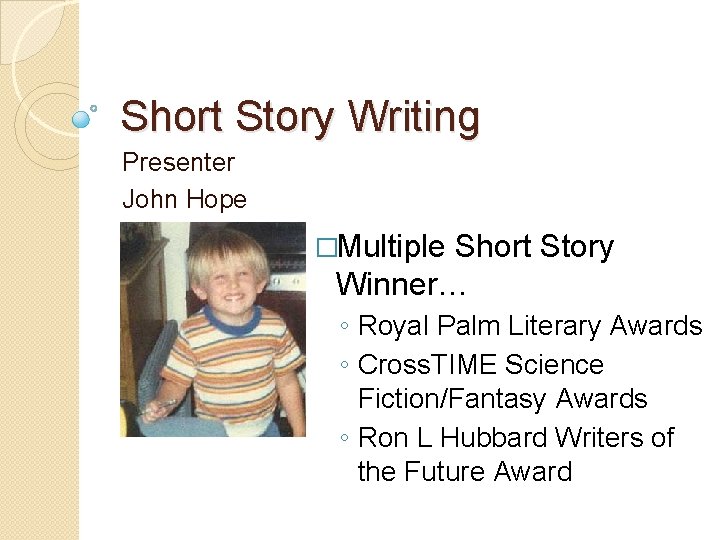
Short Story Writing Presenter John Hope �Multiple Short Story Winner… ◦ Royal Palm Literary Awards ◦ Cross. TIME Science Fiction/Fantasy Awards ◦ Ron L Hubbard Writers of the Future Award
Short Story Writing �Short Story Overview �How to Write a Short Story �Story Development Methods �Story Planning Activity �Pop Quizzes
Short Story Writing SHORT STORY OVERVIEW
Short Story Overview �What defines a short story? ◦ Often between 1 k to 5 k words, less than 20 k ◦ Contains a COMPLETE story �Main conflict resolution �Character arc ◦ Rich with scene and character description and dialogue �RPLA Guidelines ◦ Short fiction has many of the elements of a novel, including character, setting, plot, conflict, resolution, climax, dialogue, protagonist, and antagonist. Maximum 8, 000 words.
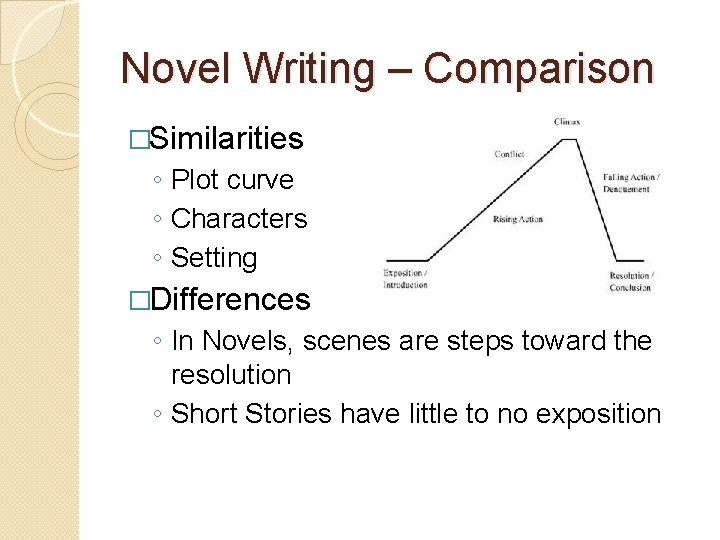
Novel Writing – Comparison �Similarities ◦ Plot curve ◦ Characters ◦ Setting �Differences ◦ In Novels, scenes are steps toward the resolution ◦ Short Stories have little to no exposition
Making it Happen �How do I squeeze an entire story into 5 k to 8 k words, and sometimes less? �Assumptions ◦ You’re experienced writing novels / novellas ◦ New to writing the “shorter stuff” ◦ Or you’re here to heckle me
Pop Quiz #1 �According to the RPLA Guidelines, short stories should include character, setting, plot, protagonist, and the following: ◦ ◦ A) conflict, plot twist, climax, dialogue B) conflict, resolution, climax, dialogue C) conflict, rising action, climax, dialogue D) Rik Feeney in a turtleneck
Pop Quiz #1 �According to the RPLA Guidelines, short stories should include character, setting, plot, protagonist, and the following: ◦ ◦ A) conflict, plot twist, climax, dialogue B) conflict, resolution, climax, dialogue C) conflict, rising action, climax, dialogue D) Rik Feeney in a turtleneck
Short Story Writing HOW TO WRITE A SHORT STORY
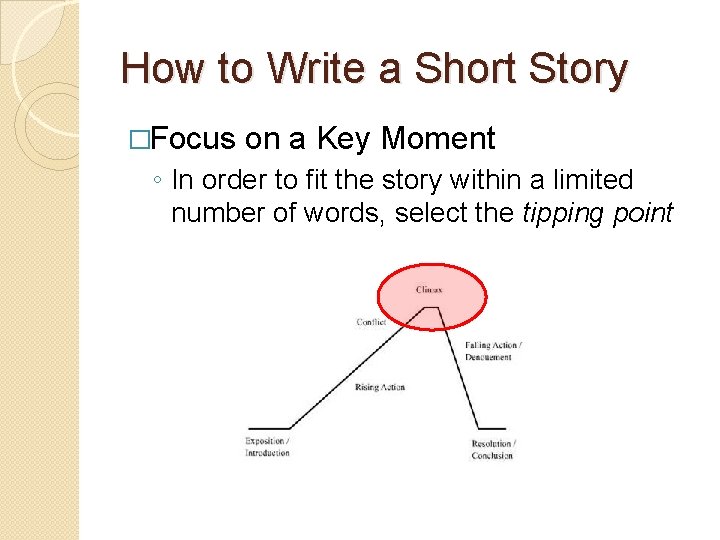
How to Write a Short Story �Focus on a Key Moment ◦ In order to fit the story within a limited number of words, select the tipping point
How to Write a Short Story �Establish basic elements before writing ◦ Conflict �Character WANTS something, but something/ someone is in the way ◦ Character(s) �Make them interesting and believable �Combine unusual characteristics ◦ Scene �Many short stories have one scene, make it good
How to Write a Short Story �Write ◦ Start as late in the story as possible ◦ Finish draft as quickly as possible �Don’t fret over details (grammar) ◦ Maintain one point of view ◦ Once you reach resolution of the main conflict, end the story as soon as possible
How to Write a Short Story �Rewrite ◦ Don’t attempt the same day draft was written ◦ Be as clear as possible for the reader �Guide them through your story ◦ Clean up, eliminate needless words, phrases ◦ Ensure theme is maintained throughout ◦ Strong opening scene/sentence ◦ Audience – will it be accepted?
How to Write a Short Story �Share with trusted readers ◦ Writing critique groups, etc �Listen to and consider feedback ◦ Don’t let others’ feedback kill your baby �Maintain your message / theme
Pop Quiz #2 �According to this presentation, what is the tipping point of a story? ◦ A) Final rise of conflict, climax, and start of the fall to resolution ◦ B) Previously rare phenomenon becoming rapidly and dramatically more common ◦ C) Following the exposition, when conflict starts to increase tension ◦ D) When you’ve had too much beer
Pop Quiz #2 �According to this presentation, what is the tipping point of a story? ◦ A) Final rise of conflict, climax, and start of the fall to resolution ◦ B) Previously rare phenomenon becoming rapidly and dramatically more common ◦ C) Following the exposition, when conflict starts to increase tension ◦ D) When you’ve had too much beer
Pop Quiz #3 �In short story writing, what should you do after you resolving the story’s main conflict? ◦ A) Include one more scene to wrap up other conflicts in the story ◦ B) Explain the meaning of the story to the reader ◦ C) End the story as soon as possible ◦ D) Burn all of your clothes and scamper through the backyard
Pop Quiz #3 �In short story writing, what should you do after you resolving the story’s main conflict? ◦ A) Include one more scene to wrap up other conflicts in the story ◦ B) Explain the meaning of the story to the reader ◦ C) End the story as soon as possible ◦ D) Burn all of your clothes and scamper through the backyard
Pop Quiz #4 �When should you start the re-write process of your short story? ◦ A) At least a day or so later, preferably longer ◦ B) Immediately after completing the draft ◦ C) After others read your story ◦ D) When ALF comes back to primetime TV
Pop Quiz #4 �When should you start the re-write process of your short story? ◦ A) At least a day or so later, preferably longer ◦ B) Immediately after completing the draft ◦ C) After others read your story ◦ D) When ALF comes back to primetime TV
Short Story Writing STORY DEVELOPMENT METHODS
Story Development Methods �There a gazillion ways to develop a story �This presentation covers only 3 methods �Experience will provide you with many, many more ways
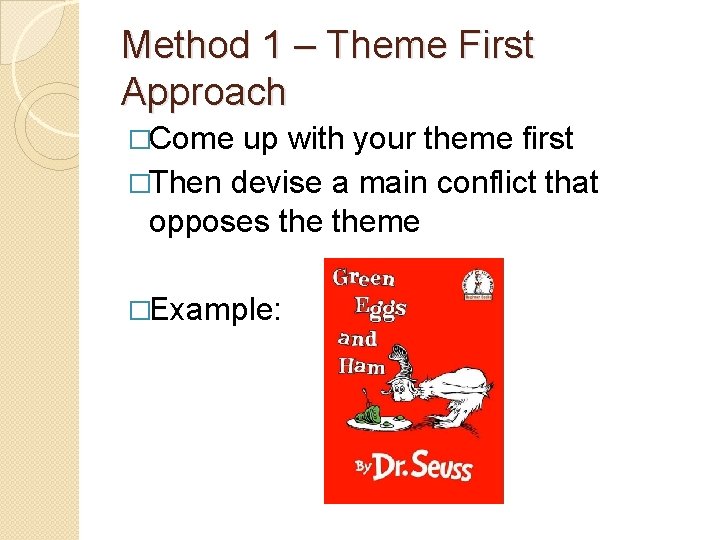
Method 1 – Theme First Approach �Come up with your theme first �Then devise a main conflict that opposes theme �Example:
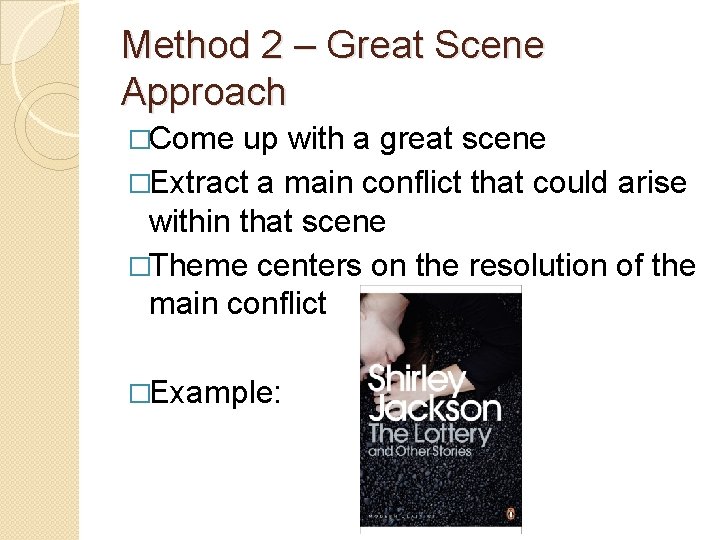
Method 2 – Great Scene Approach �Come up with a great scene �Extract a main conflict that could arise within that scene �Theme centers on the resolution of the main conflict �Example:
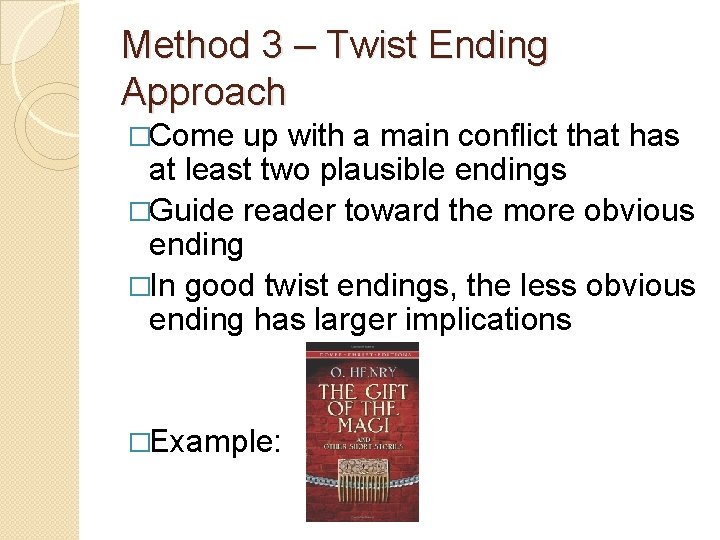
Method 3 – Twist Ending Approach �Come up with a main conflict that has at least two plausible endings �Guide reader toward the more obvious ending �In good twist endings, the less obvious ending has larger implications �Example:
Short Story Writing STORY PLANNING ACTIVITY
Story Planning (Handout) �Develop story using Method 1 Theme First Approach
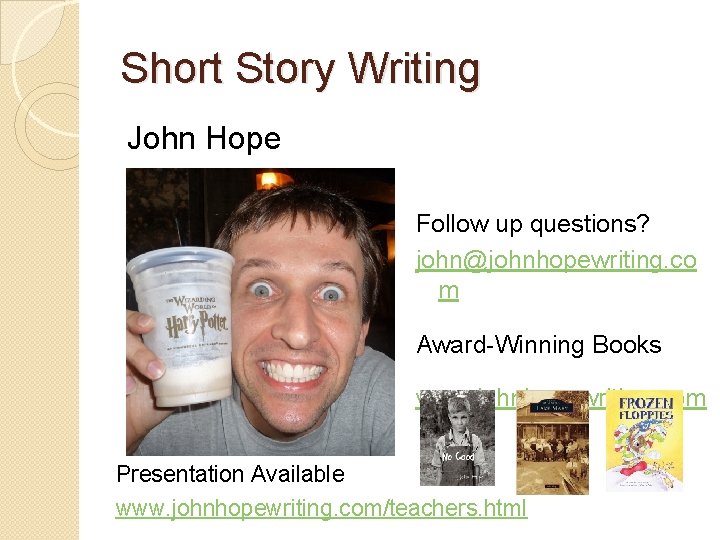
Short Story Writing John Hope Follow up questions? john@johnhopewriting. co m Award-Winning Books www. johnhopewriting. com Presentation Available www. johnhopewriting. com/teachers. html