
Short Story Notes Setting Check out the condition
- Slides: 12
Short Story Notes
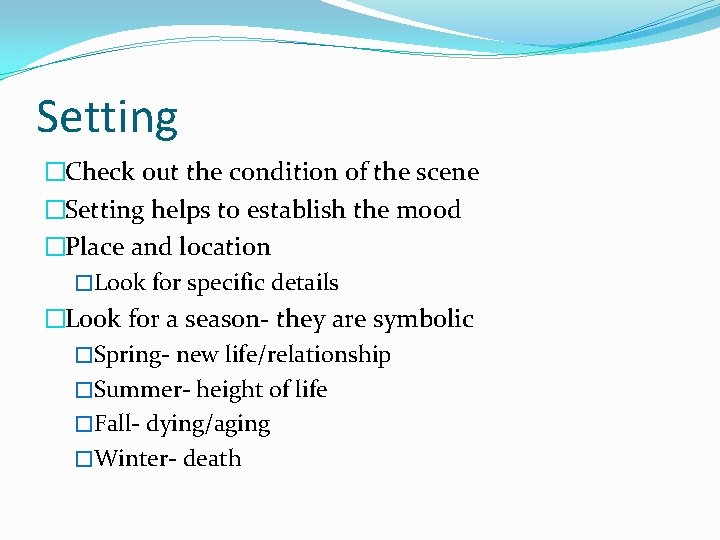
Setting �Check out the condition of the scene �Setting helps to establish the mood �Place and location �Look for specific details �Look for a season- they are symbolic �Spring- new life/relationship �Summer- height of life �Fall- dying/aging �Winter- death
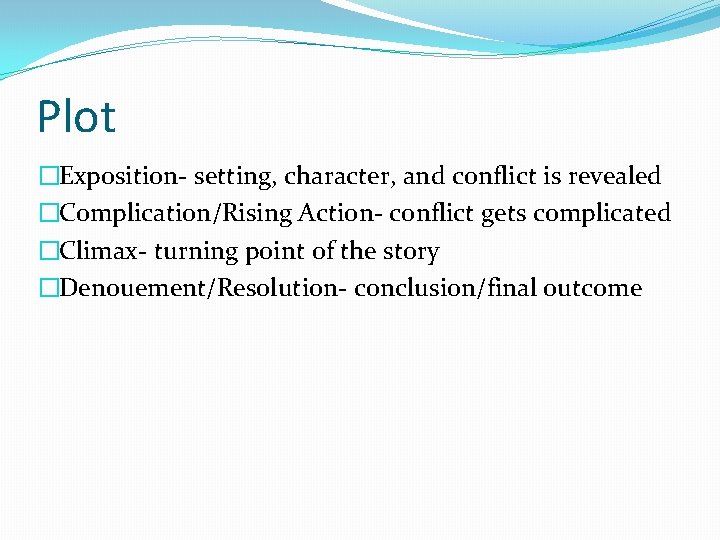
Plot �Exposition- setting, character, and conflict is revealed �Complication/Rising Action- conflict gets complicated �Climax- turning point of the story �Denouement/Resolution- conclusion/final outcome
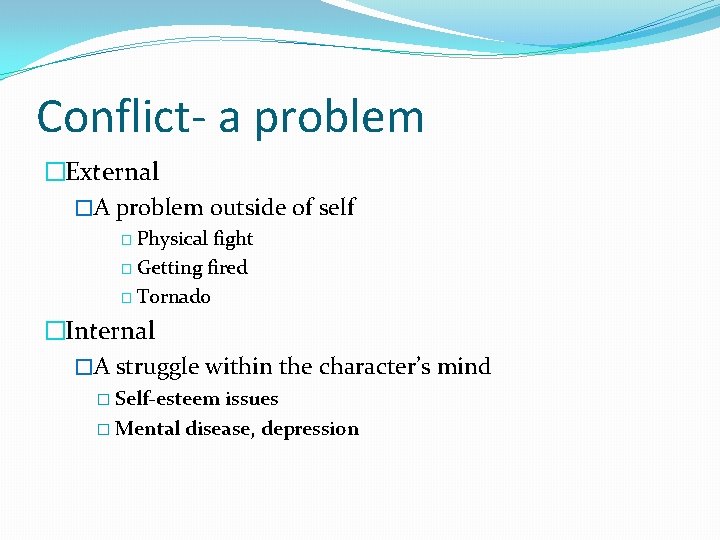
Conflict- a problem �External �A problem outside of self � Physical fight � Getting fired � Tornado �Internal �A struggle within the character’s mind � Self-esteem issues � Mental disease, depression
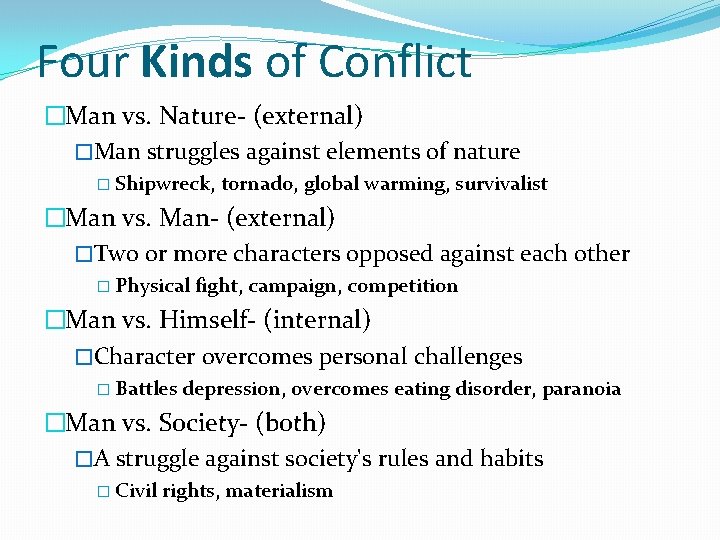
Four Kinds of Conflict �Man vs. Nature- (external) �Man struggles against elements of nature � Shipwreck, tornado, global warming, survivalist �Man vs. Man- (external) �Two or more characters opposed against each other � Physical fight, campaign, competition �Man vs. Himself- (internal) �Character overcomes personal challenges � Battles depression, overcomes eating disorder, paranoia �Man vs. Society- (both) �A struggle against society's rules and habits � Civil rights, materialism
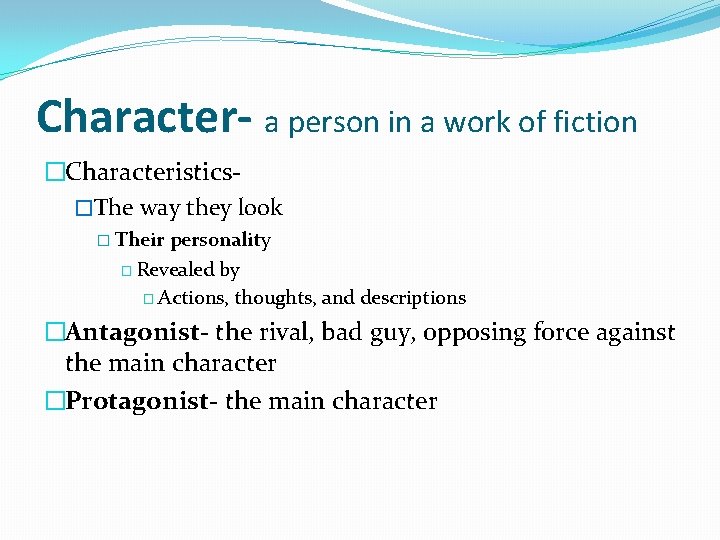
Character- a person in a work of fiction �Characteristics�The way they look � Their personality � Revealed by � Actions, thoughts, and descriptions �Antagonist- the rival, bad guy, opposing force against the main character �Protagonist- the main character
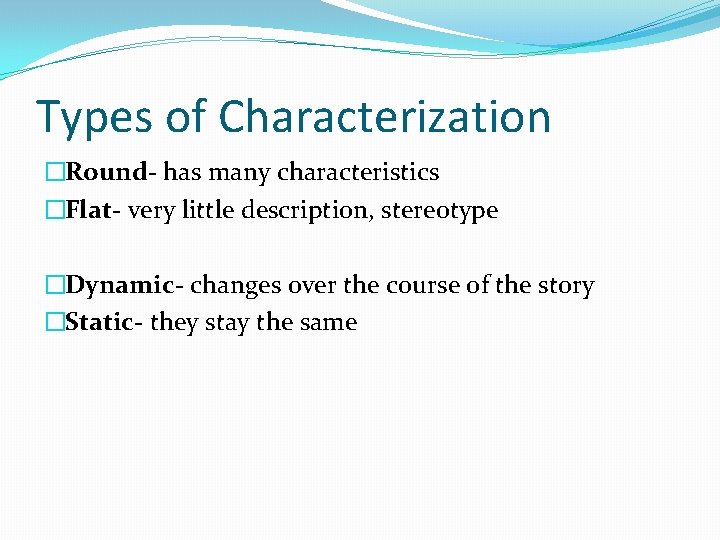
Types of Characterization �Round- has many characteristics �Flat- very little description, stereotype �Dynamic- changes over the course of the story �Static- they stay the same
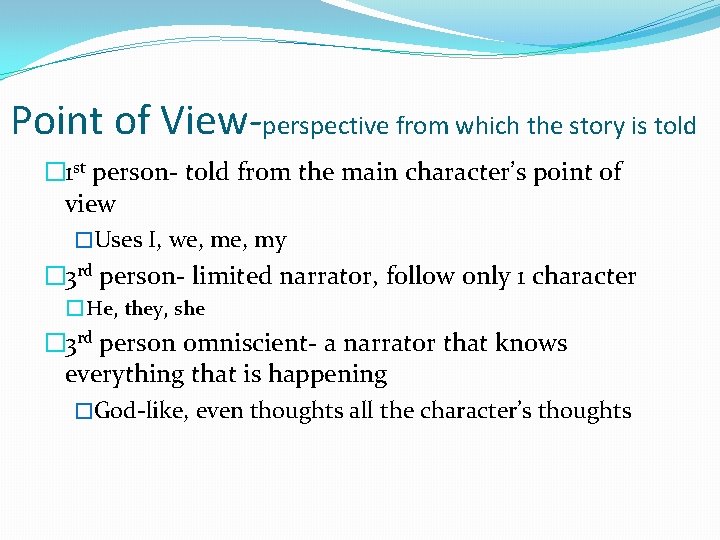
Point of View-perspective from which the story is told � 1 st person- told from the main character’s point of view �Uses I, we, my � 3 rd person- limited narrator, follow only 1 character � He, they, she � 3 rd person omniscient- a narrator that knows everything that is happening �God-like, even thoughts all the character’s thoughts
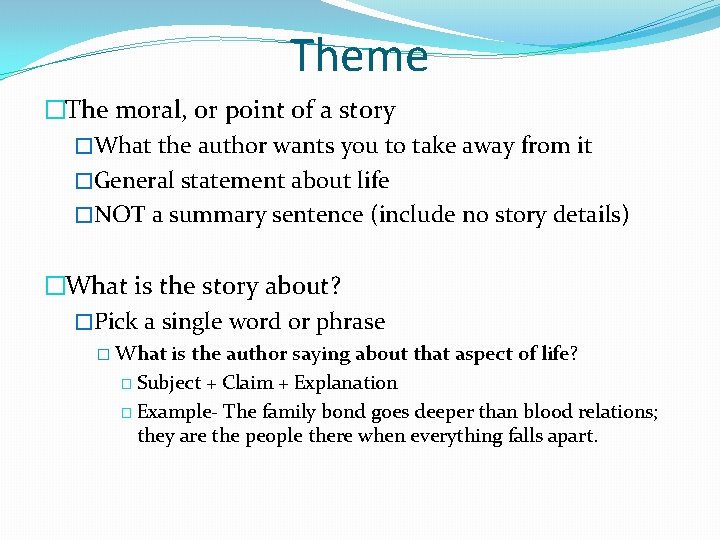
Theme �The moral, or point of a story �What the author wants you to take away from it �General statement about life �NOT a summary sentence (include no story details) �What is the story about? �Pick a single word or phrase � What is the author saying about that aspect of life? � Subject + Claim + Explanation � Example- The family bond goes deeper than blood relations; they are the people there when everything falls apart.
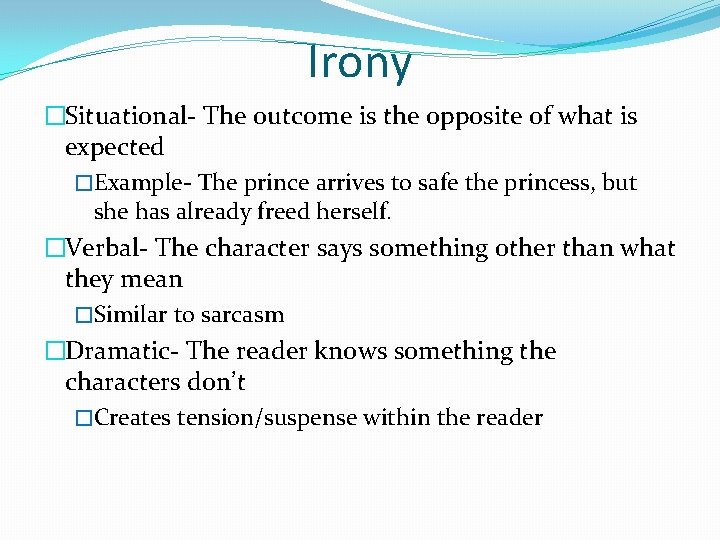
Irony �Situational- The outcome is the opposite of what is expected �Example- The prince arrives to safe the princess, but she has already freed herself. �Verbal- The character says something other than what they mean �Similar to sarcasm �Dramatic- The reader knows something the characters don’t �Creates tension/suspense within the reader
Foreshadowing �The author hints at what is going to happen.
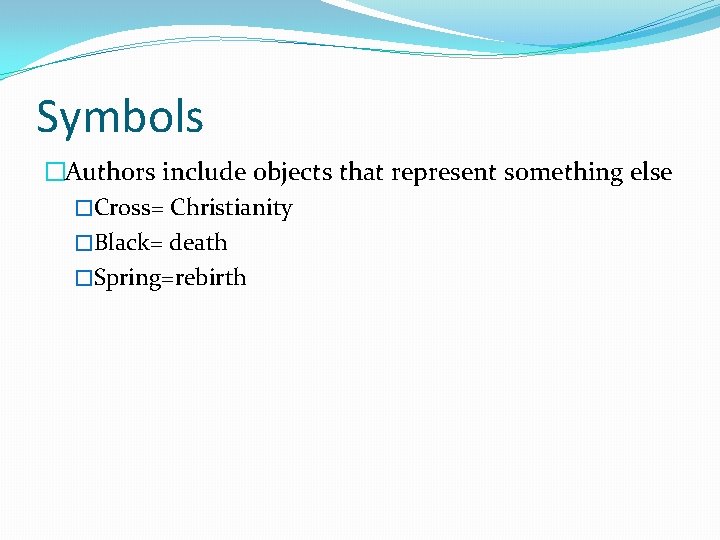
Symbols �Authors include objects that represent something else �Cross= Christianity �Black= death �Spring=rebirth