
Short Story Elements Terminology Plot series of related
- Slides: 12
Short Story Elements Terminology
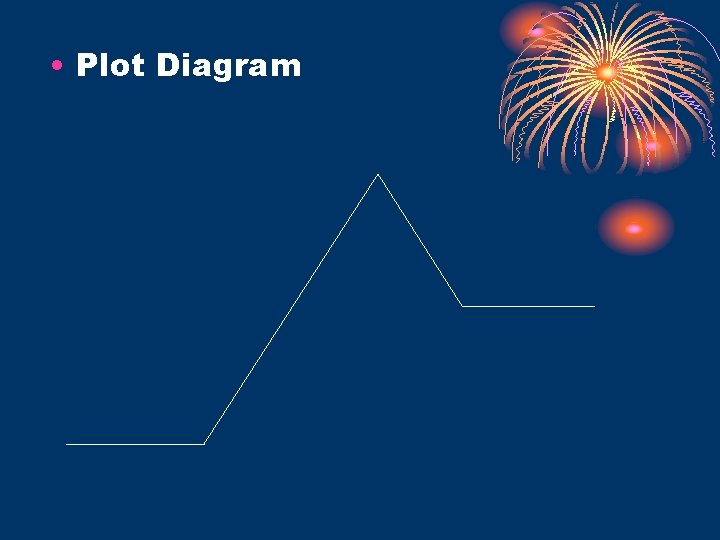
Plot: series of related events • Exposition: the beginning of the story where the characters and their conflicts are introduced • Complications: rising action/problems leading to the climax • Climax: highest emotional/exciting point of the story • Falling Action: events leading to the resolution • Resolution: (denouement) conclusion
• Plot Diagram
Conflict: a struggle or clash between opposing forces • External Conflict: when the conflict takes place with an outside force. Man vs. Nature Man vs. Society Man vs. Supernatural
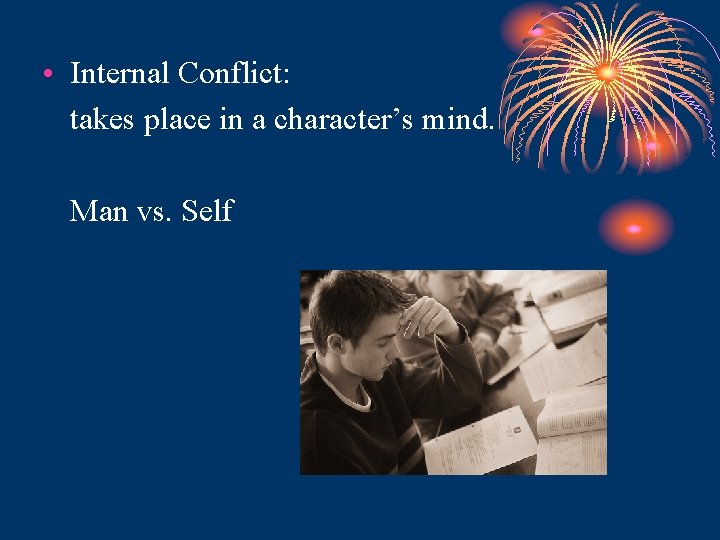
• Internal Conflict: takes place in a character’s mind. Man vs. Self
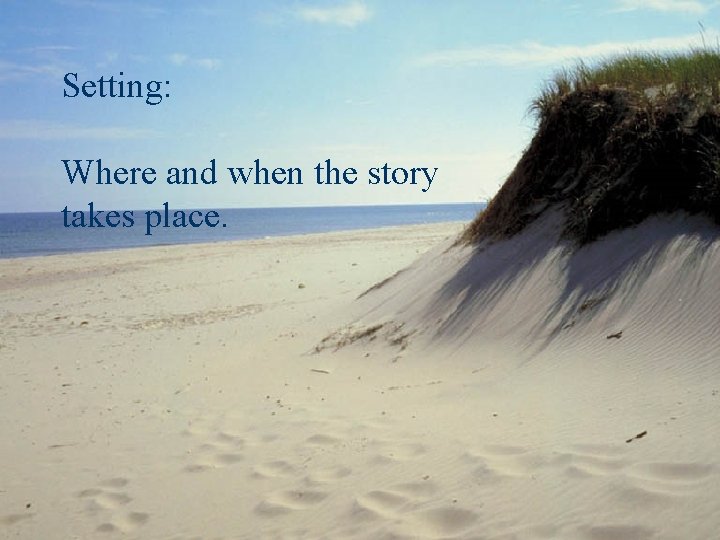
Setting: Where and when the story takes place.
Character: Individual in a story, poem, or a play. • Static Character – does not change much in the course of a story. • Dynamic Character – changes in some important way as a result of the action of the story. • Flat Character – has only one or two personality traits • Round Character – has complex and different traits.
Character continued. . . • Direct Characterization – the writer tells us directly what the character is like • Indirect Characterization – the author lets us figure out the character through clues (appearances, what they say, what they do, how others feel about them, and listening to their inner thoughts. )
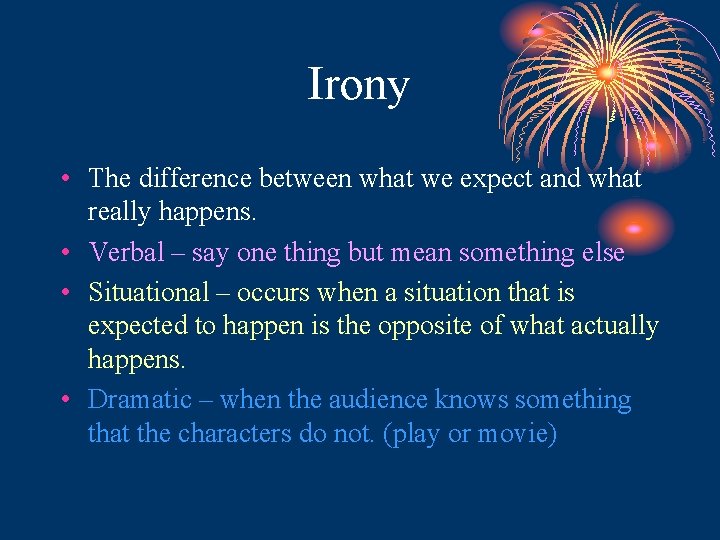
Irony • The difference between what we expect and what really happens. • Verbal – say one thing but mean something else • Situational – occurs when a situation that is expected to happen is the opposite of what actually happens. • Dramatic – when the audience knows something that the characters do not. (play or movie)
Theme • The central idea of a story. It makes some revelation about the subject of the story.
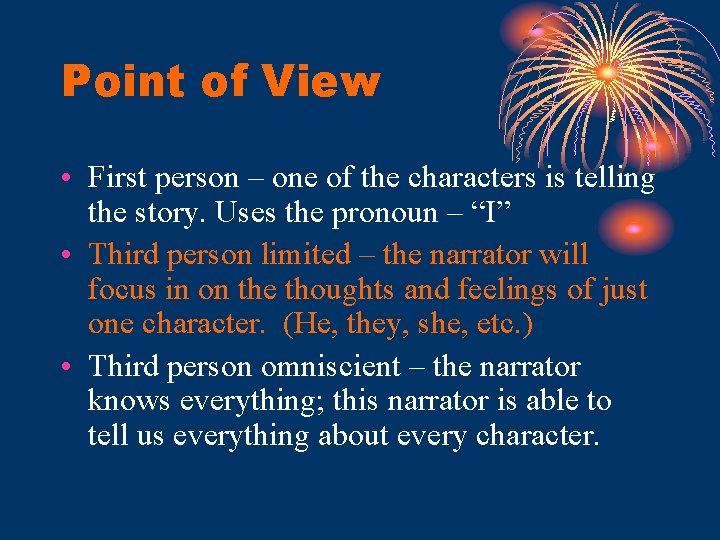
Point of View • First person – one of the characters is telling the story. Uses the pronoun – “I” • Third person limited – the narrator will focus in on the thoughts and feelings of just one character. (He, they, she, etc. ) • Third person omniscient – the narrator knows everything; this narrator is able to tell us everything about every character.
Imagery • Using words that call forth the use of one of our senses. *sight, smell, touch, hearing, and taste