
Short Story Elements Setting The time and place
- Slides: 18
Short Story Elements
Setting The time and place of a story’s action. When and where the story takes place.
Characters Animals or people who participate in the story.
Protagonist n The main character of the story.
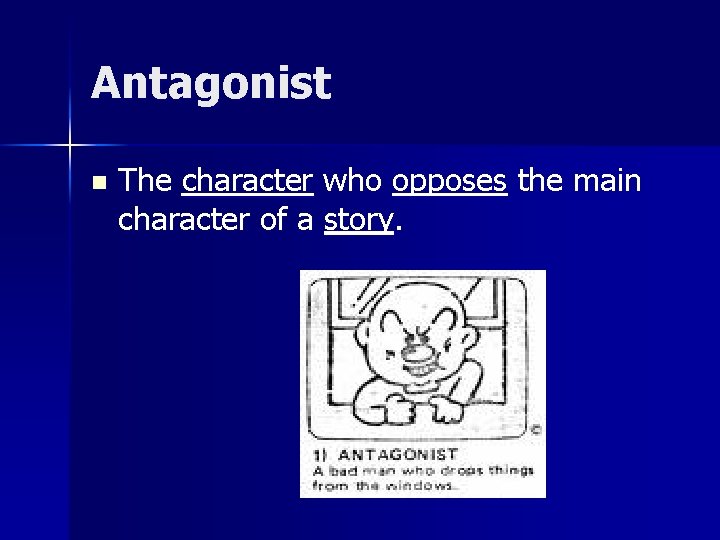
Antagonist n The character who opposes the main character of a story.
Point of View n The vantage point from which the story is told.
Narrator n The storyteller or person telling the story.
First Person Point of View n When the narrator is a character IN the story and uses “I”.
Third Person Limited Point of View When the narrator is NOT a character in the story and uses “he” and “she”. n Knows the thoughts and actions of only 1 character. n
Third Person Omniscient Point of View n The narrator is NOT a character in the story, but can reveal the thoughts and feelings of ALL the characters.
Theme n The central or main idea of a story.
Stated Theme n When the main idea of a story is directly stated or told by the narrator.
Implied Theme n When the main idea of a story is not directly stated but must be inferred or guessed.
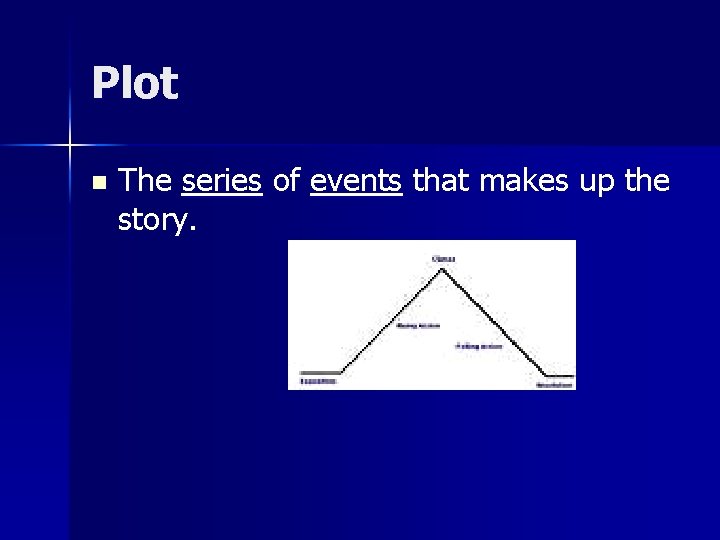
Plot n The series of events that makes up the story.
Conflict A struggle between two opposing people or forces.
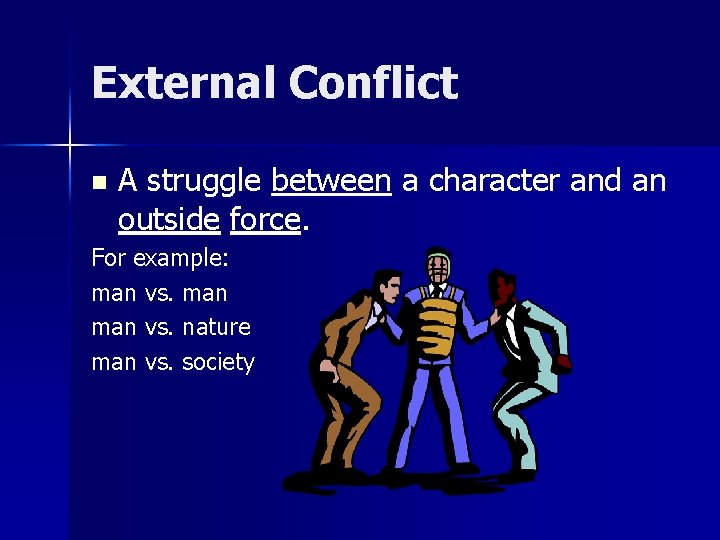
External Conflict n A struggle between a character and an outside force. For example: man vs. nature man vs. society
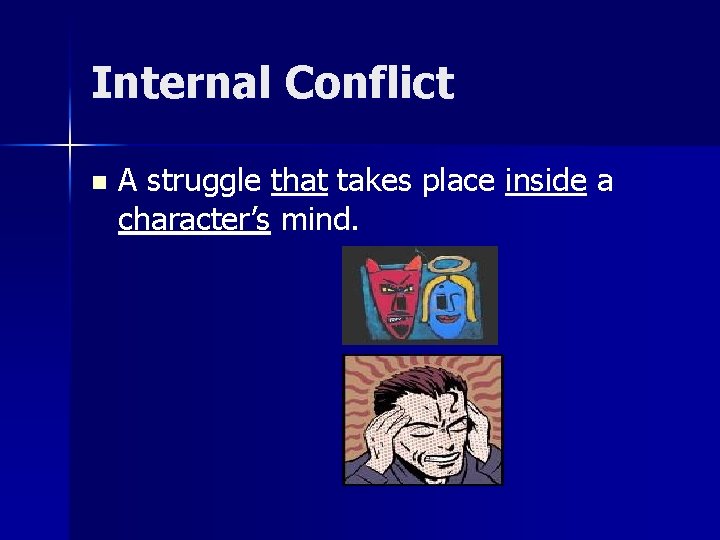
Internal Conflict n A struggle that takes place inside a character’s mind.
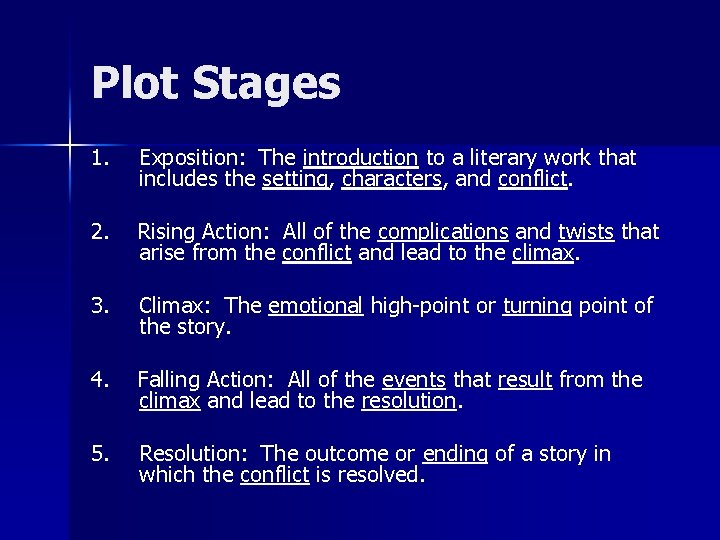
Plot Stages 1. Exposition: The introduction to a literary work that includes the setting, characters, and conflict. 2. Rising Action: All of the complications and twists that arise from the conflict and lead to the climax. 3. Climax: The emotional high-point or turning point of the story. 4. Falling Action: All of the events that result from the climax and lead to the resolution. 5. Resolution: The outcome or ending of a story in which the conflict is resolved.