
Short Stories What is a short story What
- Slides: 21
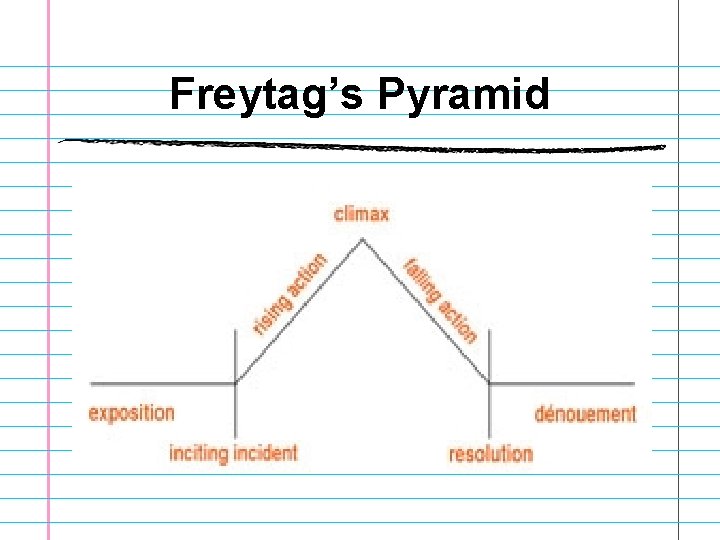
Short Stories What is a short story? What are the elements of a short story? What is Freytag’s Pyramid?
What are the four defining factors of a short story? • •
What is a short story? • Short work of fiction. • Generally centers on one climactic event. • Usually develops only a single character. • Can be read in one sitting.
Elements of a Short Story • • • Setting Character Conflict Plot Point of View Theme
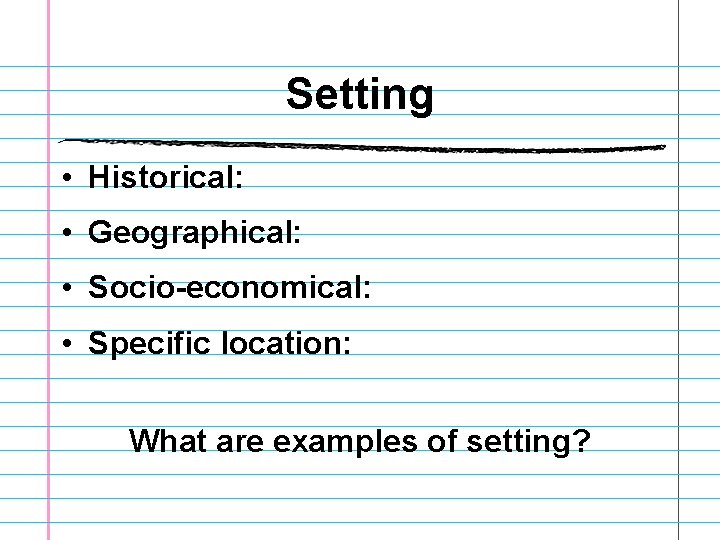
Setting • Historical: • Geographical: • Socio-economical: • Specific location: What are examples of setting?
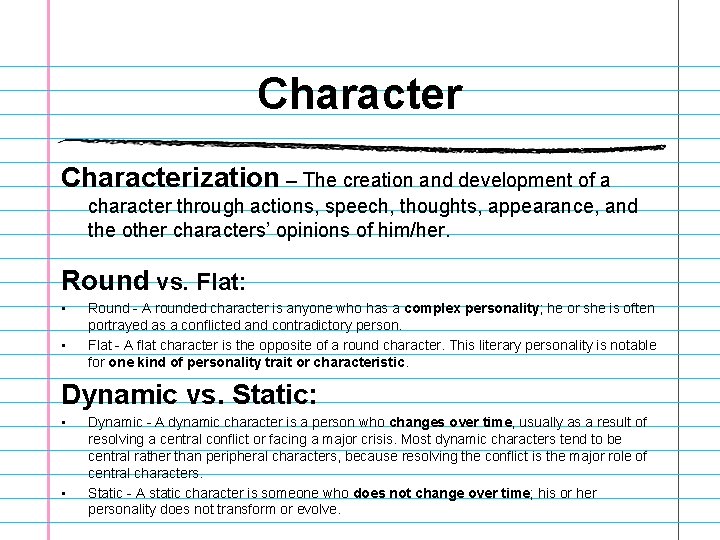
Characterization – The creation and development of a character through actions, speech, thoughts, appearance, and the other characters’ opinions of him/her. Round vs. Flat: • • Round - A rounded character is anyone who has a complex personality; he or she is often portrayed as a conflicted and contradictory person. Flat - A flat character is the opposite of a round character. This literary personality is notable for one kind of personality trait or characteristic. Dynamic vs. Static: • • Dynamic - A dynamic character is a person who changes over time, usually as a result of resolving a central conflict or facing a major crisis. Most dynamic characters tend to be central rather than peripheral characters, because resolving the conflict is the major role of central characters. Static - A static character is someone who does not change over time; his or her personality does not transform or evolve.
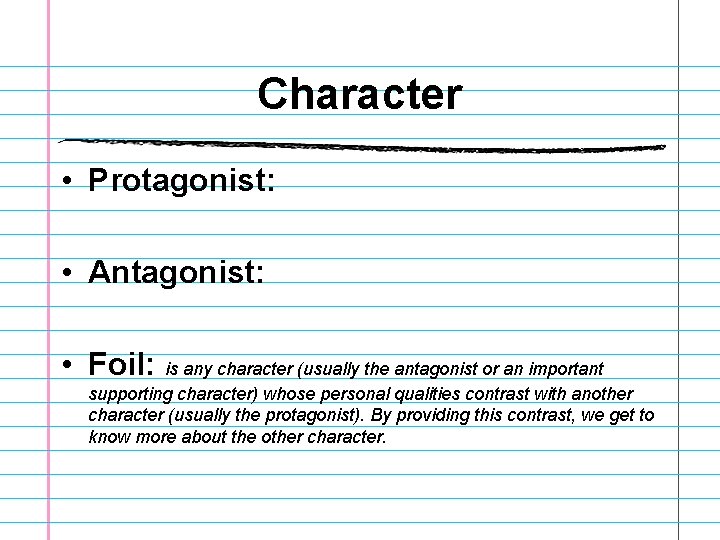
Character • Protagonist: • Antagonist: • Foil: is any character (usually the antagonist or an important supporting character) whose personal qualities contrast with another character (usually the protagonist). By providing this contrast, we get to know more about the other character.
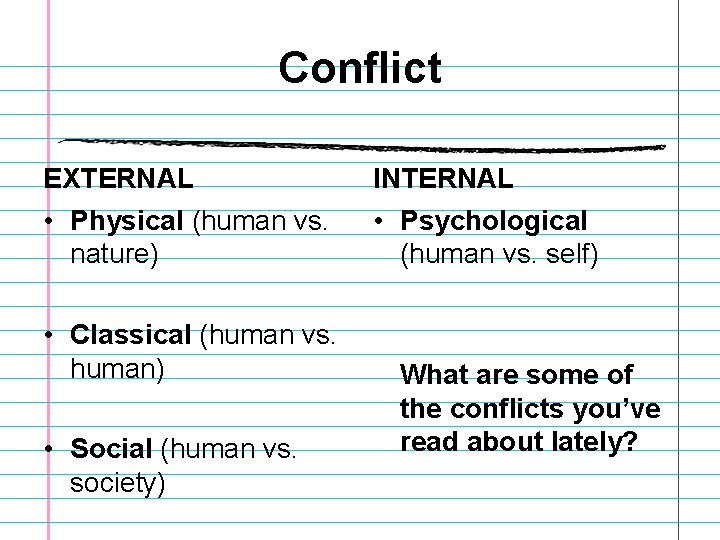
Conflict EXTERNAL • Physical (human vs. nature) • Classical (human vs. human) • Social (human vs. society) INTERNAL • Psychological (human vs. self) What are some of the conflicts you’ve read about lately?
Plot: Other literary terms related to plot: • Symbolism: • Foreshadowing: • Suspense:
Freytag’s Pyramid
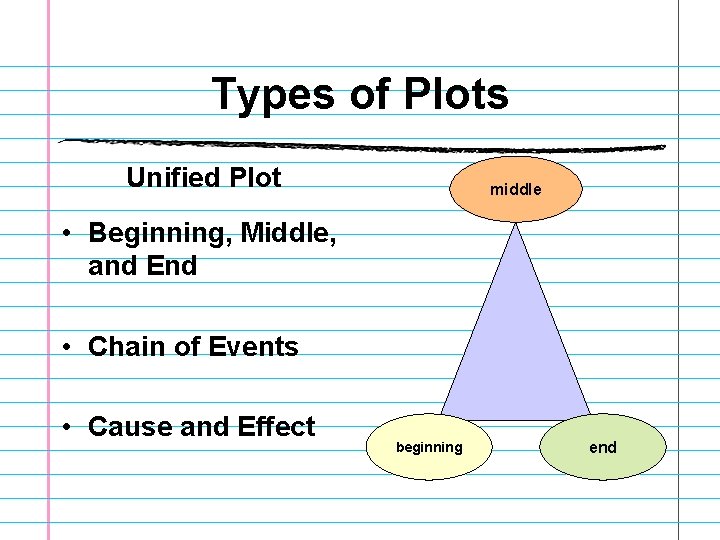
Types of Plots Unified Plot middle • Beginning, Middle, and End • Chain of Events • Cause and Effect beginning end
Types of Plot • Linear – Chronological – Flashback • Circular • Episodic
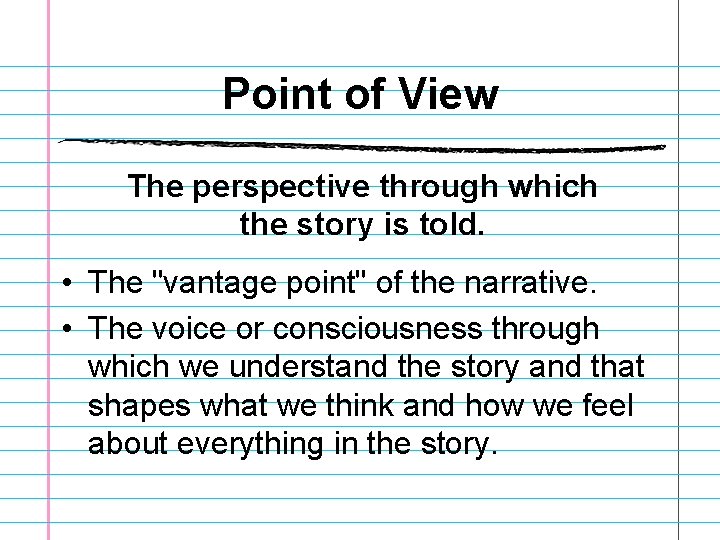
Point of View The perspective through which the story is told. • The "vantage point" of the narrative. • The voice or consciousness through which we understand the story and that shapes what we think and how we feel about everything in the story.
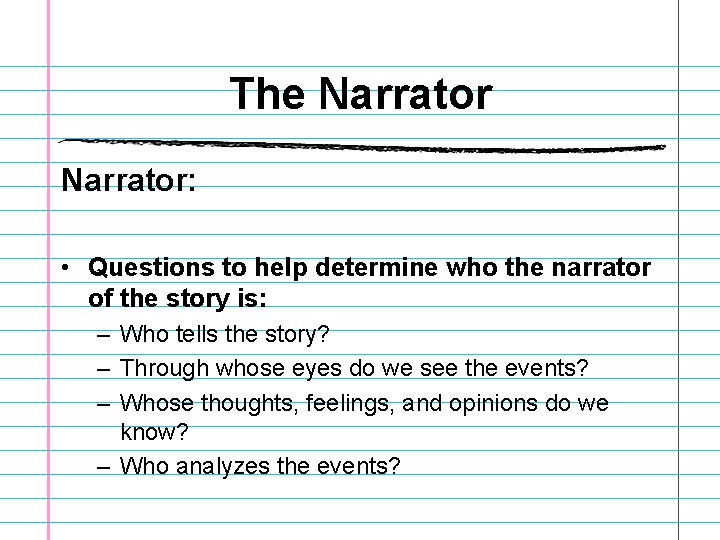
The Narrator: • Questions to help determine who the narrator of the story is: – Who tells the story? – Through whose eyes do we see the events? – Whose thoughts, feelings, and opinions do we know? – Who analyzes the events?
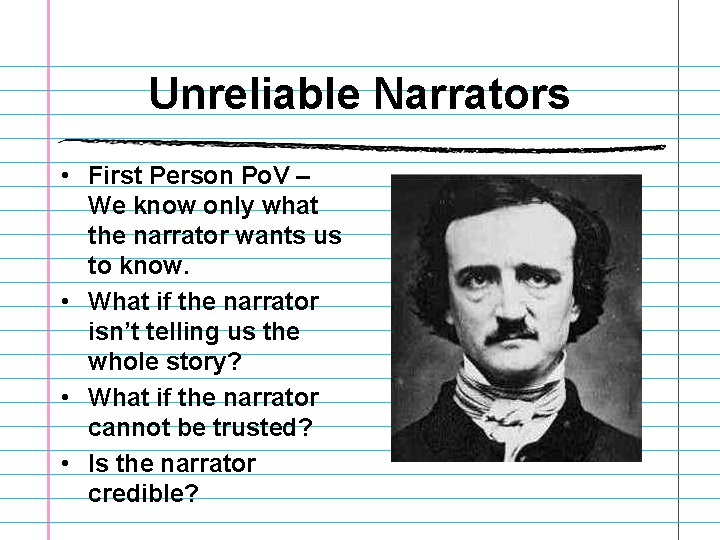
Unreliable Narrators • First Person Po. V – We know only what the narrator wants us to know. • What if the narrator isn’t telling us the whole story? • What if the narrator cannot be trusted? • Is the narrator credible?
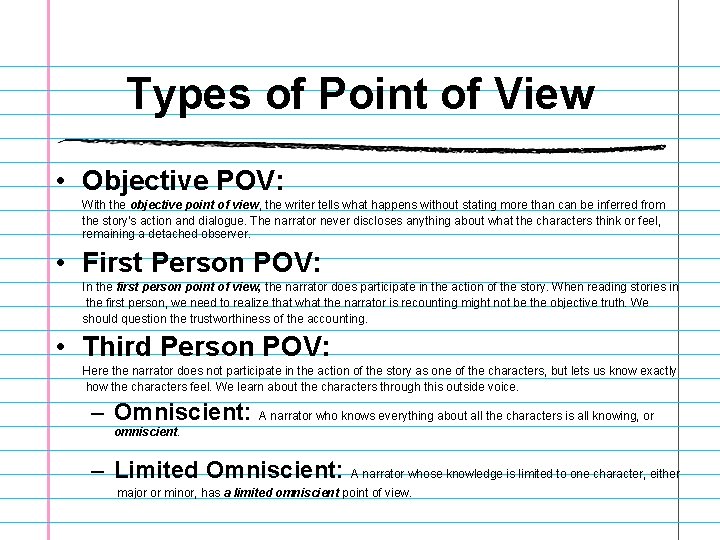
Types of Point of View • Objective POV: With the objective point of view, the writer tells what happens without stating more than can be inferred from the story's action and dialogue. The narrator never discloses anything about what the characters think or feel, remaining a detached observer. • First Person POV: In the first person point of view, the narrator does participate in the action of the story. When reading stories in the first person, we need to realize that what the narrator is recounting might not be the objective truth. We should question the trustworthiness of the accounting. • Third Person POV: Here the narrator does not participate in the action of the story as one of the characters, but lets us know exactly how the characters feel. We learn about the characters through this outside voice. – Omniscient: A narrator who knows everything about all the characters is all knowing, or omniscient. – Limited Omniscient: A narrator whose knowledge is limited to one character, either major or minor, has a limited omniscient point of view.
Point of View • How does the point of view affect our responses to the characters? • How does the point of view shape our understanding and interpretations? • How is our response influenced by how much the narrator knows and how objective and reliable s/he is? • What might happen if another point of view took charge and told the story his/her way?
Theme • Controlling idea or central insight. • Underlying meaning or main idea. • Thoughts about a topic. • View of human nature. • Commentary on society or culture.
What is a short story? What are the elements of a short story? What is Freytag’s Pyramid? QUESTIONS?
Story ideas - three elements Choose a set of three elements and write a story that contains all three of them! Extreme challenge: combine three of the elements with one of the other short story ideas on this page. 1. A stolen ring, fear of spiders, and a sinister stranger. 2. A taxi, an old enemy, and Valentine's Day. 3. Identical twins, a party invitation, and a locked closet. 4. A broken wristwatch, peppermints, and a hug that goes too far. 5. Aerobics, a secret diary, and something unpleasant under the bed. 6. An ex-boyfriend, a pair of binoculars, and a good-luck charm. 7. An annoying boss, a bikini, and a fake illness. 8. The first day of school, a love note, and a recipe with a significant mistake. 9. A horoscope, makeup, and a missing tooth. 10. A campfire, a scream, and a small lie that gets bigger and bigger.
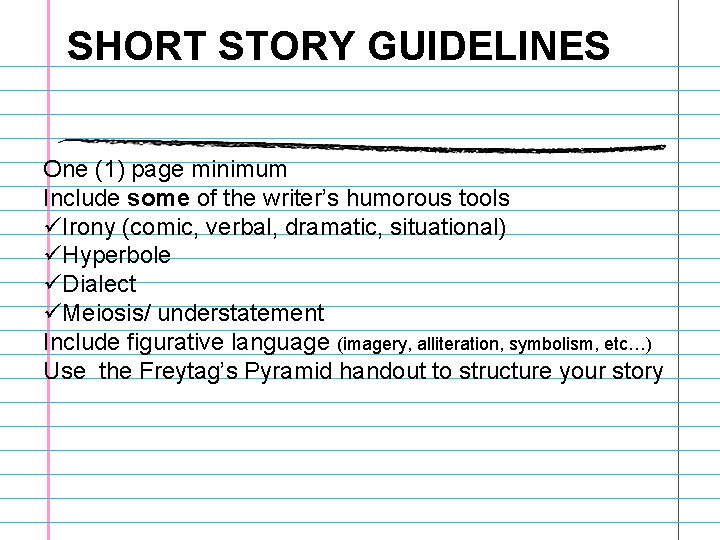
SHORT STORY GUIDELINES One (1) page minimum Include some of the writer’s humorous tools üIrony (comic, verbal, dramatic, situational) üHyperbole üDialect üMeiosis/ understatement Include figurative language (imagery, alliteration, symbolism, etc…) Use the Freytag’s Pyramid handout to structure your story