
Short Stories Plot Structure Setting Character Narration Style
- Slides: 9
Short Stories Plot Structure Setting Character Narration Style Theme and intention
Plot �What �The happens in the story �Why sequence of events things happened �The causes and effects which lead to the next event. �Helps the story unfold in an orderly fashion.
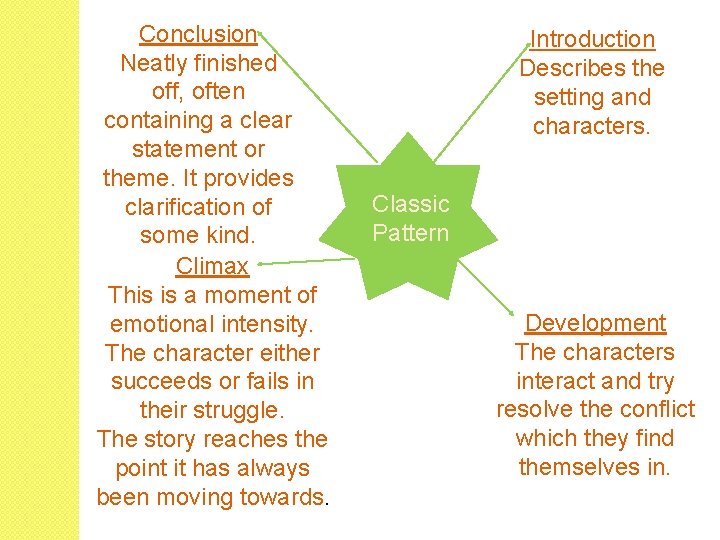
Conclusion Neatly finished off, often containing a clear statement or theme. It provides clarification of some kind. Climax This is a moment of emotional intensity. The character either succeeds or fails in their struggle. The story reaches the point it has always been moving towards. Introduction Describes the setting and characters. Classic Pattern Development The characters interact and try resolve the conflict which they find themselves in.
Structure �An element of the style. �All about HOW it is written not WHAT. �The characters, setting, theme and plot must be condensed. �They must include all that’s relevant and leave out anything that isn’t essential. �The plot goes straight to the point. �The structure must be neat and concise.
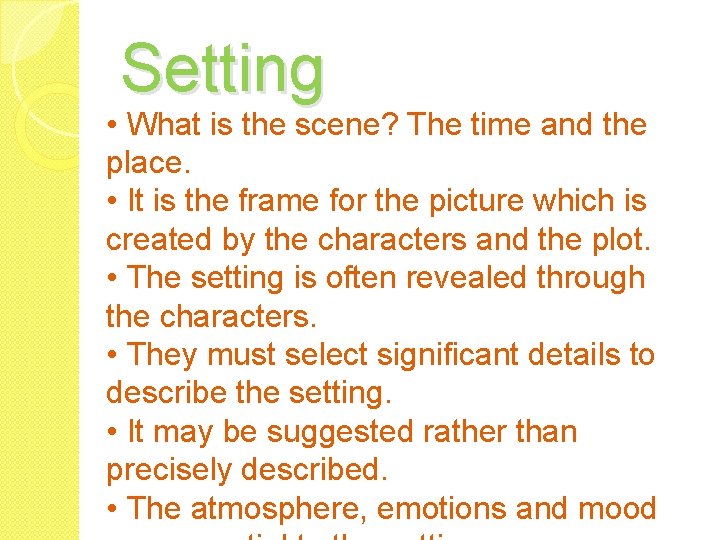
Setting • What is the scene? The time and the place. • It is the frame for the picture which is created by the characters and the plot. • The setting is often revealed through the characters. • They must select significant details to describe the setting. • It may be suggested rather than precisely described. • The atmosphere, emotions and mood
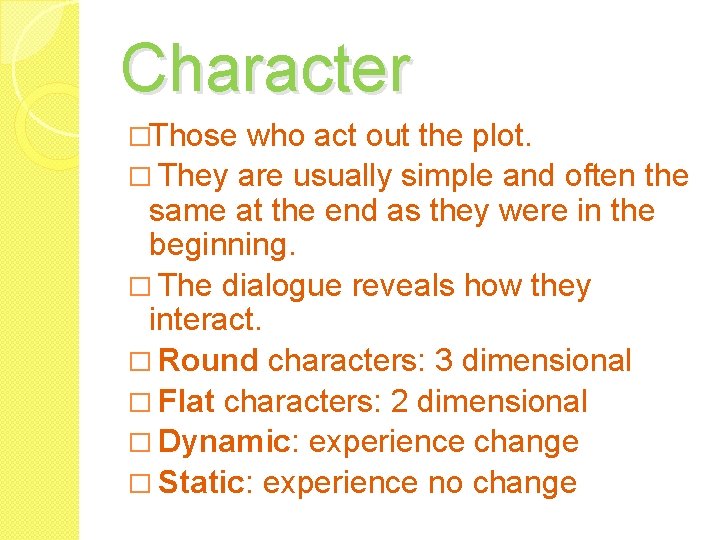
Character �Those who act out the plot. � They are usually simple and often the same at the end as they were in the beginning. � The dialogue reveals how they interact. � Round characters: 3 dimensional � Flat characters: 2 dimensional � Dynamic: experience change � Static: experience no change
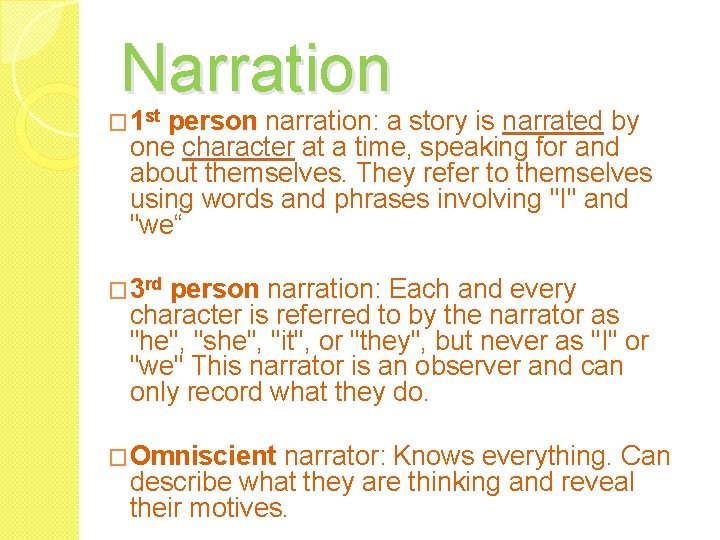
Narration � 1 st person narration: a story is narrated by one character at a time, speaking for and about themselves. They refer to themselves using words and phrases involving "I" and "we“ � 3 rd person narration: Each and every character is referred to by the narrator as "he", "she", "it", or "they", but never as "I" or "we" This narrator is an observer and can only record what they do. �Omniscient narrator: Knows everything. Can describe what they are thinking and reveal their motives.
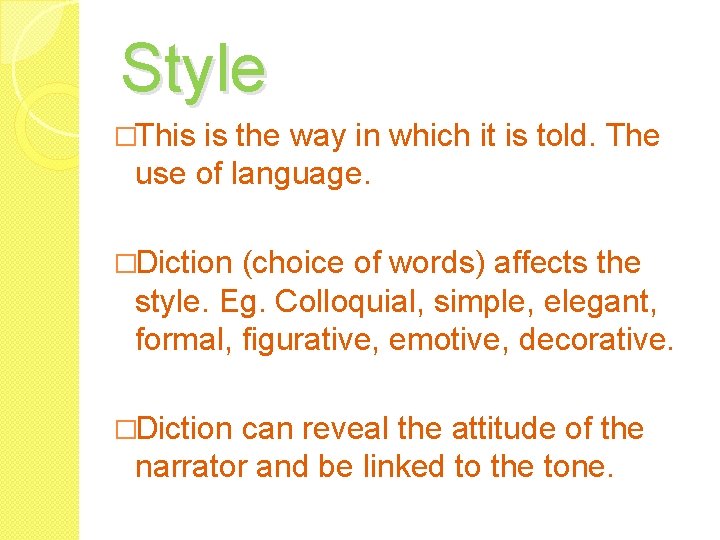
Style �This is the way in which it is told. The use of language. �Diction (choice of words) affects the style. Eg. Colloquial, simple, elegant, formal, figurative, emotive, decorative. �Diction can reveal the attitude of the narrator and be linked to the tone.
Theme and Intention This is what remains with the reader. It is � the lasting impression. �Is something thought provoking? �A thread that runs through a story. �The story gains depth when it depends less on the plot and more on the reader learning something about themselves and their life.