
Short Stories Parts of a Short Story Exposition

- Slides: 25
Short Stories
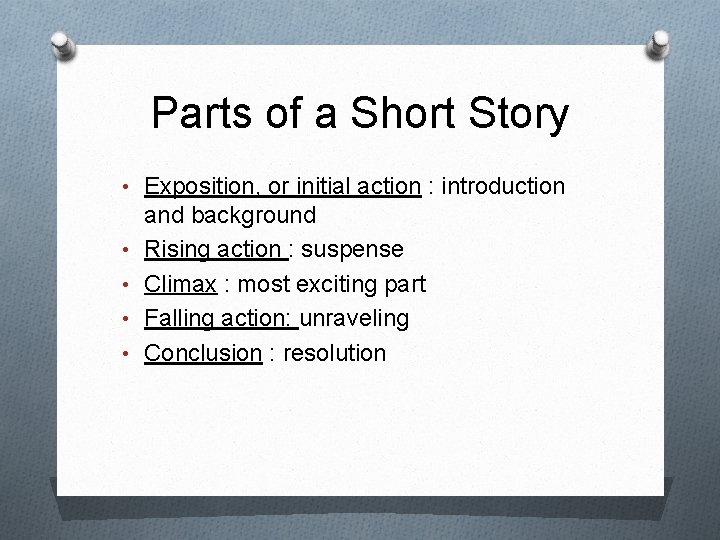
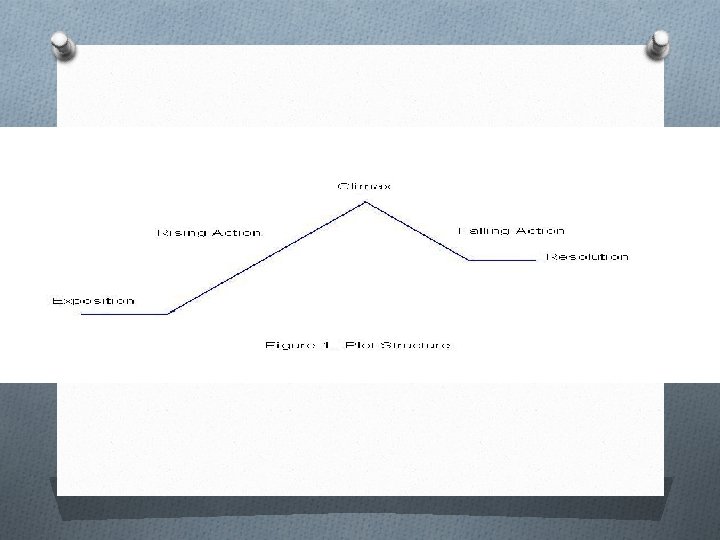
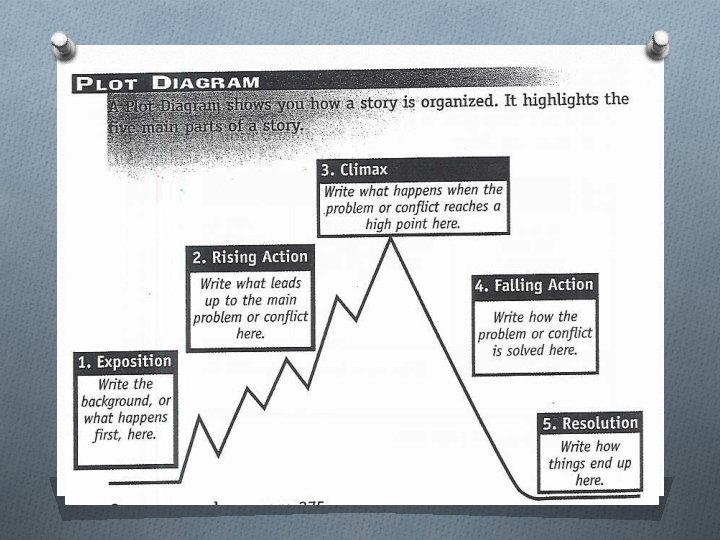
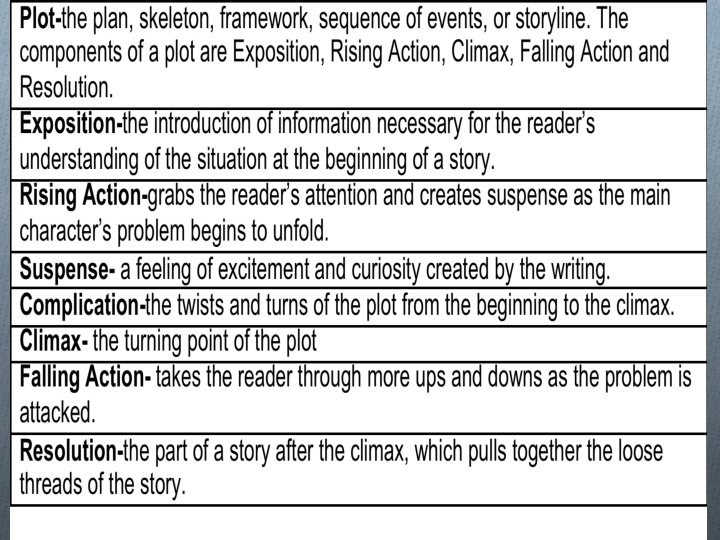
Parts of a Short Story • Exposition, or initial action : introduction • • and background Rising action : suspense Climax : most exciting part Falling action: unraveling Conclusion : resolution
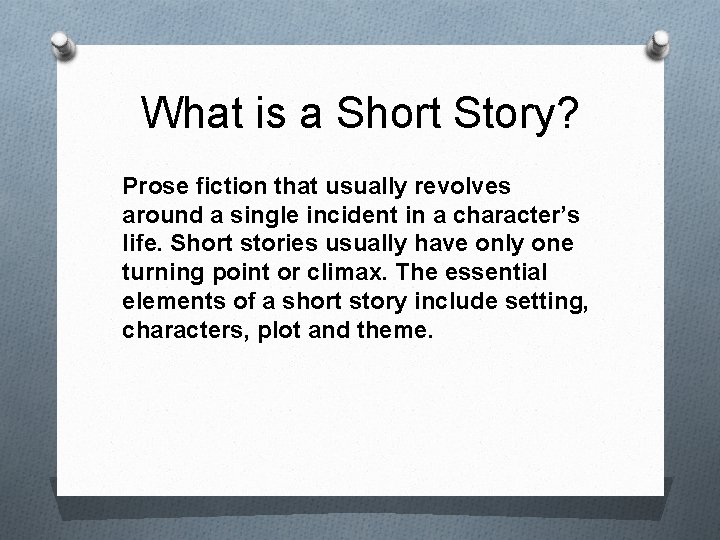
What is a Short Story? Prose fiction that usually revolves around a single incident in a character’s life. Short stories usually have only one turning point or climax. The essential elements of a short story include setting, characters, plot and theme.
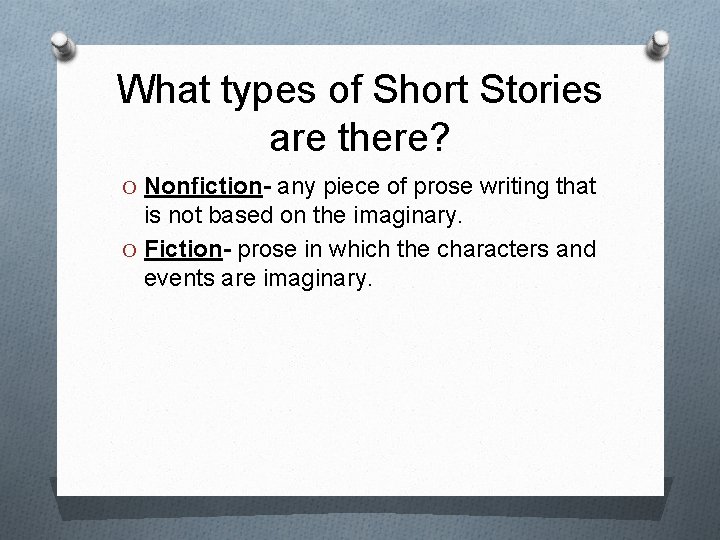
What types of Short Stories are there? O Nonfiction- any piece of prose writing that is not based on the imaginary. O Fiction- prose in which the characters and events are imaginary.
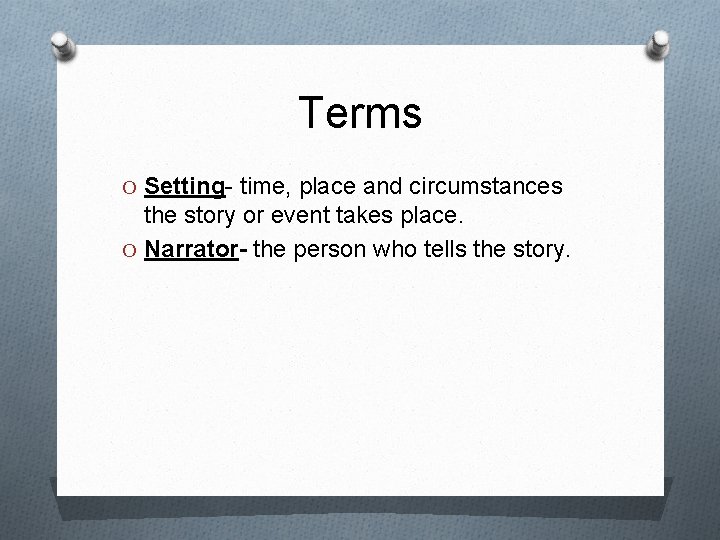
Terms O Setting- time, place and circumstances the story or event takes place. O Narrator- the person who tells the story.
Terms O Point of View- the perspective from which events are seen, a story is told or an argument is made. O First person point of view/narrativethe narrator is “I”, one of the characters in the story. {I knew I wanted to go to the dance, but I wondered why Bill was angry}
Terms O Third person limited point of view/narrative - the narrator tells the story as he, she or they. {Helena knew she wanted to go to the dance but she wondered why Bill was angry} O Omniscient point of view/narrative- the narrator is all knowing and describes the thoughts and feelings of all the characters but is not a character in the story. Example: {Helena’s teasing made Bill angry but he wasn’t going to think about that now. He would get the coolest Khakis to wear to the dance. }
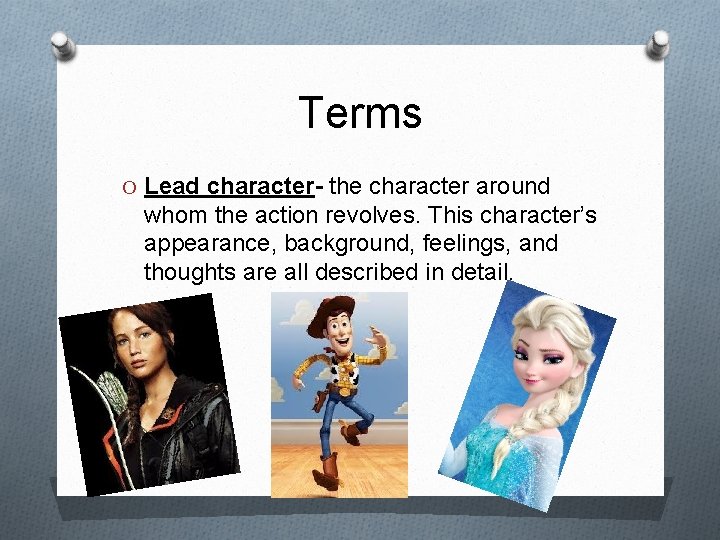
Terms O Lead character- the character around whom the action revolves. This character’s appearance, background, feelings, and thoughts are all described in detail.
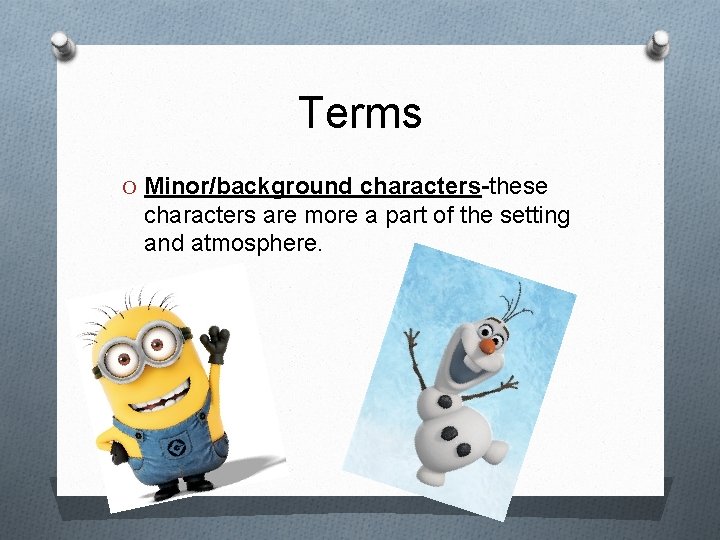
Terms O Minor/background characters-these characters are more a part of the setting and atmosphere.
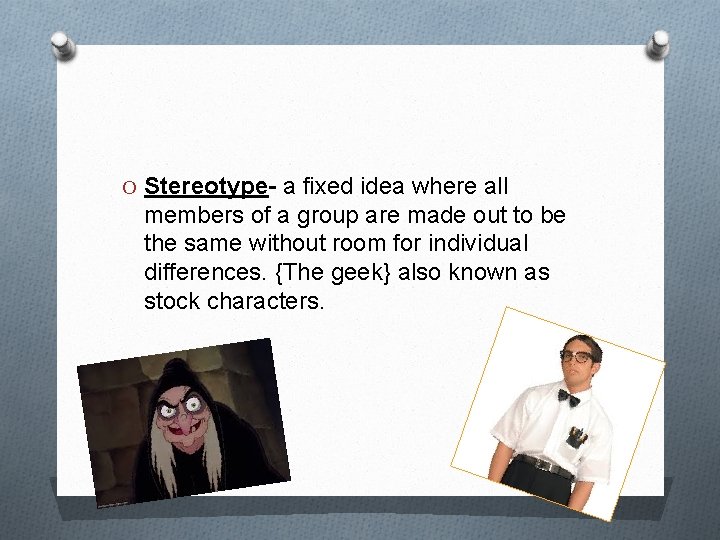
O Stereotype- a fixed idea where all members of a group are made out to be the same without room for individual differences. {The geek} also known as stock characters.
O Characterization-the way an author creates characters. See your handout for; direct, indirect, motivation, flat, round, dynamic, static} O Character trait- a personality quality, how a character behaves Example: mean, happy, kind, cheerful.
O Character sketch- a brief description of a character, using support and evidence to show that character’s attitudes, feelings, thoughts and personality.
O Conflict- the struggle between opposing forces
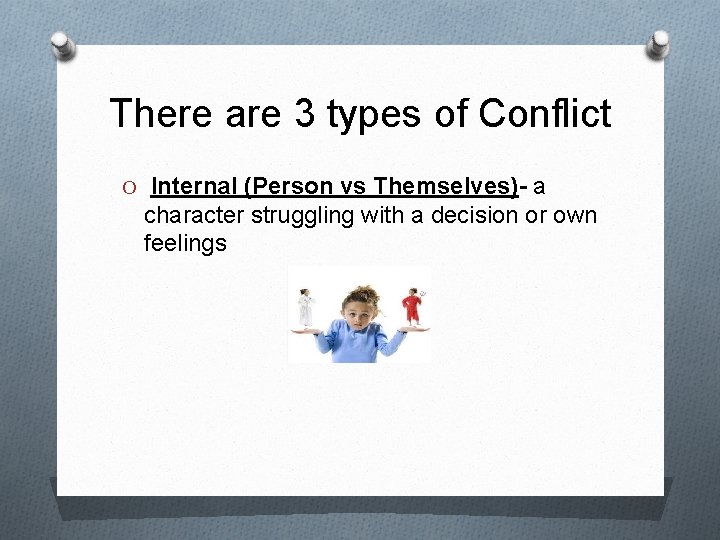
There are 3 types of Conflict O Internal (Person vs Themselves)- a character struggling with a decision or own feelings
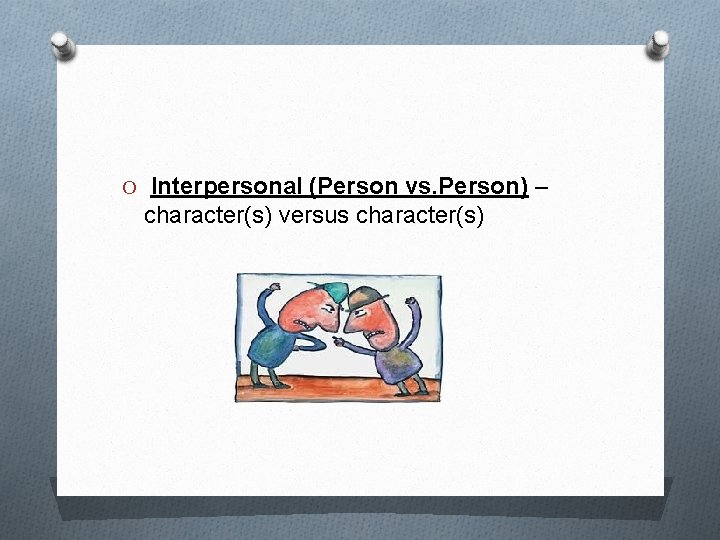
O Interpersonal (Person vs. Person) – character(s) versus character(s)
O External (Person vs. Nature) - a character struggling against the outside world (Person versus Storm)
Terms O Foreshadowing- hints about what is to come in a story. O Flashback- an episode in a story, which goes back to an earlier time. O Surprise ending-an ending where an event is both the climax and the resolution.
O Theme/message- the main idea, moral or message of a text, also known as the central insight.
O Literal meaning/language- when writing means exactly what it says.
O Figurative meaning/language-When writing is meant to be understood at a deeper level. Figures of speech such as simile, metaphor, personification and other techniques are used to create more vivid, interesting images.
O Imagery- language that appeals to the senses of sight, touch, taste, hearing and smell O Metaphor- a direct comparison. {The wind is a dancer} O Simile- a comparison using like or as. {He is as light as a feather}