
Short Run Aggregate Supply Practice The Short run





- Slides: 14
Short Run Aggregate Supply Practice The Short run aggregate supply (SRAS) curve shows the relationship between real GDP and the price level. This positive relationship exists because producers seek to maximize profits and production costs are inflexible in the short run.
Profit = selling price – production cost When the price level rises, but production costs stay the same, firms make more profit on each unit sold, so they increase the quantity that they produce. When the price level decreases, but production costs stay the same, firms make less profit on each unit sold, so they reduce the quantity that they produce.
Draw a correctly labeled SRAS Curve.
Draw a correctly labeled SRAS Curve. Price level SRAS Real GDP
The SRAS curve will shift as a result of changes in input prices (e. g. , nominal wages or oil prices) or productivity (e. g. , technological advances)
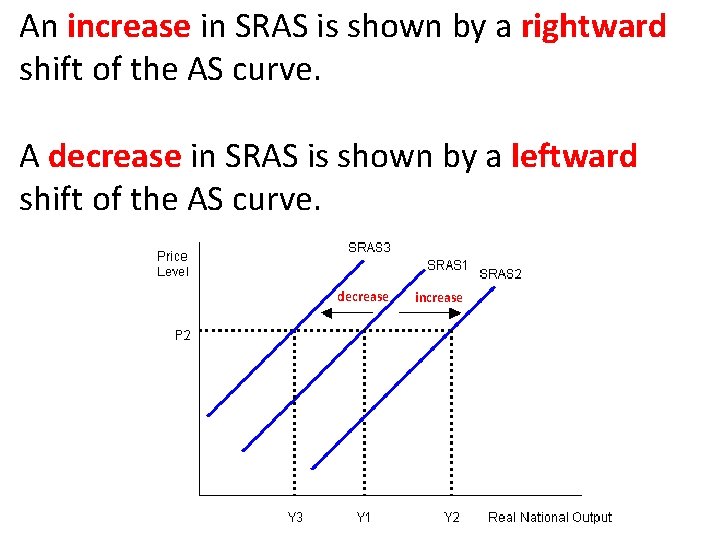
An increase in SRAS is shown by a rightward shift of the AS curve. A decrease in SRAS is shown by a leftward shift of the AS curve. decrease increase
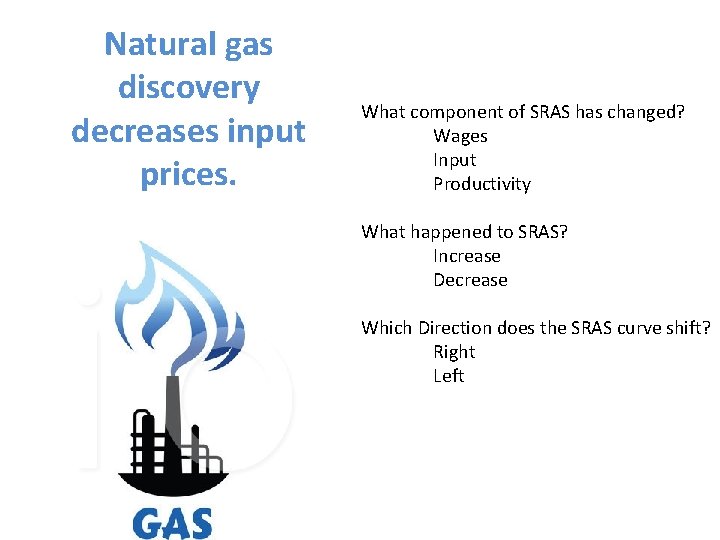
Natural gas discovery decreases input prices. What component of SRAS has changed? Wages Input Productivity What happened to SRAS? Increase Decrease Which Direction does the SRAS curve shift? Right Left
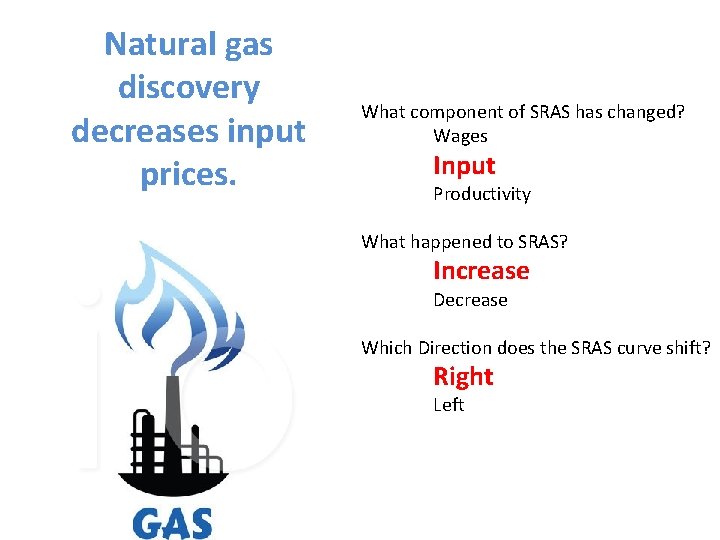
Natural gas discovery decreases input prices. What component of SRAS has changed? Wages Input Productivity What happened to SRAS? Increase Decrease Which Direction does the SRAS curve shift? Right Left
Alergy season hits and workers become less productive as they fight the symptoms What component of SRAS has changed? Wages Input Productivity What happened to SRAS? Increase Decrease Which Direction does the SRAS curve shift? Right Left
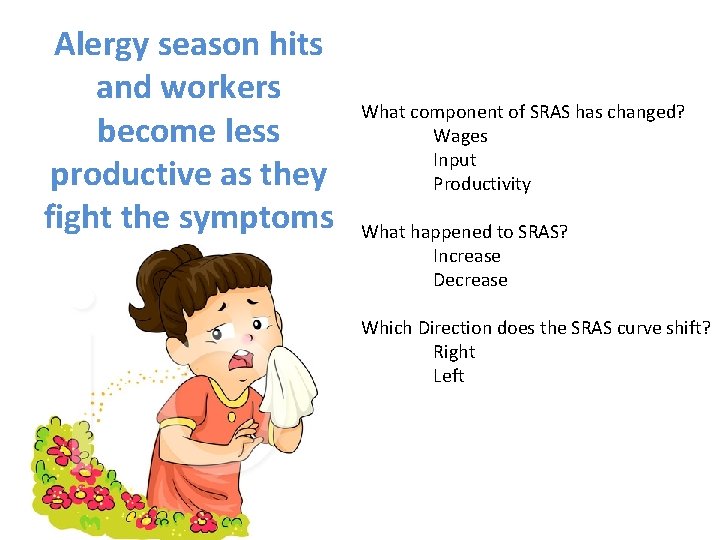
Alergy season hits and workers become less productive as they fight the symptoms What component of SRAS has changed? Wages Input Productivity What happened to SRAS? Increase Decrease Which Direction does the SRAS curve shift? Right Left
China enters a trade war and refuses to export steel to US companies What component of SRAS has changed? Wages Input Productivity What happened to SRAS? Increase Decrease Which Direction does the SRAS curve shift? Right Left
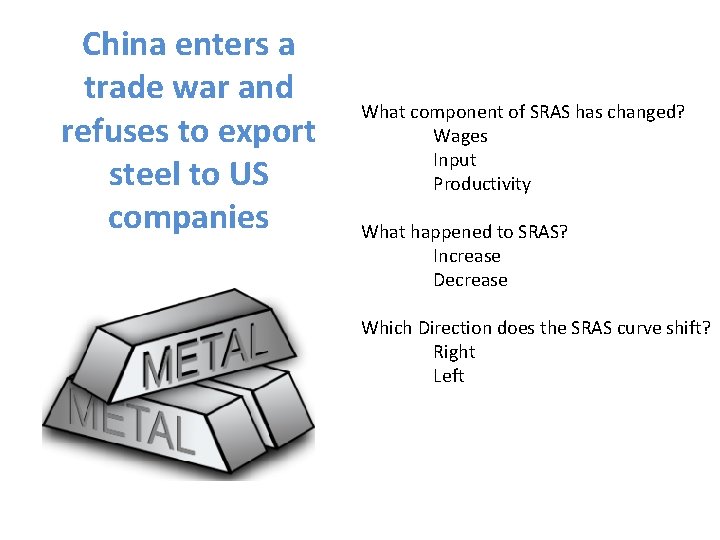
China enters a trade war and refuses to export steel to US companies What component of SRAS has changed? Wages Input Productivity What happened to SRAS? Increase Decrease Which Direction does the SRAS curve shift? Right Left
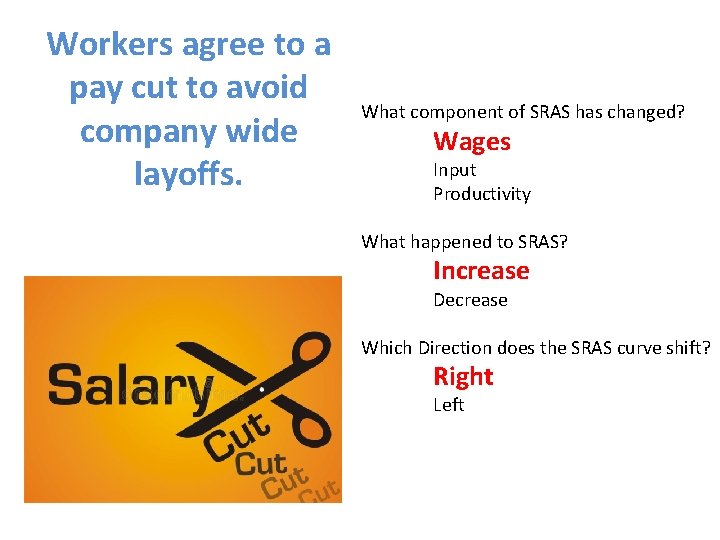
Workers agree to a pay cut to avoid company wide layoffs. What component of SRAS has changed? Wages Input Productivity What happened to SRAS? Increase Decrease Which Direction does the SRAS curve shift? Right Left
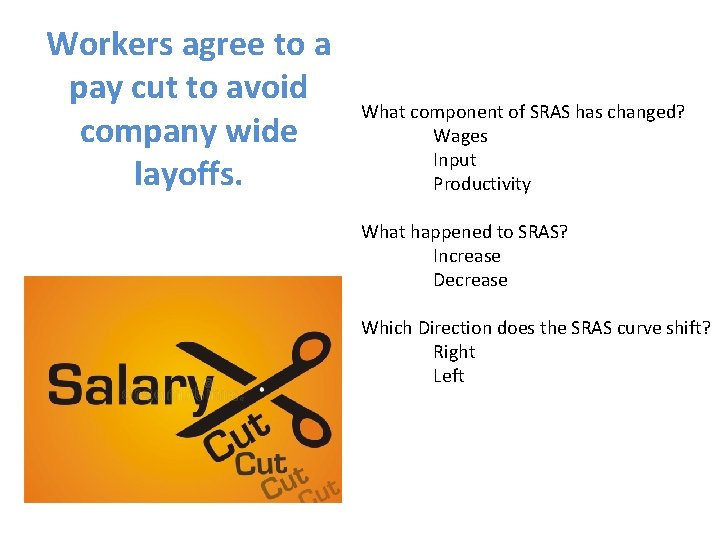
Workers agree to a pay cut to avoid company wide layoffs. What component of SRAS has changed? Wages Input Productivity What happened to SRAS? Increase Decrease Which Direction does the SRAS curve shift? Right Left