
Short Read Workshop Day 1 Experimental Design Example

- Slides: 16
Short Read Workshop Day 1 - Experimental Design Example 1: How to log in to vieques
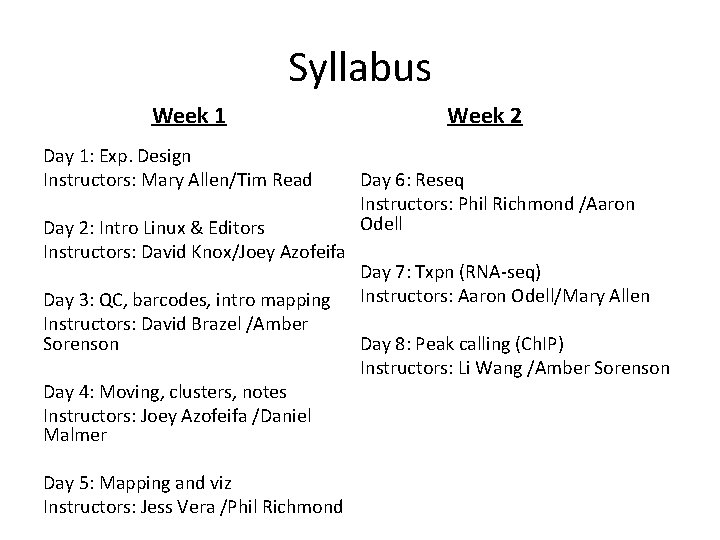
Syllabus Week 1 Day 1: Exp. Design Instructors: Mary Allen/Tim Read Day 2: Intro Linux & Editors Instructors: David Knox/Joey Azofeifa Day 3: QC, barcodes, intro mapping Instructors: David Brazel /Amber Sorenson Day 4: Moving, clusters, notes Instructors: Joey Azofeifa /Daniel Malmer Day 5: Mapping and viz Instructors: Jess Vera /Phil Richmond Week 2 Day 6: Reseq Instructors: Phil Richmond /Aaron Odell Day 7: Txpn (RNA-seq) Instructors: Aaron Odell/Mary Allen Day 8: Peak calling (Ch. IP) Instructors: Li Wang /Amber Sorenson
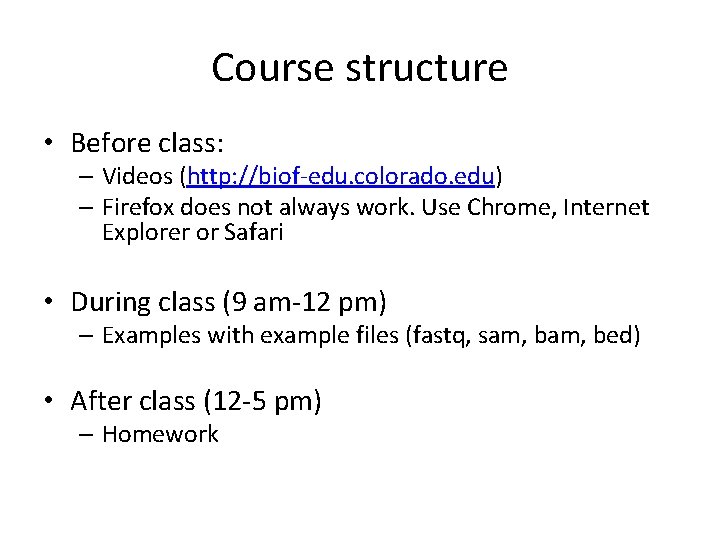
Course structure • Before class: – Videos (http: //biof-edu. colorado. edu) – Firefox does not always work. Use Chrome, Internet Explorer or Safari • During class (9 am-12 pm) – Examples with example files (fastq, sam, bed) • After class (12 -5 pm) – Homework
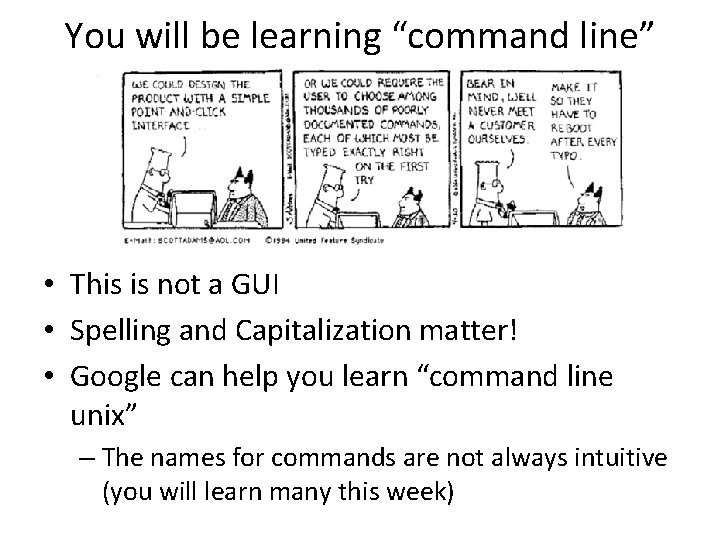
You will be learning “command line” • This is not a GUI • Spelling and Capitalization matter! • Google can help you learn “command line unix” – The names for commands are not always intuitive (you will learn many this week)
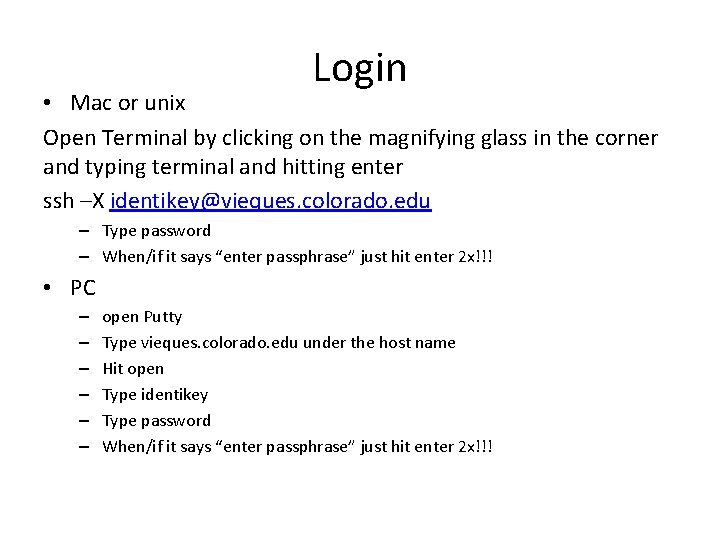
Login • Mac or unix Open Terminal by clicking on the magnifying glass in the corner and typing terminal and hitting enter ssh –X identikey@vieques. colorado. edu – Type password – When/if it says “enter passphrase” just hit enter 2 x!!! • PC – – – open Putty Type vieques. colorado. edu under the host name Hit open Type identikey Type password When/if it says “enter passphrase” just hit enter 2 x!!!
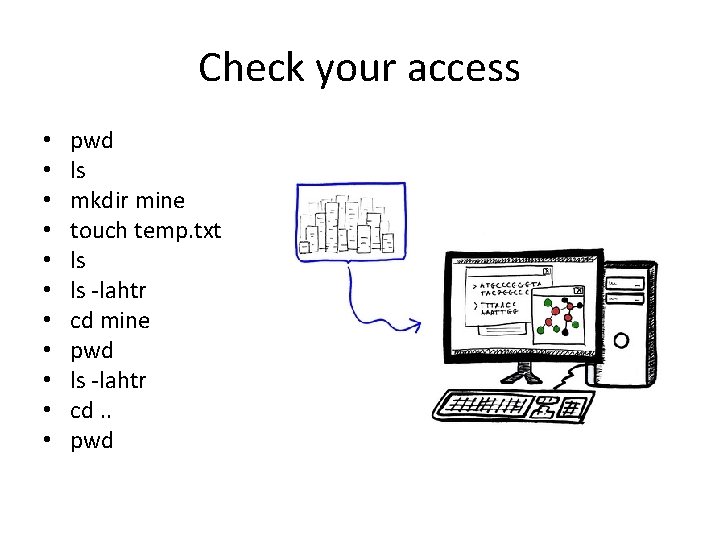
Check your access • • • pwd ls mkdir mine touch temp. txt ls ls -lahtr cd mine pwd ls -lahtr cd. . pwd
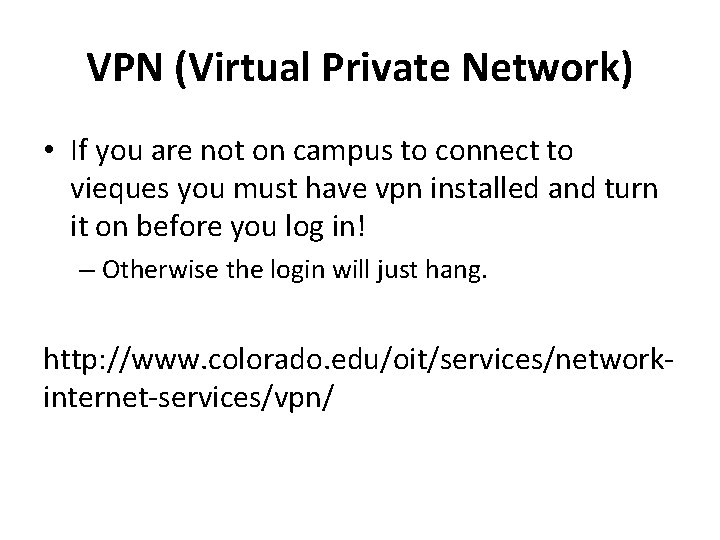
VPN (Virtual Private Network) • If you are not on campus to connect to vieques you must have vpn installed and turn it on before you log in! – Otherwise the login will just hang. http: //www. colorado. edu/oit/services/networkinternet-services/vpn/
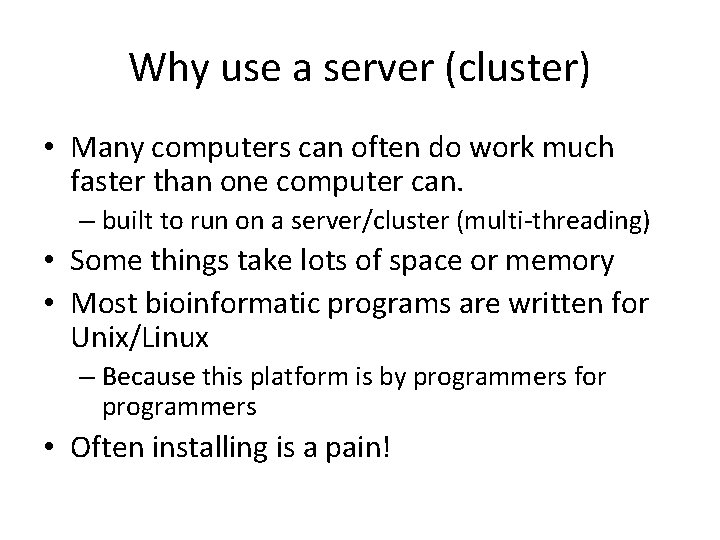
Why use a server (cluster) • Many computers can often do work much faster than one computer can. – built to run on a server/cluster (multi-threading) • Some things take lots of space or memory • Most bioinformatic programs are written for Unix/Linux – Because this platform is by programmers for programmers • Often installing is a pain!
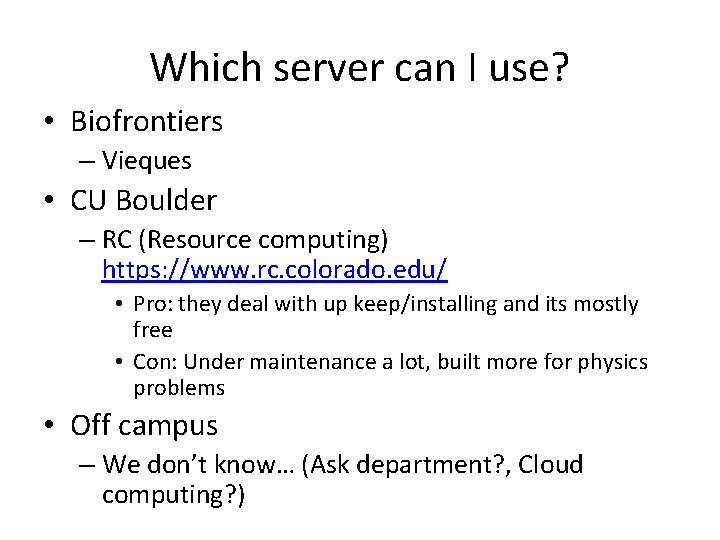
Which server can I use? • Biofrontiers – Vieques • CU Boulder – RC (Resource computing) https: //www. rc. colorado. edu/ • Pro: they deal with up keep/installing and its mostly free • Con: Under maintenance a lot, built more for physics problems • Off campus – We don’t know… (Ask department? , Cloud computing? )
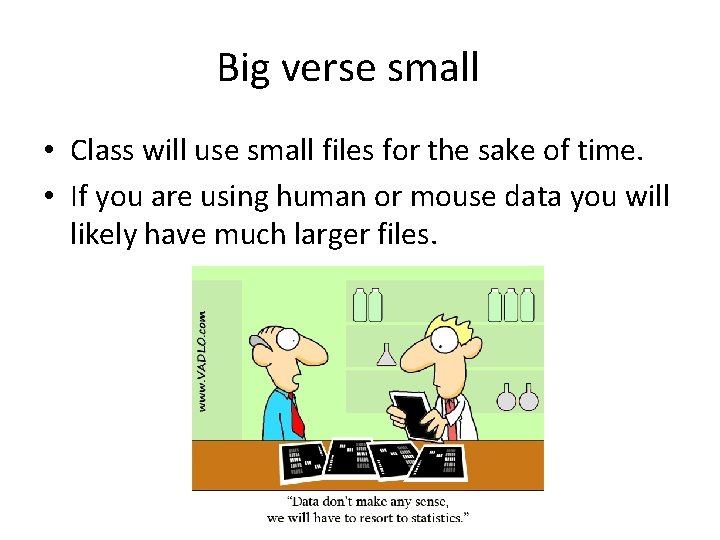
Big verse small • Class will use small files for the sake of time. • If you are using human or mouse data you will likely have much larger files.
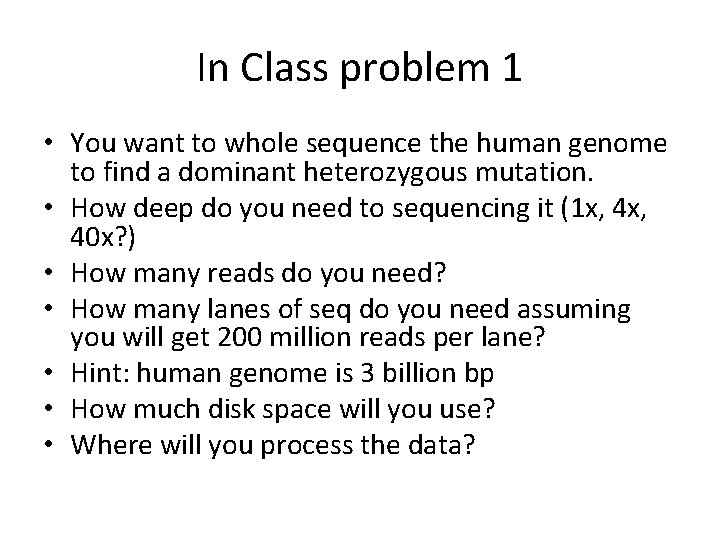
In Class problem 1 • You want to whole sequence the human genome to find a dominant heterozygous mutation. • How deep do you need to sequencing it (1 x, 4 x, 40 x? ) • How many reads do you need? • How many lanes of seq do you need assuming you will get 200 million reads per lane? • Hint: human genome is 3 billion bp • How much disk space will you use? • Where will you process the data?
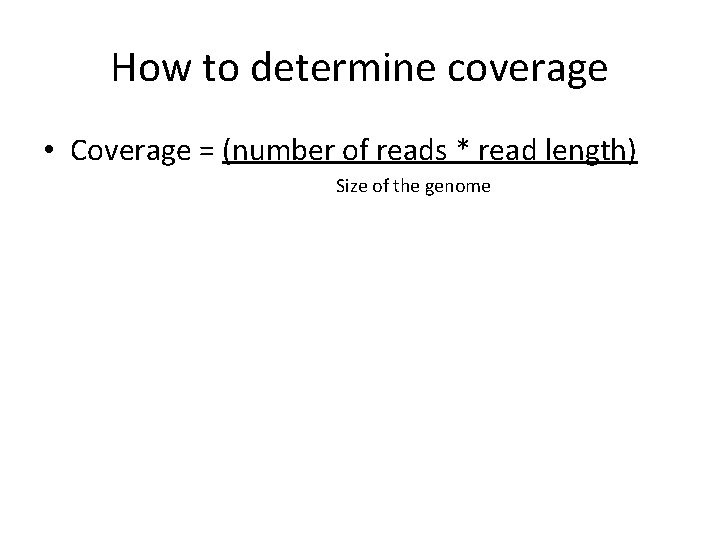
How to determine coverage • Coverage = (number of reads * read length) Size of the genome
In Class problem 2 • You are trying to sequence noncoding RNAs that are 100 bp long from penguins. • Should you use paired end or single end? • Should you use 50 bp or 100 bp? • Which RT would you use? • Which RT primer would you use?
In Class Problem 3 • You would like to Ch. IP-seq the transcription factor p 53.
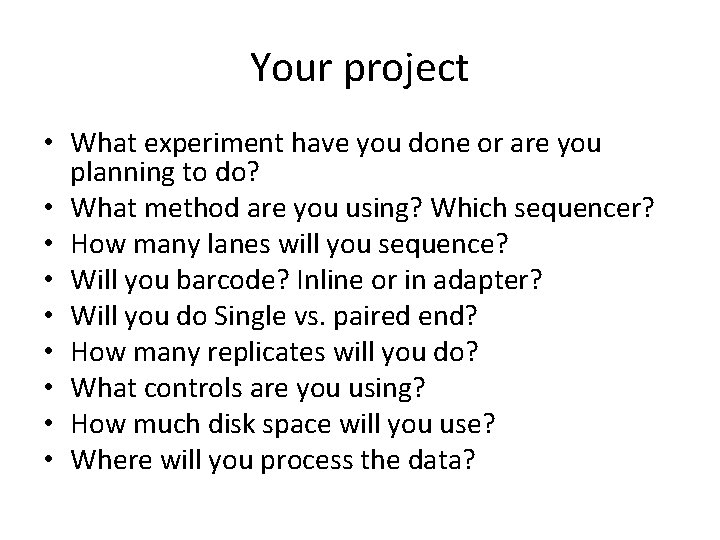
Your project • What experiment have you done or are you planning to do? • What method are you using? Which sequencer? • How many lanes will you sequence? • Will you barcode? Inline or in adapter? • Will you do Single vs. paired end? • How many replicates will you do? • What controls are you using? • How much disk space will you use? • Where will you process the data?