
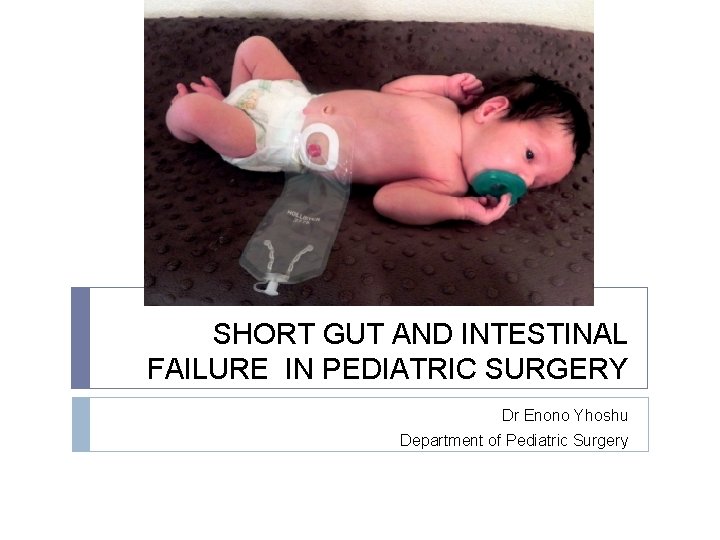
SHORT GUT AND INTESTINAL FAILURE IN PEDIATRIC SURGERY


- Slides: 17
SHORT GUT AND INTESTINAL FAILURE IN PEDIATRIC SURGERY Dr Enono Yhoshu Department of Pediatric Surgery
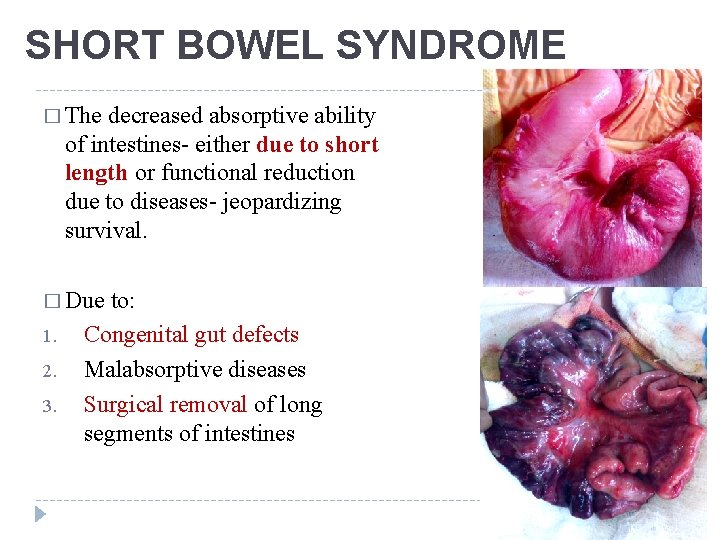
SHORT BOWEL SYNDROME � The decreased absorptive ability of intestines- either due to short length or functional reduction due to diseases- jeopardizing survival. � Due 1. 2. 3. to: Congenital gut defects Malabsorptive diseases Surgical removal of long segments of intestines
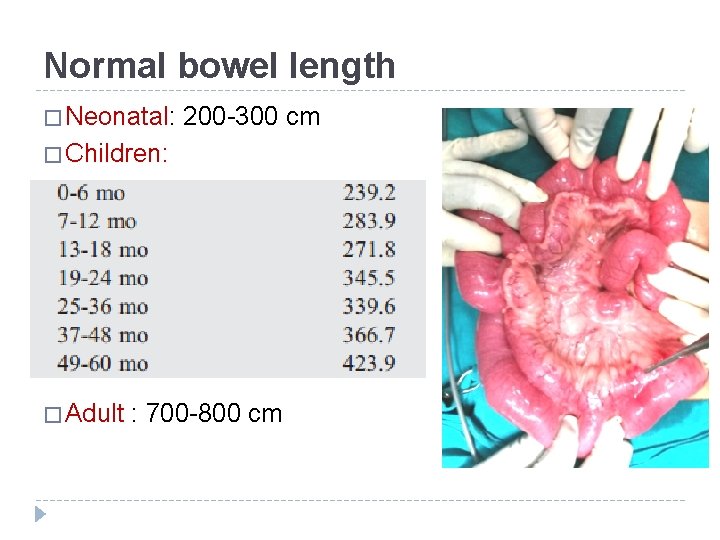
Normal bowel length � Neonatal: 200 -300 cm � Children: � Adult : 700 -800 cm
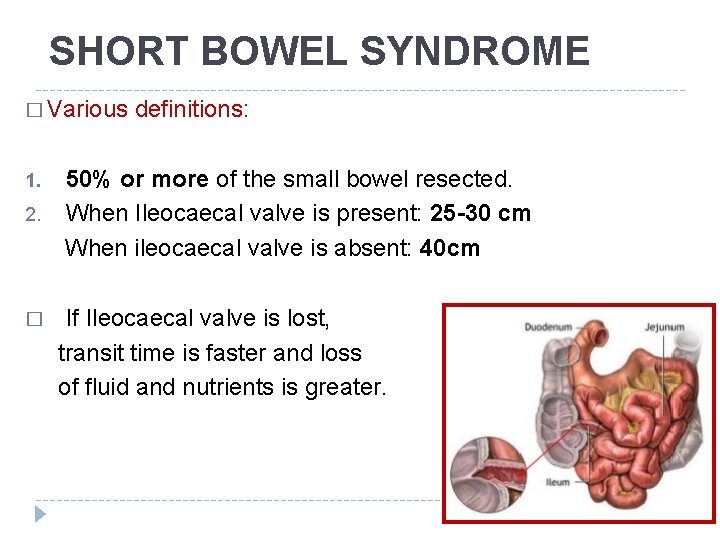
SHORT BOWEL SYNDROME � Various 1. 2. � definitions: 50% or more of the small bowel resected. When Ileocaecal valve is present: 25 -30 cm When ileocaecal valve is absent: 40 cm If Ileocaecal valve is lost, transit time is faster and loss of fluid and nutrients is greater.
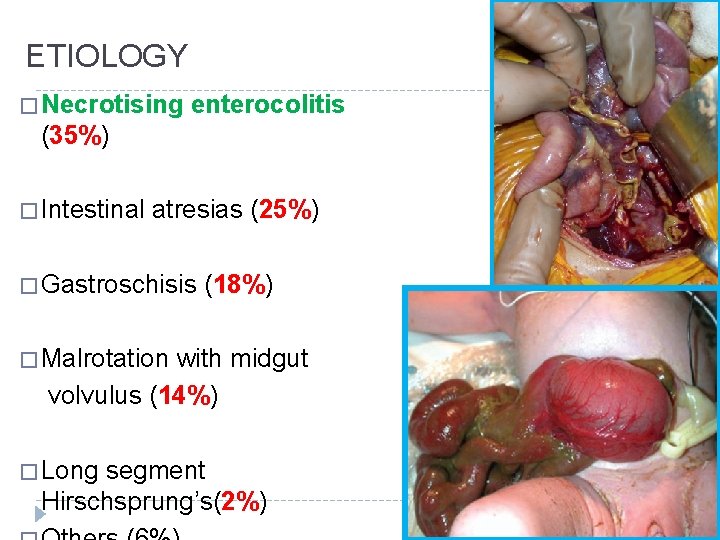
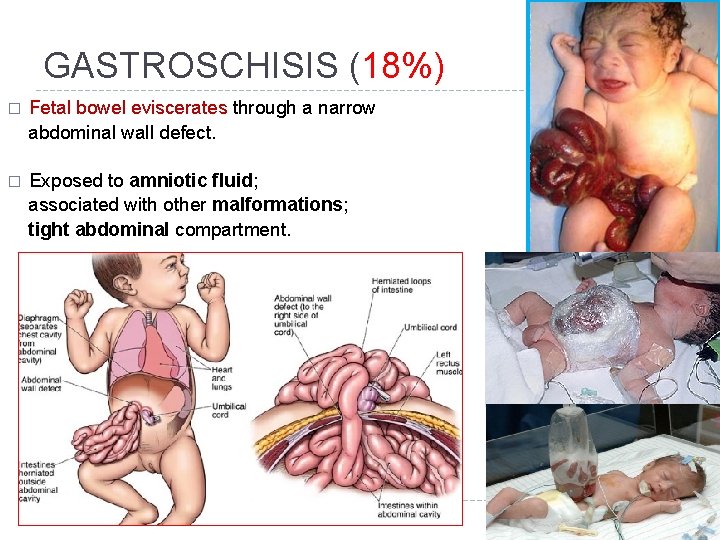
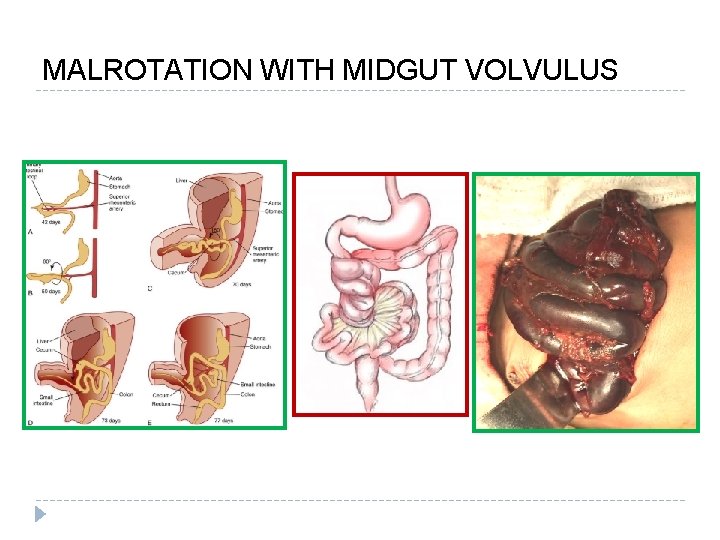
ETIOLOGY � Necrotising enterocolitis (35%) � Intestinal atresias (25%) � Gastroschisis (18%) � Malrotation with midgut volvulus (14%) � Long segment Hirschsprung’s(2%)
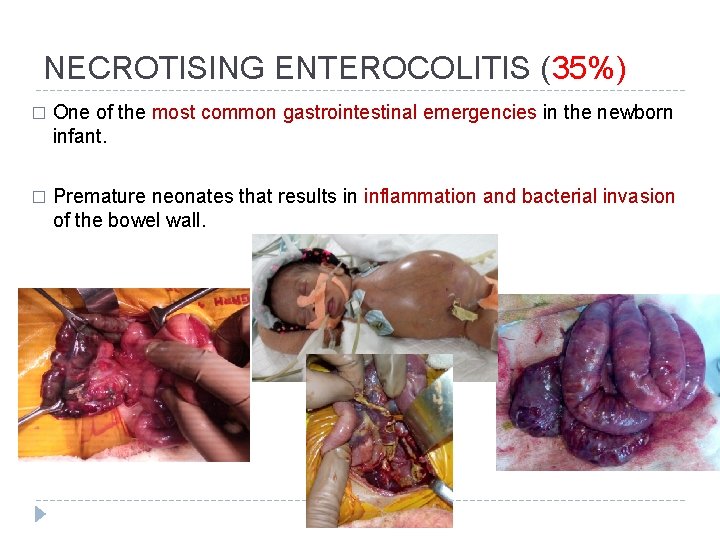
NECROTISING ENTEROCOLITIS (35%) � One of the most common gastrointestinal emergencies in the newborn infant. � Premature neonates that results in inflammation and bacterial invasion of the bowel wall.
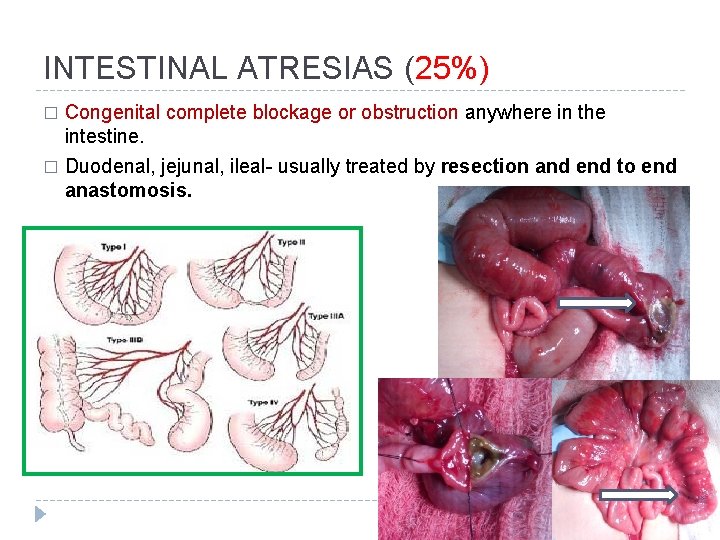
INTESTINAL ATRESIAS (25%) � Congenital complete blockage or obstruction anywhere in the intestine. � Duodenal, jejunal, ileal- usually treated by resection and end to end anastomosis.
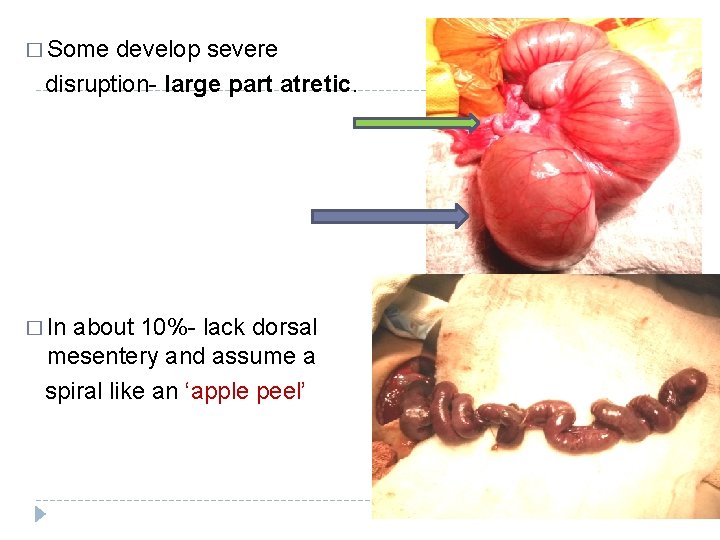
� Some develop severe disruption- large part atretic. � In about 10%- lack dorsal mesentery and assume a spiral like an ‘apple peel’
GASTROSCHISIS (18%) � Fetal bowel eviscerates through a narrow abdominal wall defect. � Exposed to amniotic fluid; associated with other malformations; tight abdominal compartment.
MALROTATION WITH MIDGUT VOLVULUS
MANAGEMENT � Requires a multi-disciplinary approach that includes - neonatologists, - gastroenterologists, - surgeons, - nutritionists, - pharmacists, - stomal therapists, - nurses, etc.
SURGICAL MANAGEMENT 1. 2. 3. Bowel conservation at initial presentation. Bowel lengthening surgeries. Intestinal transplantation.
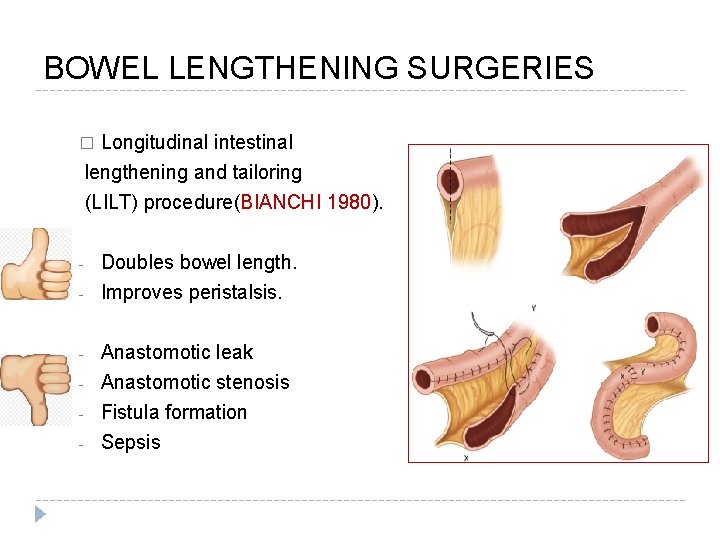
BOWEL LENGTHENING SURGERIES Longitudinal intestinal lengthening and tailoring � (LILT) procedure(BIANCHI 1980). - Doubles bowel length. Improves peristalsis. - Anastomotic leak - Anastomotic stenosis Fistula formation Sepsis - -
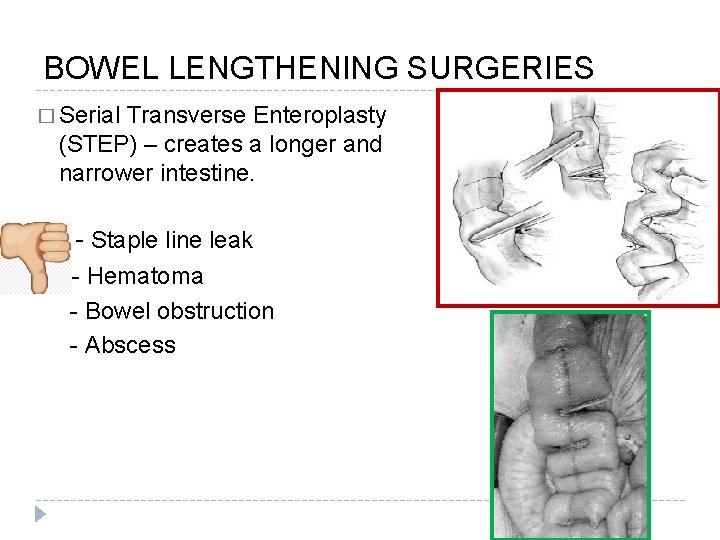
BOWEL LENGTHENING SURGERIES � Serial Transverse Enteroplasty (STEP) – creates a longer and narrower intestine. �- - Staple line leak � - Hematoma - Bowel obstruction - Abscess
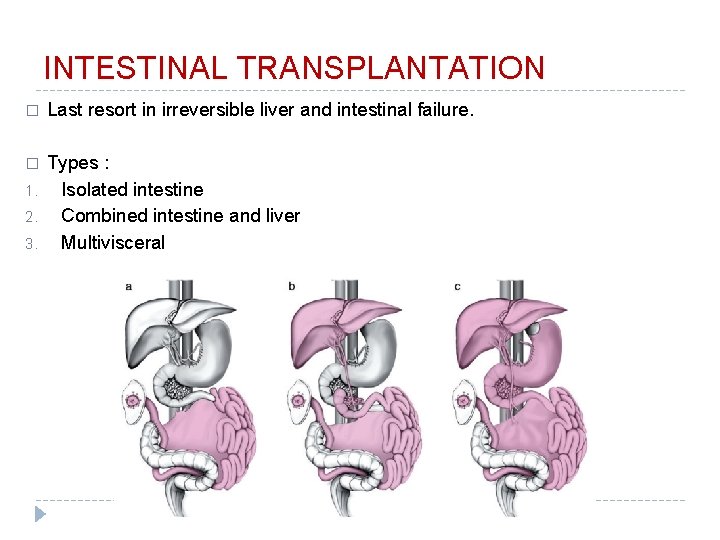
INTESTINAL TRANSPLANTATION � Last resort in irreversible liver and intestinal failure. � Types : Isolated intestine Combined intestine and liver Multivisceral 1. 2. 3.
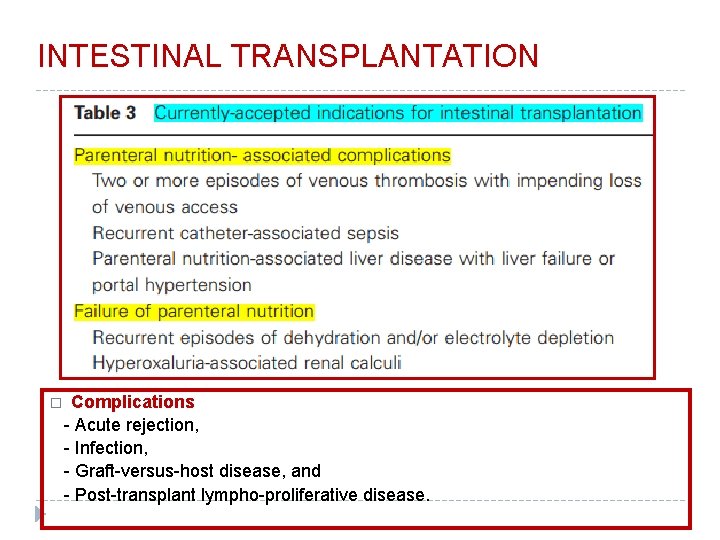
INTESTINAL TRANSPLANTATION � Complications - Acute rejection, - Infection, - Graft-versus-host disease, and - Post-transplant lympho-proliferative disease.
THANK YOU