
ShoreZone Processes and Landforms Shoreline demarcation between land
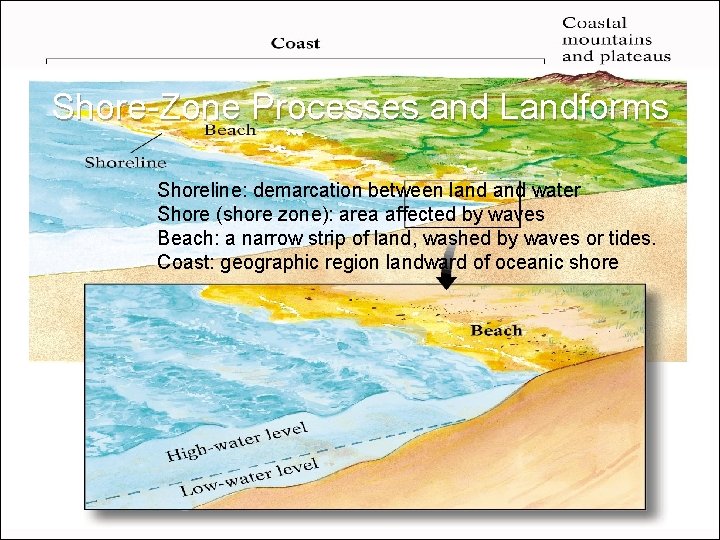
Shore-Zone Processes and Landforms Shoreline: demarcation between land water Shore (shore zone): area affected by waves Beach: a narrow strip of land, washed by waves or tides. Coast: geographic region landward of oceanic shore
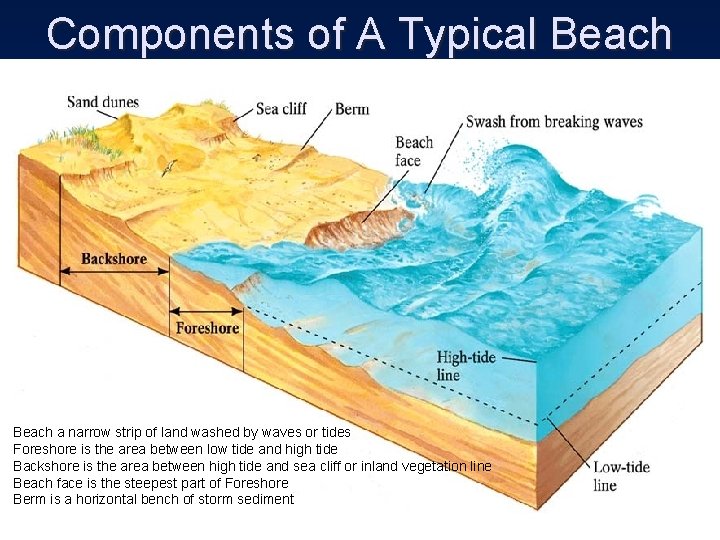
Components of A Typical Beach a narrow strip of land washed by waves or tides Foreshore is the area between low tide and high tide Backshore is the area between high tide and sea cliff or inland vegetation line Beach face is the steepest part of Foreshore Berm is a horizontal bench of storm sediment
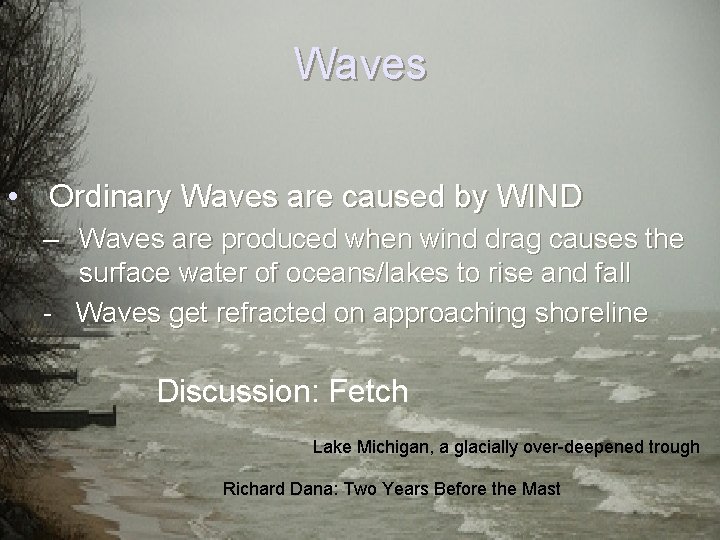
Waves • Ordinary Waves are caused by WIND – Waves are produced when wind drag causes the surface water of oceans/lakes to rise and fall - Waves get refracted on approaching shoreline Discussion: Fetch Lake Michigan, a glacially over-deepened trough Richard Dana: Two Years Before the Mast
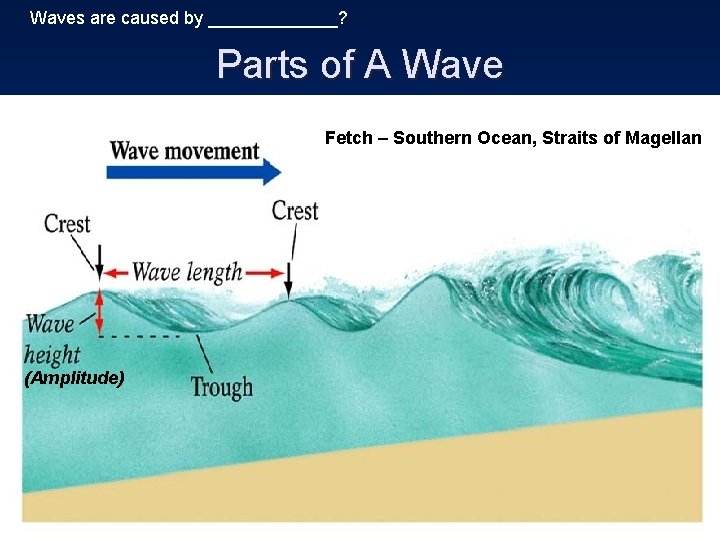
Waves are caused by _______? Parts of A Wave Fetch – Southern Ocean, Straits of Magellan (Amplitude)
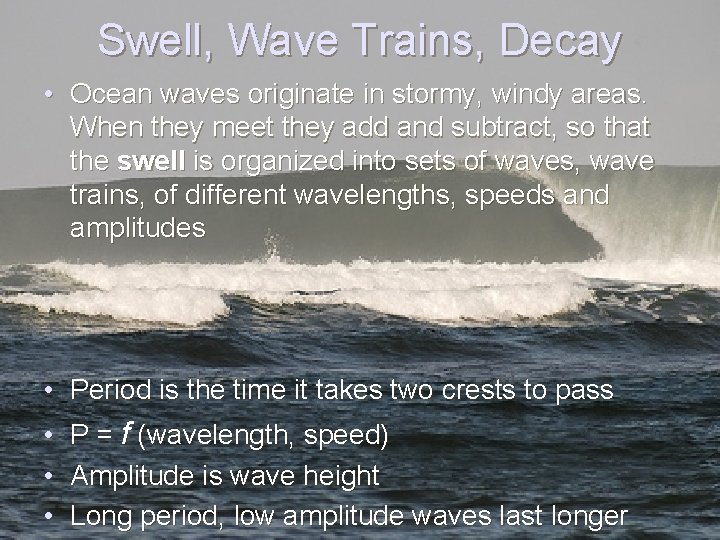
Swell, Wave Trains, Decay • Ocean waves originate in stormy, windy areas. When they meet they add and subtract, so that the swell is organized into sets of waves, wave trains, of different wavelengths, speeds and amplitudes • Period is the time it takes two crests to pass • • • P = f (wavelength, speed) Amplitude is wave height Long period, low amplitude waves last longer
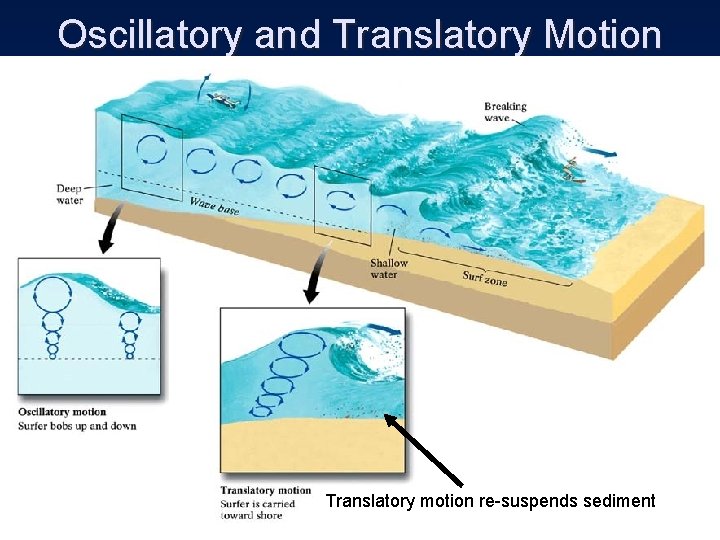
Oscillatory and Translatory Motion Translatory motion re-suspends sediment
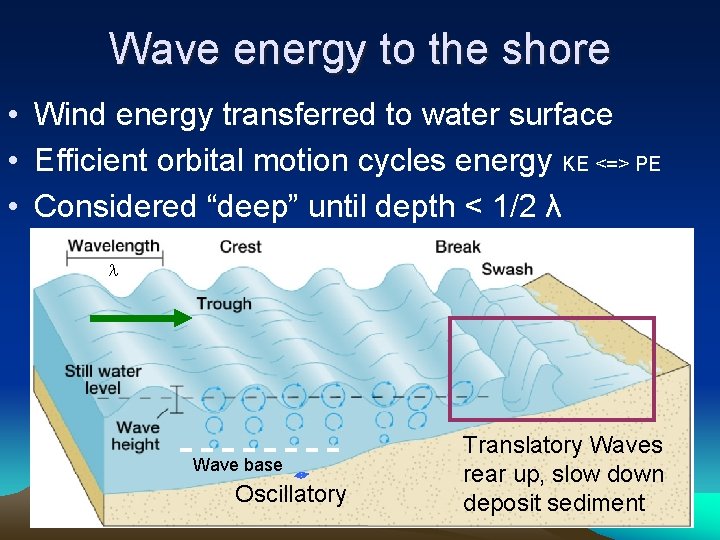
Wave energy to the shore • Wind energy transferred to water surface • Efficient orbital motion cycles energy KE <=> PE • Considered “deep” until depth < 1/2 λ l Wave base Oscillatory Translatory Waves rear up, slow down deposit sediment
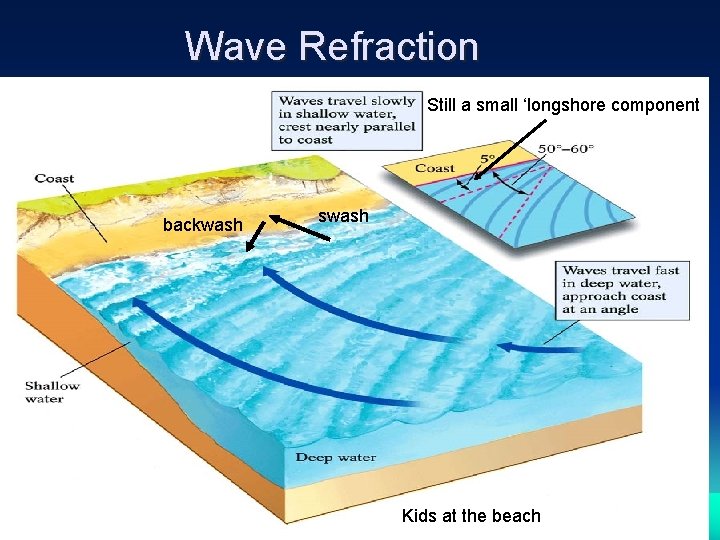
Wave Refraction Still a small ‘longshore component backwash swash Kids at the beach
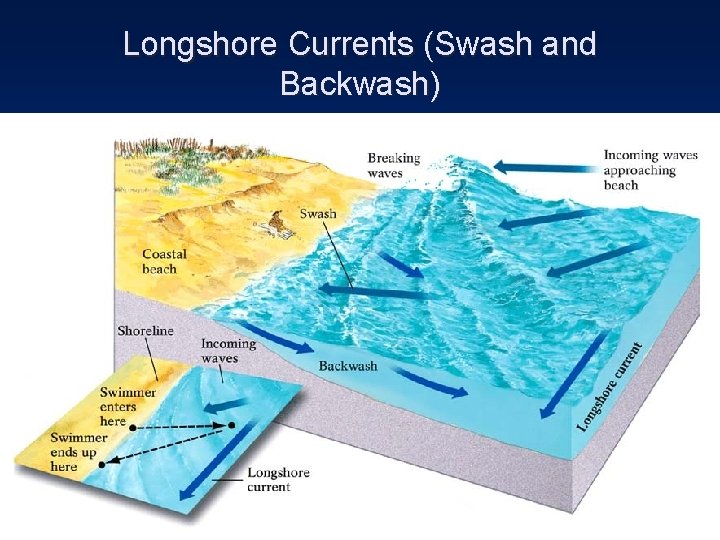
Longshore Currents (Swash and Backwash)
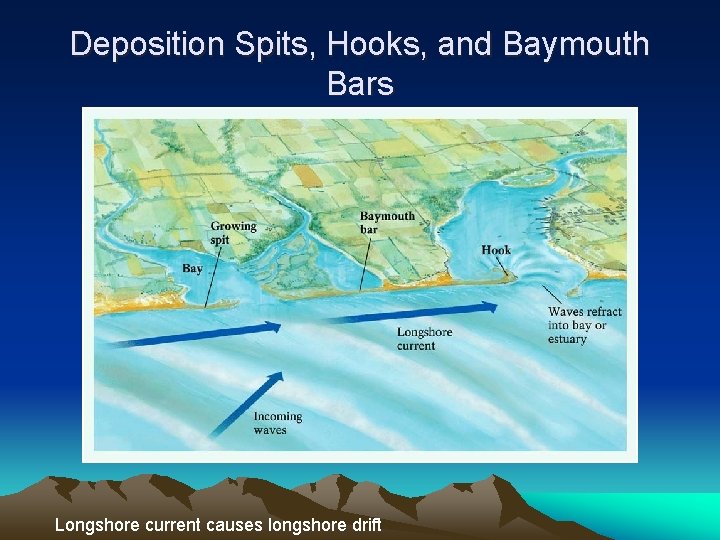
Deposition Spits, Hooks, and Baymouth Bars Longshore current causes longshore drift

Hooks: landward curve of spits • The origin of hooks has many theories • Ocean wave refraction from opposite shore of Baymouth • Onshore storm surge from Hurricanes • Strong onshore winds hurricanes & Nor'easters • Tidal: High tide carries sediment into bay, deposits new sediment at higher elevations. Low tide water level lower; ebb flow resuspends only the portion deposited in deep water: high deposits safe
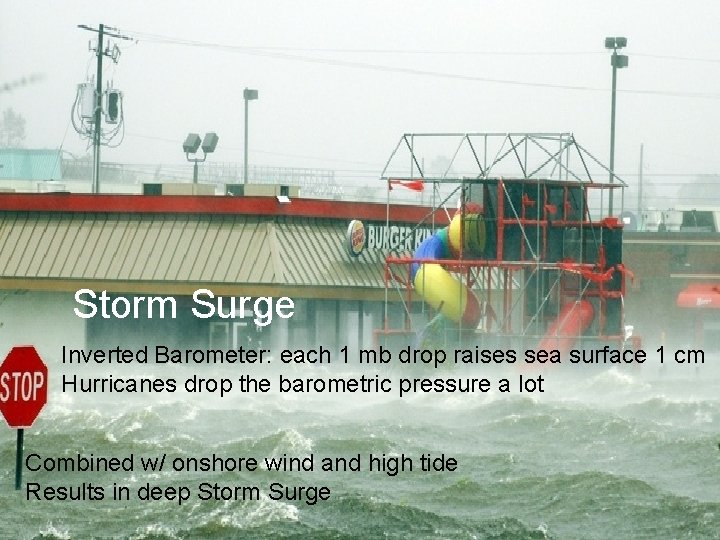
Storm Surge Inverted Barometer: each 1 mb drop raises sea surface 1 cm Hurricanes drop the barometric pressure a lot Combined w/ onshore wind and high tide Results in deep Storm Surge
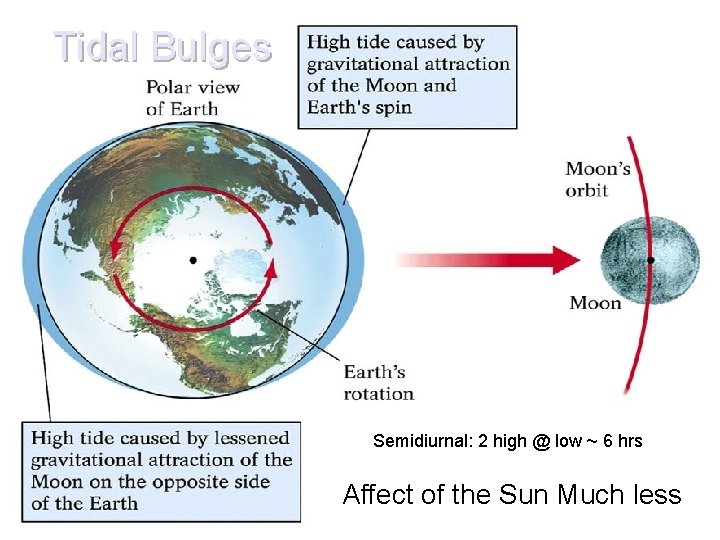
Tidal Bulges Semidiurnal: 2 high @ low ~ 6 hrs Affect of the Sun Much less
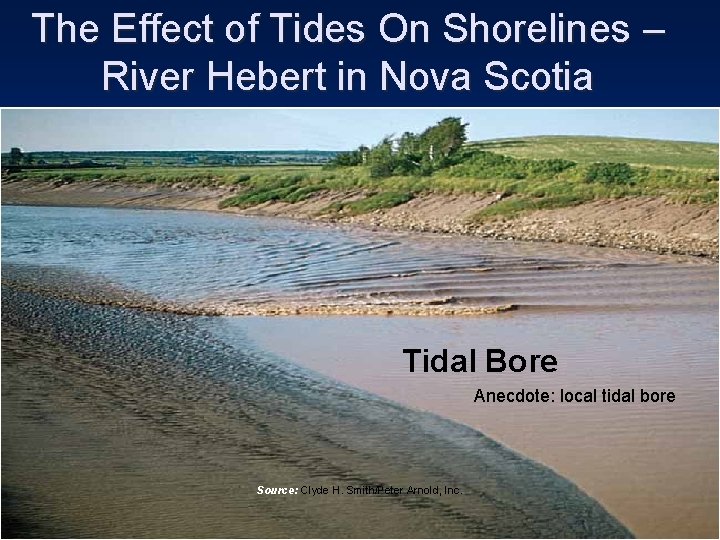
The Effect of Tides On Shorelines – River Hebert in Nova Scotia Tidal Bore Anecdote: local tidal bore Source: Clyde H. Smith/Peter Arnold, Inc.
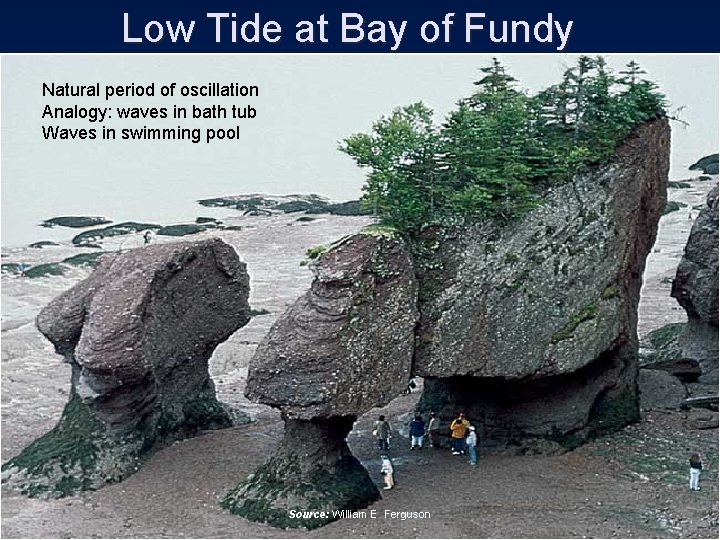
Low Tide at Bay of Fundy Natural period of oscillation Analogy: waves in bath tub Waves in swimming pool Source: William E. Ferguson
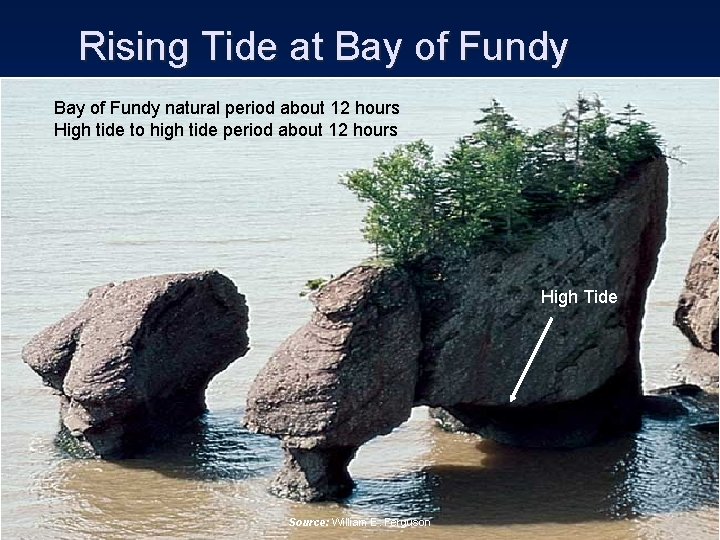
Rising Tide at Bay of Fundy natural period about 12 hours High tide to high tide period about 12 hours High Tide Source: William E. Ferguson
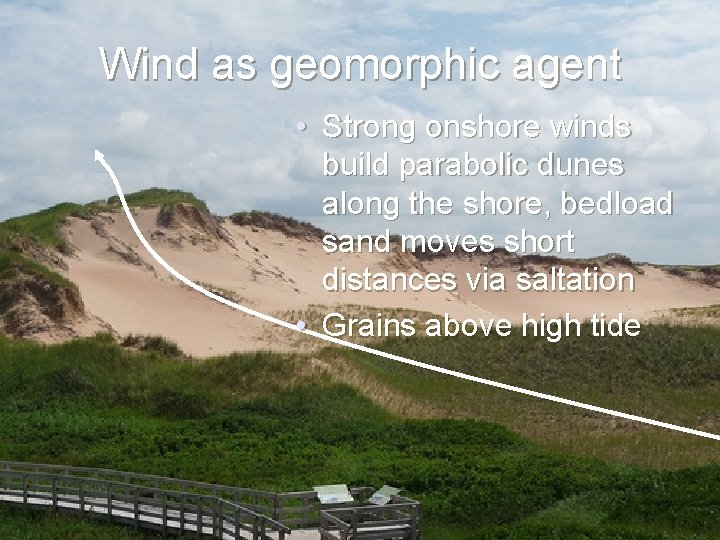
Wind as geomorphic agent • Strong onshore winds build parabolic dunes along the shore, bedload sand moves short distances via saltation • Grains above high tide
Primary Coasts • shaped by non-marine processes, by changes in the land form. • in much the same condition as it was when sea level was stabilized after the last ice age • Primary coasts are created by erosion, deposition, or tectonic activity • were formed as the sea level rose during the last 18, 000 years, submerging river and glacial valleys to form bays and fjords. • An example of a primary coast is a river delta, which forms when a river deposits soil and other material as it enters the sea. BUT, if the delta is swept away, a secondary coast is created.
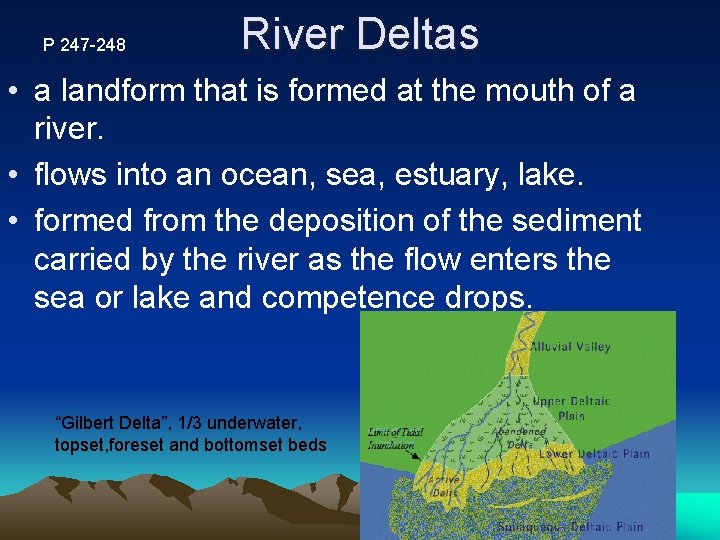
P 247 -248 River Deltas • a landform that is formed at the mouth of a river. • flows into an ocean, sea, estuary, lake. • formed from the deposition of the sediment carried by the river as the flow enters the sea or lake and competence drops. “Gilbert Delta”, 1/3 underwater, topset, foreset and bottomset beds

Wave-dominated Deltas • much of the sediment emanating from the river mouth is deflected along the coast line by longshore currents, forming spits, barrier bars and lagoons, etc. • Deltas of this form, such as the Nile Delta, tend to have a characteristic delta shape D.

Tide-dominated Deltas • Strong Tidal influence • Ebb and flow of tides distributes sediment offshore, much of delta is underwater • Distributaries become trumpet-shaped Mississippi Delta Ganges Delta
Secondary Coasts • produced by marine processes, such as the action of the sea or by creatures that live in it. • Secondary coastlines include sea cliffs, barrier islands, mud flats, coral reefs, mangrove swamps and salt marshes.
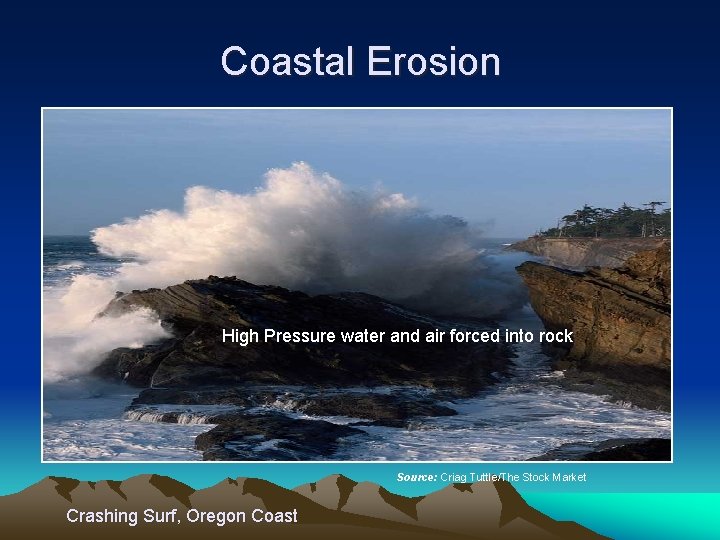
Coastal Erosion High Pressure water and air forced into rock Source: Criag Tuttle/The Stock Market Crashing Surf, Oregon Coast

The role of beach slope • A steep slope is easier to erode, a gentle slope does not erode rapidly More of the waves energy is directed perpendicular to a steep slope
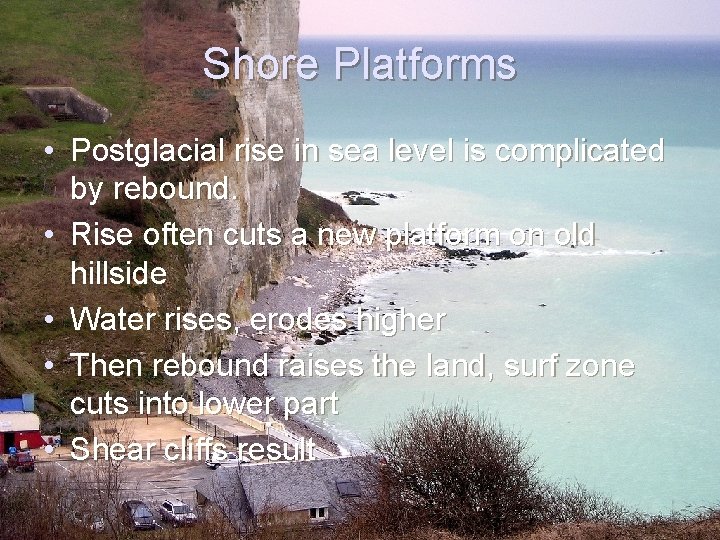
Shore Platforms • Postglacial rise in sea level is complicated by rebound. • Rise often cuts a new platform on old hillside • Water rises, erodes higher • Then rebound raises the land, surf zone cuts into lower part • Shear cliffs result
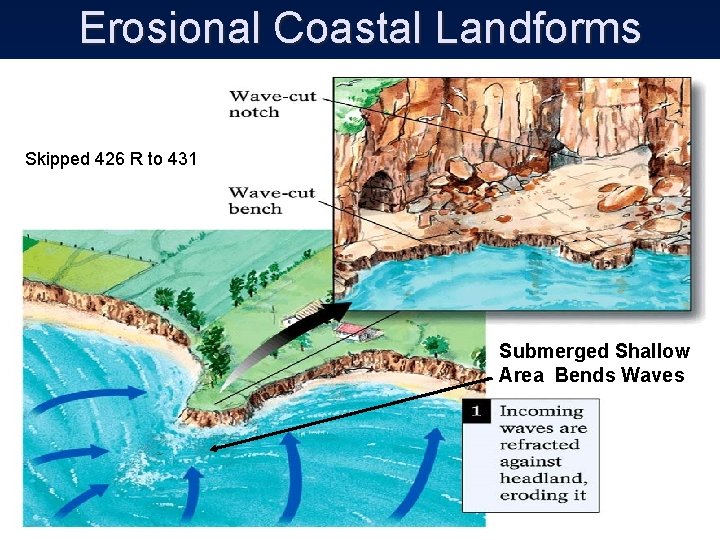
Erosional Coastal Landforms Skipped 426 R to 431 Submerged Shallow Area Bends Waves
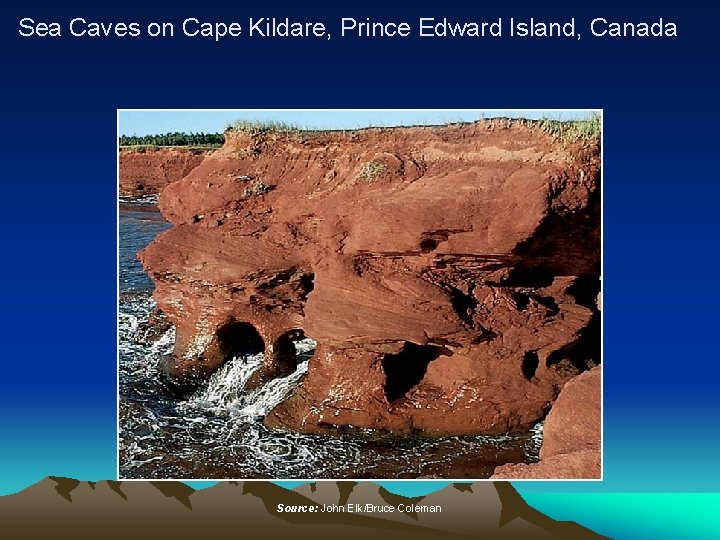
Sea Caves on Cape Kildare, Prince Edward Island, Canada Source: John Elk/Bruce Coleman
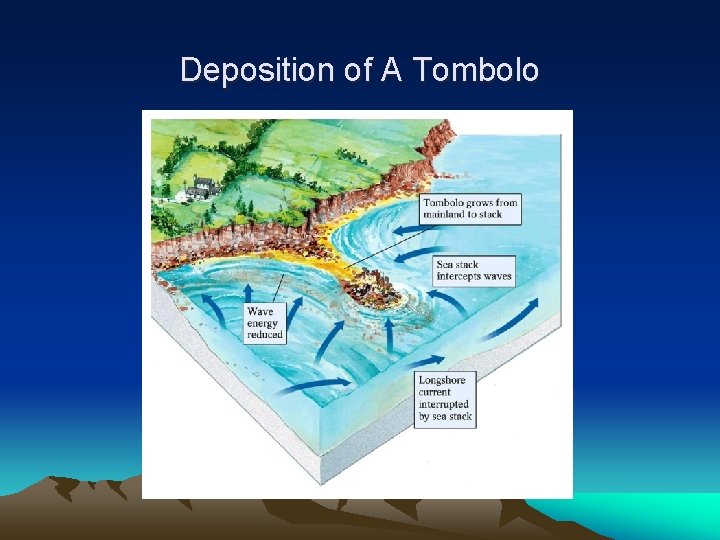
Deposition of A Tombolo
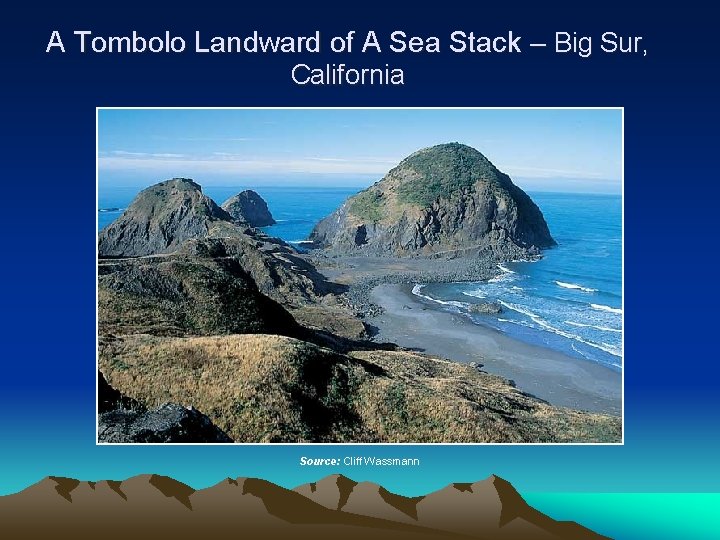
A Tombolo Landward of A Sea Stack – Big Sur, California Source: Cliff Wassmann
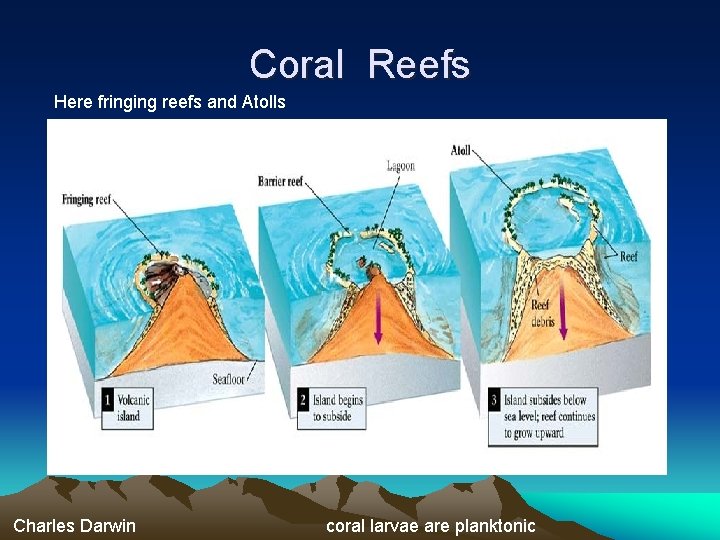
Coral Reefs Here fringing reefs and Atolls Charles Darwin coral larvae are planktonic
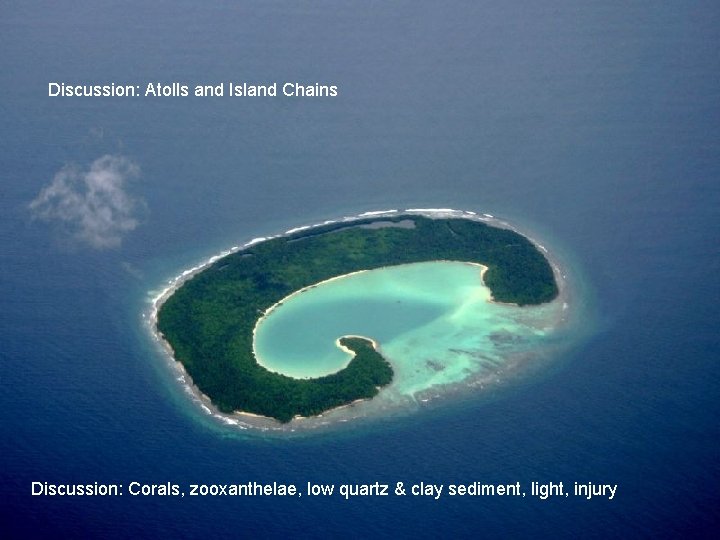
Discussion: Atolls and Island Chains Discussion: Corals, zooxanthelae, low quartz & clay sediment, light, injury
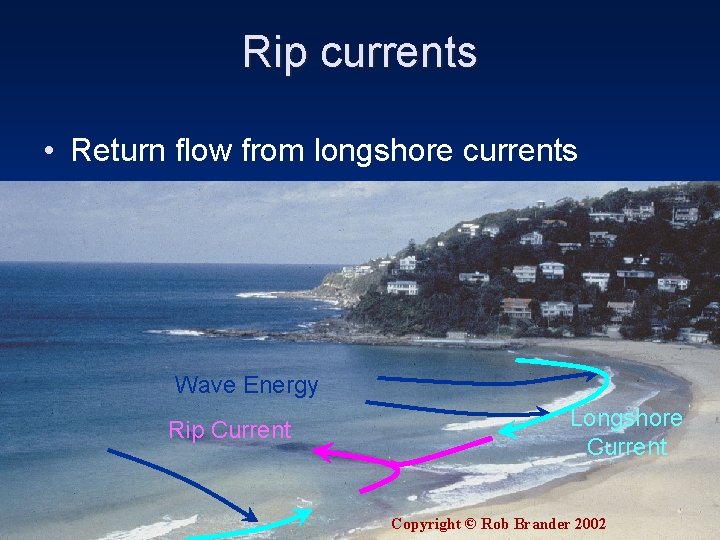
Rip currents • Return flow from longshore currents Wave Energy Rip Current Longshore Current Copyright © Rob Brander 2002
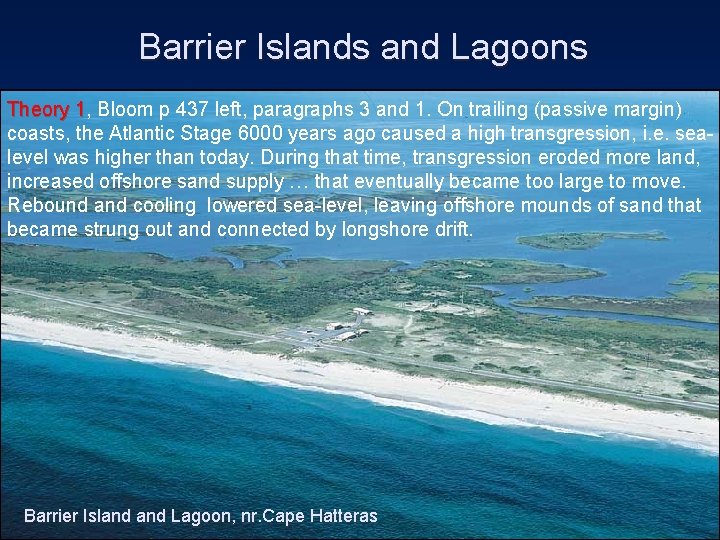
Barrier Islands and Lagoons Theory 1, 1 Bloom p 437 left, paragraphs 3 and 1. On trailing (passive margin) coasts, the Atlantic Stage 6000 years ago caused a high transgression, i. e. sealevel was higher than today. During that time, transgression eroded more land, increased offshore sand supply … that eventually became too large to move. Rebound and cooling lowered sea-level, leaving offshore mounds of sand that became strung out and connected by longshore drift. Source: Breck P. Kent Barrier Island Lagoon, nr. Cape Hatteras
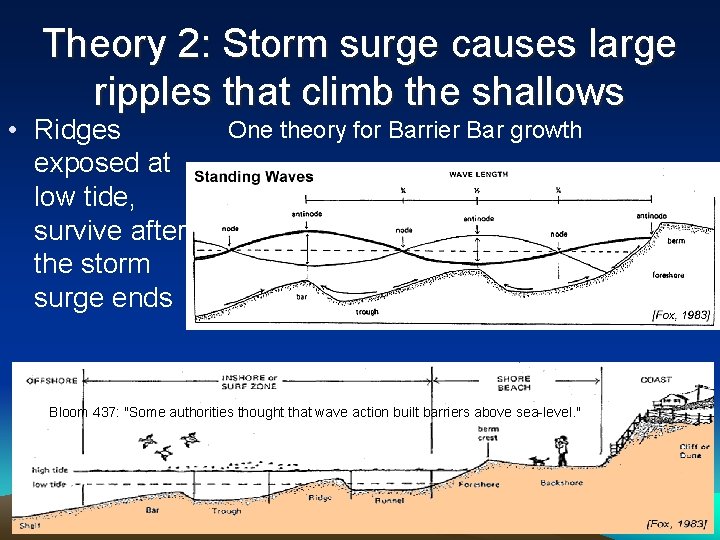
Theory 2: Storm surge causes large ripples that climb the shallows • Ridges exposed at low tide, survive after the storm surge ends One theory for Barrier Bar growth Bloom 437: "Some authorities thought that wave action built barriers above sea-level. "
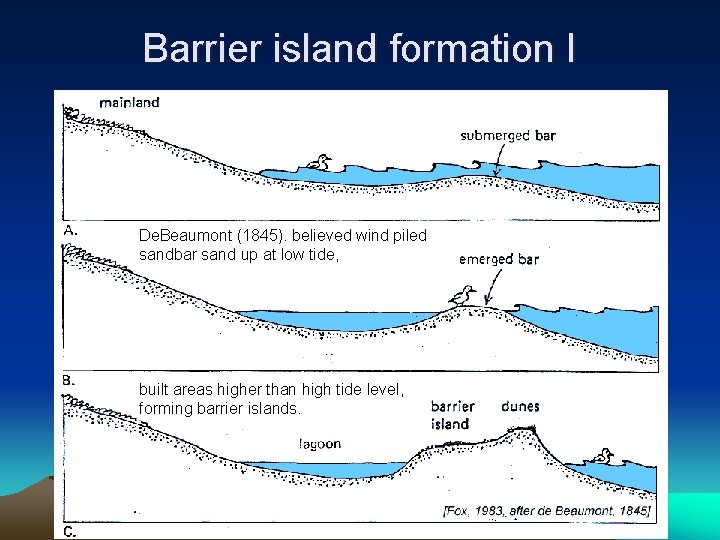
Barrier island formation I De. Beaumont (1845). believed wind piled sandbar sand up at low tide, built areas higher than high tide level, forming barrier islands.
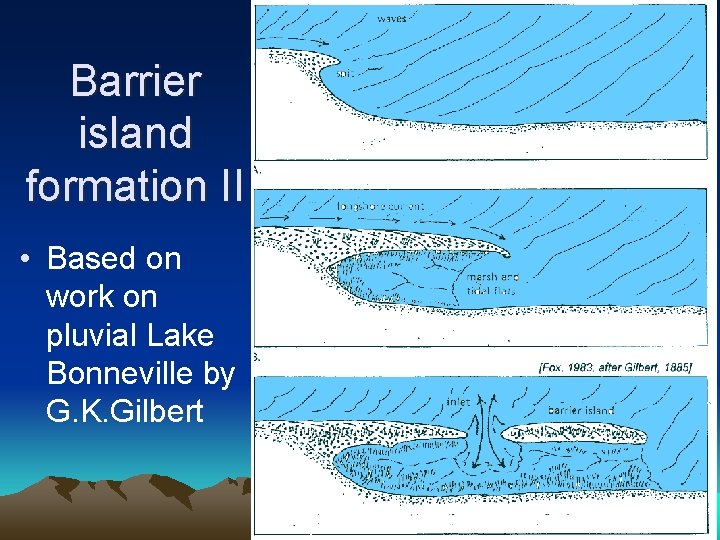
Barrier island formation II • Based on work on pluvial Lake Bonneville by G. K. Gilbert
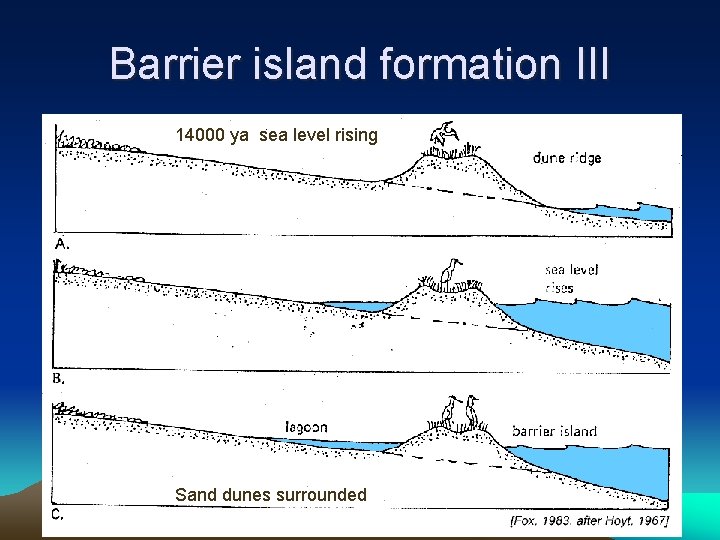
Barrier island formation III 14000 ya sea level rising Sand dunes surrounded
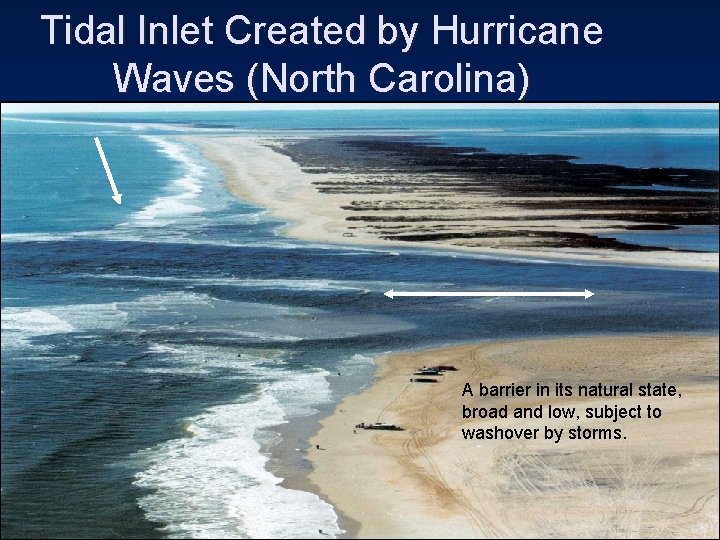
Tidal Inlet Created by Hurricane Waves (North Carolina) A barrier in its natural state, broad and low, subject to washover by storms. Source: Associated Press/Raleigh News & Observer, Chris Seward
Why are lagoons muddy? • In seawater, clay flocculates into round bunches, heavier, settles in slow water • Bloom p. 439 (paraphrased): Clay along shore suspended, carried into lagoon by high tide. Lagoons are shallow, so mud can settle quickly. • Fraction falls and sticks in lagoon, rest carried out to ocean again, where water is deep • Most offshore mud bunches still suspended next incoming tide, another chance to settle out and stick to the lagoon bottom.
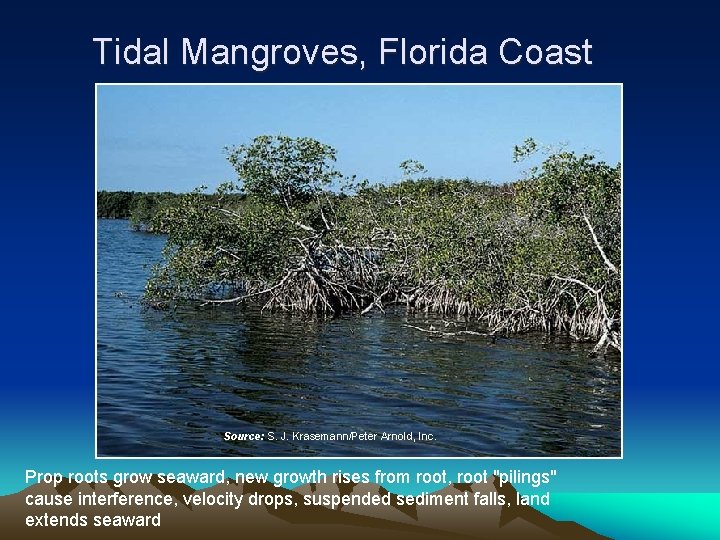
Tidal Mangroves, Florida Coast Source: S. J. Krasemann/Peter Arnold, Inc. Prop roots grow seaward, new growth rises from root, root "pilings" cause interference, velocity drops, suspended sediment falls, land extends seaward
- Slides: 40