
Shop Safety Personal Safety Eye protection Clothing Shoes
- Slides: 18
Shop Safety
Personal Safety • • Eye protection Clothing Shoes Gloves Ear protection Hair and jewelry Lifting and carrying Other personal safety warnings
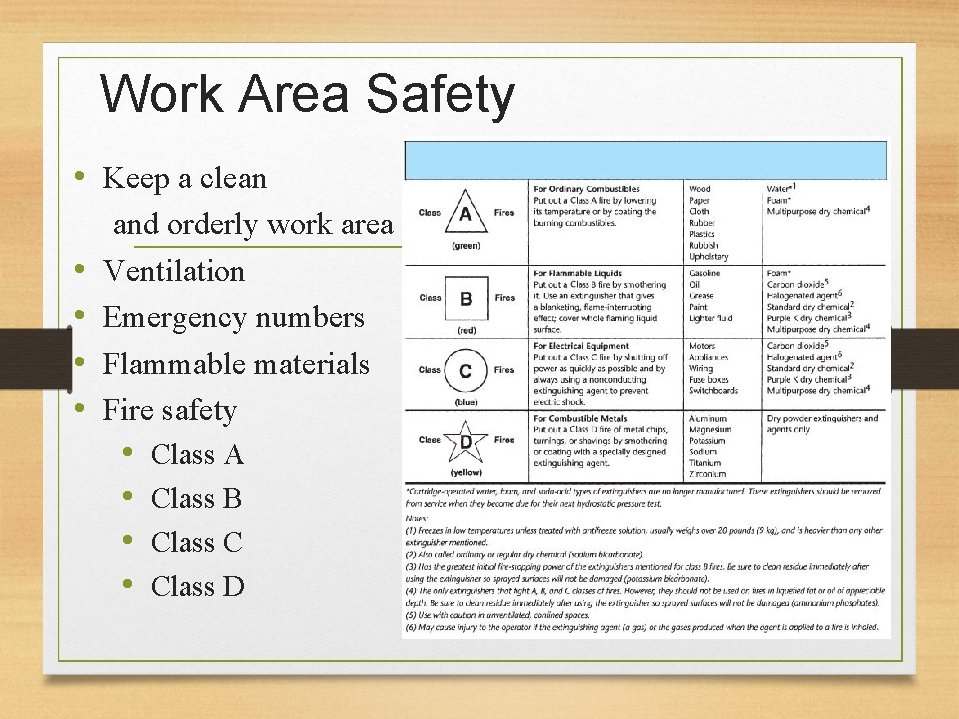
Work Area Safety • Keep a clean • • and orderly work area Ventilation Emergency numbers Flammable materials Fire safety • • Class A Class B Class C Class D
Shop Tool Safety • • Select the proper tool for the job. Use tools only for their intended purpose. Keep tools in safe working condition. Store tools safely when not in use. Report any broken or malfunctioning tools. Keep cutting tools sharp and in good condition. Do not use tools with cracked handles. Never use tools unless you know how to operate them safely.
Hazardous Materials • • • Flammable Corrosive Reactive Toxic Laws regulating hazardous materials • Right-to-know • Employee/employer obligations • Personal protection
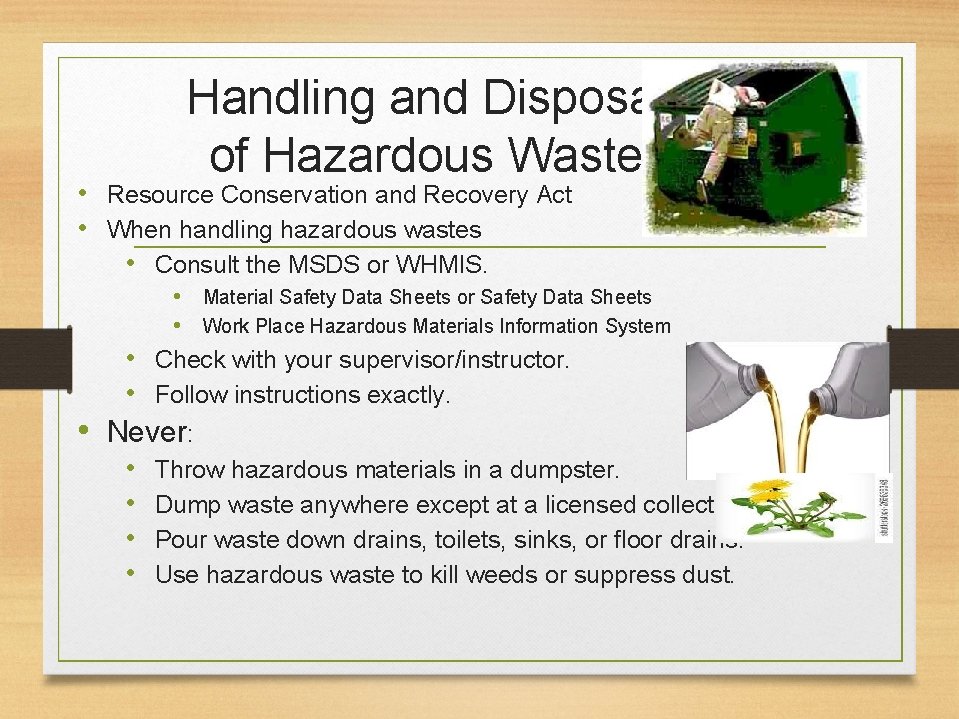
Handling and Disposal of Hazardous Waste • Resource Conservation and Recovery Act • When handling hazardous wastes • Consult the MSDS or WHMIS. • Material Safety Data Sheets or Safety Data Sheets • Work Place Hazardous Materials Information System • Check with your supervisor/instructor. • Follow instructions exactly. • Never: • Throw hazardous materials in a dumpster. • Dump waste anywhere except at a licensed collection site. • Pour waste down drains, toilets, sinks, or floor drains. • Use hazardous waste to kill weeds or suppress dust.
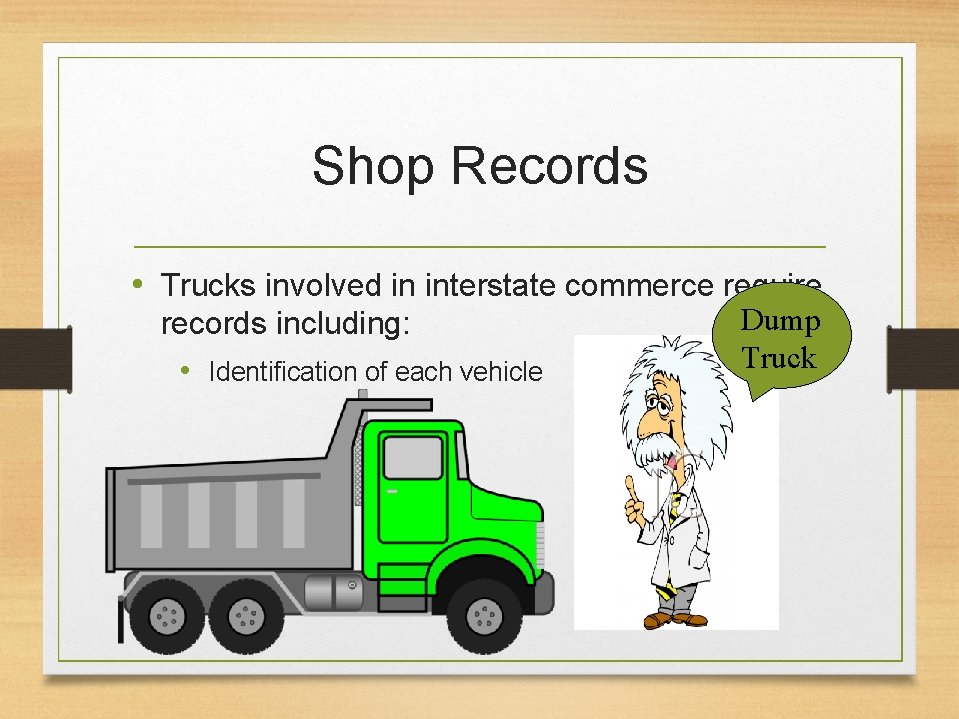
Shop Records • Trucks involved in interstate commerce require records including: • Identification of each vehicle Dump Truck
Shop Records • Trucks involved in interstate commerce require records including: • Identification of each vehicle • A maintenance and inspection schedule • A maintenance and inspection record. . handoutsInspectionCHP-Inspection-Forms. pdf
Shop Records • Trucks involved in interstate commerce require records including: • Identification of each vehicle • A maintenance and inspection schedule • A maintenance and inspection record • A lubrication record • Even if trucks are not involved in interstate commerce, these records serve important functions.
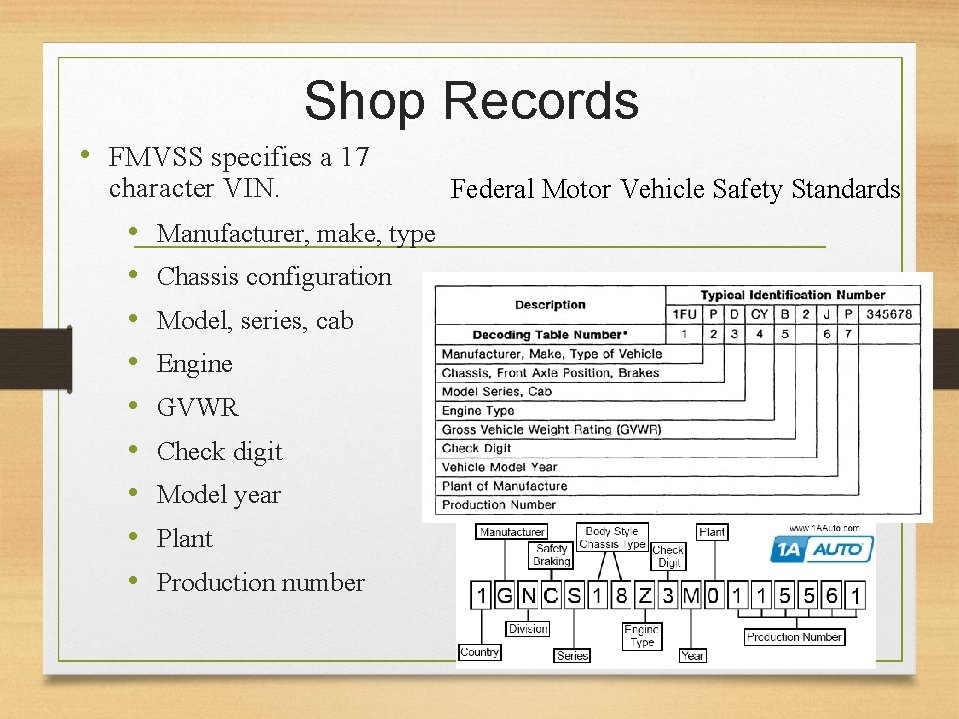
Shop Records • FMVSS specifies a 17 character VIN. • • • Manufacturer, make, type Chassis configuration Model, series, cab Engine GVWR Check digit Model year Plant Production number Federal Motor Vehicle Safety Standards
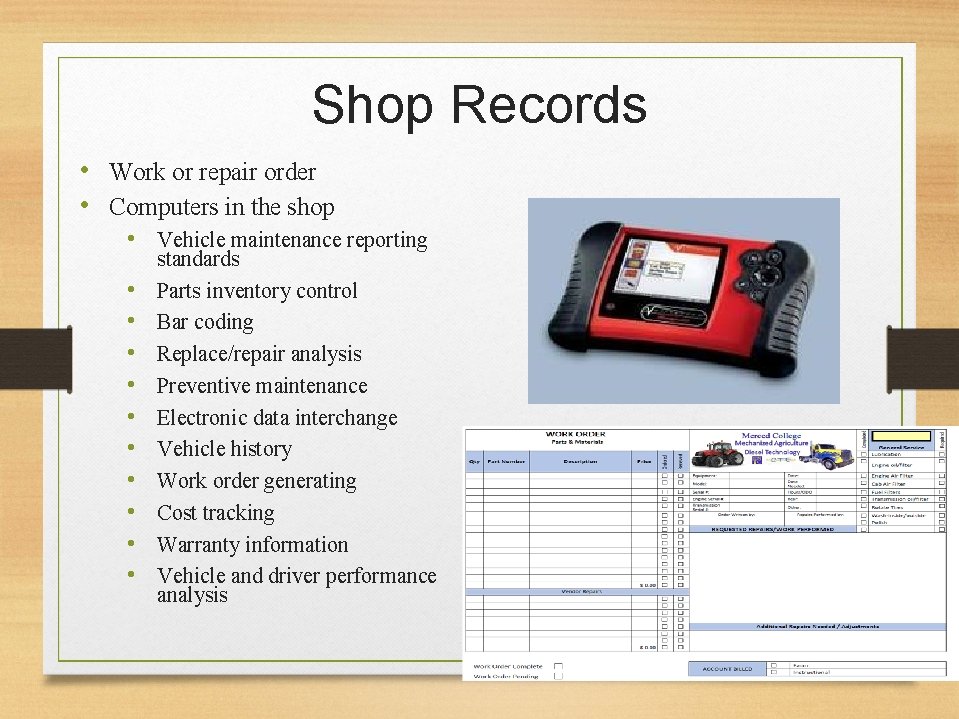
Shop Records • Work or repair order • Computers in the shop • Vehicle maintenance reporting • • • standards Parts inventory control Bar coding Replace/repair analysis Preventive maintenance Electronic data interchange Vehicle history Work order generating Cost tracking Warranty information Vehicle and driver performance analysis
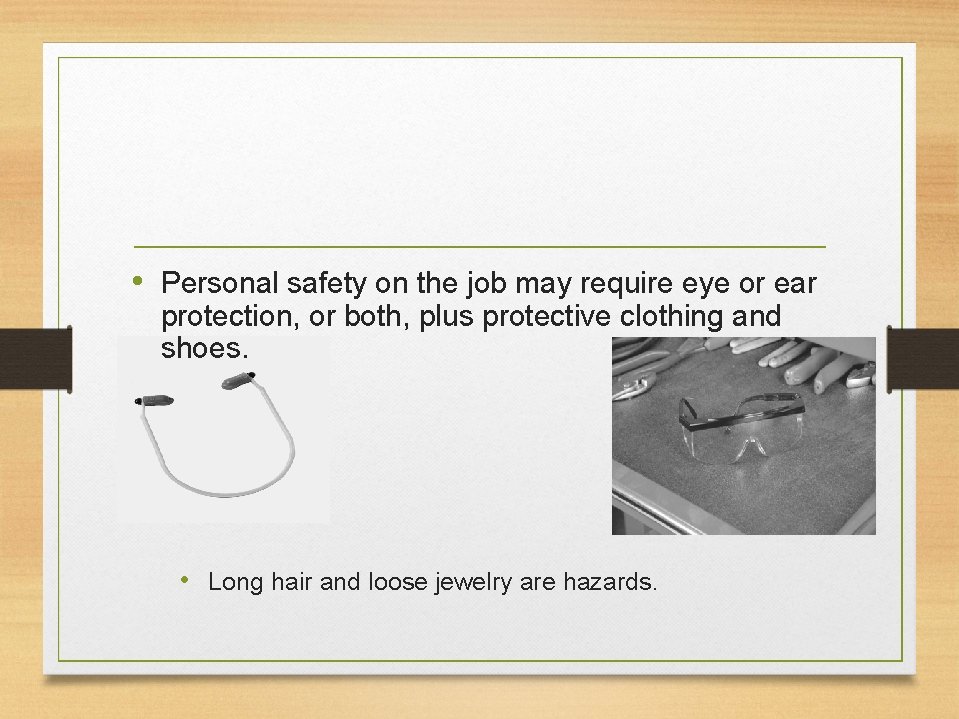
• Personal safety on the job may require eye or ear protection, or both, plus protective clothing and shoes. • Long hair and loose jewelry are hazards.
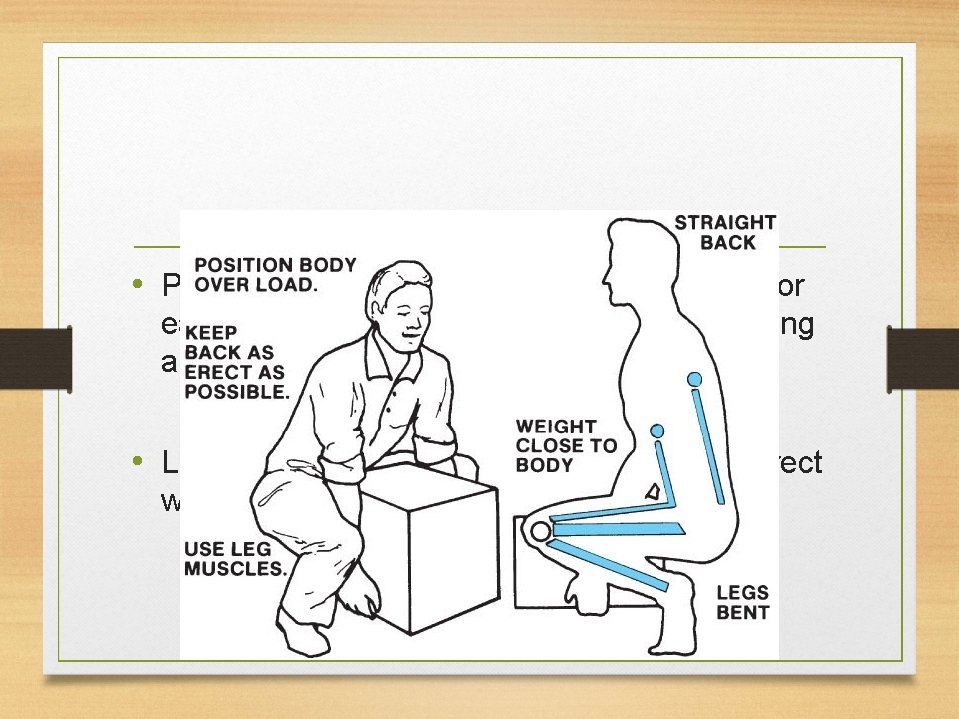
• Personal safety on the job may require eye or ear protection, or both, plus protective clothing and shoes. • Long hair and loose jewelry are hazards. • Lifting and carrying heavy materials the correct way will protect against injury.
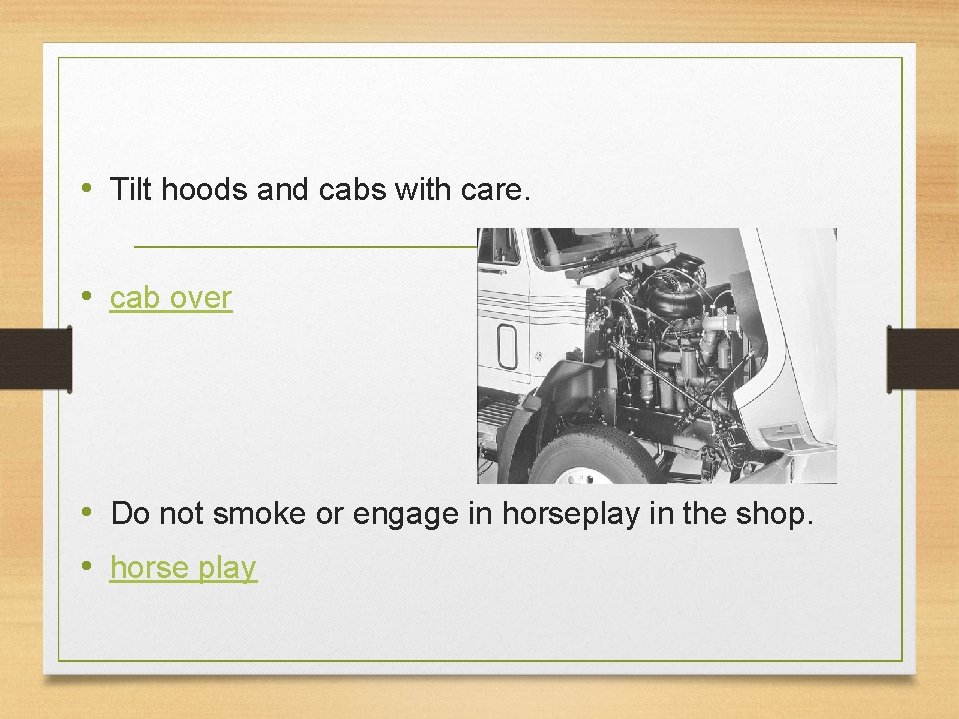
• Tilt hoods and cabs with care. • cab over • Do not smoke or engage in horseplay in the shop. • horse play
• Take care when welding or working with a hydraulic press. • Use protective eyewear. • Avoid contact with hot metal components. • The work area should be kept clean, dry, and neat, and flammable liquids and solvents should be handled and stored carefully. • Emergency telephone numbers and a first- aid kit should be handy.
• Use fire-fighting equipment appropriately: water or foam on ordinary combustibles; foam, carbon dioxide, or dry chemicals on burning liquids; carbon dioxide or dry chemicals on burning “live” electrical equipment; and special extinguishing agents on burning metals. • Select, store, use, and maintain shop tools properly. • Hazardous materials used in heavy-duty truck repair include flammable, corrosive, reactive, and toxic materials. • Your employer is obligated to inform you of potential hazards in your workplace, and you have a right to protect yourself from them.
• Specific laws govern the disposal of hazardous wastes, including oil, antifreeze/coolants, refrigerants, batteries, battery acids, acids and solvents used for cleaning, and paint and body repair product wastes. • Hazardous wastes may be recycled in the shop or removed by a licensed disposal hauler. • By law, records must be kept by each shop of the repair and maintenance of trucks involved in interstate shipping. • Computers can be useful in the shop for such tasks as parts inventory control, work order generating, and cost tracking.
• safety fails • safety first