
Shock with Annie Colgan Objectives Define shock Describe

Shock with Annie Colgan
Objectives • • • Define shock Describe four kinds of shock Describe three stages of shock Discuss signs and symptoms Describe management for shock Go over some case studies PKM made up. Don’t let his hypothetical patients die.
Shock • Hypoperfusion- inability of body to deliver sufficient oxygenated blood to body tissues
Shock in Context • Life threatening • Not immediately obvious • Can be provoked by trauma AND medical emergencies
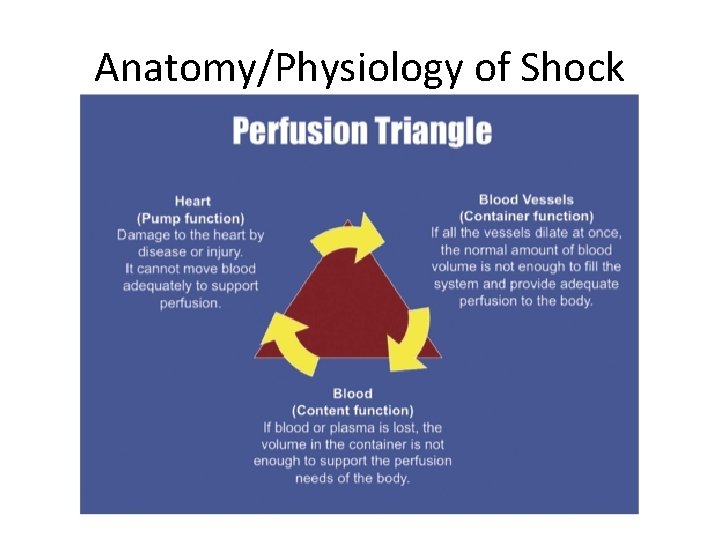
Anatomy/Physiology of Shock
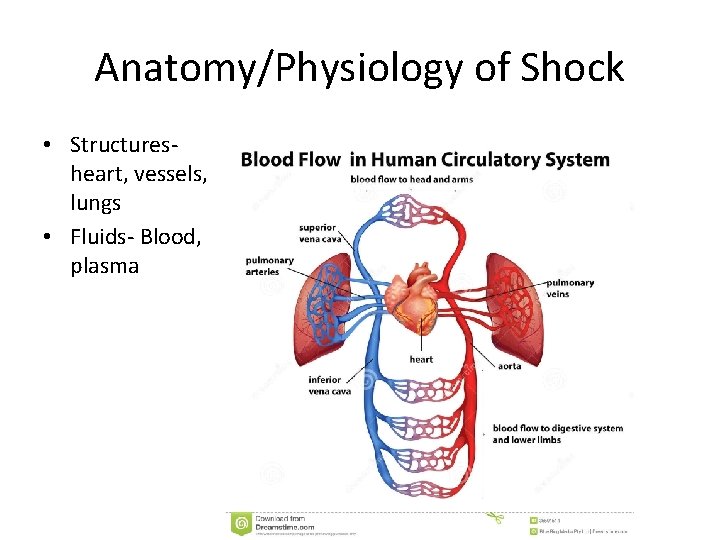
Anatomy/Physiology of Shock • Structures- heart, vessels, lungs • Fluids- Blood, plasma
Case Study You just finished hiking the Proctor on a cold winter morning before work when you come across a 20 something man collapsed at the summit of Worth. When you approach he responds, but is unable to speak. He instead motions frantically at his backpack, which is lying in the snow at his side in a pile of loose gear and clothing. How do you proceed?
Types of Shock What are the 4 Types of Shock?
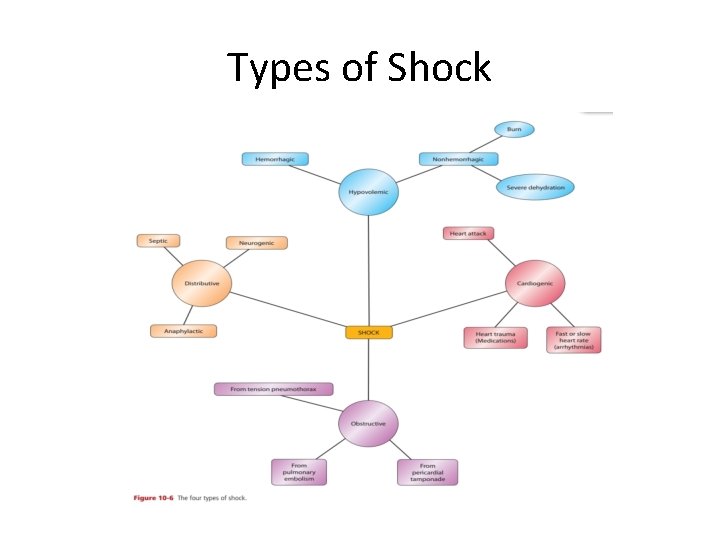
Types of Shock
Hypovolemic shock • not enough blood is available to distribute oxygen to tissues Where might the volume go? external bleeding internal bleeding adsorption of water from plasma (dehydration)
Hypovolemic Shock • 4. 7 - 5. 5 liters of blood in body • < 1 liter loss – compensated. Tachycardia, tachypnea, AMS • 1 -2 liter loss – decompensated. Further HR rise, shallow respiration. Decreased responsiveness as organs fail. • 2 + liter loss – irreversible. Death imminent.
Hypovolemia in Context Body part blood content: • Femur fracture: 1. 5 -3 L blood loss • Abdominal cavity capacity: up to 6 L
Cardiogenic Shock • Heart ceases to function. • More on this in Ch 15
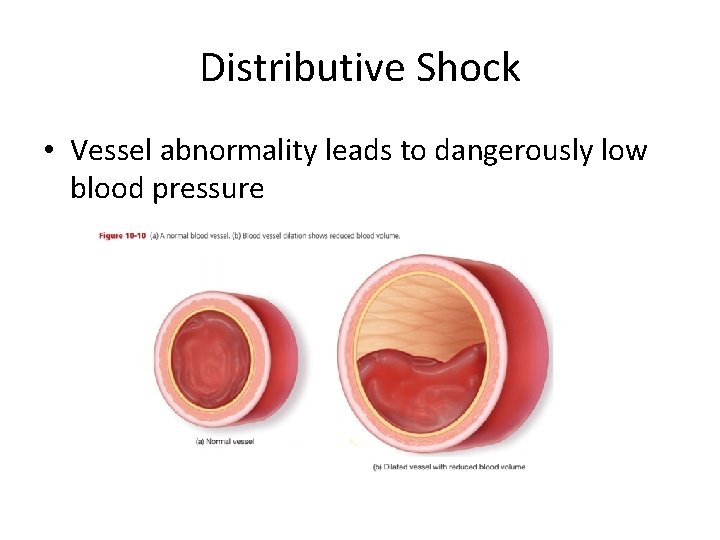
Distributive Shock • Vessel abnormality leads to dangerously low blood pressure
Distributive Shock • Septic- systemic inflammatory response to infection • Anyphylactic- systemic vasodialation in response to an allergen. Leads to respiratory arrest. • Nuerogenic- injury to CNS leads to circulatory failure
Obstructive Shock • (oxygenated) blood is prevented from reaching body tissues
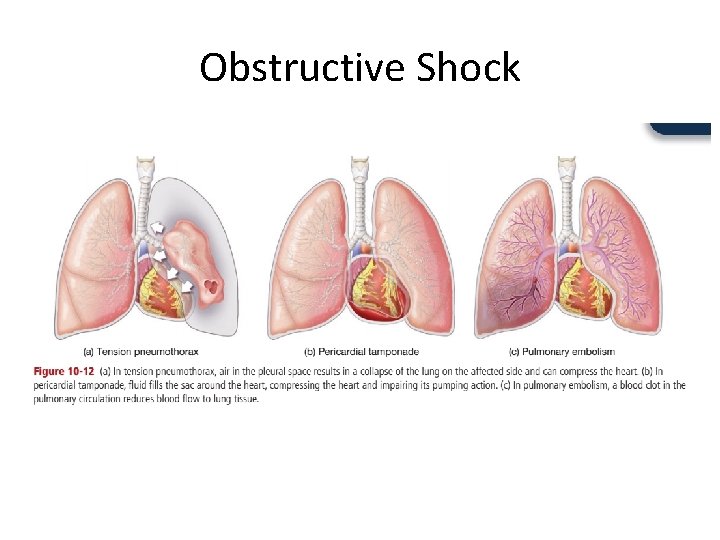
Obstructive Shock
Stages of Shock • Compensted • Decompensated • Irreversible
Stages of Shock Compensated- body is compensating for decreased perfusion by increasing oxygen intake, increasing heart output, and pulling blood to vital organs. • Tachycardia • Tachypnea • Elevated vitals, normal blood pressure • Pale, cool skin, delayed cap refill • Altered mental status
Stages of Shock Decompensated- compensatory measures can no longer deliver enough oxygen to organs. • cyanotic, cold skin • No cap refill • Failing respiration • HIGHER heart rate • VERY decreased responsiveness If not treated immediately, patient will die
Stages of Shock Irreversible shock- All compensating mechanisms have failed. Death is imminent.
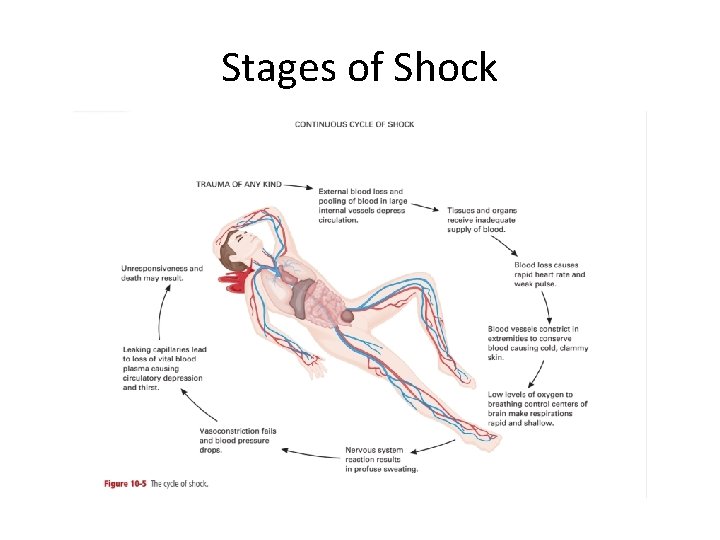
Stages of Shock
Case study “While mountain biking, you find a middle aged French Canadian at the side of the trail. His bike frame is broken in two and it is obvious he collided with a 12 inch diameter Balsam fir. He is holding his lower right arm across his chest and screaming, but compliant. Jacque is screaming so airway is fine, has sustained no spinal injury and his fresh white kit is not stained with blood, so you proceed to secondary assessment. The patient soon begins to be less responsive. What do you suspect?
Suspect shock with: Audience participation! • Massive external, or suspected internal bleeding • Multiple severe fractures • Abdominal or chest injury • Any major trauma • A severe infection • A major heart attack • Allergic reactions
Treatment • • • ABCDs Give high flow O 2. Always. Elevate legs for blood flow to heart Keep warm RAPID TRANSPORT
The smaller branches of the arterial tree that contain a muscular layer that enables changes in vessel diameter are called _______; these vessels ____. a. resistance vessels; enable the body to control how much blood is directed toward an area based on that area's metabolic needs b. distributive vessels; sense oxygen levels and increase heart rate when the brainstem detects dropping O 2 levels or rising CO 2 levels c. arterioles; exchange O 2 and CO 2 and rid the body of waste products d. metabolic vessels; trigger the release of glucose into the circulatory system
You are caring for a 55 -year-old man with significant trauma. His medical history reveals high blood pressure for which he takes a beta blocker. You realize that this group of drugs may: a. inhibit his heart's ability to beat faster. b. cause him to have lower-than-normal blood pressure. c. diminish his reactions to pain. d. cause his heart rate to increase.
In decompensated shock, the failure of body systems in spite of the body's attempt to oxygenate vital organs becomes apparent as: a. increased blood pressure and reduced pulse rate. b. delayed capillary refill and increased respiratory rate. c. increased pulse rate and decreased blood pressure. d. increased respiratory rate and reduced level of consciousness.
In shock, the body's reactions to a decreased amount of oxygen reaching the cells include: a. the release of epinephrine, increased stroke volume, and slowed respiratory rate. b. increased stroke volume, increased heart rate, and increased peripheral resistance. c. slowed respiratory rate, shunting of blood from the skin, and decreased pulse rate. d. increased stroke volume, decreased pulse rate, and shunting of blood from the skin.
You are reassessing a patient who has sustained blunt trauma to the chest. Which one of the following reassessment findings best indicates that the patient is deteriorating and is in the decompensating phase of shock? a. Pulse of 96 beats per minute b. Blood pressure of 88/50 c. Blood oozing from an abdominal laceration d. Skin that is cool and dry
- Slides: 30