
Shock Management What is Shock Is a condition
- Slides: 26
Shock Management
What is Shock? Is a condition where the perfusion of organs is too low to meet the metabolic demands and leads to anaerobic metabolism. In other words, blood flow (pressure) and oxygen delivery to the body is too low
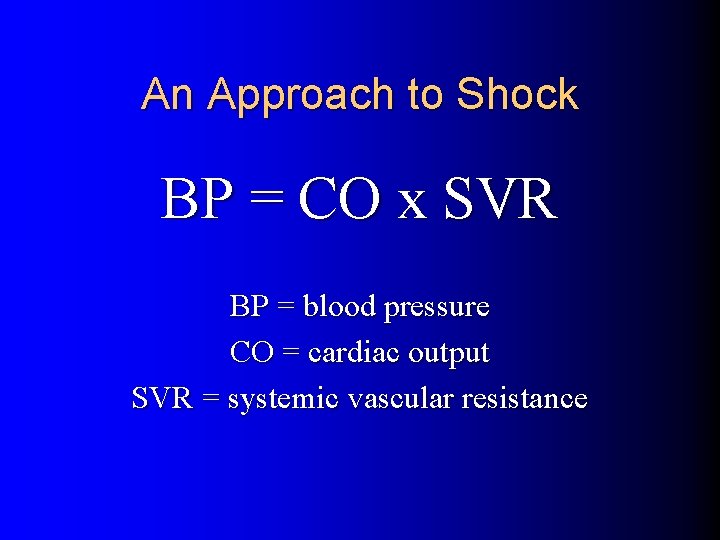
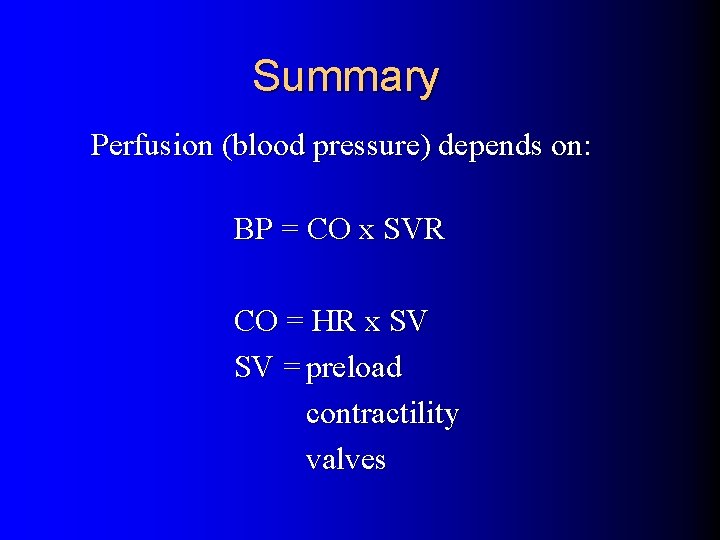
An Approach to Shock BP = CO x SVR BP = blood pressure CO = cardiac output SVR = systemic vascular resistance
An Approach to Shock If the blood pressure is low, then either the: CO is low or the SVR is low
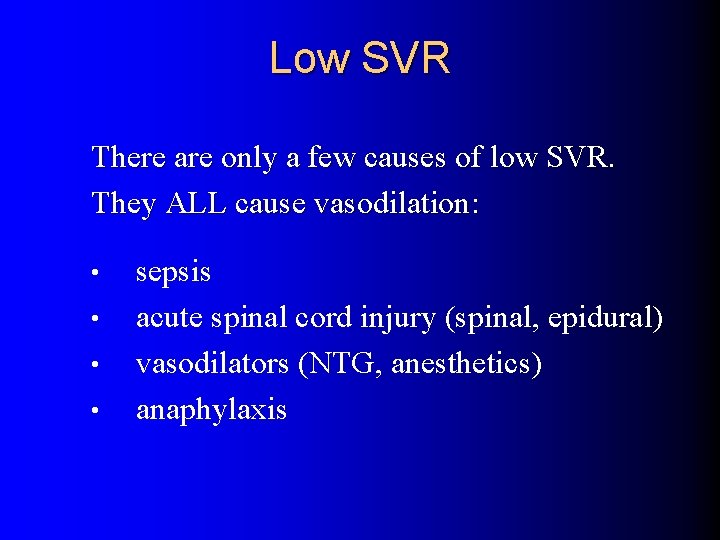
Low SVR There are only a few causes of low SVR. They ALL cause vasodilation: • • sepsis acute spinal cord injury (spinal, epidural) vasodilators (NTG, anesthetics) anaphylaxis
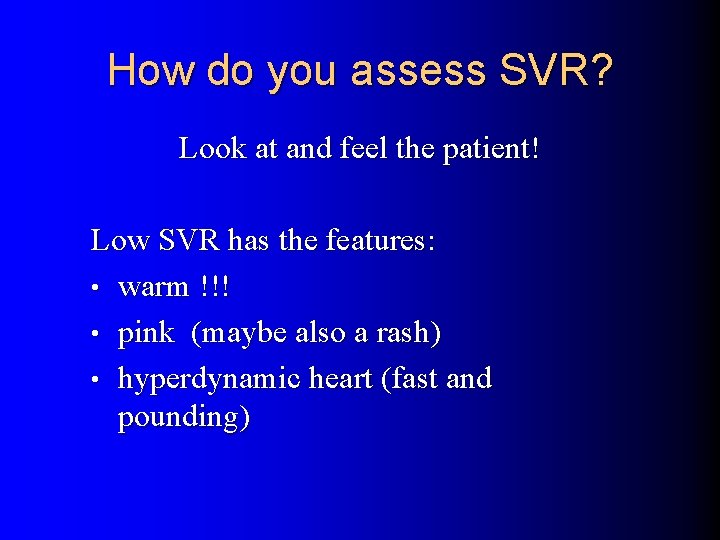
How do you assess SVR? Look at and feel the patient! Low SVR has the features: • warm !!! • pink (maybe also a rash) • hyperdynamic heart (fast and pounding)
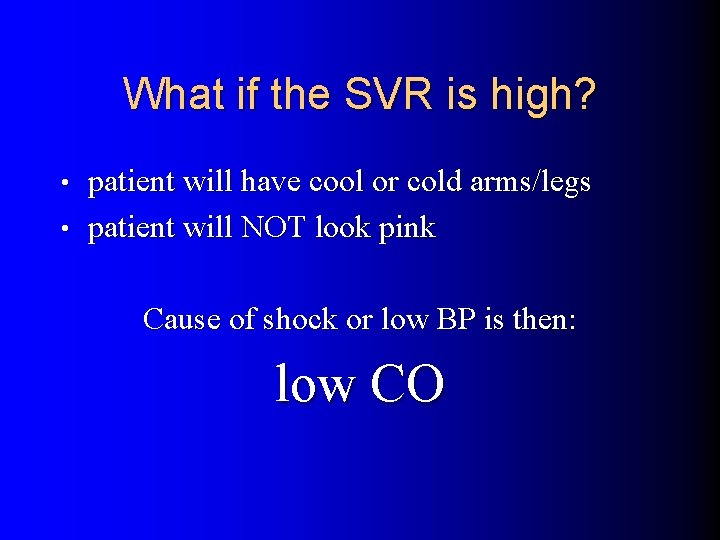
What if the SVR is high? patient will have cool or cold arms/legs • patient will NOT look pink • Cause of shock or low BP is then: low CO
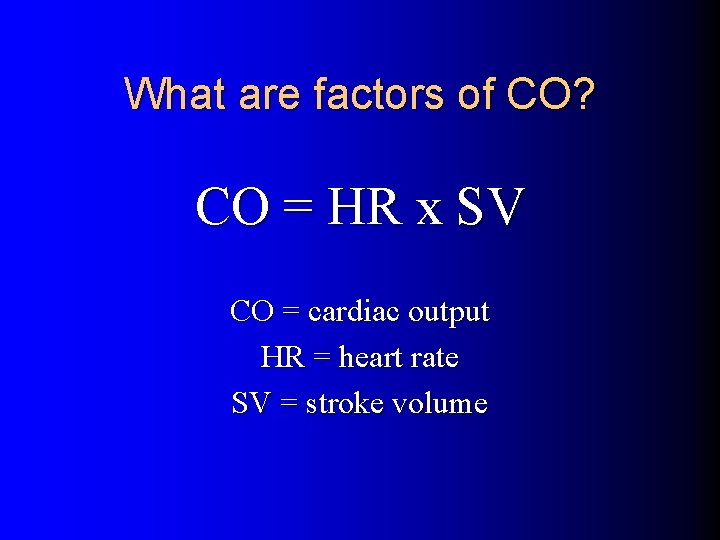
What are factors of CO? CO = HR x SV CO = cardiac output HR = heart rate SV = stroke volume
HR Problems • HR problems are easy to diagnose • bradycardia and tachycardia will be covered in my “arrhythmia” talk later
Low SV (stroke volume) Most common cause of shock but Most difficult to diagnose and manage
Factors of SV Preload: is the ventricle full? Contractility: how well does the ventricle contract Valve function: normal? regurgitation? stenosis?
Stroke Volume Which factors can we influence? • Preload and contractility We cannot change valve function
Summary Perfusion (blood pressure) depends on: BP = CO x SVR CO = HR x SV SV = preload contractility valves
Your patient has BP of 60/20
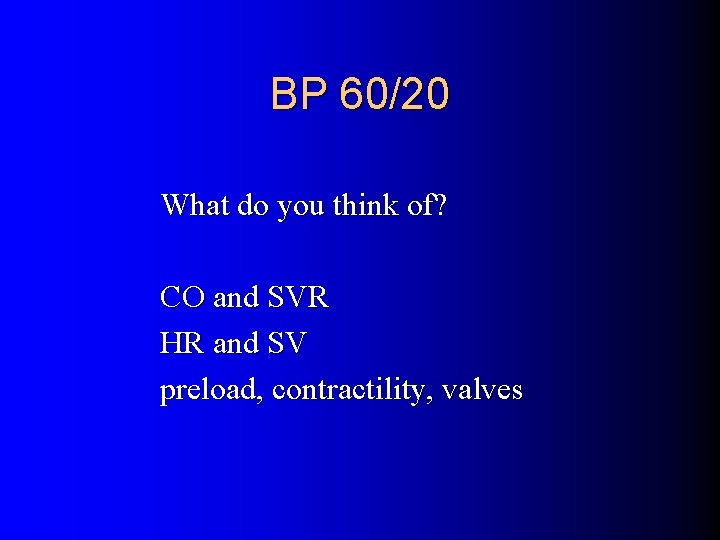
BP 60/20 What do you think of? CO and SVR HR and SV preload, contractility, valves
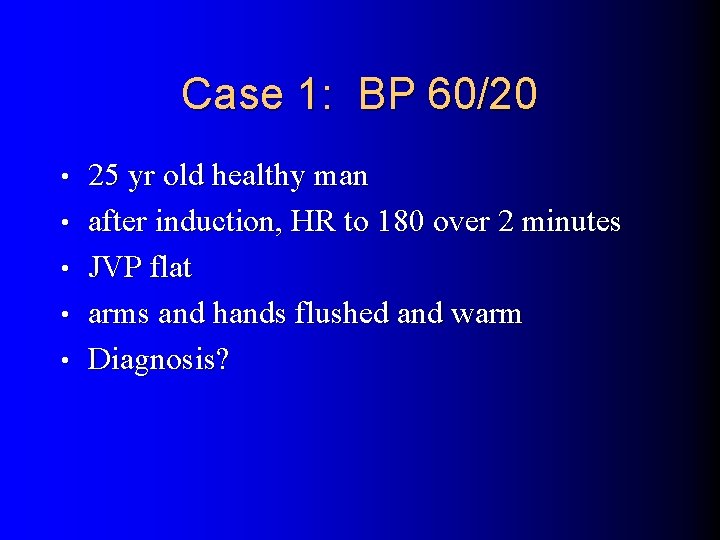
Case 1: BP 60/20 • • • 25 yr old healthy man after induction, HR to 180 over 2 minutes JVP flat arms and hands flushed and warm Diagnosis?
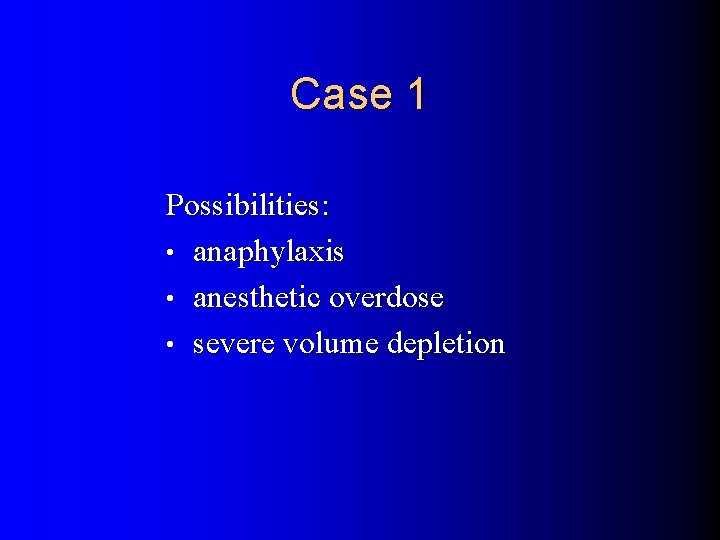
Case 1 Possibilities: • anaphylaxis • anesthetic overdose • severe volume depletion
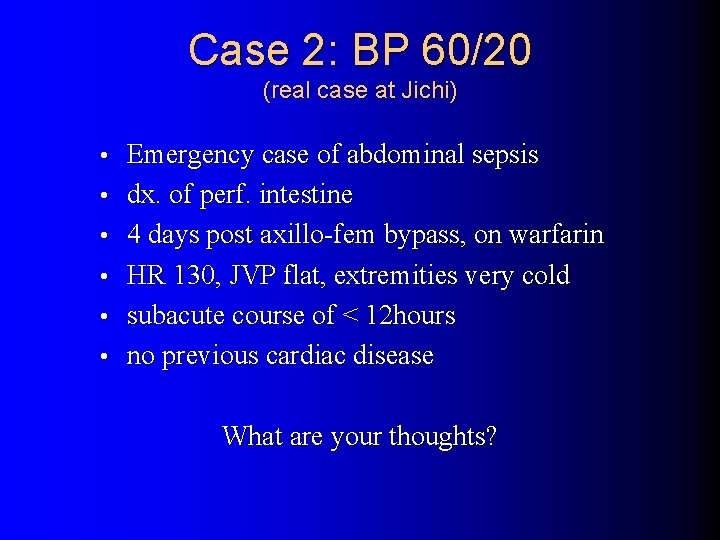
Case 2: BP 60/20 (real case at Jichi) • • • Emergency case of abdominal sepsis dx. of perf. intestine 4 days post axillo-fem bypass, on warfarin HR 130, JVP flat, extremities very cold subacute course of < 12 hours no previous cardiac disease What are your thoughts?
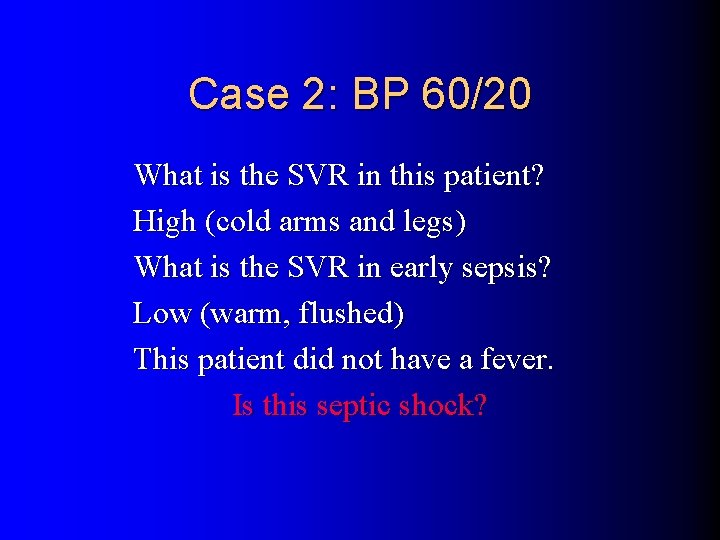
Case 2: BP 60/20 What is the SVR in this patient? High (cold arms and legs) What is the SVR in early sepsis? Low (warm, flushed) This patient did not have a fever. Is this septic shock?
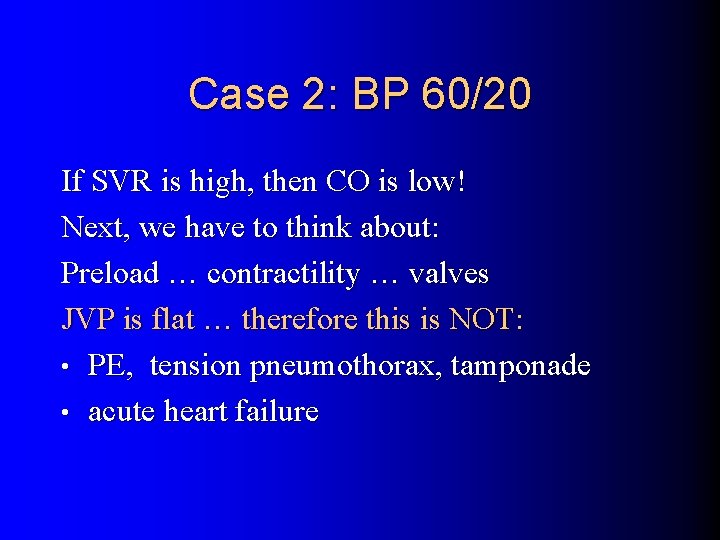
Case 2: BP 60/20 If SVR is high, then CO is low! Next, we have to think about: Preload … contractility … valves JVP is flat … therefore this is NOT: • PE, tension pneumothorax, tamponade • acute heart failure
Case 2: BP 60/20 • • • Why is the JVP flat? Volume depletion Why is the patient volume depleted? Had an IV for maintenance Why did the patient crash over 12 hours?
Case 2: BP 60/20 15 minutes into the laparotomy, the blood results became available • the Hb was 50 • the pre-op CT scan showed a retroperitoneal hematoma The laparotomy was completely unnecessary The patient was in shock because of acute bleeding and not because of sepsis •
Case 3: BP 60/20 trauma car accident • HR 130, JVP full, extremities cold • Thoughts?
Case 3: BP 60/20 Does a full JVP mean that preload is adequate? • no What are 4 causes of decreased preload with a full JVP? • pulmonary embolism • tension pneumothorax • pericardial tamponade • RV infarction
Case 3: BP 60/20 In a trauma setting, think about: • tension pneumothorax • pericardial tamponade … as causes of inadequate preload
Summary Managing shock is THE SAME as managing low blood pressure Requires analysis of all factors of BP: SVR, CO, HR, preload, contrqctility, valves