
Shock Kenneth Stahl MD FACS OBJECTIVES 1 Define
Shock Kenneth Stahl MD FACS OBJECTIVES 1. Define shock and apply to clinical situations 2. Recognize clinical presentations of shock 3. Learn the cellular mechanisms and sub-cellular biochemistry of shock 4. Learn the degrees and grades of shock 5. Understand diagnostic tests used in patients with shock 6. Learn treatments for various types of shock
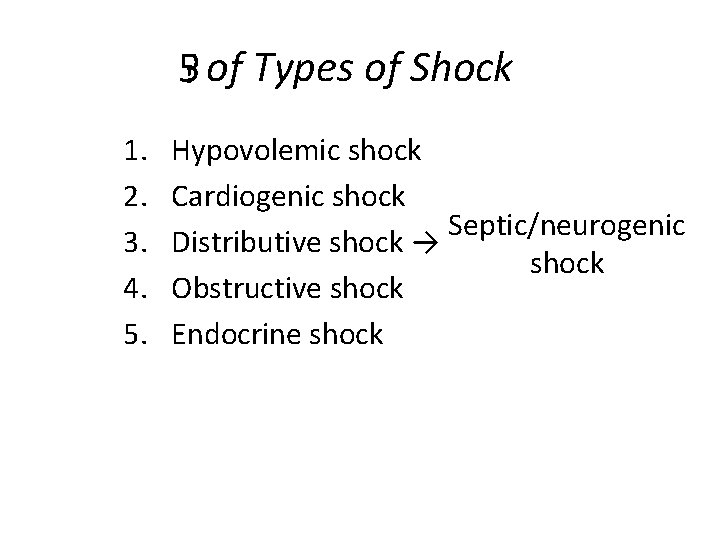
5? of Types of Shock 1. 2. 3. 4. 5. Hypovolemic shock Cardiogenic shock Septic/neurogenic Distributive shock → ? shock Obstructive shock Endocrine shock
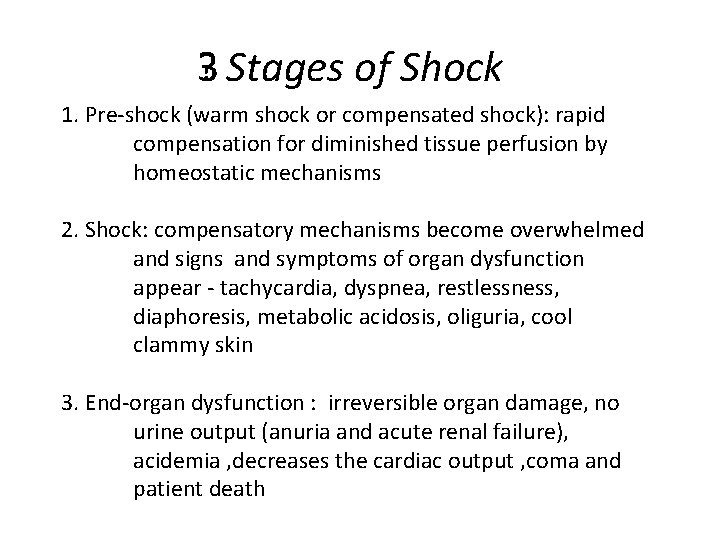
3? Stages of Shock 1. Pre-shock (warm shock or compensated shock): rapid compensation for diminished tissue perfusion by homeostatic mechanisms 2. Shock: compensatory mechanisms become overwhelmed and signs and symptoms of organ dysfunction appear - tachycardia, dyspnea, restlessness, diaphoresis, metabolic acidosis, oliguria, cool clammy skin 3. End-organ dysfunction : irreversible organ damage, no urine output (anuria and acute renal failure), acidemia , decreases the cardiac output , coma and patient death
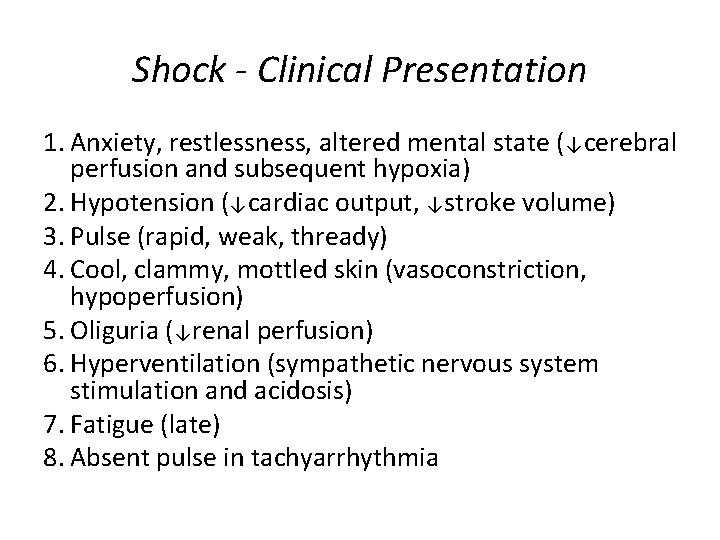
Shock - Clinical Presentation 1. Anxiety, restlessness, altered mental state (↓cerebral perfusion and subsequent hypoxia) 2. Hypotension (↓cardiac output, ↓stroke volume) 3. Pulse (rapid, weak, thready) 4. Cool, clammy, mottled skin (vasoconstriction, hypoperfusion) 5. Oliguria (↓renal perfusion) 6. Hyperventilation (sympathetic nervous system stimulation and acidosis) 7. Fatigue (late) 8. Absent pulse in tachyarrhythmia
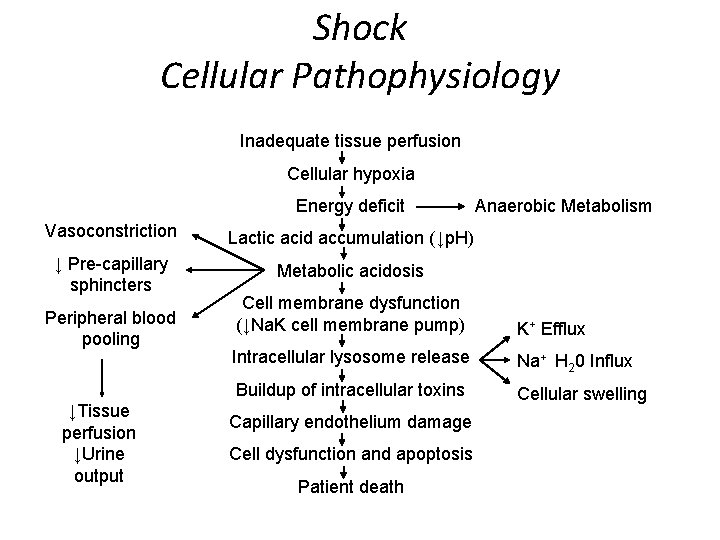
Shock Cellular Pathophysiology Inadequate tissue perfusion Cellular hypoxia Energy deficit Vasoconstriction Lactic acid accumulation (↓p. H) ↓ Pre-capillary sphincters Metabolic acidosis Peripheral blood pooling ↓Tissue perfusion ↓Urine output Anaerobic Metabolism Cell membrane dysfunction (↓Na. K cell membrane pump) K+ Efflux Intracellular lysosome release Na+ H 20 Influx Buildup of intracellular toxins Cellular swelling Capillary endothelium damage Cell dysfunction and apoptosis Patient death
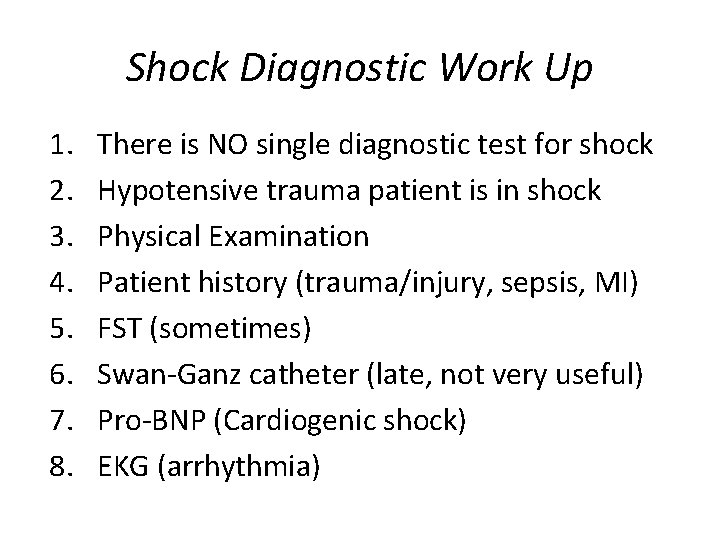
Shock Diagnostic Work Up 1. 2. 3. 4. 5. 6. 7. 8. There is NO single diagnostic test for shock Hypotensive trauma patient is in shock Physical Examination Patient history (trauma/injury, sepsis, MI) FST (sometimes) Swan-Ganz catheter (late, not very useful) Pro-BNP (Cardiogenic shock) EKG (arrhythmia)
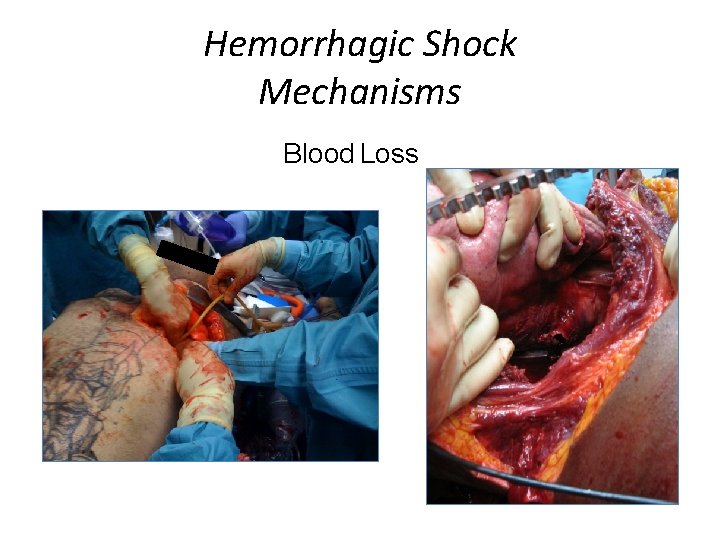
Hemorrhagic Shock Mechanisms Blood Loss
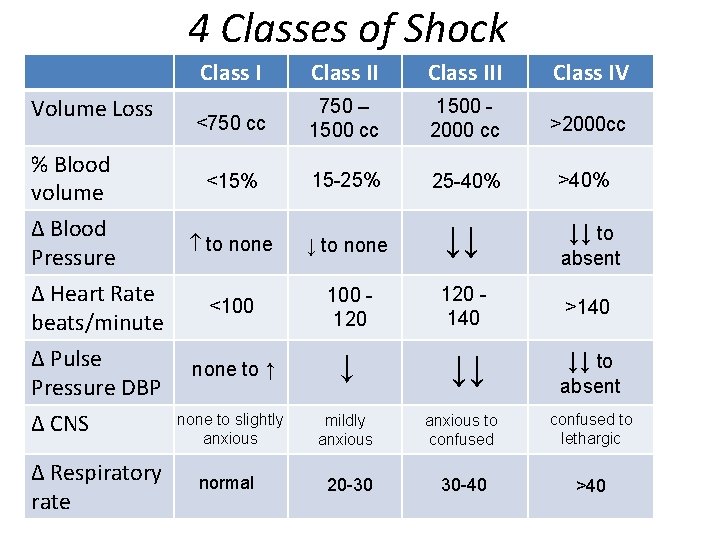
4 Classes of Shock Volume Loss % Blood volume ∆ Blood Pressure ∆ Heart Rate beats/minute ∆ Pulse Pressure DBP ∆ CNS ∆ Respiratory rate Class III Class IV <750 cc 750 – 1500 cc 1500 2000 cc >2000 cc <15% 15 -25% 25 -40% >40% to none ↓↓ <100 120 140 >140 none to ↑ ↓ ↓↓ ↓↓ to none to slightly anxious mildly anxious to confused to lethargic normal 20 -30 30 -40 >40 ↓↓ to absent
Treatment of Hemorrhagic Shock 1. RECOGNIZE patient is in shock 2. ATLS (ABCDE’s) 3. Volume, volume 4. Surgical – stop bleeding, correct injury 5. Re-establish normal hemodynamics 6. Re-establish urine flow
Obstructive Shock 1. Cardiac Tamponade 2. Tension Pneumothorax 3. Mediastinal Crushing Injury (caval obstruction) 4. Aortic dissection (obstruction) 5. Mediastinal Torsion 6. Pulmonary Embolism
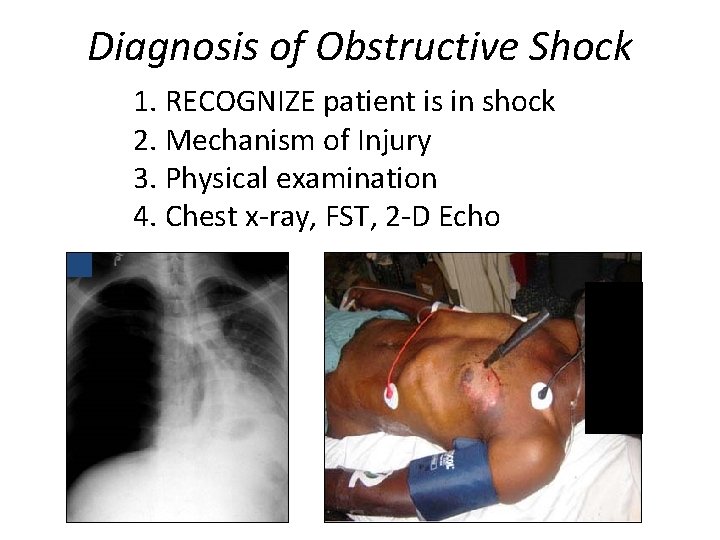
Diagnosis of Obstructive Shock 1. RECOGNIZE patient is in shock 2. Mechanism of Injury 3. Physical examination 4. Chest x-ray, FST, 2 -D Echo
Distributive Shock Neurogenic/Septic Shock 1. Low systemic vascular resistance (SVR) 2. Spinal chord trauma (neurogenic shock) 3. Gram negative sepsis
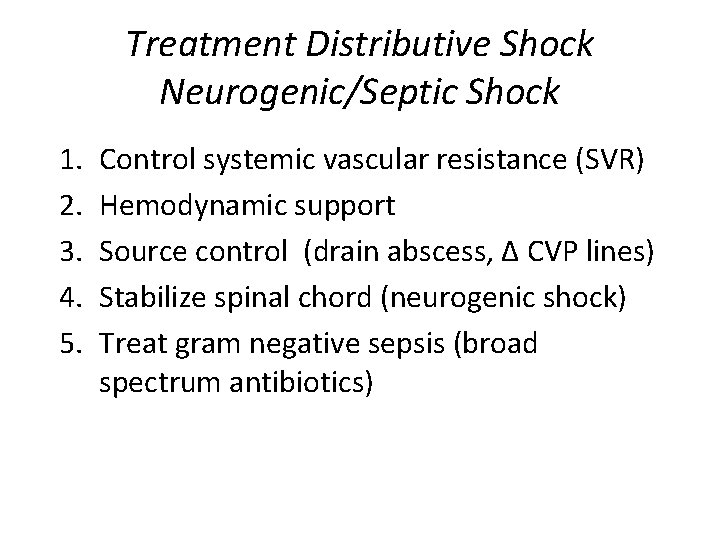
Treatment Distributive Shock Neurogenic/Septic Shock 1. 2. 3. 4. 5. Control systemic vascular resistance (SVR) Hemodynamic support Source control (drain abscess, ∆ CVP lines) Stabilize spinal chord (neurogenic shock) Treat gram negative sepsis (broad spectrum antibiotics)
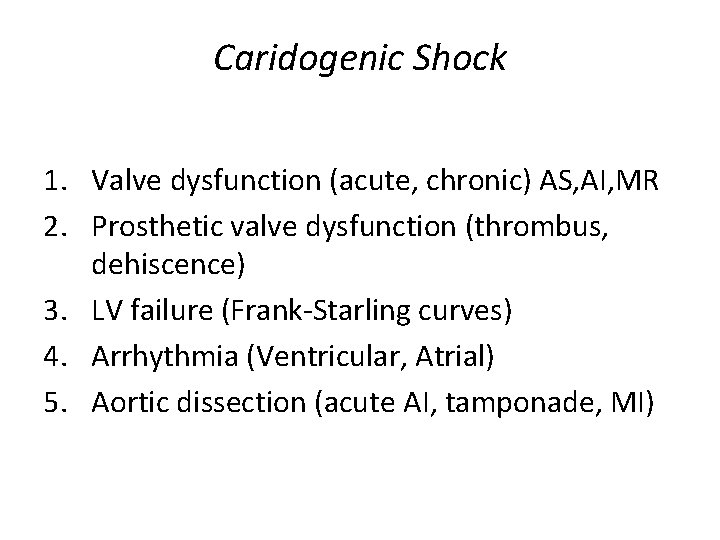
Caridogenic Shock 1. Valve dysfunction (acute, chronic) AS, AI, MR 2. Prosthetic valve dysfunction (thrombus, dehiscence) 3. LV failure (Frank-Starling curves) 4. Arrhythmia (Ventricular, Atrial) 5. Aortic dissection (acute AI, tamponade, MI)
Endocrine Shock 1. Acute adrenal deficiency 2. Hypothyroidism 3. Hyperthyroidism (thyrotoxicosis)
Summary 1. Shock is an circulatory system abnormality that results in inadequate tissue perfusion 2. Hypovolemia is the cause of shock in the majority of trauma patients 3. Hypovolemic shock has 4 stages from mild to fatal 4. There is NO DIAGNOSTIC test for shock 5. The most important and first treatment for shock is RECOGNIZING patient is in shock
- Slides: 16