
Shipping market cycles have 3 different components Longterm
- Slides: 11
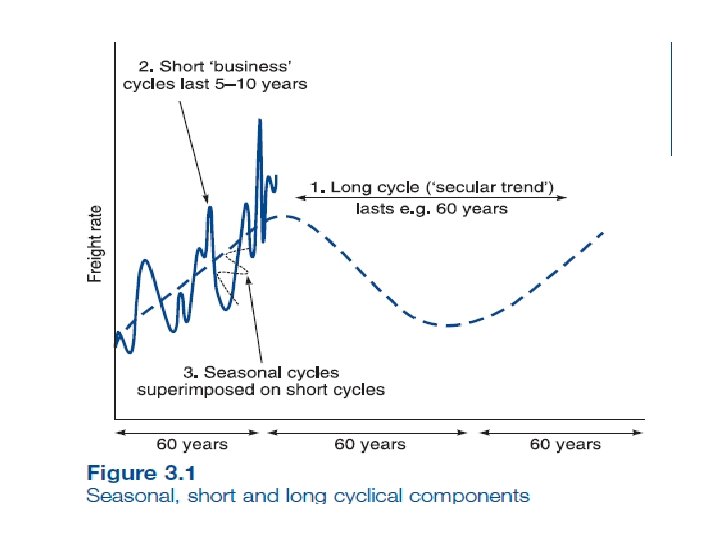
Shipping market cycles have 3 different components • Long-term – secular trend • Short-term – business cycles • Seasonal – regular fluctuations
Supply – demand function • Is co-coordinated by shipping cycle in the shipping market
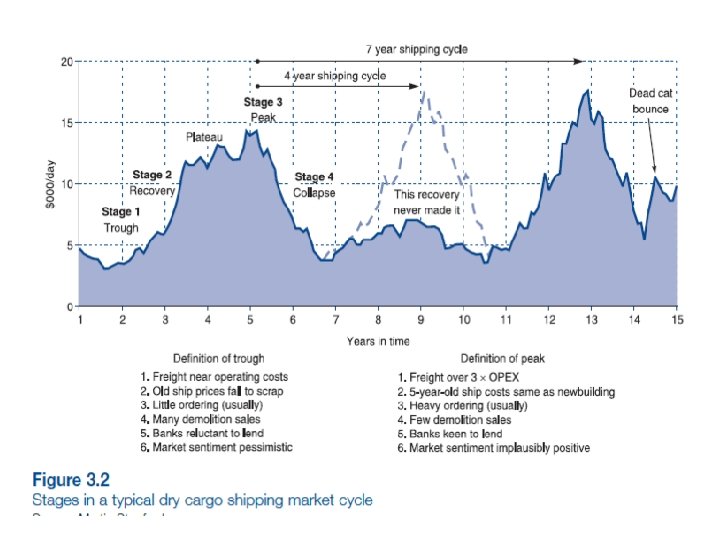
4 (episodic) Stages in a typical short term cycle 1. 2. 3. 4. Trough (ship surplus, freight rates fall, distress, slow steaming, ships queuing in ports, least efficient ships move into lay-up, old ships=scrap price, demolition market is flourishing, etc. ) Recovery (freight rates > operation costs, confidence, optimism (fighting with pessimism. . ) Peak (Excitement, freight rates increase, new building orders increase, overtrading, etc) Collapse (supply > demand, + business cycle downturn, ships reduce speed, market sometimes reluctant to accept that the party is over).
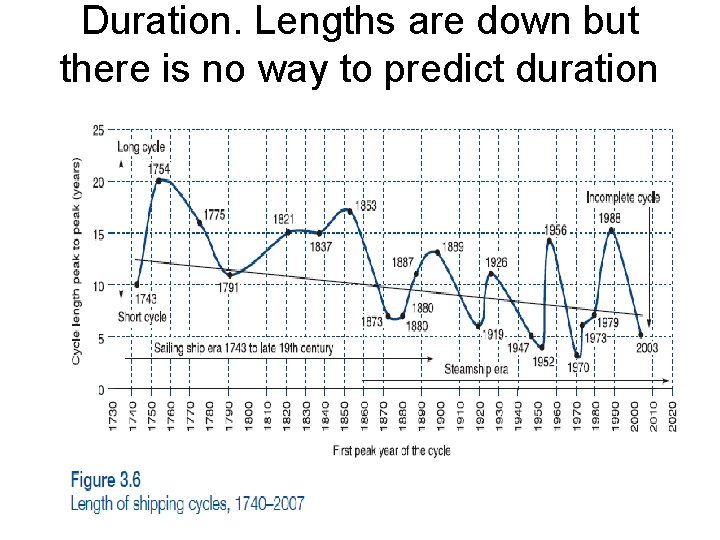
Cycle consists of 3 Events • Trade boom • Shipping boom (overbuilding) • Prolonged slump Cycle is more about people Overshooting is inherent… No formula for predicting the shape of the next stage / cycle… Sometimes markets get stuck in the middle
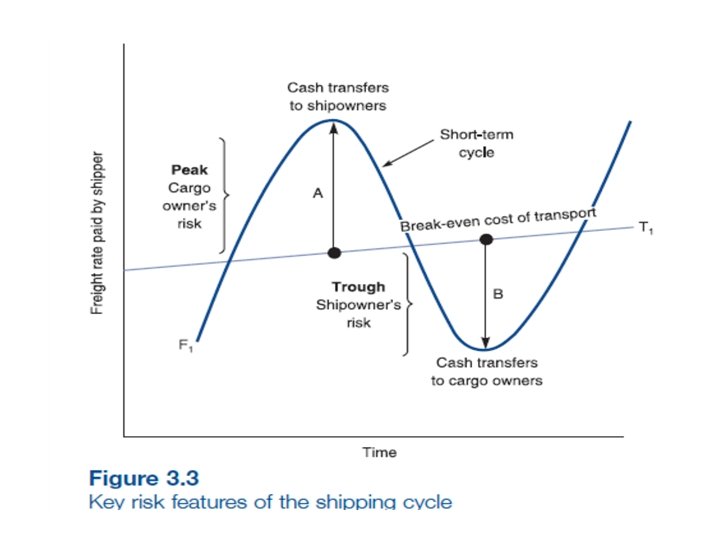
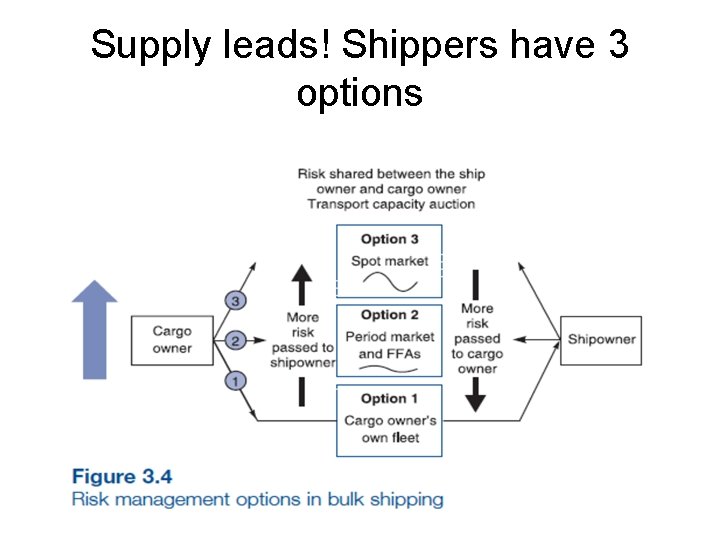
Shipping risk • Industrial shipping: the cargo owners runs the risk. Ship-owners are just subcontractors (χρονοναύλωση ή αγορά στόλου. . . ). Σιδηρομετάλλευμα, βωξίτης, άνθρακας κτλ. ) • Ship-owner runs the risk (speculative and very risky business! (δεξαμενόπλοια μετά το ’ 73. Οι φορτωτές μεταφέρουν τον κίνδυνο όταν business is very risky!).
Shipping risk • Measurable liability for any financial loss arising from unforeseen imbalances bet. Supply and demand for sea transport. (who bears the burden if the prediction is wrong…)? ? • Figure below: movements in freight rates determines who pays! T=break even line • Shipping risk = about the timing of receipts
Supply leads! Shippers have 3 options
Duration. Lengths are down but there is no way to predict duration