
Ship motion compensation platform for high payloads dynamic

- Slides: 35
Ship motion compensation platform for high payloads dynamic analysis and control MSc Project at Gusto. MSC – Wouter de Zeeuw Prof. dr. D. J. Rixen, Ir. M. Wondergem Challenge the future 1
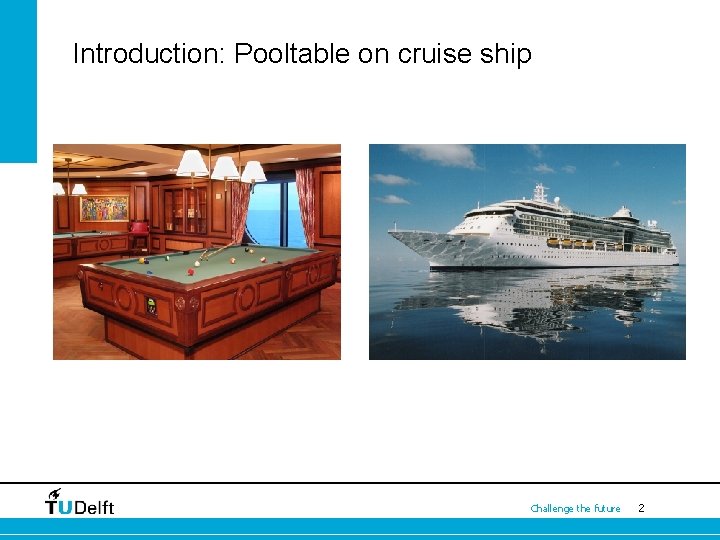
Introduction: Pooltable on cruise ship Challenge the future 2
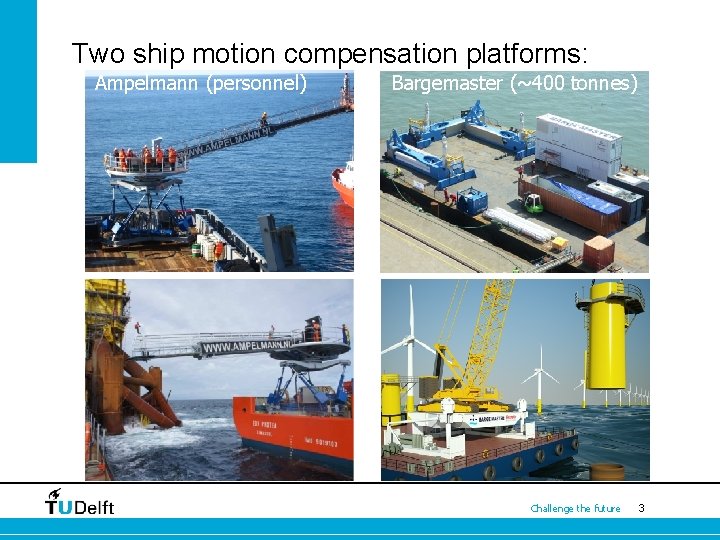
Two ship motion compensation platforms: Ampelmann (personnel) Bargemaster (~400 tonnes) Challenge the future 3
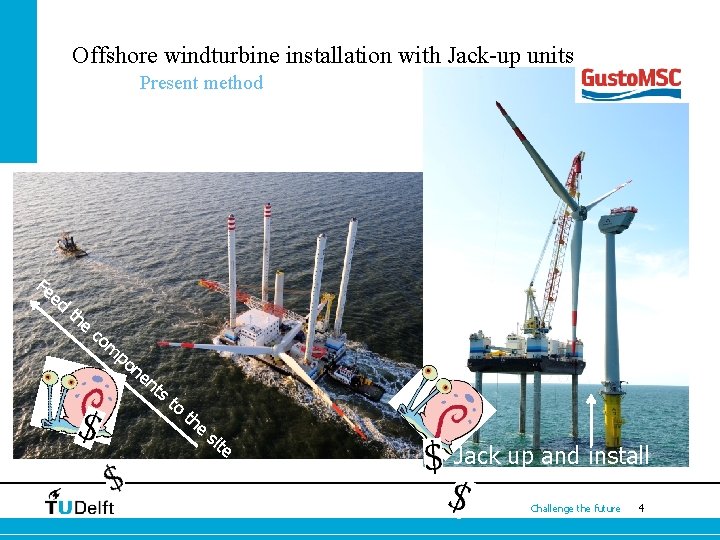
Offshore windturbine installation with Jack-up units Present method Fe e d th e co m po ne nt s to th e sit e Jack up and install Challenge the future 4
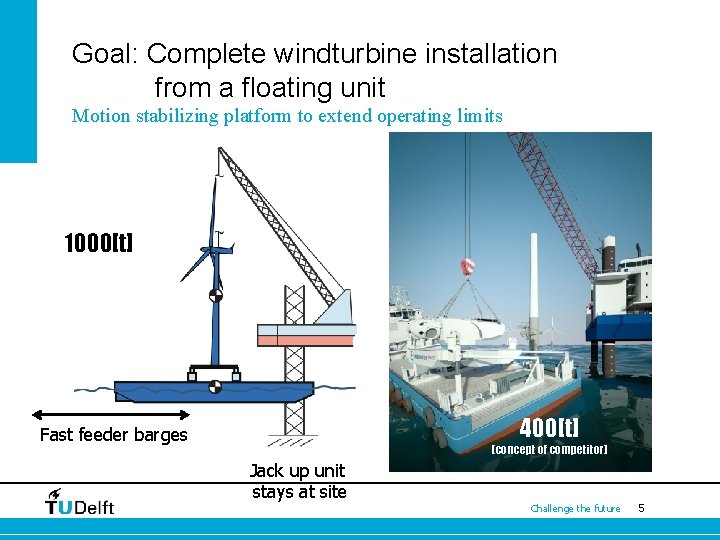
Goal: Complete windturbine installation from a floating unit Motion stabilizing platform to extend operating limits 1000[t] 400[t] Fast feeder barges (concept of competitor) Jack up unit stays at site Challenge the future 5
Small overview Preliminary 2 D model 1. Analysis of Ampelmann scalemodel tests 2. 3 D modeling of new mechanism on ship 3. Controlling the system Challenge the future 6
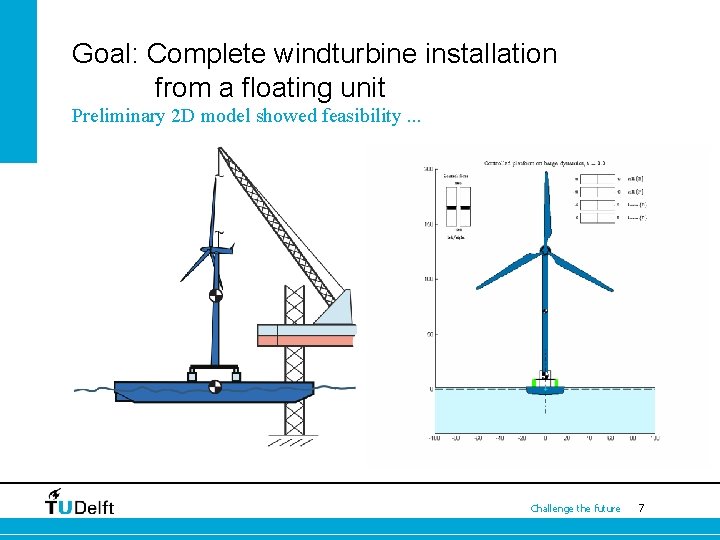
Goal: Complete windturbine installation from a floating unit Preliminary 2 D model showed feasibility. . . 400[t] (concept of competitor) Challenge the future 7
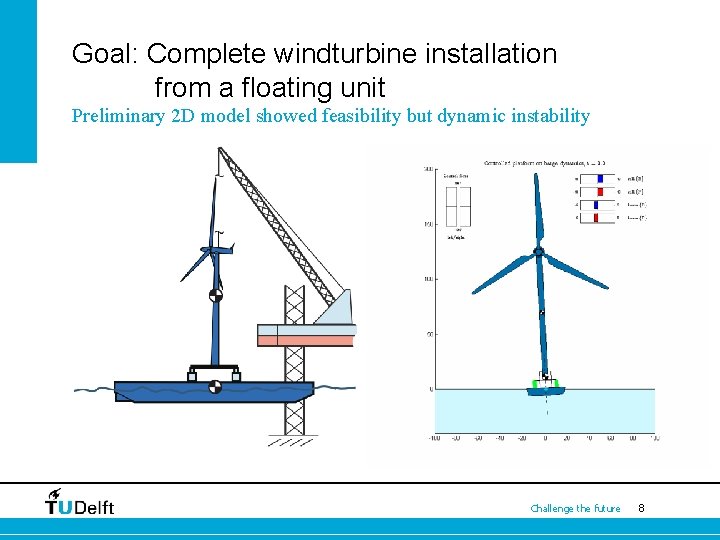
Goal: Complete windturbine installation from a floating unit Preliminary 2 D model showed feasibility but dynamic instability 400[t] (concept of competitor) Challenge the future 8
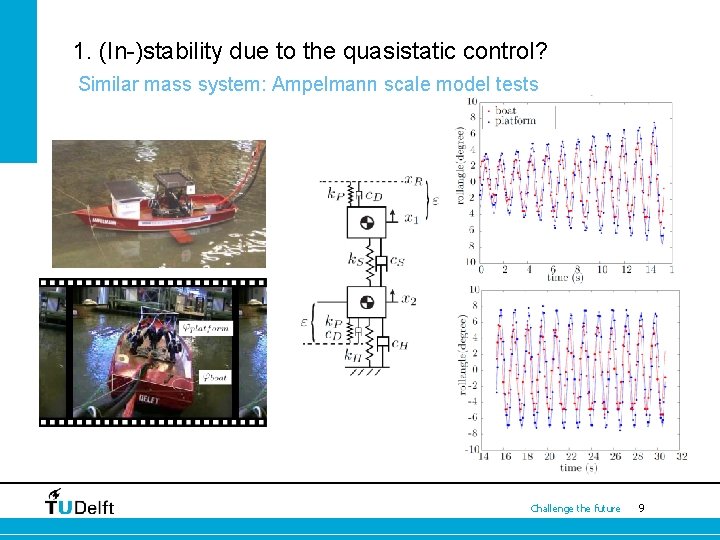
1. (In-)stability due to the quasistatic control? Similar mass system: Ampelmann scale model tests Challenge the future 9
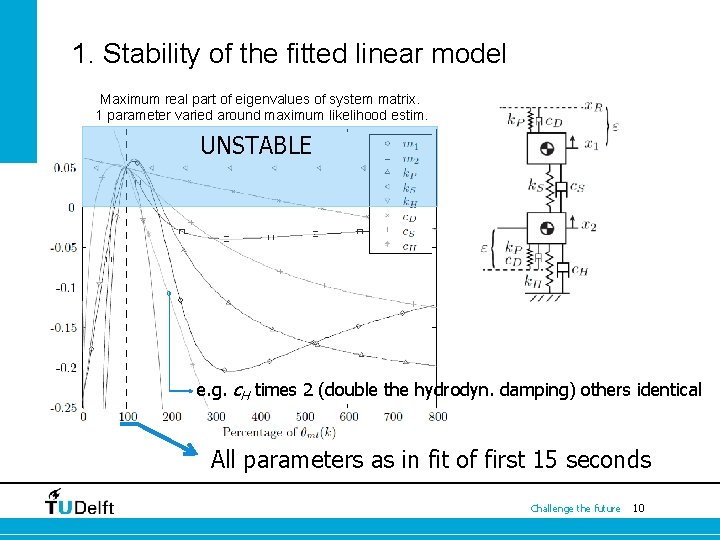
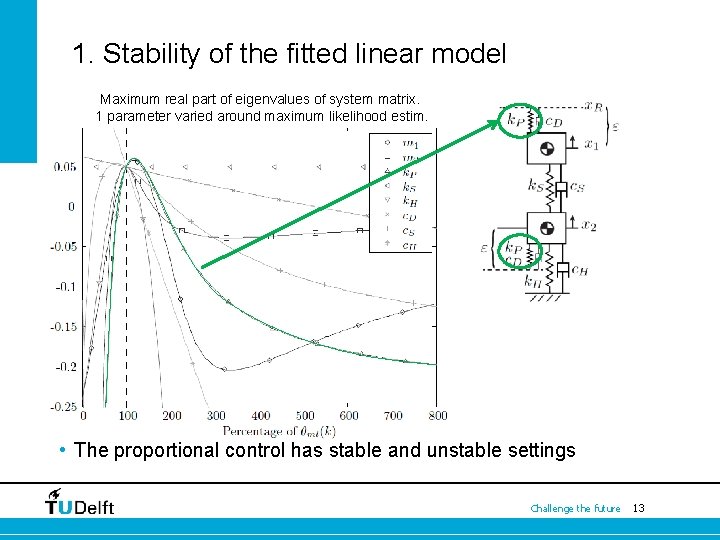
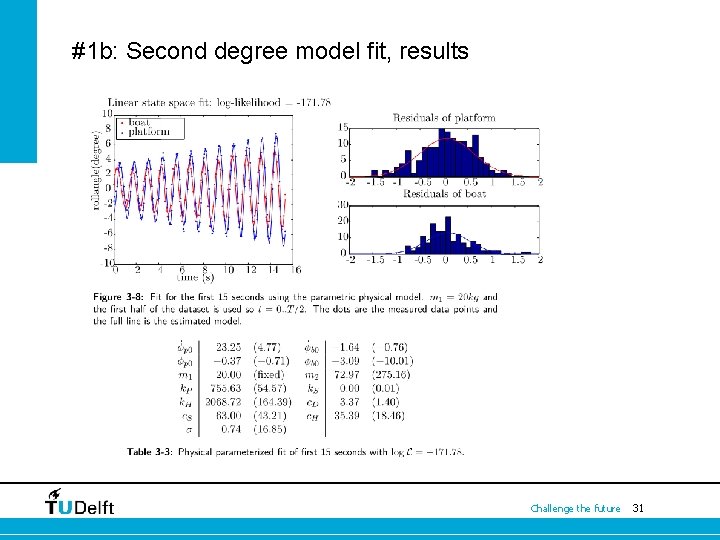
1. Stability of the fitted linear model Maximum real part of eigenvalues of system matrix. 1 parameter varied around maximum likelihood estim. UNSTABLE e. g. c. H times 2 (double the hydrodyn. damping) others identical All parameters as in fit of first 15 seconds Challenge the future 10
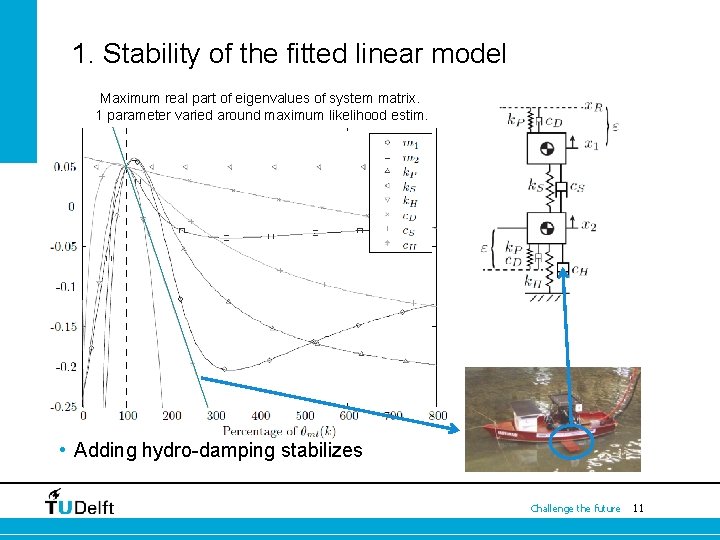
1. Stability of the fitted linear model Maximum real part of eigenvalues of system matrix. 1 parameter varied around maximum likelihood estim. • Adding hydro-damping stabilizes Challenge the future 11
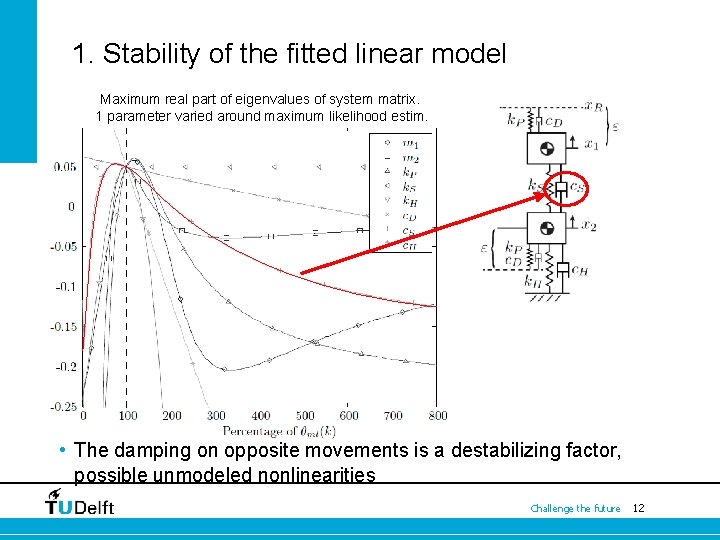
1. Stability of the fitted linear model Maximum real part of eigenvalues of system matrix. 1 parameter varied around maximum likelihood estim. • The damping on opposite movements is a destabilizing factor, possible unmodeled nonlinearities Challenge the future 12
1. Stability of the fitted linear model Maximum real part of eigenvalues of system matrix. 1 parameter varied around maximum likelihood estim. • The proportional control has stable and unstable settings Challenge the future 13
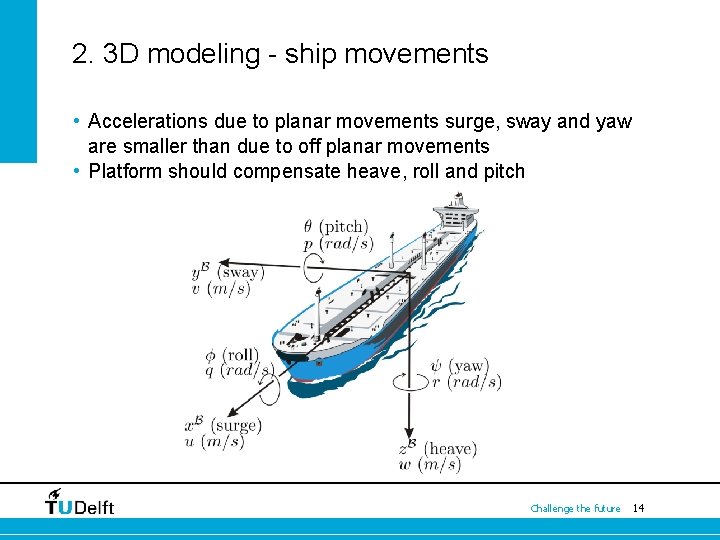
2. 3 D modeling - ship movements • Accelerations due to planar movements surge, sway and yaw are smaller than due to off planar movements • Platform should compensate heave, roll and pitch Challenge the future 14
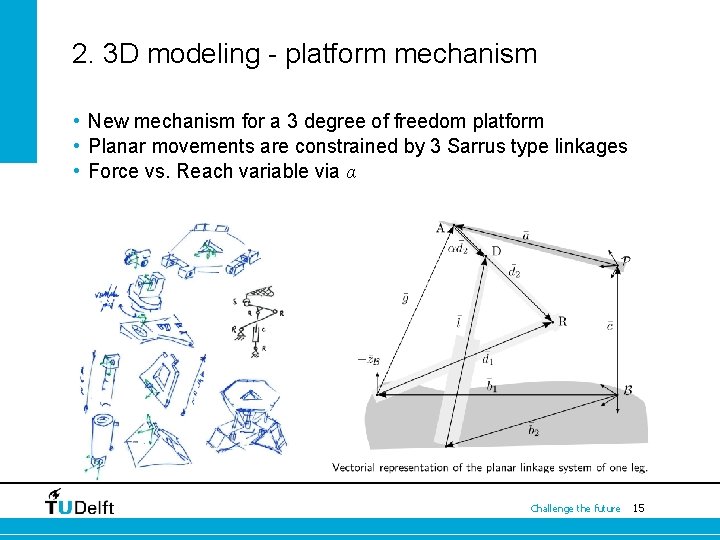
2. 3 D modeling - platform mechanism • New mechanism for a 3 degree of freedom platform • Planar movements are constrained by 3 Sarrus type linkages • Force vs. Reach variable via α Challenge the future 15
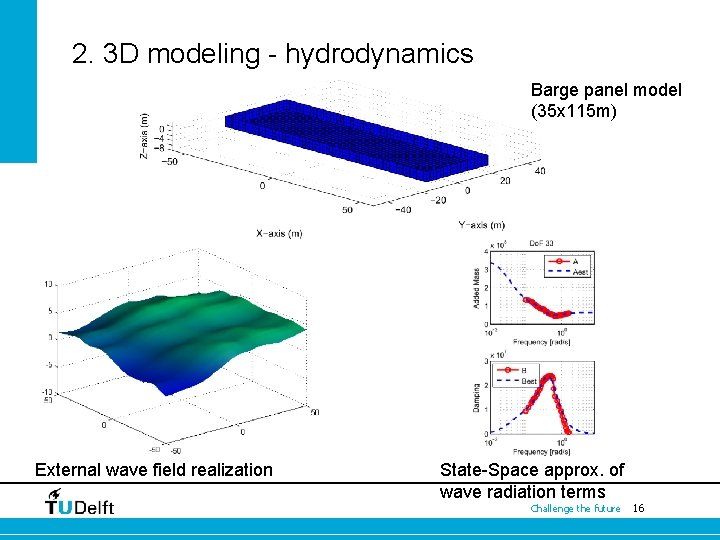
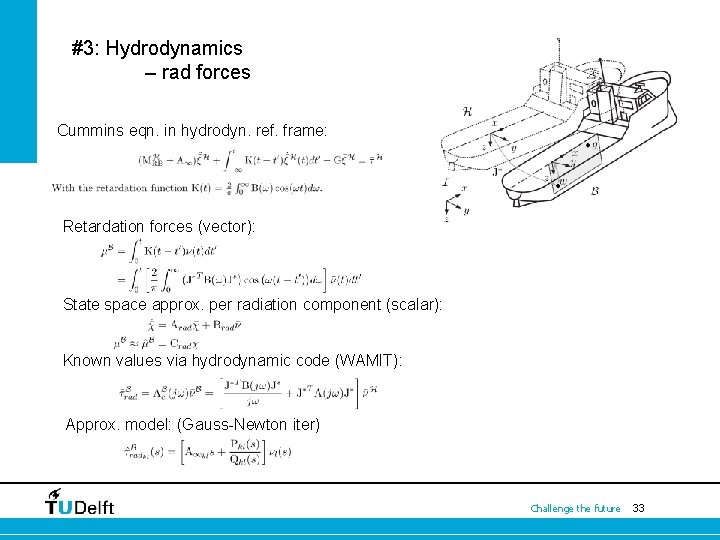
2. 3 D modeling - hydrodynamics Barge panel model (35 x 115 m) External wave field realization State-Space approx. of wave radiation terms Challenge the future 16
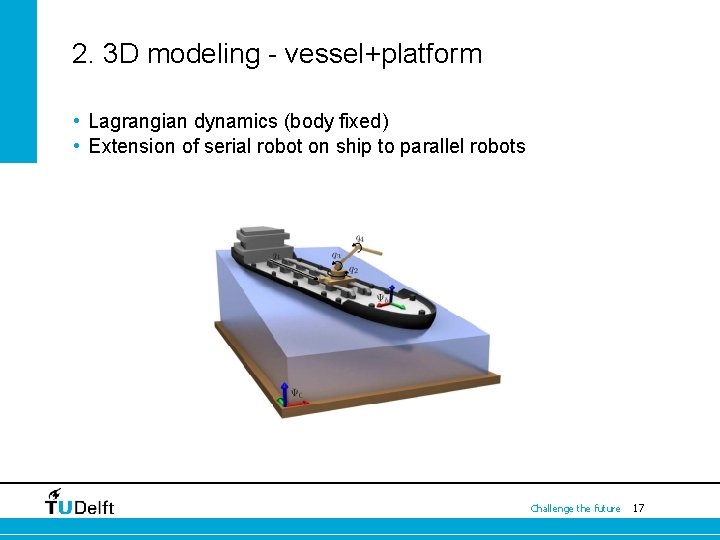
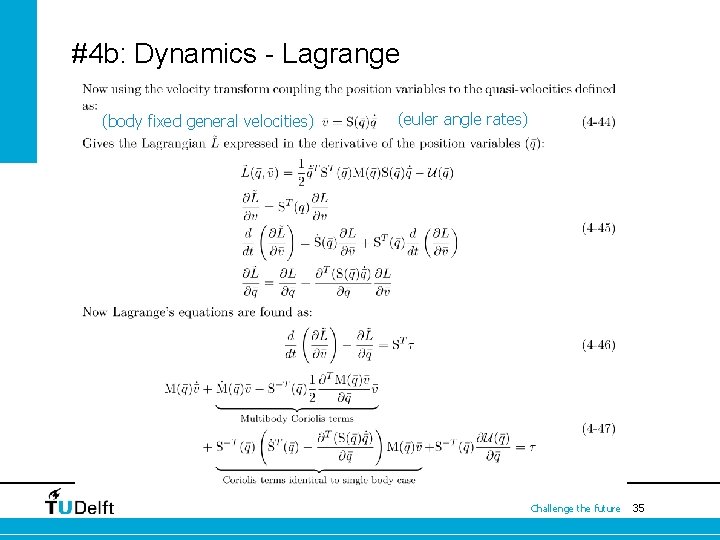
2. 3 D modeling - vessel+platform • Lagrangian dynamics (body fixed) • Extension of serial robot on ship to parallel robots Challenge the future 17
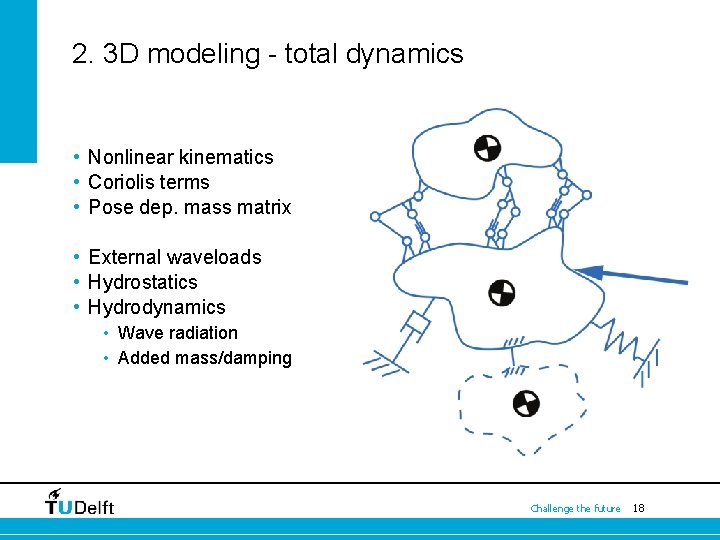
2. 3 D modeling - total dynamics • Nonlinear kinematics • Coriolis terms • Pose dep. mass matrix • External waveloads • Hydrostatics • Hydrodynamics • Wave radiation • Added mass/damping Challenge the future 18
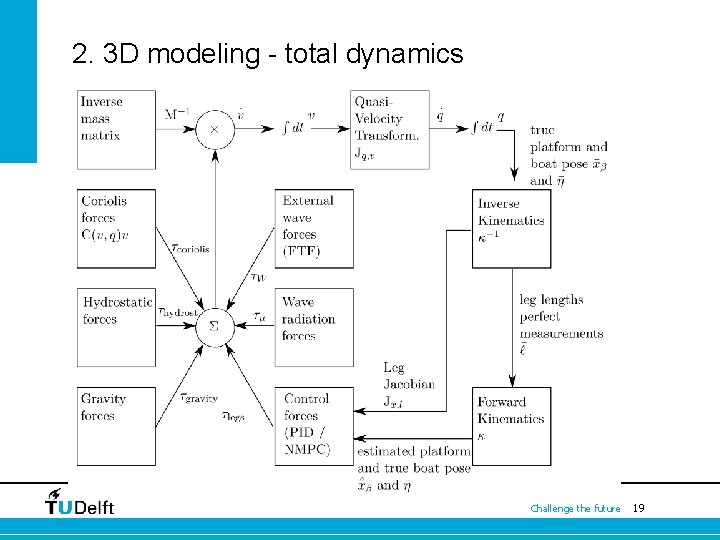
2. 3 D modeling - total dynamics Challenge the future 19
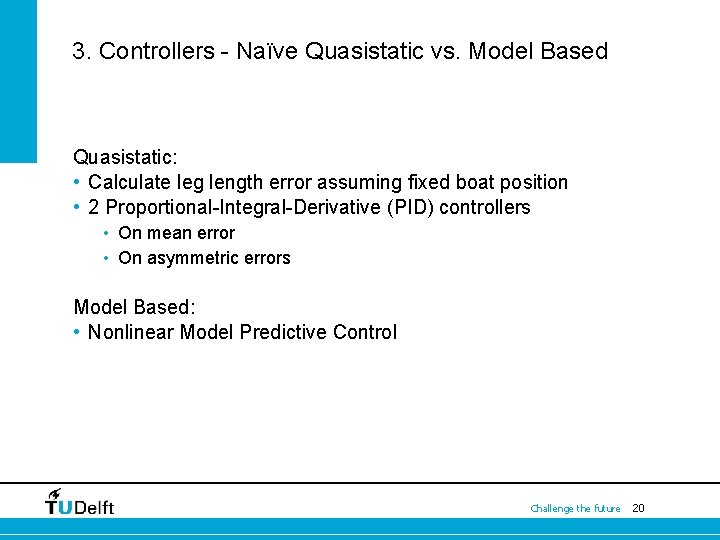
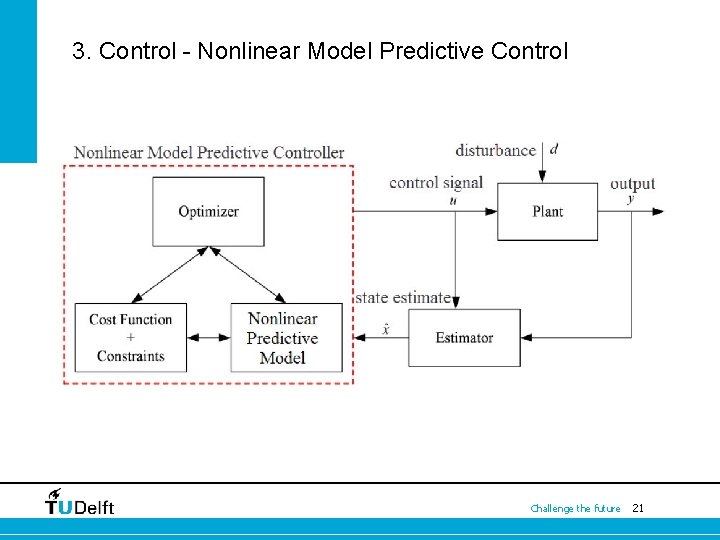
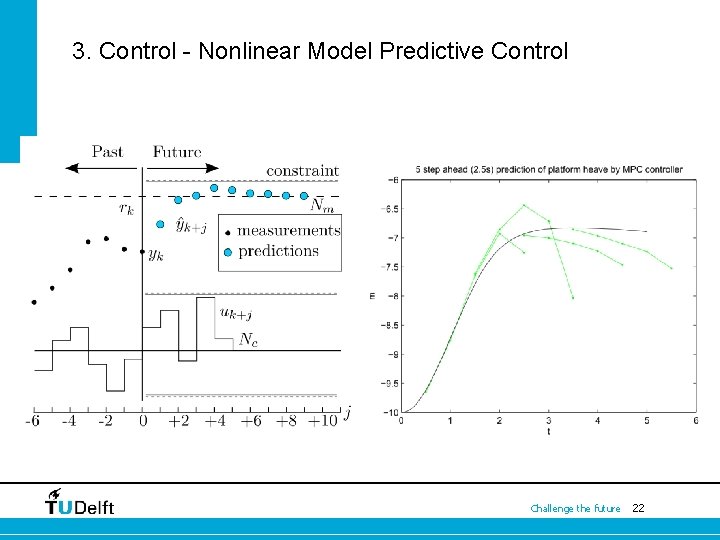
3. Controllers - Naïve Quasistatic vs. Model Based Quasistatic: • Calculate leg length error assuming fixed boat position • 2 Proportional-Integral-Derivative (PID) controllers • On mean error • On asymmetric errors Model Based: • Nonlinear Model Predictive Control Challenge the future 20
3. Control - Nonlinear Model Predictive Control Challenge the future 21
3. Control - Nonlinear Model Predictive Control Challenge the future 22
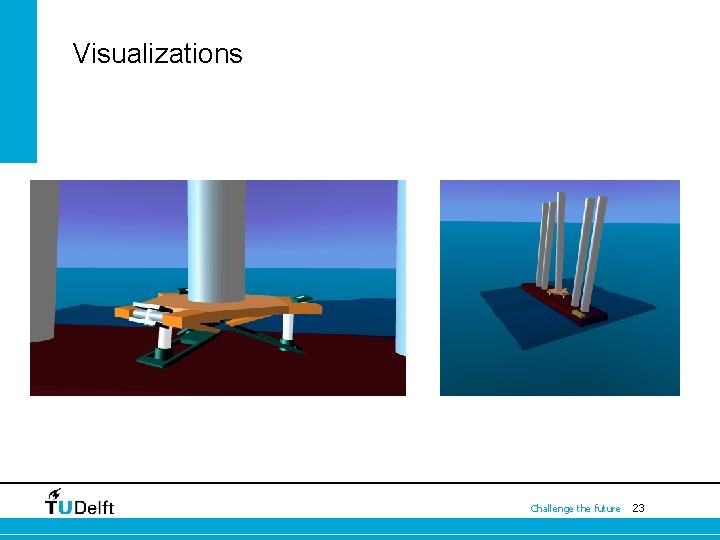
Visualizations Challenge the future 23
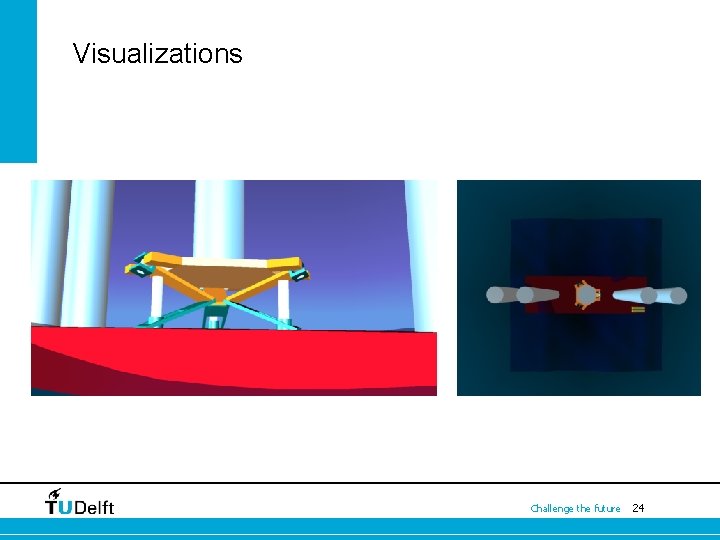
Visualizations Challenge the future 24
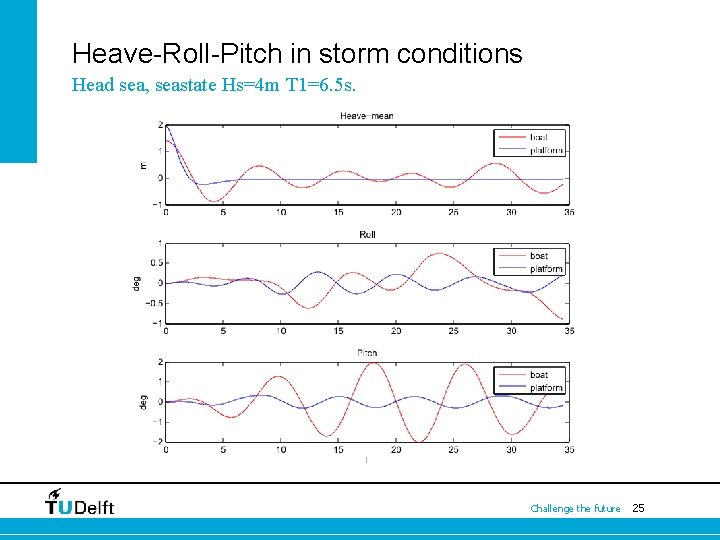
Heave-Roll-Pitch in storm conditions Head sea, seastate Hs=4 m T 1=6. 5 s. Challenge the future 25
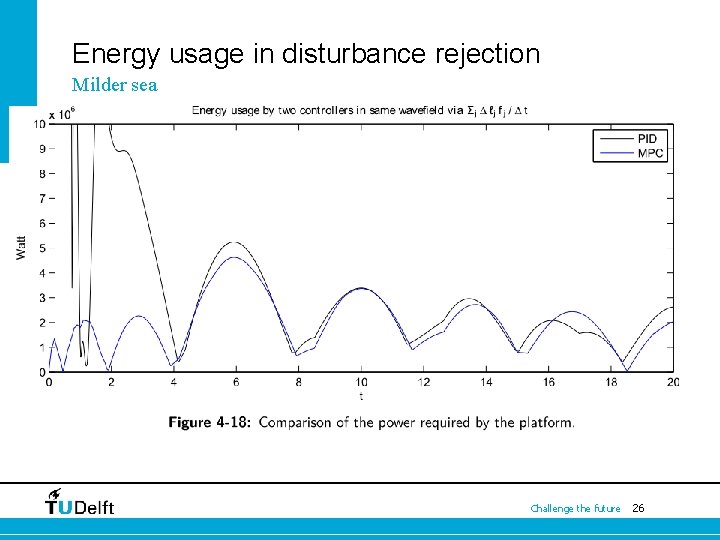
Energy usage in disturbance rejection Milder sea Challenge the future 26
Conclusions • The scalemodel roll instability can be reproduced by a linear model with quasistatic control and influential parameters can be recognized. • The coupled ship - parallel platform dynamics are derived and he new platform can compensate the ship movements. • MPC is shown to be a successful candidate for control, requires less power than PID in disturbance rejection and is less hard to tune and to stabilize. Challenge the future 27
Challenge the future 28
Thank you. Questions? Challenge the future 29
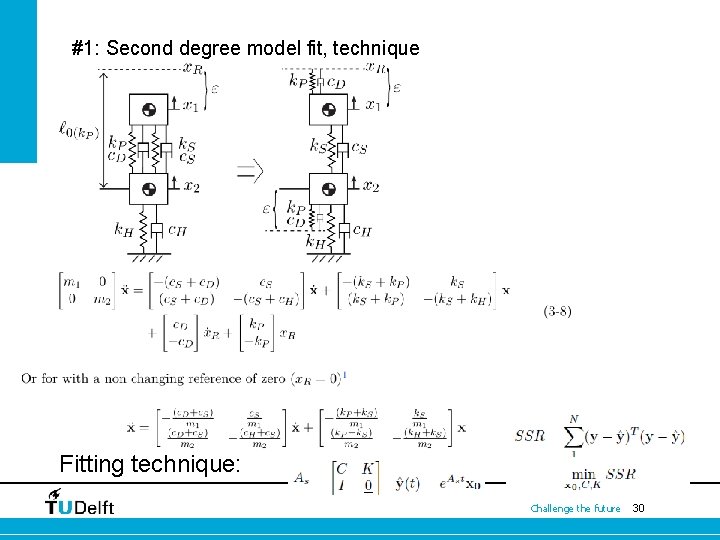
#1: Second degree model fit, technique Fitting technique: Challenge the future 30
#1 b: Second degree model fit, results Challenge the future 31
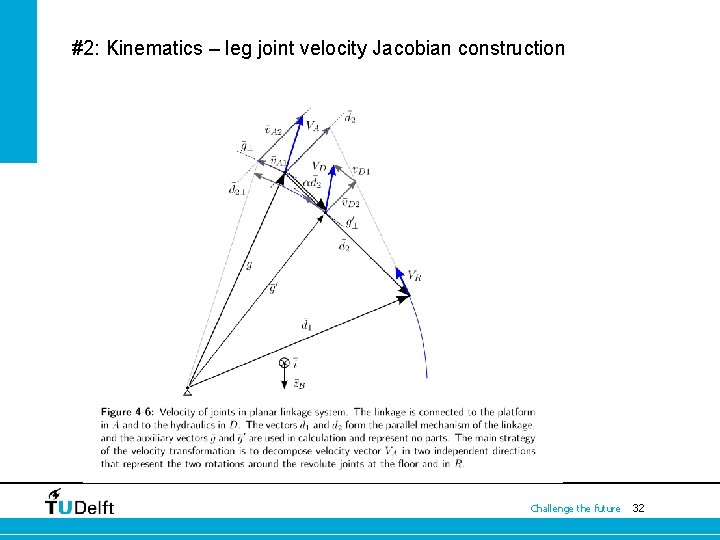
#2: Kinematics – leg joint velocity Jacobian construction Challenge the future 32
#3: Hydrodynamics – rad forces Cummins eqn. in hydrodyn. ref. frame: Retardation forces (vector): State space approx. per radiation component (scalar): Known values via hydrodynamic code (WAMIT): Approx. model: (Gauss-Newton iter) Challenge the future 33
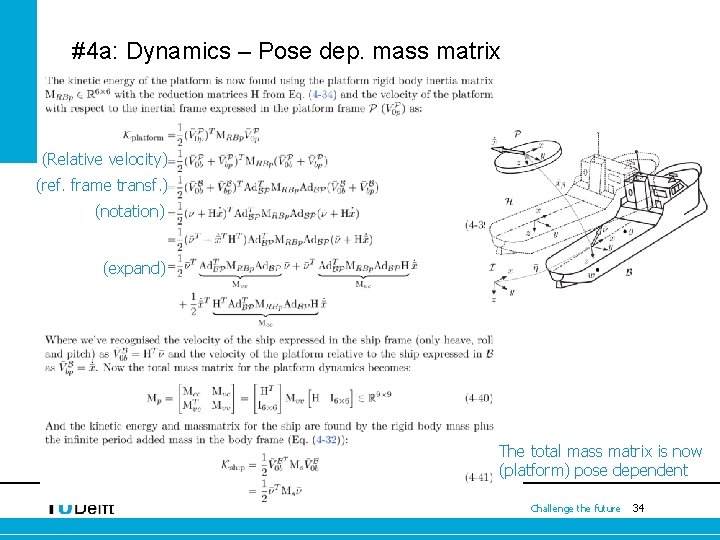
#4 a: Dynamics – Pose dep. mass matrix (Relative velocity) (ref. frame transf. ) (notation) (expand) The total mass matrix is now (platform) pose dependent Challenge the future 34
#4 b: Dynamics - Lagrange (body fixed general velocities) (euler angle rates) Challenge the future 35