
SHINKENSAN Japans Bullet Train The first highspeed passenger

SHINKENSAN Japan’s Bullet Train

The first high-speed passenger train was built in Japan in 1964. It connected the busy cities of Tokyo and Osaka.
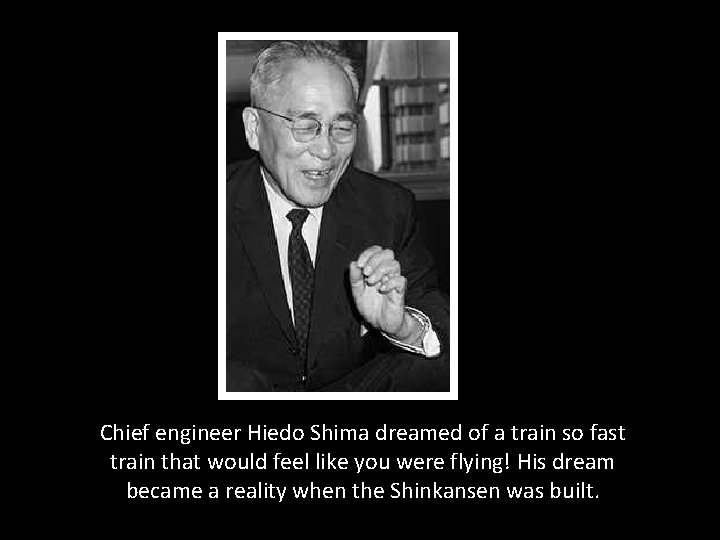
Chief engineer Hiedo Shima dreamed of a train so fast train that would feel like you were flying! His dream became a reality when the Shinkansen was built.
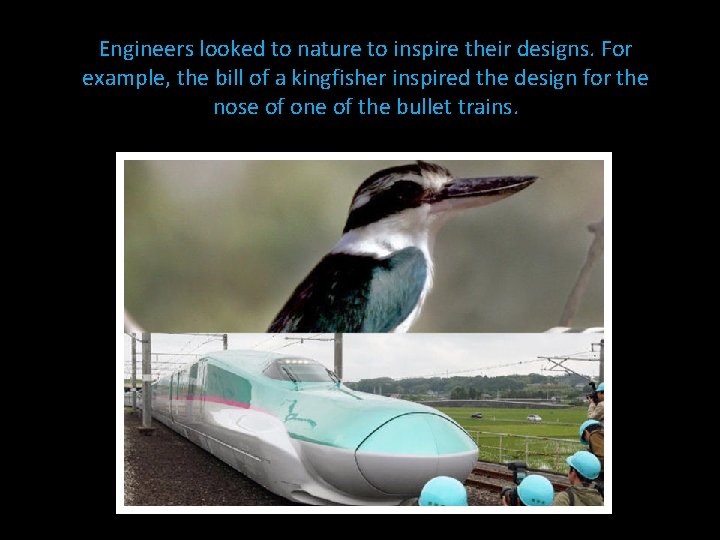
Engineers looked to nature to inspire their designs. For example, the bill of a kingfisher inspired the design for the nose of one of the bullet trains.
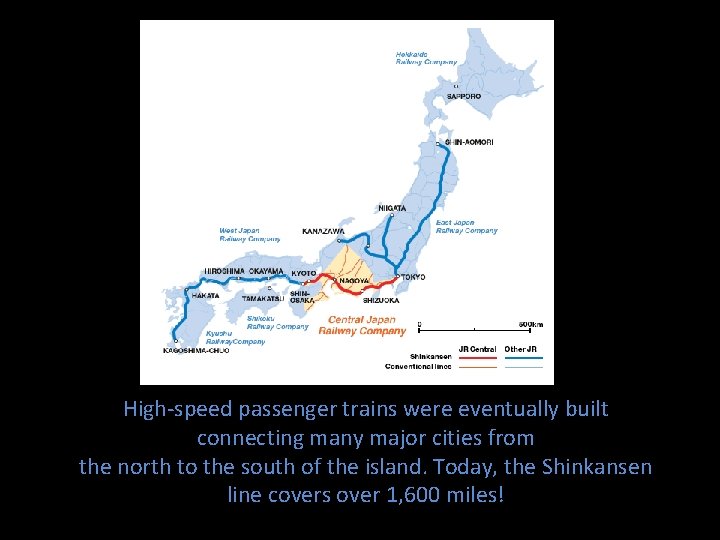
High-speed passenger trains were eventually built connecting many major cities from the north to the south of the island. Today, the Shinkansen line covers over 1, 600 miles!
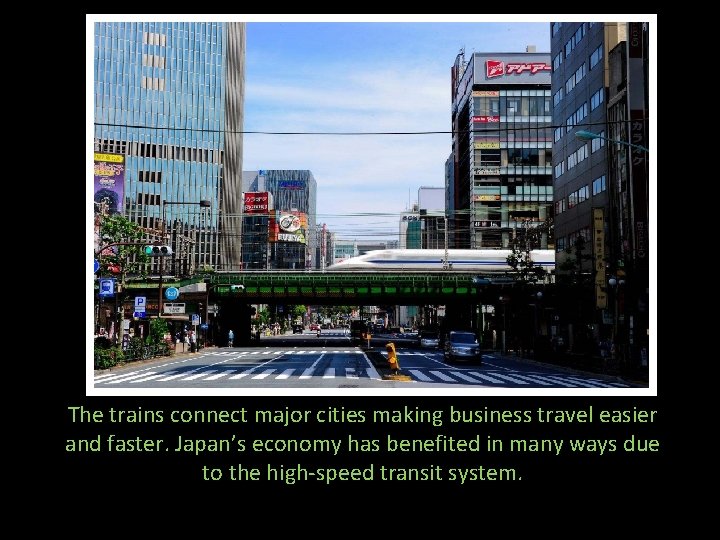
The trains connect major cities making business travel easier and faster. Japan’s economy has benefited in many ways due to the high-speed transit system.
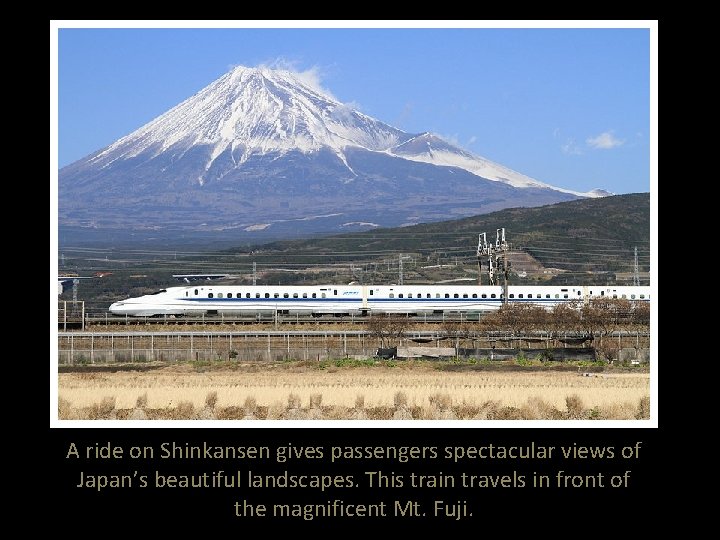
A ride on Shinkansen gives passengers spectacular views of Japan’s beautiful landscapes. This train travels in front of the magnificent Mt. Fuji.

There are three classes of passenger cars. The interior of the trains vary from basic to luxurious.

The trains are the fastest land transportation on earth. Average speed is 200 mph. But in April, 2015, a maglev train set a world record speed of 375 mph!

Shinkansen terminals are very busy. Upwards of 150 million people ride the trains every year!
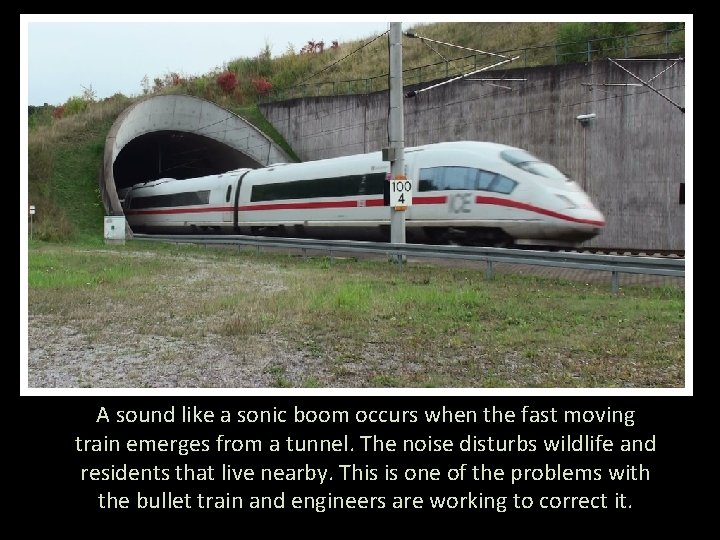
A sound like a sonic boom occurs when the fast moving train emerges from a tunnel. The noise disturbs wildlife and residents that live nearby. This is one of the problems with the bullet train and engineers are working to correct it.
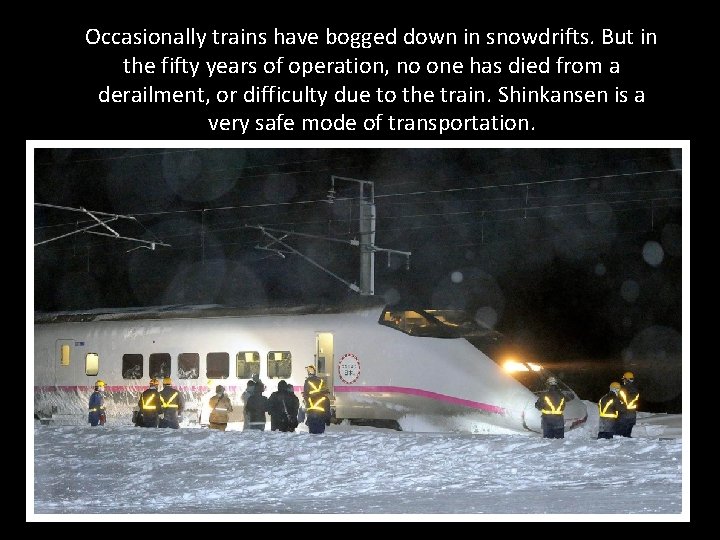
Occasionally trains have bogged down in snowdrifts. But in the fifty years of operation, no one has died from a derailment, or difficulty due to the train. Shinkansen is a very safe mode of transportation.

The train system shuts down each night for cleaning and maintenance. The pink cleaning crew waits to board and begin their work.
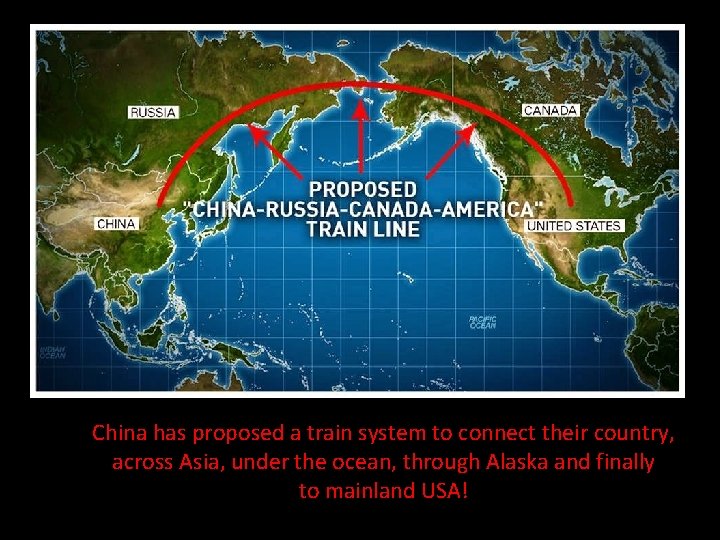
China has proposed a train system to connect their country, across Asia, under the ocean, through Alaska and finally to mainland USA!

CREDITS:
- Slides: 15