
SHIGELLA Enterocolitis Bacillary dysentery ENTERIC GRAM NAGATIVE RODS
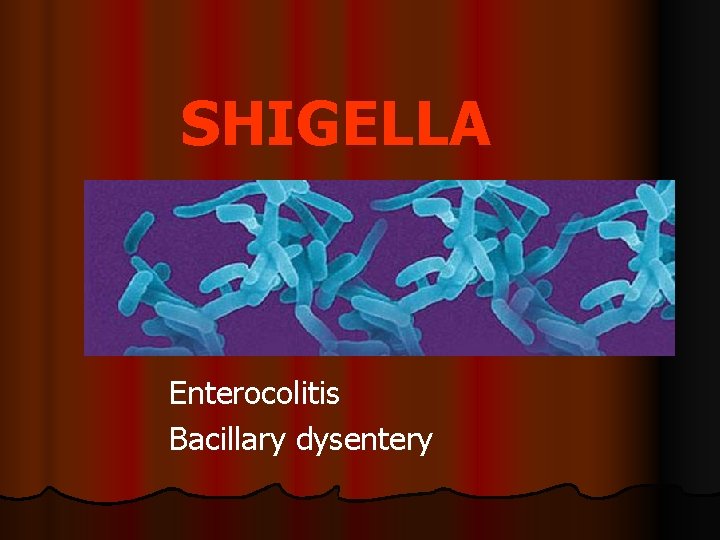
SHIGELLA Enterocolitis Bacillary dysentery
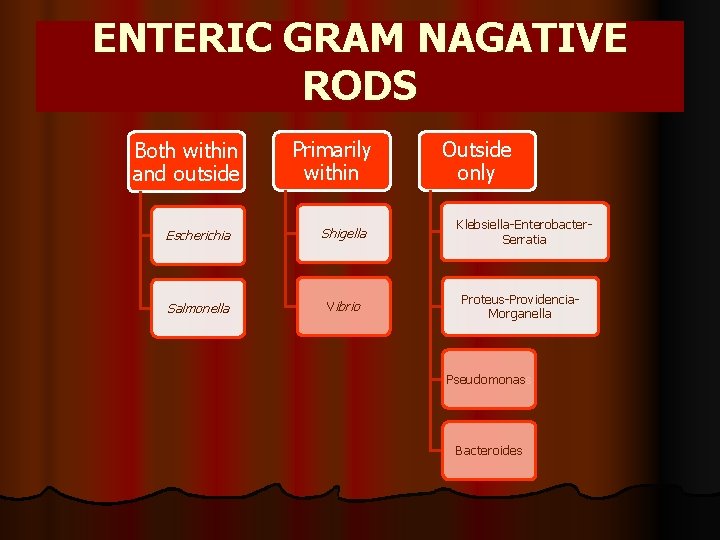
ENTERIC GRAM NAGATIVE RODS Both within and outside Primarily within Escherichia Shigella Salmonella Vibrio Outside only Klebsiella-Enterobacter. Serratia Proteus-Providencia. Morganella Pseudomonass Bacteroides
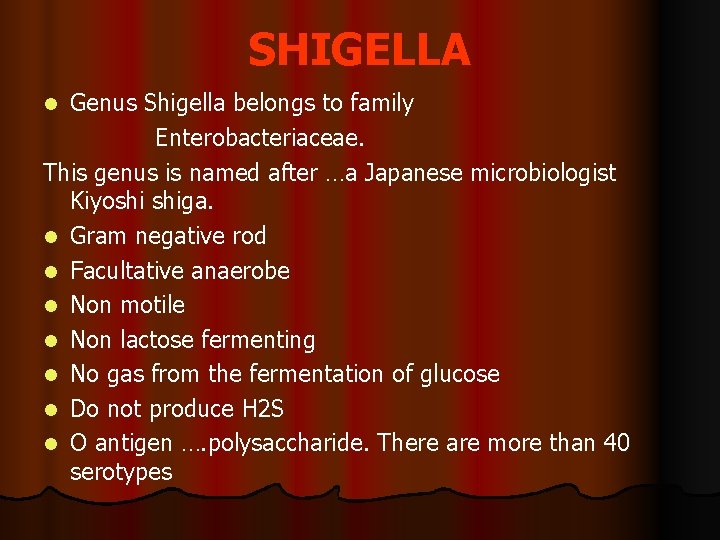
SHIGELLA Genus Shigella belongs to family Enterobacteriaceae. This genus is named after …a Japanese microbiologist Kiyoshi shiga. l Gram negative rod l Facultative anaerobe l Non motile l Non lactose fermenting l No gas from the fermentation of glucose l Do not produce H 2 S l O antigen …. polysaccharide. There are more than 40 serotypes l
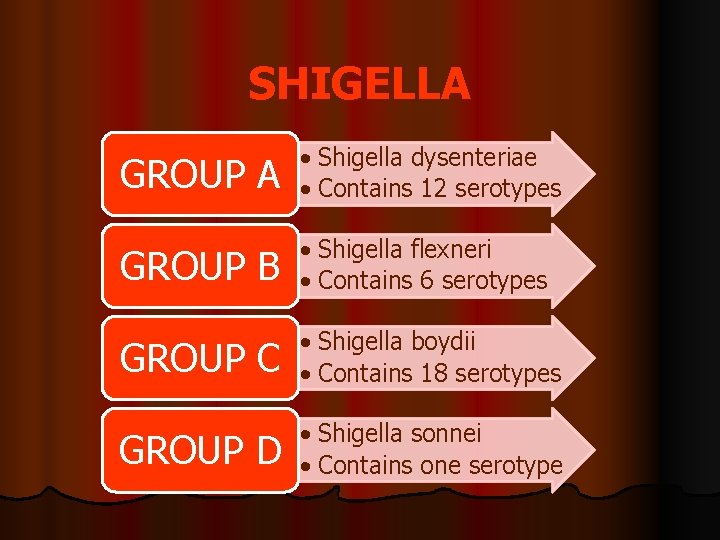
SHIGELLA GROUP A • Shigella dysenteriae • Contains 12 serotypes GROUP B • Shigella flexneri • Contains 6 serotypes GROUP C • Shigella boydii • Contains 18 serotypes GROUP D • Shigella sonnei • Contains one serotype

Transmission l l l Faeco-oral transmission. The 4 Fs are involved………. fingers flies food feces Food borne to water-borne incidence 2: 1 Approximately half of Shigella infections are seen in children less than 10 years There is no carrier state with shigella Incubation period… 1 -4 days

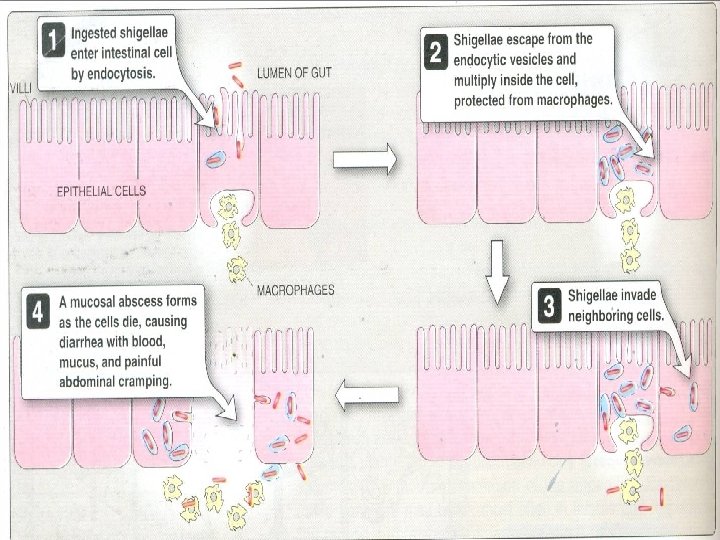
PATHOGENESIS l Shigella are most effective pathogens among the enteric bacteria. l They have a very low ID 50, 1 O…. 100 bacteria. l Shigellosis is only a human disease.
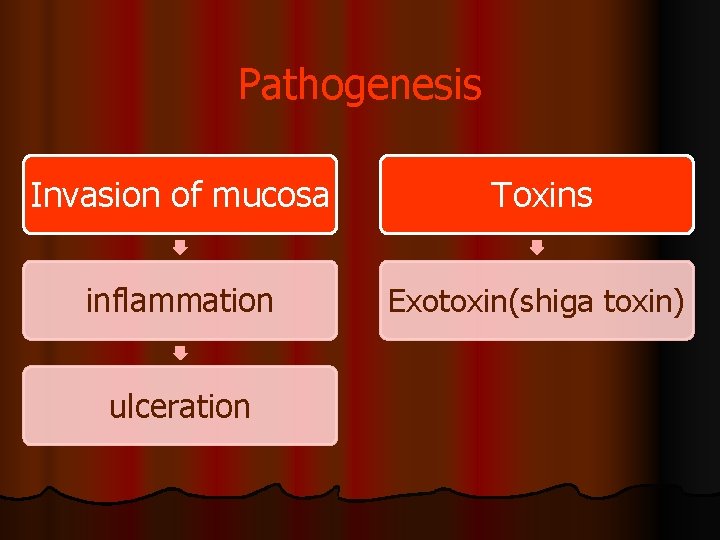
Pathogenesis Invasion of mucosa Toxins inflammation Exotoxin(shiga toxin) ulceration
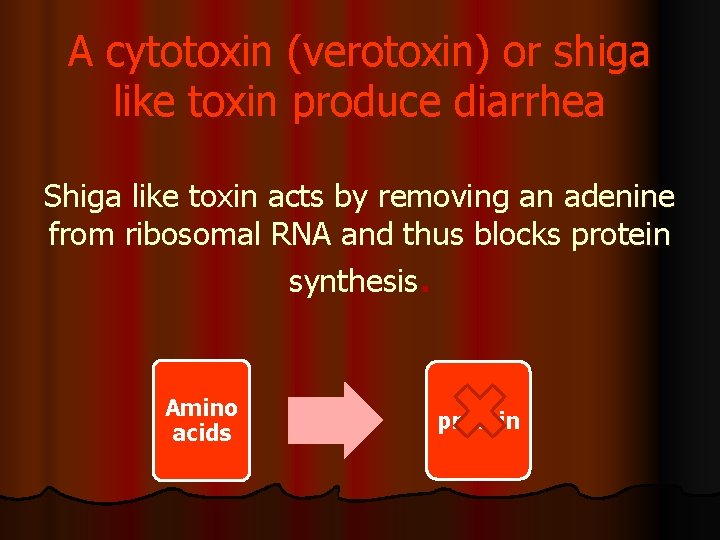
A cytotoxin (verotoxin) or shiga like toxin produce diarrhea Shiga like toxin acts by removing an adenine from ribosomal RNA and thus blocks protein synthesis. Amino acids protein
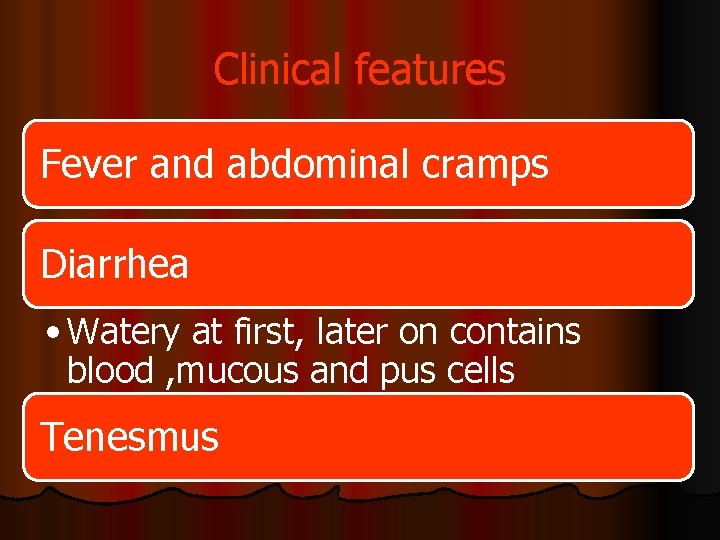
Clinical features Fever and abdominal cramps Diarrhea • Watery at first, later on contains blood , mucous and pus cells Tenesmus
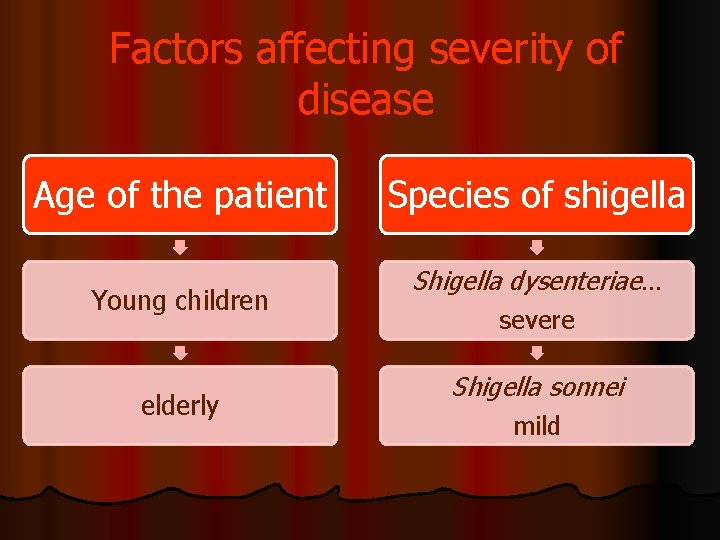
Factors affecting severity of disease Age of the patient Young children elderly Species of shigella Shigella dysenteriae… severe Shigella sonnei mild
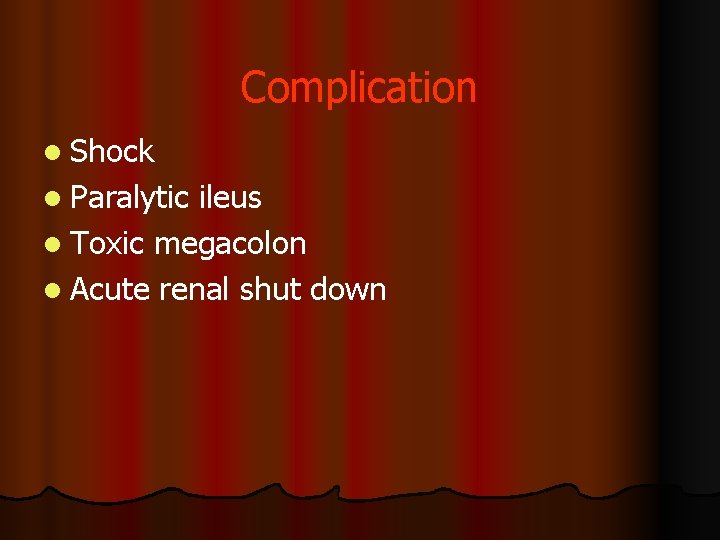
Complication l Shock l Paralytic ileus l Toxic megacolon l Acute renal shut down
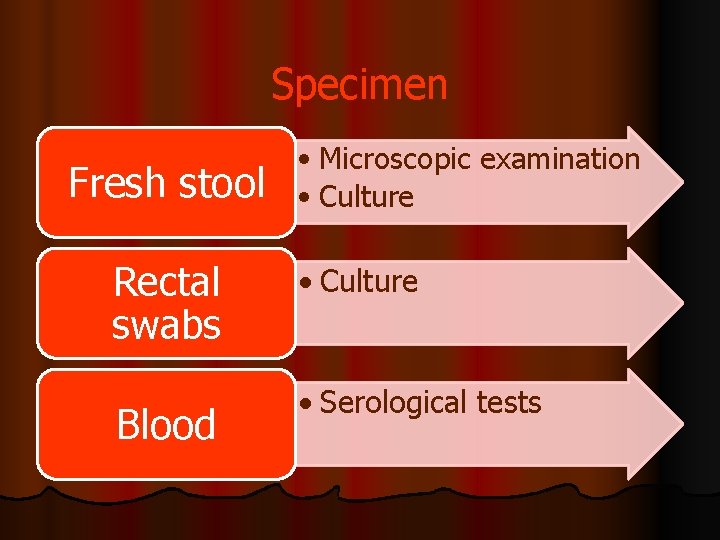
Specimen Fresh stool Rectal swabs Blood • Microscopic examination • Culture • Serological tests

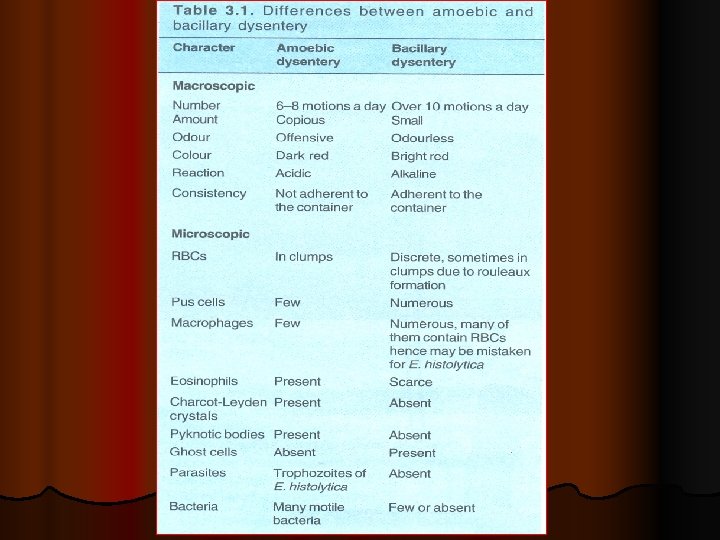
Microscopic examination l METHYLENE BLUE STAIN OF FAECAL MATTER l In cases of shigella, pus and blood will be present especially in later stages l Unlike ameobic dysentry, stools will have alkaline p. H.

Culture selective media l Mac. Conkey’s agar l DCA l EMB agar l Salmonella-shigella agar l XLD l Hekteon agar
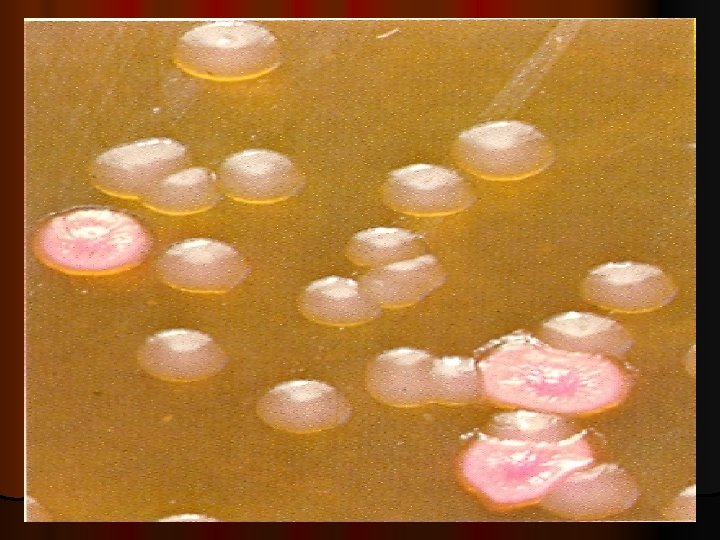
Culture differential media Mac. Conkey’s • Colorless agar colonies
Differential media EMB agar • Colorless colonies

EMB agar
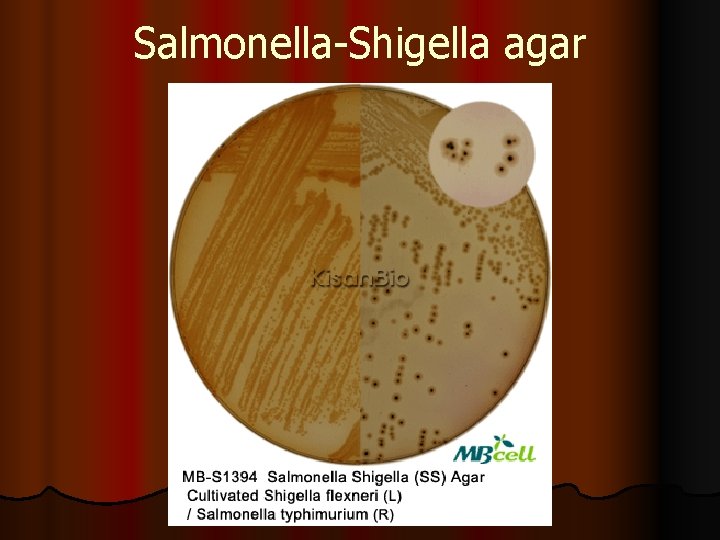
Salmonella-Shigella agar
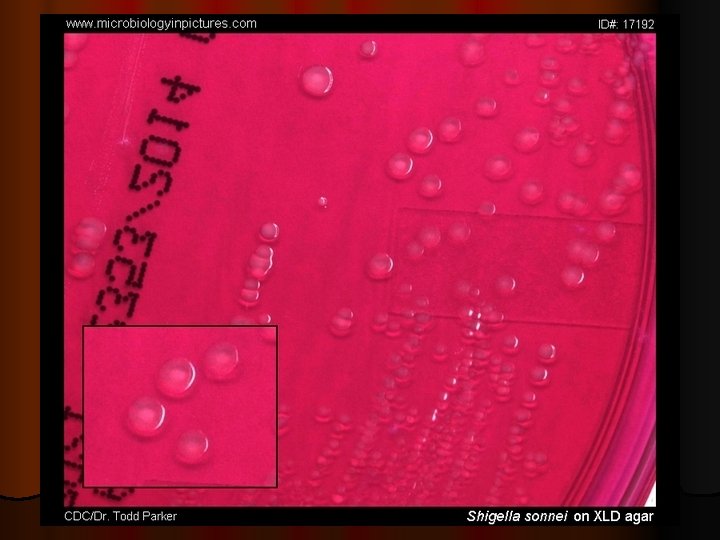
XLD agar • Red pink colonies. . withou t black centers
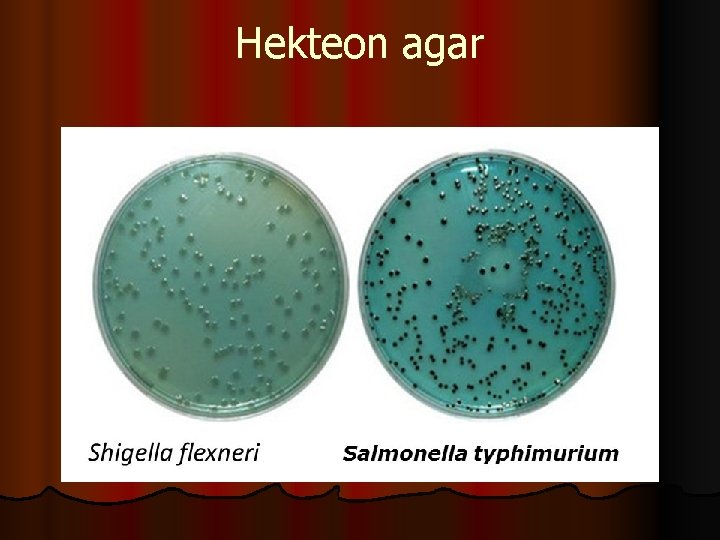
Hekteon agar
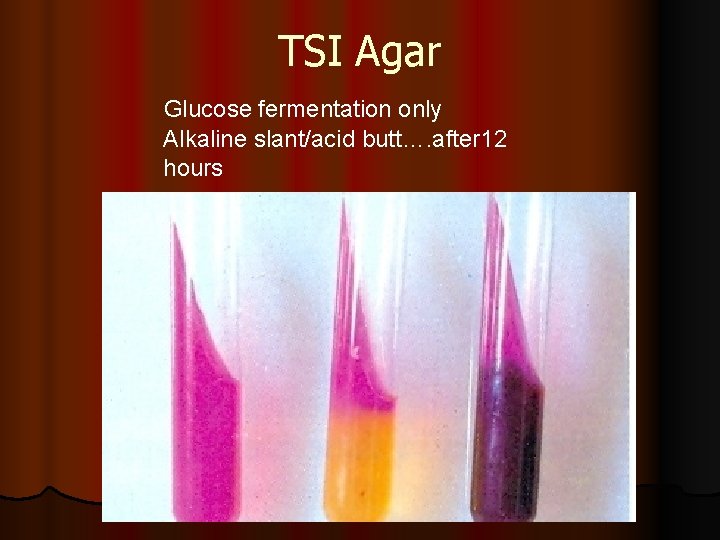
TSI Agar Glucose fermentation only Alkaline slant/acid butt…. after 12 hours
TSI agar • Alkaline slant • Acid butt • No gas , no H 2 S
Treatment l Drug of choice…Fluoroquinolone Incidence of multiple drug resistance is high. l Alternative…Trimethoprim sulphamethoxazole l Antiperistaltic drugs are contraindicated in shigellosis
Prevention l Proper sewage disposal l Chlorination of water l Personal hygiene education l No vaccine
- Slides: 29