
SHELTERNFI CLUSTER NORTHWEST SYRIA 5 October 2020 1
SHELTER/NFI CLUSTER NORTH-WEST SYRIA 5 October 2020 1
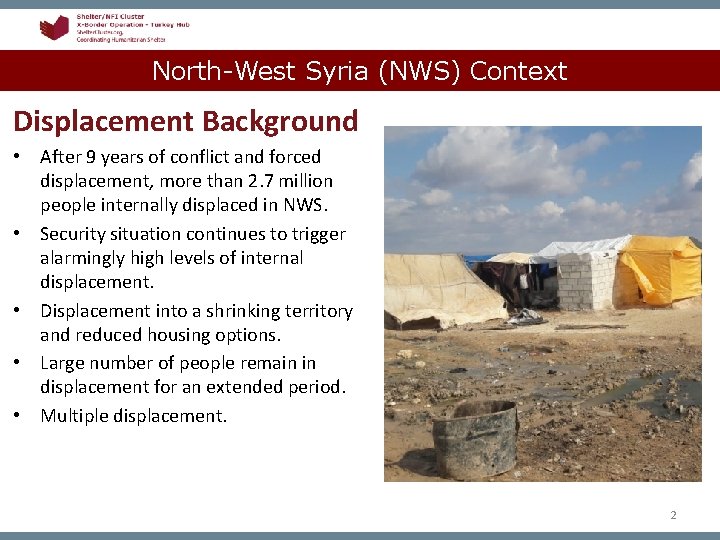
North-West Syria (NWS) Context Displacement Background • After 9 years of conflict and forced displacement, more than 2. 7 million people internally displaced in NWS. • Security situation continues to trigger alarmingly high levels of internal displacement. • Displacement into a shrinking territory and reduced housing options. • Large number of people remain in displacement for an extended period. • Multiple displacement. 2
North-West Syria (NWS) Context 3
North-West Syria (NWS) Context Identified Gaps and Needs • More than half of all IDPs in north-west Syria reside in inadequate housing (HNAP). • Protracted displacement, more people remain in displacement, long-term shelter needs of displaced persons are increasing. • Inherent protection and privacy issues related to overcrowded and lack of shelter, especially for women and girls. COVID-19 impact. • Regular reports on fire, floods and high-speed wind incidents impacting IDP sites. • Poor infrastructure in the camps as IDP s are establishing their own sites. 4
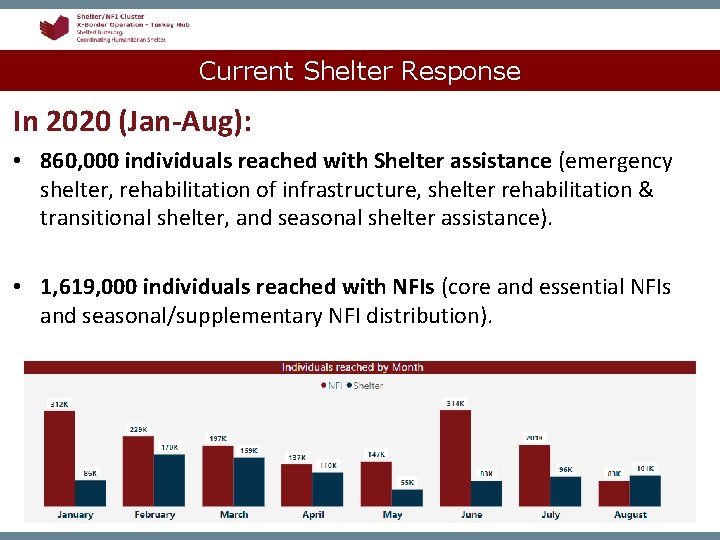
Current Shelter Response In 2020 (Jan-Aug): • 860, 000 individuals reached with Shelter assistance (emergency shelter, rehabilitation of infrastructure, shelter rehabilitation & transitional shelter, and seasonal shelter assistance). • 1, 619, 000 individuals reached with NFIs (core and essential NFIs and seasonal/supplementary NFI distribution). 5
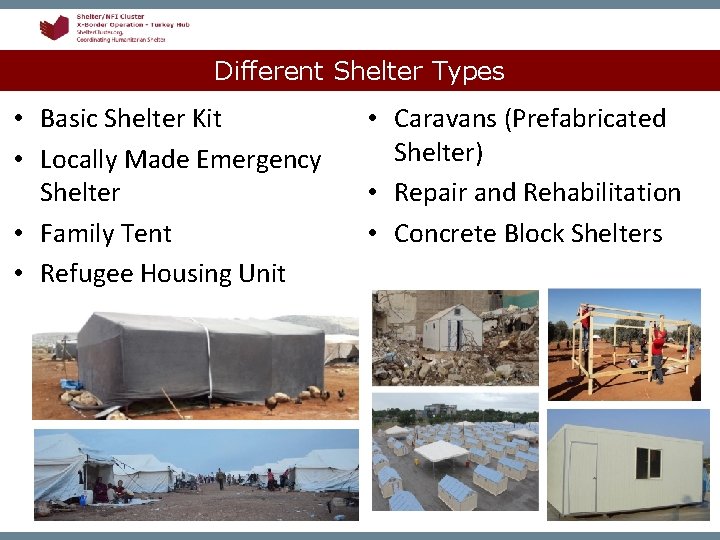
Different Shelter Types • Basic Shelter Kit • Locally Made Emergency Shelter • Family Tent • Refugee Housing Unit • Caravans (Prefabricated Shelter) • Repair and Rehabilitation • Concrete Block Shelters 6
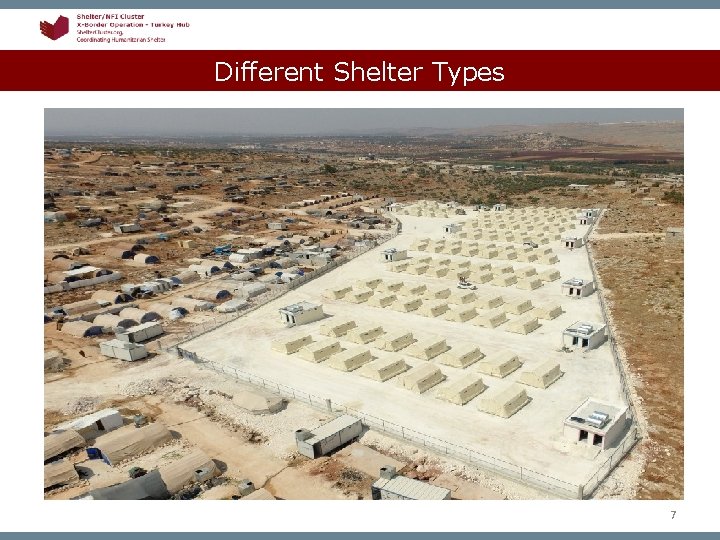
Different Shelter Types 7
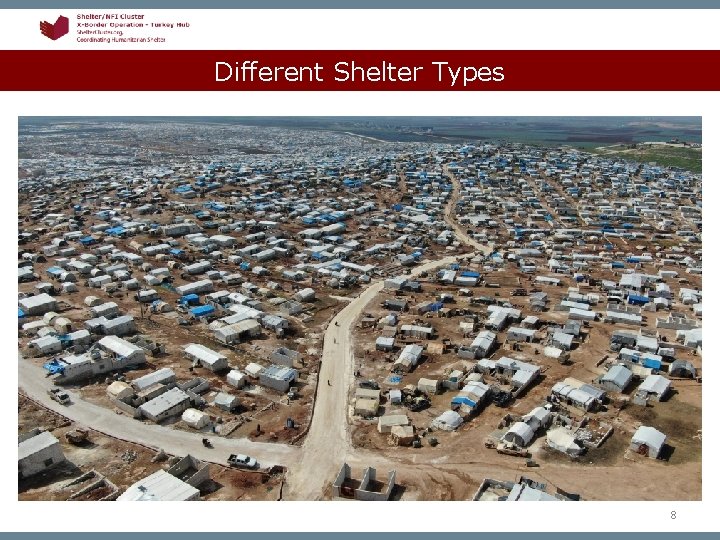
Different Shelter Types 8
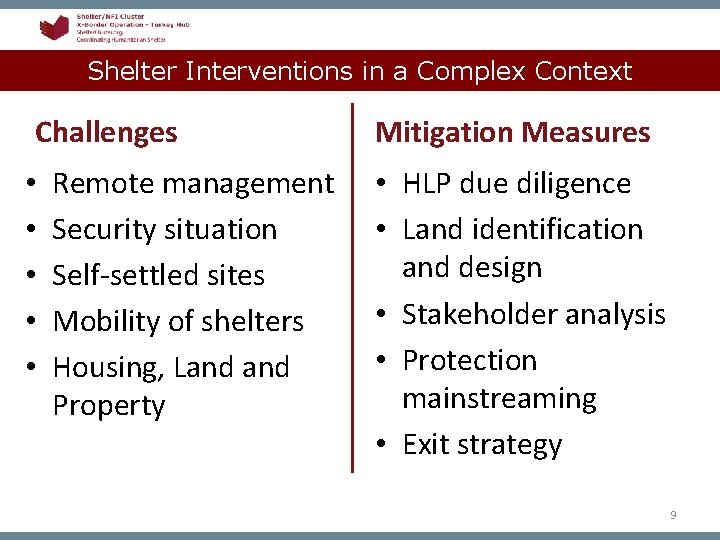
Shelter Interventions in a Complex Context Challenges • • • Remote management Security situation Self-settled sites Mobility of shelters Housing, Land Property Mitigation Measures • HLP due diligence • Land identification and design • Stakeholder analysis • Protection mainstreaming • Exit strategy 9
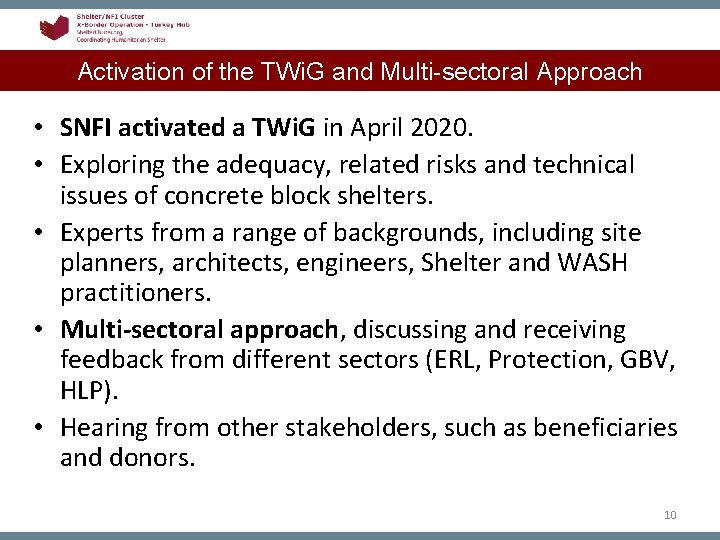
Activation of the TWi. G and Multi-sectoral Approach • SNFI activated a TWi. G in April 2020. • Exploring the adequacy, related risks and technical issues of concrete block shelters. • Experts from a range of backgrounds, including site planners, architects, engineers, Shelter and WASH practitioners. • Multi-sectoral approach, discussing and receiving feedback from different sectors (ERL, Protection, GBV, HLP). • Hearing from other stakeholders, such as beneficiaries and donors. 10
Guiding Principles and Way Forward • Guiding Principles on Internal Displacement: ‘Every human being has the right to dignity and physical, mental and moral integrity’, and ‘All internally displaced persons have the right to an adequate standard of living. ’ 11
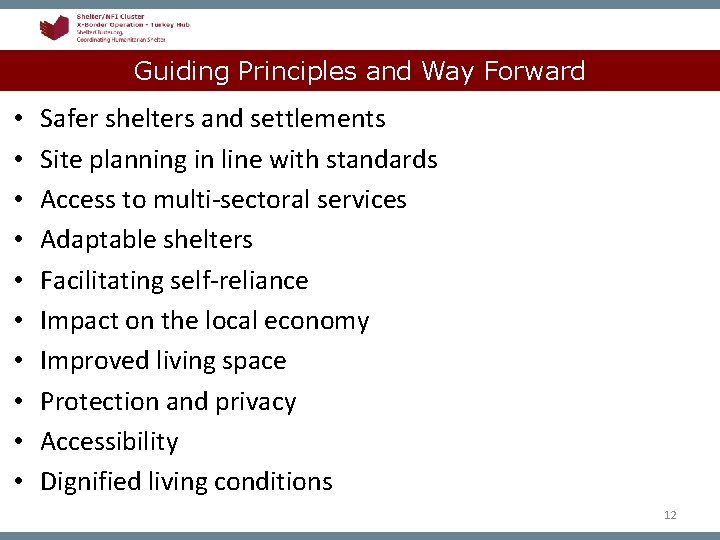
Guiding Principles and Way Forward • • • Safer shelters and settlements Site planning in line with standards Access to multi-sectoral services Adaptable shelters Facilitating self-reliance Impact on the local economy Improved living space Protection and privacy Accessibility Dignified living conditions 12
THANK YOU! 13
- Slides: 13