
Sheltered Instruction Observation Protocol SIOP SIOP The Sheltered
Sheltered Instruction Observation Protocol SIOP
SIOP The Sheltered Instruction Observation Protocol (SIOP) Model is a research-based and validated instructional model that has proven effective in addressing the academic needs of English learners throughout the United States.
SIOP The SIOP Model consists of 8 interrelated components: � Lesson Preparation � Building Background � Comprehensible Input � Strategies � Interaction � Practice/Application � Lesson Delivery
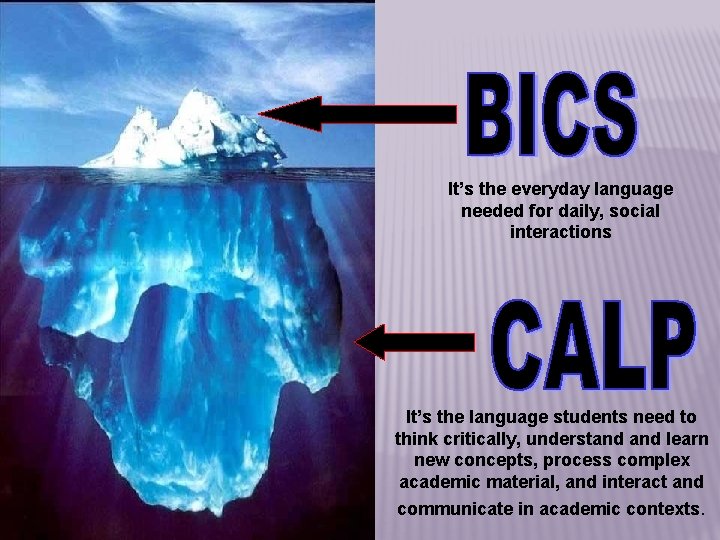
It’s the everyday language needed for daily, social interactions It’s the language students need to think critically, understand learn new concepts, process complex academic material, and interact and communicate in academic contexts.
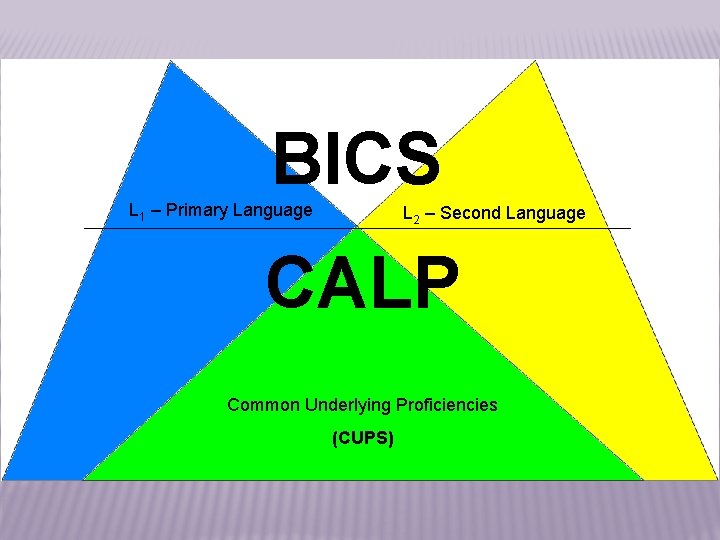
BICS L 1 – Primary Language L 2 – Second Language CALP Common Underlying Proficiencies (CUPS)
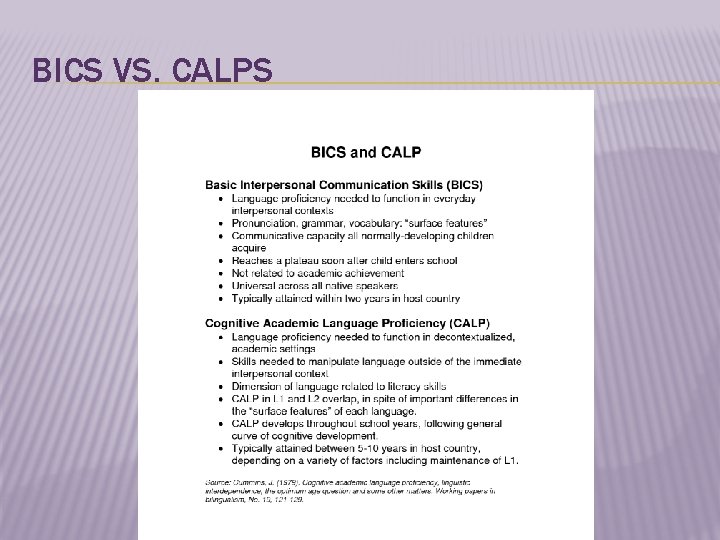
BICS VS. CALPS
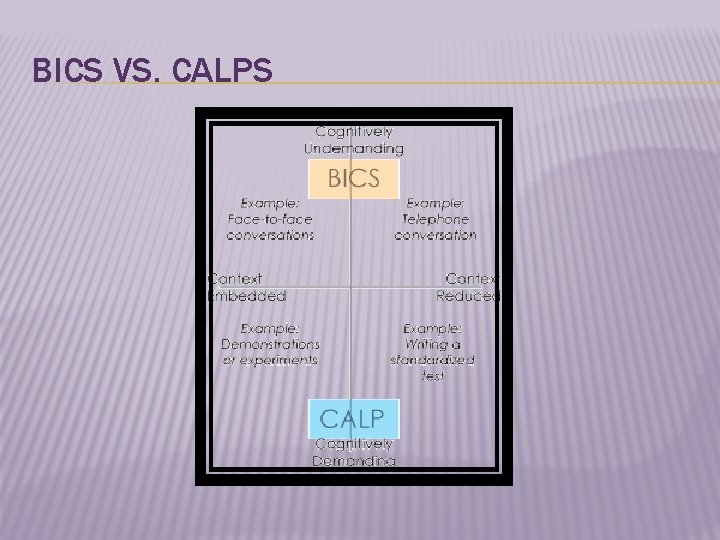
BICS VS. CALPS
RESEARCH PROVES THAT… � ELLs need to learn 17 new academic words per day in order to catch up to same grade peers � That equates to ~3000 new words per school year � How many new words did your students learn in class today?
OWNING A WORD How many times must a student interact with a word in order to “own” the word?
OLD RESEARCH 24 times

NEW RESEARCH 85 times!
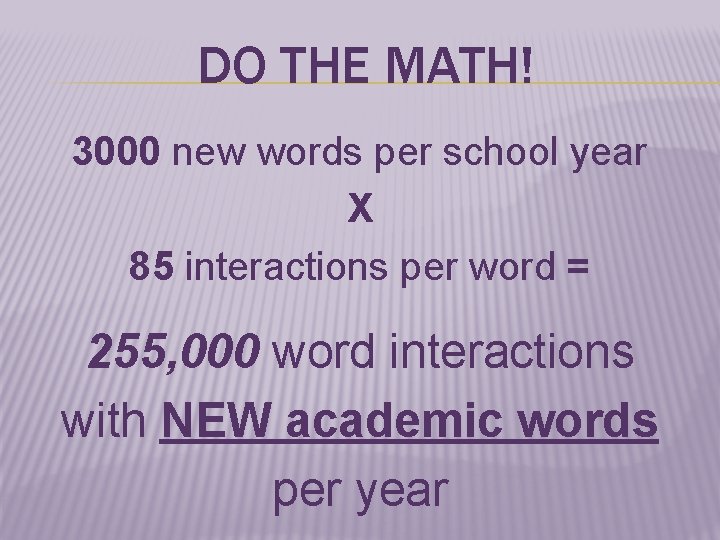
DO THE MATH! 3000 new words per school year X 85 interactions per word = 255, 000 word interactions with NEW academic words per year

THIS IS CATCH UP…NOT KEEP UP!
? ? ? How many NEW academic words did your students say in class today? How many times and ways did they interact with it/them?
Is it any wonder that our ELLs struggle and fail at school !?
WANT TO KNOW A SECRET? �It’s not just the ELLs �Special Education �Low SES �At risk

BEFORE WE GO ANY FARTHER… http: //tinyurl. com/zcwyyc p
OBJECTIVES Our objectives today: � Content: I can coach my team on ways to prepare for my ELLs that will improve the students’ access to the content. � Language: I can explain why SIOP is not a gimmick, but a way of thinking and teaching that will support all learners academically and linguistically.
CONTENT & LANGUAGE OBJECTIVES Why do we need language objectives? Brainstorm…and share!
WHY LANGUAGE OBJECTIVES? � Academic achievement requires academic language proficiency. � Academic language proficiency involves the vocabulary, language patterns, and register specific to individual content areas. � Academic language proficiency is developed through sustained content-based language instruction.
SUCCESS VS. FAILURE What is the single BEST predictor of academic success or failure?
SUCCESS VS. FAILURE Level of academic vocabulary
WRITING LANGUAGE OBJECTIVES Take time to think, plan, select, and connect: � Language objectives should be stated clearly and simply in student friendly language. � Ask yourself what are my students doing today to develop their language skills in reading, writing, listening, speaking, thinking ? � Tell them and show them…post and talk about them
ABILITY LEVELS � Write an objective that all students should attain based on the content concepts in the lesson, but adjust the intended outcomes to match the students’ ability levels. � (Some students may master the language objective by the end of the lesson; others will reach mastery at some point after practice)
WHAT? ? ? Does this mean I need to have several different language objectives for one class?
LANGUAGE OBJECTIVES � NO! You only need one language objective � Understand that not all students will be able to master the objectives at the same time on the same day or in the same way � You DO need to know your students’ ability levels (i. e. IPT, TELPAS, etc. ) in order to plan your lessons
IMPORTANT TO REMEMBER � It is also important to not equate low language proficiency with limited cognitive ability � Make sure that the language objectives you create reflect tasks that fall on the higher end of Bloom's Taxonomy and use verbs (e. g. , orally justify) accordingly. � Explicitly teach the academic words they need to understand the objective.
WHERE TO START � Decide what key vocabulary, concept words, and other academic words students will need to know in order to talk, read, and write about the topic of the lesson. � Those words might be taught as a language objective. � They should include technical terms, such as ecosystem, and terms like distribution that have different meanings across content areas (i. e. polysemous words).
HOW MANY WAYS CAN YOU USE…. ? Bar Measure Strike
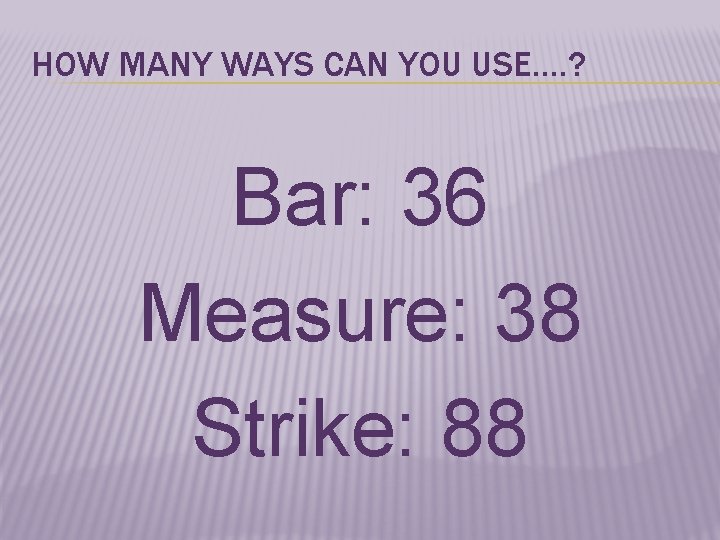
HOW MANY WAYS CAN YOU USE…. ? Bar: 36 Measure: 38 Strike: 88
WHERE TO START � The ELPS! � Consider the language functions related to the topic of the lesson � For example, will the students describe, explain, compare, or chart information
WHERE TO START � Think about the language skills necessary for students to accomplish the lesson's activities.
WHERE TO START � Identify grammar or language structures common to the content area. � For example, many science textbooks use the passive voice to describe processes. Passive voice is very difficult for ESL students to understand. The test tube was carefully smelled.
WHERE TO START � Consider the tasks that the students will complete and the language that will be embedded in those assignments. � If students are working on a scientific investigation together, will they need to explain the steps of the procedure to one another? � The language objective might focus on how to explain procedures aloud.
WHERE TO START � Explore language learning strategies that lend themselves to the topic of the lesson. � For example, if students are starting a new chapter in the textbook, the strategy of previewing the text might be an appropriate language objective.
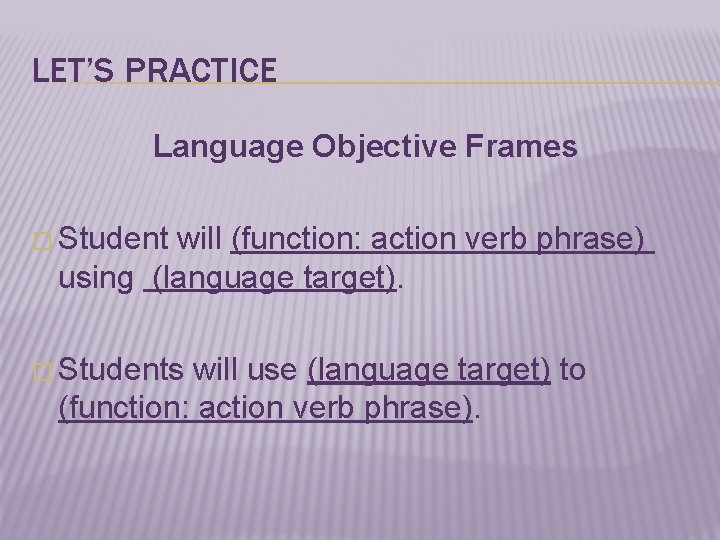
LET’S PRACTICE Language Objective Frames � Student will (function: action verb phrase) using (language target). � Students will use (language target) to (function: action verb phrase).
- Slides: 36