
Sheltered Instruction Observation Protocol SIOP Helping English Language
Sheltered Instruction Observation Protocol SIOP® Helping English Language Learners Reach Academic Success WS# 88251 Karina E. Chapa, M. Ed. Language Proficiency, Biliteracy and Cultural Diversity Director Region One ESC
• Be respectful to others Professional Learning Essential Agreements • Be an active participant • Take care of your needs • Use electronic devices as learning tools
Content Objectives Today I will: • Become familiar with the SIOP® Model. • Identify and/or review basic concepts of second language acquisition. • Analyze and understand the first three components of the SIOP® Model.
Language Objectives Today I will: • Begin to develop a SIOP® related lexicon. • Discuss factors that affect second language acquisition. • Write content and language objectives and share them with my peers. • Discuss the relevance of building background knowledge and deliver comprehensible input to create successful academic experiences for ELLs.
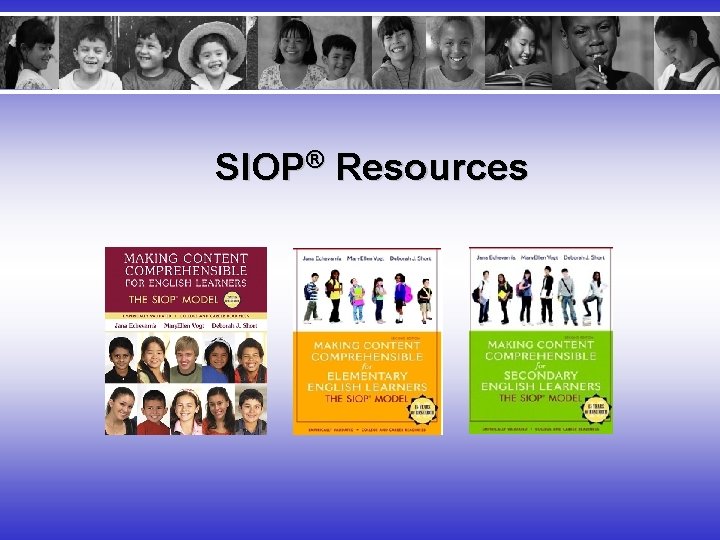
SIOP® Resources

Second Language Acquisition
Blah School
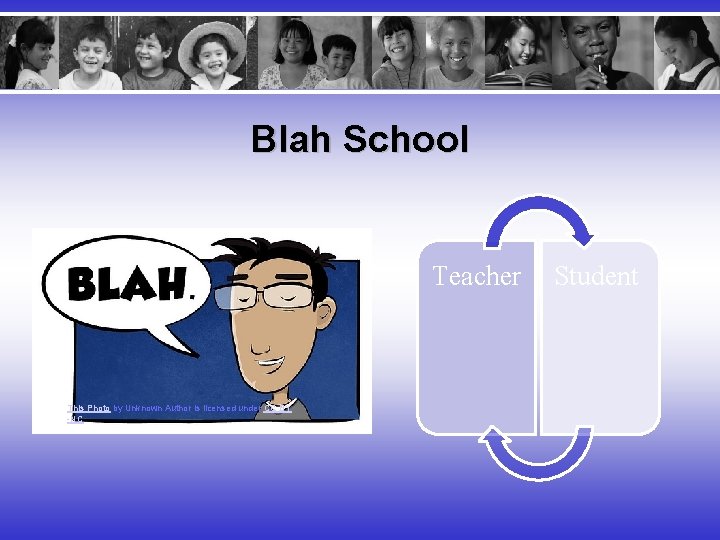
Blah School Teacher This Photo by Unknown Author is licensed under CC BY -NC Student
But what if the lesson was in English?
![Rolle’s Theorem If a function f is continuous on a closed interval [a, b]](http://slidetodoc.com/presentation_image_h2/d40a837824453e45b2586f095b1d7fb5/image-10.jpg "Rolle’s Theorem If a function f is continuous on a closed interval [a, b]")
Rolle’s Theorem If a function f is continuous on a closed interval [a, b] and differentiable on the open interval (a, b), and f(a) = f(b) then there is some number c in the open interval (a, b) such that f '(c) = 0.
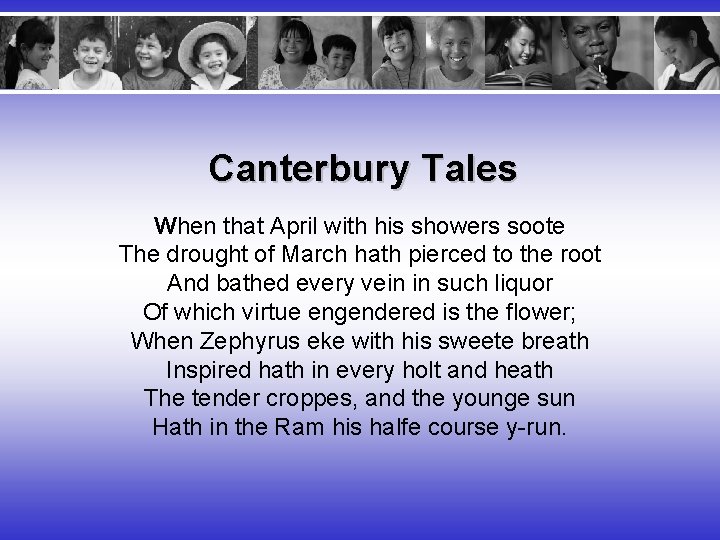
Canterbury Tales When that April with his showers soote The drought of March hath pierced to the root And bathed every vein in such liquor Of which virtue engendered is the flower; When Zephyrus eke with his sweete breath Inspired hath in every holt and heath The tender croppes, and the younge sun Hath in the Ram his halfe course y-run.
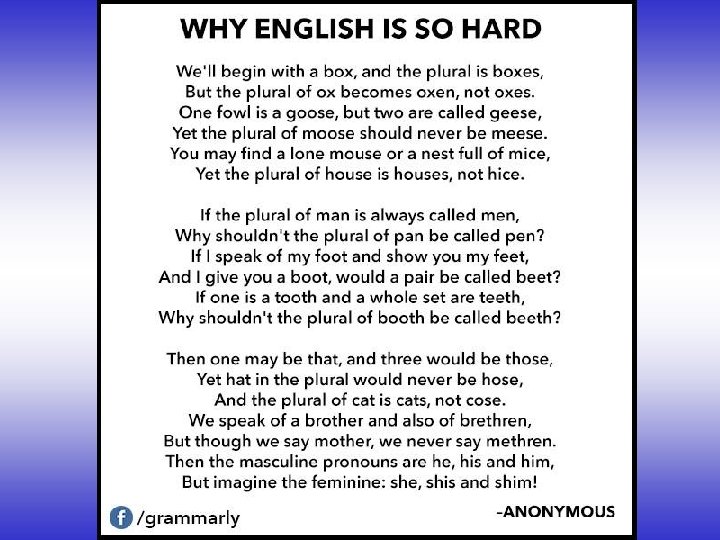

All content teachers ARE language teachers!
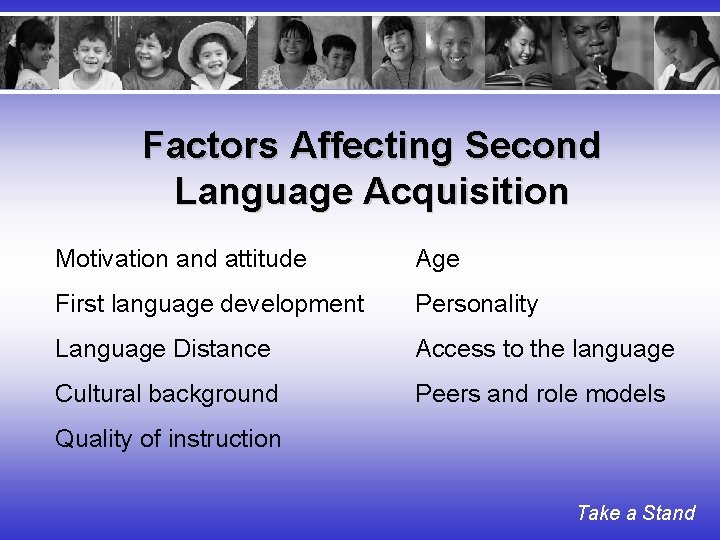
Factors Affecting Second Language Acquisition Motivation and attitude Age First language development Personality Language Distance Access to the language Cultural background Peers and role models Quality of instruction Take a Stand
s ’ t Le kahoot. it
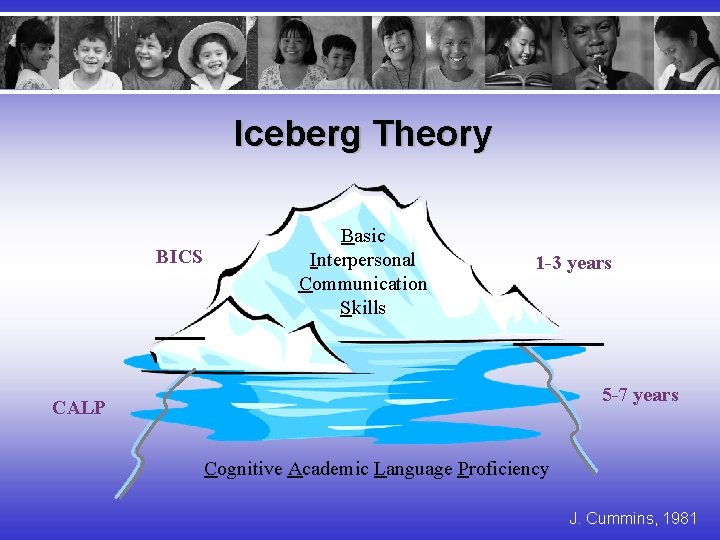
Iceberg Theory BICS Basic Interpersonal Communication Skills 1 -3 years 5 -7 years CALP Cognitive Academic Language Proficiency J. Cummins, 1981
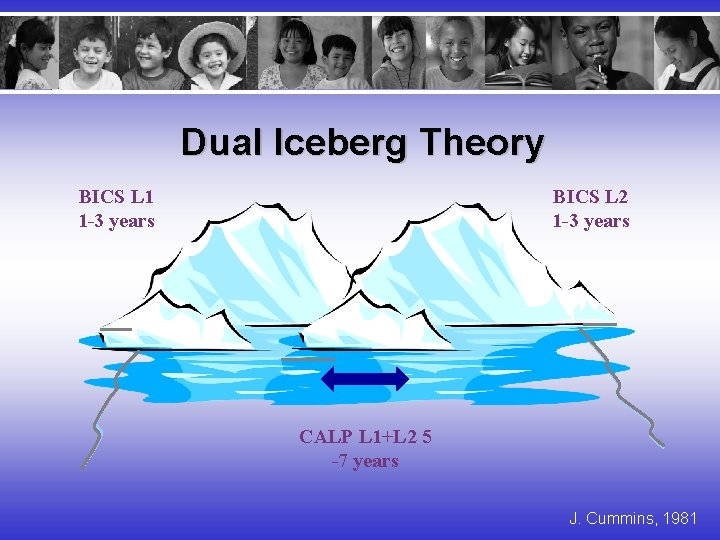
Dual Iceberg Theory BICS L 2 1 -3 years BICS L 1 1 -3 years CALP L 1+L 2 5 -7 years J. Cummins, 1981
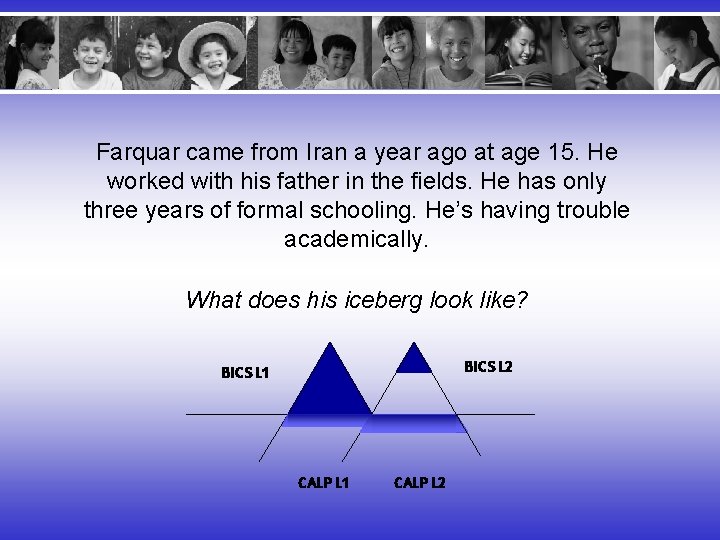
Farquar came from Iran a year ago at age 15. He worked with his father in the fields. He has only three years of formal schooling. He’s having trouble academically. What does his iceberg look like? BICS L 2 BICS L 1 CALP L 2
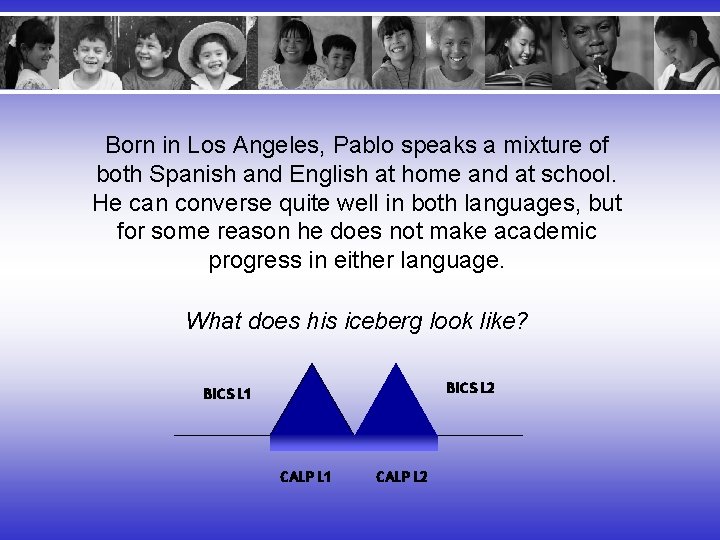
Born in Los Angeles, Pablo speaks a mixture of both Spanish and English at home and at school. He can converse quite well in both languages, but for some reason he does not make academic progress in either language. What does his iceberg look like? BICS L 2 BICS L 1 CALP L 2
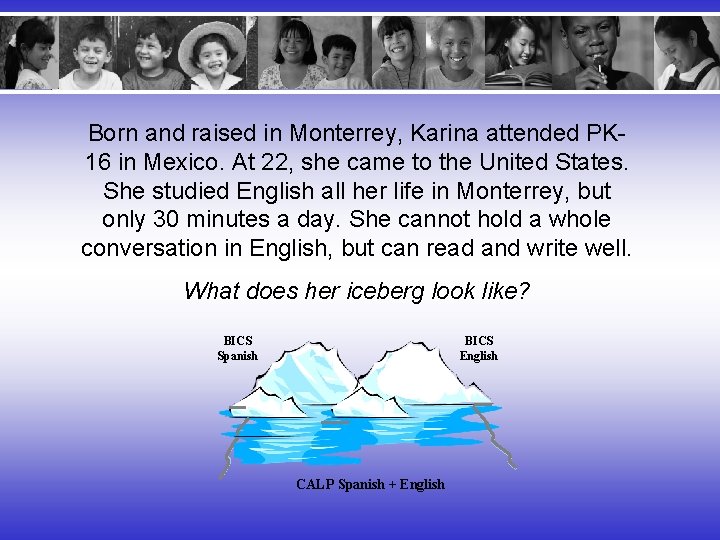
Born and raised in Monterrey, Karina attended PK 16 in Mexico. At 22, she came to the United States. She studied English all her life in Monterrey, but only 30 minutes a day. She cannot hold a whole conversation in English, but can read and write well. What does her iceberg look like? BICS English BICS Spanish CALP Spanish + English
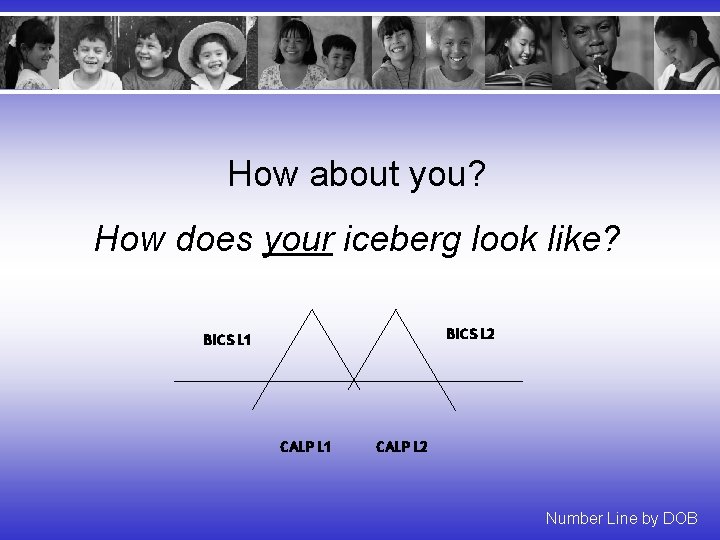
How about you? How does your iceberg look like? BICS L 2 BICS L 1 CALP L 2 Number Line by DOB
General Principles of Language Acquisition 1. Number heads together (1 -8) and name your team. 2. Regroup by numbers to create expert groups. 3. Each group will read one general principle from pages 1 -3 on the handouts. 4. Each team will develop a visual representing each section and a signal/hand gesture to go with it. 5. Go back to original team of 8 and teach your section to your team. Expert Jigsaw

The ® SIOP Model
Stand up when you can complete ONE of these sentence stems: er n gin e B • Teaching ELLs is so difficult because… te a i ed m r e t In • One challenge I face when teaching ELLs is. . . ed c an v Ad • One challenge I face when instructing ELLs is. . . What I have done to overcome this challenge is. . .
The goal of Sheltered Instruction is: To make content comprehensible while developing academic language
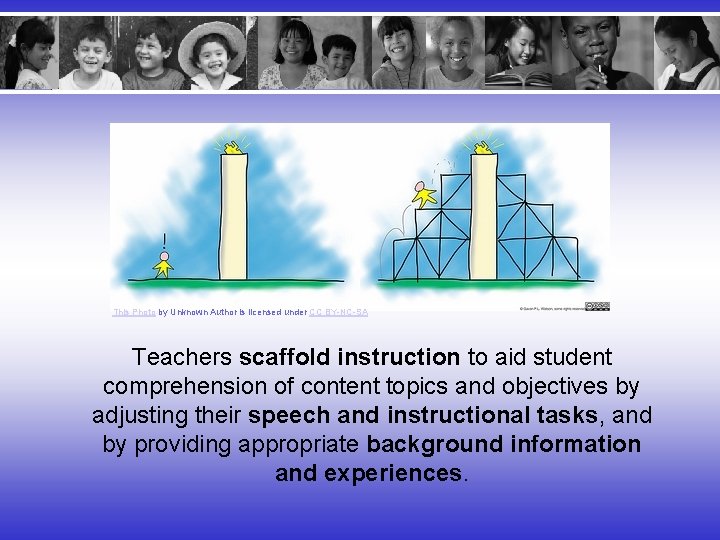
This Photo by Unknown Author is licensed under CC BY-NC-SA Teachers scaffold instruction to aid student comprehension of content topics and objectives by adjusting their speech and instructional tasks, and by providing appropriate background information and experiences.
The SIOP® Model The model was developed during a 7 -year research project (1996 -2003) for the Center for Research on Education, Diversity and Excellence (CREDE), funded by the Institute for Education Sciences, U. S. Department of Education.
SIOP Framework TEKS/ELPS
The SIOP® Model: Sheltered Instruction for Academic Achievement Video: Introduction to the Model
SIOP® Model Self-Assessment Using the 30 features of the SIOP® Model, mark the box that most closely represents your current teaching practices: D=Daily O=Occasionally - Handouts Pages 4 -6 - N=Never
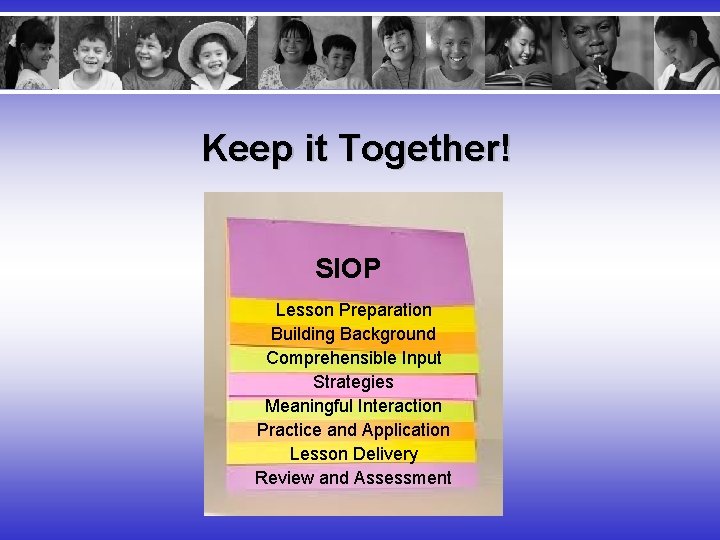
Keep it Together! SIOP Lesson Preparation Building Background Comprehensible Input Strategies Meaningful Interaction Practice and Application Lesson Delivery Review and Assessment
Component 1: Preparation
Features 1. Clearly defined content objectives for students. 2. Clearly defined language objectives for students. 3. Content concepts appropriate for age and educational background level of students. 4. Supplementary materials used to a high degree, making the lesson clear. 5. Adaptation of content for all levels of student proficiency. 6. Meaningful activities that integrate lesson concepts with language practice.
Content and Language Objectives Quick Round Table Content Objectives Language Objectives
Feature 1: Content Objectives Concrete content objectives that identify what students should know and be able to do must guide teaching and learning. For ELLs content objectives need to be stated simply, orally and in writing, and they need to be tied to specific grade-level content standards (TEKS).
Content Objectives - Sample Science TEKS Differentiate between structure and function in plant and animal cell organelles, including cell membrane, cell wall, nucleus, cytoplasm, mitochondria, chloroplast, and vacuole. Student Friendly Format Today I will compare and contrast cell structures and functions of plants and animals.
Writing Content Objectives • Get into grade levels/content areas teams. • Select a TEKS from your content/grade. • Write it in a student friendly format on blank paper. - Handouts Pages 7 -8 -
Feature 2: Language Objectives As with content objectives, language objectives should be stated clearly and simply, and students should be informed of them, both orally and in writing. In Texas, language objectives must be tied to the ELPS. Integrate the four language domains: Listening, speaking, reading and writing!
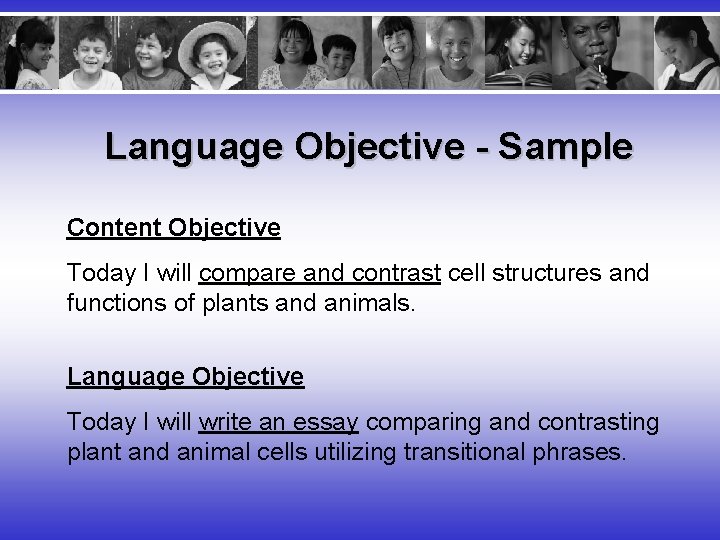
Language Objective - Sample Content Objective Today I will compare and contrast cell structures and functions of plants and animals. Language Objective Today I will write an essay comparing and contrasting plant and animal cells utilizing transitional phrases.
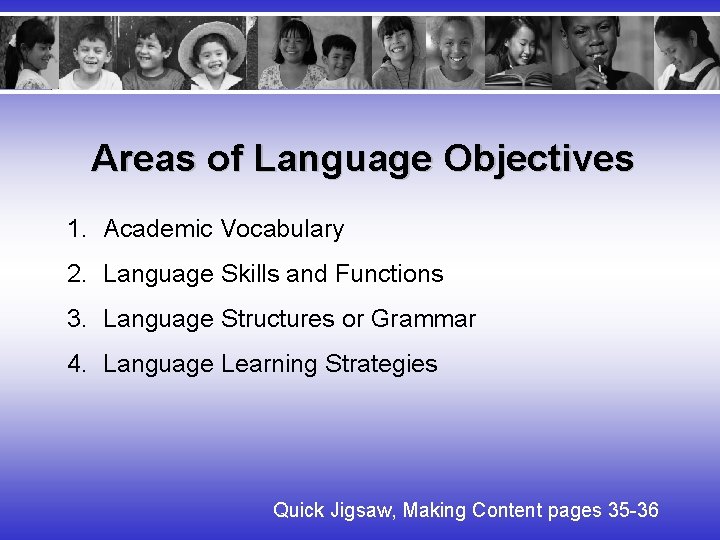
Areas of Language Objectives 1. Academic Vocabulary 2. Language Skills and Functions 3. Language Structures or Grammar 4. Language Learning Strategies Quick Jigsaw, Making Content pages 35 -36
Writing Language Objectives • Get into grade levels/content areas teams. • Determine HOW the students will show you that they learned the concept, through L, S, R, W. • Write it in a student friendly format on blank paper.
Content and Language Objectives • Content Objectives come from the TEKS What am I going to learn? • Language Objectives come from the ELPS How will I demonstrate my learning through listening, speaking, reading and/or writing?
Evaluating Content and Language Objectives 1. Review your Content and Language Objectives with the checklist on page 43 of Making Content Comprehensible. 2. Review your content and language objective and write the revised version on chart paper. 3. Gallery Walk with post-its to provide feedback.
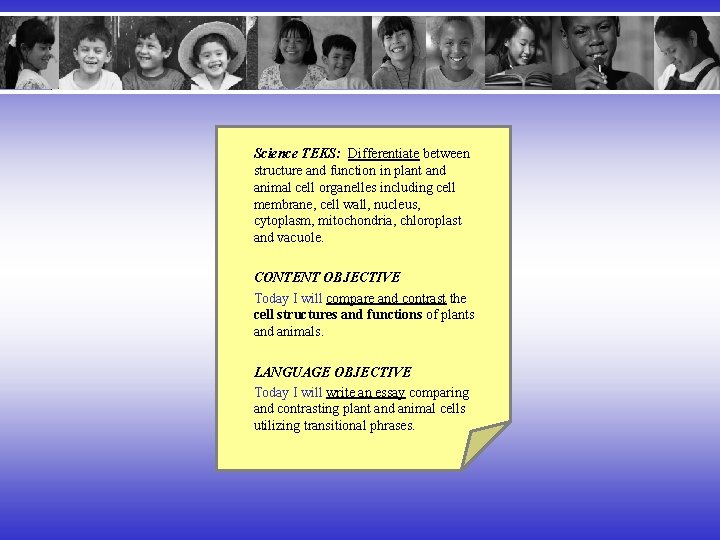
Science TEKS: Differentiate between structure and function in plant and animal cell organelles including cell membrane, cell wall, nucleus, cytoplasm, mitochondria, chloroplast and vacuole. CONTENT OBJECTIVE Today I will compare and contrast the cell structures and functions of plants and animals. LANGUAGE OBJECTIVE Today I will write an essay comparing and contrasting plant and animal cells utilizing transitional phrases.
Feature 3: Content Concepts Carefully consider the content concepts you want to teach and use district curriculum guidelines and grade-level content standards to guide you. Teachers need to take into account their students’ background knowledge and experiences before jumping into a new lesson. ELLs do not benefit from a watered down curriculum.
Feature 4: Supplementary Materials Information that is embedded in context allows ELLs to understand complete more cognitively demanding tasks. Supplementary materials are especially important for students without a grade-level academic background and/or who have language and learning difficulties.
Supplementary Materials Supplementary materials support different learning styles and multiple ways of knowing (multiple intelligences) because information and concepts are presented in a multifaceted manner. Supplementary materials provide real-life context and enable students to bridge prior experiences with new learning.
Supplementary Materials 1. Hands-on Manipulatives 2. Realia 3. Pictures and Visuals 4. Multimedia 6. Related literature 7. Hi-lo Readers and Thematic Sets 8. Chapter Summaries 9. Adapted text 5. Demonstrations Dynamic Jigsaw w/Foldable, Making Content pages 42 -43
Feature 5: Adaptation of Content Teachers can adapt content without watering down the curriculum, so that concepts are left intact. • Graphic organizers • Highlighted text • Outlines • Taped text • Leveled study guides • Adapted text • Jigsaw text reading • Marginal notes Handouts, pages 9 -14
Adaptation of Content How do you adapt content for your English Language Learners? 1. Write your answer on two post-its (duplicate) 2. Line up by Years of Experience 3. Create an Inside-Outside Circle to share/exchange answers
Feature 6: Meaningful Activities Lesson activities should be planned to promote language development in all skills while ELLs are mastering content objectives. Students are more successful when they are learning by relating classroom experiences to their own lives. These meaningful experiences are often described as “authentic”, because they represent a reality for students.
Meaningful Activities 1. Read the ideas on Page 15 of your Handouts. 2. Circle 2 ideas that you have done in the past. 3. Draw a star on 2 ideas that you are willing to try in the future. 4. Turn and Talk (Think-Pair-Share) with your partner.
Component 1 Review: Lesson Preparation 1. Get to your Content and Language Objectives poster 2. Add a meaningful activity from page 15 of your Handouts on the bottom of your chart paper 3. Free Gallery Walk!
The SIOP® Model: Sheltered Instruction for Academic Achievement Video Component 1: Preparation
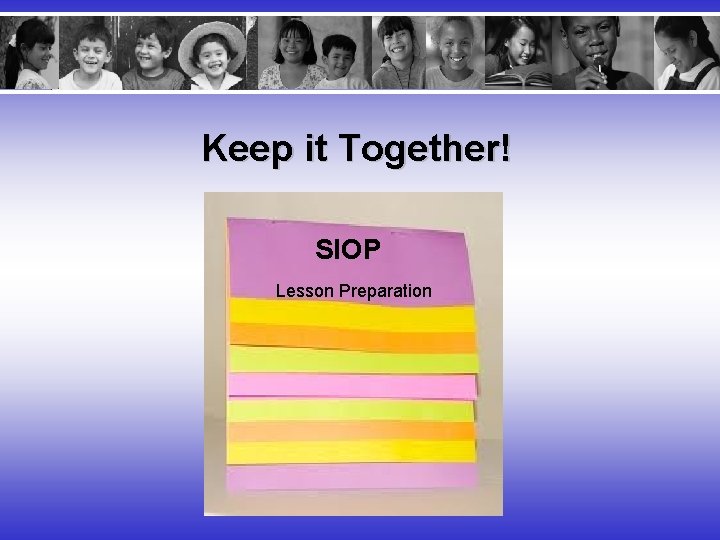
Keep it Together! SIOP Lesson Preparation
Tickets Out Please complete these sentence stems on post-its: I used to think… But now I know…
Thank you for your participation! See you tomorrow! Karina E. Chapa, M. Ed. kchapa@esc 1. net Facebook: Region One ESC Bilingual Twitter @bilingualpride @esc 1 bilingual
- Slides: 57