
Shell International Petroleum Company Major Causes of Injuries

- Slides: 11
Shell International Petroleum Company Major Causes of Injuries & Corrective Actions NETS Conference 12 October 2011 Mike Watson Global Road Safety Manager Confidential 1
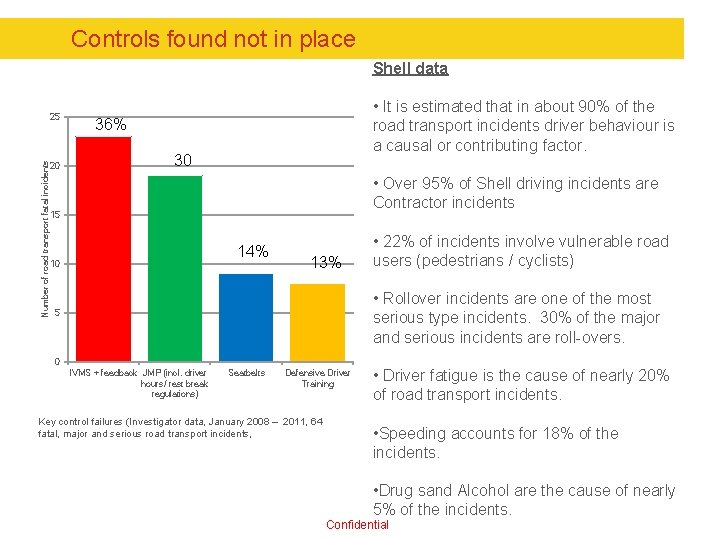
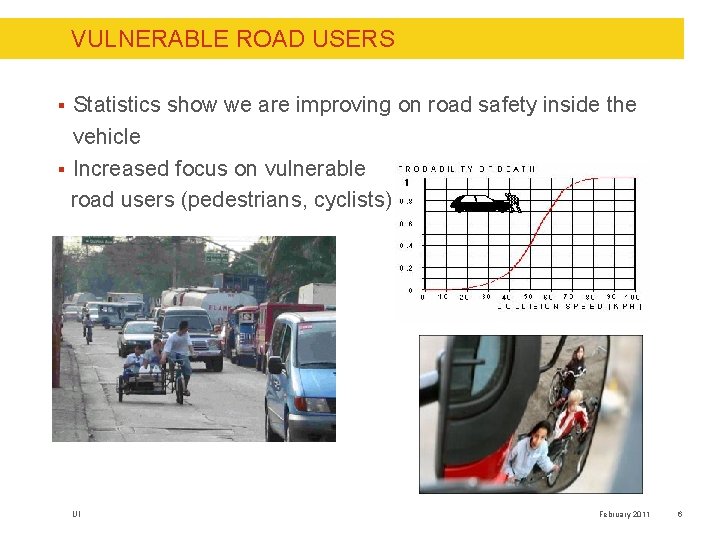
Controls found not in place Shell data Number of road transport fatal incidents 25 20 • It is estimated that in about 90% of the road transport incidents driver behaviour is a causal or contributing factor. 36% 30 • Over 95% of Shell driving incidents are Contractor incidents 15 14% 10 13% • 22% of incidents involve vulnerable road users (pedestrians / cyclists) • Rollover incidents are one of the most serious type incidents. 30% of the major and serious incidents are roll-overs. 5 0 IVMS + feedback JMP (incl. driver hours/ rest break regulations) Seatbelts Defensive Driver Training Key control failures (Investigator data, January 2008 – 2011, 64 fatal, major and serious road transport incidents, • Driver fatigue is the cause of nearly 20% of road transport incidents. • Speeding accounts for 18% of the incidents. • Drug sand Alcohol are the cause of nearly 5% of the incidents. 2 Confidential
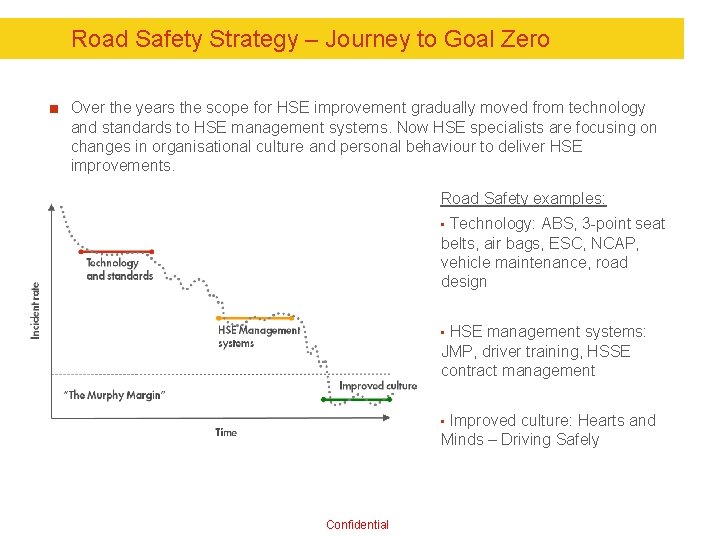
Road Safety Strategy – Journey to Goal Zero Over the years the scope for HSE improvement gradually moved from technology and standards to HSE management systems. Now HSE specialists are focusing on changes in organisational culture and personal behaviour to deliver HSE improvements. Road Safety examples: Technology: ABS, 3 -point seat belts, air bags, ESC, NCAP, vehicle maintenance, road design • HSE management systems: JMP, driver training, HSSE contract management • Improved culture: Hearts and Minds – Driving Safely • Confidential 3
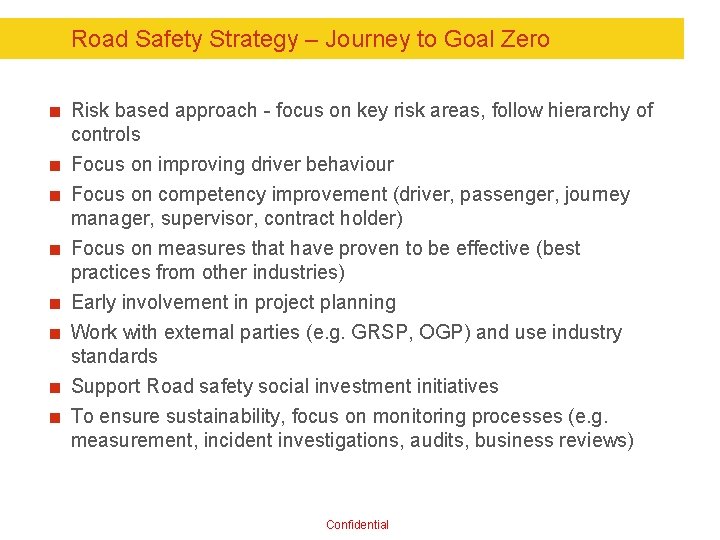
Road Safety Strategy – Journey to Goal Zero Risk based approach - focus on key risk areas, follow hierarchy of controls Focus on improving driver behaviour Focus on competency improvement (driver, passenger, journey manager, supervisor, contract holder) Focus on measures that have proven to be effective (best practices from other industries) Early involvement in project planning Work with external parties (e. g. GRSP, OGP) and use industry standards Support Road safety social investment initiatives To ensure sustainability, focus on monitoring processes (e. g. measurement, incident investigations, audits, business reviews) Confidential 4
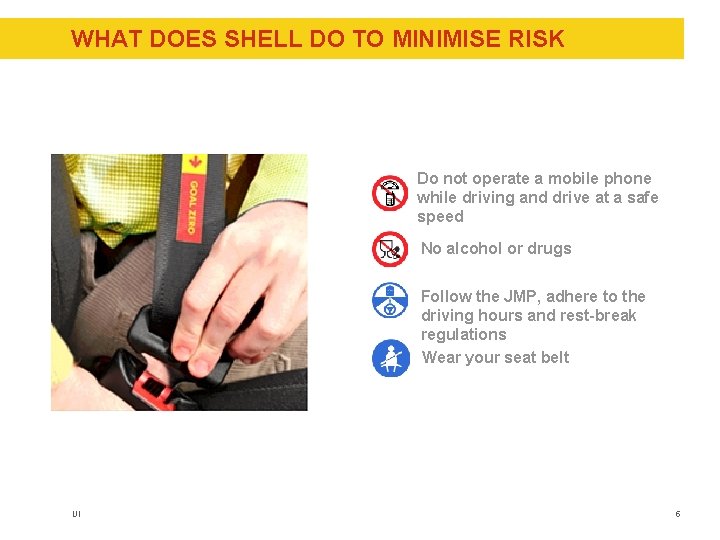
WHAT DOES SHELL DO TO MINIMISE RISK Do not operate a mobile phone while driving and drive at a safe speed No alcohol or drugs Follow the JMP, adhere to the driving hours and rest-break regulations Wear your seat belt UI 5
VULNERABLE ROAD USERS Statistics show we are improving on road safety inside the vehicle § Increased focus on vulnerable road users (pedestrians, cyclists) § UI February 2011 6
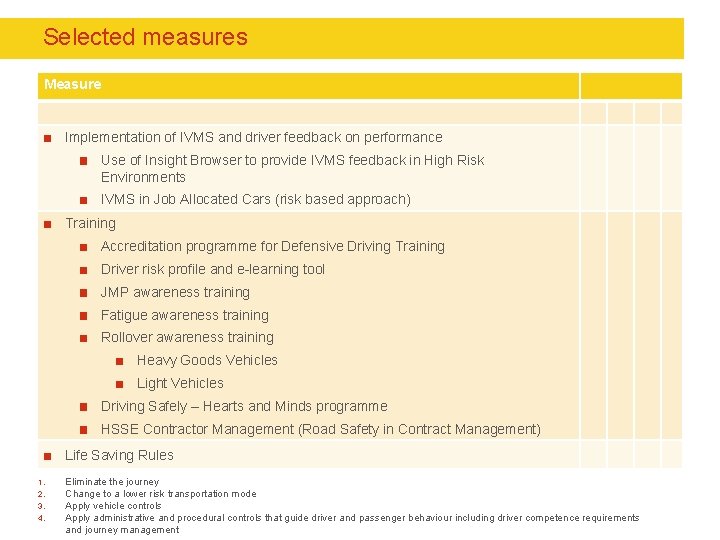
Selected measures Measure Implementation of IVMS and driver feedback on performance Use of Insight Browser to provide IVMS feedback in High Risk Environments IVMS in Job Allocated Cars (risk based approach) Training Accreditation programme for Defensive Driving Training Driver risk profile and e-learning tool JMP awareness training Fatigue awareness training Rollover awareness training Heavy Goods Vehicles Light Vehicles Driving Safely – Hearts and Minds programme HSSE Contractor Management (Road Safety in Contract Management) Life Saving Rules 1. 2. 3. 4. Eliminate the journey Change to a lower risk transportation mode Apply vehicle controls Apply administrative and procedural controls that guide driver and passenger behaviour including driver competence requirements and journey management 7
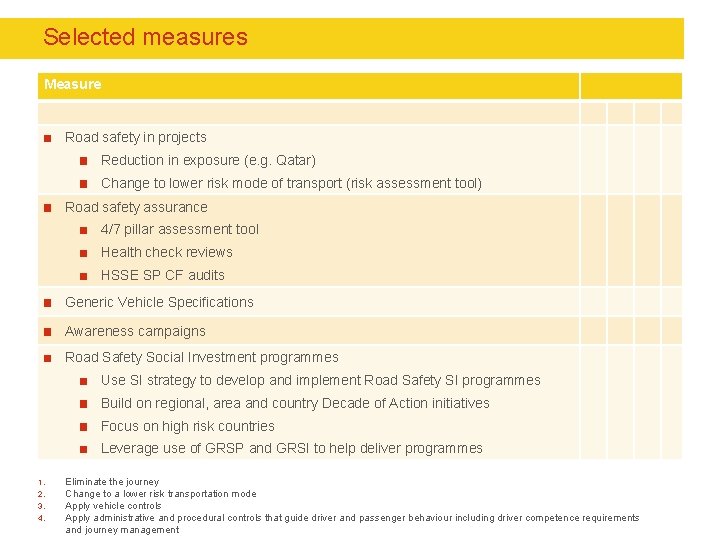
Selected measures Measure Road safety in projects Reduction in exposure (e. g. Qatar) Change to lower risk mode of transport (risk assessment tool) Road safety assurance 4/7 pillar assessment tool Health check reviews HSSE SP CF audits Generic Vehicle Specifications Awareness campaigns Road Safety Social Investment programmes Use SI strategy to develop and implement Road Safety SI programmes Build on regional, area and country Decade of Action initiatives Focus on high risk countries Leverage use of GRSP and GRSI to help deliver programmes 1. 2. 3. 4. Eliminate the journey Change to a lower risk transportation mode Apply vehicle controls Apply administrative and procedural controls that guide driver and passenger behaviour including driver competence requirements and journey management 8
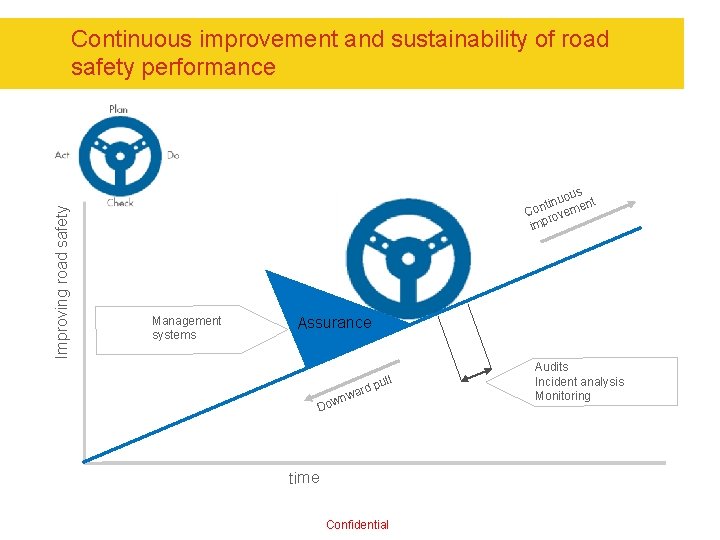
Improving road safety Continuous improvement and sustainability of road safety performance us inuo ent t n Co ovem r imp Management systems Assurance ard nw Dow pull Audits Incident analysis Monitoring time Confidential 9
Motor Vehicle Incident Classifications Fatal (Employee, Contractor and Third party Major (Lost Time Injury and Rollovers) Serious (TRC / OSHA Recordable) Minor (property damage) Calculate frequency rates to benchmark our perfoirmance (use Km driven) Confidential