
Sheet 11 Lecture Vitamins Lecture 1 Lecture Date

- Slides: 63
Sheet #11 Lecture (Vitamins Lecture 1) Lecture Date : - 1 -8 -2018 Done By : - Haneen Diab Edited By : - ﺳﻨﺪﺱ ﻧﺼﺎﺭ Re-Edited By : - Sima Shihab Doctor : - Nabil Amer
If you come by any mistake (whether it be spelling, grammatical or scientific) while browsing this sheet, kindly report it to the academic team 2023 od@gmail. com
Vitamins
Learning Objectives 1. Know the classifications and properties of the vitamins group. 2. Understand the structure of each vitamin. 3. Understand the role of each vitamin in metabolism 4. Know the symptoms of vitamin deficiency.
SHEET P. 1 v Vitamins are essential for life, they must be supplied by food. v They act as catalysts in the metabolism. § for example, hydroxylysine and hydroxyproline (in collagen) require vitamin C as a cofactor. v A deficiency in any vitamin leads to diseases.
• Polish biochemist Casimir Funk discovered vitamin B 1 in 1912 in rice bran. • He proposed the complex be named "Vitamin" (vital amines). • By the time it was shown that not all vitamins were amines, the word was already ubiquitous.
SHEET P. 2 v Casimir Funk discovered vitamin B 1 in indonesia, where everyone was deficient in it due to eating rice without the bran ( )ﻣﻘﺭ ((white rice)) v Beriberi: the name for the deficiency in vitamin B 1 v White rice is almost tasteless, that’s why it’s used in Asian food, they depend on other things for flavour. v At first, the word “vitamin” was spelled as “vitamine”, but later on it was changed to “vitamin” without the e when it was discovered that their composition isn’t related to amino acids.
Definition and Classification • Non-caloric organic nutrients • Needed in very small amounts • Facilitators – help body processes proceed; digestion, absorption, metabolism, growth etc. • Some appear in food as precursors or provitamins
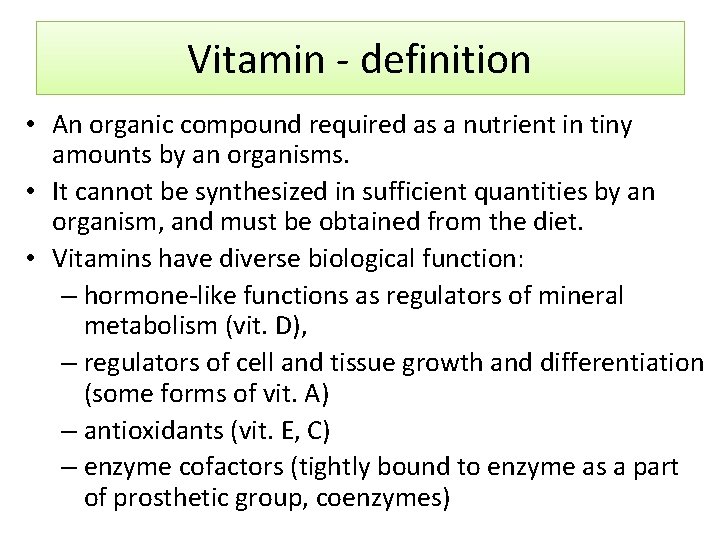
Vitamin - definition • An organic compound required as a nutrient in tiny amounts by an organisms. • It cannot be synthesized in sufficient quantities by an organism, and must be obtained from the diet. • Vitamins have diverse biological function: – hormone-like functions as regulators of mineral metabolism (vit. D), – regulators of cell and tissue growth and differentiation (some forms of vit. A) – antioxidants (vit. E, C) – enzyme cofactors (tightly bound to enzyme as a part of prosthetic group, coenzymes)
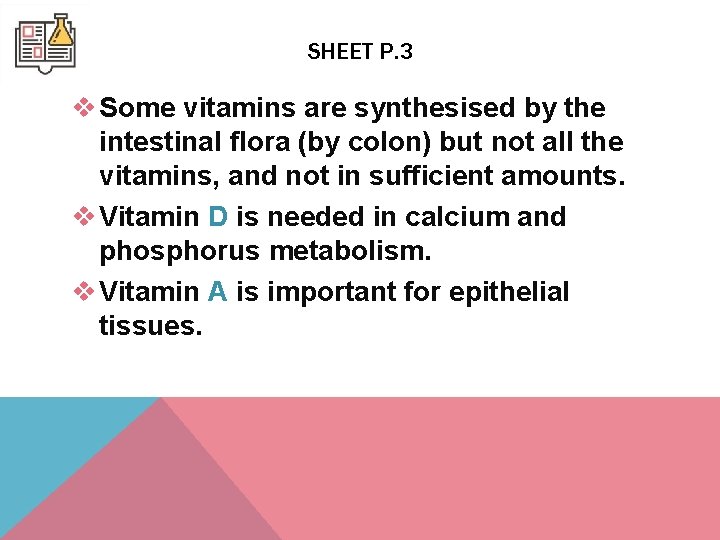
SHEET P. 3 v Some vitamins are synthesised by the intestinal flora (by colon) but not all the vitamins, and not in sufficient amounts. v Vitamin D is needed in calcium and phosphorus metabolism. v Vitamin A is important for epithelial tissues.
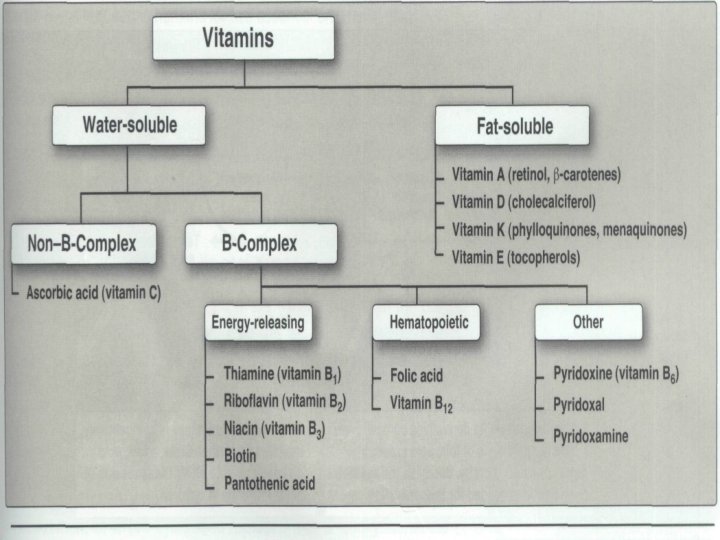
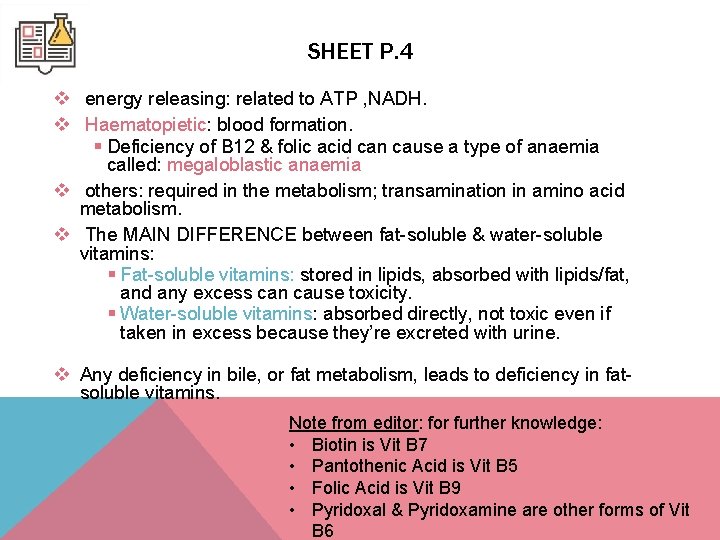
SHEET P. 4 v energy releasing: related to ATP , NADH. v Haematopietic: blood formation. § Deficiency of B 12 & folic acid can cause a type of anaemia called: megaloblastic anaemia v others: required in the metabolism; transamination in amino acid metabolism. v The MAIN DIFFERENCE between fat-soluble & water-soluble vitamins: § Fat-soluble vitamins: stored in lipids, absorbed with lipids/fat, and any excess can cause toxicity. § Water-soluble vitamins: absorbed directly, not toxic even if taken in excess because they’re excreted with urine. v Any deficiency in bile, or fat metabolism, leads to deficiency in fatsoluble vitamins. Note from editor: for further knowledge: • Biotin is Vit B 7 • Pantothenic Acid is Vit B 5 • Folic Acid is Vit B 9 • Pyridoxal & Pyridoxamine are other forms of Vit B 6
Fat vs. Water Soluble Vitamins Absorption Water Soluble Fat Soluble Directly to blood Lymph via CM chylomicrons Transport Free Require carrier Storage Circulate freely In cells with fat Excretion In urine Stored with fat Toxicity Less likely More Likely Requirements Every 2 -3 days Every week
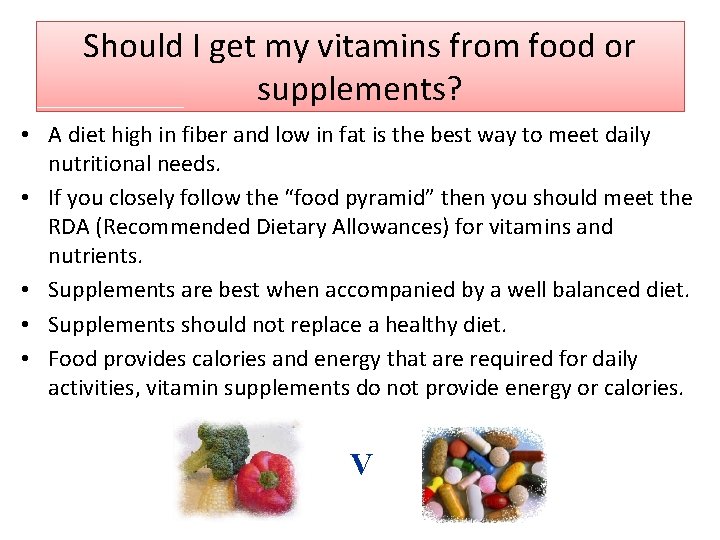
Should I get my vitamins from food or supplements? • A diet high in fiber and low in fat is the best way to meet daily nutritional needs. • If you closely follow the “food pyramid” then you should meet the RDA (Recommended Dietary Allowances) for vitamins and nutrients. • Supplements are best when accompanied by a well balanced diet. • Supplements should not replace a healthy diet. • Food provides calories and energy that are required for daily activities, vitamin supplements do not provide energy or calories. V
SHEET P. 5 v You don’t need to take vitamins as supplements, except for in some cases such as: pregnancy, lactation; due to extra-metabolism & extra-burning.
Do I need a multivitamin supplement? • It does not hurt to get a little to take a multivitamin daily to ensure proper nutrition. & strict vegetarians • Most college students are not eating a well balanced diet and could use the added nutrition of a multivitamin. • When choosing a supplement, select one that meets 100 -300% of the RDA.
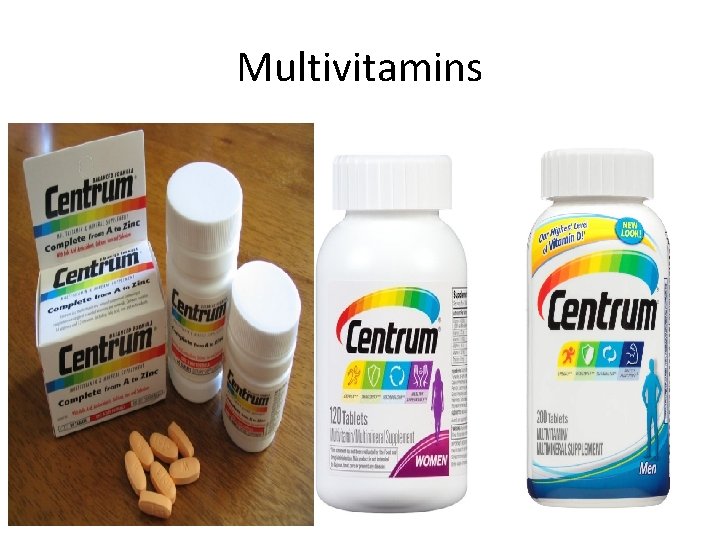
What do Multivitamins contain? • A multivitamin should contain fat-soluble vitamins A, D, E, K water-soluble vitamins B 1, B 2, B 6, B 12, niacin, pantothenic acid, biotin, folic acid , and Vitamin C. • They will also usually have minerals such as zinc, magnesium, copper, and calcium in them.
Multivitamins
What does RDA mean? • Recommended Dietary Allowances • These are suggested levels of essential nutrients considered adequate to meet nutritional needs of healthy individuals.
Can I take too many vitamins? • For the most part vitamin supplements are safe to take. • Follow the recommended dosages on the label of the bottle. • Fat-soluble vitamins are more likely to be toxic to your health if taken in excess, because they are stored in the body, where as water-soluble are excreted.
Should I take my vitamins with food? • It is advised to take your vitamins with a snack or meal to avoid stomach irritation. • The presence of carbohydrates and proteins stimulate digestive enzymes that will allow for better absorption of nutrients for the supplements. (Iron should be taken on an empty stomach). It is best absorbed that way
What are antioxidants? • Definition: Substances that fight off freeradicals in our bodies. • Free radicals are compounds within our bodies that may lead to chronic disease and/or are involved in cell tissue damage. • Examples of vitamins that contain antioxidants are… C, E, and Beta Carotene. free radicals are what cause cancers & aging
Stress & Nutrition of Your Body • Stress can cause your body to excrete nutrients rather than using them to perform vital functions. • Stress can also cause the production of free radicals which play a role in the development of cancer, heart disease, and aging. Heart attacks , cancers, peptic ulcers & gastric ulcers are more prevalent in people who work as doctors or lawyers due to stress.
Supplements that aid in suppressing stress • Increasing serotonin levels in the brain wards off stress related symptoms like depression, irritability, and frustration. • The mineral magnesium can help to regulate serotonin levels. • Antioxidant supplements can also break up free radicals that cause harm to your body.
Vitamin A The retinoids, a family of molecules that are related to retinol (vitamin A), Retinoic acid, derived from oxidation of dietary retinol, mediates most of the actions of the retinoids, except for vision, which depends on retinal, the aldehyde derivative of retinol.
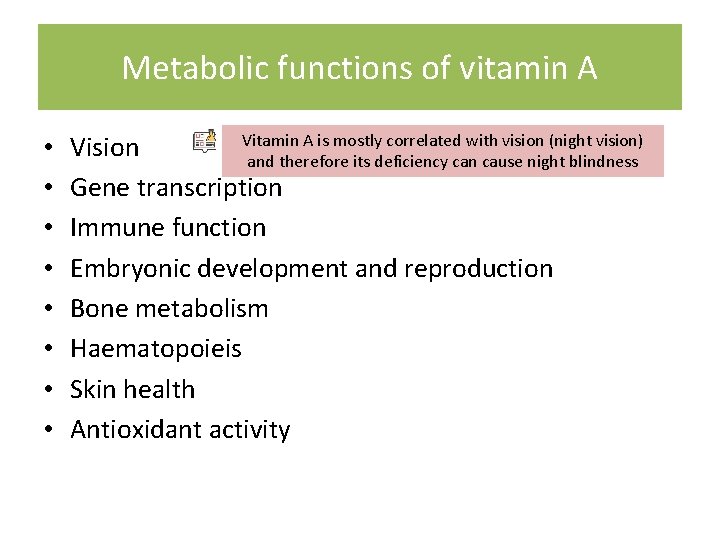
Metabolic functions of vitamin A • • Vitamin A is mostly correlated with vision (night vision) Vision and therefore its deficiency can cause night blindness Gene transcription Immune function Embryonic development and reproduction Bone metabolism Haematopoieis Skin health Antioxidant activity
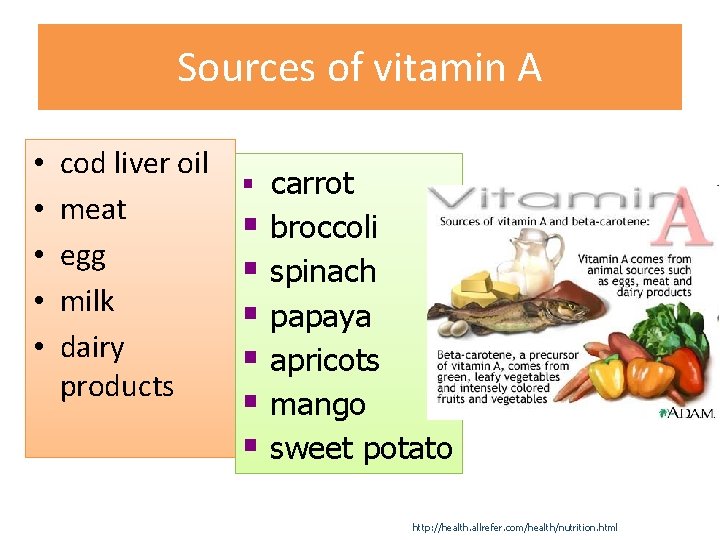
Sources of vitamin A • • • cod liver oil meat egg milk dairy products § carrot § broccoli § spinach § papaya § apricots § mango § sweet potato http: //health. allrefer. com/health/nutrition. html
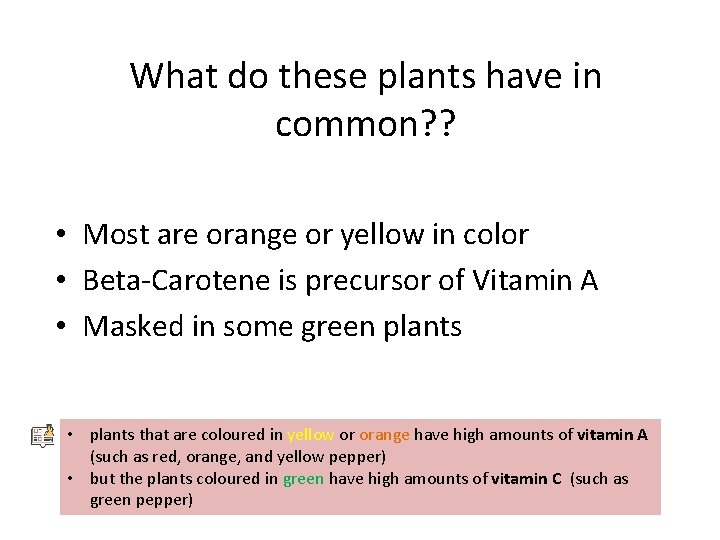
What do these plants have in common? ? • Most are orange or yellow in color • Beta-Carotene is precursor of Vitamin A • Masked in some green plants • plants that are coloured in yellow or orange have high amounts of vitamin A (such as red, orange, and yellow pepper) • but the plants coloured in green have high amounts of vitamin C (such as green pepper)
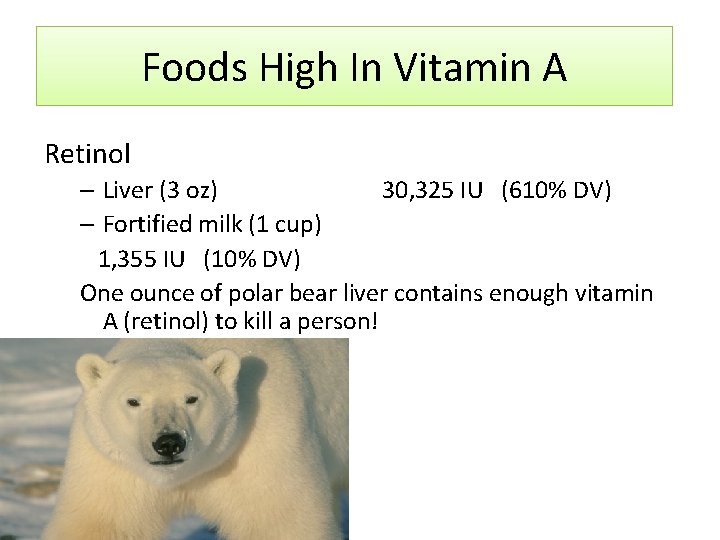
Foods High In Vitamin A Retinol – Liver (3 oz) 30, 325 IU (610% DV) – Fortified milk (1 cup) 1, 355 IU (10% DV) One ounce of polar bear liver contains enough vitamin A (retinol) to kill a person!
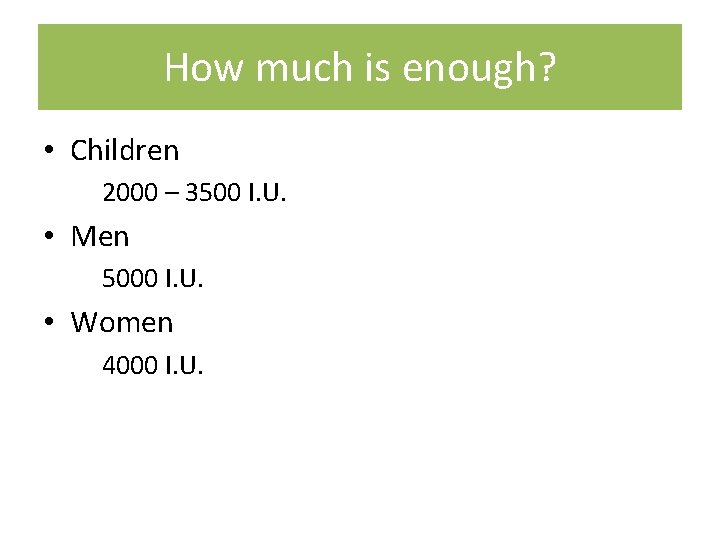
How much is enough? • Children 2000 – 3500 I. U. • Men 5000 I. U. • Women 4000 I. U.
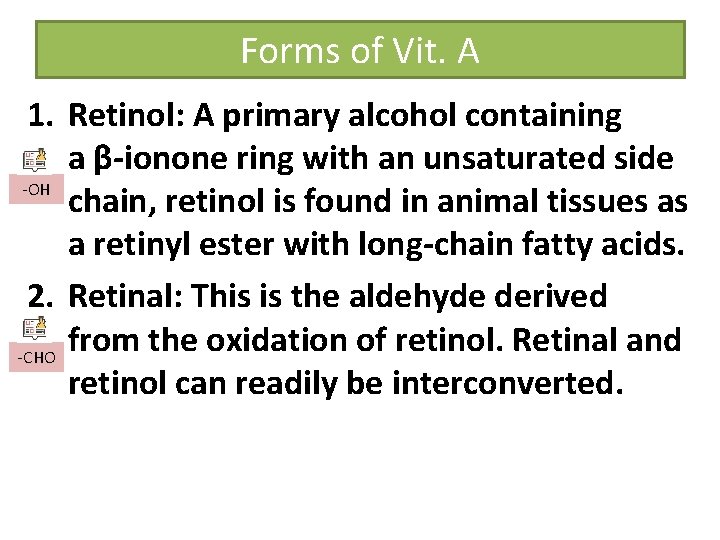
Forms of Vit. A 1. Retinol: A primary alcohol containing a β-ionone ring with an unsaturated side -OH chain, retinol is found in animal tissues as a retinyl ester with long-chain fatty acids. 2. Retinal: This is the aldehyde derived from the oxidation of retinol. Retinal and -CHO retinol can readily be interconverted.
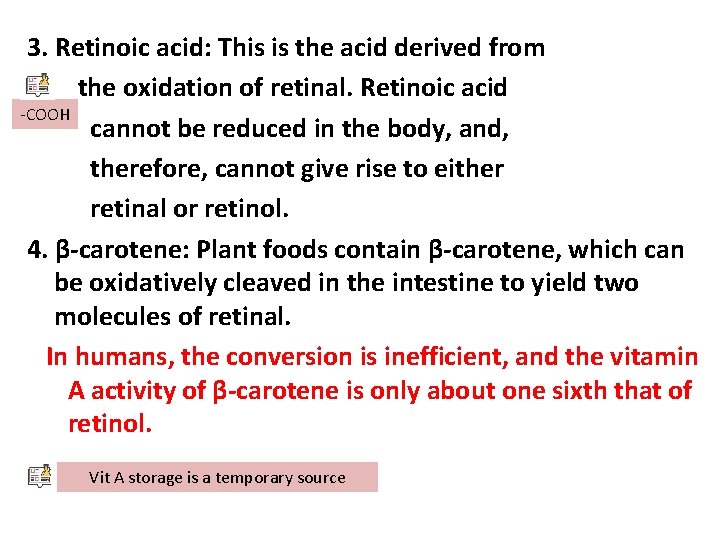
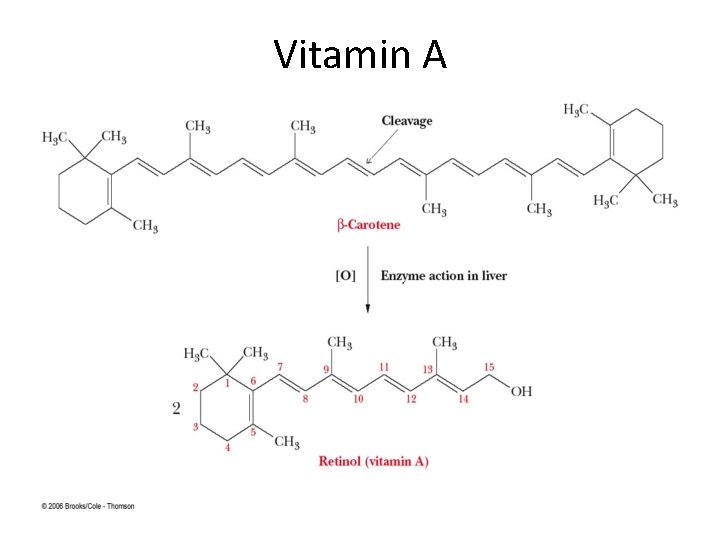
3. Retinoic acid: This is the acid derived from the oxidation of retinal. Retinoic acid -COOH cannot be reduced in the body, and, therefore, cannot give rise to either retinal or retinol. 4. β-carotene: Plant foods contain β-carotene, which can be oxidatively cleaved in the intestine to yield two molecules of retinal. In humans, the conversion is inefficient, and the vitamin A activity of β-carotene is only about one sixth that of retinol. Vit A storage is a temporary source
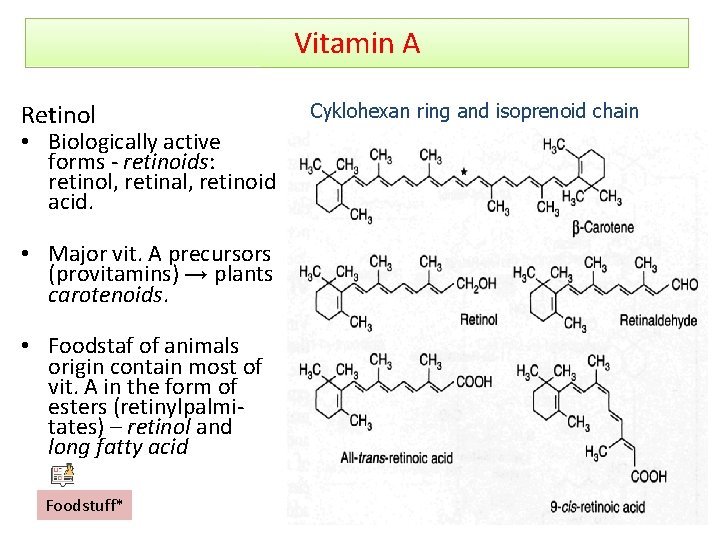
Vitamin A Retinol • Biologically active forms - retinoids: retinol, retinal, retinoid acid. • Major vit. A precursors (provitamins) → plants carotenoids. • Foodstaf of animals origin contain most of vit. A in the form of esters (retinylpalmitates) – retinol and long fatty acid Foodstuff* Cyklohexan ring and isoprenoid chain
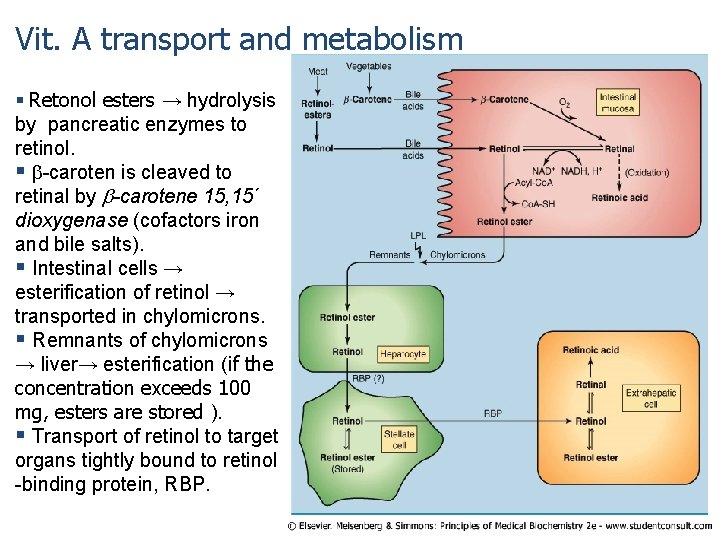
Vit. A transport and metabolism § Retonol esters → hydrolysis by pancreatic enzymes to retinol. § b-caroten is cleaved to retinal by b-carotene 15, 15´ dioxygenase (cofactors iron and bile salts). § Intestinal cells → esterification of retinol → transported in chylomicrons. § Remnants of chylomicrons → liver→ esterification (if the concentration exceeds 100 mg, esters are stored ). § Transport of retinol to target organs tightly bound to retinol -binding protein, RBP.
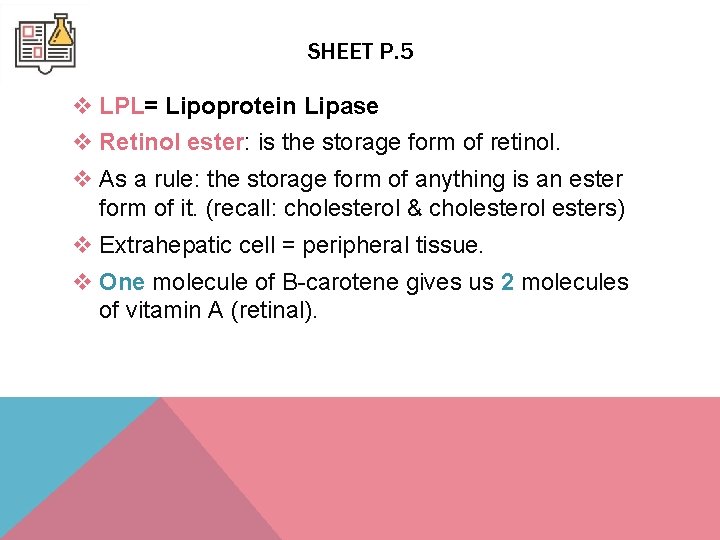
SHEET P. 5 v LPL= Lipoprotein Lipase v Retinol ester: is the storage form of retinol. v As a rule: the storage form of anything is an ester form of it. (recall: cholesterol & cholesterol esters) v Extrahepatic cell = peripheral tissue. v One molecule of B-carotene gives us 2 molecules of vitamin A (retinal).
Vitamin A
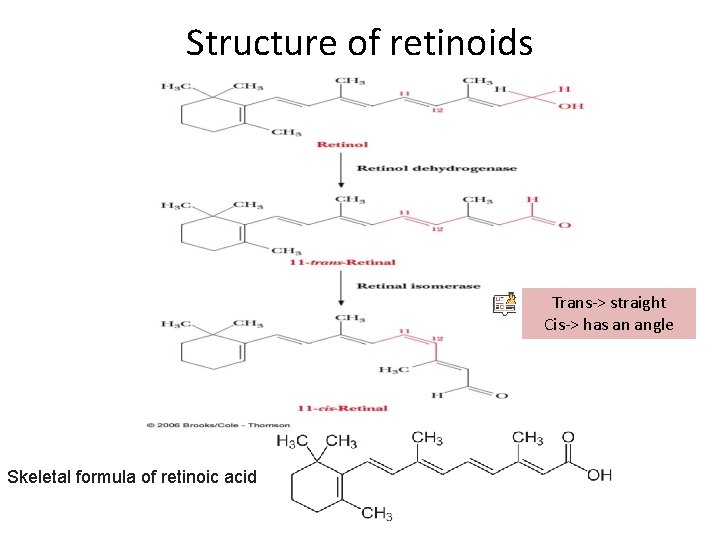
Structure of retinoids Trans-> straight Cis-> has an angle Skeletal formula of retinoic acid
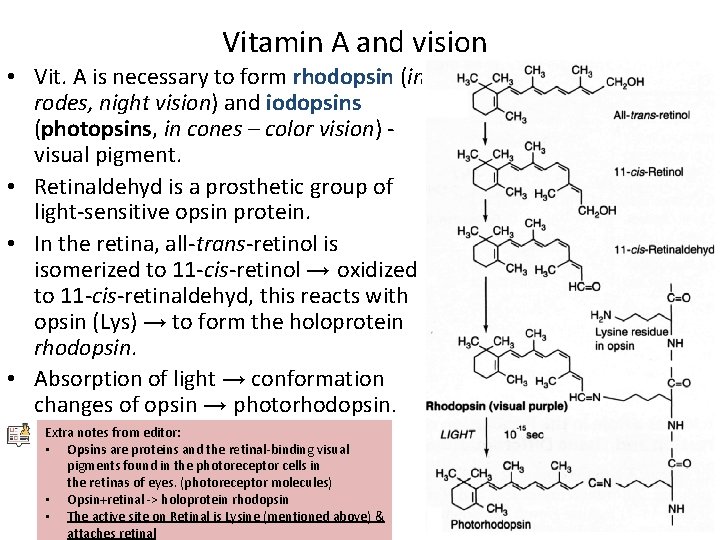
Vitamin A and vision • Vit. A is necessary to form rhodopsin (in rodes, night vision) and iodopsins (photopsins, in cones – color vision) - visual pigment. • Retinaldehyd is a prosthetic group of light-sensitive opsin protein. • In the retina, all-trans-retinol is isomerized to 11 -cis-retinol → oxidized to 11 -cis-retinaldehyd, this reacts with opsin (Lys) → to form the holoprotein rhodopsin. • Absorption of light → conformation changes of opsin → photorhodopsin. Extra notes from editor: • Opsins are proteins and the retinal-binding visual pigments found in the photoreceptor cells in the retinas of eyes. (photoreceptor molecules) • Opsin+retinal -> holoprotein rhodopsin • The active site on Retinal is Lysine (mentioned above) & attaches retinal
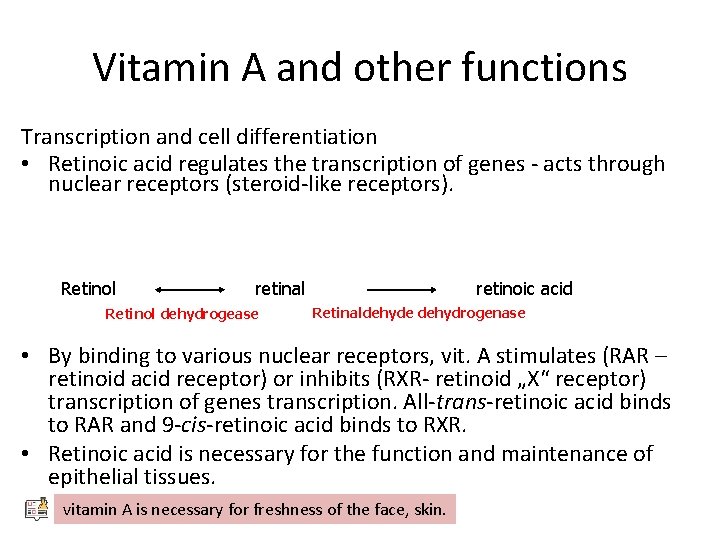
Vitamin A and other functions Transcription and cell differentiation • Retinoic acid regulates the transcription of genes - acts through nuclear receptors (steroid-like receptors). Retinol retinal Retinol dehydrogease retinoic acid Retinaldehyde dehydrogenase • By binding to various nuclear receptors, vit. A stimulates (RAR – retinoid acid receptor) or inhibits (RXR- retinoid „X“ receptor) transcription of genes transcription. All-trans-retinoic acid binds to RAR and 9 -cis-retinoic acid binds to RXR. • Retinoic acid is necessary for the function and maintenance of epithelial tissues. vitamin A is necessary for freshness of the face, skin.
Vitamin A - deficiency • The early sign → a loss of sensitivity to green light, – prolonged deficiency → impairment to adapt to dim light – more prolonged deficiency leads to night blindness • Ever escalated deficiency leads to squamous metaplasia - columnar epithelia are transformed into heavily keratinized squamous epithelia. Deficiency of vitamin A leads to skin dryness & peeling. • The conjunctiva loses mucus-secreting cells → glycoprotein content of the tears is reduced → xerophthalmia ( „dry eyes“) – Often complication - bacterial or chlamidial infection which results in perforation of the cornea and blindness Extra note from editor: conjunctiva is the mucous membrane that covers the front of the eye and lines the inside of the eyelids
Vitamin A - deficiency • Transformation of respiratory epithelium – loss of protective airway function (antibacterial properties) → bronchitis. Bronchitis = ﺍﻟﻬﻮﺍﺋﻴﺔ ﺍﻟﻘﺼﺒﺎﺕ ﺍﻟﺘﻬﺎﺏ • Conversion of the urinary tract epithelium → higher frequency of urinary stone formation • Immunosuppression • Impairment of reproductive function (both in men and women). • Worldwide deficiency of vit. A • 3 – 10 mil. children become xerophthalmic every year – 250 000 to 500 000 go to blindness – 1 million die from infections
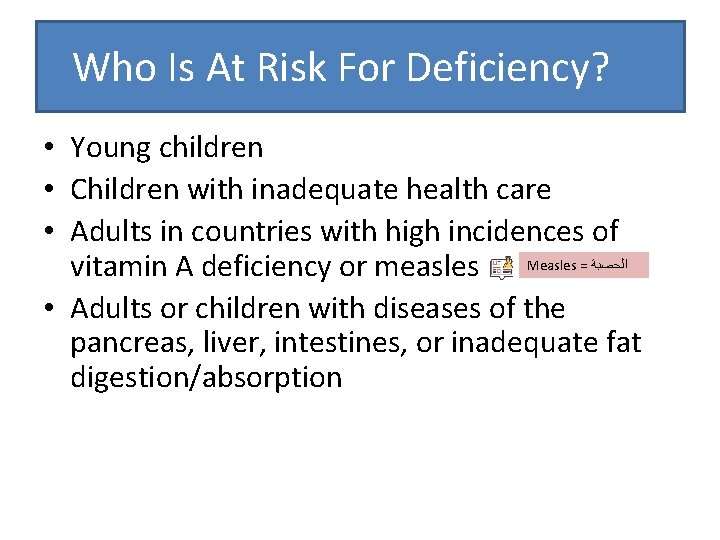
Who Is At Risk For Deficiency? • Young children • Children with inadequate health care • Adults in countries with high incidences of vitamin A deficiency or measles Measles = ﺍﻟﺤﺼﺒﺔ • Adults or children with diseases of the pancreas, liver, intestines, or inadequate fat digestion/absorption
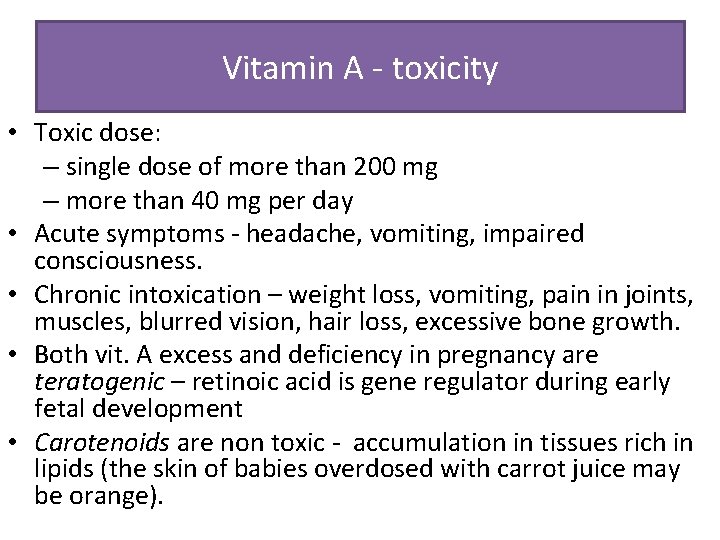
Vitamin A - toxicity • Toxic dose: – single dose of more than 200 mg – more than 40 mg per day • Acute symptoms - headache, vomiting, impaired consciousness. • Chronic intoxication – weight loss, vomiting, pain in joints, muscles, blurred vision, hair loss, excessive bone growth. • Both vit. A excess and deficiency in pregnancy are teratogenic – retinoic acid is gene regulator during early fetal development • Carotenoids are non toxic - accumulation in tissues rich in lipids (the skin of babies overdosed with carrot juice may be orange).
SHEET P. 6 v These are basically the symptoms of the toxicity in anything ((also nausea)). v Notes from editor: v Teratogenic: Able to disturb the growth and development of an embryo or fetus. Can cause congenital abnormalities.
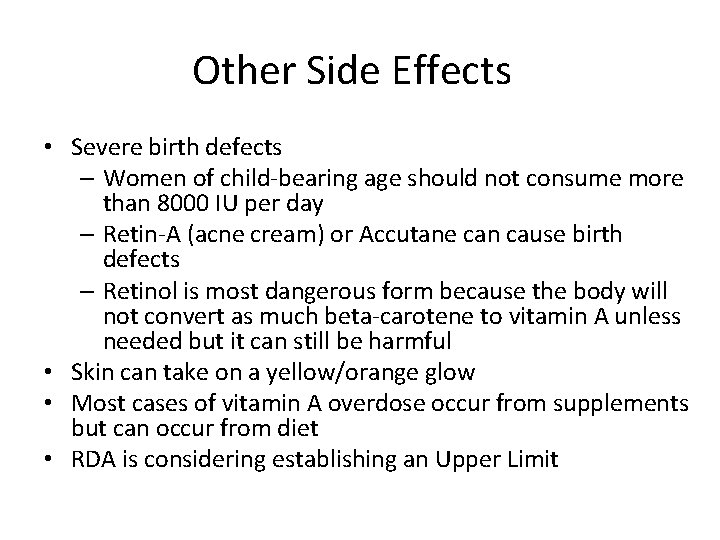
Other Side Effects • Severe birth defects – Women of child-bearing age should not consume more than 8000 IU per day – Retin-A (acne cream) or Accutane can cause birth defects – Retinol is most dangerous form because the body will not convert as much beta-carotene to vitamin A unless needed but it can still be harmful • Skin can take on a yellow/orange glow • Most cases of vitamin A overdose occur from supplements but can occur from diet • RDA is considering establishing an Upper Limit
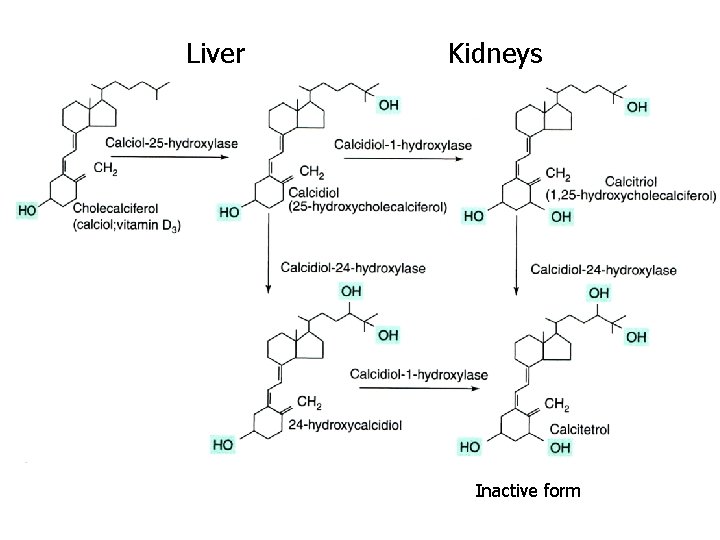
Vitamin D • Calciol, vitamin D 2 (cholecalciferol) → precursor of calcitriol, D 3 (1, 25 -dihydroxycalciferol). • Regulates with PTH calcium and phosphate level (absorption, reabsorption, excretion). • Synthesis in the skin (7 -dehydrocholesterol) UV → further transformation in the liver and kidneys.
SHEET P. 7 v Vitamin D 3 is the active form, formed in the kidneys. v PTH: (parathyroid hormone) v Vitamin D and PTH are related to calcium and phosphorus metabolism.
Vitamin D Distribution 1. Diet: Ergocalciferol (vitamin D 2) found in plants, and cholecalciferol (vitamin D 3 ) found in animal tissues, are sources of preformed vitamin D activity. Ergocalciferol and cholecalciferol differ chemically only in the presence of an additional double bond and methyl group in the plant sterol. 2. Endogenous vitamin precursor: 7 -Dehydrocholesterol, an intermediate in cholesterol synthesis, is converted to cholecalciferol in the dermis and epidermis of humans exposed to sunlight. Preformed vitamin D is a dietary requirement only in individuals with limited exposure to sunlight.
SHEET P. 8 v Vitamin D 2 is a provitamin D. v it is found in milk and cereals fortified with vitamin D. v The basis/origin of Vit D’s structure is cholesterol. v The best time to get vitamin D from sunlight is before 10 AM and after 3 -4 PM (not during noon, because exposure to sun during that time can lead to dehydration & sunstroke).
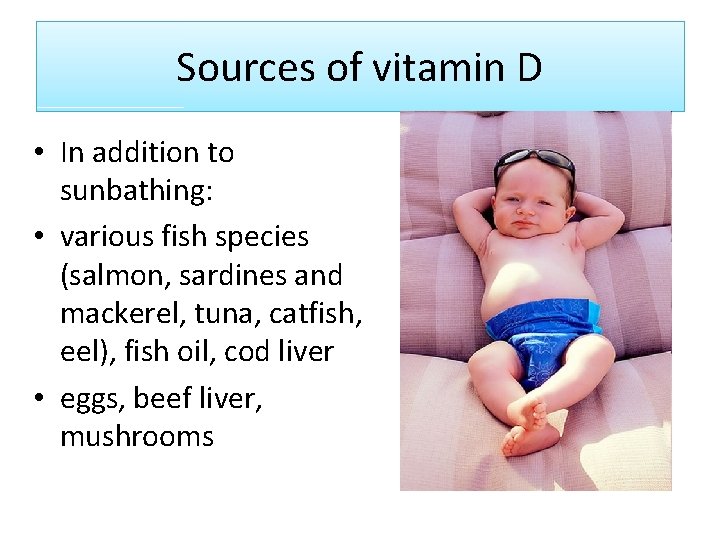
Sources of vitamin D • In addition to sunbathing: • various fish species (salmon, sardines and mackerel, tuna, catfish, eel), fish oil, cod liver • eggs, beef liver, mushrooms
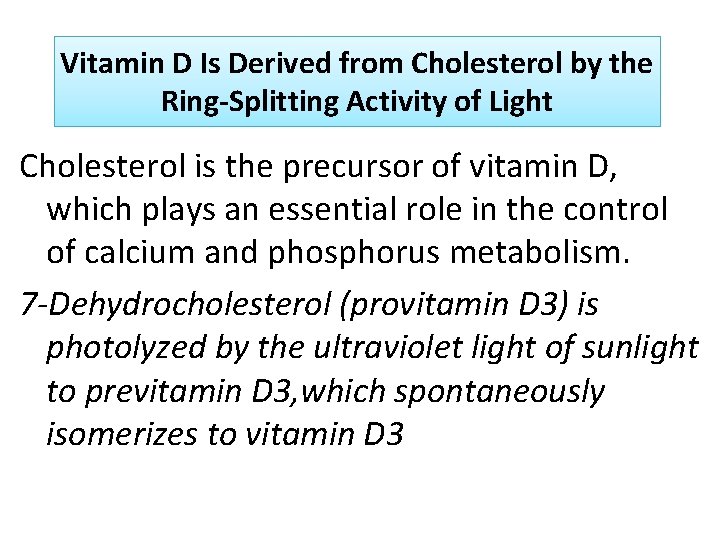
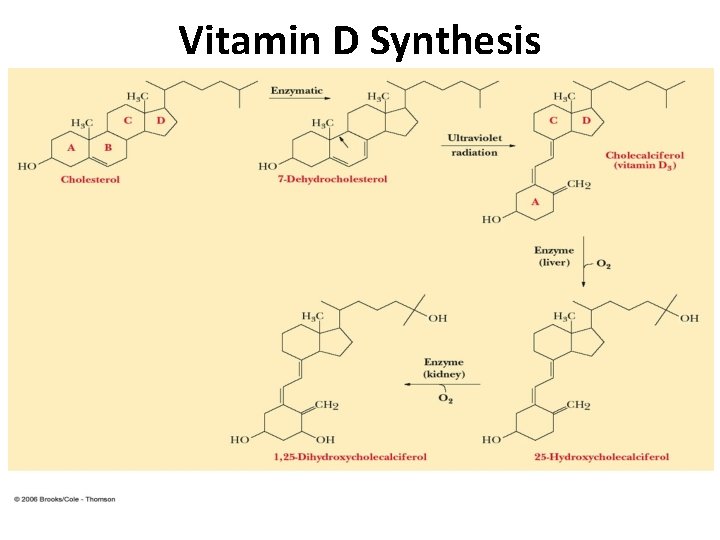
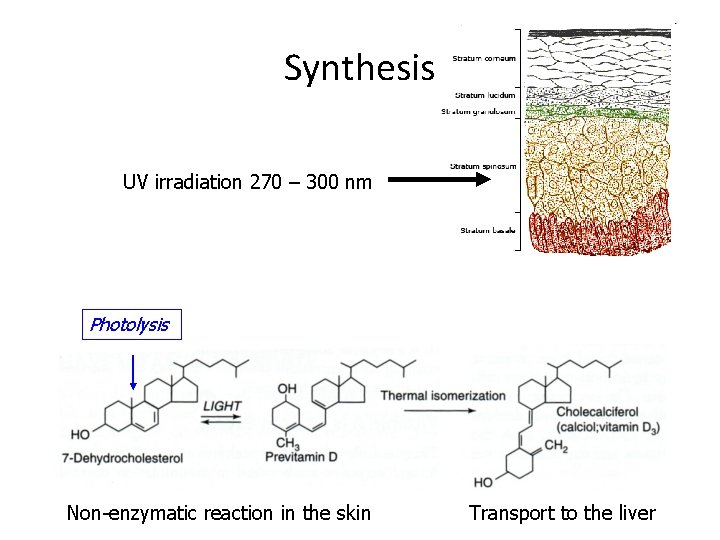
Vitamin D Is Derived from Cholesterol by the Ring-Splitting Activity of Light Cholesterol is the precursor of vitamin D, which plays an essential role in the control of calcium and phosphorus metabolism. 7 -Dehydrocholesterol (provitamin D 3) is photolyzed by the ultraviolet light of sunlight to previtamin D 3, which spontaneously isomerizes to vitamin D 3
Vitamin D Synthesis
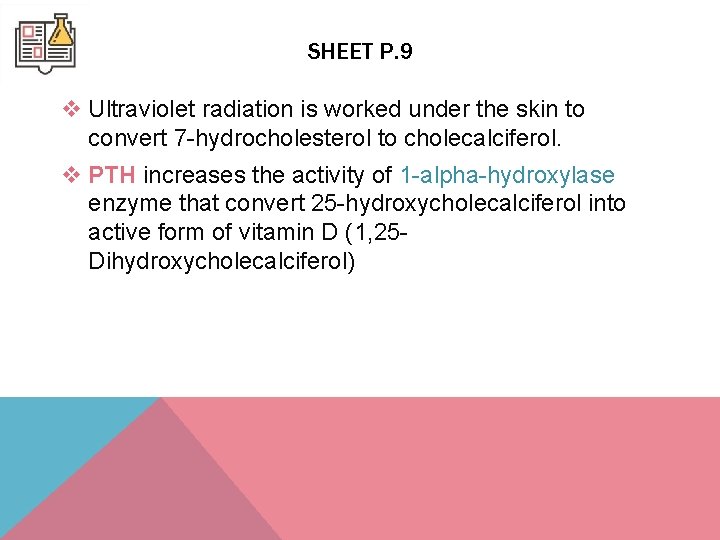
SHEET P. 9 v Ultraviolet radiation is worked under the skin to convert 7 -hydrocholesterol to cholecalciferol. v PTH increases the activity of 1 -alpha-hydroxylase enzyme that convert 25 -hydroxycholecalciferol into active form of vitamin D (1, 25 Dihydroxycholecalciferol)
Synthesis UV irradiation 270 – 300 nm Photolysis Non-enzymatic reaction in the skin Transport to the liver
Liver Kidneys Inactive form
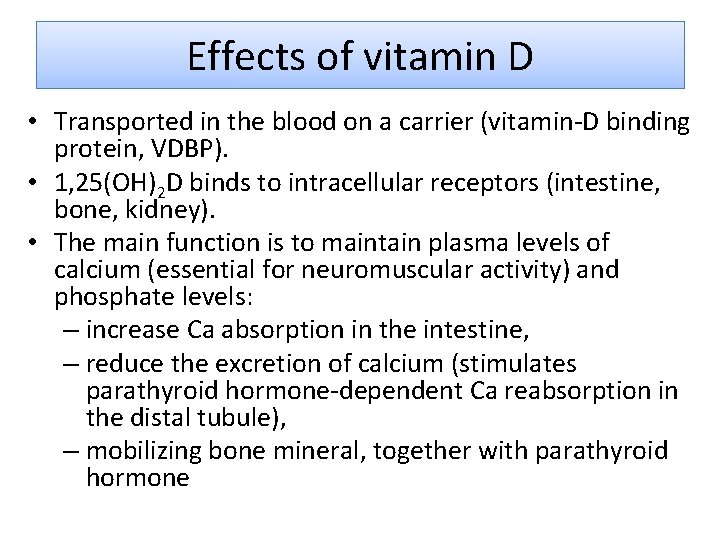
Effects of vitamin D • Transported in the blood on a carrier (vitamin-D binding protein, VDBP). • 1, 25(OH)2 D binds to intracellular receptors (intestine, bone, kidney). • The main function is to maintain plasma levels of calcium (essential for neuromuscular activity) and phosphate levels: – increase Ca absorption in the intestine, – reduce the excretion of calcium (stimulates parathyroid hormone-dependent Ca reabsorption in the distal tubule), – mobilizing bone mineral, together with parathyroid hormone
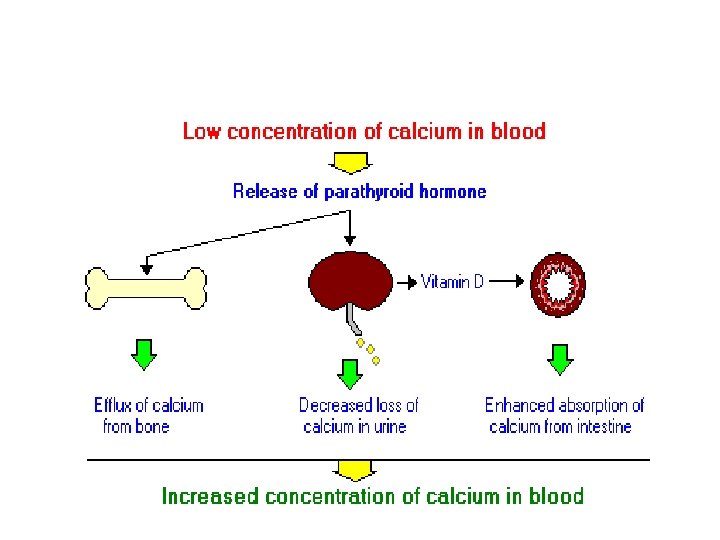
SHEET P. 10 v Maintaining plasma calcium levels is accomplished using both PTH & Vit D: § PTH works on the bones, whereas Vit D doesn’t. § PTH works on the kidneys which stimulates Vit D’s synthesis which in turn works on the intestines (to increase the absorption of calcium) & the kidney (to decrease the loss of calcium). v. Parathyroid glands: are small four or five glands located on the back of the thyroid gland (on its posterior wall). v(release PTH). v. When the parathyroid glands are surgically removed, the patient must take calcium supplements for life.
Vitamin D - deficincy • Failure of absorption in the intestine. • The lack of the liver and the renal hydroxylation of vit. D (congenital deficiency of 1 -hydroxylase). • The lack of UV irradiation. • The main manifestation - impaired ossification of the newly created osteiod, abundance of non mineralized matrix. • Vit. D is necessary for the prevention of skeletal changes (rickets in growing individuals, osteomalacia (soft bones) in adults).
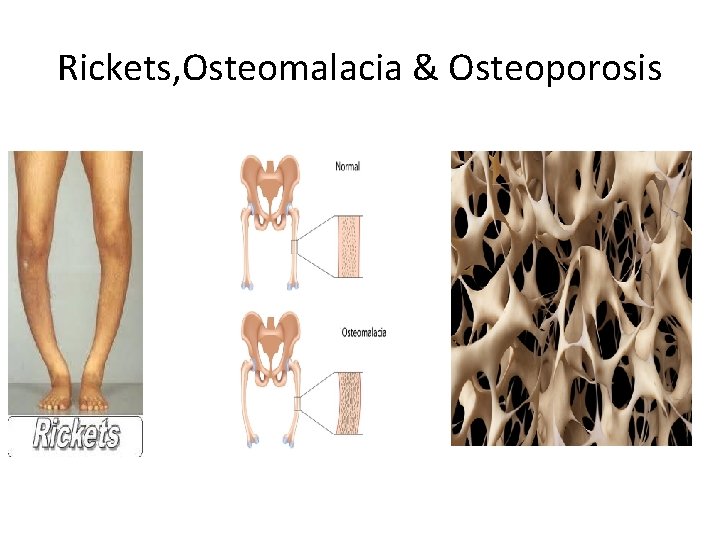
Rickets, Osteomalacia & Osteoporosis
SHEET P. 11 v. Rickets: is caused by a deficiency of vitamin D in children. v. Osteomalacia: is caused by deficiency of vitamin D in adults (soft bones). ( ﺍﻟﻌﻈﺎﻡ )ﺗﻠﻴﻴﻦ v. Osteoporosis is not related to vitamin D at all, it is caused by excess of cortisone hormone in adults. (bone density loss) ( ﺍﻟﻌﻈﺎﻡ ﻓﻲ )ﺗﻨﺨﺮ § A side effect of taking cortisone medication is osteoporosis. Notes from editor: • Rickets is a condition that results in weak or soft bones in children. Symptoms include bowed legs, stunted growth, bone pain, large forehead, and trouble sleeping. • Osteomalacia & osteoporosis are often confused but in osteoporosis, the bones are porous and brittle, whereas in osteomalacia the bones are soft.
Vitamin D and Immunity • It increases the activity of natural killer cells (cytotoxic lymphocytes). • Increases the phagocytic ability of macrophages. • Reduces the risk of virus diseases (colds, flu). • Reduces the risk of many cancers (colon, breast and ovarian cancer). • Reduces the risk of cardiovascular disease → have a positive impact on the composition of plasma lipids.
The End of the Lecture