
Sheep and Goat Value Chain Development in Ethiopia

- Slides: 13
Sheep and Goat Value Chain Development in Ethiopia CGIAR Research Program (CRP 3. 7) Livestock and Fish Report Writing Getachew Legese
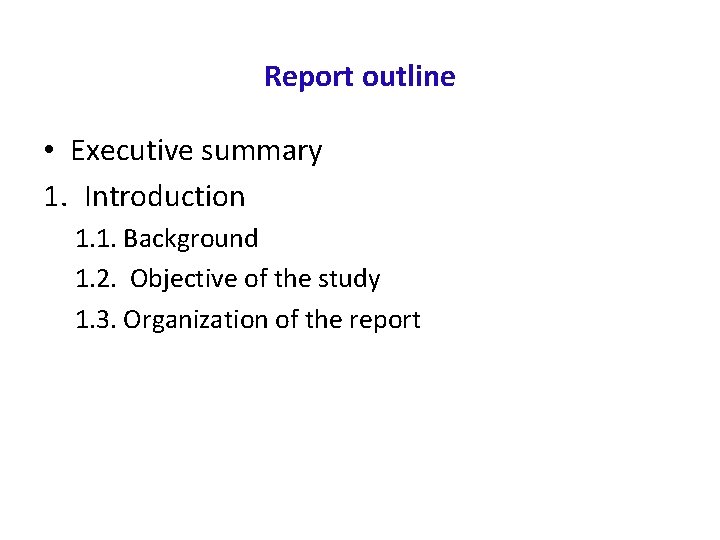
Report outline • Executive summary 1. Introduction 1. 1. Background 1. 2. Objective of the study 1. 3. Organization of the report
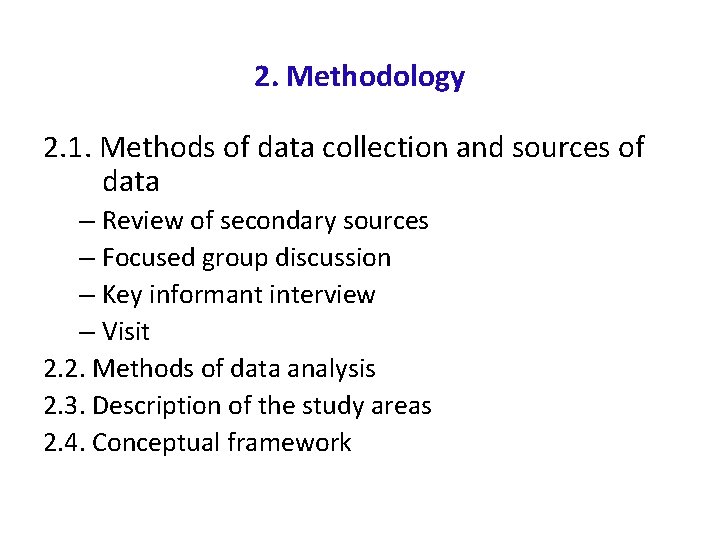
2. Methodology 2. 1. Methods of data collection and sources of data – Review of secondary sources – Focused group discussion – Key informant interview – Visit 2. 2. Methods of data analysis 2. 3. Description of the study areas 2. 4. Conceptual framework
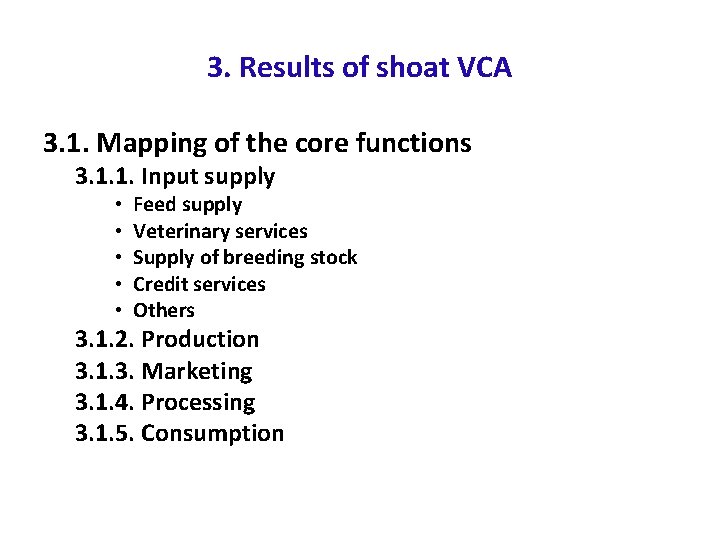
3. Results of shoat VCA 3. 1. Mapping of the core functions 3. 1. 1. Input supply • • • Feed supply Veterinary services Supply of breeding stock Credit services Others 3. 1. 2. Production 3. 1. 3. Marketing 3. 1. 4. Processing 3. 1. 5. Consumption
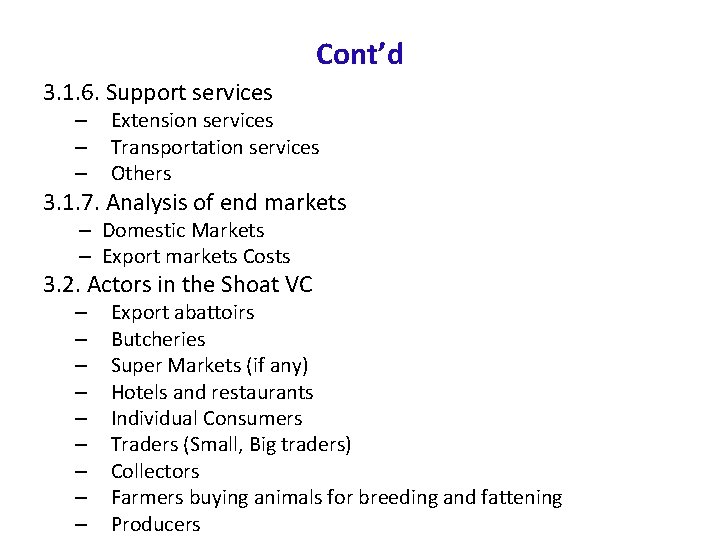
Cont’d 3. 1. 6. Support services – – – Extension services Transportation services Others 3. 1. 7. Analysis of end markets – Domestic Markets – Export markets Costs 3. 2. Actors in the Shoat VC – – – – – Export abattoirs Butcheries Super Markets (if any) Hotels and restaurants Individual Consumers Traders (Small, Big traders) Collectors Farmers buying animals for breeding and fattening Producers
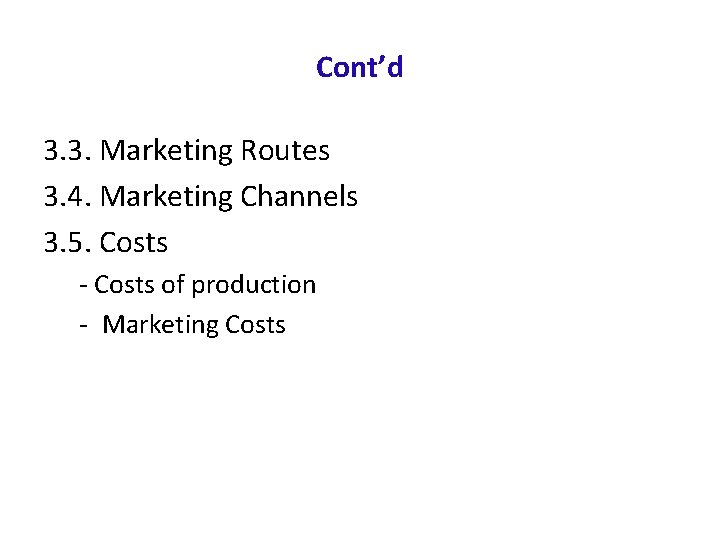
Cont’d 3. 3. Marketing Routes 3. 4. Marketing Channels 3. 5. Costs - Costs of production - Marketing Costs
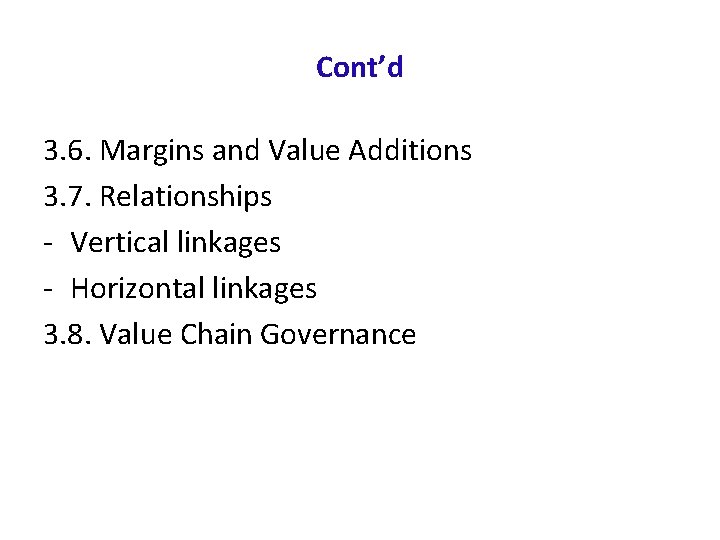
Cont’d 3. 6. Margins and Value Additions 3. 7. Relationships - Vertical linkages - Horizontal linkages 3. 8. Value Chain Governance
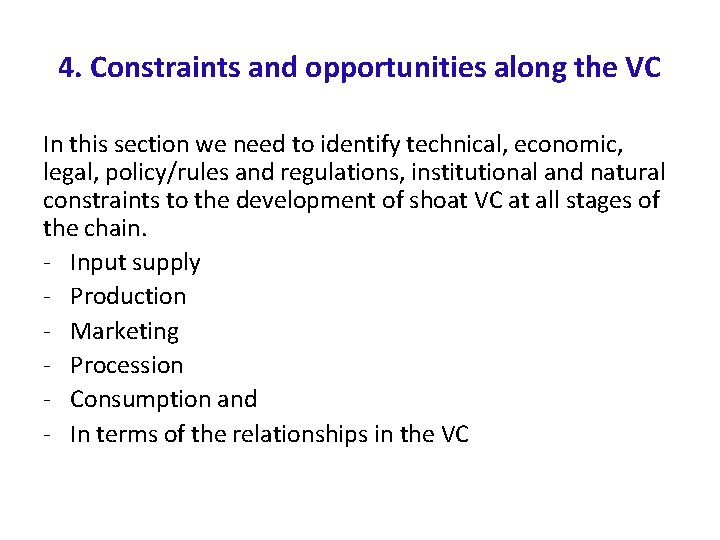
4. Constraints and opportunities along the VC In this section we need to identify technical, economic, legal, policy/rules and regulations, institutional and natural constraints to the development of shoat VC at all stages of the chain. - Input supply - Production - Marketing - Procession - Consumption and - In terms of the relationships in the VC
Opportunities - Opportunities should also be identified at all stages of the VC
Prioritization of the constraints and opportunities • Constraints identified at all levels of the value chain should be listed and discussed according to their order of priority by the VC actors
Conclusions and recommendations • Short conclusions focusing on the core findings of the study • Recommendations need to be specific and practically applicable. • Recommendations should follow the priority orders of the identified constraints
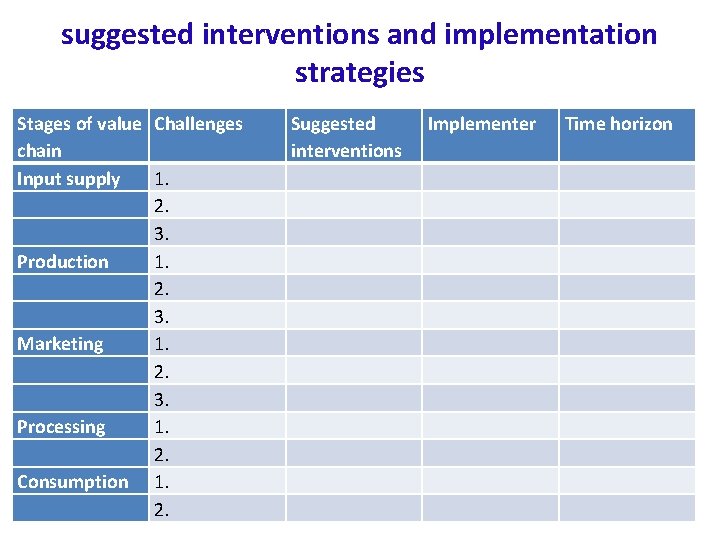
suggested interventions and implementation strategies Stages of value Challenges chain Input supply 1. 2. 3. Production 1. 2. 3. Marketing 1. 2. 3. Processing 1. 2. Consumption 1. 2. Suggested interventions Implementer Time horizon
Thank You!!