
Sheep and Goat Pox Capripoxvirus Infection Overview Organism



- Slides: 30
Sheep and Goat Pox Capripoxvirus Infection
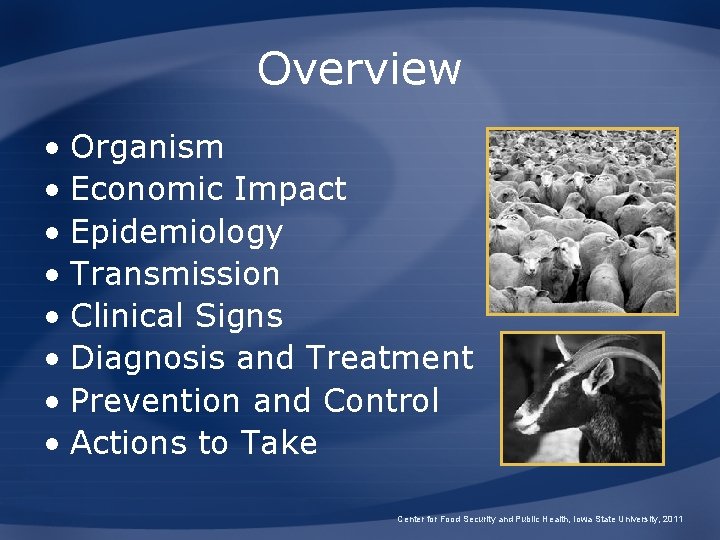
Overview • Organism • Economic Impact • Epidemiology • Transmission • Clinical Signs • Diagnosis and Treatment • Prevention and Control • Actions to Take Center for Food Security and Public Health, Iowa State University, 2011
The Organism
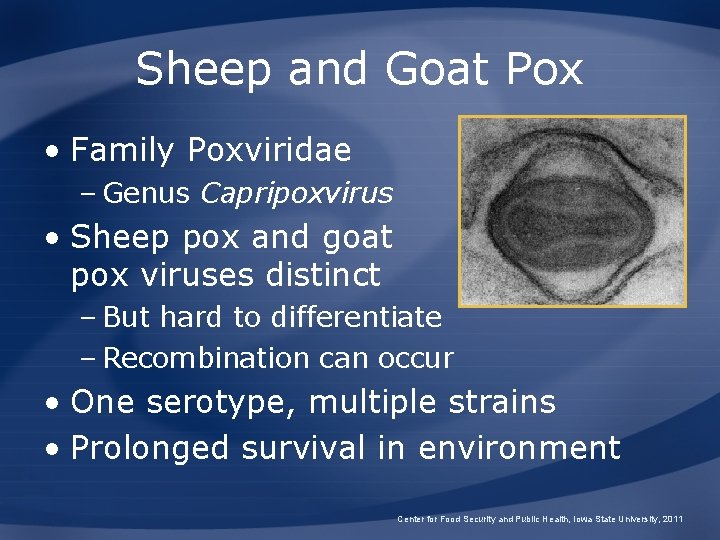
Sheep and Goat Pox • Family Poxviridae – Genus Capripoxvirus • Sheep pox and goat pox viruses distinct – But hard to differentiate – Recombination can occur • One serotype, multiple strains • Prolonged survival in environment Center for Food Security and Public Health, Iowa State University, 2011
Importance
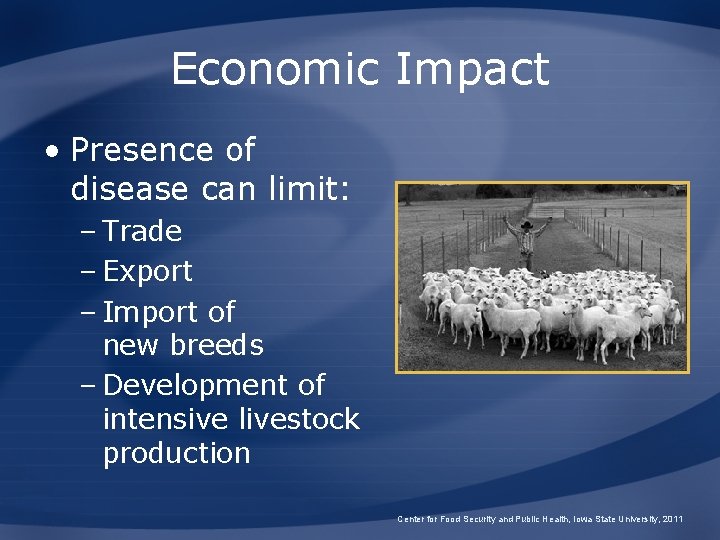
Economic Impact • Presence of disease can limit: – Trade – Export – Import of new breeds – Development of intensive livestock production Center for Food Security and Public Health, Iowa State University, 2011
Epidemiology
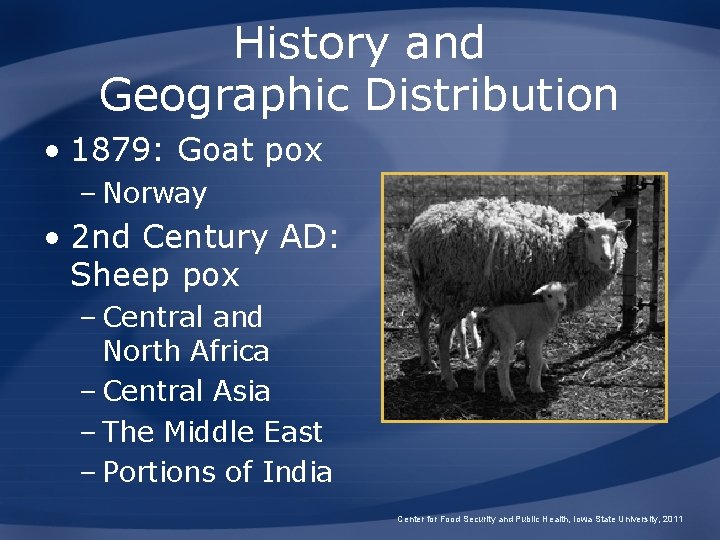
History and Geographic Distribution • 1879: Goat pox – Norway • 2 nd Century AD: Sheep pox – Central and North Africa – Central Asia – The Middle East – Portions of India Center for Food Security and Public Health, Iowa State University, 2011
Morbidity/Mortality • Mortality up to 50% in fully susceptible flock • Mortality up to 100% in young animals • Symptoms severe in – Stressed animals – Animals with concurrent infections – Naïve animals Center for Food Security and Public Health, Iowa State University, 2011
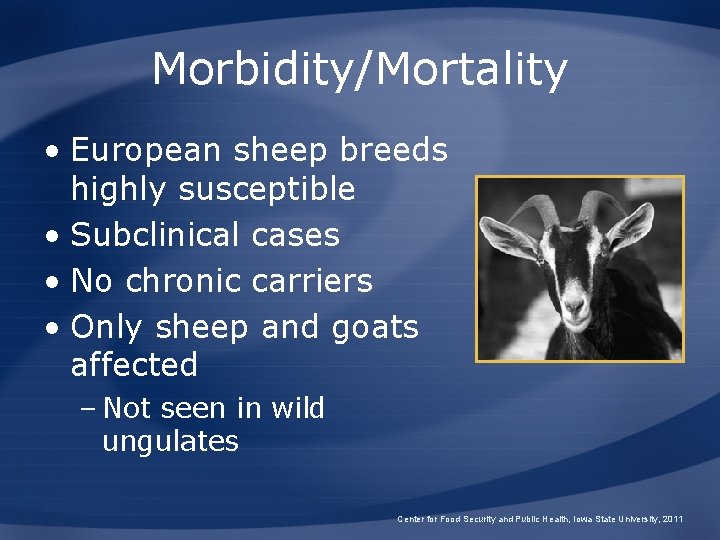
Morbidity/Mortality • European sheep breeds highly susceptible • Subclinical cases • No chronic carriers • Only sheep and goats affected – Not seen in wild ungulates Center for Food Security and Public Health, Iowa State University, 2011
Transmission
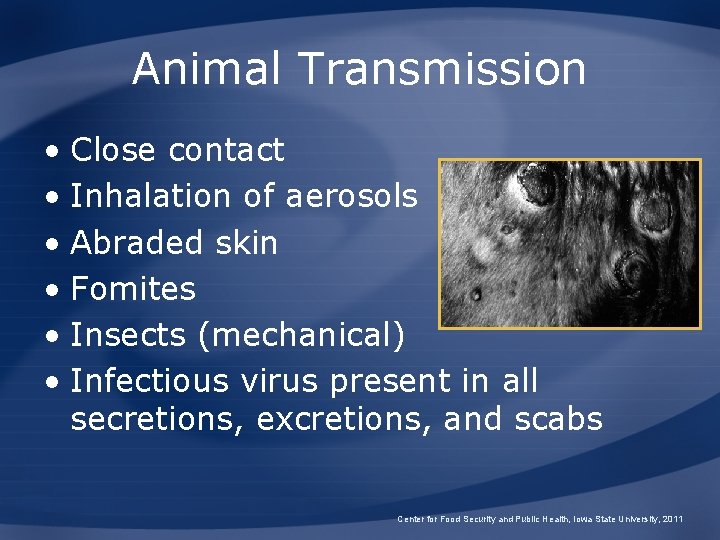
Animal Transmission • Close contact • Inhalation of aerosols • Abraded skin • Fomites • Insects (mechanical) • Infectious virus present in all secretions, excretions, and scabs Center for Food Security and Public Health, Iowa State University, 2011
Animals and Sheep and Goat Pox
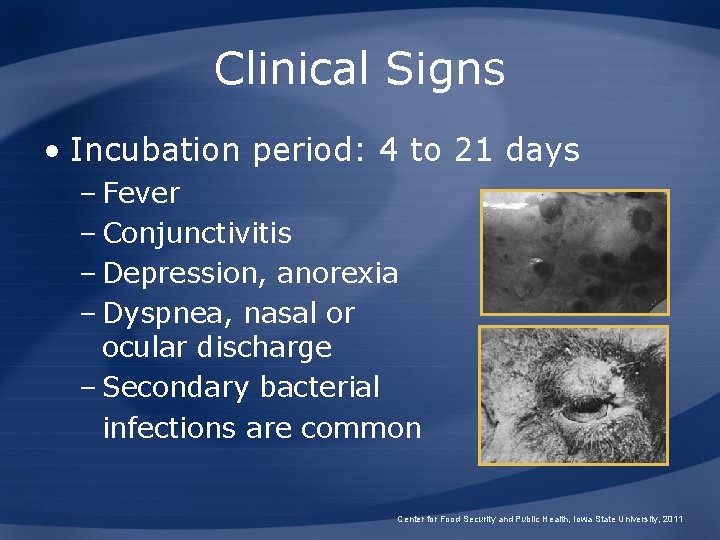
Clinical Signs • Incubation period: 4 to 21 days – Fever – Conjunctivitis – Depression, anorexia – Dyspnea, nasal or ocular discharge – Secondary bacterial infections are common Center for Food Security and Public Health, Iowa State University, 2011
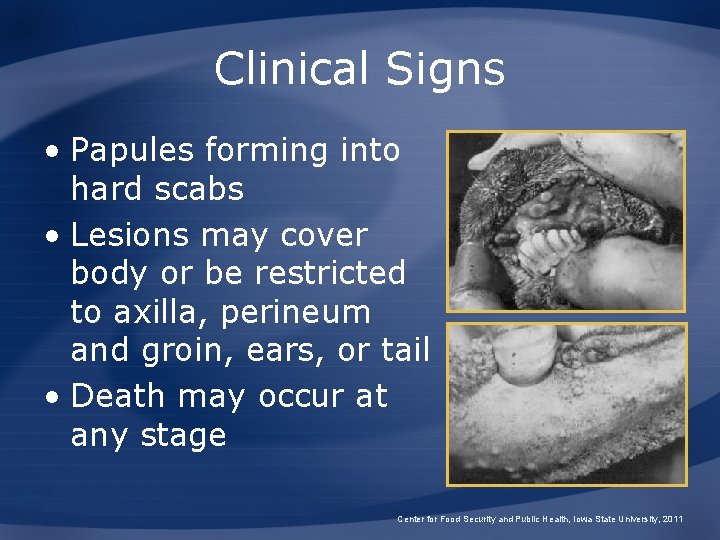
Clinical Signs • Papules forming into hard scabs • Lesions may cover body or be restricted to axilla, perineum and groin, ears, or tail • Death may occur at any stage Center for Food Security and Public Health, Iowa State University, 2011
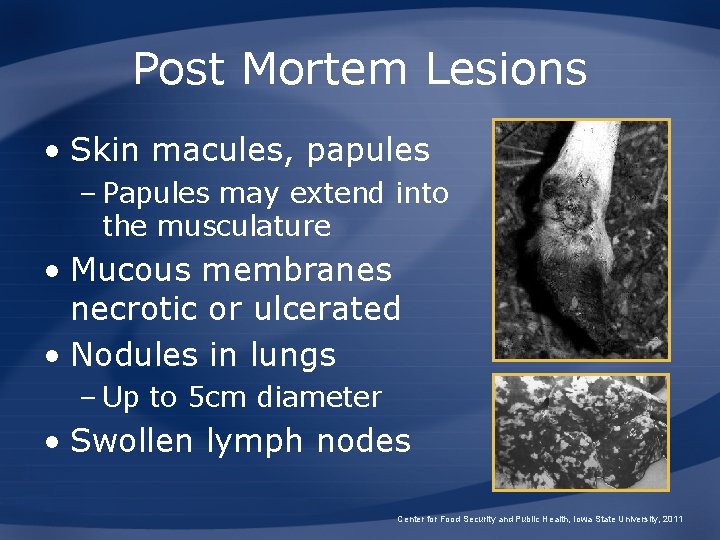
Post Mortem Lesions • Skin macules, papules – Papules may extend into the musculature • Mucous membranes necrotic or ulcerated • Nodules in lungs – Up to 5 cm diameter • Swollen lymph nodes Center for Food Security and Public Health, Iowa State University, 2011
Differential Diagnosis • Contagious exthyma • Bluetongue • Mycotic dermatitis • Sheep scab • Mange • Photsensitization • Peste des petits ruminants • Parasitic pneumonia • Caseous lymphadenitis • Insect bites Center for Food Security and Public Health, Iowa State University, 2011
Sampling • Before collecting or sending any samples, the proper authorities should be contacted • Samples should only be sent under secure conditions and to authorized laboratories to prevent the spread of the disease Center for Food Security and Public Health, Iowa State University, 2011
Diagnosis • Clinical – Suspect in animals with characteristic skin lesions, fever, and lymphadenitis • Laboratory – Virus isolation, electron microscopy – PCR – Viral antigen detection (AGID, ELISA) – Serology – Characteristic histopathologic lesions Center for Food Security and Public Health, Iowa State University, 2011
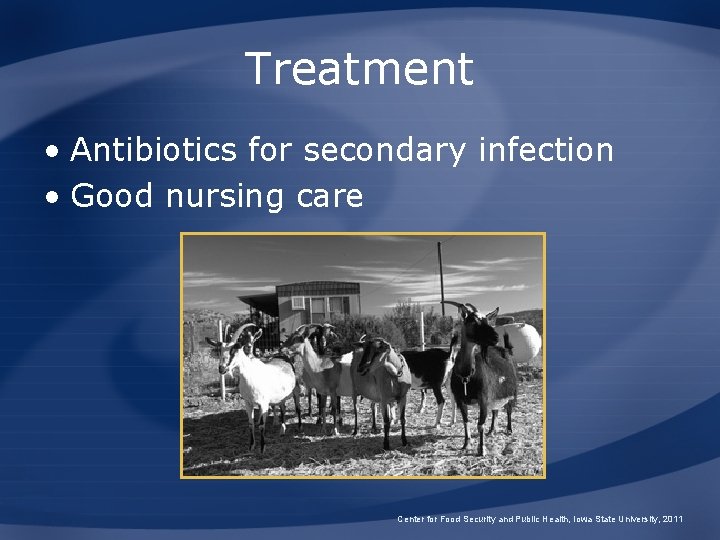
Treatment • Antibiotics for secondary infection • Good nursing care Center for Food Security and Public Health, Iowa State University, 2011
Public Health Significance • No conclusive evidence of infection in humans • Anecdotal reports of sheep or goat pox lesions in humans in India and Sweden – Not verified by virus isolation Center for Food Security and Public Health, Iowa State University, 2011
Prevention and Control
Recommended Actions • IMMEDIATELY notify authorities • Federal – Area Veterinarian in Charge (AVIC) http: //www. aphis. usda. gov/animal_health/area_offices/ • State – State veterinarian http: //www. usaha. org/State. Animal. Health. Officials. pdf • Quarantine Center for Food Security and Public Health, Iowa State University, 2011
Prevention • Non-endemic areas – Infected animals, fomites, and animal products may introduce disease – Keep free with import restrictions Center for Food Security and Public Health, Iowa State University, 2011
Control and Eradication • Endemic areas – Vaccinate • Outbreak in endemic area, small scale – Quarantine, slaughter infected and exposed, clean and disinfect – Ring vaccination • Outbreak in endemic area, large scale – Massive vaccination – Movement restrictions Center for Food Security and Public Health, Iowa State University, 2011
Control and Eradication • Outbreak in non-endemic area – Quarantine, slaughter infected and exposed, clean and disinfect – Ring vaccination • No carrier state • Isolate infected herds and sick animals for at least 45 days after recovery Center for Food Security and Public Health, Iowa State University, 2011
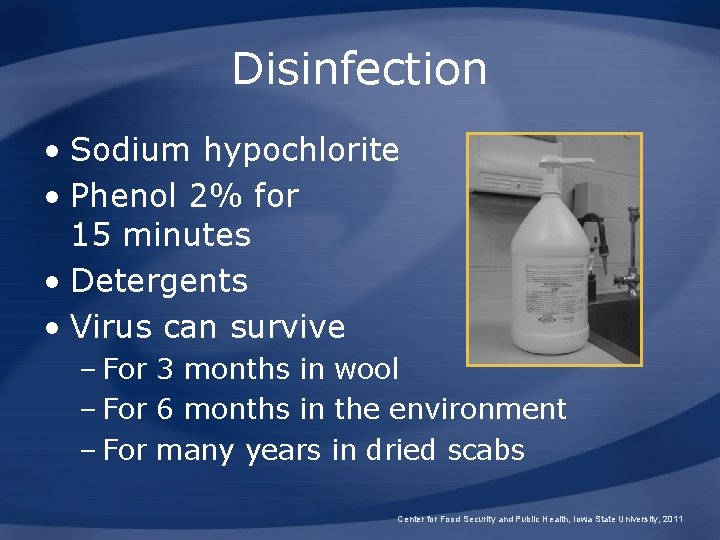
Disinfection • Sodium hypochlorite • Phenol 2% for 15 minutes • Detergents • Virus can survive – For 3 months in wool – For 6 months in the environment – For many years in dried scabs Center for Food Security and Public Health, Iowa State University, 2011
Vaccination • Vaccination can provide effective control in endemic areas • Killed vaccines do not provide long lasting immunity • Attenuated virus vaccines give immunity up to 2 years Center for Food Security and Public Health, Iowa State University, 2011
Additional Resources • World Organization for Animal Health (OIE) – www. oie. int • U. S. Department of Agriculture (USDA) – www. aphis. usda. gov • Center for Food Security and Public Health – www. cfsph. iastate. edu • USAHA Foreign Animal Diseases (“The Gray Book”) – www. usaha. org/pubs/fad. pdf Center for Food Security and Public Health, Iowa State University, 2011
Acknowledgments Development of this presentation was funded by grants from the Centers for Disease Control and Prevention, the Iowa Homeland Security and Emergency Management Division, and the Iowa Department of Agriculture and Land Stewardship to the Center for Food Security and Public Health at Iowa State University. Authors: Katie Steneroden, DVM; Anna Rovid Spickler, DVM, Ph. D; James A. Roth, DVM, Ph. D Reviewers: Bindy Comito Sornsin, BA; Katie Spaulding, BS; Kerry Leedom Larson, DVM, MPH, Ph. D Center for Food Security and Public Health, Iowa State University, 2011