
Sharp Safety Blood borne Pathogens Introduction Lesson objectives

Sharp Safety & Blood borne Pathogens
Introduction Lesson objectives: 1. 2. 3. 4. 5. Define blood borne pathogens. Identify workers who are at risk of exposure to blood borne pathogens. Identify key aspects of a Blood borne Pathogen Exposure Control Plan; Describe methods for controlling exposure to blood borne pathogens. Describe steps to take when exposed to a blood borne pathogen.
Bloodborne Pathogens What are bloodborne pathogens • Pathogenic microorganisms present in human blood that can lead to diseases • Examples of primary concern – Hepatitis B (HBV) – Hepatitis C (HCV) – Human Immunodeficiency Virus (HIV)
Blood borne Pathogens • Hepatitis B (HBV) – Silent infection; symptoms include jaundice, fatigue, abdominal pain, loss of appetite, intermittent nausea, vomiting; may lead to chronic liver disease, liver cancer, and death – HBV can survive for at least one week in dried blood
Bloodborne Pathogens • Hepatitis C (HCV) – Symptoms include: jaundice, fatigue, abdominal pain, loss of appetite, intermittent nausea, vomiting – May lead to chronic liver disease and death
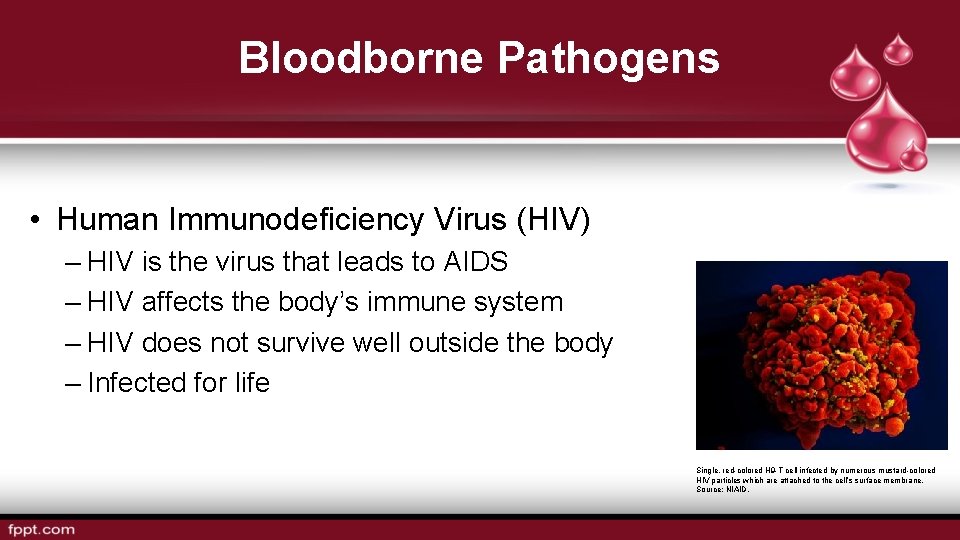
Bloodborne Pathogens • Human Immunodeficiency Virus (HIV) – HIV is the virus that leads to AIDS – HIV affects the body’s immune system – HIV does not survive well outside the body – Infected for life Single, red-colored H 9 -T cell infected by numerous mustard-colored HIV particles which are attached to the cell’s surface membrane. Source: NIAID.
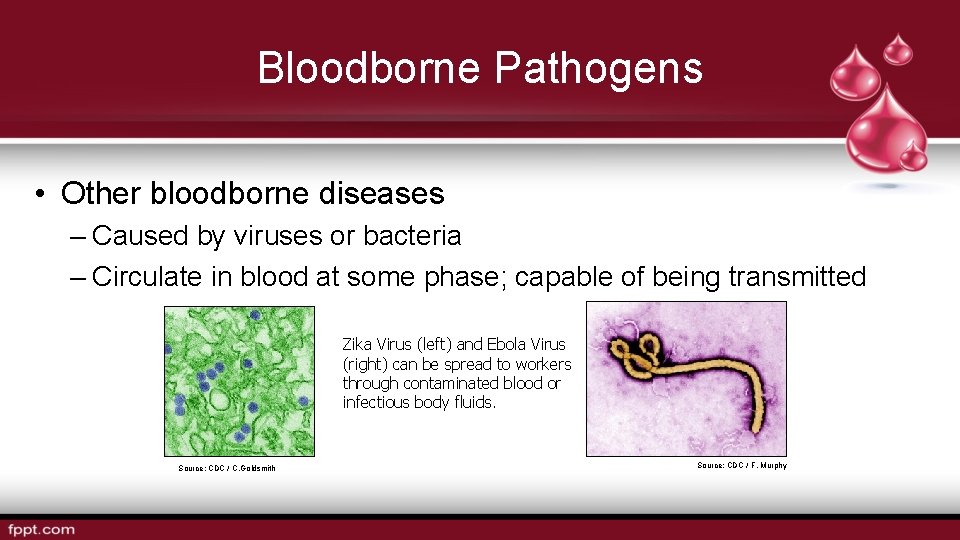
Bloodborne Pathogens • Other bloodborne diseases – Caused by viruses or bacteria – Circulate in blood at some phase; capable of being transmitted Zika Virus (left) and Ebola Virus (right) can be spread to workers through contaminated blood or infectious body fluids. Source: CDC / C. Goldsmith Source: CDC / F. Murphy
Bloodborne Pathogens • Examples – Hepatitis D (HDV) – Syphilis – Malaria – Brucellosis – Leptospirosis – Arboviral Infections – Relapsing fever – Creutzfeldt-Jakob Disease – Human T-Lymphotropic Virus Type I – Viral Hemorrahagic Fever
Risk of Exposure Contamination sources: • Blood • Other potentially infectious materials (OPIM) – Human body fluids – Any unfixed tissue or organ from human – Cultures, culture mediums, or other solutions – Experimental animal blood, tissues, or organs infected with HIV or HBV

Risk of Exposure Spread of bloodborne pathogens occurs through: • Direct contact • Indirect contact • Respiratory transmission • Vector-borne transmission Source: NIOSH
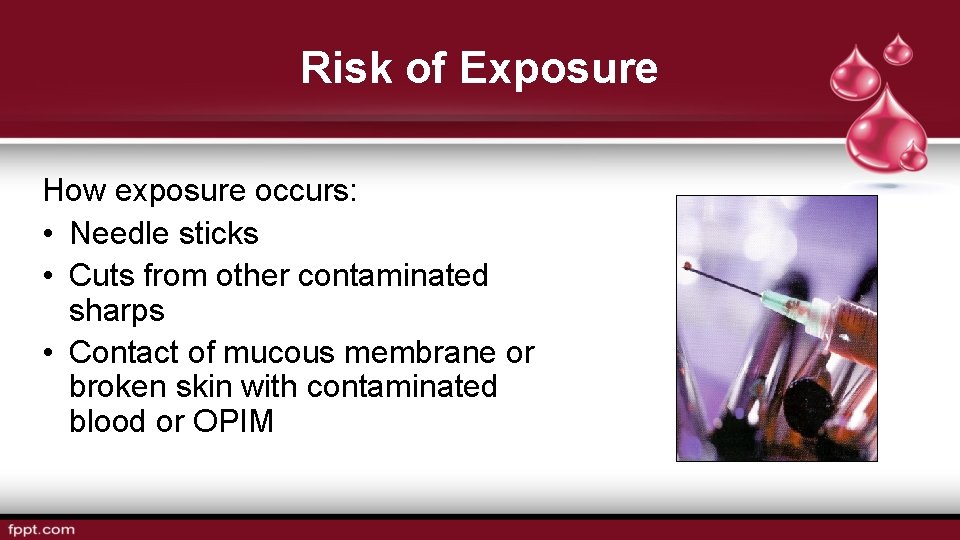
Risk of Exposure How exposure occurs: • Needle sticks • Cuts from other contaminated sharps • Contact of mucous membrane or broken skin with contaminated blood or OPIM
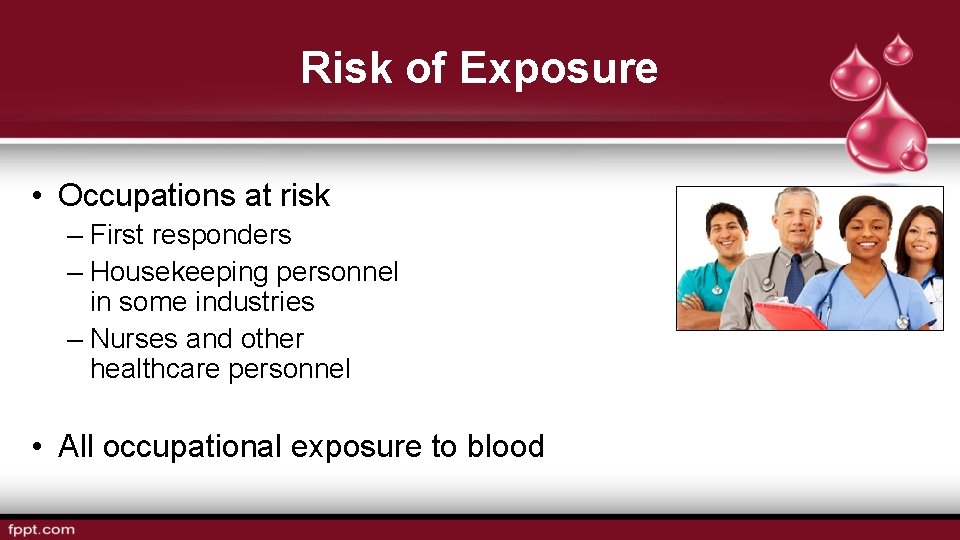
Risk of Exposure • Occupations at risk – First responders – Housekeeping personnel in some industries – Nurses and other healthcare personnel • All occupational exposure to blood Source: OSHA

Exposure Control Plan (ECP) Establish an Exposure Control Plan • Written plan • Review and update plan
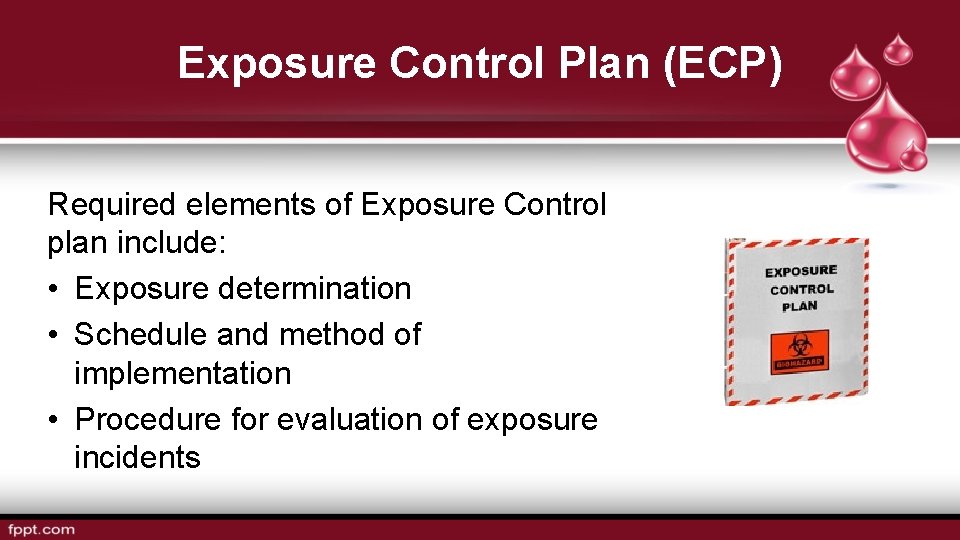
Exposure Control Plan (ECP) Required elements of Exposure Control plan include: • Exposure determination • Schedule and method of implementation • Procedure for evaluation of exposure incidents
Exposure Control Plan (ECP) • Accessible to employees • Review and update – Annually – When new or modified tasks/procedures are implemented
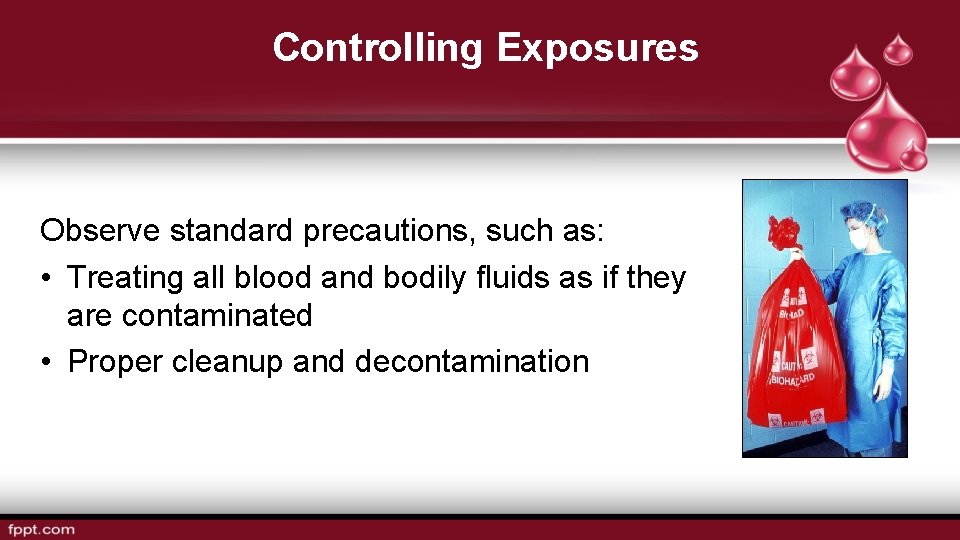
Controlling Exposures Observe standard precautions, such as: • Treating all blood and bodily fluids as if they are contaminated • Proper cleanup and decontamination
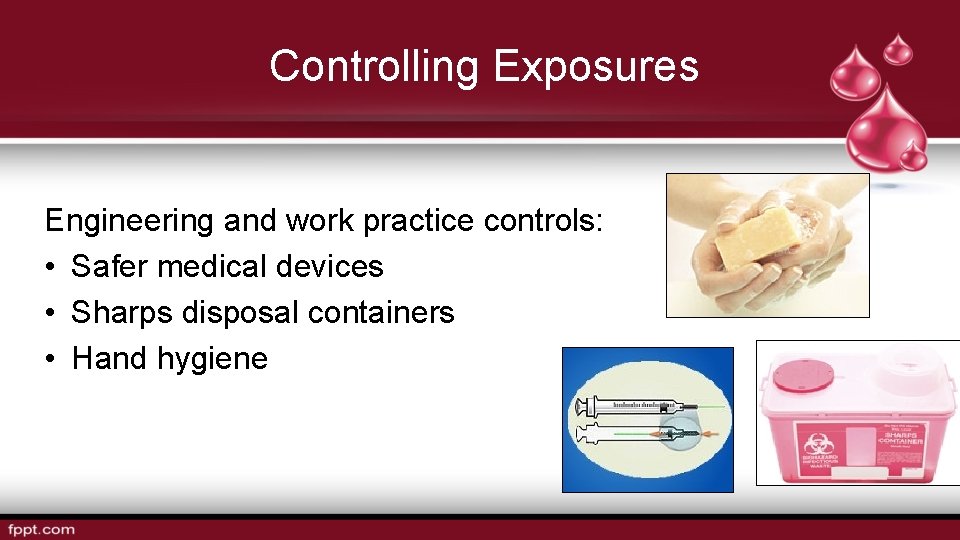
Controlling Exposures Engineering and work practice controls: • Safer medical devices • Sharps disposal containers • Hand hygiene
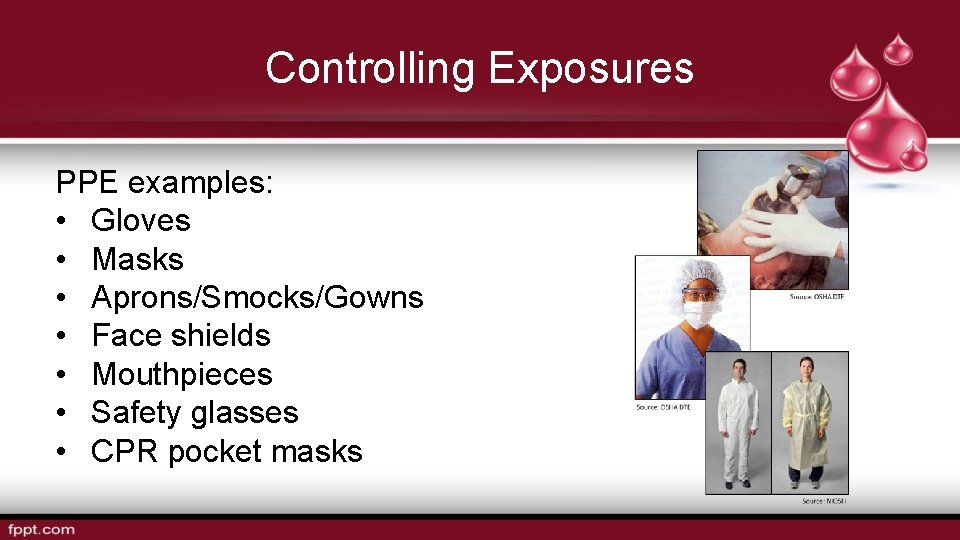
Controlling Exposures PPE examples: • Gloves • Masks • Aprons/Smocks/Gowns • Face shields • Mouthpieces • Safety glasses • CPR pocket masks
Controlling Exposures Employer’s responsibilities: • Perform hazard assessment • Identify and provide appropriate PPE to employee at no cost • Train employees on use and care • Maintain/replace PPE • Review, update, evaluate PPE program
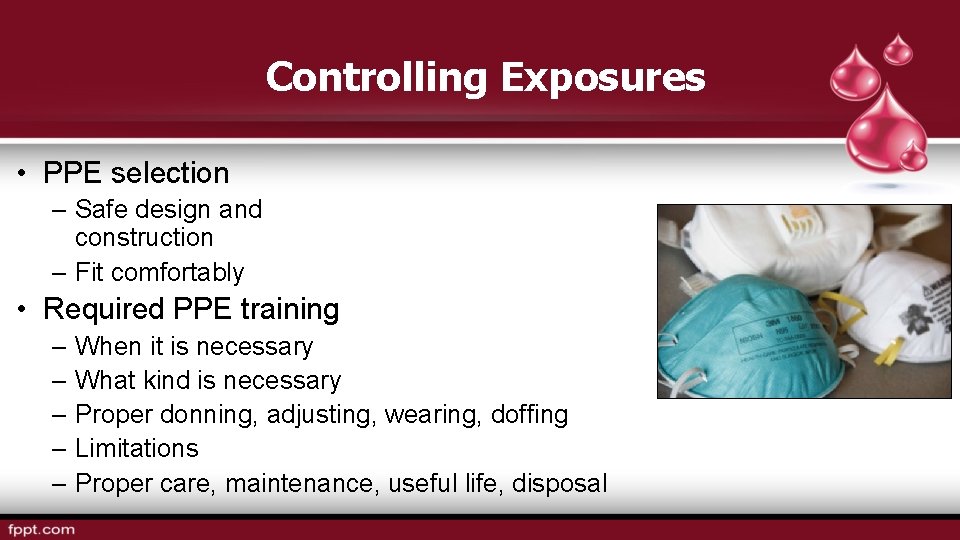
Controlling Exposures • PPE selection – Safe design and construction – Fit comfortably • Required PPE training – When it is necessary – What kind is necessary – Proper donning, adjusting, wearing, doffing – Limitations – Proper care, maintenance, useful life, disposal
Controlling Exposures Employee’s responsibilities: • Properly wear PPE • Attend training • Care for, clean, and maintain • Notify when repairs/replacement needed
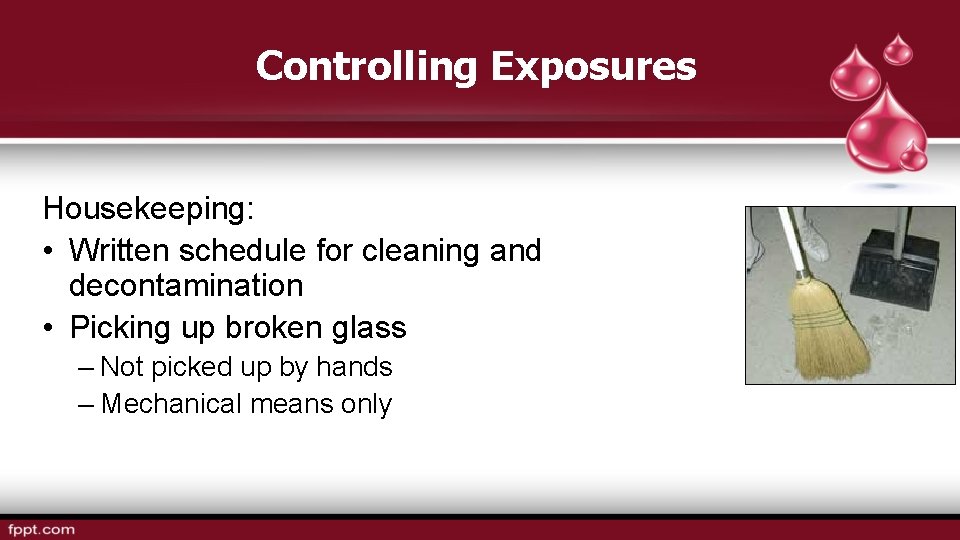
Controlling Exposures Housekeeping: • Written schedule for cleaning and decontamination • Picking up broken glass – Not picked up by hands – Mechanical means only
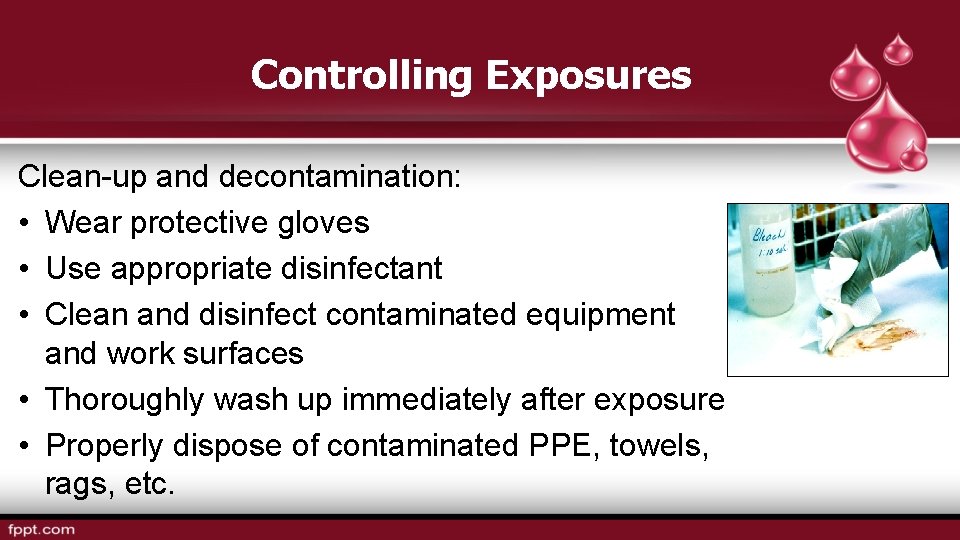
Controlling Exposures Clean-up and decontamination: • Wear protective gloves • Use appropriate disinfectant • Clean and disinfect contaminated equipment and work surfaces • Thoroughly wash up immediately after exposure • Properly dispose of contaminated PPE, towels, rags, etc.
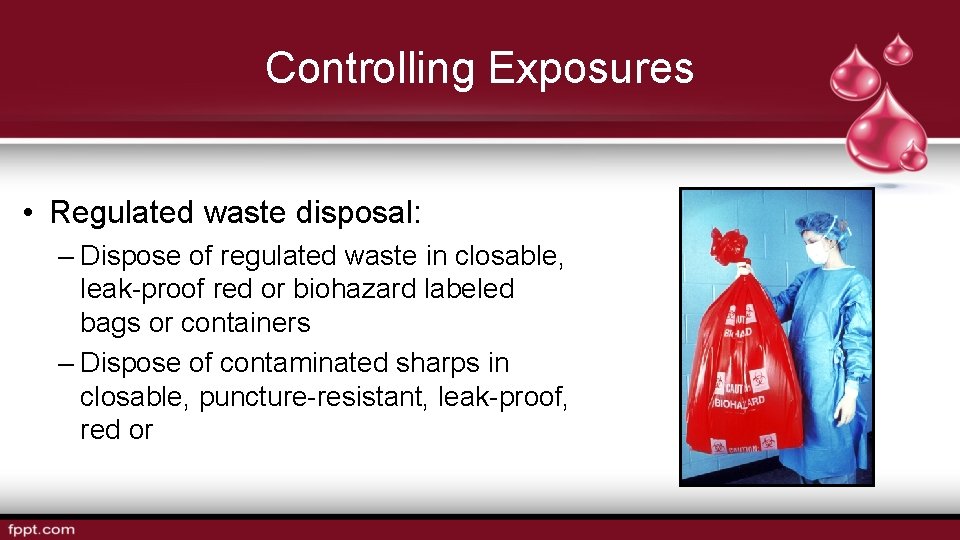
Controlling Exposures • Regulated waste disposal: – Dispose of regulated waste in closable, leak-proof red or biohazard labeled bags or containers – Dispose of contaminated sharps in closable, puncture-resistant, leak-proof, red or
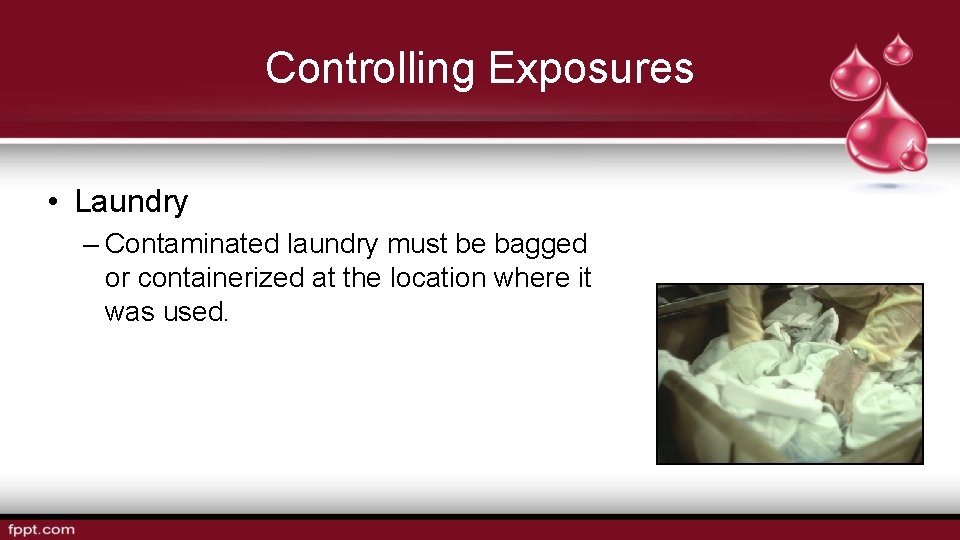
Controlling Exposures • Laundry – Contaminated laundry must be bagged or containerized at the location where it was used.
Controlling Exposures Training: • Who – All employees with occupational exposure to blood or other potentially infectious material (OPIM) – Employees who are trained in first aid and CPR • No cost; during working hours • When – Initial assignment – Annually; or with new/modified tasks
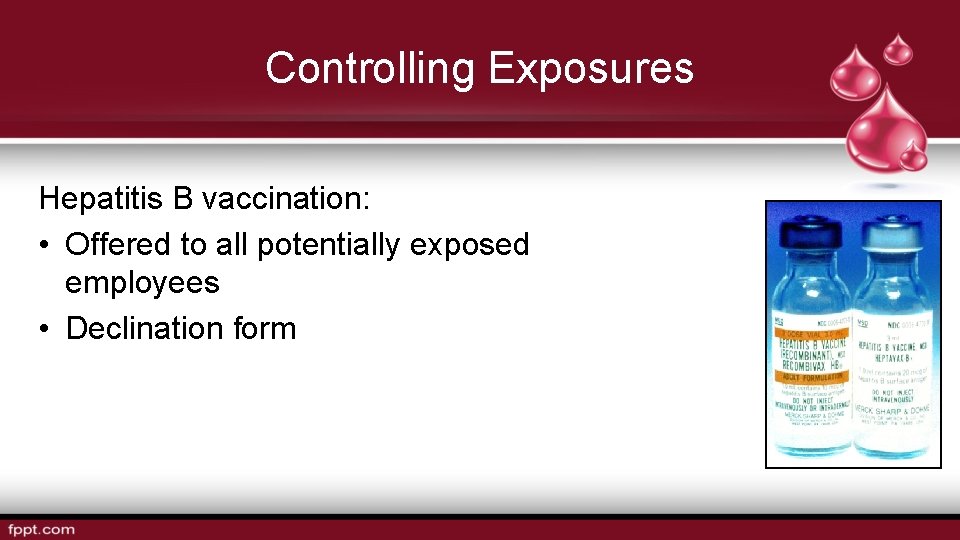
Controlling Exposures Hepatitis B vaccination: • Offered to all potentially exposed employees • Declination form
Controlling Exposures No vaccinations for: • Hepatitis C • HIV
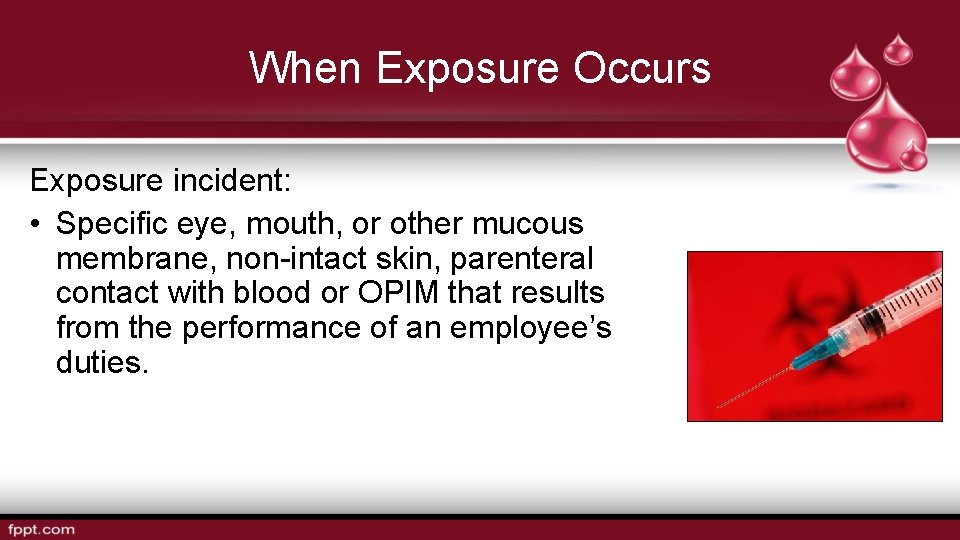
When Exposure Occurs Exposure incident: • Specific eye, mouth, or other mucous membrane, non-intact skin, parenteral contact with blood or OPIM that results from the performance of an employee’s duties.
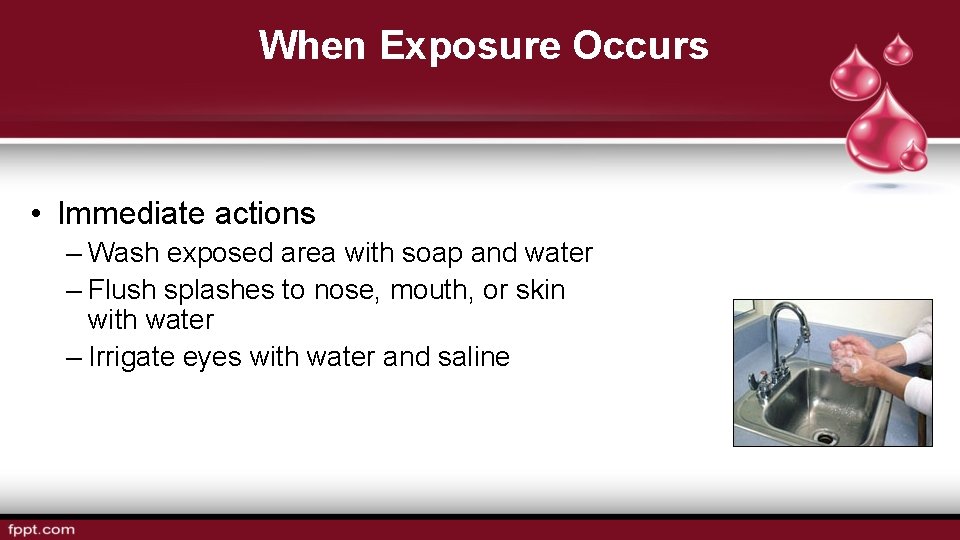
When Exposure Occurs • Immediate actions – Wash exposed area with soap and water – Flush splashes to nose, mouth, or skin with water – Irrigate eyes with water and saline
When Exposure Occurs • Report exposure immediately • Direct employee to healthcare professional for treatment
When Exposure Occurs • Confidential medical evaluation and follow-up – Route(s) of exposure and circumstances – Source individual – Collect/test blood for HBV and HIV serological status – Post exposure prophylaxis (when medically indicated) – Counseling – Evaluation
- Slides: 32