
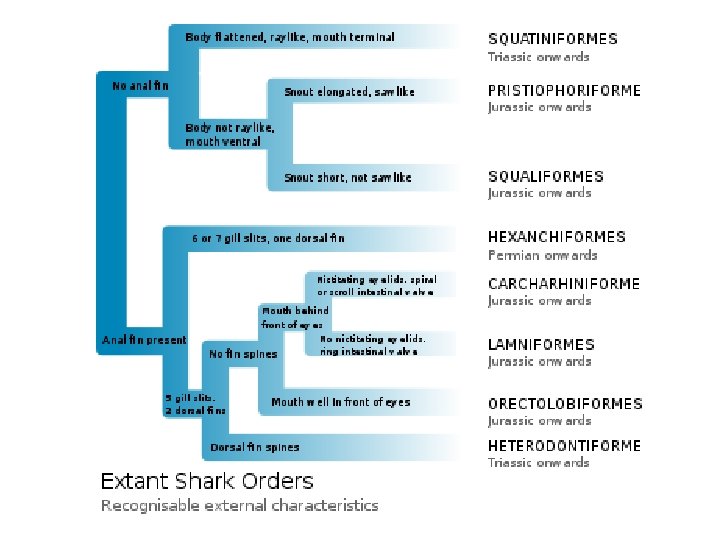
Sharks Classification Kingdom Animalia Phylum Class Subclass Superorder
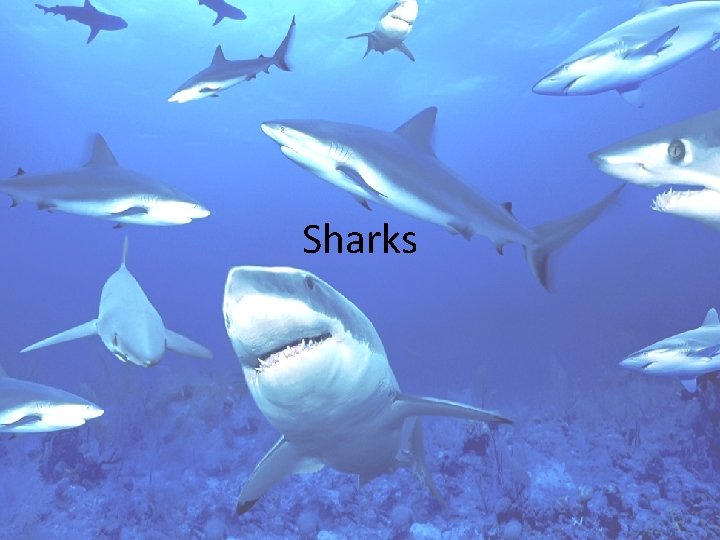
Sharks
Classification • Kingdom Animalia – Phylum _______ • Class _______ –Subclass _______ » Superorder _______ • Known as “_____” until the 16 th century – Name “shark” may have come from the Yucatec Maya
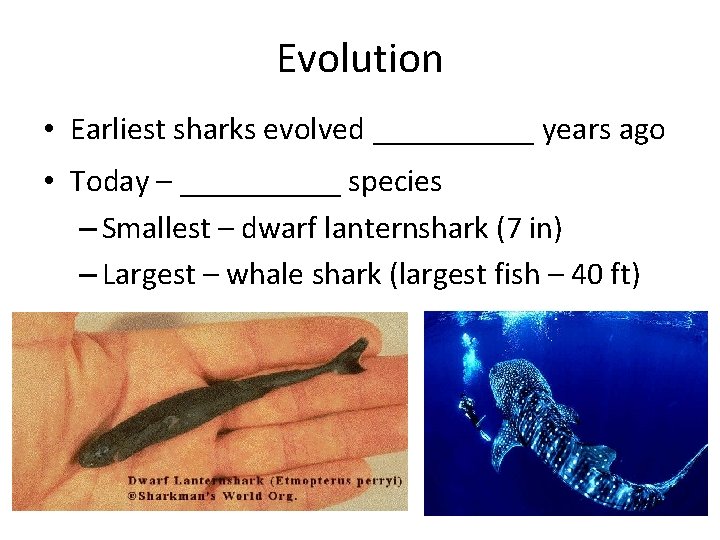
Evolution • Earliest sharks evolved _____ years ago • Today – _____ species – Smallest – dwarf lanternshark (7 in) – Largest – whale shark (largest fish – 40 ft)
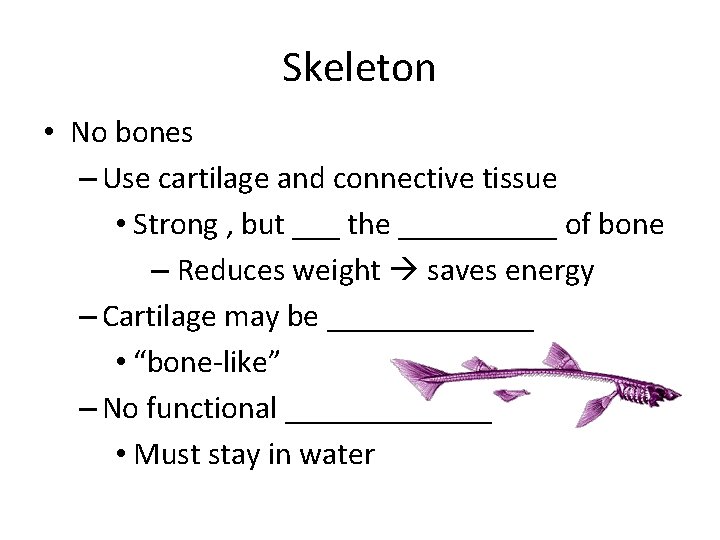
Skeleton • No bones – Use cartilage and connective tissue • Strong , but ___ the _____ of bone – Reduces weight saves energy – Cartilage may be _______ • “bone-like” – No functional _______ • Must stay in water
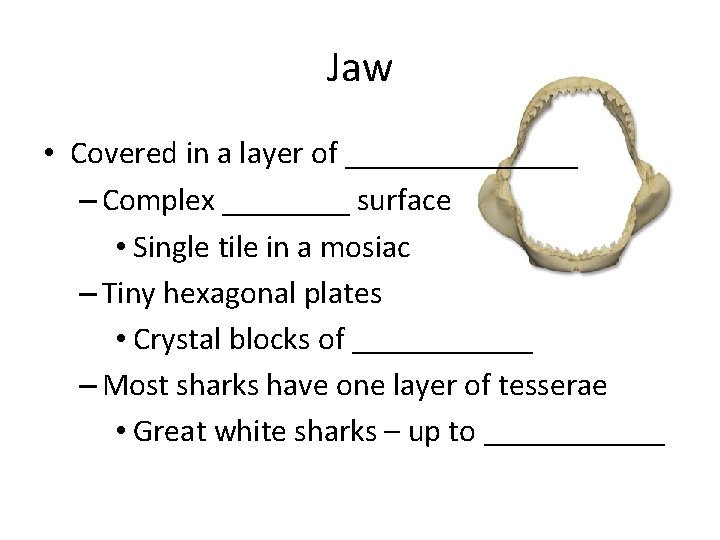
Jaw • Covered in a layer of _______ – Complex ____ surface • Single tile in a mosiac – Tiny hexagonal plates • Crystal blocks of _______ – Most sharks have one layer of tesserae • Great white sharks – up to _______
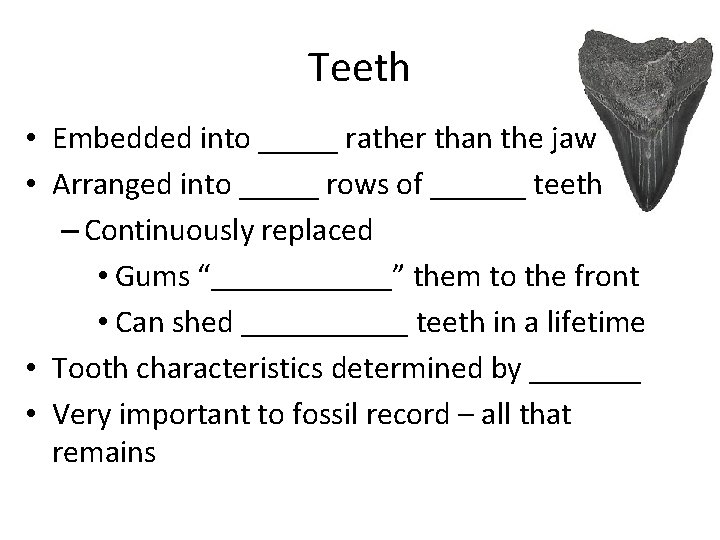
Teeth • Embedded into _____ rather than the jaw • Arranged into _____ rows of ______ teeth – Continuously replaced • Gums “_______” them to the front • Can shed ______ teeth in a lifetime • Tooth characteristics determined by _______ • Very important to fossil record – all that remains
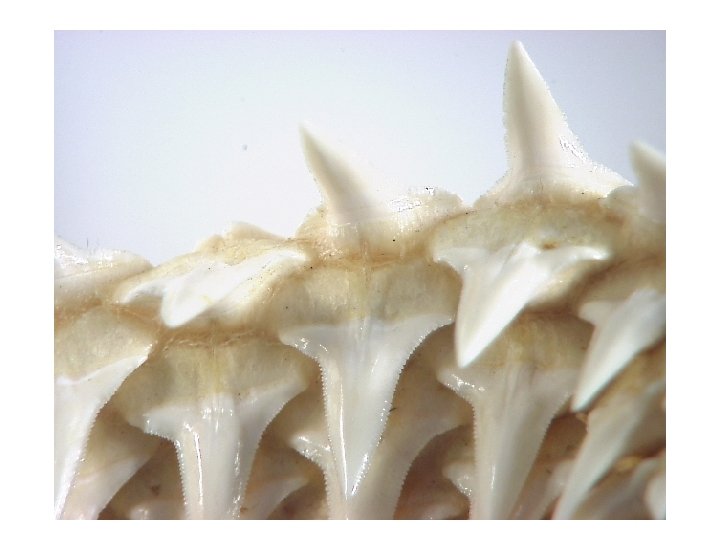
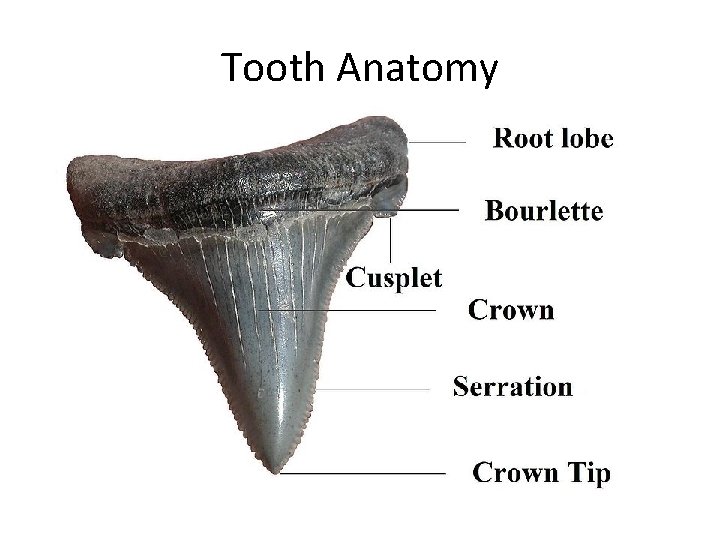
Tooth Anatomy
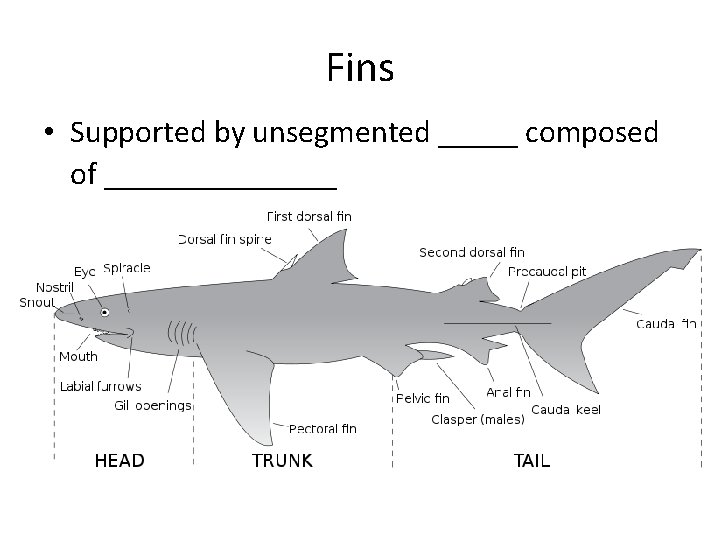
Fins • Supported by unsegmented _____ composed of _______
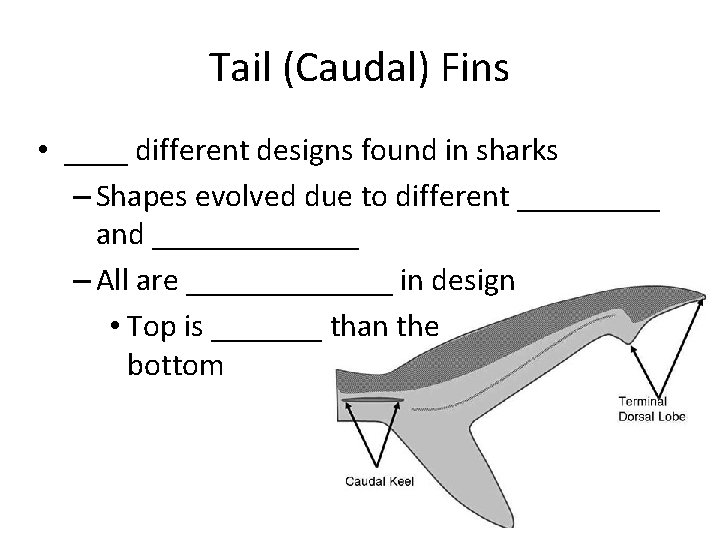
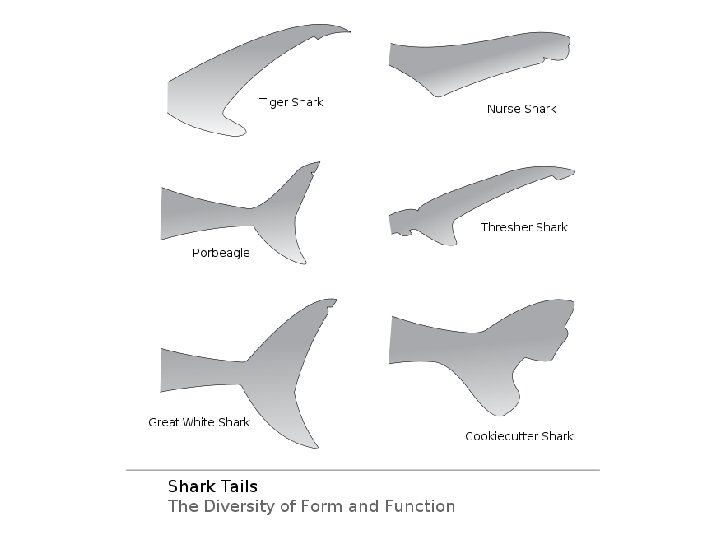
Tail (Caudal) Fins • ____ different designs found in sharks – Shapes evolved due to different _____ and _______ – All are _______ in design • Top is _______ than the bottom
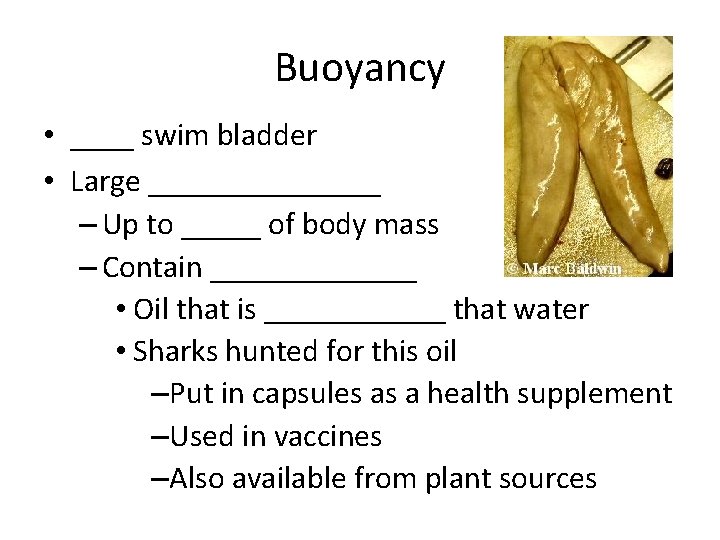
Buoyancy • ____ swim bladder • Large _______ – Up to _____ of body mass – Contain _______ • Oil that is _______ that water • Sharks hunted for this oil –Put in capsules as a health supplement –Used in vaccines –Also available from plant sources
Respiration • Oxygen removed as water passes through the mouth and over the _______ – Process known as _______ • Most sharks can pump water over their gills while at rest –Some cannot (obligate ram ventilators) – Gills _______ covered (as with most fish)
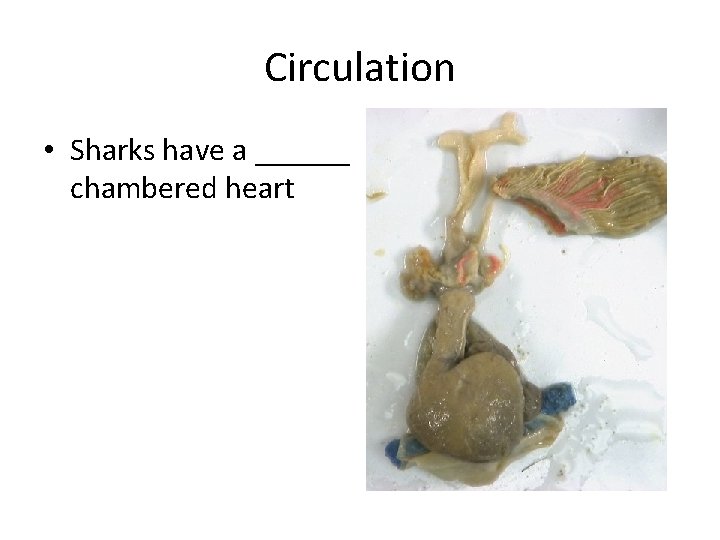
Circulation • Sharks have a ______ chambered heart
_________ • Most sharks are _________ (cold blooded) – Body temp is that of the environment • Family Lamnidae sharks can raise their body temp higher than the water temp (includes mako and great white) – _______ – Strip of red muscle in center of body attached to the _________ (miraculous net)
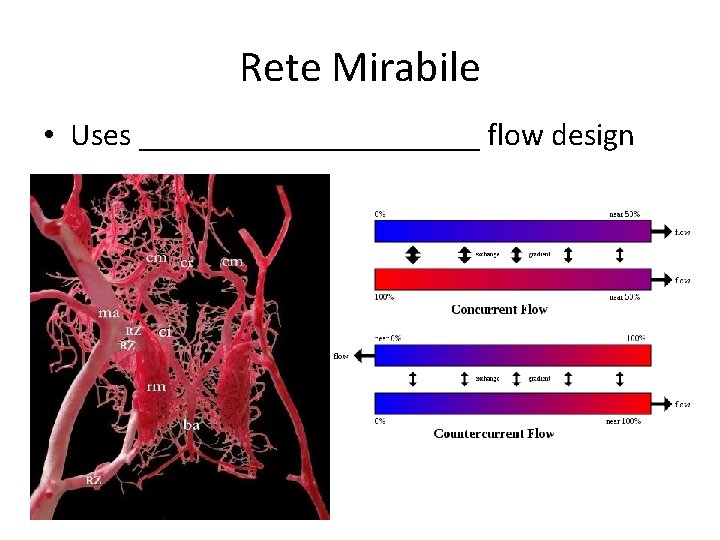
Rete Mirabile • Uses __________ flow design
_______ • Living in salt water • Large production of _____ – Shark’s tissues ________ (in balance with) the sea water • So, few sharks can live in fresh water – Bull sharks can change their kidney function to ______________
Senses – Smell • Very keen ____ sense – Can detect _____ of blood in sea water – Even greater attraction to chemicals found in _____ of organisms • Leads sharks to sewage outfalls
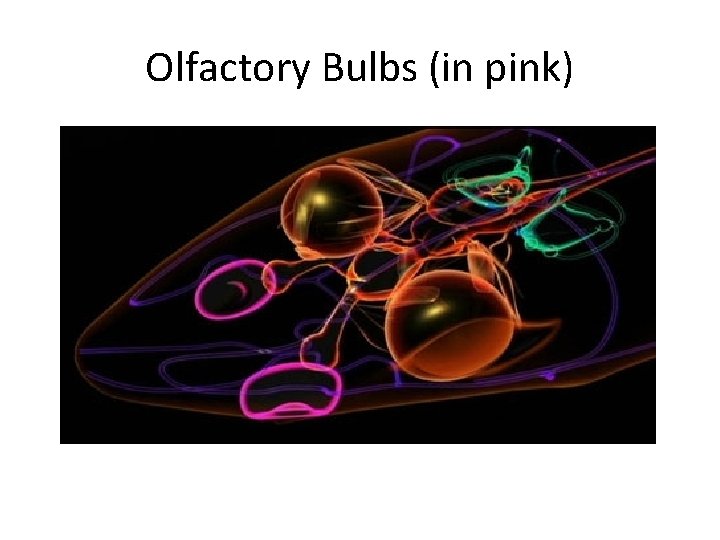
Olfactory Bulbs (in pink)
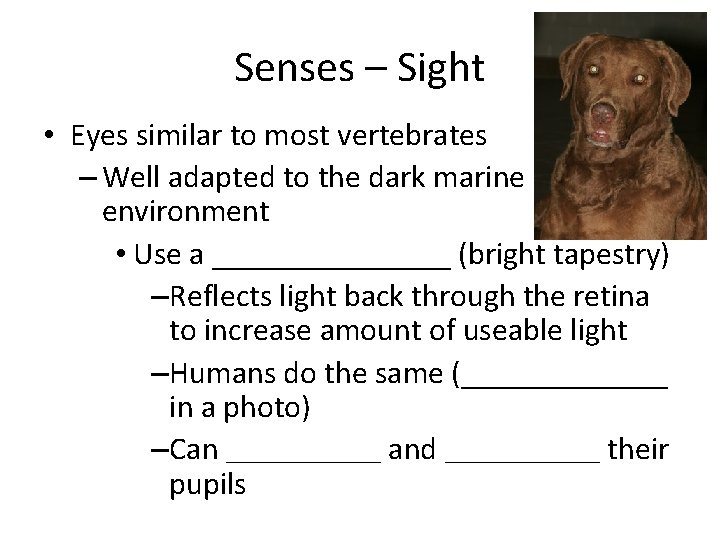
Senses – Sight • Eyes similar to most vertebrates – Well adapted to the dark marine environment • Use a ________ (bright tapestry) –Reflects light back through the retina to increase amount of useable light –Humans do the same (_______ in a photo) –Can _______ and _______ their pupils
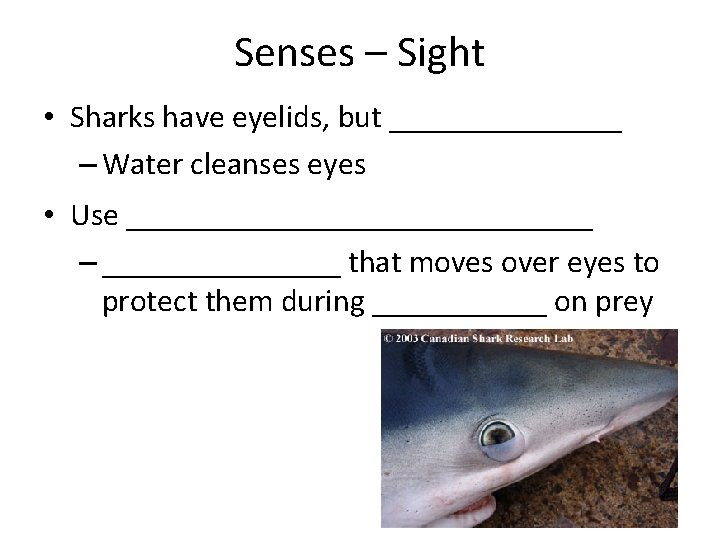
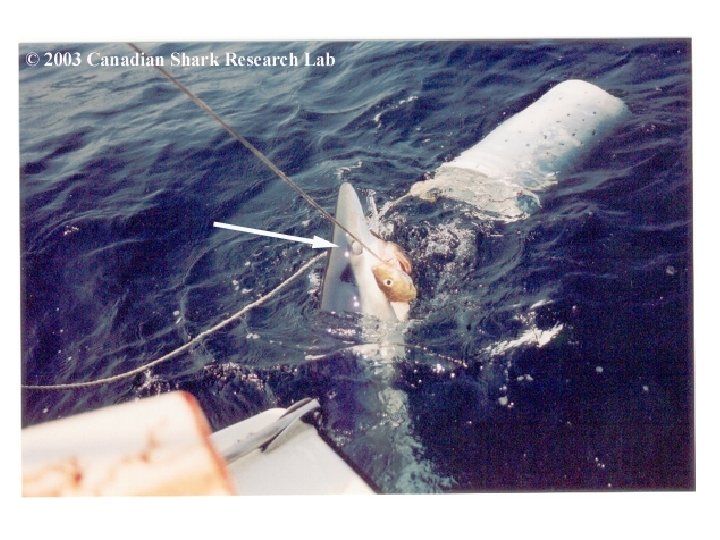
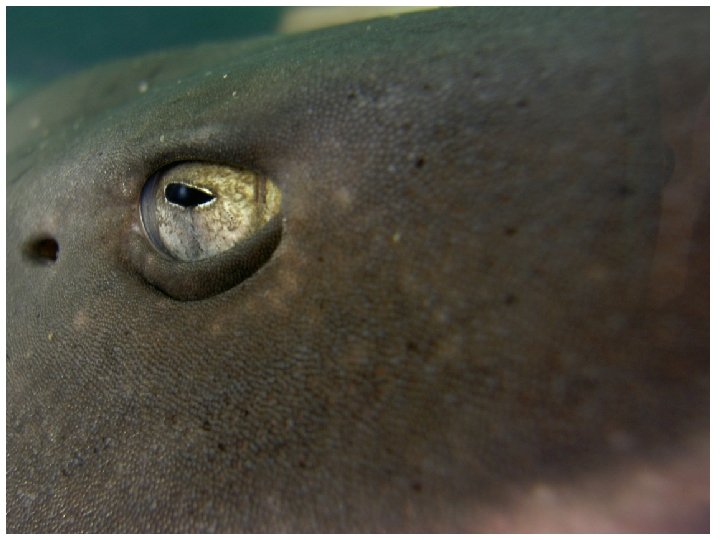
Senses – Sight • Sharks have eyelids, but _______ – Water cleanses eyes • Use _____________ – ________ that moves over eyes to protect them during ______ on prey
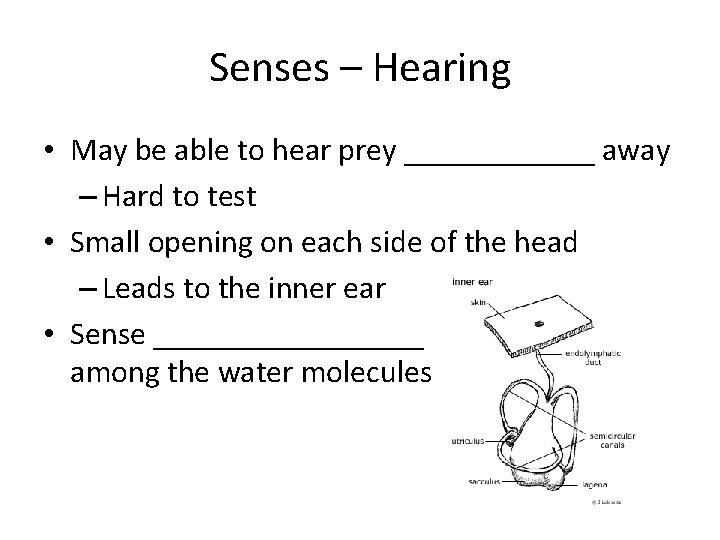
Senses – Hearing • May be able to hear prey ______ away – Hard to test • Small opening on each side of the head – Leads to the inner ear • Sense _________ among the water molecules
Senses – Hearing • _______ system – System of _____ within the lateral line • Runs the length of the body • ______ expose water to the system • Contains ______ cells with hairlike projections • Also helps with ____ and movement
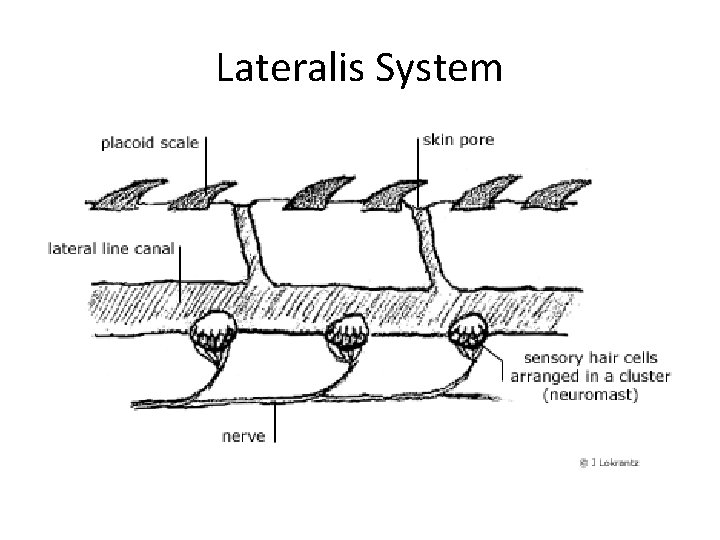
Lateralis System
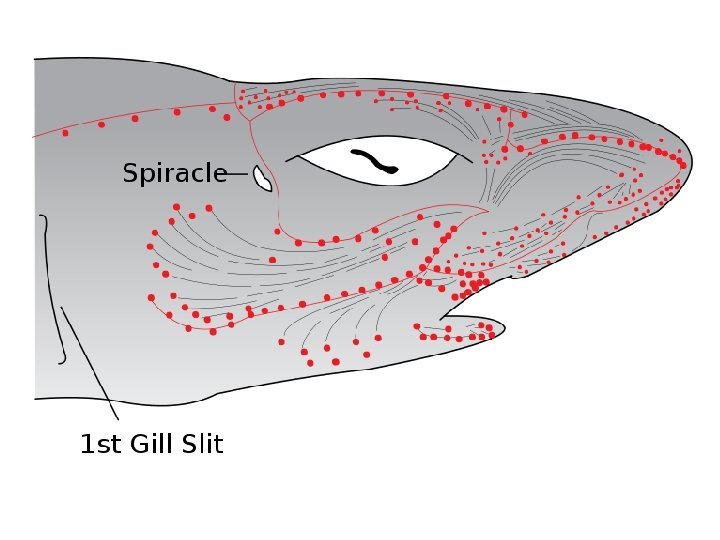
Senses – _______ • Sharks can detect electromagnetic fields produced by all living organisms – Sharks have the _______ electrical sensitivity of any organism – Helps them find prey (even under the sand) – Use ______________ • Electrorecptor organs –Hundreds to thousands per shark
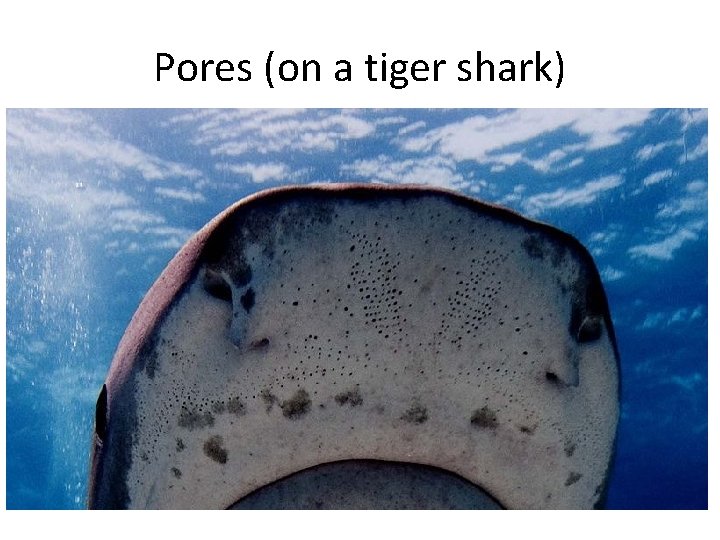
Pores (on a tiger shark)
Senses – Electroreception • Ocean currents travel through the magnetic field of the earth – Creates electric fields • May allow sharks to _______ the world’s oceans • Allows sharks to detect __________________
- Slides: 31