
SHARING WITH PARENTS ON Helping Your Children Be
SHARING WITH PARENTS ON Helping Your Children Be Discerning About Online Information
What does it mean to be discerning about online information? It refers to the ability to tell online falsehoods apart from information that is true and reliable.
Forms of Online Falsehoods Disinformation: Deliberate spread of false information, created to deceive by disinformation agents Misinformation: Unintentional spread of false information
Outline of Presentation • • Case Study Discussion Impact of Online Falsehoods MOE’s Cyber Wellness Education Parents as Partners
CASE STUDY Discussion
Case Study
Case Study
Case Study

Case Study
Case Study
Case Study
Case Study
Case Study
Case Study
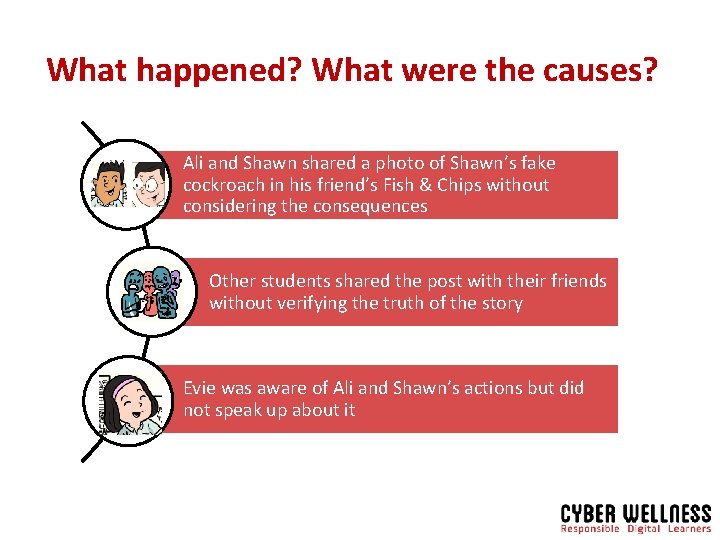
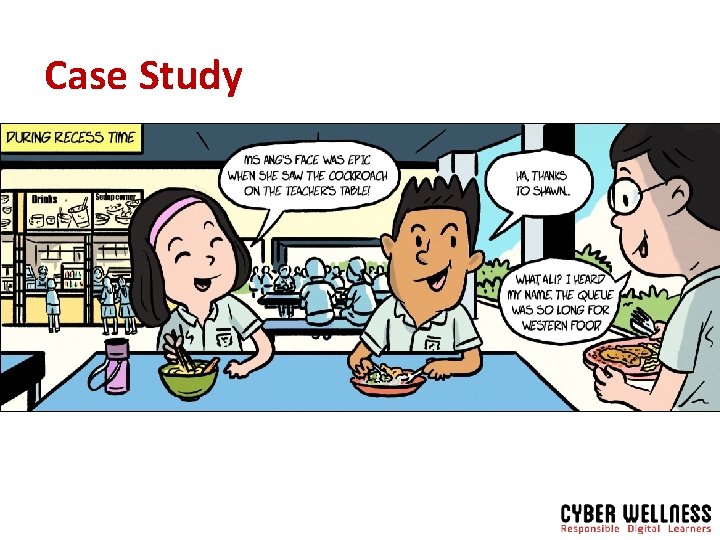
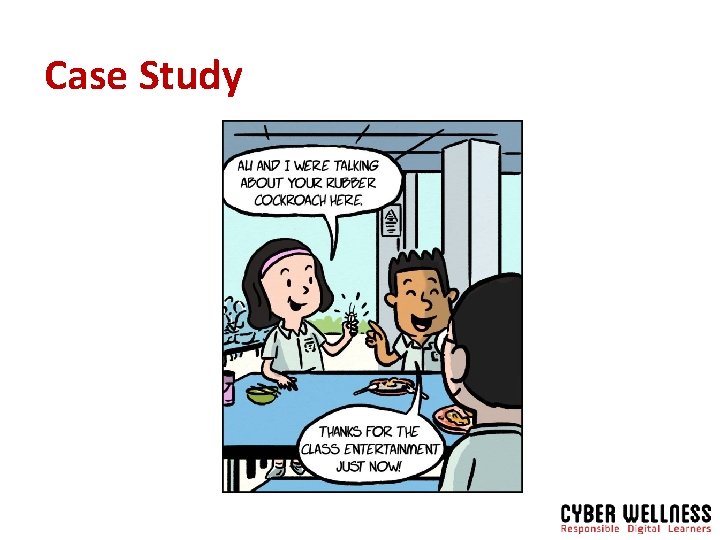
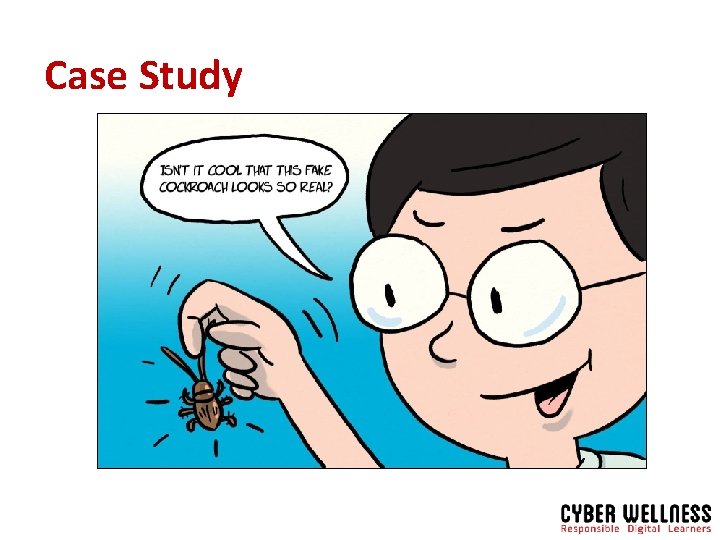
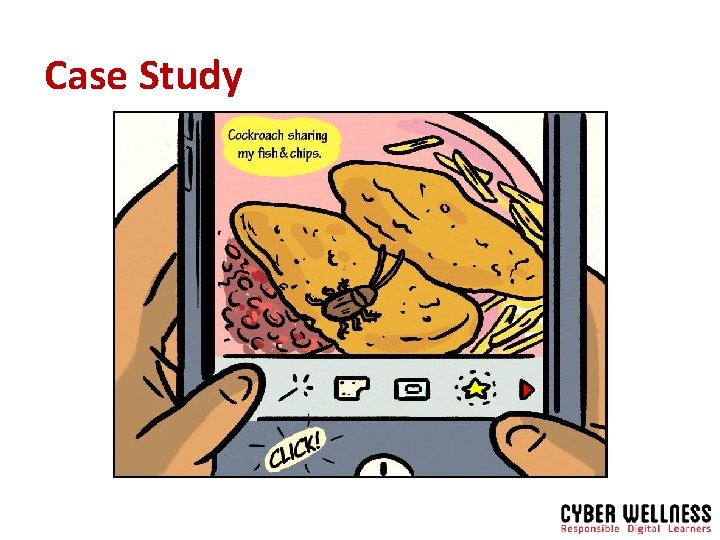
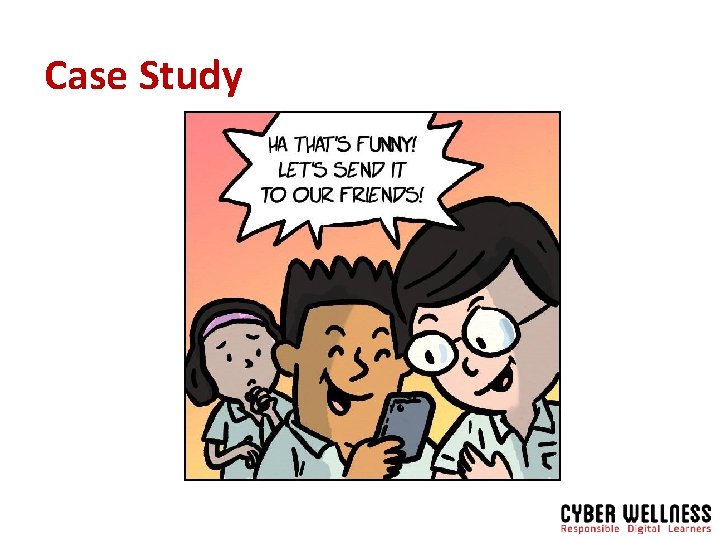
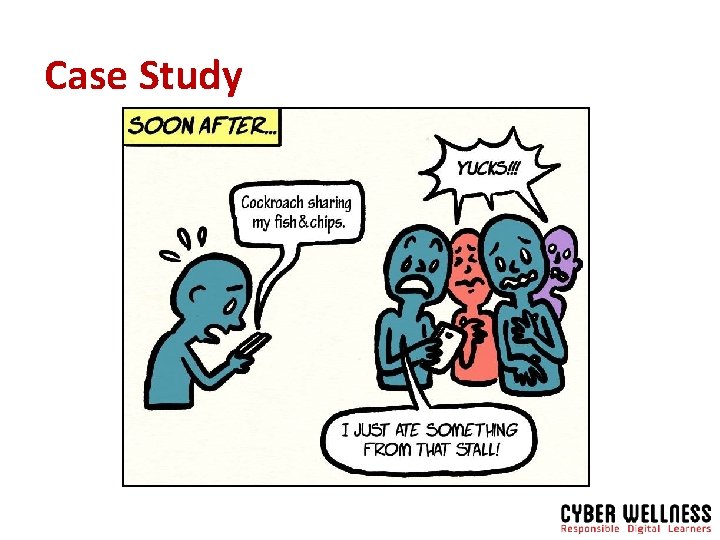
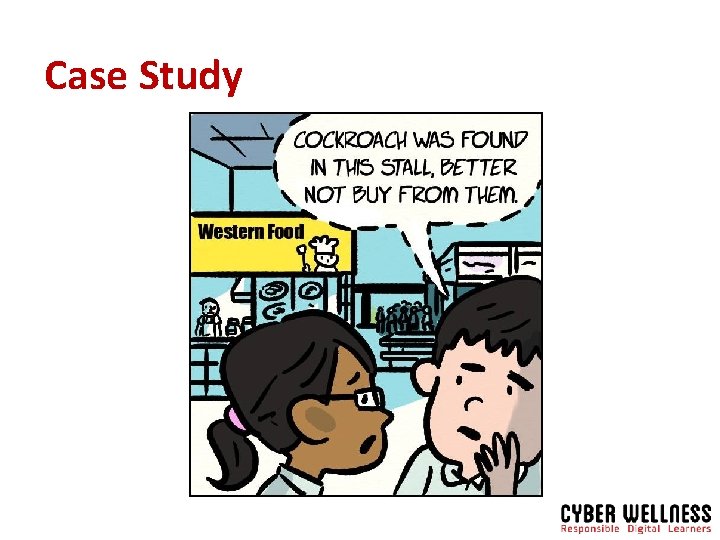
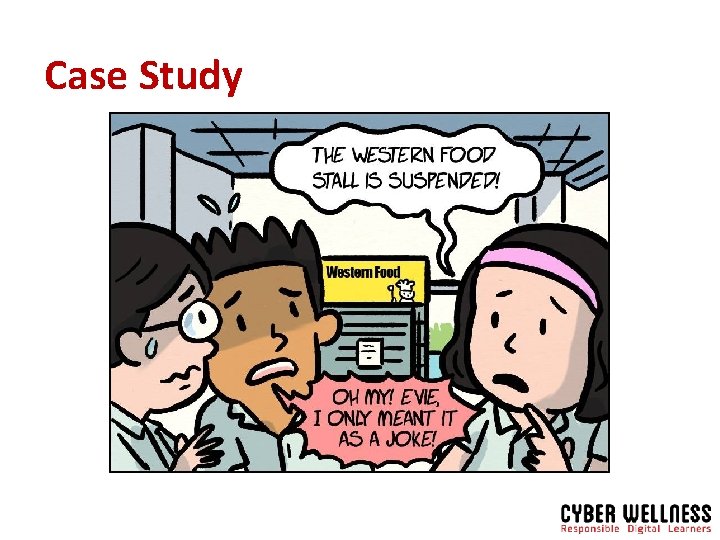
What happened? What were the causes? Ali and Shawn shared a photo of Shawn’s fake cockroach in his friend’s Fish & Chips without considering the consequences Other students shared the post with their friends without verifying the truth of the story Evie was aware of Ali and Shawn’s actions but did not speak up about it
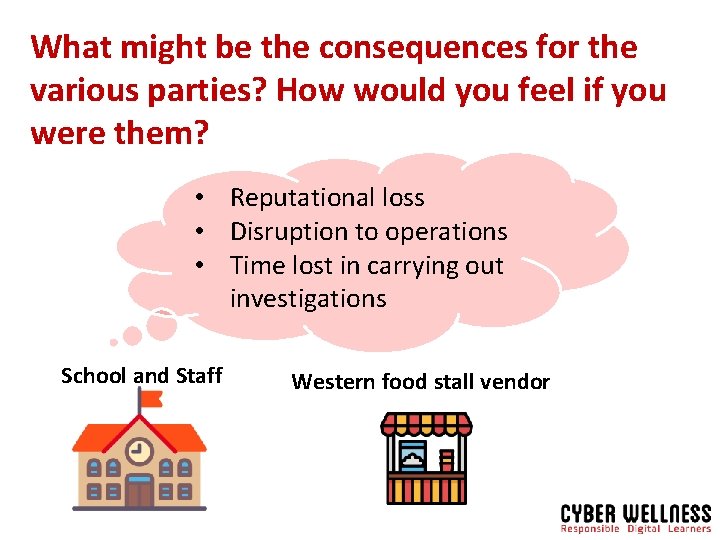
What might be the consequences for the various parties? How would you feel if you were them? • Reputational loss • Disruption to operations • Time lost in carrying out investigations School and Staff Western food stall vendor
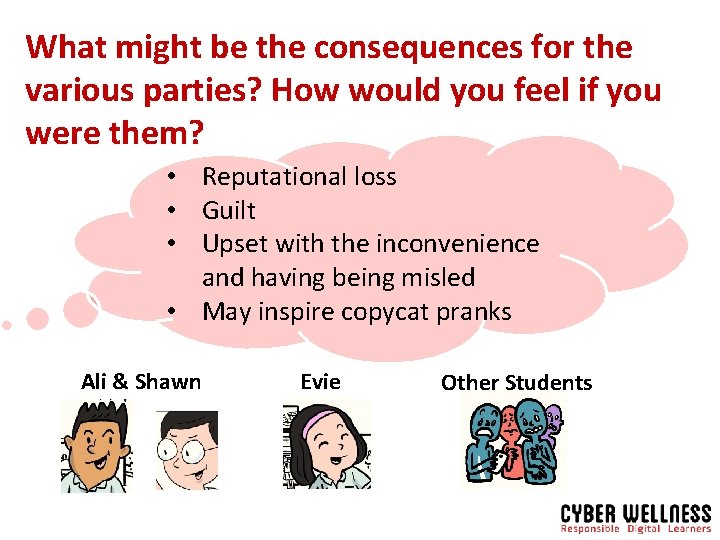
What might be the consequences for the various parties? How would you feel if you were them? • Reputational loss • Guilt • Upset with the inconvenience and having being misled • May inspire copycat pranks Ali & Shawn Evie Other Students
What are some examples and tell-tale signs of false information in this case study and beyond that you are aware of? Share with your child In this case, the news or information is sensational (very astonishing, shocking or scandalous) • Such stories usually provide sketchy details about the time, place and identities of individuals interviewed.
What are some examples and tell-tale signs of false information in this case study and beyond that you are aware of? Share with your child. In other cases, we may also encounter content that sounds too good to be true, like offers or freebies. • These are usually scams aimed at tempting people into submitting personal details or payment. • There may also be links that will link to fake or harmful websites. Do not click on links without checking if it is a genuine offer.
What are some examples and tell-tale signs of false information in this case study and beyond that you are aware of? Share with your child. Ignore messages with URL links that are unknown or mimic official websites. Look out for grammatical or spelling errors.
IMPACT OF Online Falsehoods
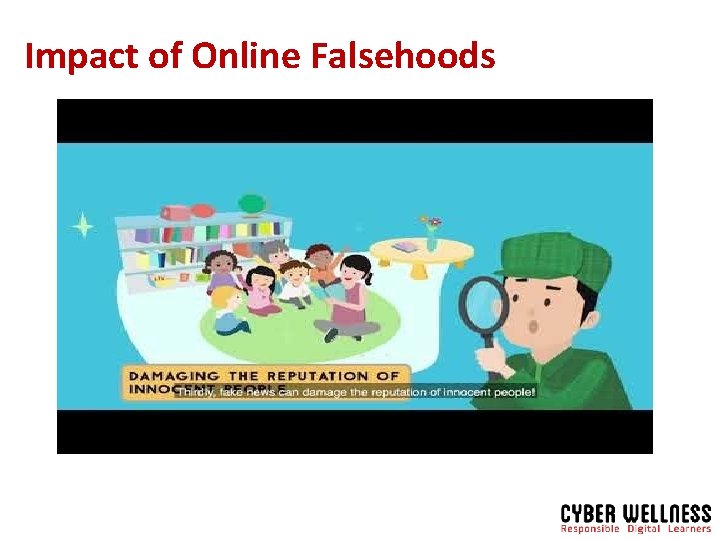
Impact of Online Falsehoods
MOE’S Cyber Wellness Education
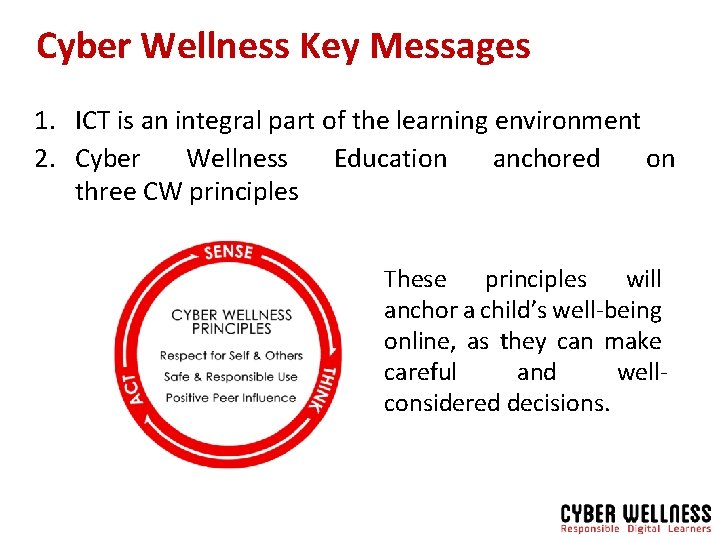
Cyber Wellness Key Messages 1. ICT is an integral part of the learning environment 2. Cyber Wellness Education anchored on three CW principles These principles will anchor a child’s well-being online, as they can make careful and wellconsidered decisions.
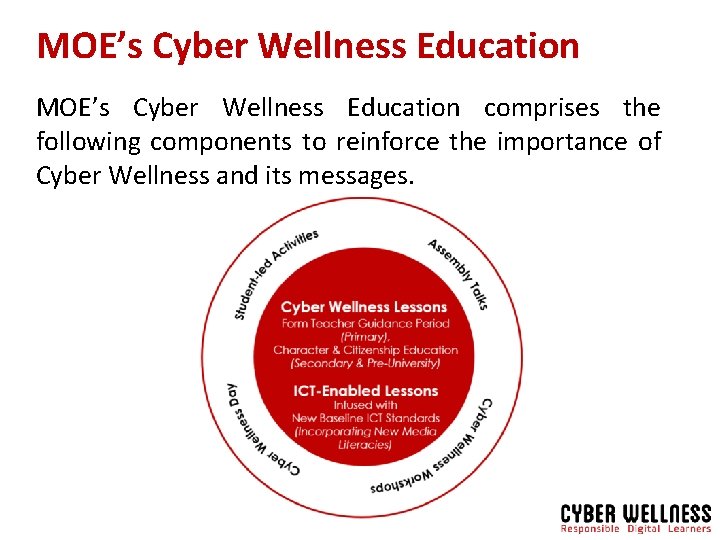
MOE’s Cyber Wellness Education comprises the following components to reinforce the importance of Cyber Wellness and its messages.
School-wide Programmes Examples of School-wide Programmes “Schools are encouraged to share with parents their school-based CW programmes to create greater awareness of how their children are benefitting from the programmes. ” For e. g. Schools can share with parents their school’s cyber wellness student ambassador programme here (i. e. how their students have led in the promotion of cyber wellness messages and provided peer support for cyber issues. )
PARENTS As Partners
How Can Parents Help? Parents can help by: - Being a good role model - e. g. not participating in the posting or sharing of unverified information, and informing senders of the misinformation - Sharing examples of positive online expressions with their children - e. g. inspirational stories from social media
How Can Parents Help? Parents can help by: - Encouraging use of the T. H. I. N. K. framework before posting anything online - Is it True, Helpful, Inspiring, Necessary, and Kind? - Helping your child understand that sharing false or misleading information can create unnecessary misunderstanding and hurt the reputation of self and others - It will also be hard to undo the damage once the information is spread or further misinterpreted by others.
How Can Parents Help? Parents can help by: - Encouraging the verification of information: - Depending on the type of information received, check - against a few authoritative sources like the school, the government or mainstream news sites. Check with a trusted adult. Use fact-checking websites e. g. (www. gov. sg/factually) Do a reverse image search. Look at the language
How Can Parents Help? Parents can help by: - Monitoring the interactions of their children with others on social media or online games - Alerting teachers if you think something is not right
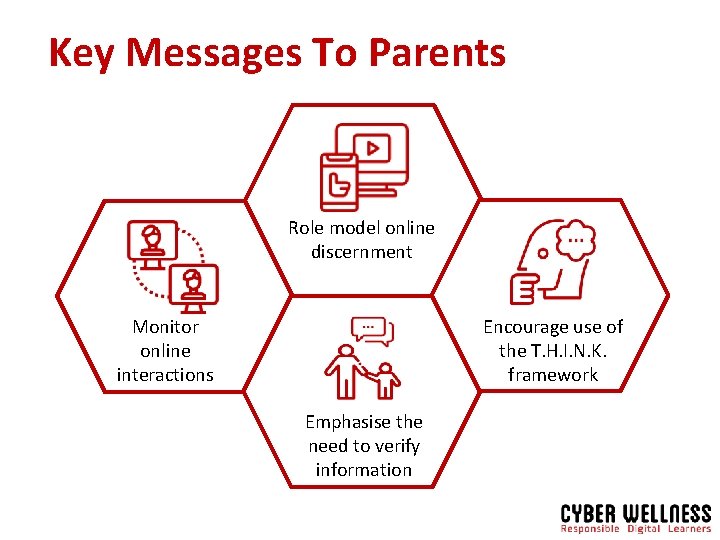
Key Messages To Parents Role model online discernment Monitor online interactions Encourage use of the T. H. I. N. K. framework Emphasise the need to verify information
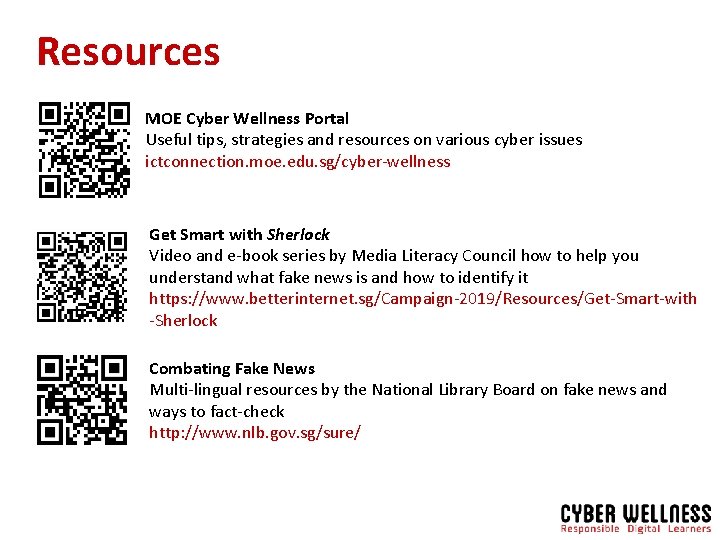
Resources MOE Cyber Wellness Portal Useful tips, strategies and resources on various cyber issues ictconnection. moe. edu. sg/cyber-wellness Get Smart with Sherlock Video and e-book series by Media Literacy Council how to help you understand what fake news is and how to identify it https: //www. betterinternet. sg/Campaign-2019/Resources/Get-Smart-with -Sherlock Combating Fake News Multi-lingual resources by the National Library Board on fake news and ways to fact-check http: //www. nlb. gov. sg/sure/
Give Us Your Feedback! go. gov. sg/connect-priparents-t 2
Every Parent A Supportive Partner
- Slides: 35