
Sharing Water Part I Watersheds and Water Users
- Slides: 35
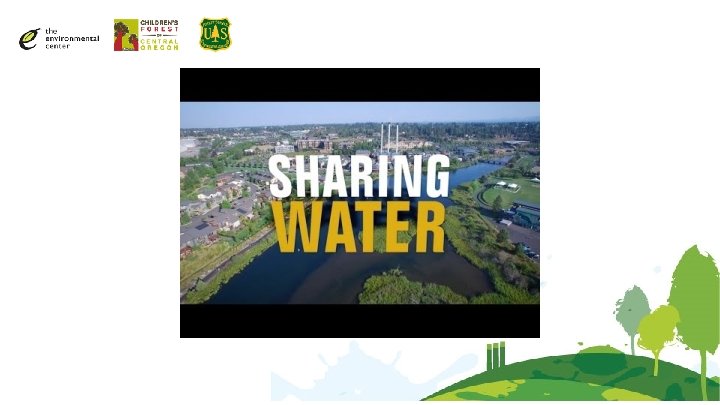
Sharing Water
Part I: Watersheds and Water Users
How do you connect with water? After visiting each photo, choose one that represents your personal connection to water Stand by the photo
What kind of water user are you? What water users do you depend upon?
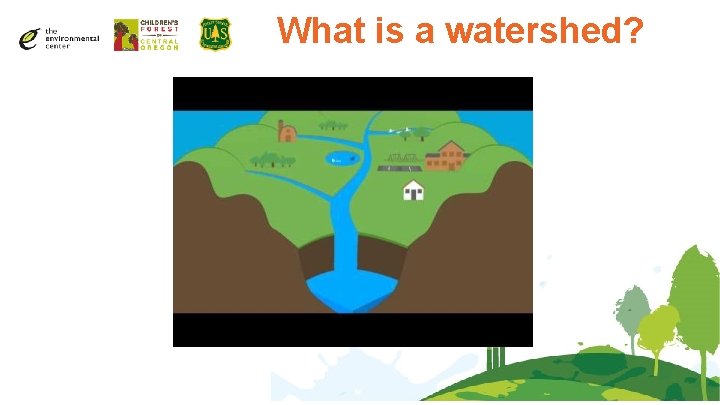
What is a watershed?
Who are the water users of Central Oregon?
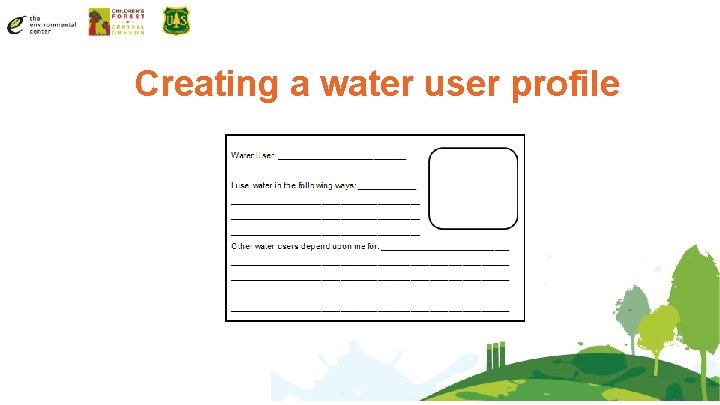
Creating a water user profile
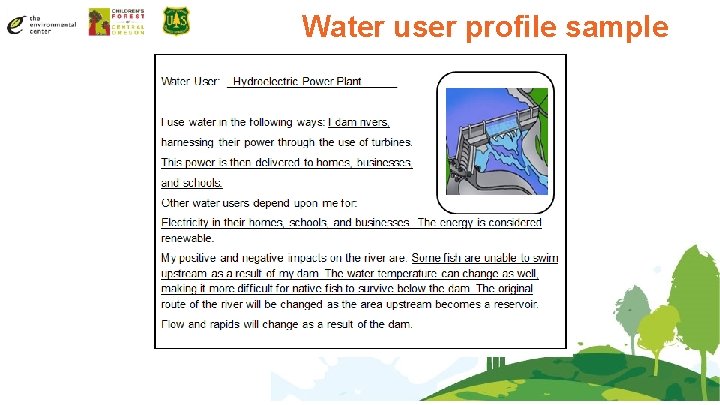
Water user profile sample
Discussion: 1. What do our results suggest we value as a classroom?
Discussion: 2. Are there water users who did not receive tokens? How might this affect other water users?
Discussion: 3. What should happen when a water user negatively impacts water quality or consumes too much?
Discussion: 4. Is one water user more important than all the others? What values or attitudes shape that belief?
Discussion: 5. When decisions about water allocation have to be made, do you think it’s possible to please every water user in our region?
Discussion: 6. What responsibilities do water users have if they are given water?
Part II: Water Conservation
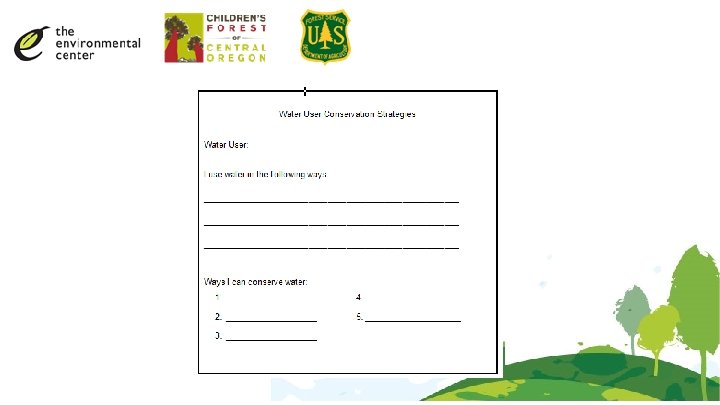
How much?
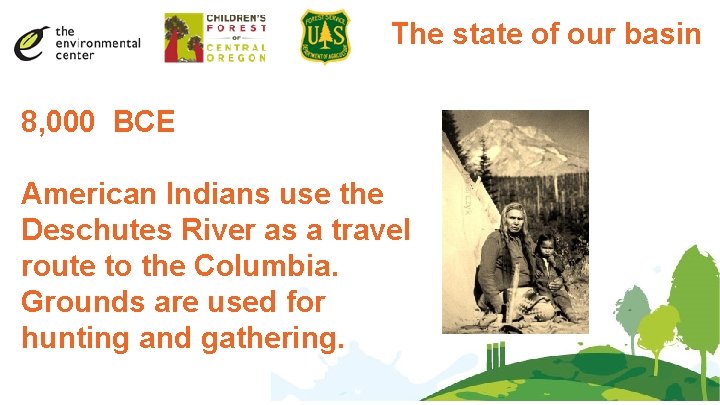
The state of our basin 8, 000 BCE American Indians use the Deschutes River as a travel route to the Columbia. Grounds are used for hunting and gathering.
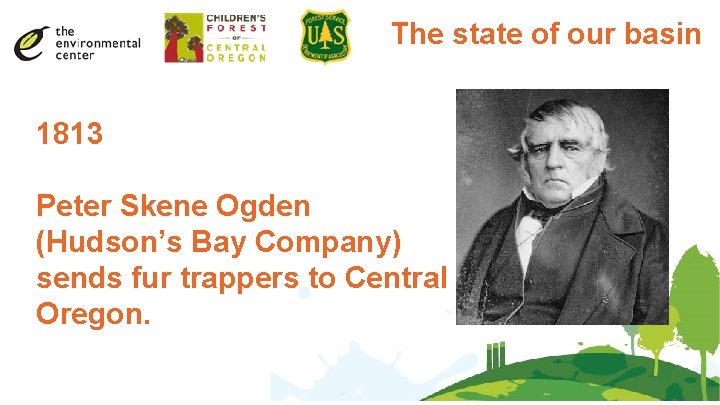
The state of our basin 1813 Peter Skene Ogden (Hudson’s Bay Company) sends fur trappers to Central Oregon.
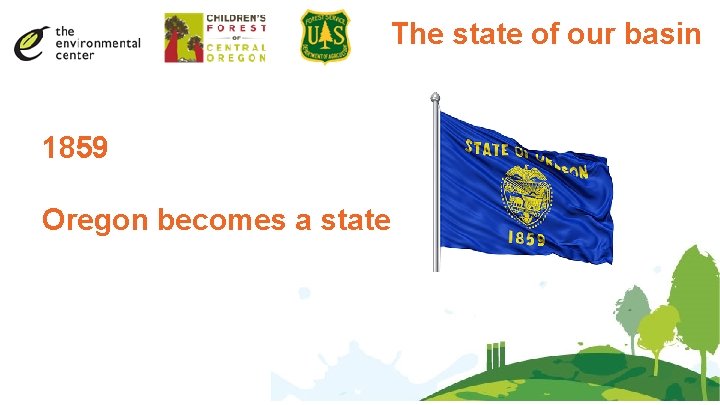
The state of our basin 1859 Oregon becomes a state
The state of our basin 1870 The first euro-american settlers arrive
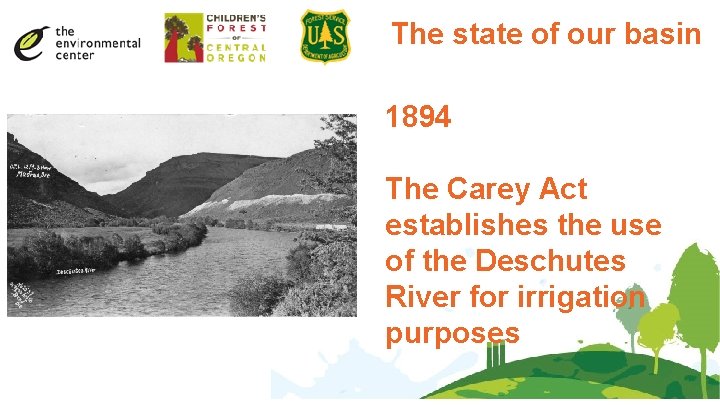
The state of our basin 1894 The Carey Act establishes the use of the Deschutes River for irrigation purposes
The state of our basin 1904 Several irrigation companies complete canals to irrigate thousands of acres of Central Oregon farmland
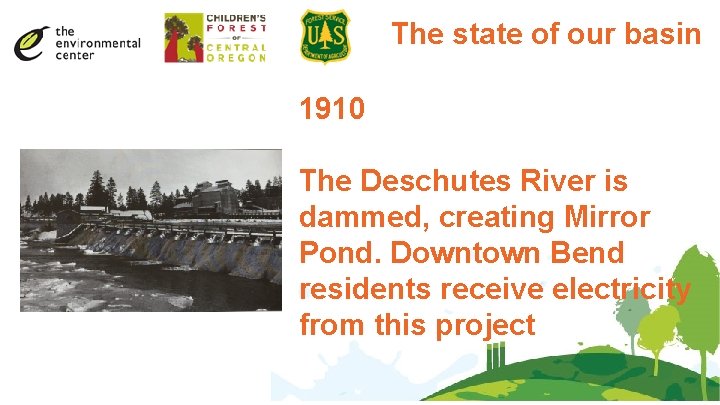
The state of our basin 1910 The Deschutes River is dammed, creating Mirror Pond. Downtown Bend residents receive electricity from this project
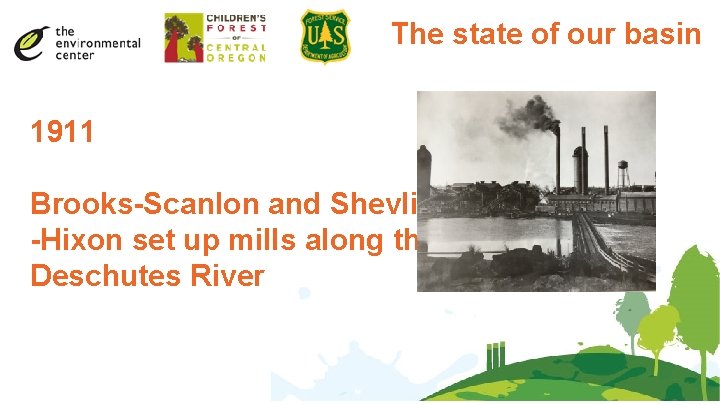
The state of our basin 1911 Brooks-Scanlon and Shevlin -Hixon set up mills along the Deschutes River
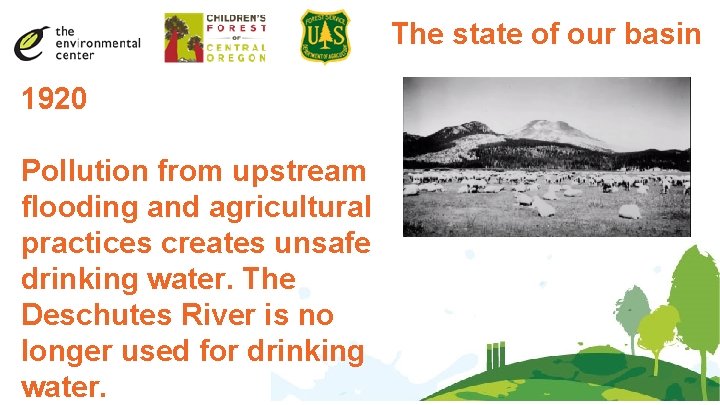
The state of our basin 1920 Pollution from upstream flooding and agricultural practices creates unsafe drinking water. The Deschutes River is no longer used for drinking water.
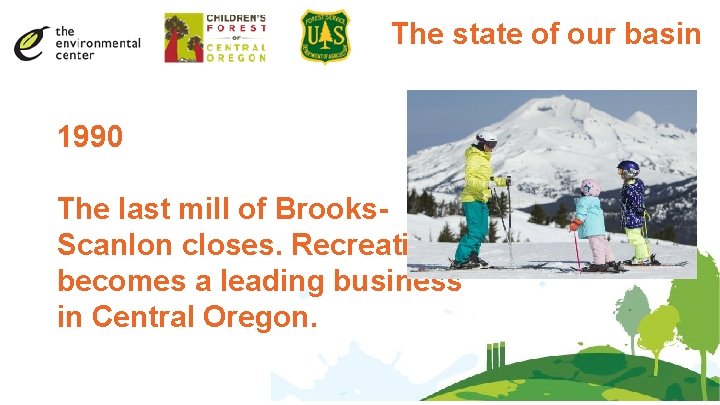
The state of our basin 1990 The last mill of Brooks. Scanlon closes. Recreation becomes a leading business in Central Oregon.
Discussion: 1. Why do people feel strongly about some users and not others?
Discussion: 2. What attitudes or beliefs shape our decisions about what we value?
Discussion: 3. What changes or factors might influence a different decision about who receives water?
Discussion: 4. When decisions about water allocation affect a large group of people, do you believe you can satisfy all users?
Discussion: 5. What options do we have when there isn’t enough water to satisfy all of the users?
Discussion: 6. What can you do as a domestic water user to conserve?