
Sharing good pedagogy The promise of Learning Design
- Slides: 37
Sharing good pedagogy: The promise of Learning Design James Dalziel Professor of Learning Technology and Director, Macquarie E-Learning Centre Of Excellence (MELCOE) Macquarie University james@melcoe. mq. edu. au www. melcoe. mq. edu. au Featured Presentation for the 9 th Sakai Conference, Paris, France, 1 st July, 2008
Overview • • • 2 Ticks, 1 Cross What is Learning Design? Three Examples Two Approaches to Sharing Application to Research Activities Summary
2 Ticks, 1 Cross • We have had two great successes and one significant failure in open education to date • The first success is the development and adoption of open source course management systems like Sakai • The second success is the open sharing of educational content, such as Open. Courseware
2 Ticks, 1 Cross • The failure is our difficulty in describing and sharing good pedagogy – the teaching and learning processes that foster deep approaches to learning • How can instructors benefit from the good teaching ideas of their peers, and how can these ideas be easily instantiated in online courses?
2 Ticks, 1 Cross • What happens when one educator describes their teaching to another? – Could the other educator reproduce the experience? • An important separation – Teaching as designing/lesson planning (pre-class) vs – Teaching as facilitating/improvising (during class) • To share pedagogical know-how, we need a common descriptive language or framework – Focus on designing/planning for today – (Describing teaching as improvising still too hard? )
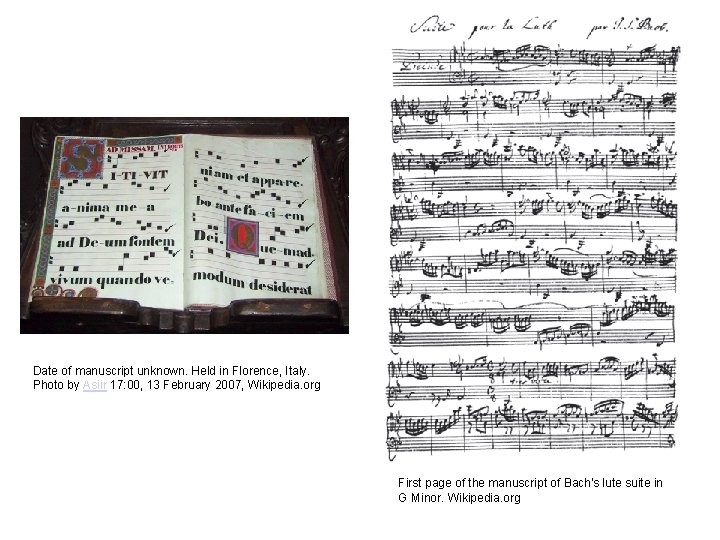
Date of manuscript unknown. Held in Florence, Italy. Photo by Asiir 17: 00, 13 February 2007, Wikipedia. org First page of the manuscript of Bach's lute suite in G Minor. Wikipedia. org
What is Learning Design? • Learning Design is a new approach to describing teaching and learning processes in a structured way • Typically describes sequences of student activities (scaffolding of content + collaboration) – A sequence applies to a class/week/topic (not whole unit) • Focus on sharing and re-using good sequences • Often implemented online with technology – But becoming a general framework for face to face and online
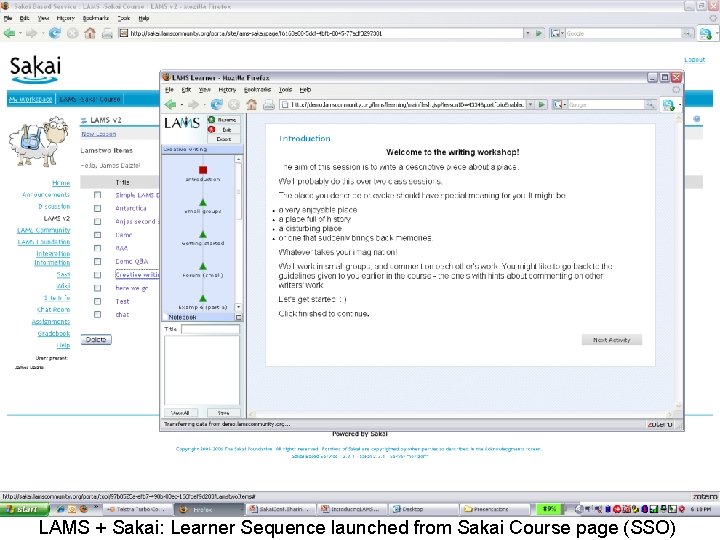
What is Learning Design? • Learning Design is particularly useful for pedagogical approaches that have a structured process, eg: – Inquiry Based Learning, Role Plays, Problem Based Learning • Learning Design focuses on how educators structure activities to foster student learning • Learning Design systems can integrate with Sakai – For students, link(s) from course area to the relevant sequence – Lecturer single-sign-on and easy authoring and launching
LAMS + Sakai: Learner Sequence launched from Sakai Course page (SSO)
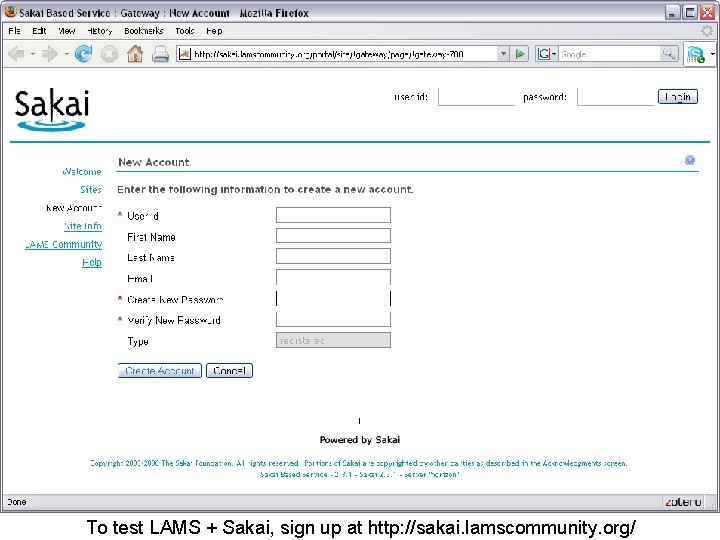
To test LAMS + Sakai, sign up at http: //sakai. lamscommunity. org/
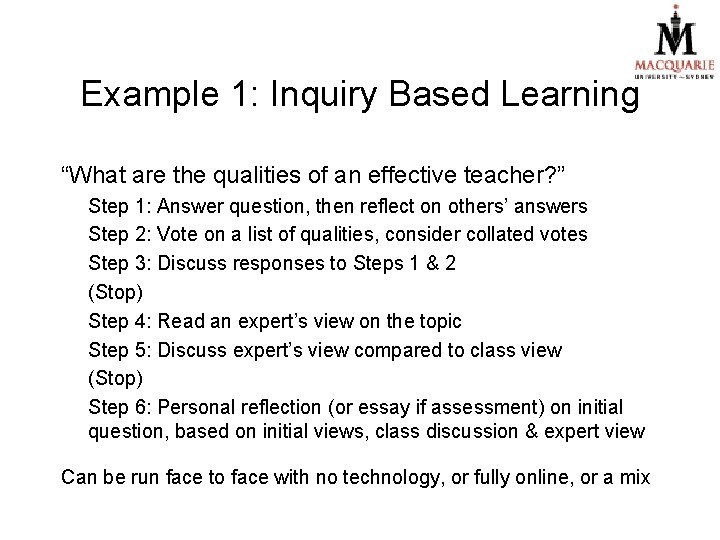
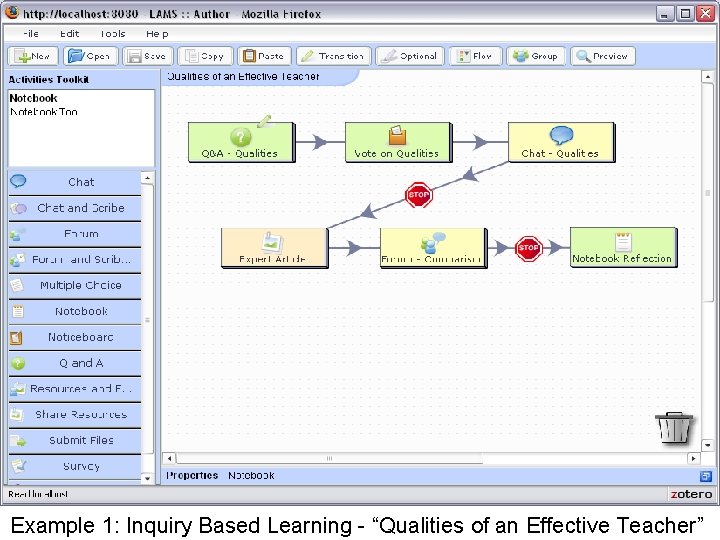
Example 1: Inquiry Based Learning “What are the qualities of an effective teacher? ” Step 1: Answer question, then reflect on others’ answers Step 2: Vote on a list of qualities, consider collated votes Step 3: Discuss responses to Steps 1 & 2 (Stop) Step 4: Read an expert’s view on the topic Step 5: Discuss expert’s view compared to class view (Stop) Step 6: Personal reflection (or essay if assessment) on initial question, based on initial views, class discussion & expert view Can be run face to face with no technology, or fully online, or a mix
Example 1: Inquiry Based Learning - “Qualities of an Effective Teacher”
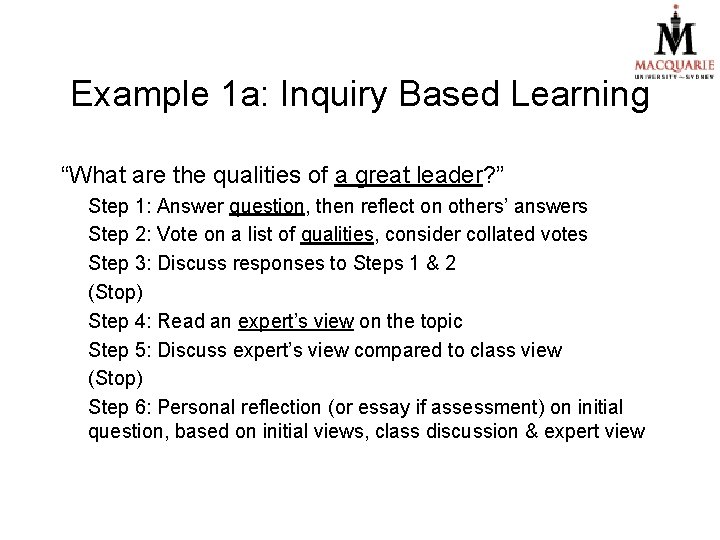
Example 1 a: Inquiry Based Learning “What are the qualities of a great leader? ” Step 1: Answer question, then reflect on others’ answers Step 2: Vote on a list of qualities, consider collated votes Step 3: Discuss responses to Steps 1 & 2 (Stop) Step 4: Read an expert’s view on the topic Step 5: Discuss expert’s view compared to class view (Stop) Step 6: Personal reflection (or essay if assessment) on initial question, based on initial views, class discussion & expert view
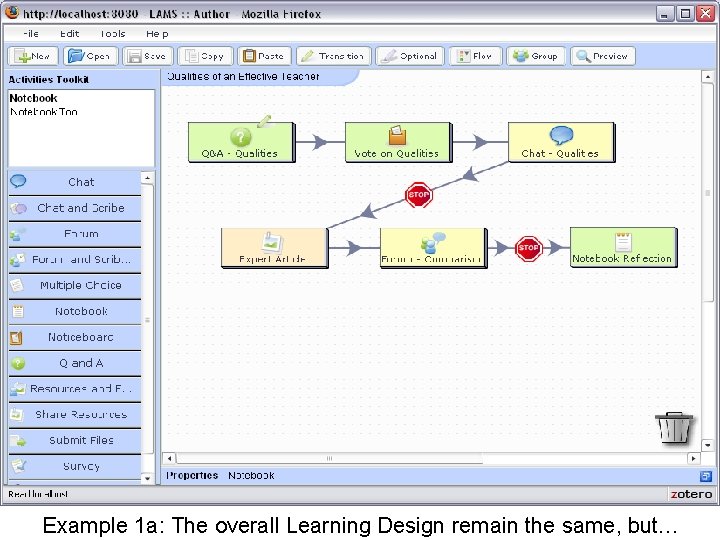
Example 1 a: The overall Learning Design remain the same, but…
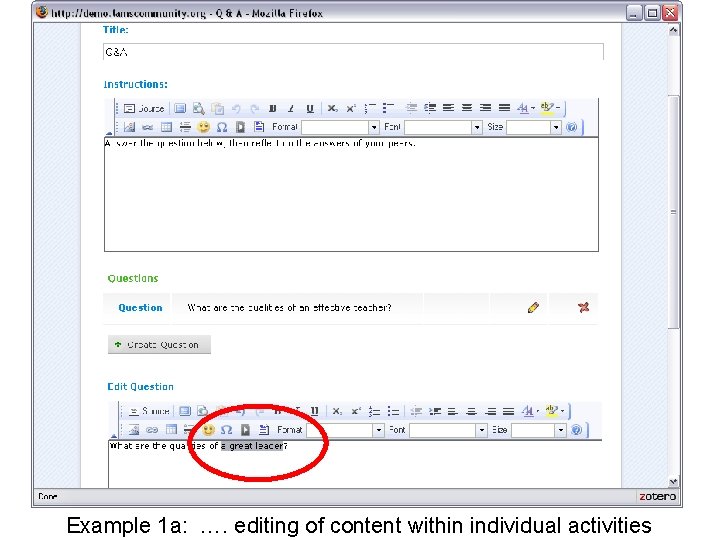
Example 1 a: …. editing of content within individual activities
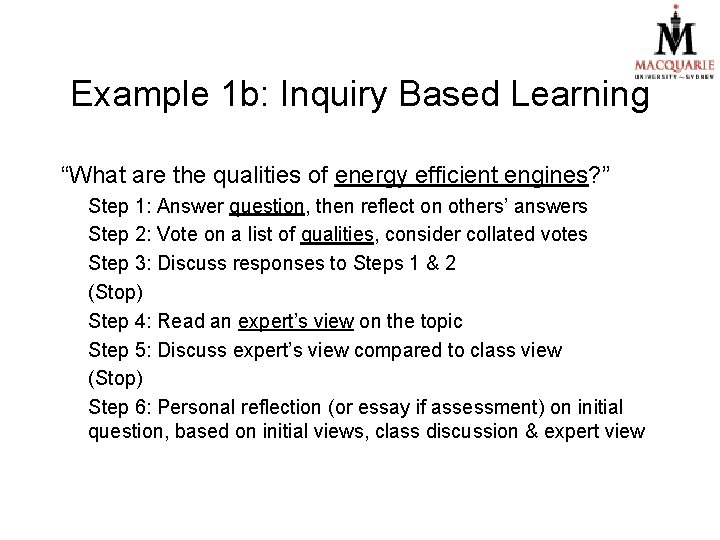
Example 1 b: Inquiry Based Learning “What are the qualities of energy efficient engines? ” Step 1: Answer question, then reflect on others’ answers Step 2: Vote on a list of qualities, consider collated votes Step 3: Discuss responses to Steps 1 & 2 (Stop) Step 4: Read an expert’s view on the topic Step 5: Discuss expert’s view compared to class view (Stop) Step 6: Personal reflection (or essay if assessment) on initial question, based on initial views, class discussion & expert view
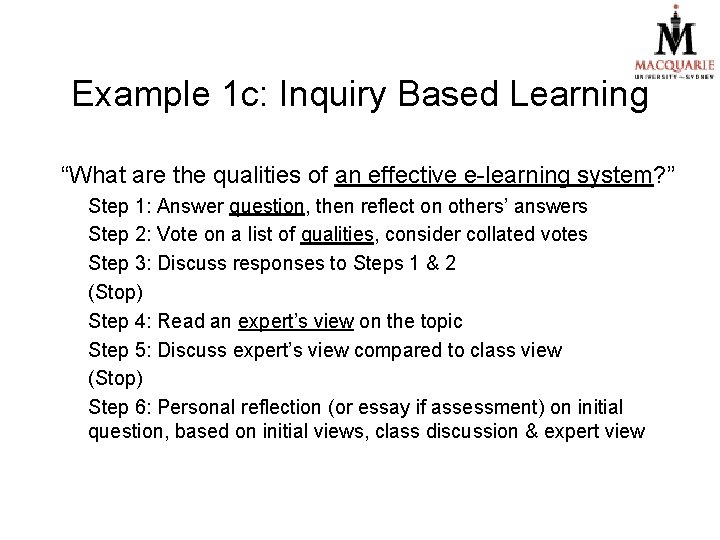
Example 1 c: Inquiry Based Learning “What are the qualities of an effective e-learning system? ” Step 1: Answer question, then reflect on others’ answers Step 2: Vote on a list of qualities, consider collated votes Step 3: Discuss responses to Steps 1 & 2 (Stop) Step 4: Read an expert’s view on the topic Step 5: Discuss expert’s view compared to class view (Stop) Step 6: Personal reflection (or essay if assessment) on initial question, based on initial views, class discussion & expert view
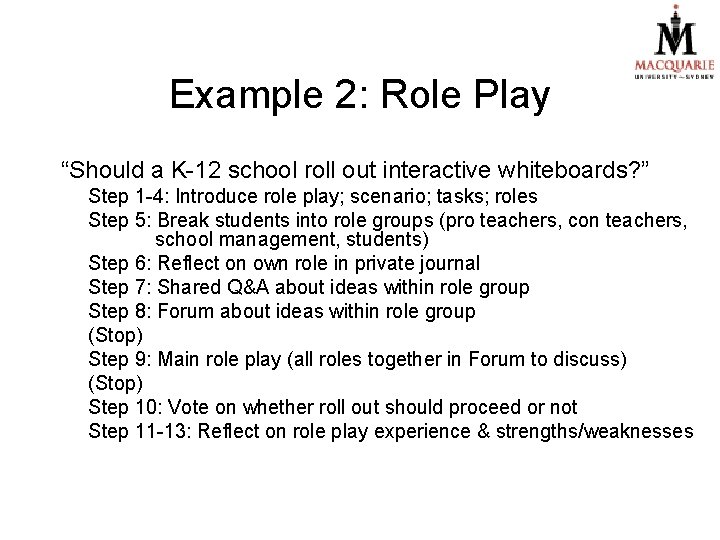
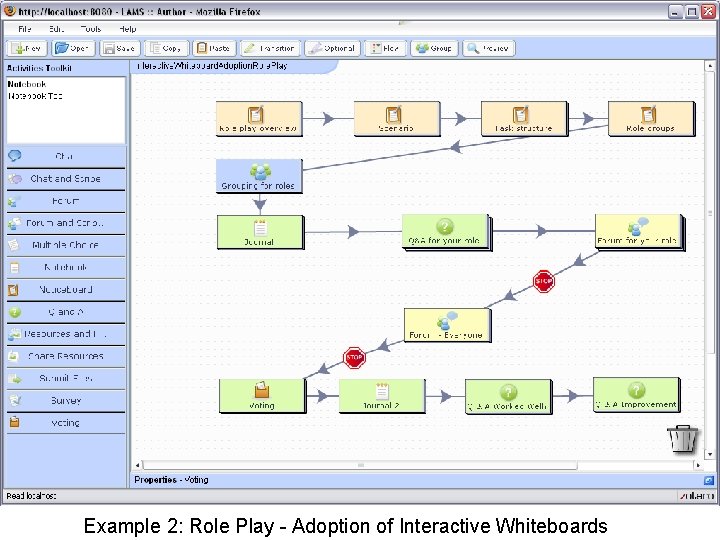
Example 2: Role Play “Should a K-12 school roll out interactive whiteboards? ” Step 1 -4: Introduce role play; scenario; tasks; roles Step 5: Break students into role groups (pro teachers, con teachers, school management, students) Step 6: Reflect on own role in private journal Step 7: Shared Q&A about ideas within role group Step 8: Forum about ideas within role group (Stop) Step 9: Main role play (all roles together in Forum to discuss) (Stop) Step 10: Vote on whether roll out should proceed or not Step 11 -13: Reflect on role play experience & strengths/weaknesses
Example 2: Role Play - Adoption of Interactive Whiteboards
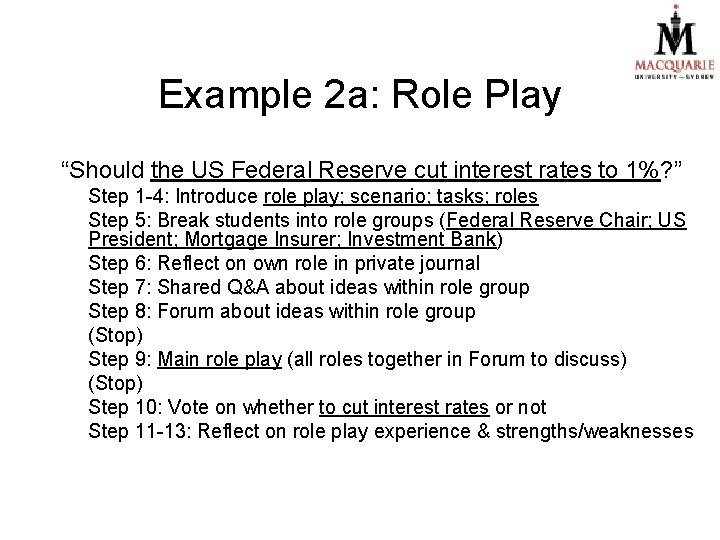
Example 2 a: Role Play “Should the US Federal Reserve cut interest rates to 1%? ” Step 1 -4: Introduce role play; scenario; tasks; roles Step 5: Break students into role groups (Federal Reserve Chair; US President; Mortgage Insurer; Investment Bank) Step 6: Reflect on own role in private journal Step 7: Shared Q&A about ideas within role group Step 8: Forum about ideas within role group (Stop) Step 9: Main role play (all roles together in Forum to discuss) (Stop) Step 10: Vote on whether to cut interest rates or not Step 11 -13: Reflect on role play experience & strengths/weaknesses
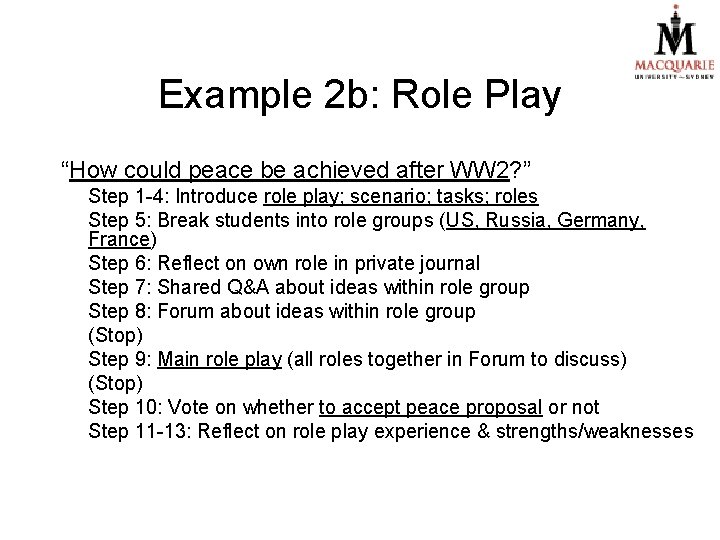
Example 2 b: Role Play “How could peace be achieved after WW 2? ” Step 1 -4: Introduce role play; scenario; tasks; roles Step 5: Break students into role groups (US, Russia, Germany, France) Step 6: Reflect on own role in private journal Step 7: Shared Q&A about ideas within role group Step 8: Forum about ideas within role group (Stop) Step 9: Main role play (all roles together in Forum to discuss) (Stop) Step 10: Vote on whether to accept peace proposal or not Step 11 -13: Reflect on role play experience & strengths/weaknesses
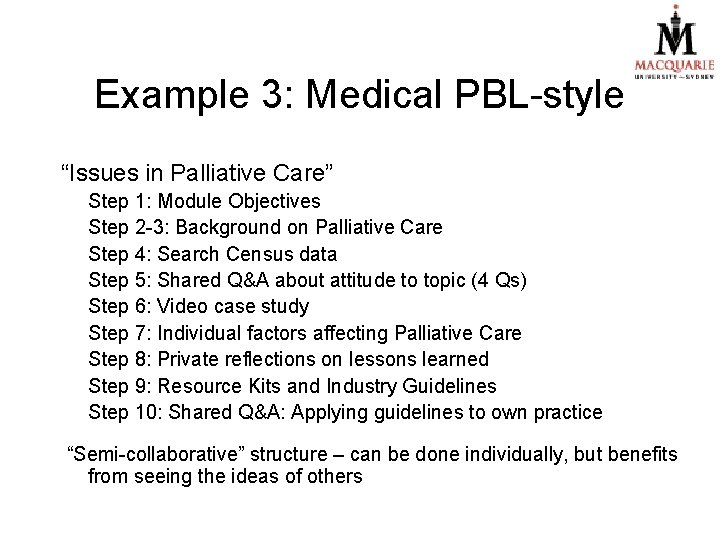
Example 3: Medical PBL-style “Issues in Palliative Care” Step 1: Module Objectives Step 2 -3: Background on Palliative Care Step 4: Search Census data Step 5: Shared Q&A about attitude to topic (4 Qs) Step 6: Video case study Step 7: Individual factors affecting Palliative Care Step 8: Private reflections on lessons learned Step 9: Resource Kits and Industry Guidelines Step 10: Shared Q&A: Applying guidelines to own practice “Semi-collaborative” structure – can be done individually, but benefits from seeing the ideas of others
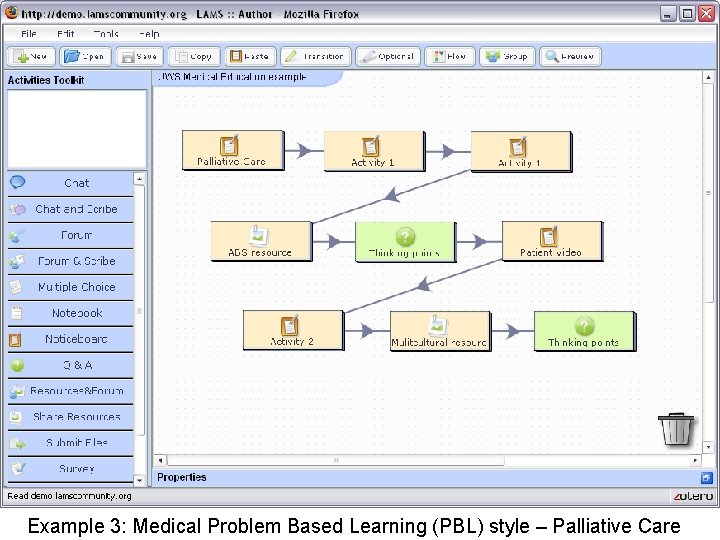
Example 3: Medical Problem Based Learning (PBL) style – Palliative Care
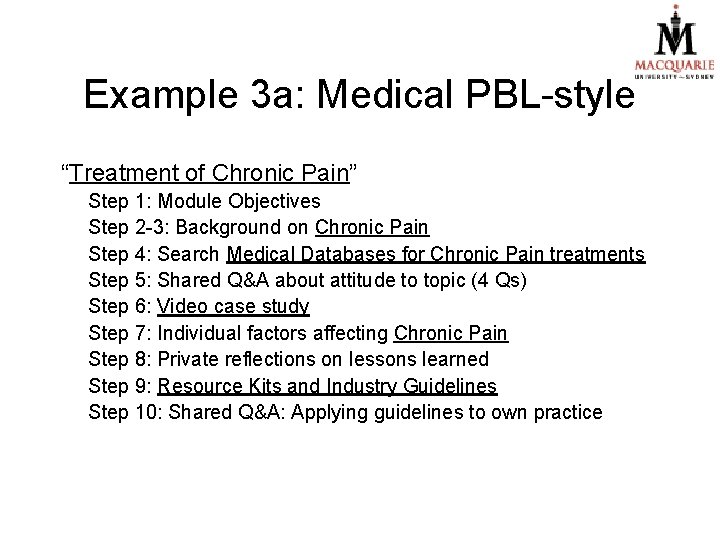
Example 3 a: Medical PBL-style “Treatment of Chronic Pain” Step 1: Module Objectives Step 2 -3: Background on Chronic Pain Step 4: Search Medical Databases for Chronic Pain treatments Step 5: Shared Q&A about attitude to topic (4 Qs) Step 6: Video case study Step 7: Individual factors affecting Chronic Pain Step 8: Private reflections on lessons learned Step 9: Resource Kits and Industry Guidelines Step 10: Shared Q&A: Applying guidelines to own practice
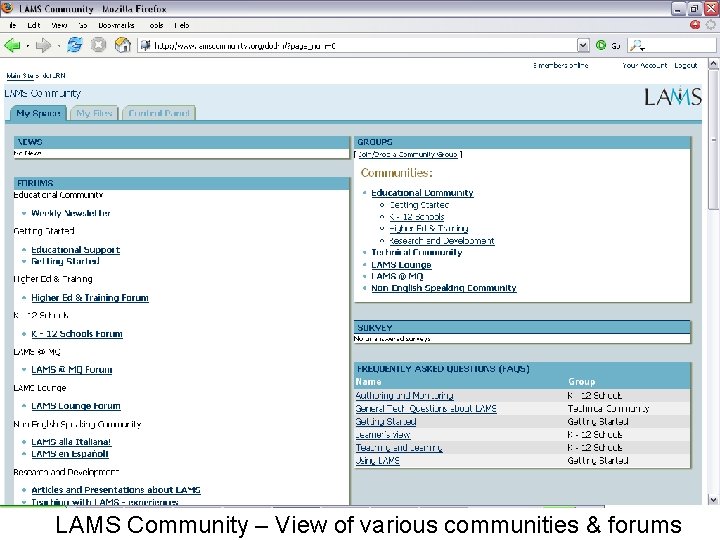
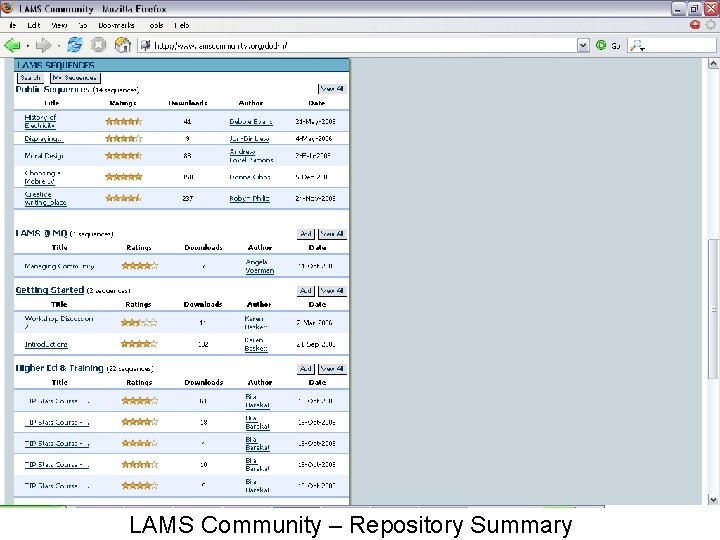
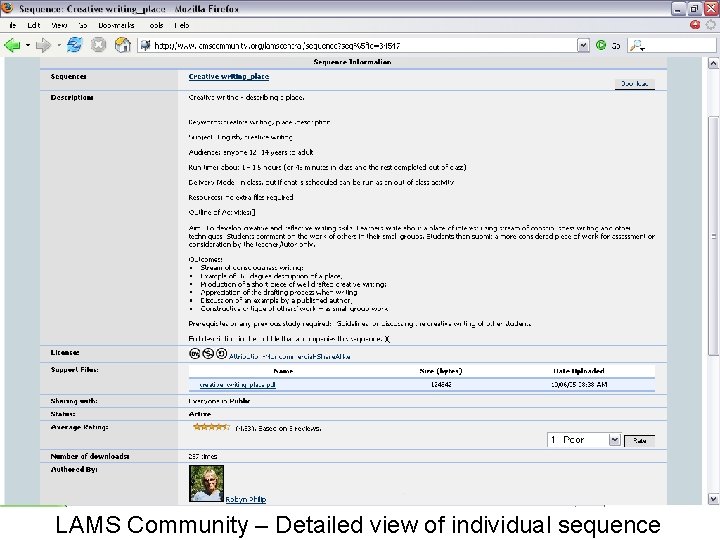
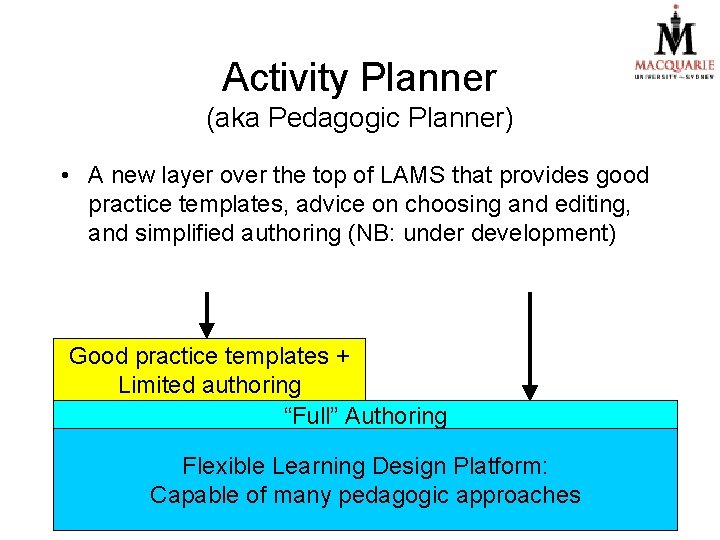
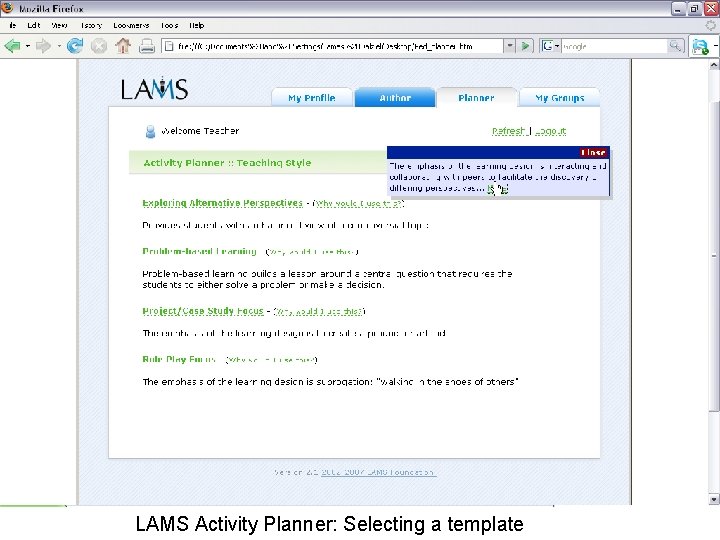
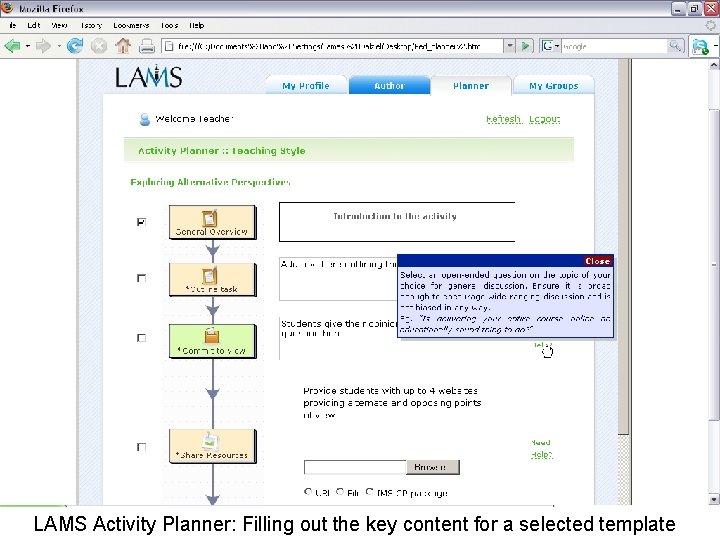
Two examples of sharing • LAMS Community (www. lamscommunity. org) – Approximately 3300 members, 86 countries, 290 shared sequences downloaded 7500 times, 3700 discussion postings • Activity Planner (aka Pedagogic Planner) – Providing a suite of pre-built activity templates, combined with advice on choosing an appropriate template – (Under development)
LAMS Community – View of various communities & forums
LAMS Community – Repository Summary
LAMS Community – Detailed view of individual sequence
Activity Planner (aka Pedagogic Planner) • A new layer over the top of LAMS that provides good practice templates, advice on choosing and editing, and simplified authoring (NB: under development) Good practice templates + Limited authoring “Full” Authoring Flexible Learning Design Platform: Capable of many pedagogic approaches
LAMS Activity Planner: Selecting a template
LAMS Activity Planner: Filling out the key content for a selected template
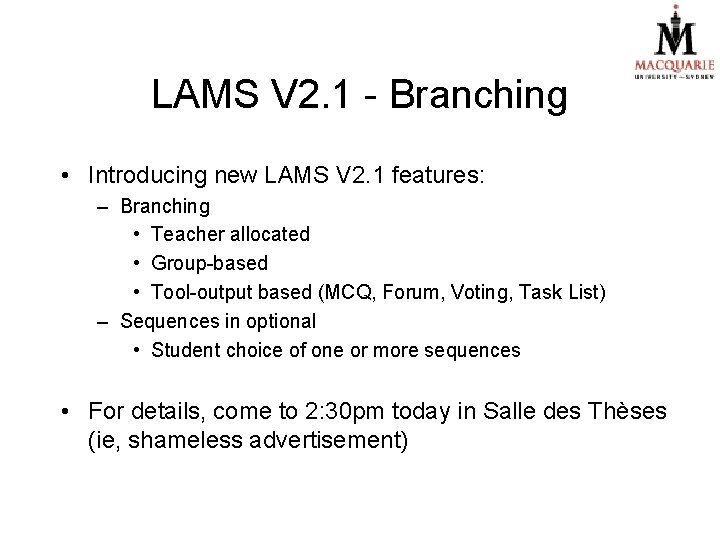
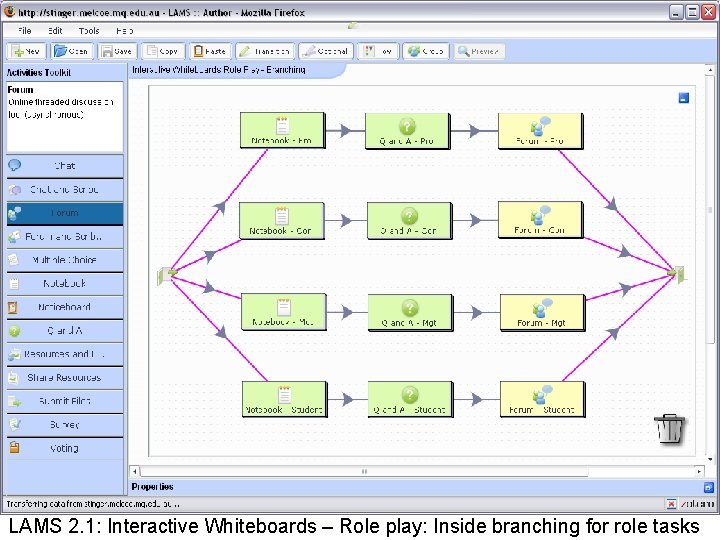
LAMS V 2. 1 - Branching • Introducing new LAMS V 2. 1 features: – Branching • Teacher allocated • Group-based • Tool-output based (MCQ, Forum, Voting, Task List) – Sequences in optional • Student choice of one or more sequences • For details, come to 2: 30 pm today in Salle des Thèses (ie, shameless advertisement)
LAMS 2. 1: Interactive Whiteboards – Role play: Inside branching for role tasks
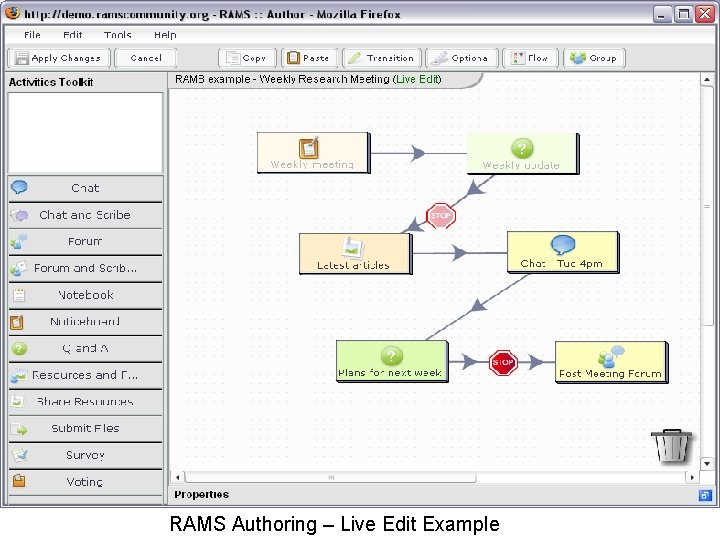
Application to Research Activities • The concept of re-usable sequences of learning activities can also be applied to research activities – Research team management – Research workflows – Modeling of research processes ahead of time (eg, biosecurity) • RAMS (Research Activity Management System) – Shares a common workflow core with LAMS – Many new LAMS features (Branching, Live Edit, Conditions, etc) have arisen from RAMS requirements
RAMS Authoring – Live Edit Example
Summary • Our failure to share good pedagogy is not just a technical issue – We lack a notational framework for describing teaching and learning processes (whether implemented with technology or not) • Learning Design provides a first glimpse at re-usable descriptions of (some kinds) of teaching and learning processes • Learning Design doesn’t need to be complete, just sufficient to convey teaching ideas between educators (cf music notation)
Further LAMS Information • Introduction to LAMS – walkthroughs, videos, case studies http: //cd. lamsfoundation. org/ • General demonstration accounts for LAMS http: //demo. lamscommunity. org/ • General information about LAMS http: //www. lamsfoundation. org/ • LAMS Community http: //www. lamscommunity. org/ • Qualities of an Effective Teacher – download sequence from http: //www. lamscommunity. org/dotlrn/clubs/educationalcommunity/lam sresearchdevelopment/lams-seq//sequence? seq%5 fid=256078 • Adoption of Interactive Whiteboards in schools Role Play – download sequence from http: //lamscommunity. org/lamscentral/sequence? seq_id=376440 • Animated “mock-ups” for Pedagogic Planner concept http: //saturn. melcoe. mq. edu. au/jly/Ped_planner. htm http: //saturn. melcoe. mq. edu. au/jly/Ped_plannerv 2. htm