
Shaping the Earths Crust Weathering and Erosion Shaping
- Slides: 21
Shaping the Earth’s Crust Weathering and Erosion
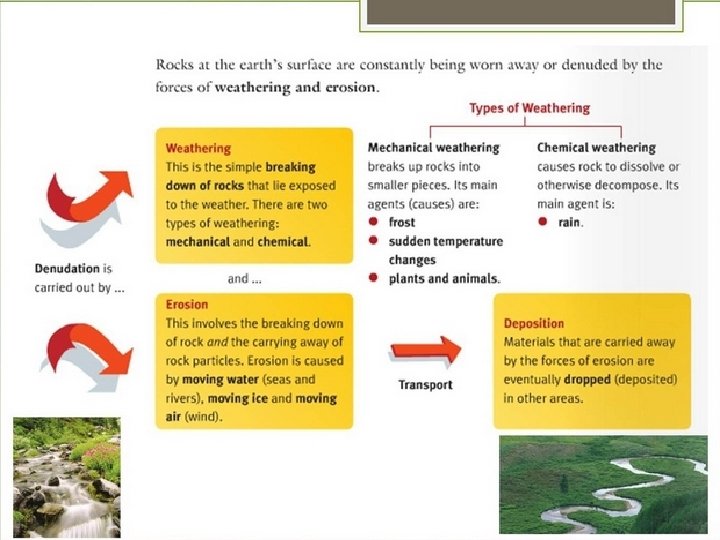
Shaping the Earth’s Crust • The rocks and soil of the earth’s crust are continually being worn down because of a number of processes. • These processes are known collectively as Denudation. • Denudation occurs as a result of both weathering and erosion.
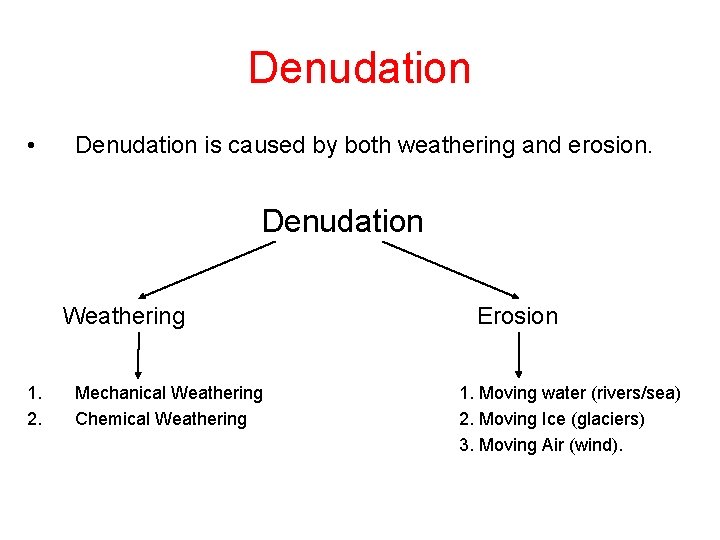
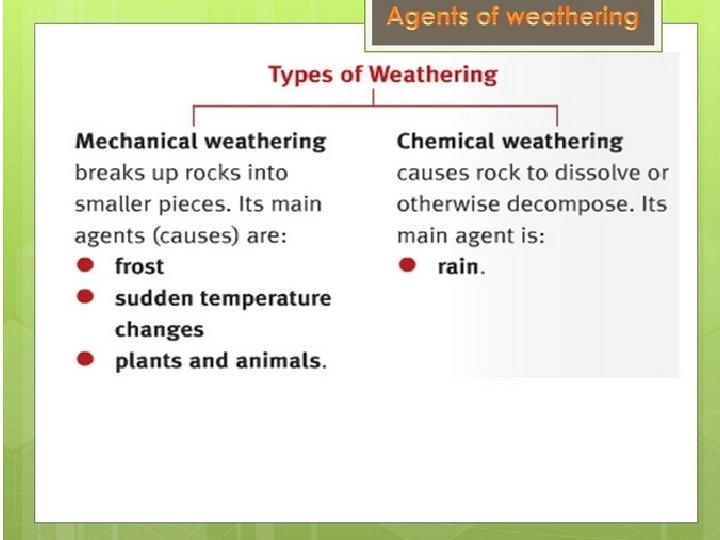
Denudation • Denudation is caused by both weathering and erosion. Denudation Weathering 1. 2. Mechanical Weathering Chemical Weathering Erosion 1. Moving water (rivers/sea) 2. Moving Ice (glaciers) 3. Moving Air (wind).
Weathering and Erosion • This will focus on Mechanical Weathering and Erosion https: //youtu. be/CNUz. Tm. PKxv 8
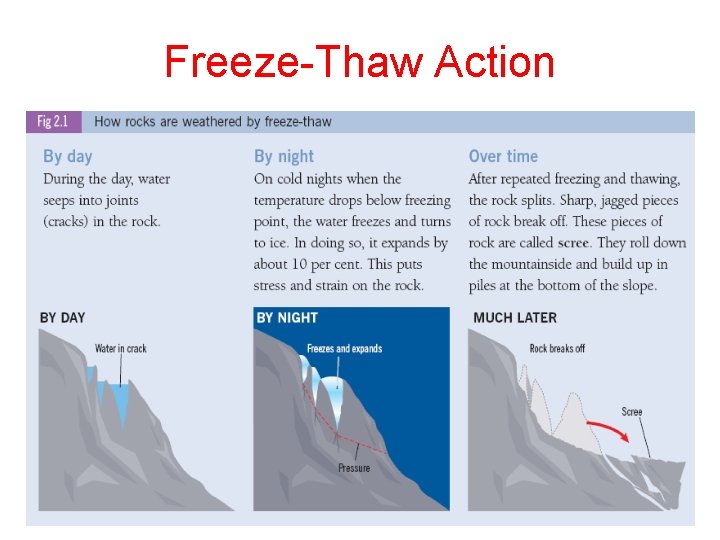
Mechanical Weathering • Mechanical weathering breaks up the rocks into smaller pieces. • One type of mechanical weathering is called Freezethaw action. • Freeze-thaw action breaks the rock into smaller pieces. • It occurs high in the mountains where there is lots of rain and the temperature rises above and below 0 degrees Celsius quite often.
Freeze-Thaw Action
Chemical Weathering • This video will focus on Chemical Weathering https: //youtu. be/P 8 o. Wj 3 PVK 9 E
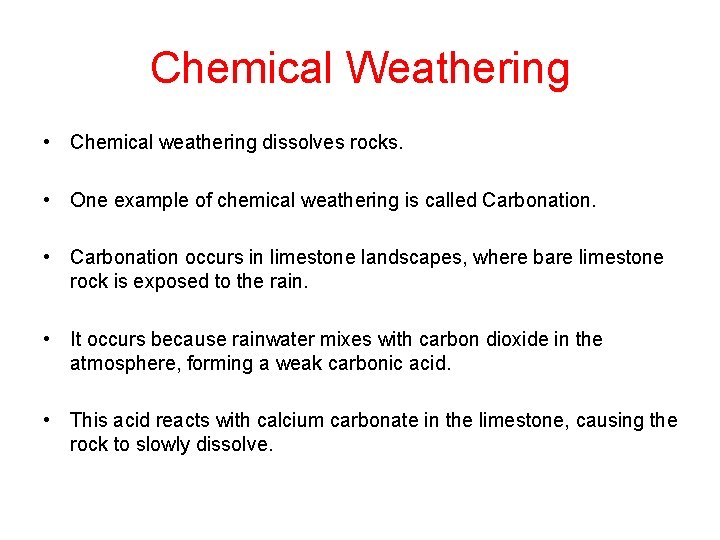
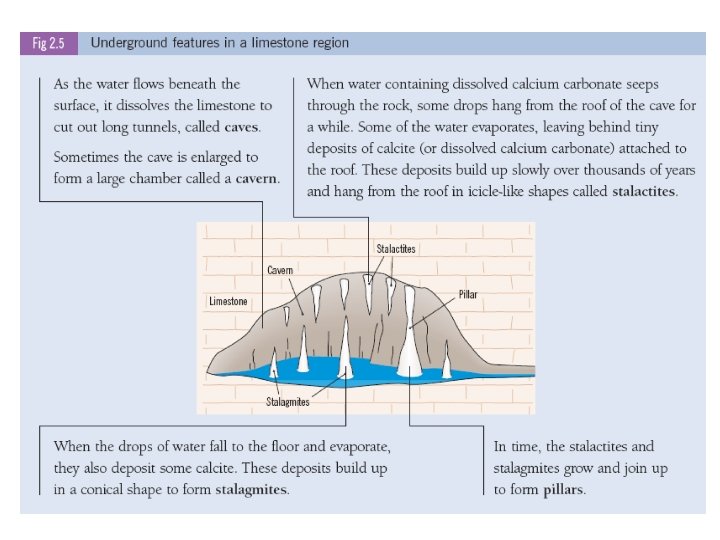
Chemical Weathering • Chemical weathering dissolves rocks. • One example of chemical weathering is called Carbonation. • Carbonation occurs in limestone landscapes, where bare limestone rock is exposed to the rain. • It occurs because rainwater mixes with carbon dioxide in the atmosphere, forming a weak carbonic acid. • This acid reacts with calcium carbonate in the limestone, causing the rock to slowly dissolve.
Weathering and Erosion Song • https: //youtu. be/2311 y. O 5 op. Vk
Homework 1. What is meant by the terms: Weathering, Denudation, Erosion 2. Discuss the process of Mechanical Weathering 3. Discuss the process of Chemical Weathering
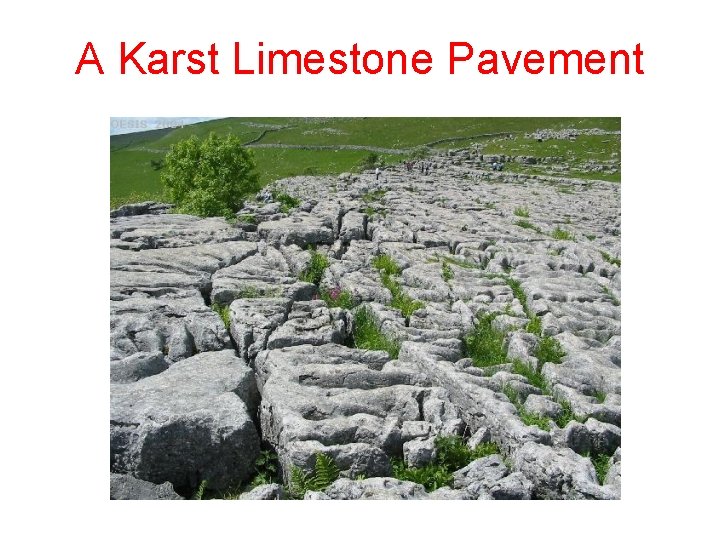
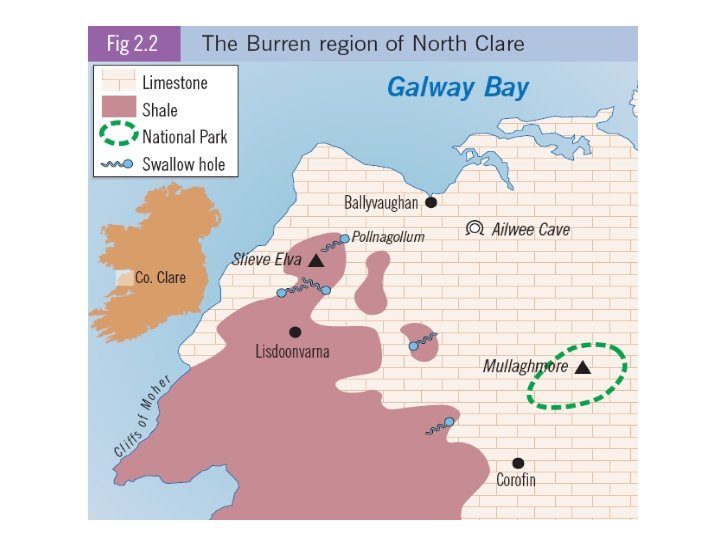
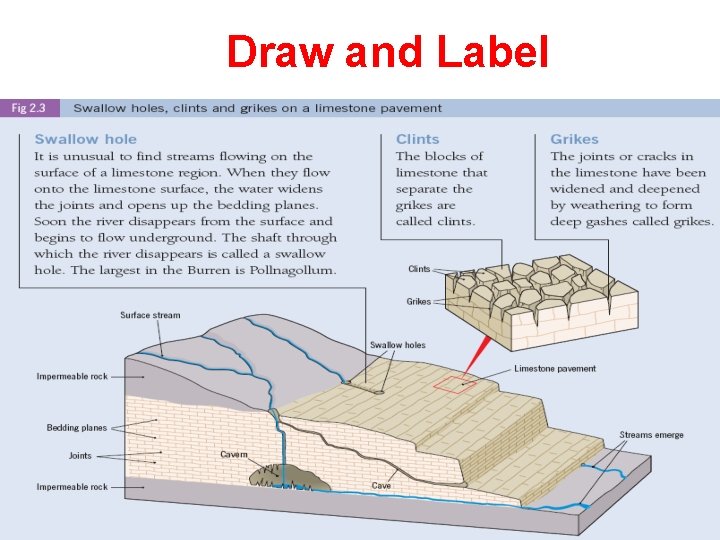
Carbonation – Karst Landscapes • Carbonation occurs in areas where bare limestone rock is exposed to the weather. • These areas are known as karst landscapes, after a limestone region called Karst in Slovenia. • An example of a Karst landscape in Ireland is the Burren in Co. Clare. • Here the soil has been worn away, leaving the bare limestone rock exposed. Carbonation has created many spectacular features, particularly underground.
A Karst Limestone Pavement
The Burren- A Karst Landscape https: //youtu. be/67 thq. Vxb. Lik
Draw and Label
Mass Movement • Mass movement means the movement of any loose material (rocks, soil, mud) down slope under the influence of gravity. • The loose material is known as regolith. • The rate of mass movement is influenced by 4 factors. • • Gradient Water Content Human Activity Vegetation
Influences on Mass Movement • Gradient – Mass movement occurs on sloping land. Mass movement is fastest on steep slopes. • Water Content – After heavy rain the regolith (loose material) is heavier. • Human Activity – People often cut into hillsides to make roads or railway lines. This creates steep slopes where mass movement can occur. • Vegetation – The roots of trees and plants help keep the regolith together, slowing down mass movement.
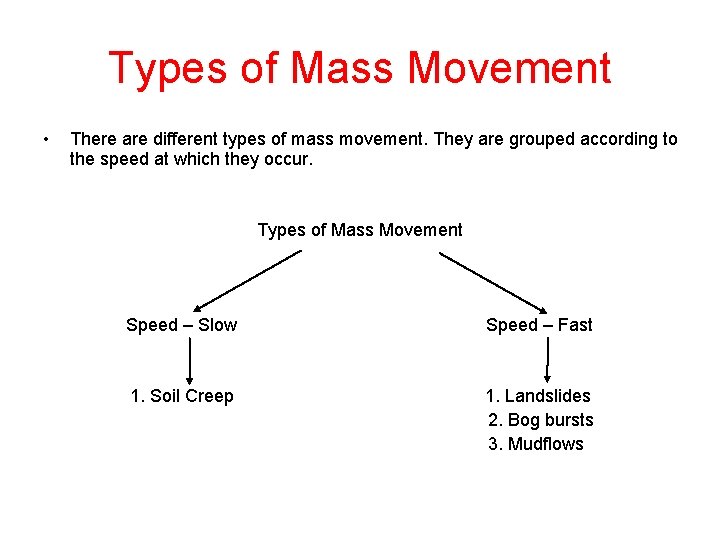
Types of Mass Movement • There are different types of mass movement. They are grouped according to the speed at which they occur. Types of Mass Movement Speed – Slow Speed – Fast 1. Soil Creep 1. Landslides 2. Bog bursts 3. Mudflows