
SHAPING EVOLUTIONARY THEORY MECHANISMS OF EVOLUTION Natural selection
- Slides: 36
SHAPING EVOLUTIONARY THEORY
MECHANISMS OF EVOLUTION Natural selection is not the only mechanism of evolution
Population Genetics � Evolution will not occur in a population unless allelic frequencies are acted upon by forces that cause change � Without these forces the allelic frequency remains constant and evolution does not occur
Hardy-Weinberg principle � � When allelic frequencies remain constant, a population is in genetic equilibrium Must meet five conditions to be in equilibrium � No genetic drift Population is very large � No gene flow No immigration or emigration � No mutation � Mating must be random � No natural selection � No population is in equilibrium for long
Genetic Drift � � � Any change in the allelic frequencies that is due to chance In large populations enough alleles drift to ensure allelic frequency remains constant In small populations the effects of genetic drift become pronounced � Chance � of losing an allele becomes greater Seen in founder effect and bottleneck
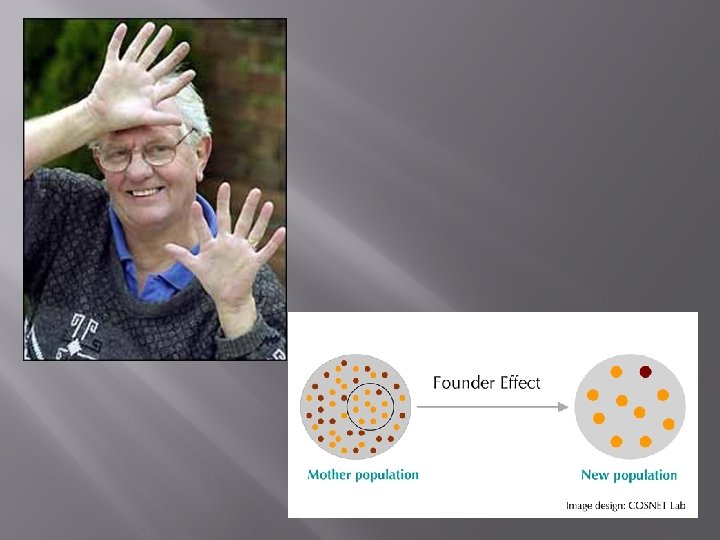
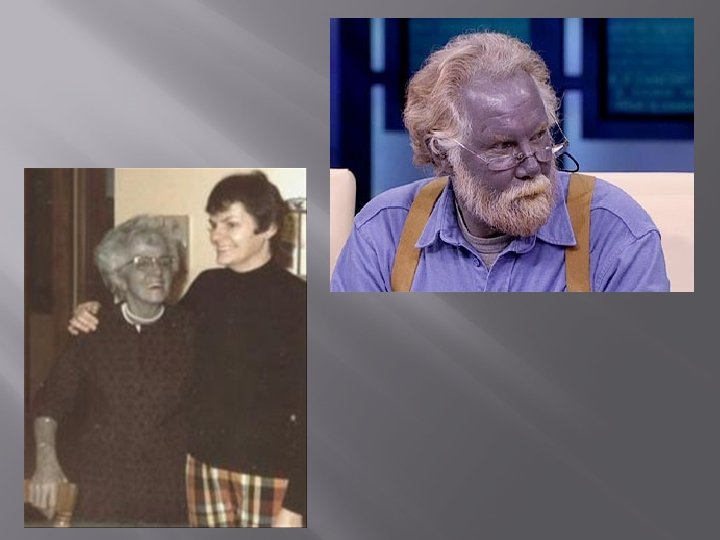
Founder Effect � � � When a small sample of a population settles in an area separate from the rest of the population Alleles that were uncommon in the original population might be common in the new population Amish and Mennonite communities of the United States � Six-finger dwarfism
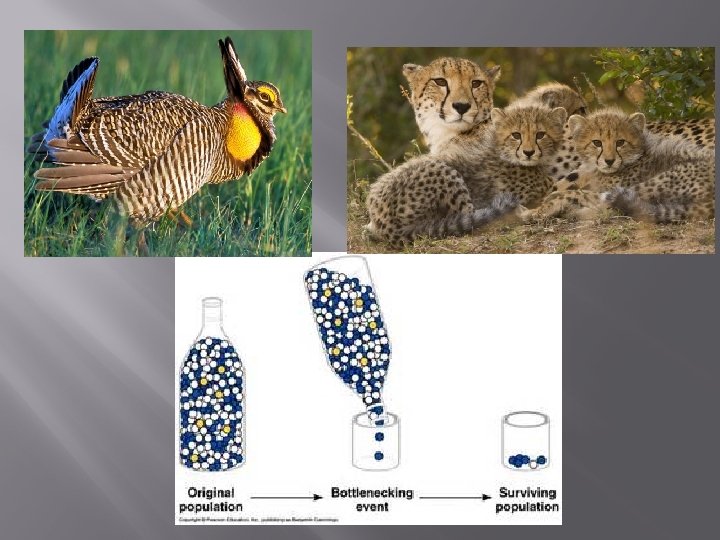
Bottleneck � � � When a population declines to a very low number and then rebounds The gene pool of the rebound population often has reduced diversity Cheetahs
Gene Flow � Random movements of individuals between populations, or migration, increases genetic variation
Nonrandom Mating � � Rarely is mating completely random in a population Organisms mate with individuals in close proximity � Promotes inbreeding � Favors individuals that are homozygous for a trait
Mutation � � Cumulative effect of mutations in a population might cause a change in allelic frequencies Many mutations may harm or be lethal but some may provide an advantage
Natural Selection � Acts to select the individuals that are best adapted for survival and reproduction
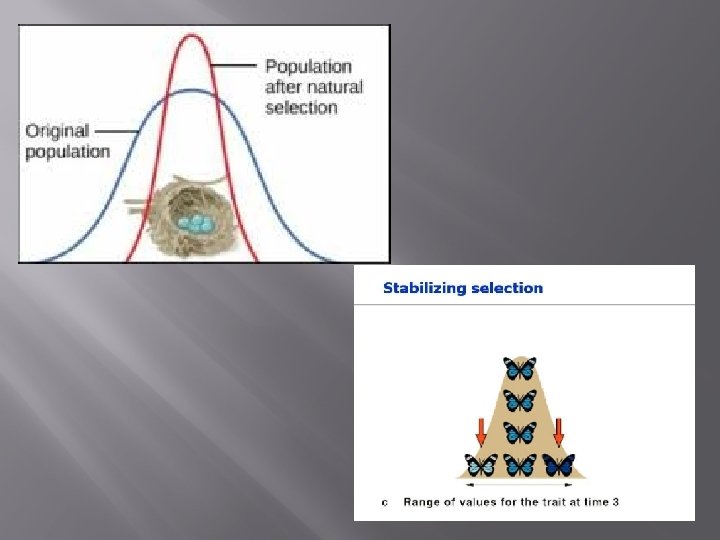
Stabilizing Selection � � Eliminates extreme expression of a trait when the average expression leads to higher fitness Human birth weight
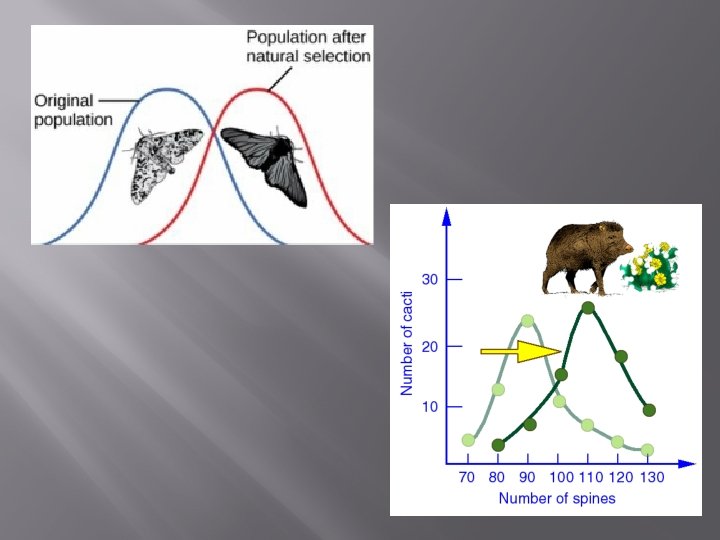
Directional Selection � � � Extreme version of a trait makes an organism more fit Peppered moth Galapagos finches
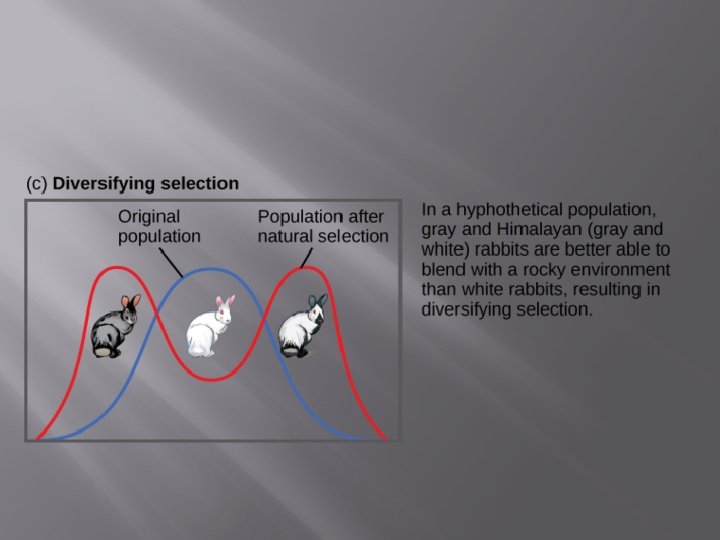
Disruptive Selection � � � Splits a population into two groups Removes individuals with average traits Northern water snakes
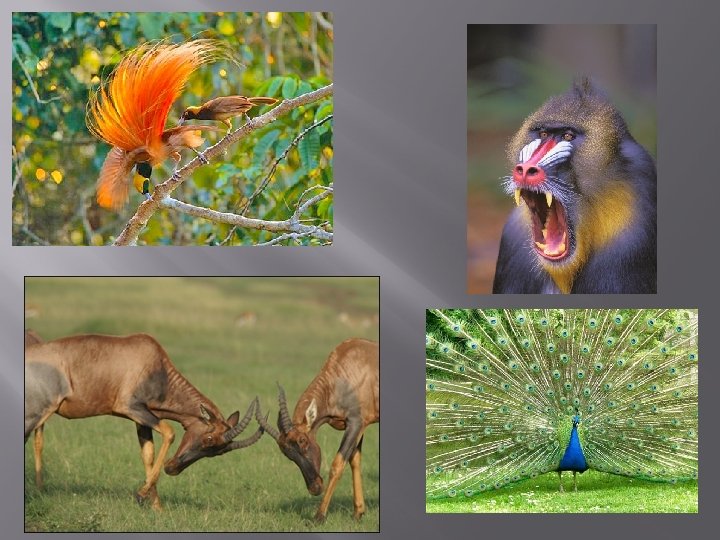
Sexual Selection � � Hinges on the ability to attract a mate Often operates in populations where males and females differ significantly in appearance Males may fight over females or territories Peacocks
REPRODUCTIVE ISOLATION Speciation is the process whereby some members of a sexually reproducing population change so much that they can no longer produce fertile offspring with members of the original population
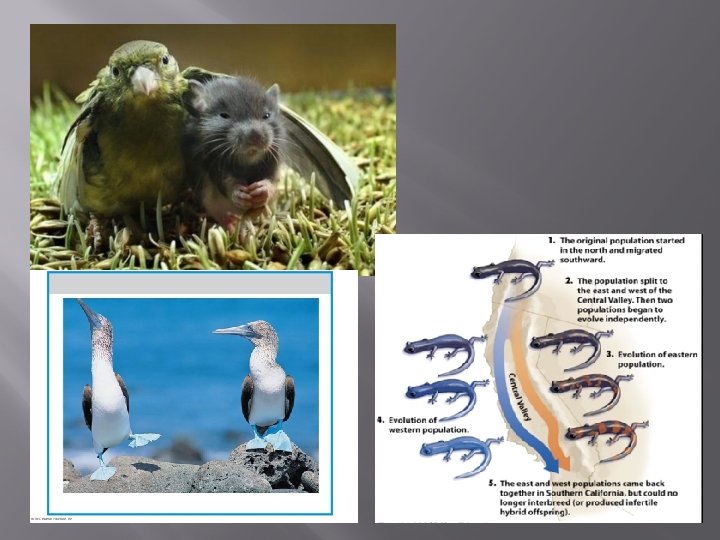
Prezygotic Isolation � � Operate before fertilization occurs Geographic, ecological, or behavioral differences Meadowlarks Trout
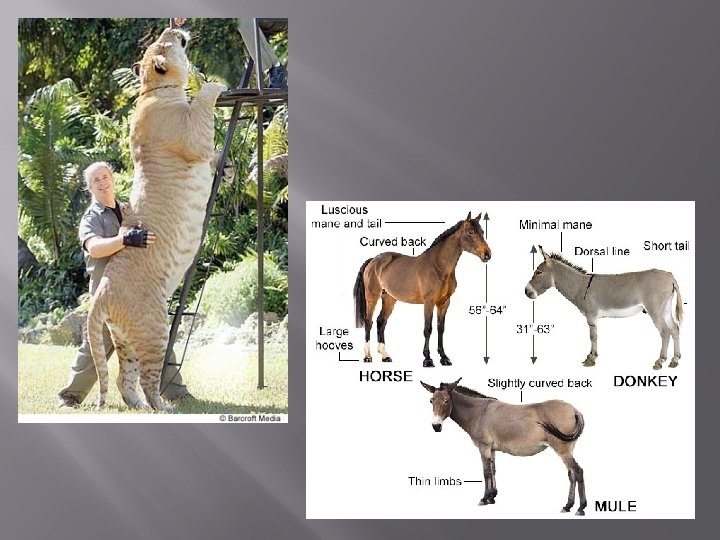
Postzygotic Isolation � � When fertilization has occurred but a hybrid offspring cannot develop or reproduce Ligers
Allopatric Speciation � A physical barrier divides one population into two or more populations � Mountain � � ranges, bodies of water, and lava flows Eventually the two populations will not be able to interbreed Kaibab and Abert squirrels
Sympatric Speciation � � � Ancestor species and new species evolve side by side Believed to happen frequently in plants Can be seen in some insect species being studied right now
PATTERNS OF EVOLUTION Evolution takes a long time compared to the human lifespan but evidence for evolution can be seen.
Adaptive Radiation � � � One species gives rise to many species in response to the creation of new habitat or another ecological opportunity Happens relatively quickly Often follows large scale extinctions Cichlid fish Mammals after dinosaurs
Coevolution � Species evolve in close relation with another species � The relationship is so close that the evolution of one species affects the evolution of the other � Orchid and moth
Convergent Evolution � � � Unrelated species develop similar traits even though they live in different parts of the world Occurs in environments that might be far apart geographically but have similar ecology and climate Australian marsupials and placental mammals on other continents
Rate of Speciation � � May happen quickly or take millions of years Gradualism � Evolution � proceeds in small, gradual steps Punctuated Equilibrium � Rapid spurts of genetic change cause species to diverge quickly � Followed by long periods of little change