
Shang China 2 nd Period Job Development There
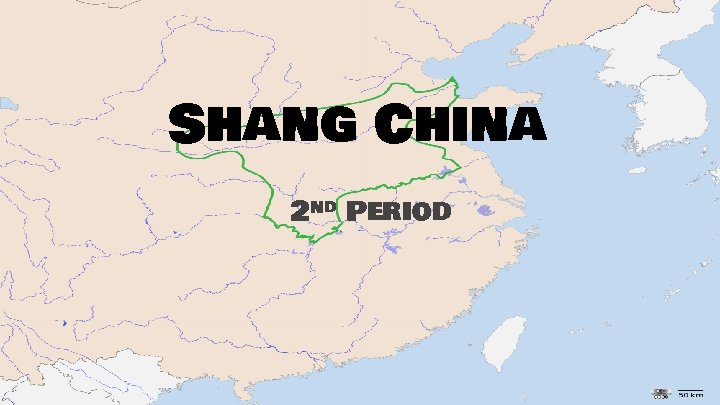
Shang China 2 nd Period
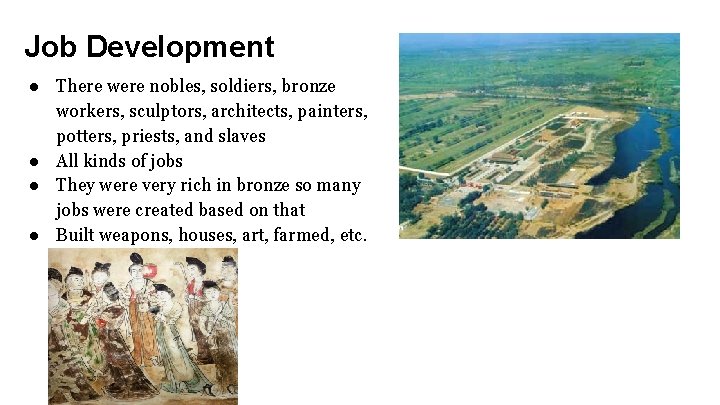
Job Development ● There were nobles, soldiers, bronze workers, sculptors, architects, painters, potters, priests, and slaves ● All kinds of jobs ● They were very rich in bronze so many jobs were created based on that ● Built weapons, houses, art, farmed, etc.
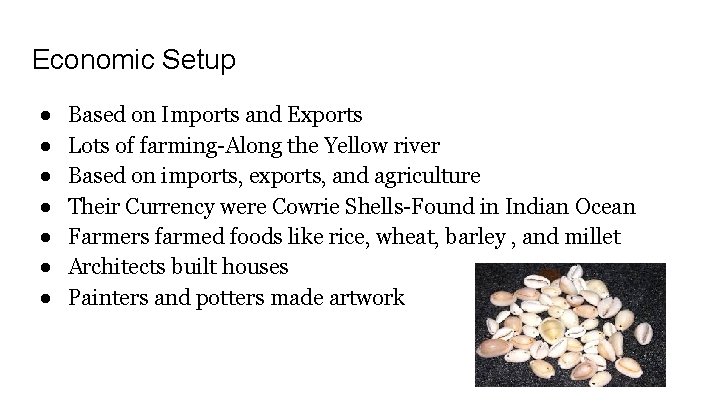
Economic Setup ● ● ● ● Based on Imports and Exports Lots of farming-Along the Yellow river Based on imports, exports, and agriculture Their Currency were Cowrie Shells-Found in Indian Ocean Farmers farmed foods like rice, wheat, barley , and millet Architects built houses Painters and potters made artwork
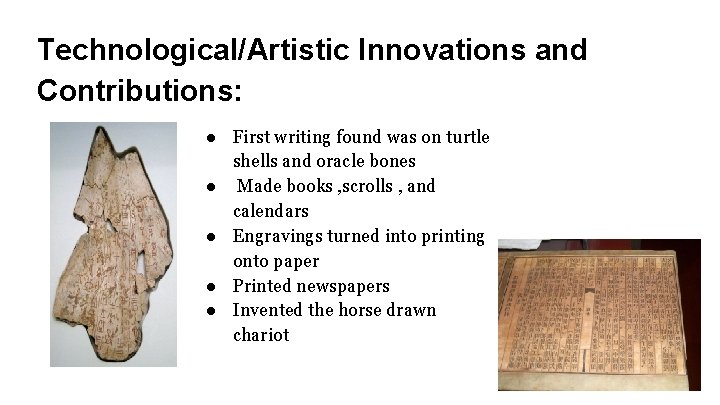
Technological/Artistic Innovations and Contributions: ● First writing found was on turtle shells and oracle bones ● Made books , scrolls , and calendars ● Engravings turned into printing onto paper ● Printed newspapers ● Invented the horse drawn chariot
Political Organization: ● ● ● Imperialistic Kings believed to be appointed by god Tang overthrow Jie in 1675 bce and started shang dynasty Tang focused on bettering the society Political system based on cities and boundaries Capital, Shang, had two city walls, inner housing elite and specialists, and outer consisting of common people ● Kings appoint men to lead boundaries and surrounding areas
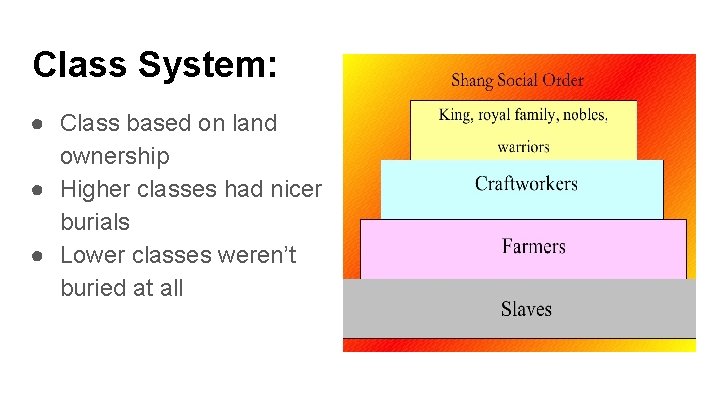
Class System: ● Class based on land ownership ● Higher classes had nicer burials ● Lower classes weren’t buried at all
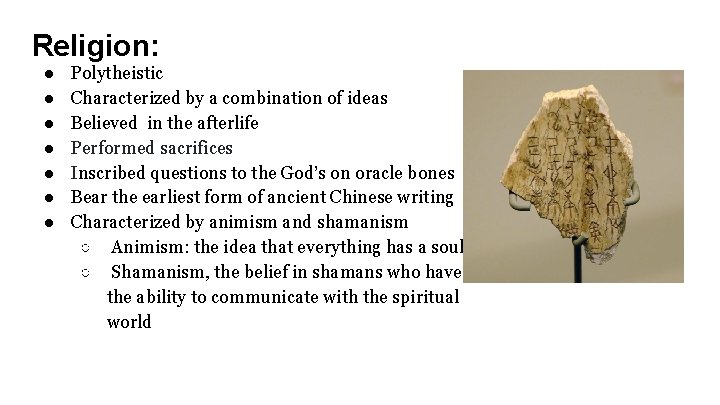
Religion: ● ● ● ● Polytheistic Characterized by a combination of ideas Believed in the afterlife Performed sacrifices Inscribed questions to the God’s on oracle bones Bear the earliest form of ancient Chinese writing Characterized by animism and shamanism ○ Animism: the idea that everything has a soul; ○ Shamanism, the belief in shamans who have the ability to communicate with the spiritual world
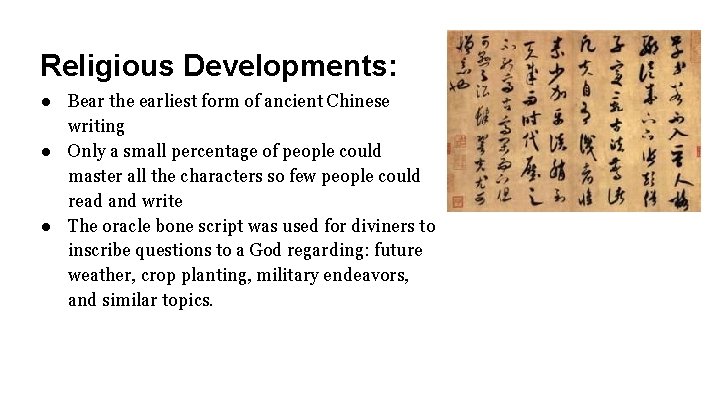
Religious Developments: ● Bear the earliest form of ancient Chinese writing ● Only a small percentage of people could master all the characters so few people could read and write ● The oracle bone script was used for diviners to inscribe questions to a God regarding: future weather, crop planting, military endeavors, and similar topics.
Work Cited Bibliography "9 b. Shang Dynasty — China's First Recorded History. " Ushistory. com. http: //www. ushistory. org/civ/9 b. asp. "About China Learning Initiatives. " ASIASOCIETY. ORG. https: //asiasociety. org/china-learning-initiatives/writing-and-technology-china. "China: The Shang Dynasty. " digitalhistorymusuem. weebly. com. https: //digitalhistorymusuem. weebly. com/economics. html. “Economics. ” China: The Shang Dynasty, digitalhistorymusuem. weebly. com/economics. html. Elshaikh, Eman M. , and David Rheinstrom. "Shang Dynasty Civilization. " Kahn Academy. https: //www. khanacademy. org/humanities/world-historybeginnings/shang-dynasty-china/a/shang-dynasty-article. "job specialization. " whapshangdynasty. weebly. com. https: //whapshangdynasty. weebly. com/job-specialization. html. Leung, Irene. “Writing and Technology in China. ” Asia Society, Aug. 2008, asiasociety. org/china-learning-initiatives/writing-and-technology-china. “PUAM - Asian Art Collection. ” Princeton University, The Trustees of Princeton University, etcweb. princeton. edu/asianart/timeperiod_china. jsp? ctry=China&pd=Shang%7 CZhou. "Shang Dynasty Art. " http: //www. arthistory. net/shang-dynasty-art/. "Shang/Zhou dynasty ca. 1600– 256 B. C. " etcweb. princeton. edu. https: //etcweb. princeton. edu/asianart/timeperiod_china. jsp? ctry=China&pd=Shang%7 CZhou.
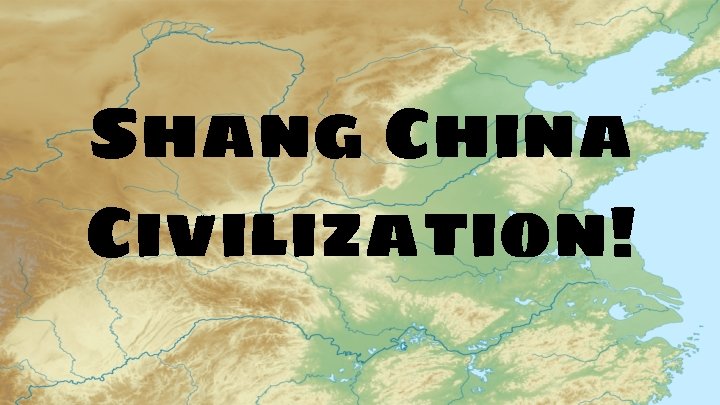
Shang China Civilization!
- Slides: 10