
Shampoo How to formulate solutions Lesson Topics Shampoo





- Slides: 68
Shampoo How to formulate solutions
Lesson Topics • • • Shampoo Market Overview Consumer Problems Surfactant Science Formulating a shampoo Testing
Lesson Objectives • Shampoo Market Overview – Introduce the shampoo market • Consumer Problems – Explain the problems shampoo formulas are designed to fix • Surfactant Science – Discuss surfactant properties – How they are relevant to cosmetics • Formulating a solution – Dissect a shampoo formula – Explaining what ingredients are used and why • Testing – Explain how to test a shampoo
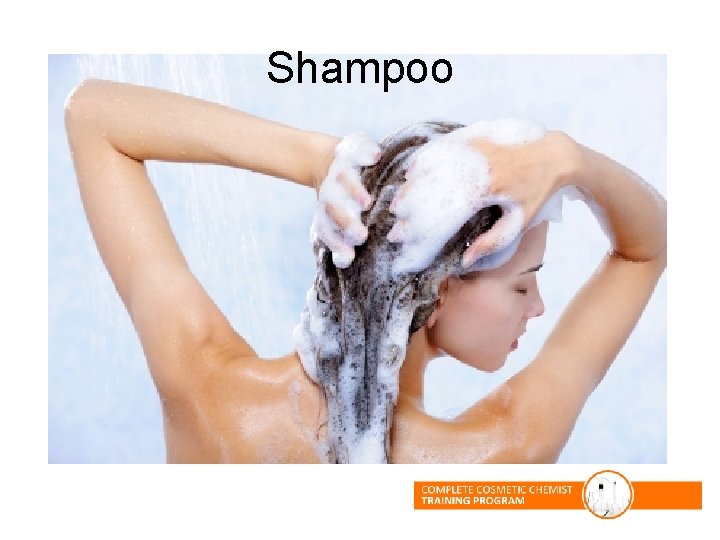
Shampoo
Shampoos • Solution cosmetic designed to clean hair and leave it a more manageable state • Solutions - one of the simplest types of cosmetic formulas
Shampoo Market • Overall Market – Hair care market estimated ~ $40 Billion worldwide – Amount of money spent in US on Shampoo/conditioner • $2. 26 billion (Food, Drug, Mass market)* *Does not include Walmart
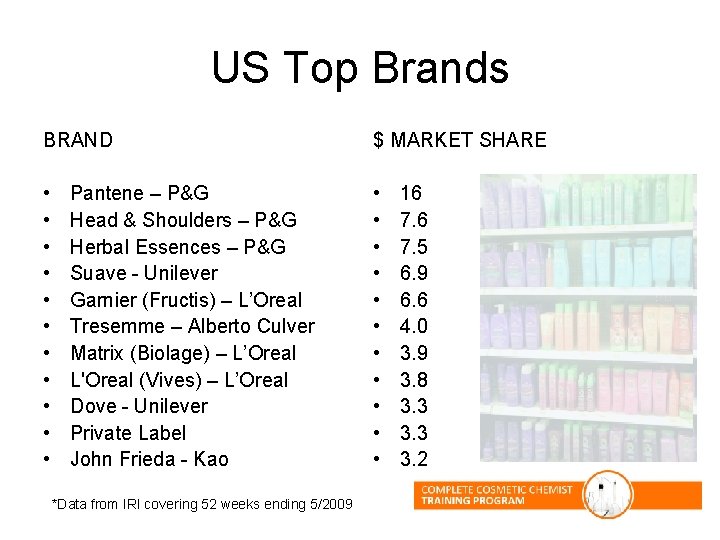
US Top Brands BRAND $ MARKET SHARE • • • • • • Pantene – P&G Head & Shoulders – P&G Herbal Essences – P&G Suave - Unilever Garnier (Fructis) – L’Oreal Tresemme – Alberto Culver Matrix (Biolage) – L’Oreal L'Oreal (Vives) – L’Oreal Dove - Unilever Private Label John Frieda - Kao *Data from IRI covering 52 weeks ending 5/2009 16 7. 5 6. 9 6. 6 4. 0 3. 9 3. 8 3. 3 3. 2
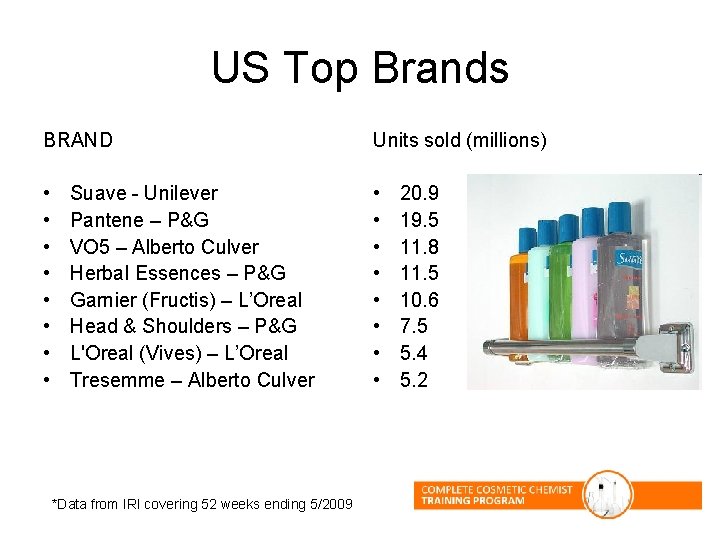
US Top Brands BRAND Units sold (millions) • • • • Suave - Unilever Pantene – P&G VO 5 – Alberto Culver Herbal Essences – P&G Garnier (Fructis) – L’Oreal Head & Shoulders – P&G L'Oreal (Vives) – L’Oreal Tresemme – Alberto Culver *Data from IRI covering 52 weeks ending 5/2009 20. 9 19. 5 11. 8 11. 5 10. 6 7. 5 5. 4 5. 2
Shampoo Market • Types of shampoo (marketing) – – – – – Normal Extra body (volumizing, thickening, etc) Moisturizing (smoothing, shine, restore) Strengthening Curl 2 in 1 Color treated Color Enhancing Baby (tear-free) Natural
Shampoo Market • Specialty – Anti-dandruff – Anti-lice – Hair loss treatments • Significantly Different – Powdered shampoos – No-rinse shampoo – Co-washing
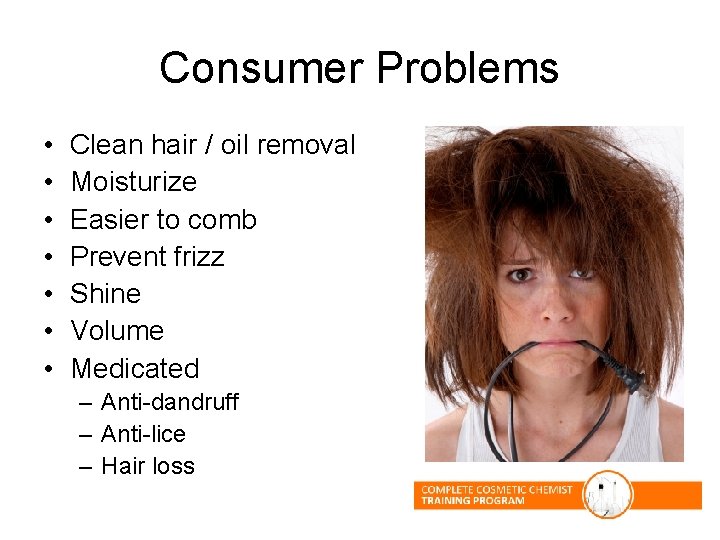
Consumer Problems • • Clean hair / oil removal Moisturize Easier to comb Prevent frizz Shine Volume Medicated – Anti-dandruff – Anti-lice – Hair loss
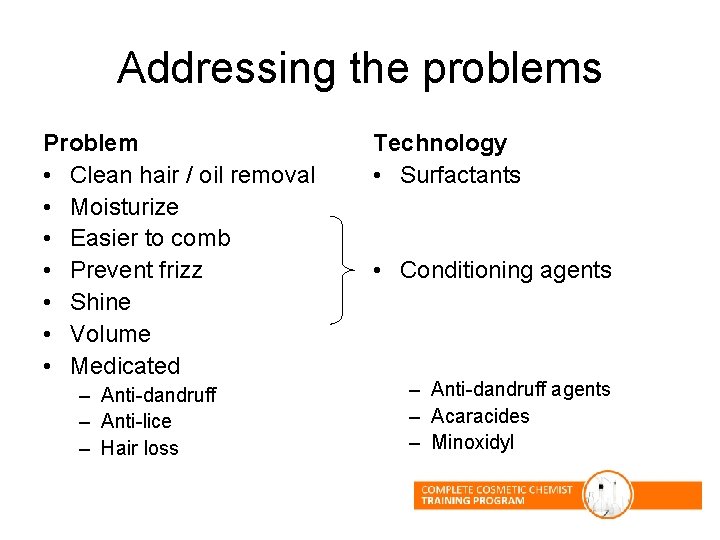
Addressing the problems Problem • Clean hair / oil removal • Moisturize • Easier to comb • Prevent frizz • Shine • Volume • Medicated – Anti-dandruff – Anti-lice – Hair loss Technology • Surfactants • Conditioning agents – Anti-dandruff agents – Acaracides – Minoxidyl
Surfactant Science
Surfactants • Defined – Molecules compatible with water & oil – Surfactant = Surface Active Agent
Surfactant Molecule Hydrophilic = Lipophobic Hydrophobic = Lipophilic
Surfactant in solution • Reduces surface tension • Helps disperse oil in water (or water in oil) • Forms micelles to suspend particles
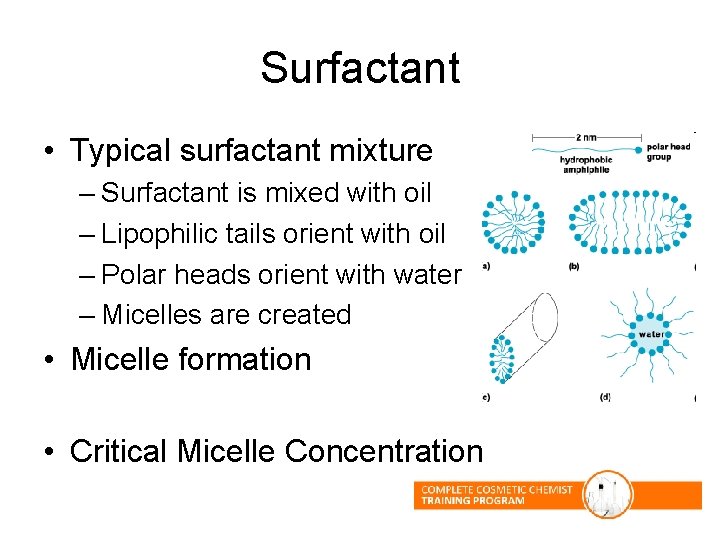
Surfactant • Typical surfactant mixture – Surfactant is mixed with oil – Lipophilic tails orient with oil – Polar heads orient with water – Micelles are created • Micelle formation • Critical Micelle Concentration
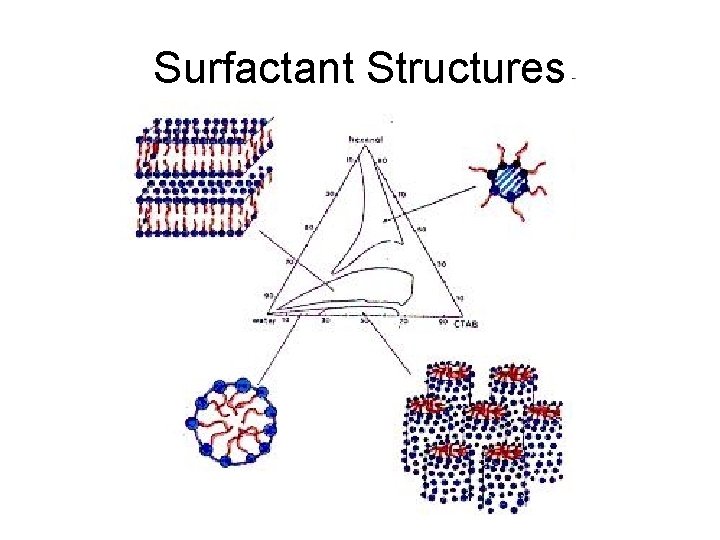
Surfactant Solutions • Depending on concentration different structures are formed • Simple shampoos are basically surfactant solutions (no oils)
Surfactant Structures
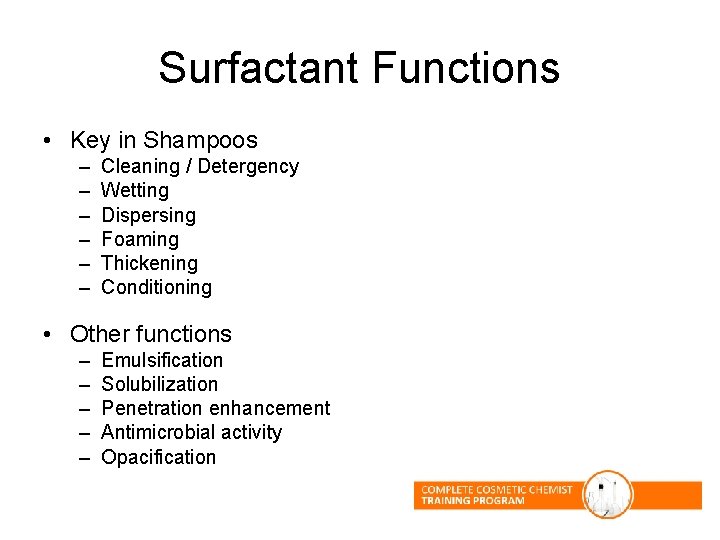
Surfactant Functions • Key in Shampoos – – – Cleaning / Detergency Wetting Dispersing Foaming Thickening Conditioning • Other functions – – – Emulsification Solubilization Penetration enhancement Antimicrobial activity Opacification
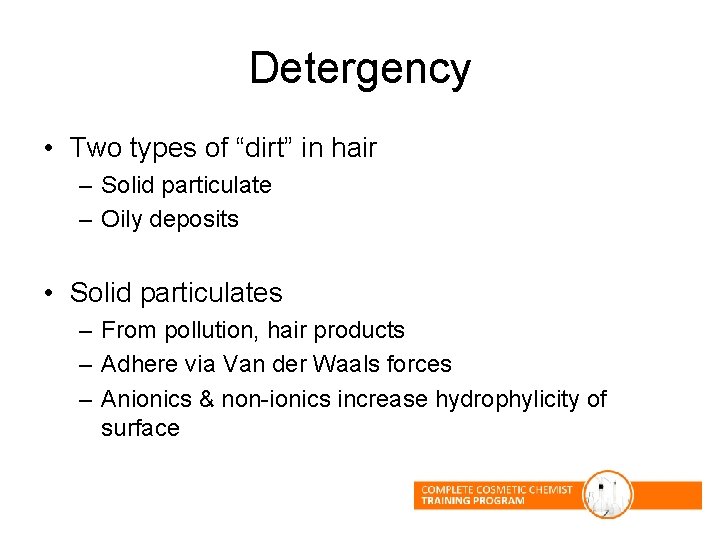
Detergency • Two types of “dirt” in hair – Solid particulate – Oily deposits • Solid particulates – From pollution, hair products – Adhere via Van der Waals forces – Anionics & non-ionics increase hydrophylicity of surface
Detergency • How surfactants remove liquids – Remove dirt & grease from surfaces – Mechanism • Surfactant orients along oil/water interface • This lifts oil off surface suspending in solution • Rinse water removes the oil micelle
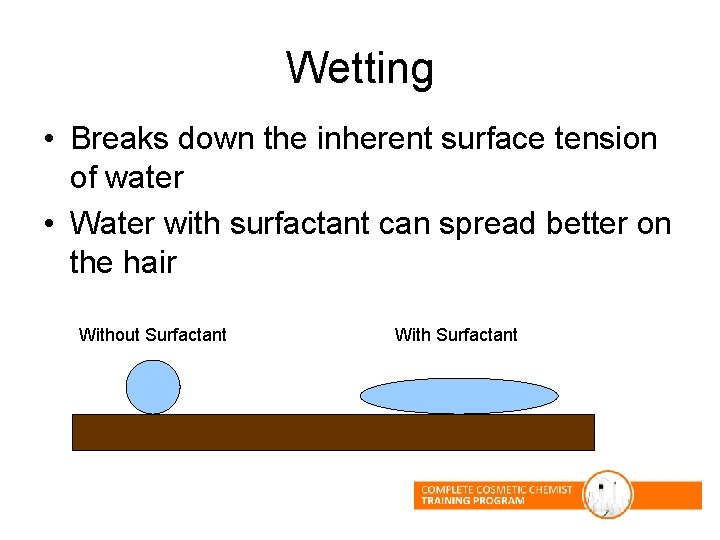
Wetting • Breaks down the inherent surface tension of water • Water with surfactant can spread better on the hair Without Surfactant With Surfactant
Dispersing • Particles are suspended in the shampoo / water solution • They are removed upon rinsing
Foaming • Air is dispersed in a continuous liquid medium • Air bubbles are surrounded by thin layers of liquid films • Foam doesn’t contribute much to removal of dirt – Consumers like foam but it doesn’t really mean the product cleans better
Thickening • Viscosity of surfactant solution can be affected by – Concentration of surfactant – Salt concentration – p. H
Types of Surfactants • Anionic – Negatively charged • Amphoteric (Zwitterionic) – capable of both positive & negative charges • Cationic – Positively charged • Nonionic – No charge
Anionic Surfactants • These are the primary shampoo surfactants • Alkyl Sulfates – Examples - SLS • Alkyl Ether Sulfates – Example – ALES • Alpha – Olefin Sulfonates – Examples
Anionic Surfactants • Other types – Sulfosuccinates – Alkylbenzene Sulfonates – Acyl Methyltaurates – Acyl Sarcosinates – Acyl Isethionates – Acyl Polypeptide Condensates – Monoglyceride Sulfates – Fatty Glyceryl Ether Sulfonates
Anionics • Why use them? – Excellent detergency – Relatively inexpensive – Good foaming – Highly stable • Drawbacks – Can be irritating – Drying to hair
Amphoteric Surfactants • Can have a positive or negative charge depending on the p. H of the solution • Zwitterionic • Types – Cocamidopropyl Betaine – Cocoamphopropionate – Sodium Lauraminopropionate
Amphoteric Surfactants • Why use them? – – Good Detergency Less Irritating than anionics Helps thicken system Helps improve foam • Drawbacks – More expensive – Do not foam well enough on their own
Non Ionic Surfactants • Surfactant molecules with no charge • Types – Fatty Alkanolamides • Lauramide DEA • Cocamide DEA – Amine Oxides • Lauramine Oxide • Stearamine Oxide
Non Ionic Surfactants • Why use them? – – – – Foam enhancer Reduce irritation Increase viscosity Conditioning effect Anti-static effect Solubilize fragrances Baby Shampoos • PEG-80 Sorbitan Laurate • Drawbacks – Safety issues – More expensive – Do not foam well on their own
Cationics • Positively charged surfactant molecules • Types – Cetrimonium Chloride – Stearylalkonium Chloride • Not used for shampoos – Don’t clean as well – Don’t rinse as well – Don’t foam as well
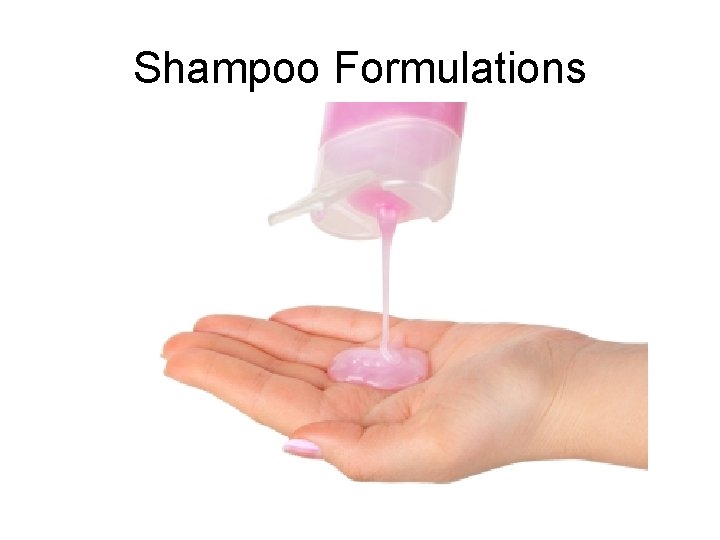
Shampoo Formulations
Shampoo Characteristics • Aesthetics – Appearance • Clear • Pearlized – Thickness (Viscosity) • Foam – Creamy, rich to thin & loose • Harshness • Conditioning effects
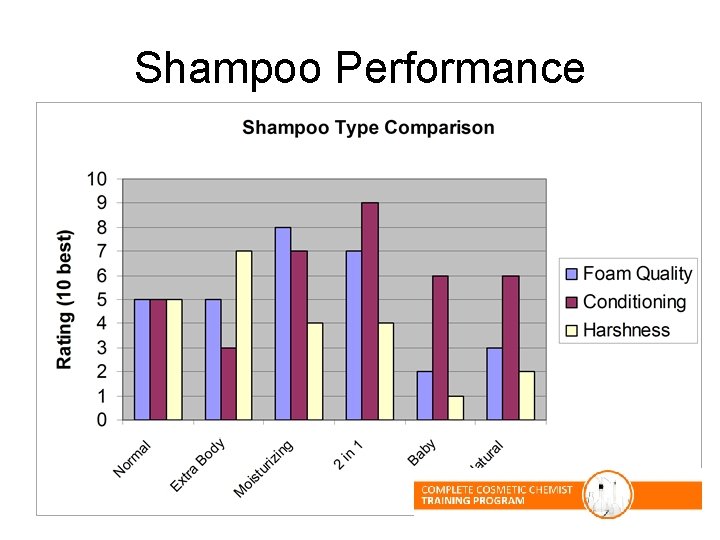
Basic types of Shampoos • • • Normal Volumizing Moisturizing 2 in 1 Baby Natural
Shampoo Performance
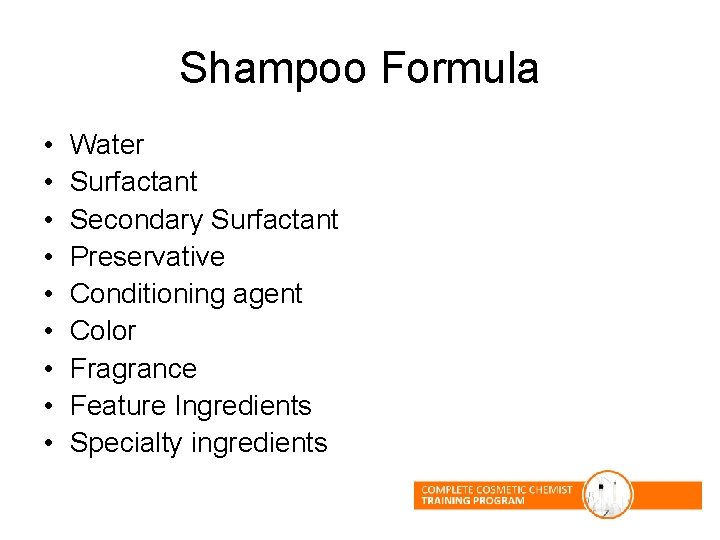
Shampoo Formula • • • Water Surfactant Secondary Surfactant Preservative Conditioning agent Color Fragrance Feature Ingredients Specialty ingredients
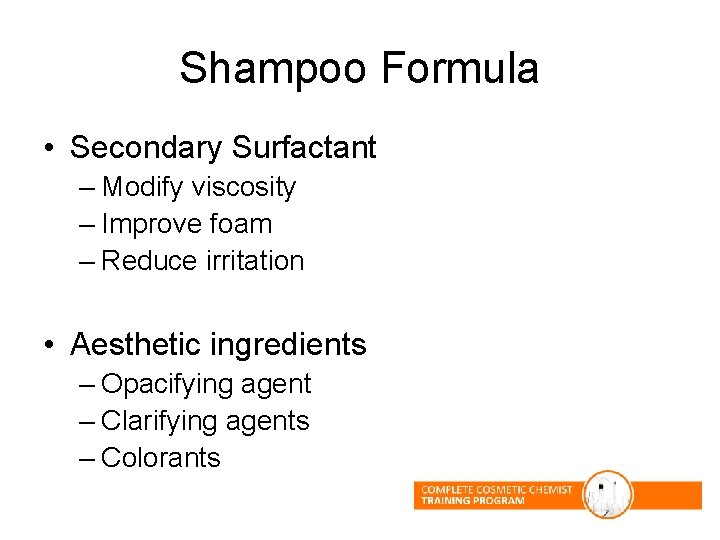
Shampoo Formula • Secondary Surfactant – Modify viscosity – Improve foam – Reduce irritation • Aesthetic ingredients – Opacifying agent – Clarifying agents – Colorants
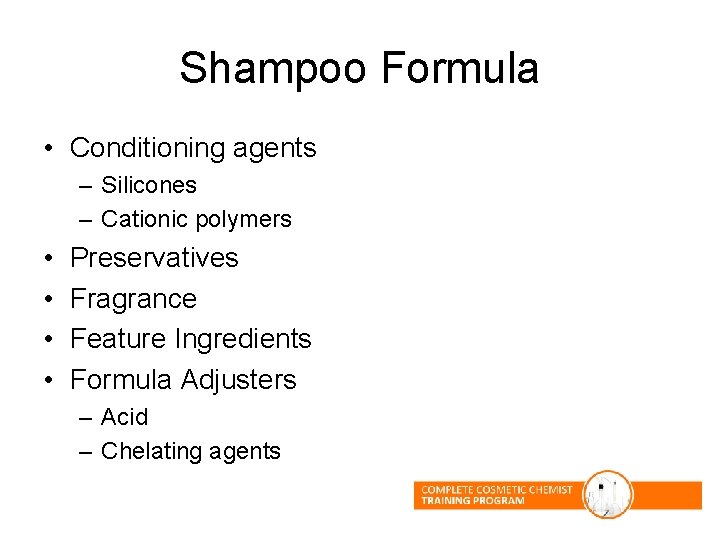
Shampoo Formula • Conditioning agents – Silicones – Cationic polymers • • Preservatives Fragrance Feature Ingredients Formula Adjusters – Acid – Chelating agents
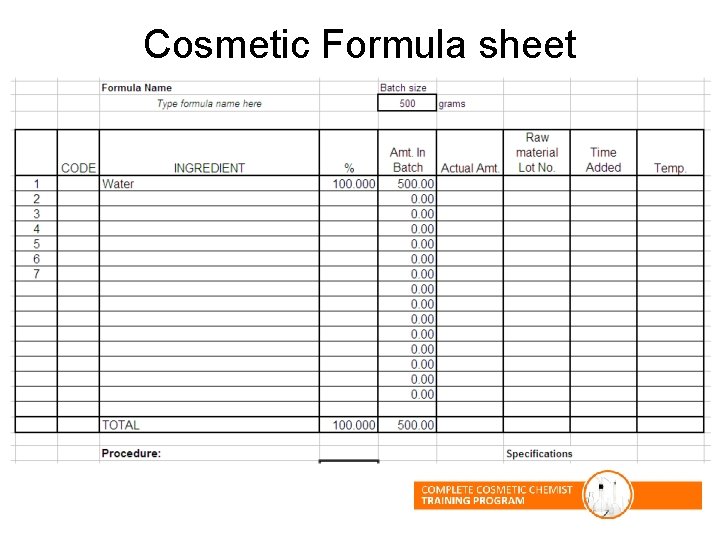
Cosmetic Formula sheet
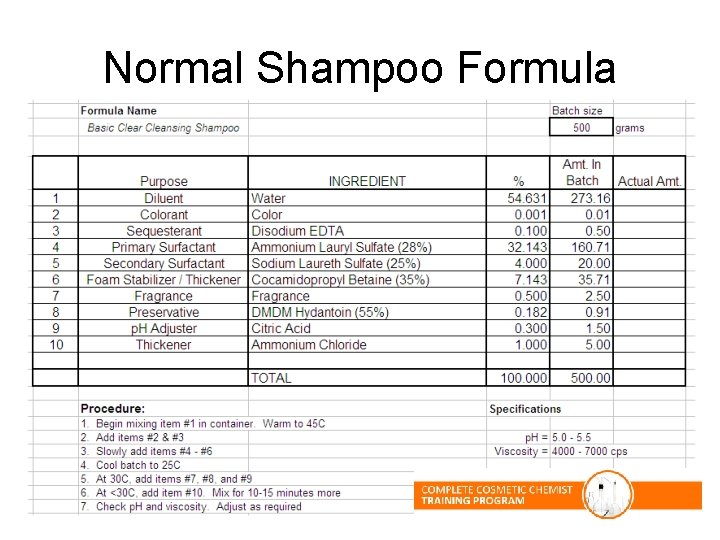
Normal Shampoo Formula
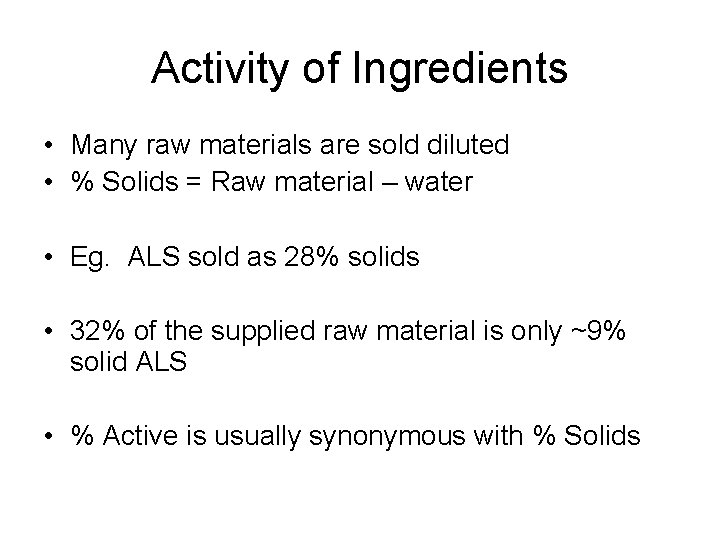
Activity of Ingredients • Many raw materials are sold diluted • % Solids = Raw material – water • Eg. ALS sold as 28% solids • 32% of the supplied raw material is only ~9% solid ALS • % Active is usually synonymous with % Solids
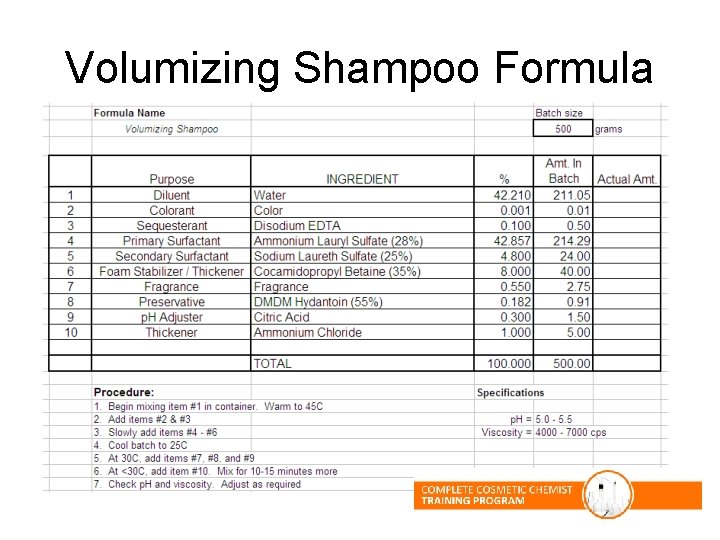
Volumizing Shampoo Formula
Volumizing Shampoo • Higher level of surfactant • Volumizing polymer (optional) – Guar hydroxypropyltrimonium chloride
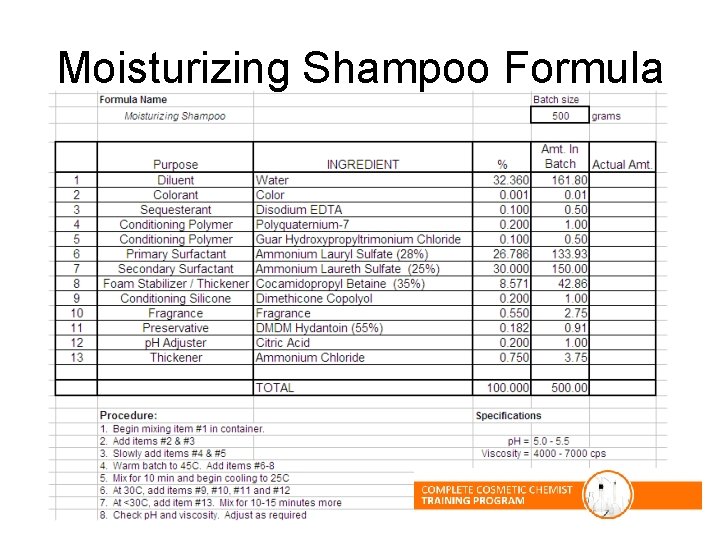
Moisturizing Shampoo Formula
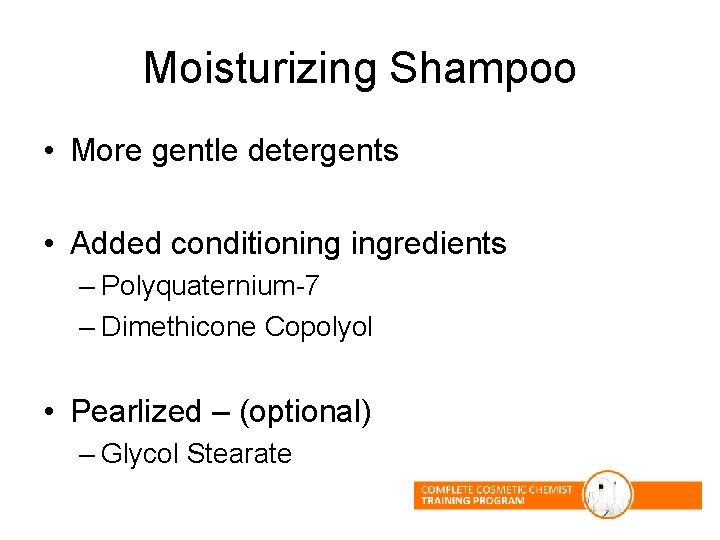
Moisturizing Shampoo • More gentle detergents • Added conditioning ingredients – Polyquaternium-7 – Dimethicone Copolyol • Pearlized – (optional) – Glycol Stearate
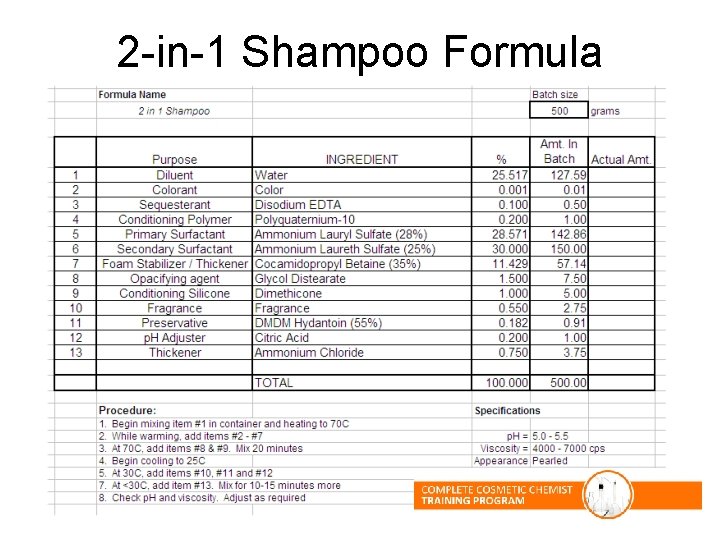
2 -in-1 Shampoo Formula
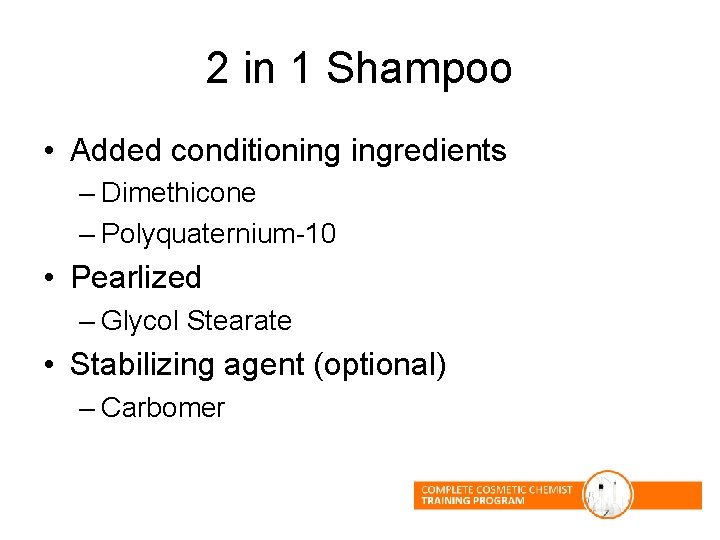
2 in 1 Shampoo • Added conditioning ingredients – Dimethicone – Polyquaternium-10 • Pearlized – Glycol Stearate • Stabilizing agent (optional) – Carbomer
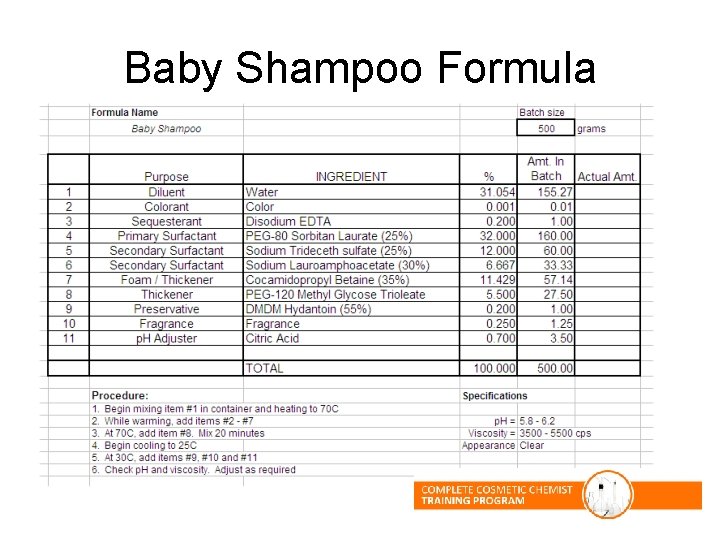
Baby Shampoo Formula
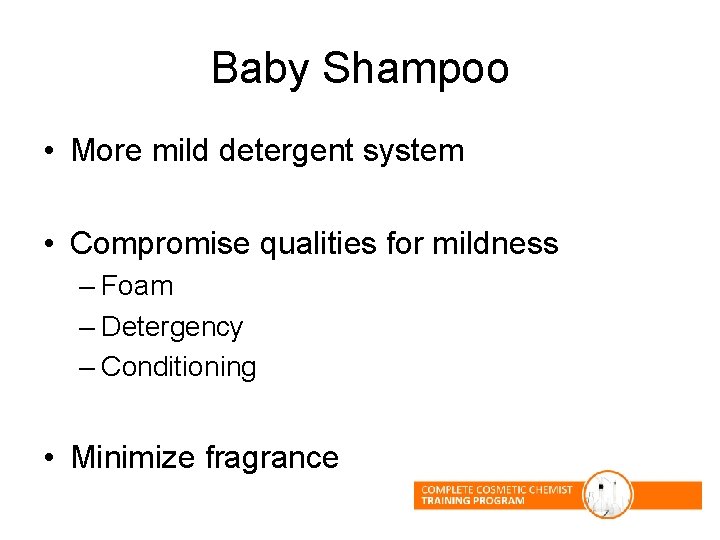
Baby Shampoo • More mild detergent system • Compromise qualities for mildness – Foam – Detergency – Conditioning • Minimize fragrance
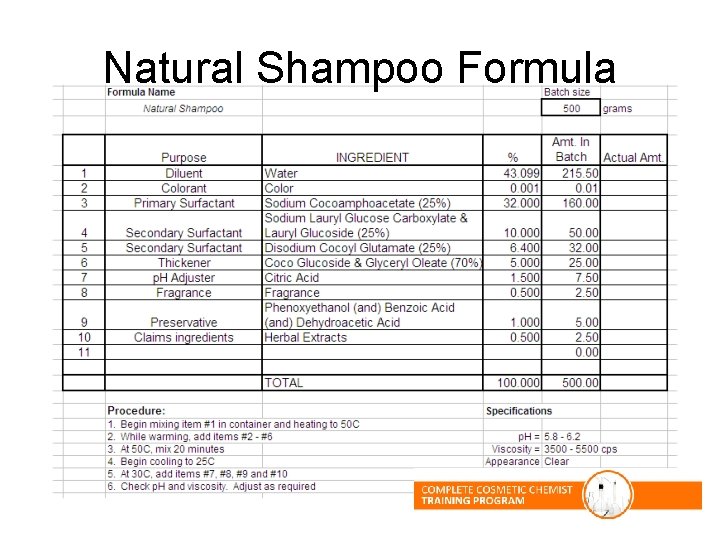
Natural Shampoo Formula
Natural Shampoo • Sulfate free detergent • “Gentle” preservatives – No Parabens – No DMDM Hydantoin • Natural extract ingredients • Synthetic fragrance free?
Making the batch
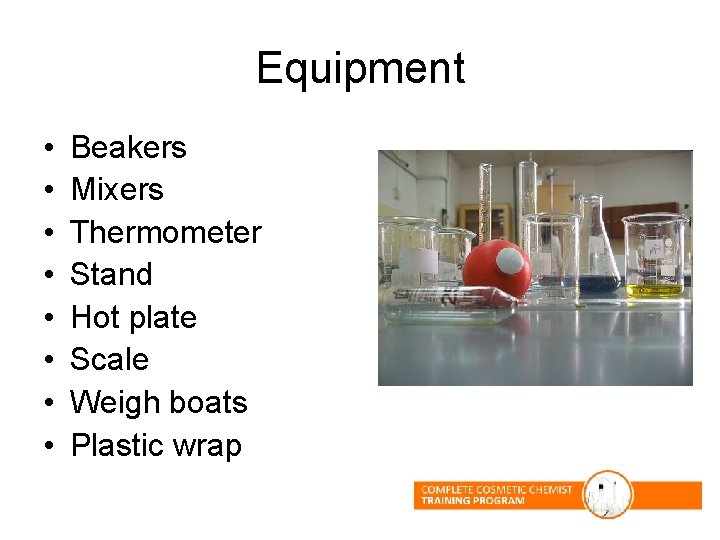
Equipment • • Beakers Mixers Thermometer Stand Hot plate Scale Weigh boats Plastic wrap
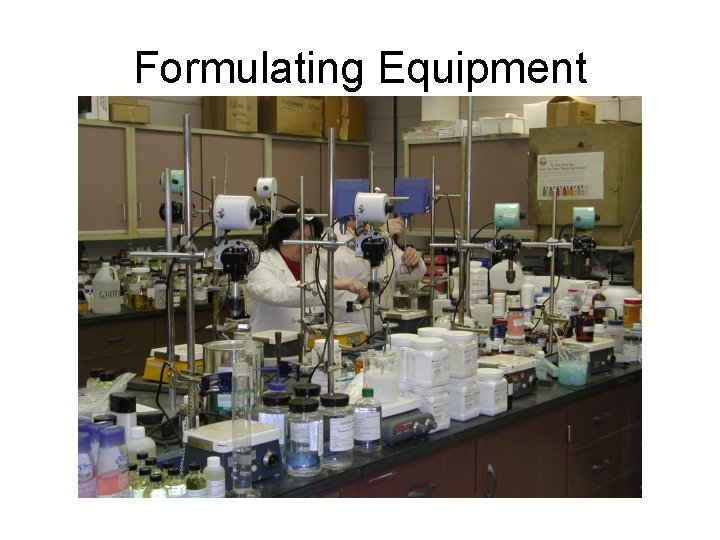
Formulating Equipment
Shampoo Batching tips • Cover batch with plastic wrap • Record time, temp, changes • Pre-weigh ingredients • Weigh container prior to making batch – Compensate for water loss • Take specification readings at the end – Adjust as needed –
Shampoo testing • QA/QC Tests • Performance Tests
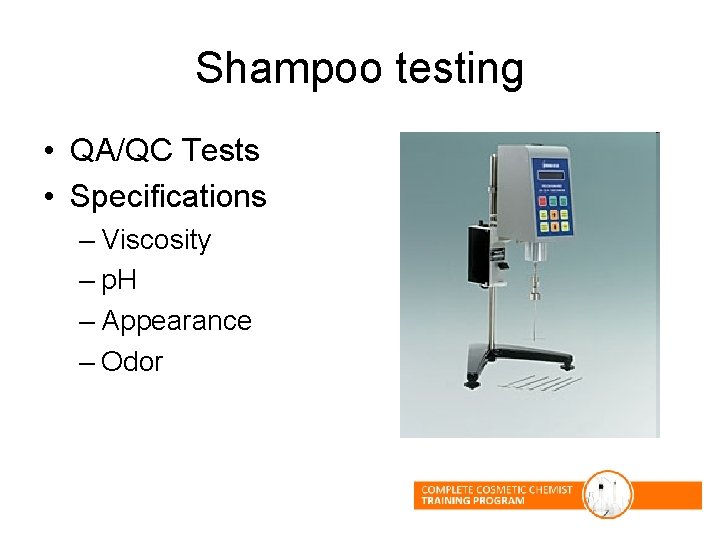
Shampoo testing • QA/QC Tests • Specifications – Viscosity – p. H – Appearance – Odor
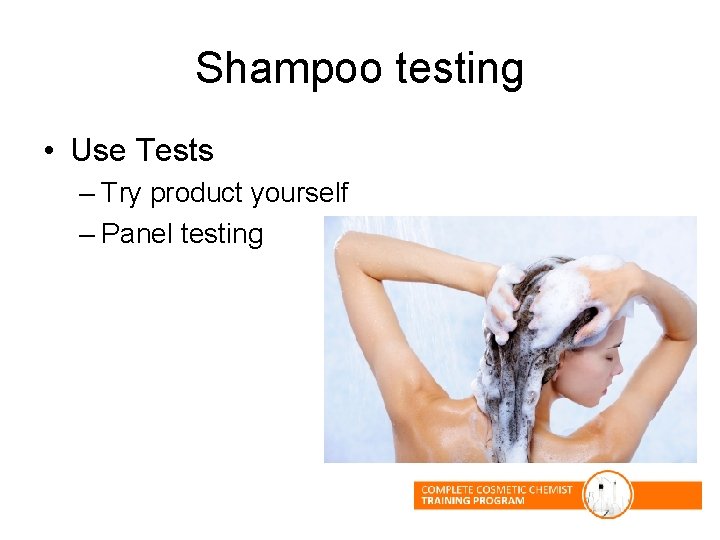
Shampoo testing • Use Tests – Try product yourself – Panel testing
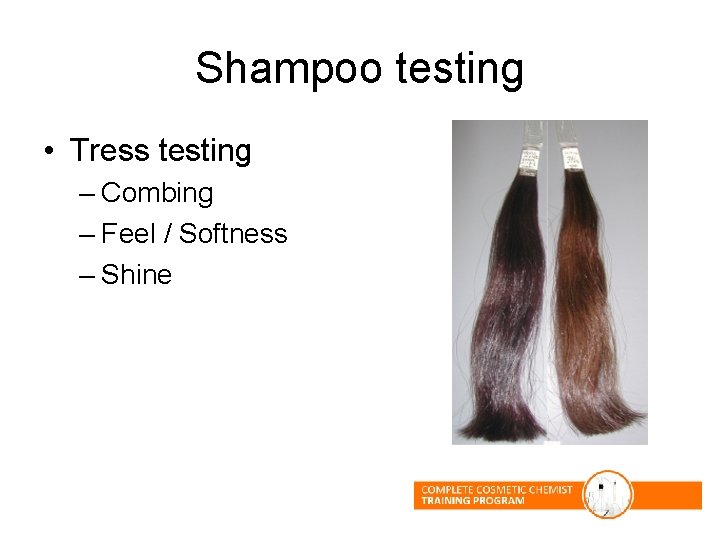
Shampoo testing • Tress testing – Combing – Feel / Softness – Shine
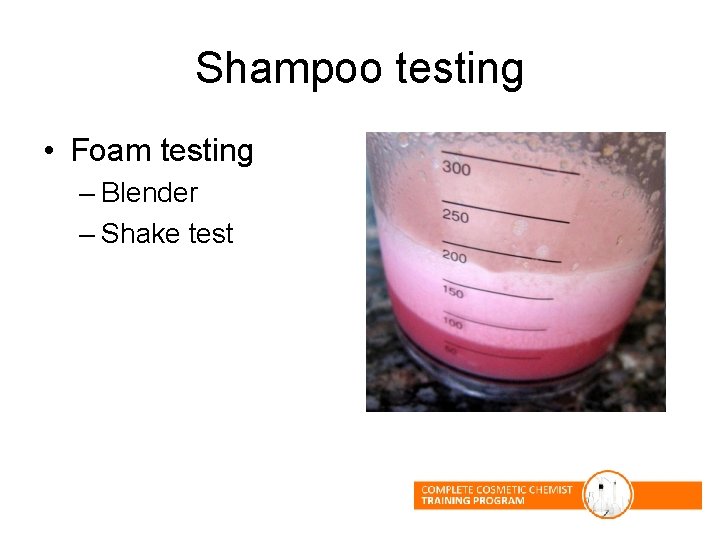
Shampoo testing • Foam testing – Blender – Shake test
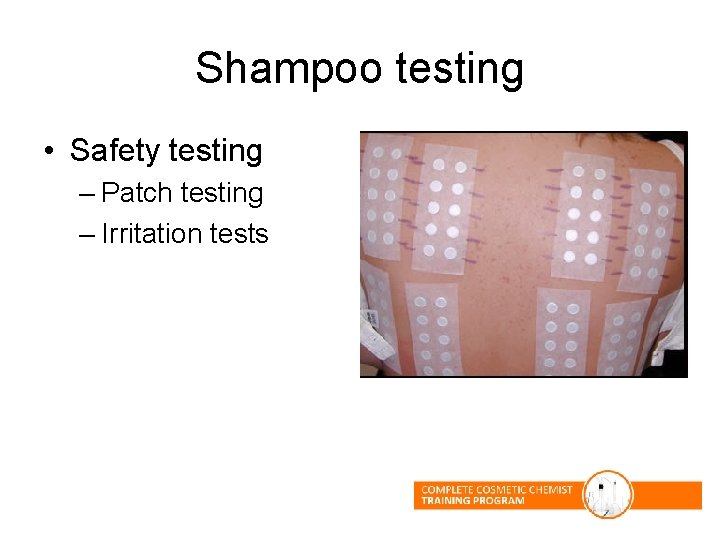
Shampoo testing • Safety testing – Patch testing – Irritation tests
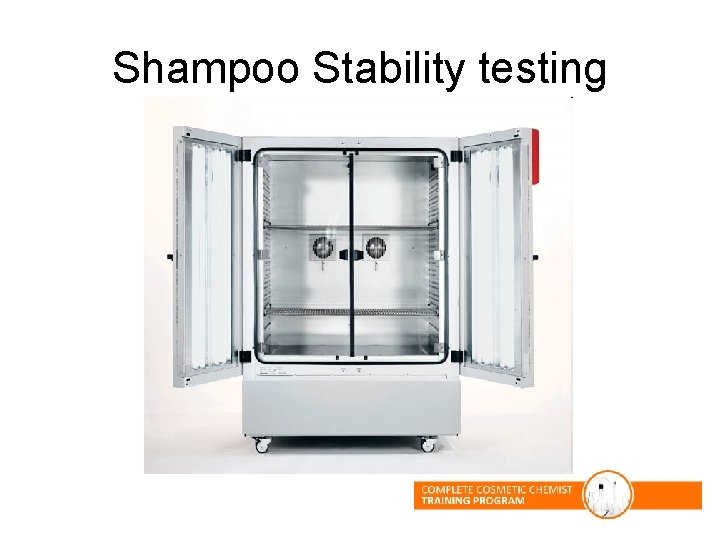
Shampoo Stability testing
Shampoo Summary • Shampoo Market Overview – Big compared to other cosmetics • Consumer Problems – Cleansing, conditioning primary problems • Surfactant Science – Makes oil & water more compatible – Responsible for cleaning hair • Formulating shampoos – 6 types of shampoos • Testing – Use tests, lab tests, and QC tests
Shampoos