
Shallow vs Deep Copy MARCUS BIEL Software Craftsman
Shallow vs Deep Copy MARCUS BIEL, Software Craftsman www. marcus-biel. com
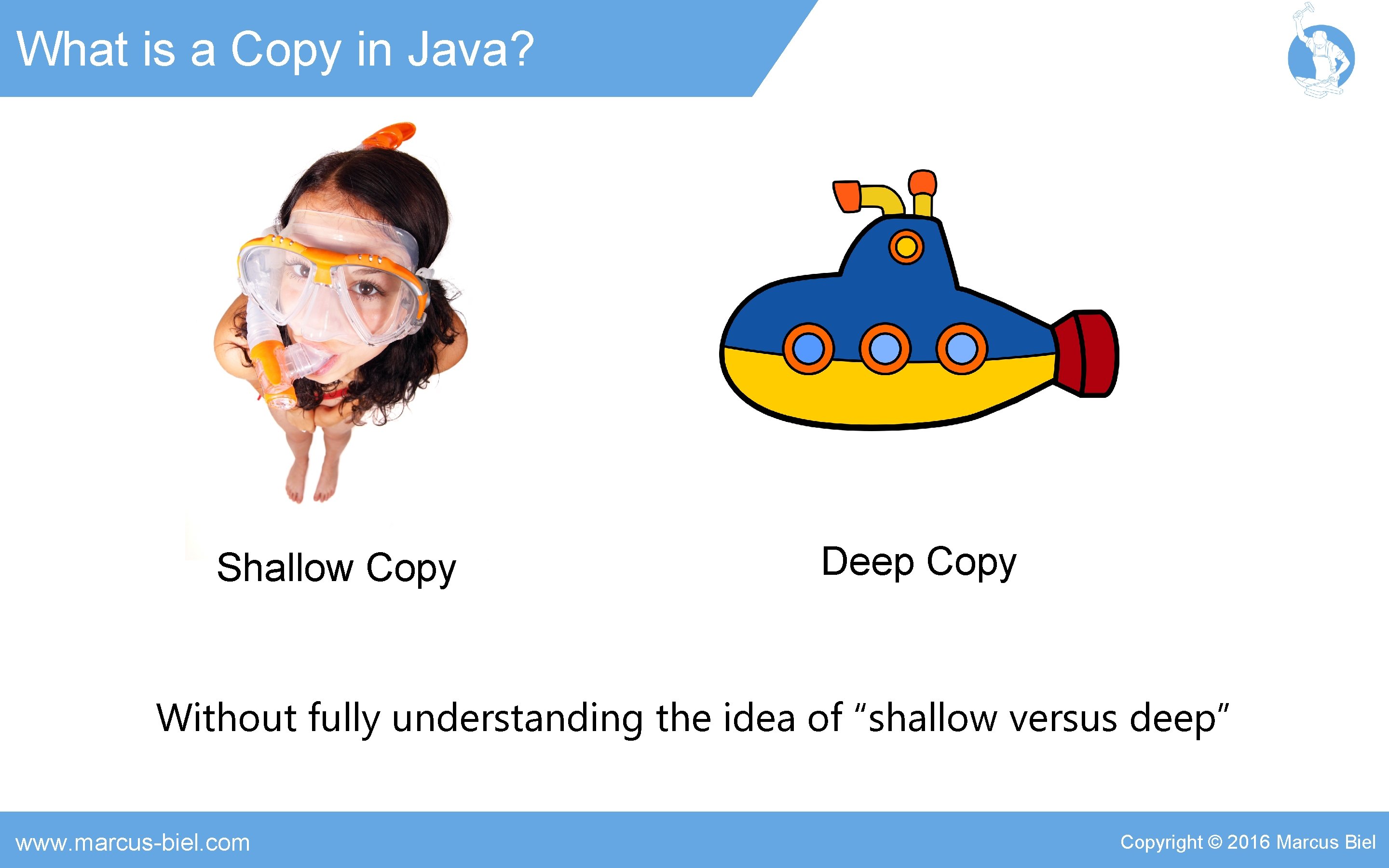
What is a Copy in Java? Shallow Copy Deep Copy Without fully understanding the idea of “shallow versus deep” www. marcus-biel. com Copyright © 2016 Marcus Biel

What is a Copy in Java? C Y P O We can already see that the expression is related to a copy. www. marcus-biel. com Copyright © 2016 Marcus Biel
What is a Copy in Java? C Y P O So let’s start with the simplest question – What actually is a “copy” in Java? www. marcus-biel. com Copyright © 2016 Marcus Biel
What is a Copy in Java? C Y P O To answer that question, we have to differentiate between a reference copy and an object copy. www. marcus-biel. com Copyright © 2016 Marcus Biel
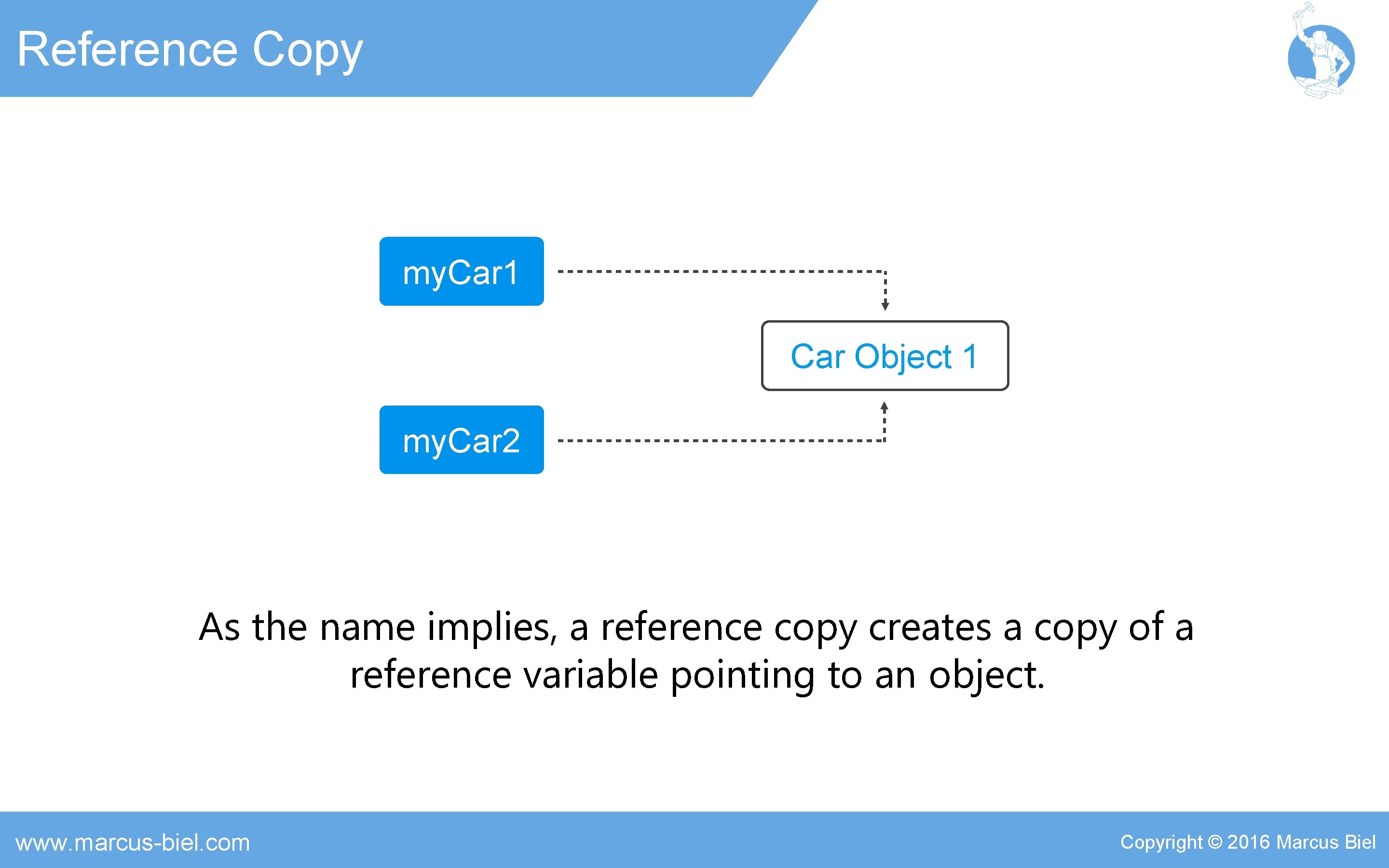
Reference Copy my. Car 1 Car Object 1 my. Car 2 As the name implies, a reference copy creates a copy of a reference variable pointing to an object. www. marcus-biel. com Copyright © 2016 Marcus Biel
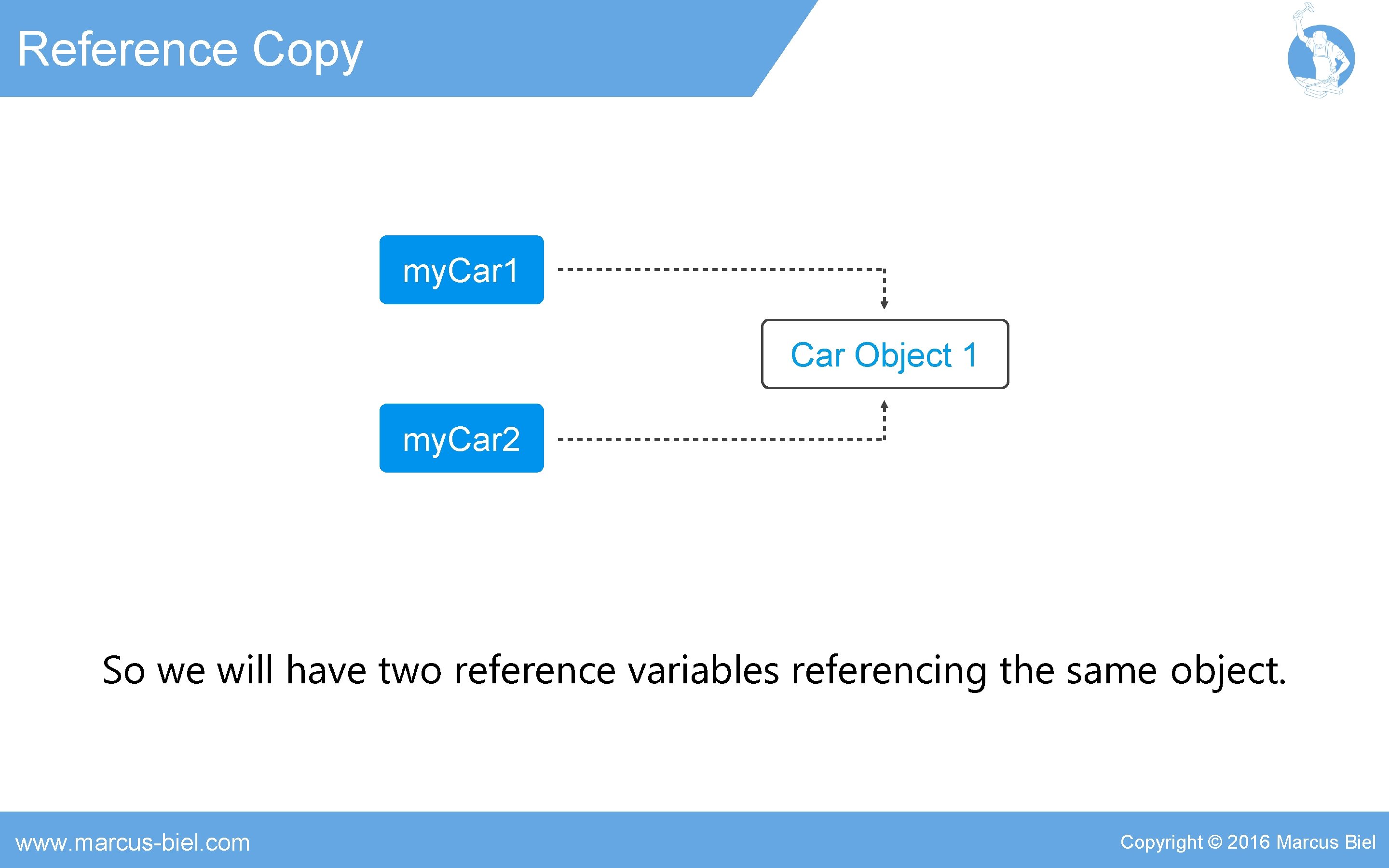
Reference Copy my. Car 1 Car Object 1 my. Car 2 So we will have two reference variables referencing the same object. www. marcus-biel. com Copyright © 2016 Marcus Biel
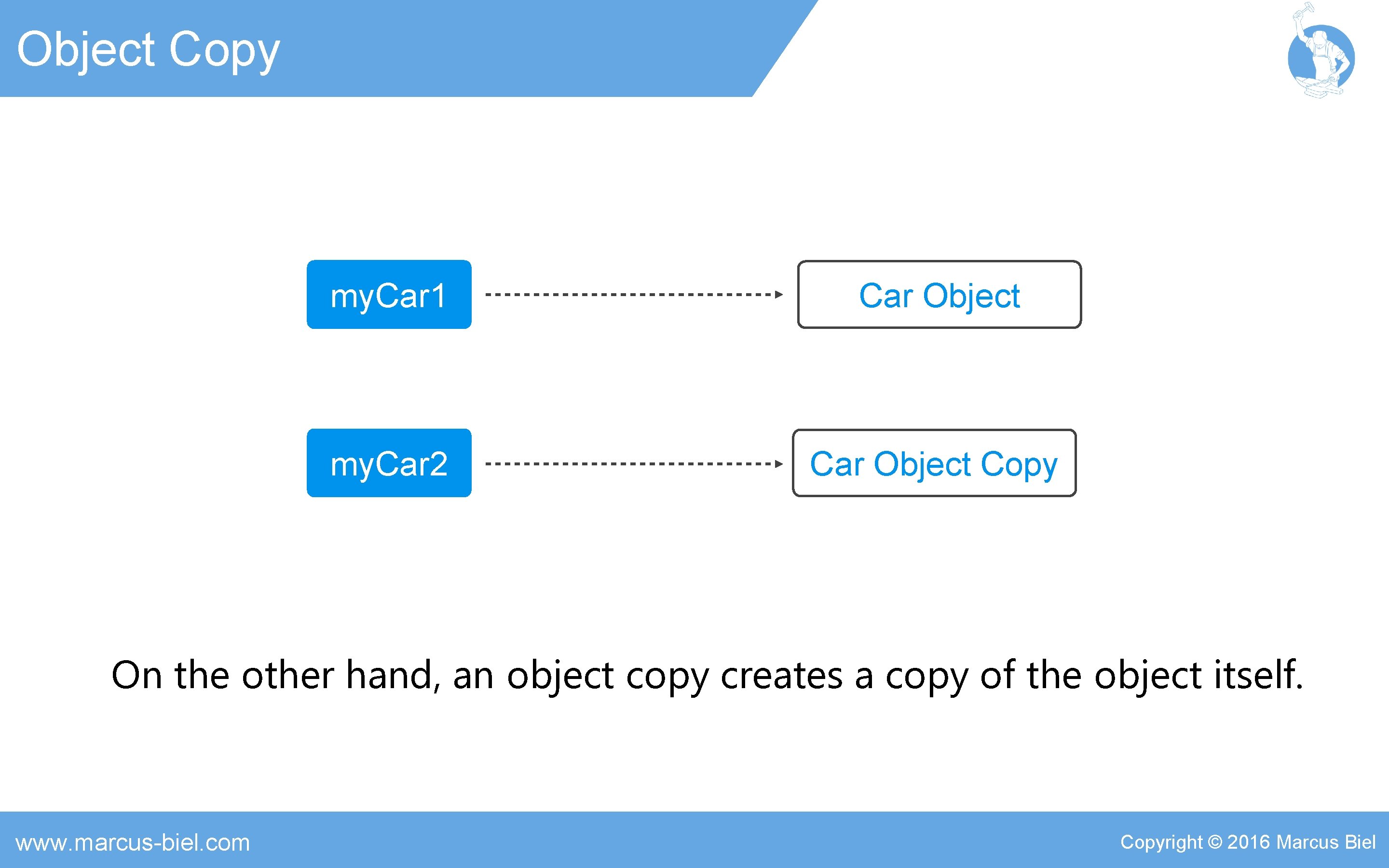
Object Copy my. Car 1 Car Object my. Car 2 Car Object Copy On the other hand, an object copy creates a copy of the object itself. www. marcus-biel. com Copyright © 2016 Marcus Biel
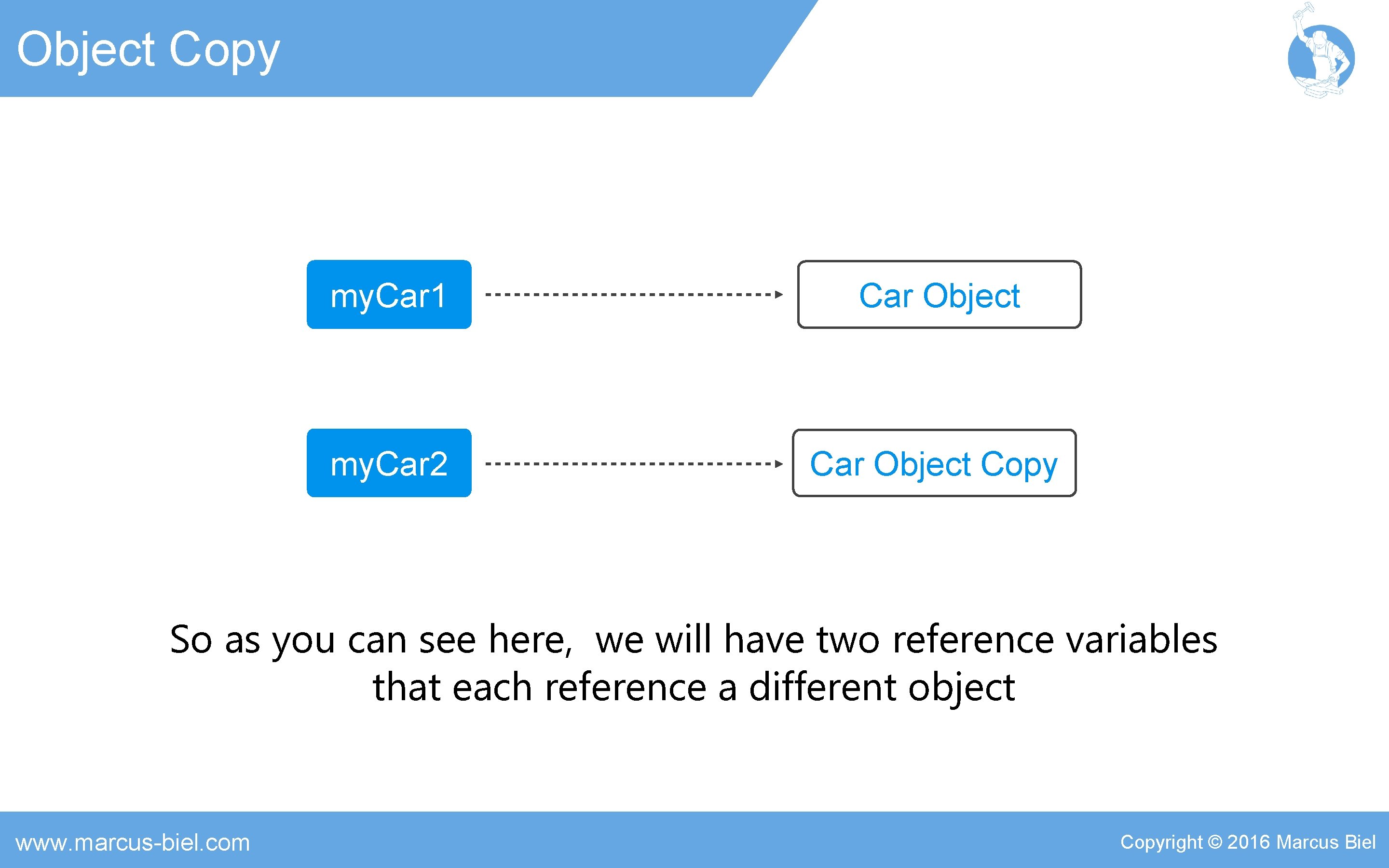
Object Copy my. Car 1 Car Object my. Car 2 Car Object Copy So as you can see here, we will have two reference variables that each reference a different object www. marcus-biel. com Copyright © 2016 Marcus Biel
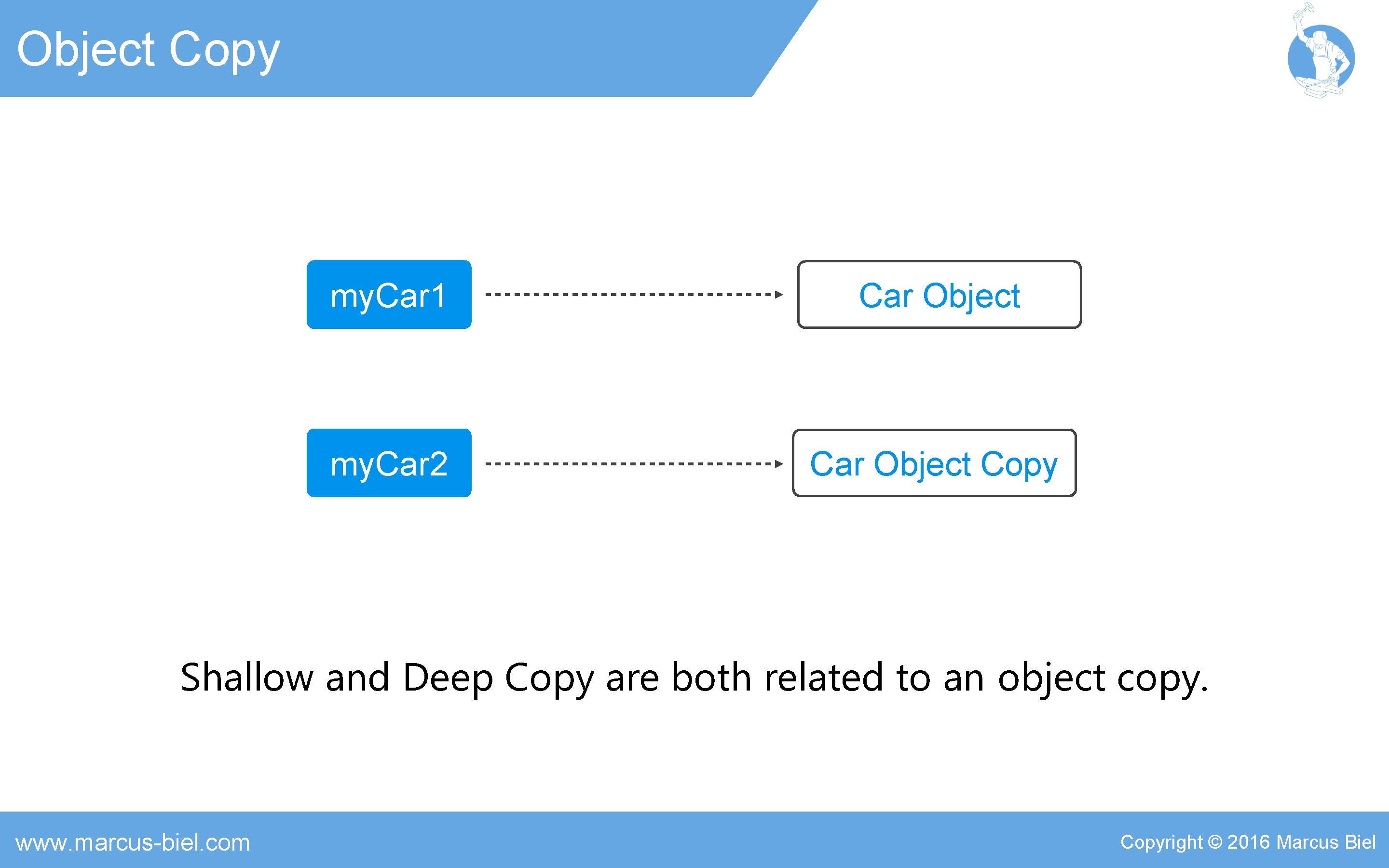
Object Copy my. Car 1 Car Object my. Car 2 Car Object Copy Shallow and Deep Copy are both related to an object copy. www. marcus-biel. com Copyright © 2016 Marcus Biel
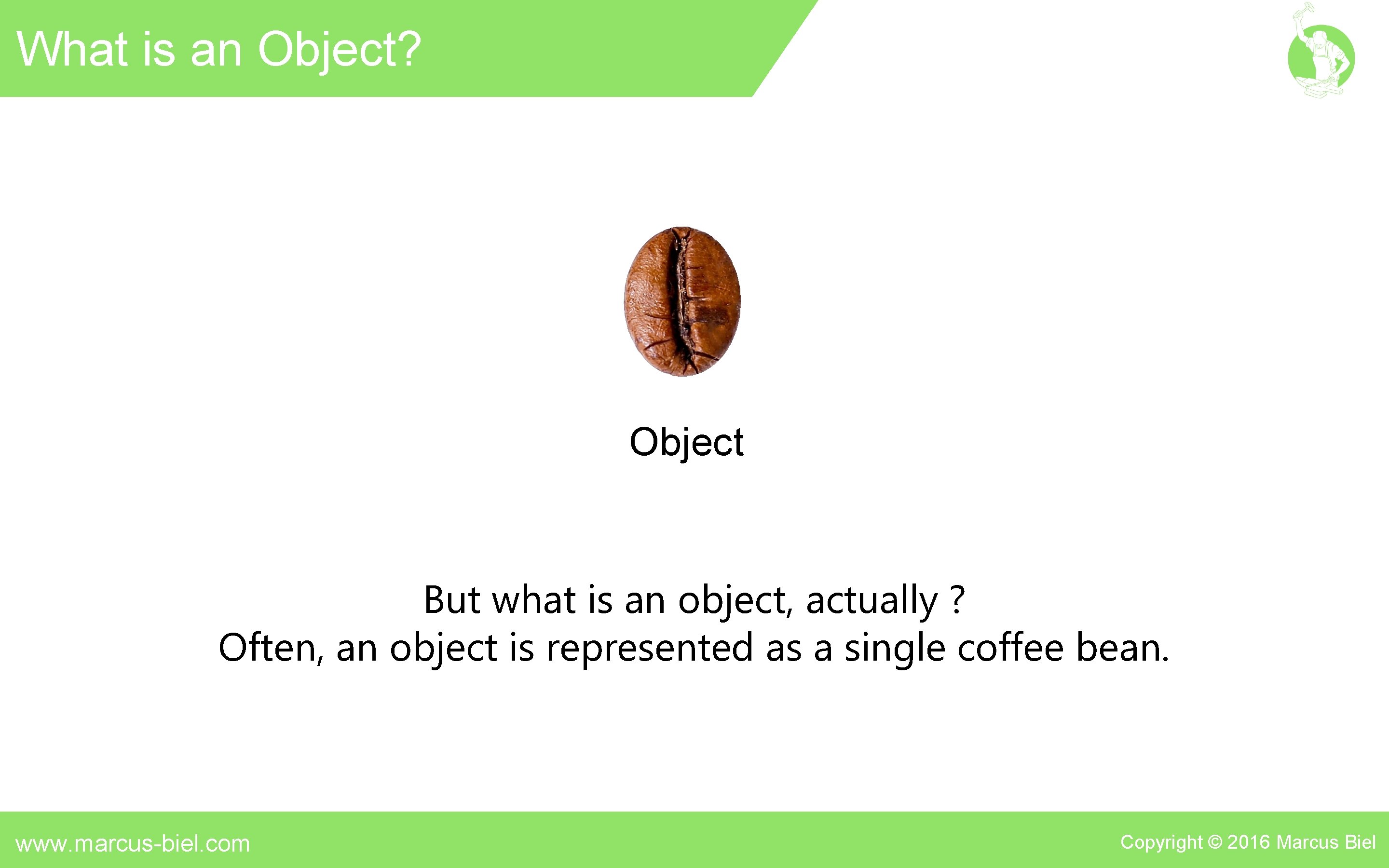
What is an Object? Object But what is an object, actually ? Often, an object is represented as a single coffee bean. www. marcus-biel. com Copyright © 2016 Marcus Biel
What is an Object? Object However, that’s just a very simplified view. Let’s look at this in more detail. www. marcus-biel. com Copyright © 2016 Marcus Biel

What is an Object? Person Say we have a Person object. www. marcus-biel. com Copyright © 2016 Marcus Biel
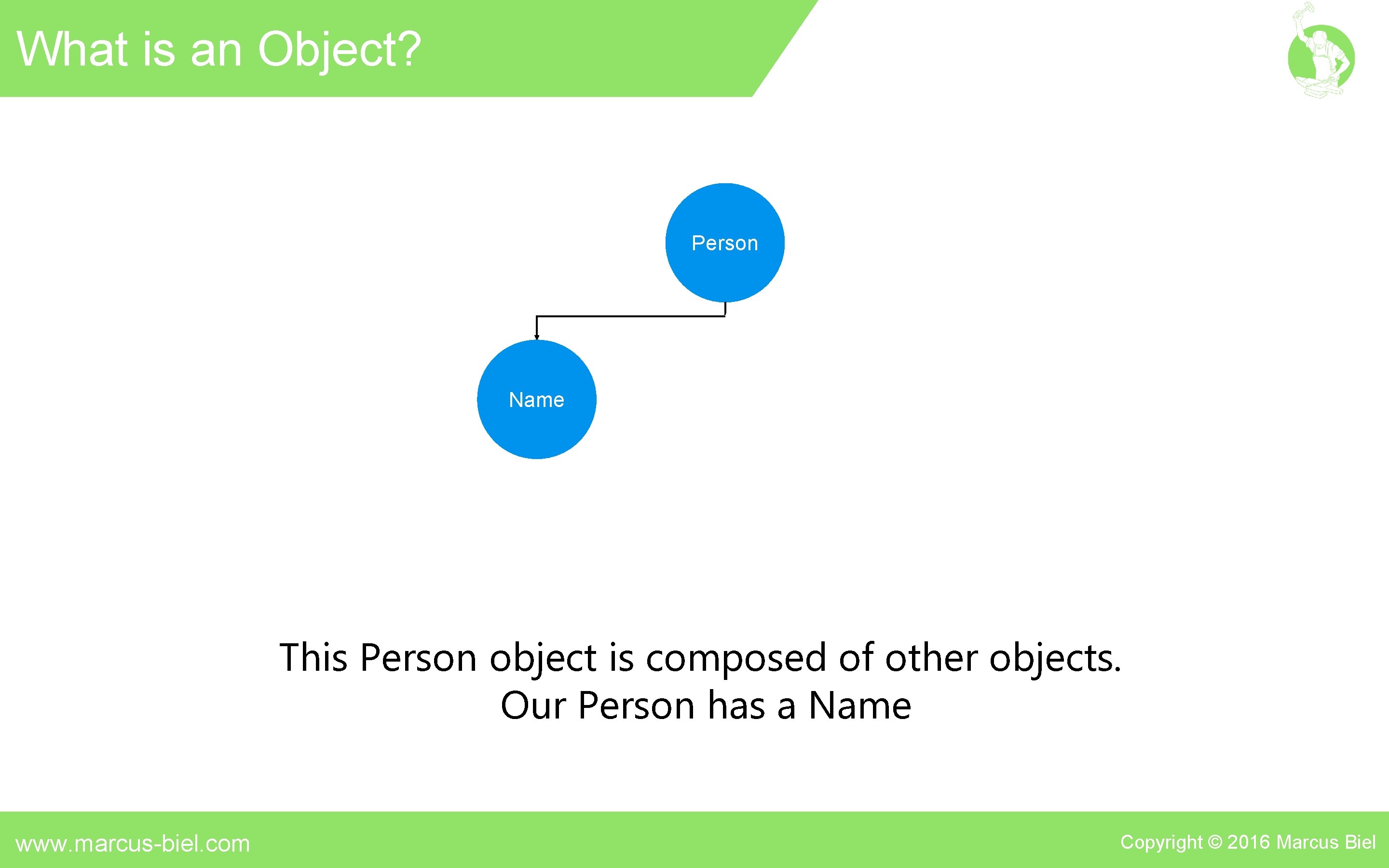
What is an Object? Person Name This Person object is composed of other objects. Our Person has a Name www. marcus-biel. com Copyright © 2016 Marcus Biel
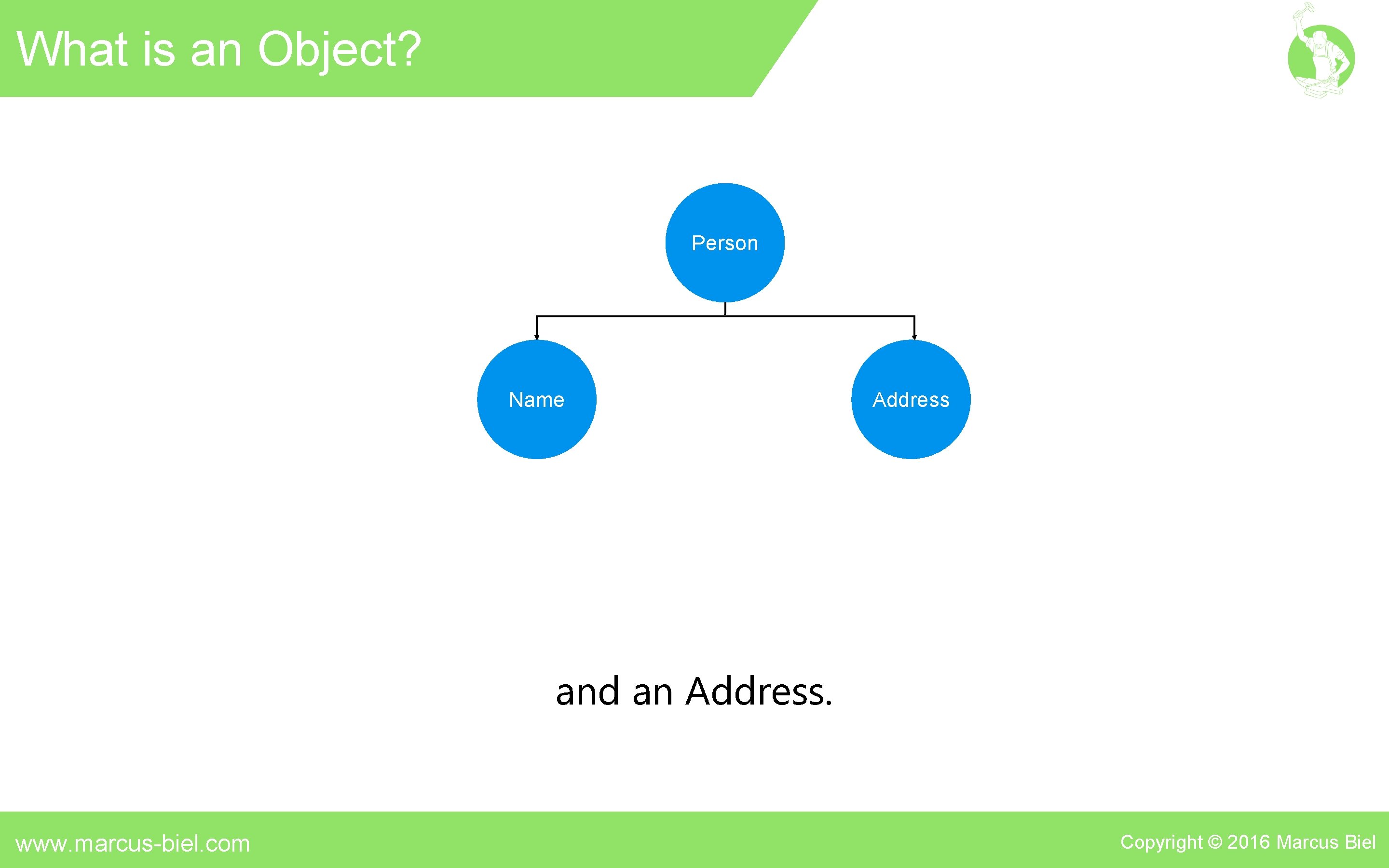
What is an Object? Person Name Address and an Address. www. marcus-biel. com Copyright © 2016 Marcus Biel
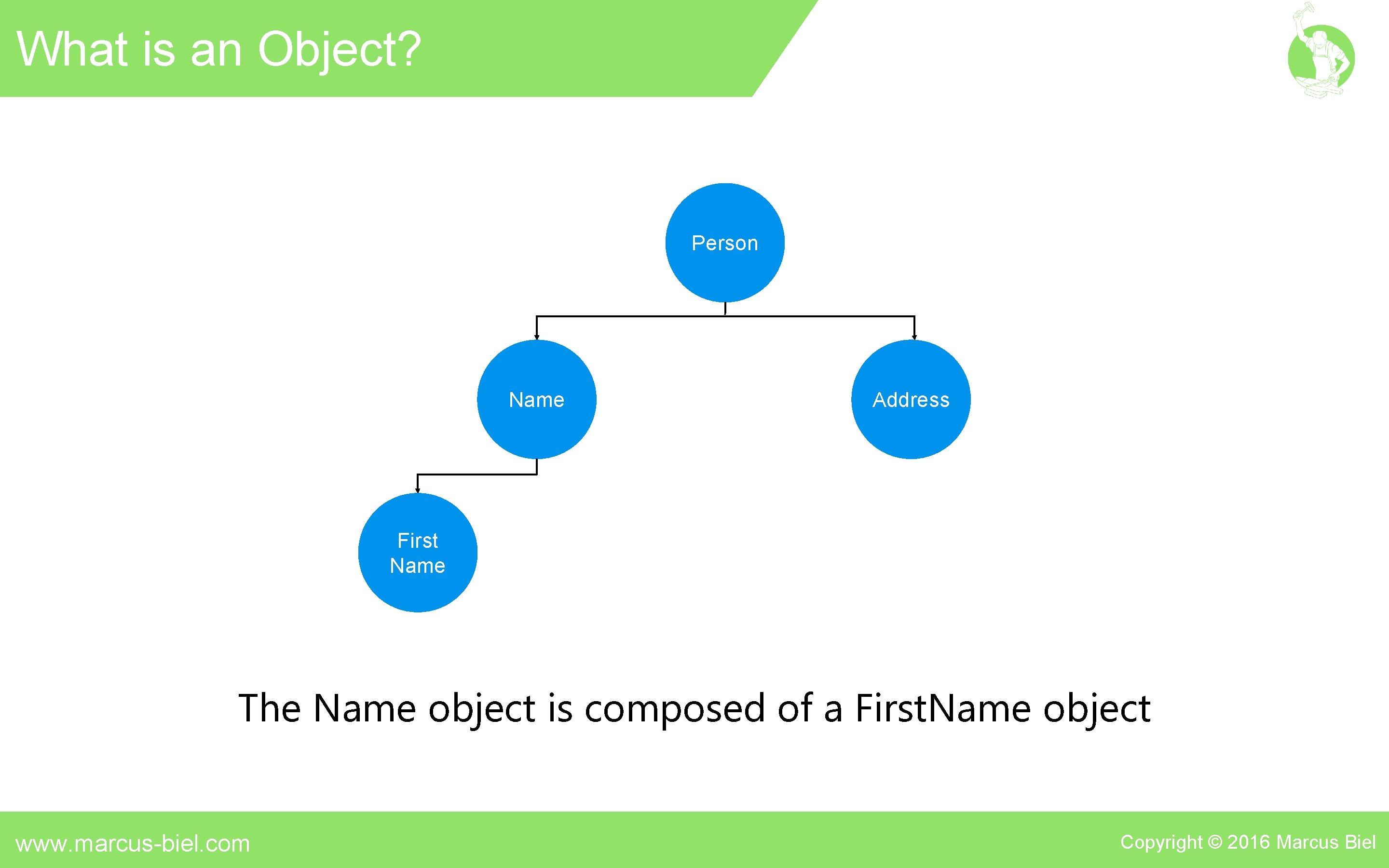
What is an Object? Person Name Address First Name The Name object is composed of a First. Name object www. marcus-biel. com Copyright © 2016 Marcus Biel
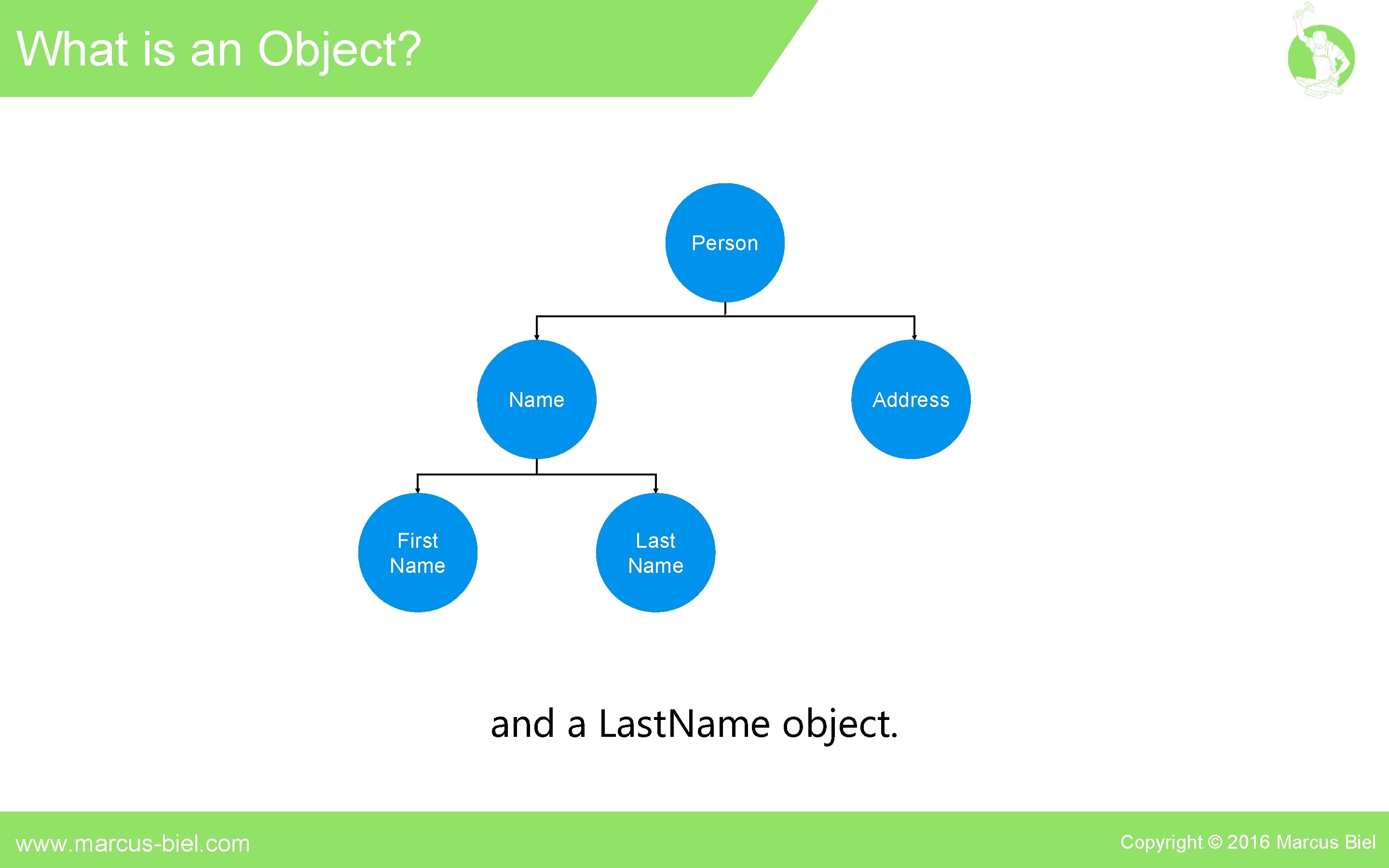
What is an Object? Person Name First Name Address Last Name and a Last. Name object. www. marcus-biel. com Copyright © 2016 Marcus Biel
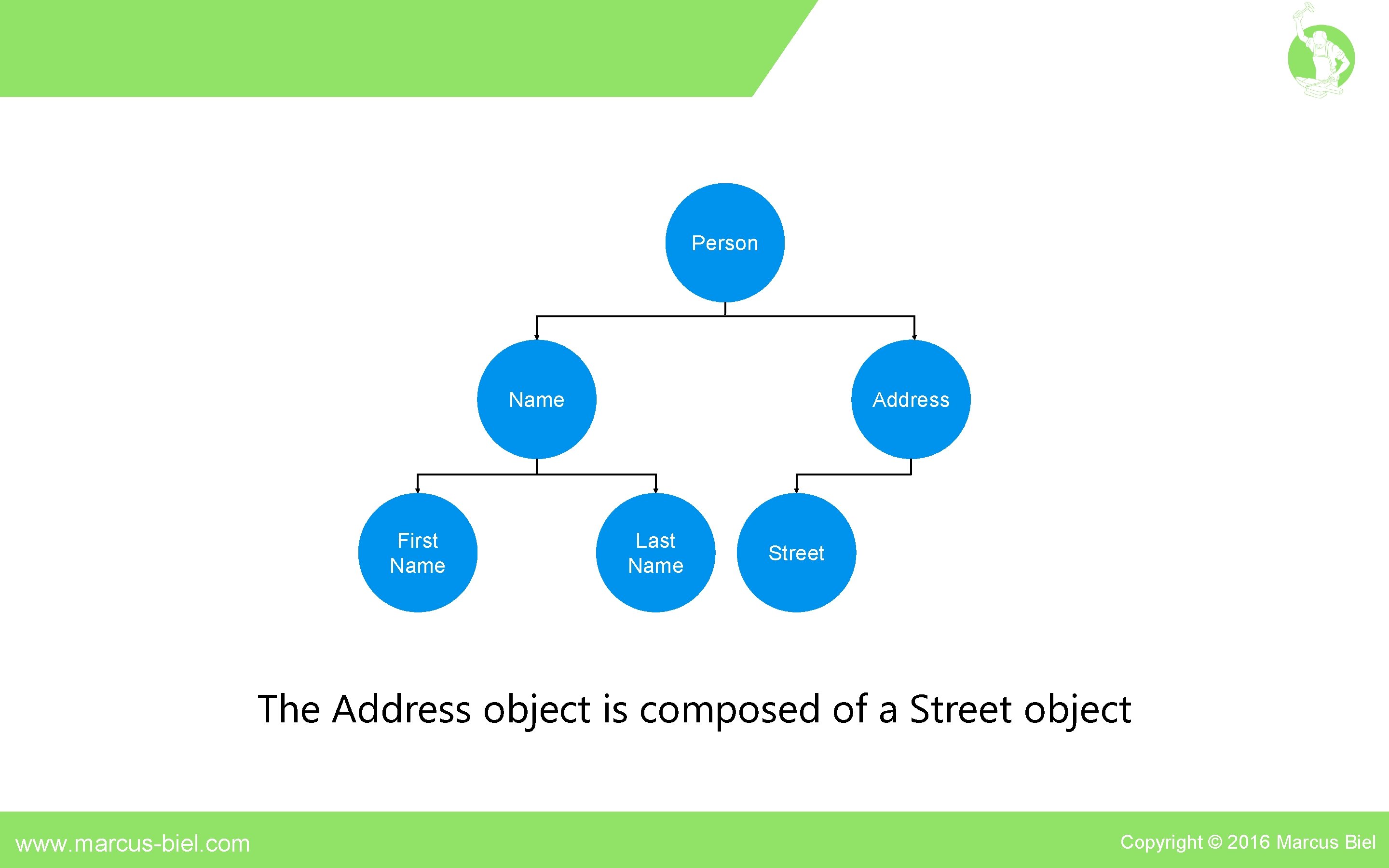
Person Name First Name Address Last Name Street The Address object is composed of a Street object www. marcus-biel. com Copyright © 2016 Marcus Biel
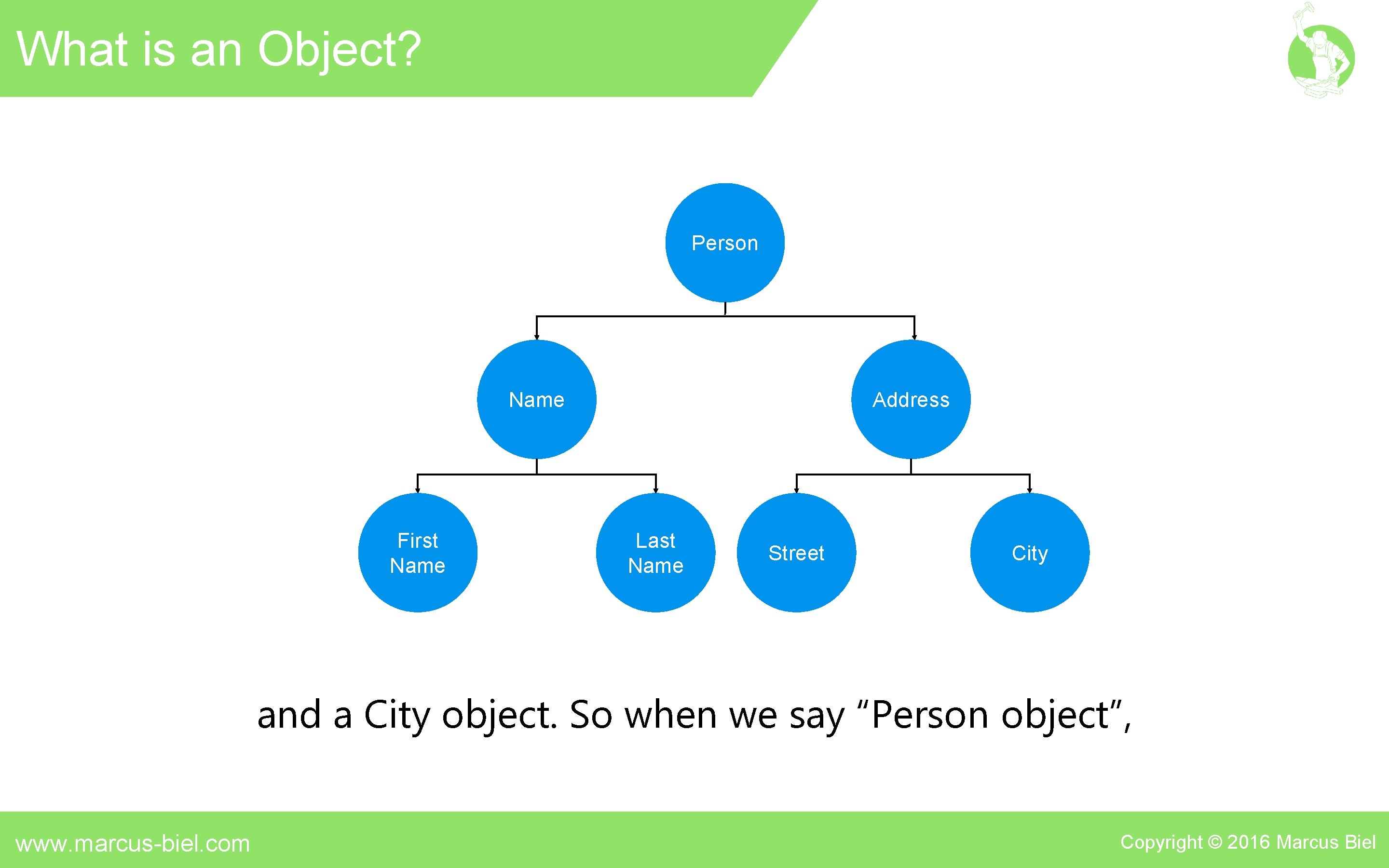
What is an Object? Person Name First Name Address Last Name Street City and a City object. So when we say “Person object”, www. marcus-biel. com Copyright © 2016 Marcus Biel
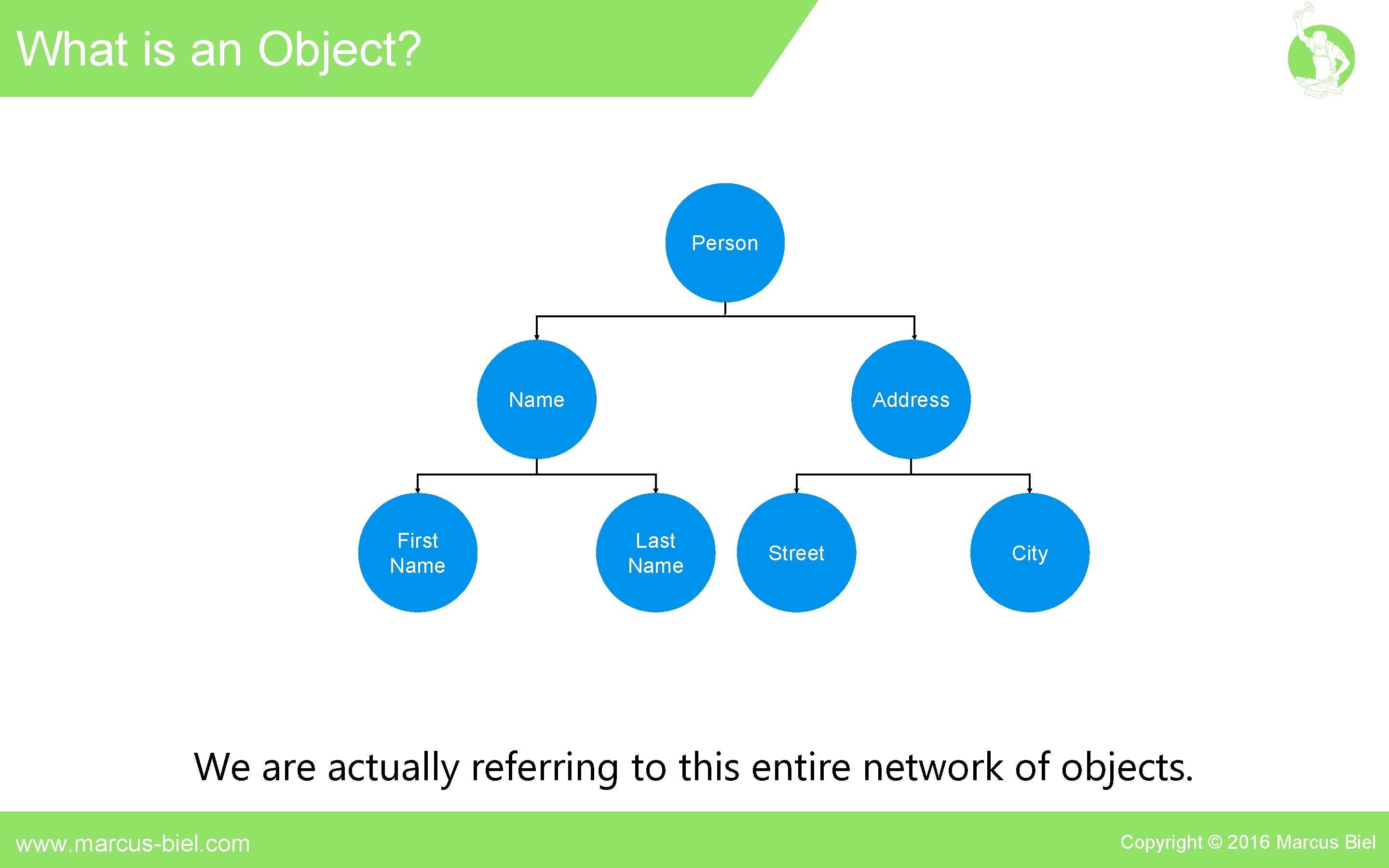
What is an Object? Person Name First Name Address Last Name Street City We are actually referring to this entire network of objects. www. marcus-biel. com Copyright © 2016 Marcus Biel

Reason to Copy an Object So why would we want to make an object copy? www. marcus-biel. com Copyright © 2016 Marcus Biel
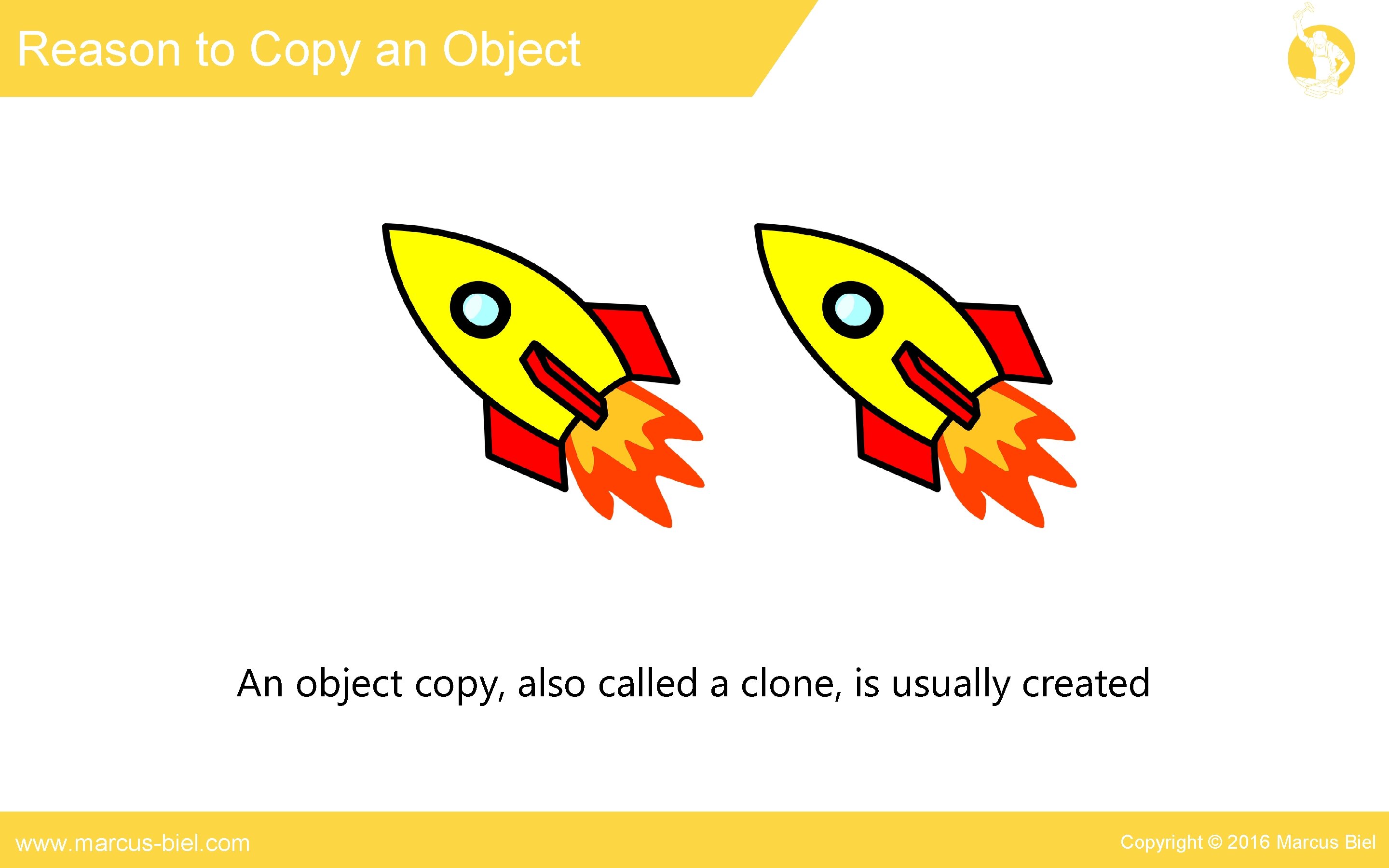
Reason to Copy an Object An object copy, also called a clone, is usually created www. marcus-biel. com Copyright © 2016 Marcus Biel
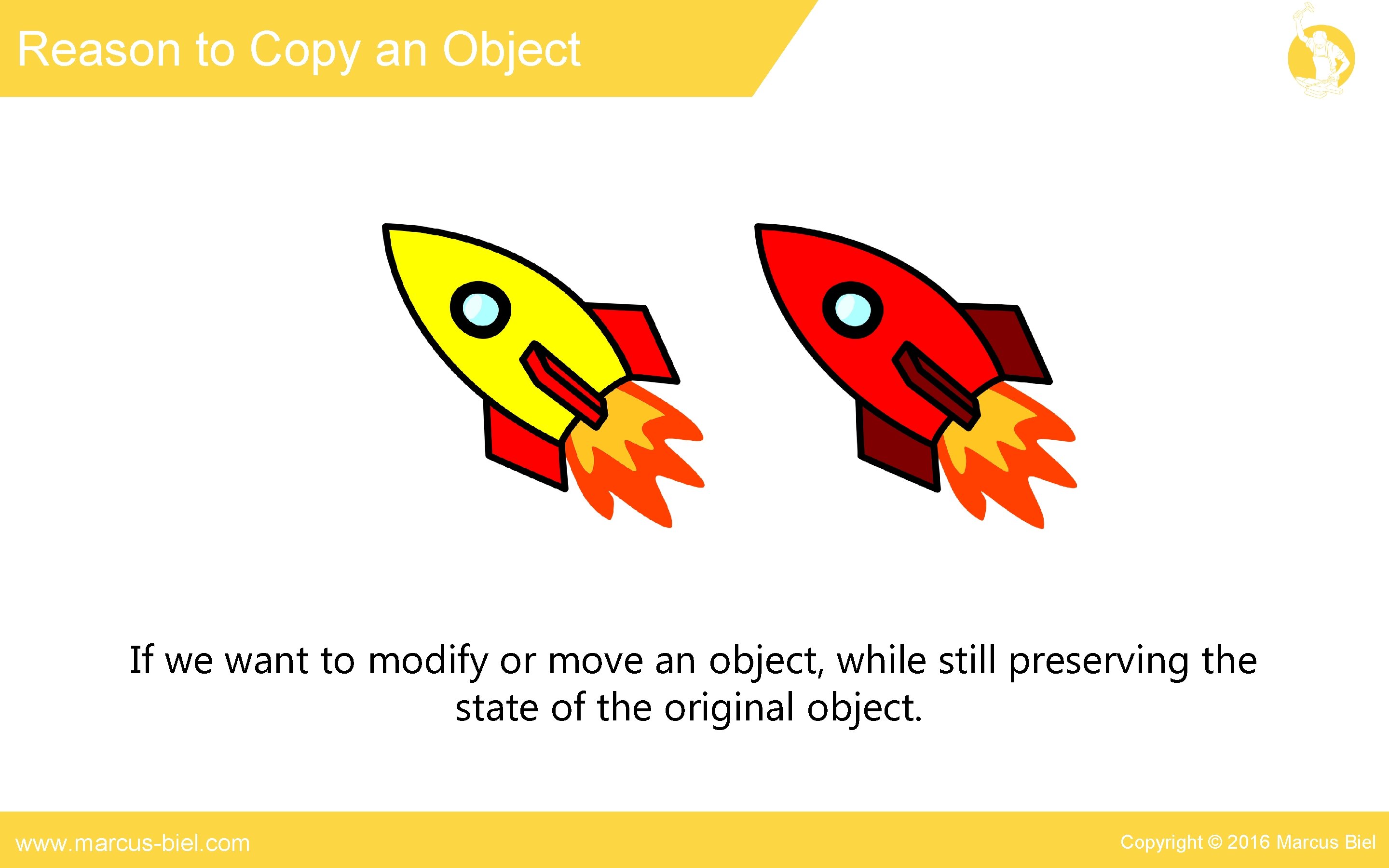
Reason to Copy an Object If we want to modify or move an object, while still preserving the state of the original object. www. marcus-biel. com Copyright © 2016 Marcus Biel
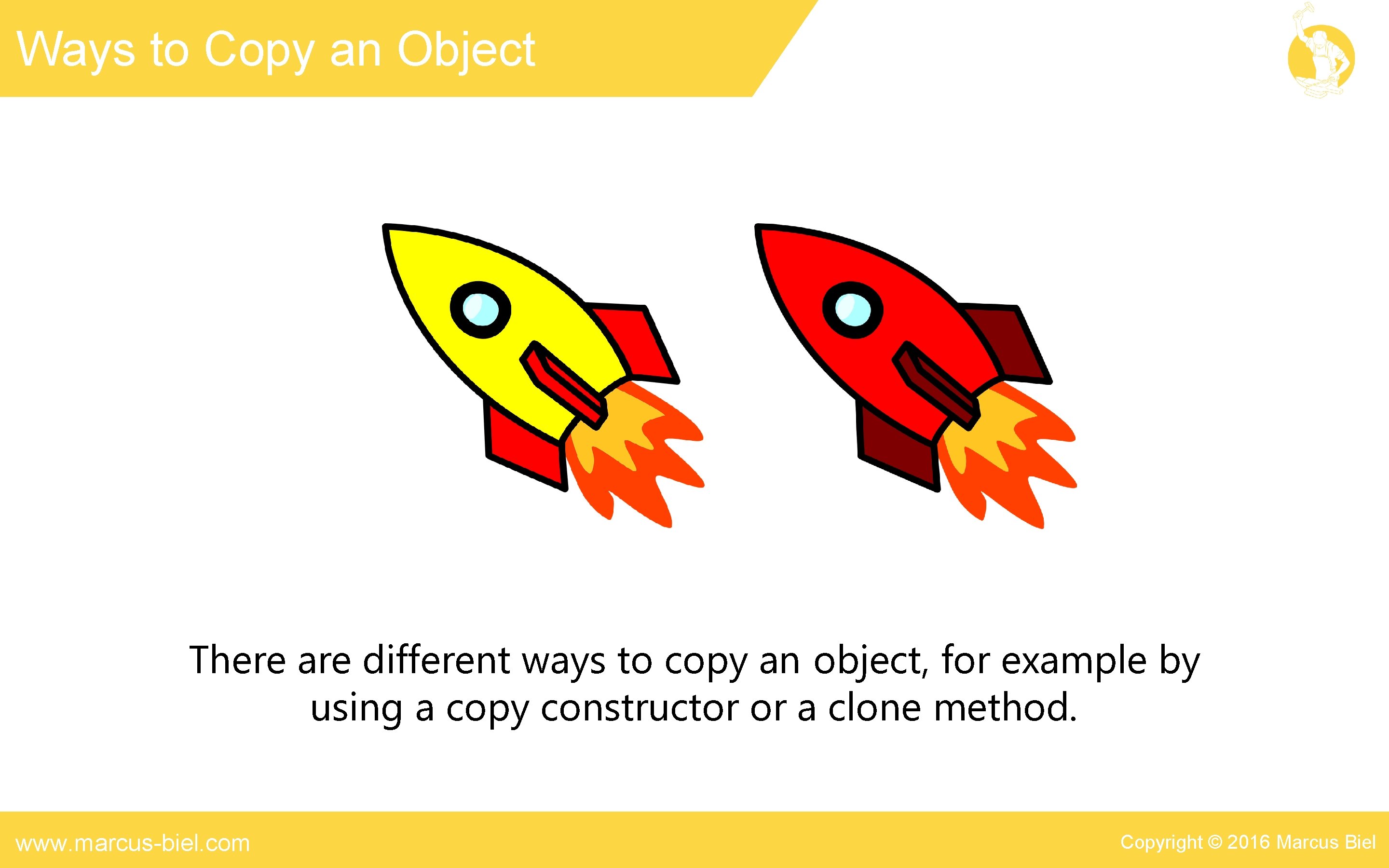
Ways to Copy an Object There are different ways to copy an object, for example by using a copy constructor or a clone method. www. marcus-biel. com Copyright © 2016 Marcus Biel
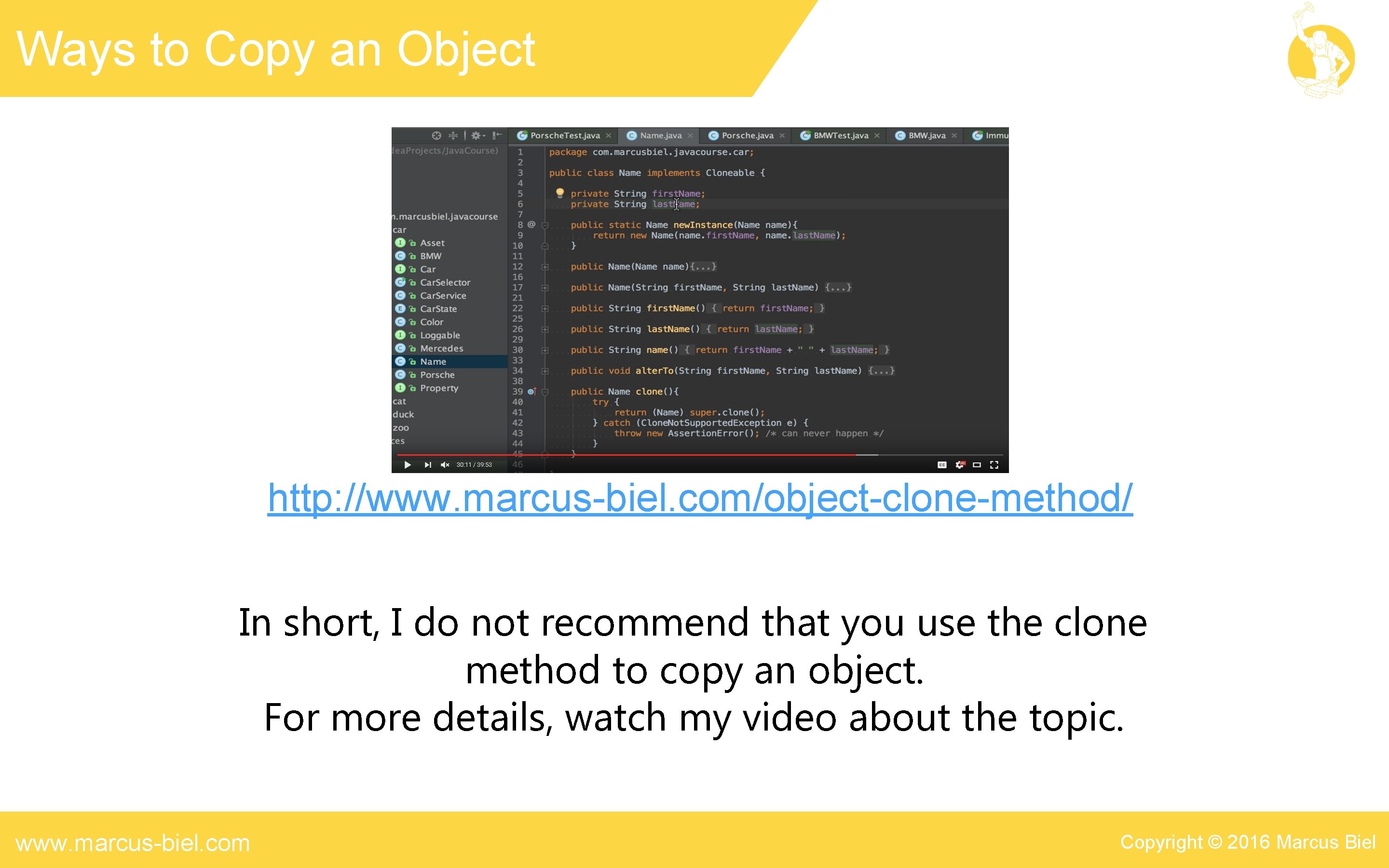
Ways to Copy an Object http: //www. marcus-biel. com/object-clone-method/ In short, I do not recommend that you use the clone method to copy an object. For more details, watch my video about the topic. www. marcus-biel. com Copyright © 2016 Marcus Biel
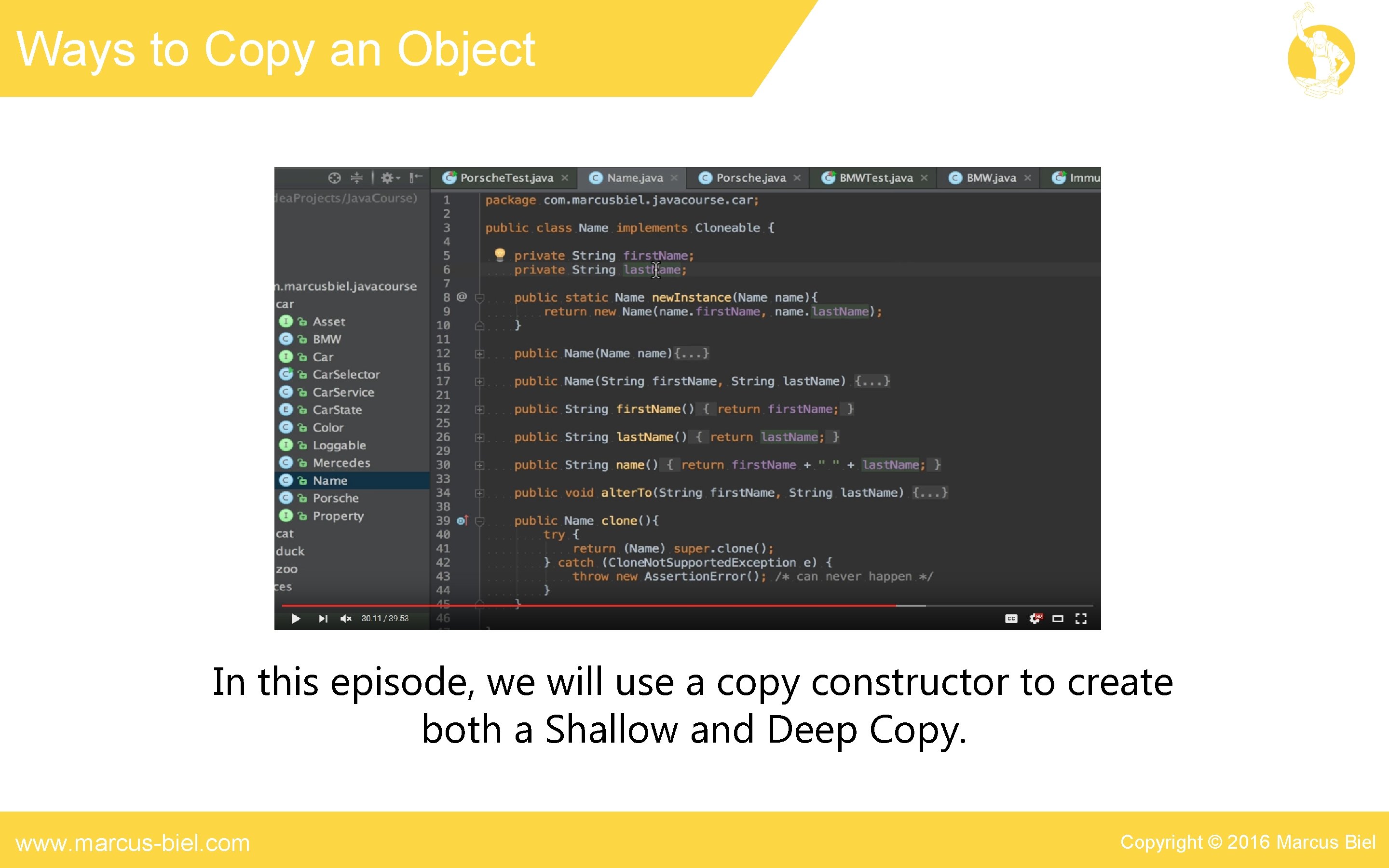
Ways to Copy an Object In this episode, we will use a copy constructor to create both a Shallow and Deep Copy. www. marcus-biel. com Copyright © 2016 Marcus Biel
Shallow Copy vs. Deep Copy Shallow Copy Deep Copy Now that we have a solid foundation, let me explain the actual difference between a “Shallow” and a “Deep Copy” of an object. www. marcus-biel. com Copyright © 2016 Marcus Biel

Shallow Copy Let’s start with a Shallow Copy. www. marcus-biel. com Copyright © 2016 Marcus Biel
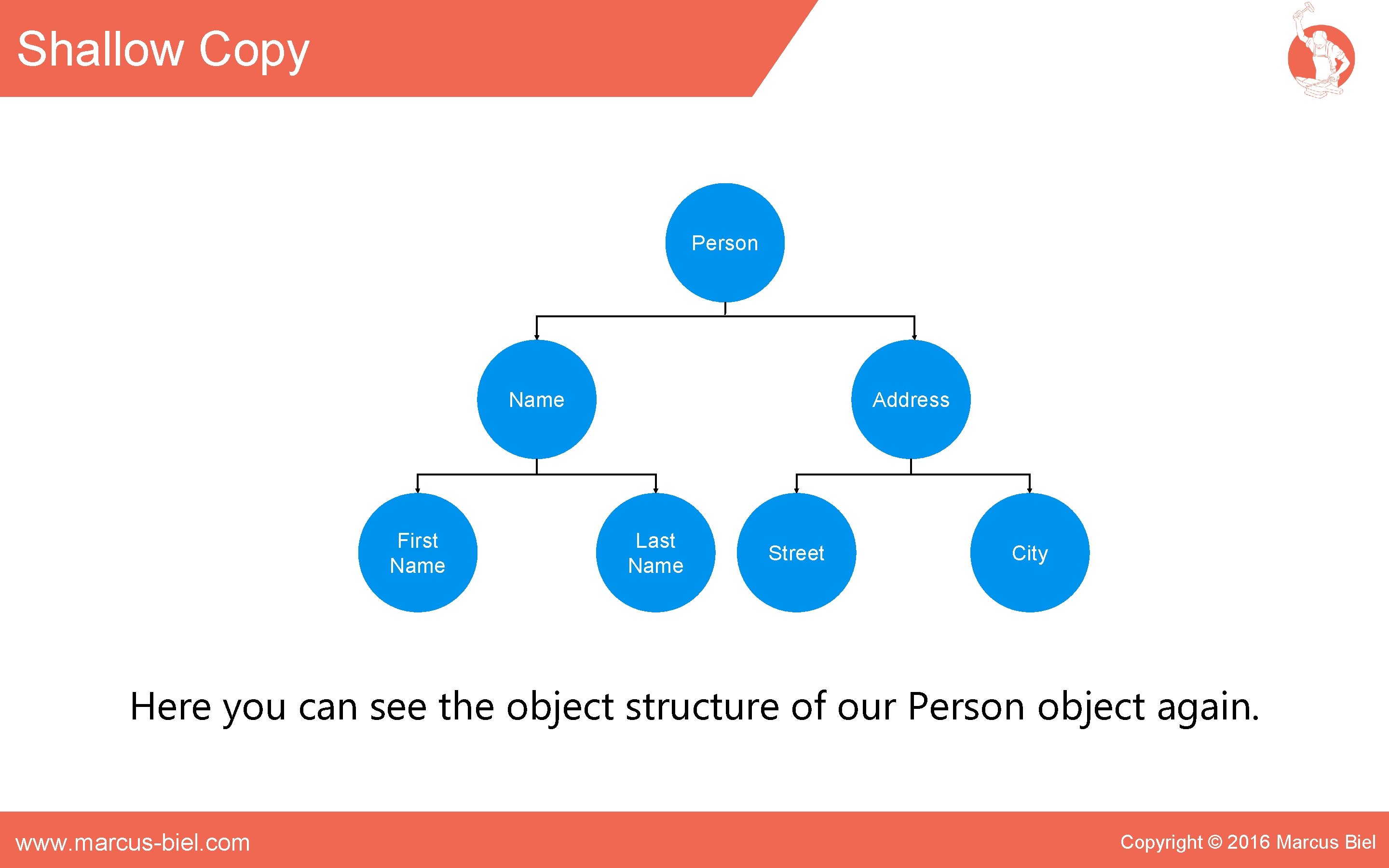
Shallow Copy Person Name First Name Address Last Name Street City Here you can see the object structure of our Person object again. www. marcus-biel. com Copyright © 2016 Marcus Biel
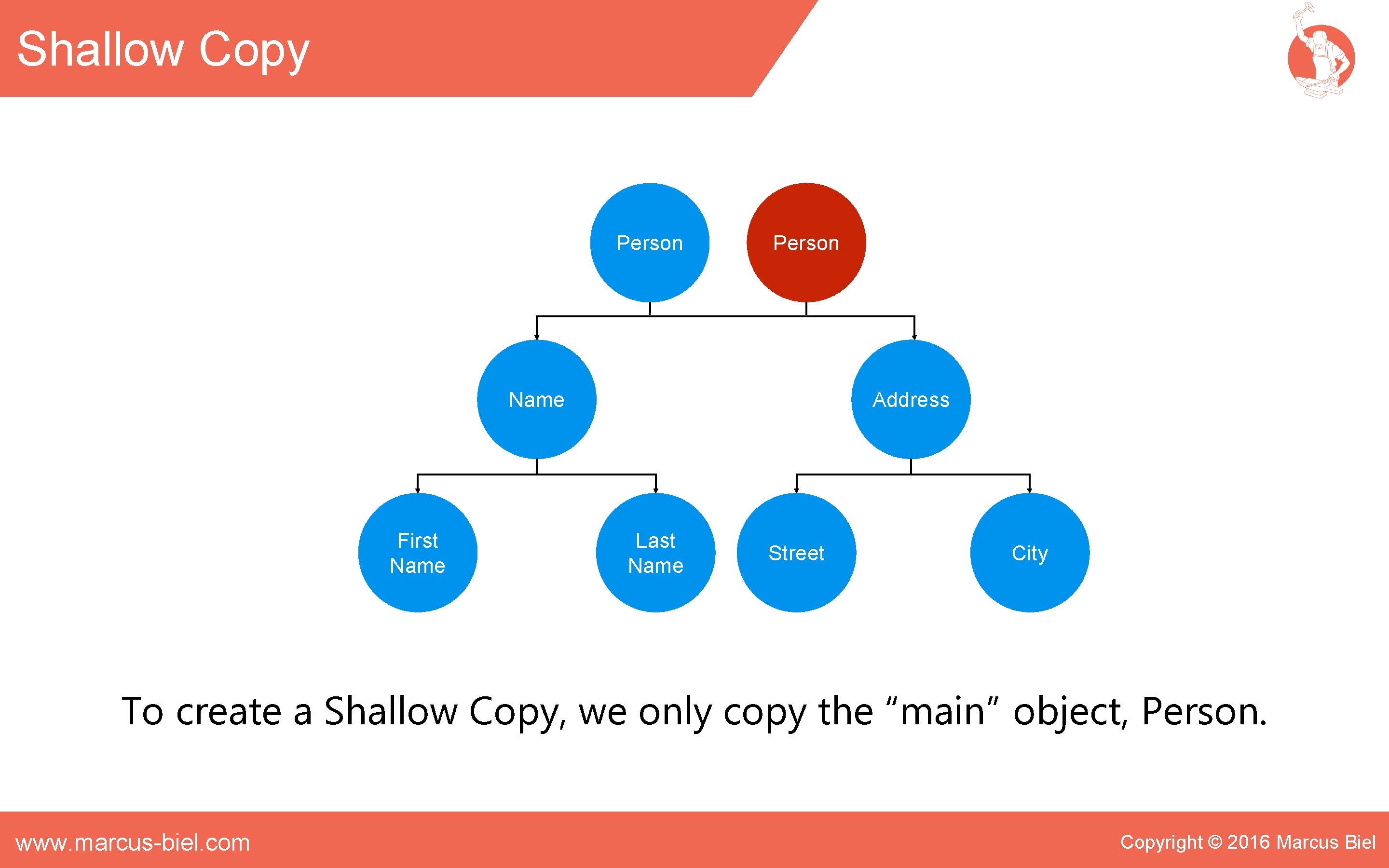
Shallow Copy Person Name First Name Address Last Name Street City To create a Shallow Copy, we only copy the “main” object, Person. www. marcus-biel. com Copyright © 2016 Marcus Biel
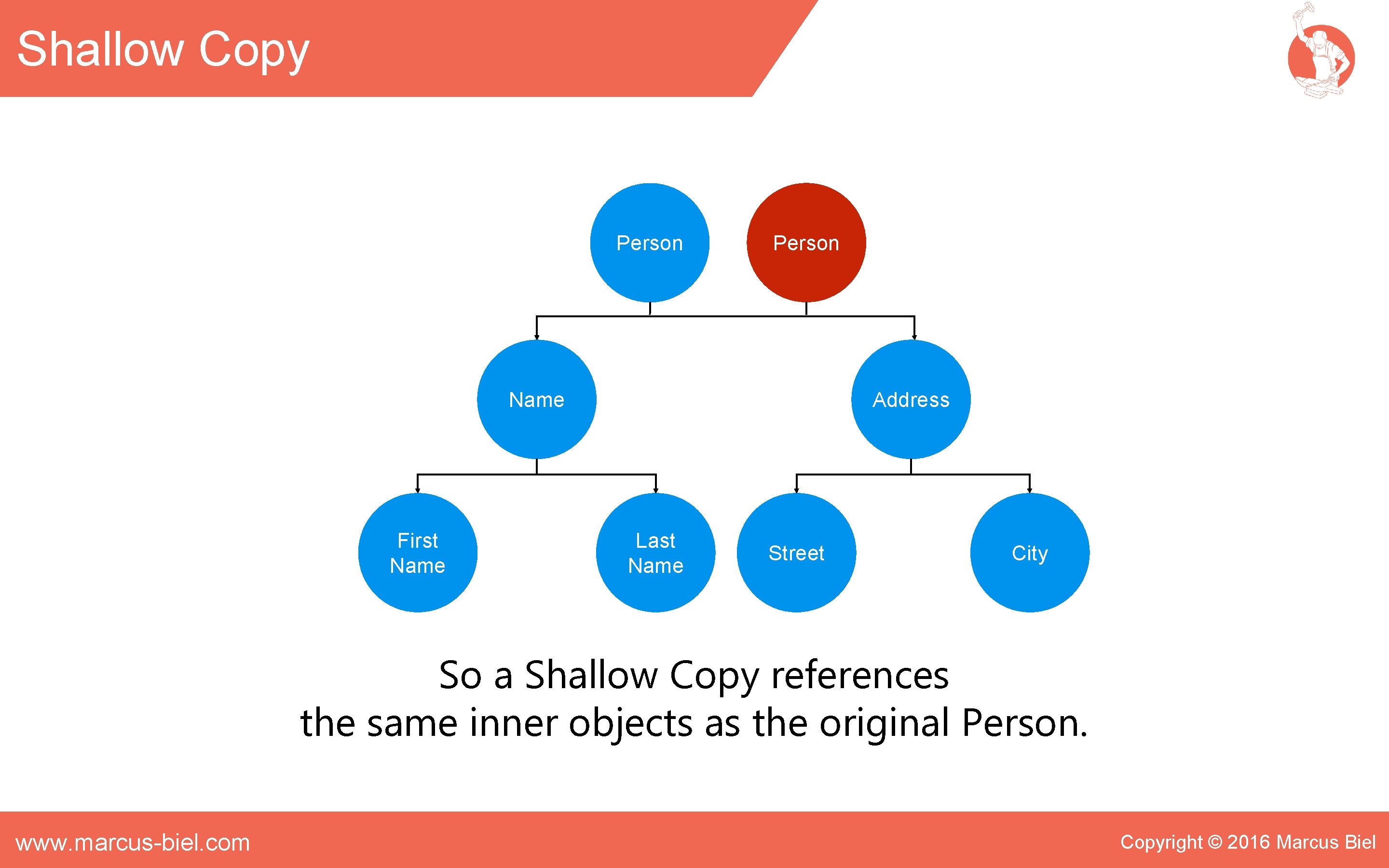
Shallow Copy Person Name First Name Address Last Name Street City So a Shallow Copy references the same inner objects as the original Person. www. marcus-biel. com Copyright © 2016 Marcus Biel
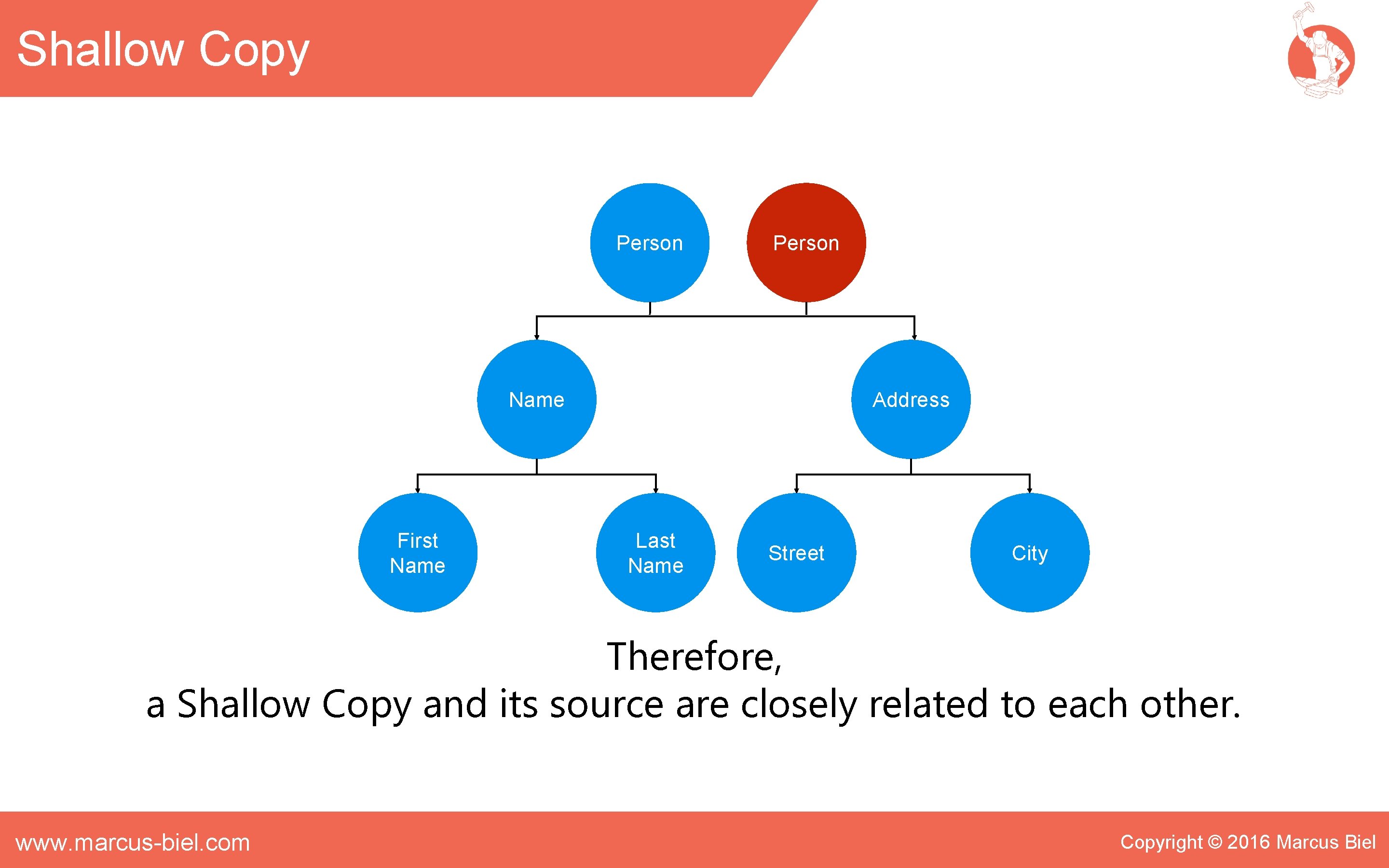
Shallow Copy Person Name First Name Address Last Name Street City Therefore, a Shallow Copy and its source are closely related to each other. www. marcus-biel. com Copyright © 2016 Marcus Biel
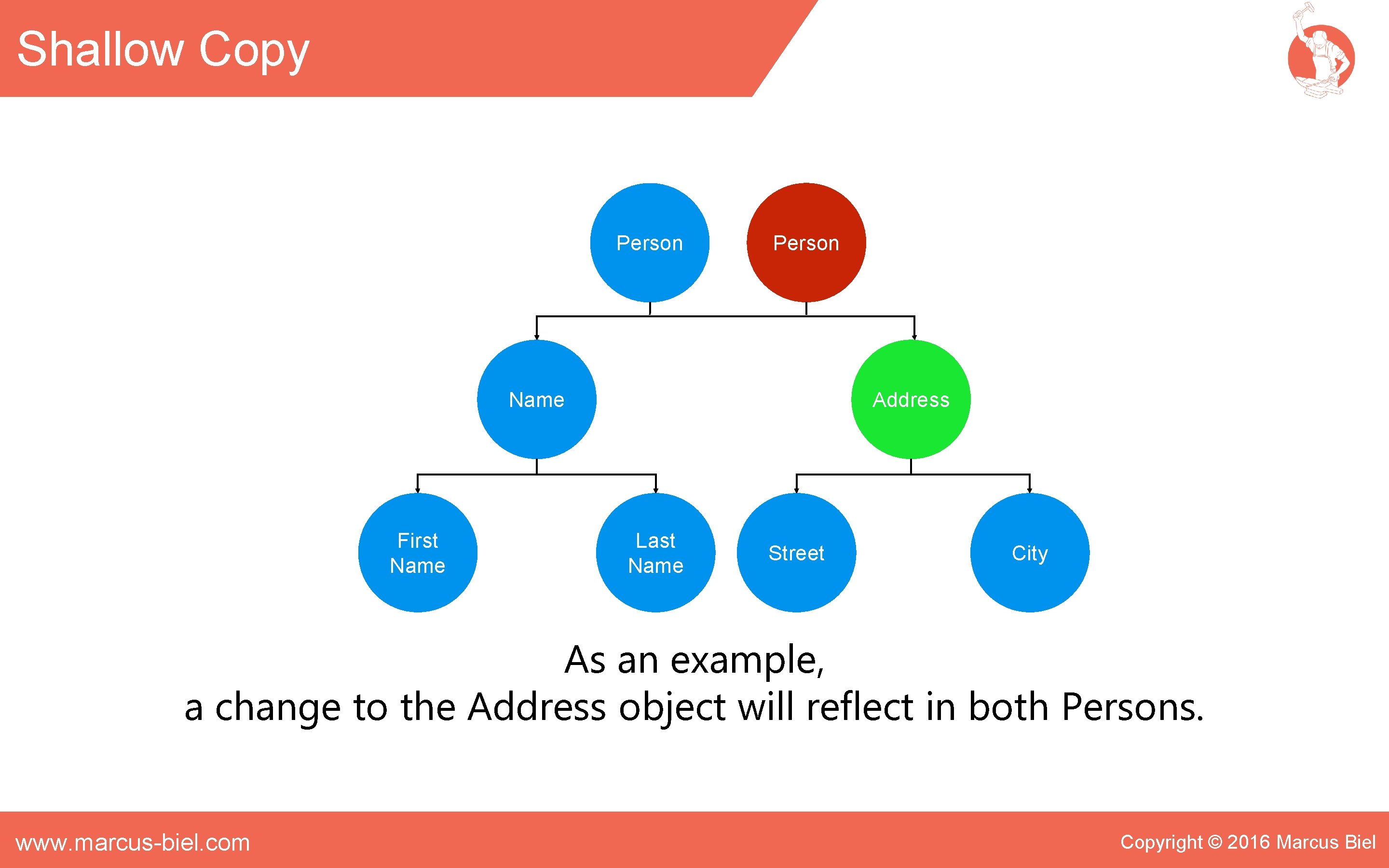
Shallow Copy Person Name First Name Address Last Name Street City As an example, a change to the Address object will reflect in both Persons. www. marcus-biel. com Copyright © 2016 Marcus Biel
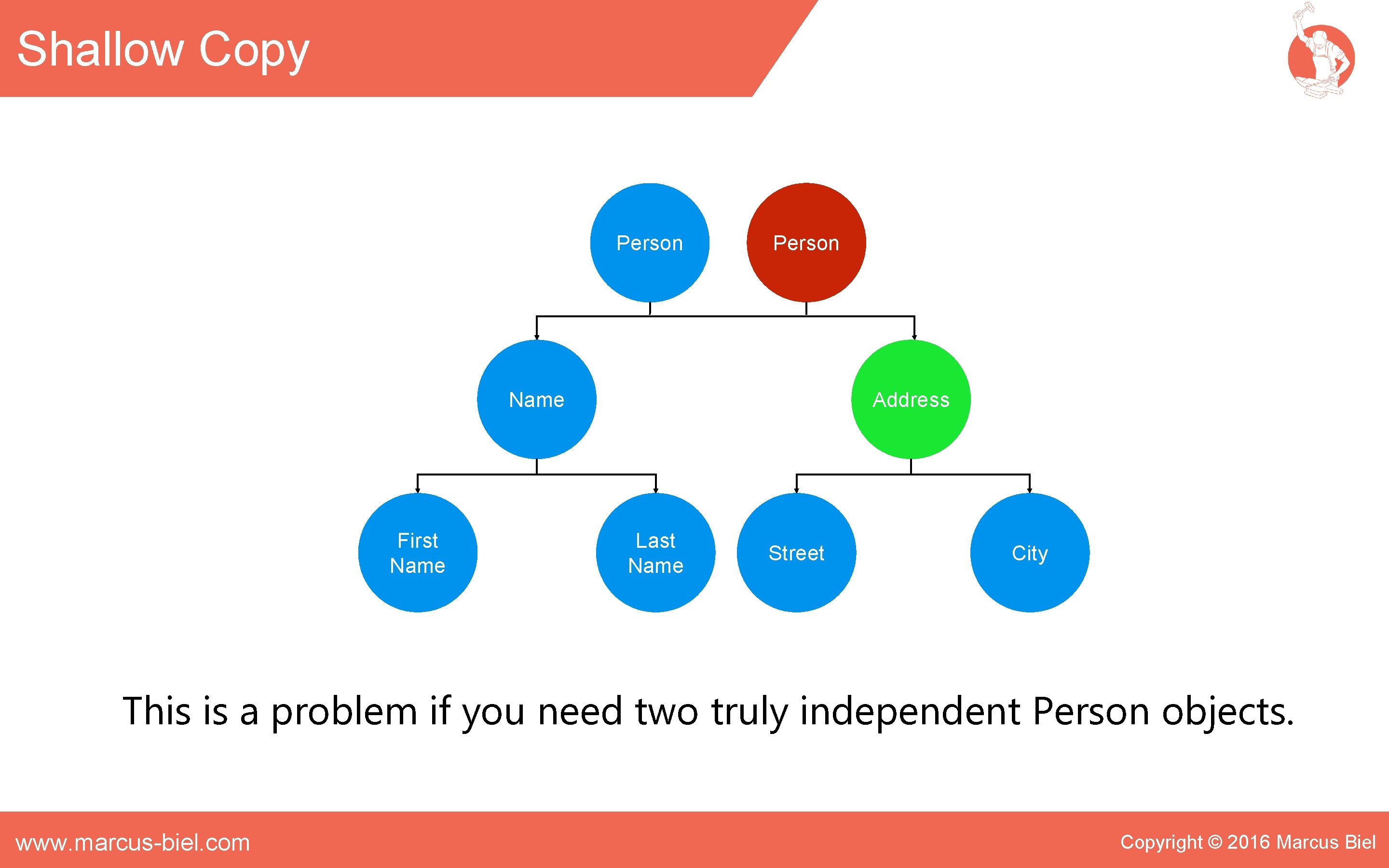
Shallow Copy Person Name First Name Address Last Name Street City This is a problem if you need two truly independent Person objects. www. marcus-biel. com Copyright © 2016 Marcus Biel
Deep Copy In contrast to a Shallow Copy, a Deep Copy is a fully independent copy of an object. www. marcus-biel. com Copyright © 2016 Marcus Biel
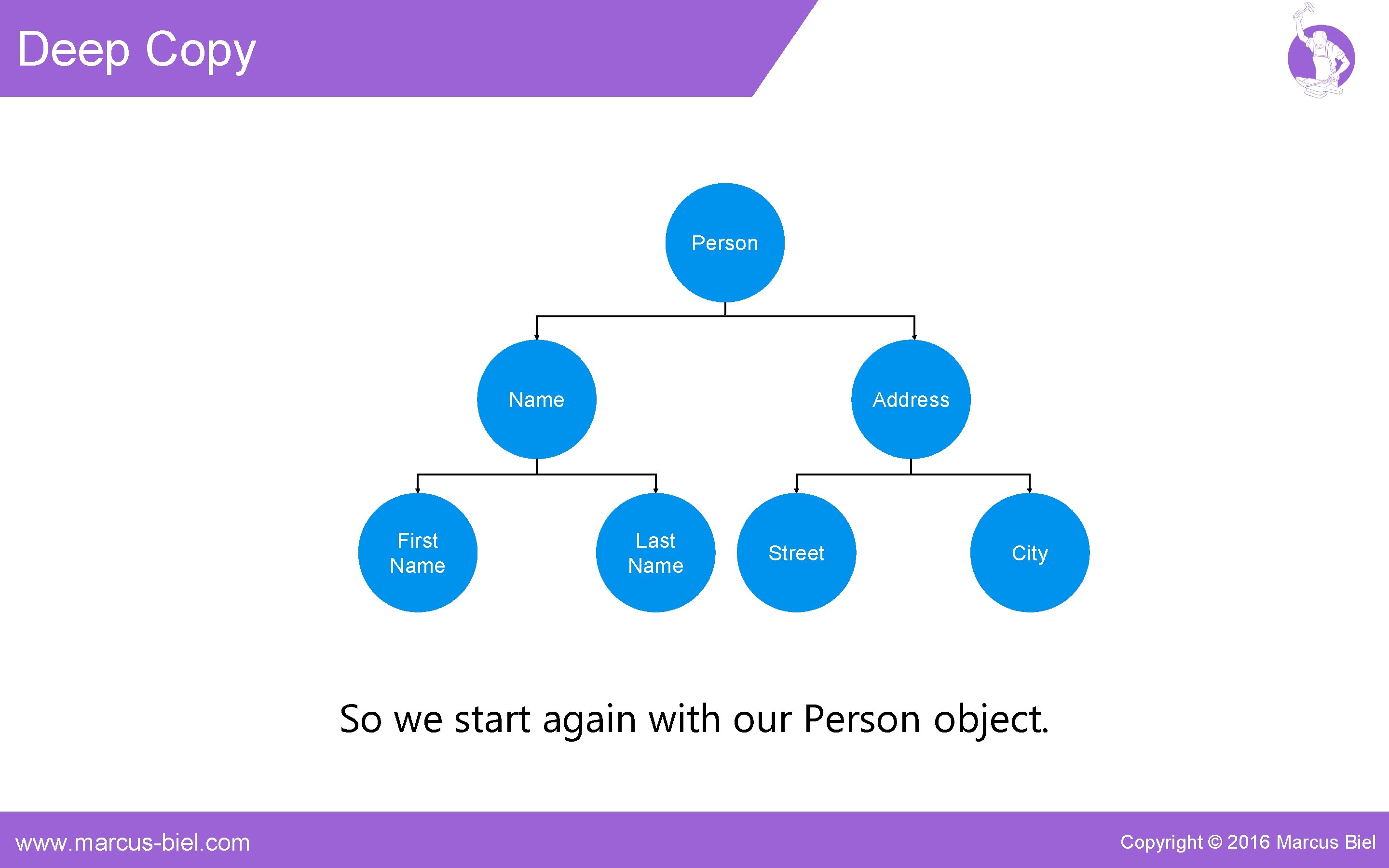
Deep Copy Person Name First Name Address Last Name Street City So we start again with our Person object. www. marcus-biel. com Copyright © 2016 Marcus Biel
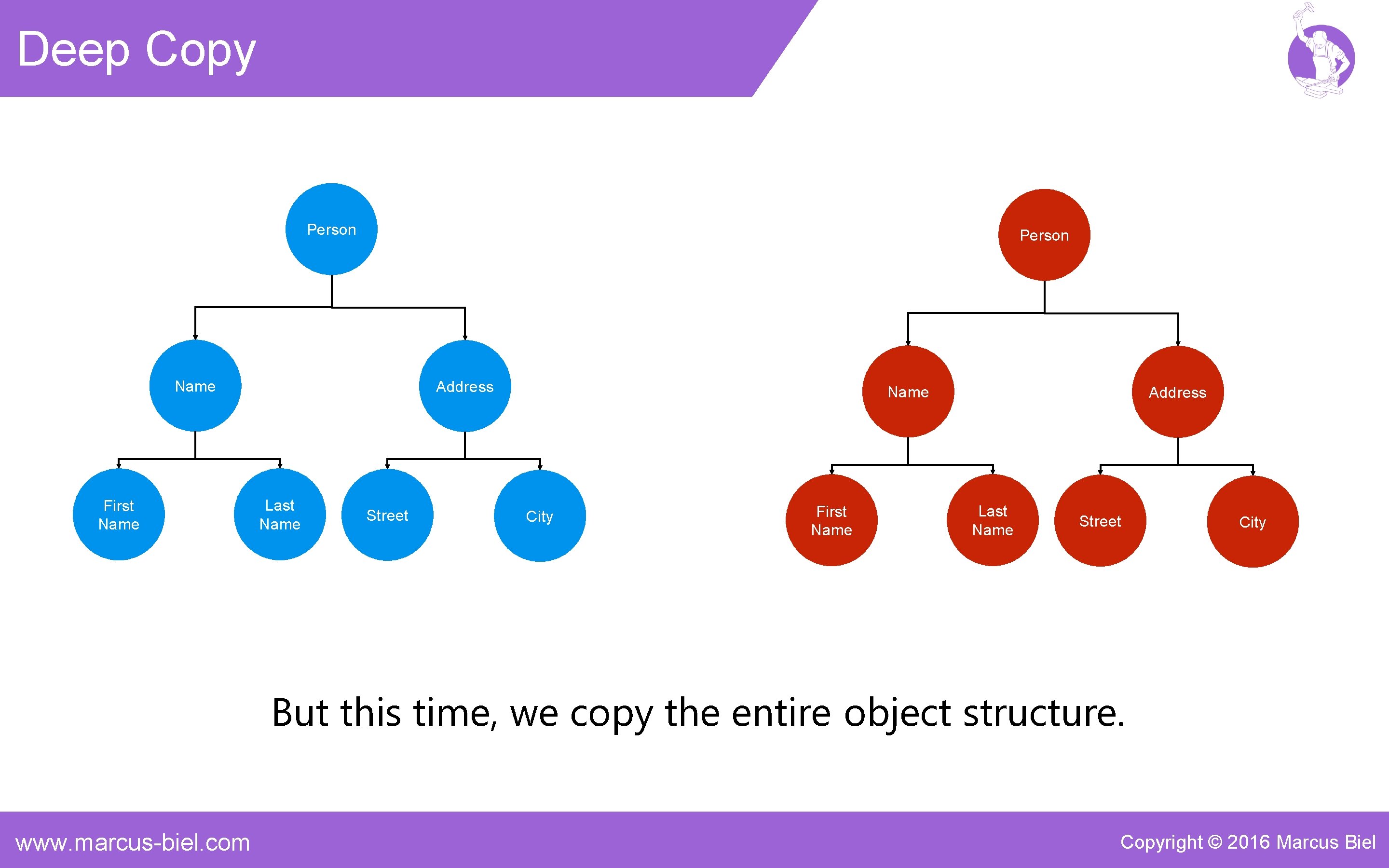
Deep Copy Person Name First Name Address Last Name Street Name City First Name Address Last Name Street City But this time, we copy the entire object structure. www. marcus-biel. com Copyright © 2016 Marcus Biel
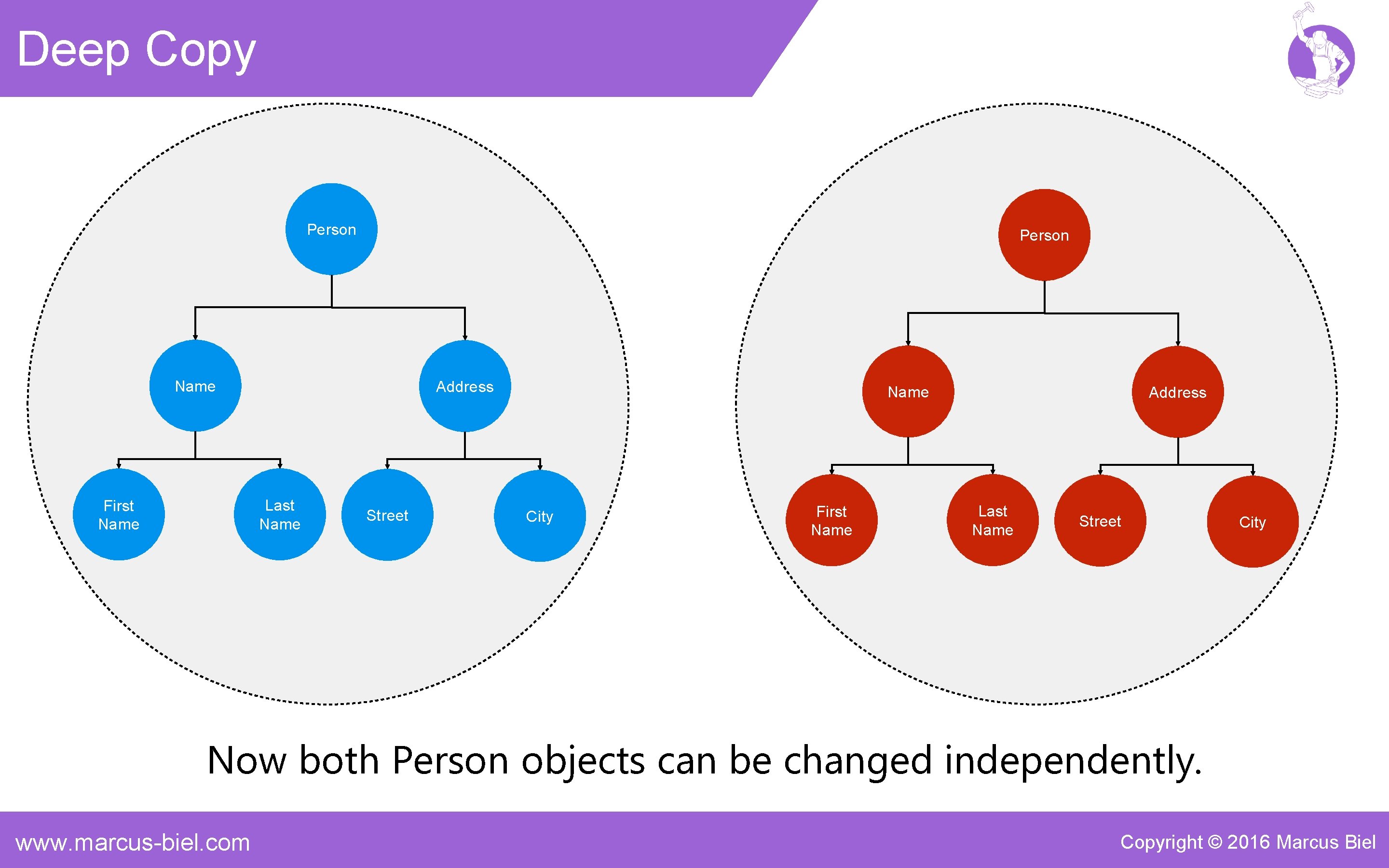
Deep Copy Person Name Address Last Name First Name Street Name City First Name Address Last Name Street City Now both Person objects can be changed independently. www. marcus-biel. com Copyright © 2016 Marcus Biel
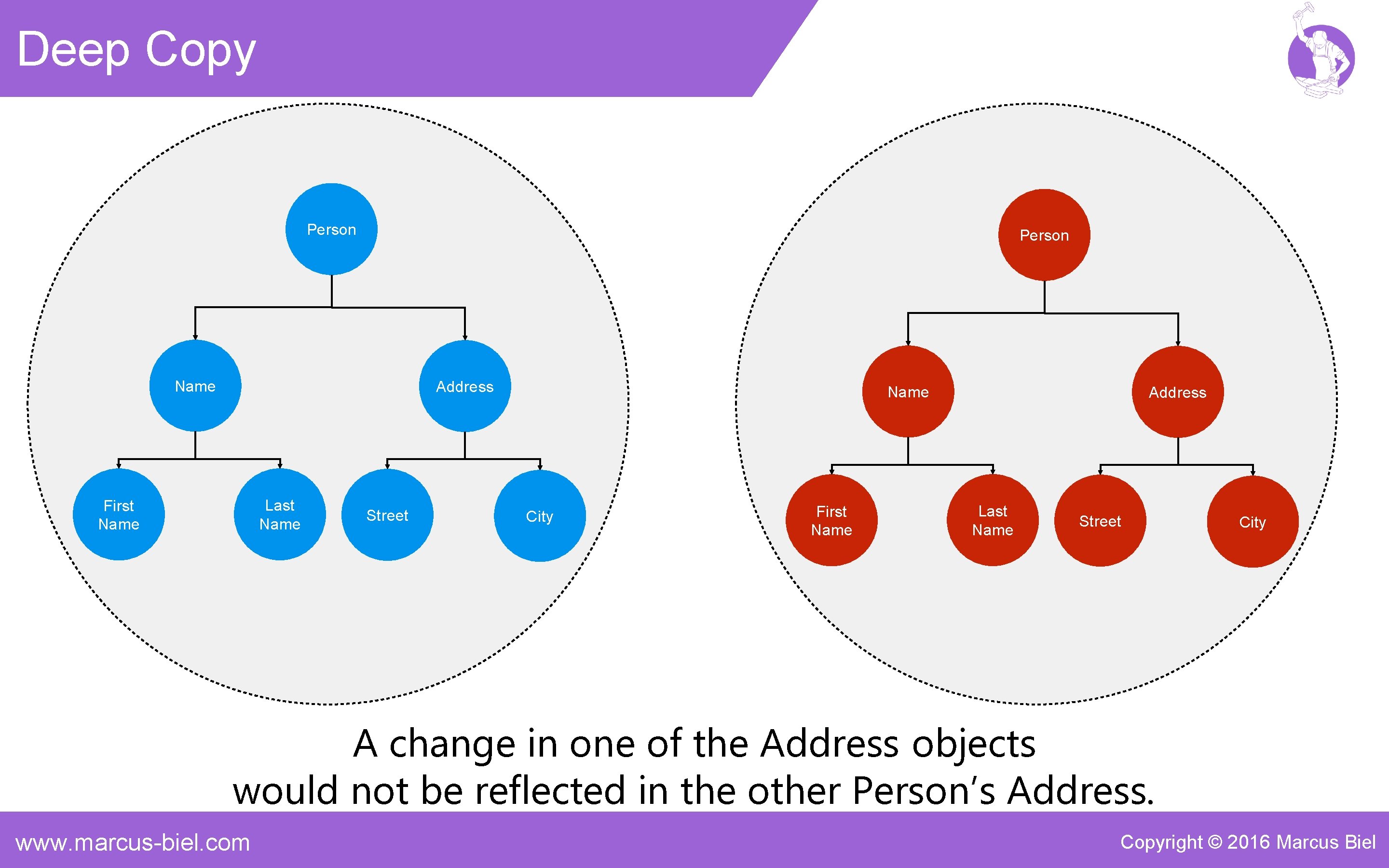
Deep Copy Person Name Address Last Name First Name Street Name City First Name Address Last Name Street City A change in one of the Address objects would not be reflected in the other Person’s Address. www. marcus-biel. com Copyright © 2016 Marcus Biel
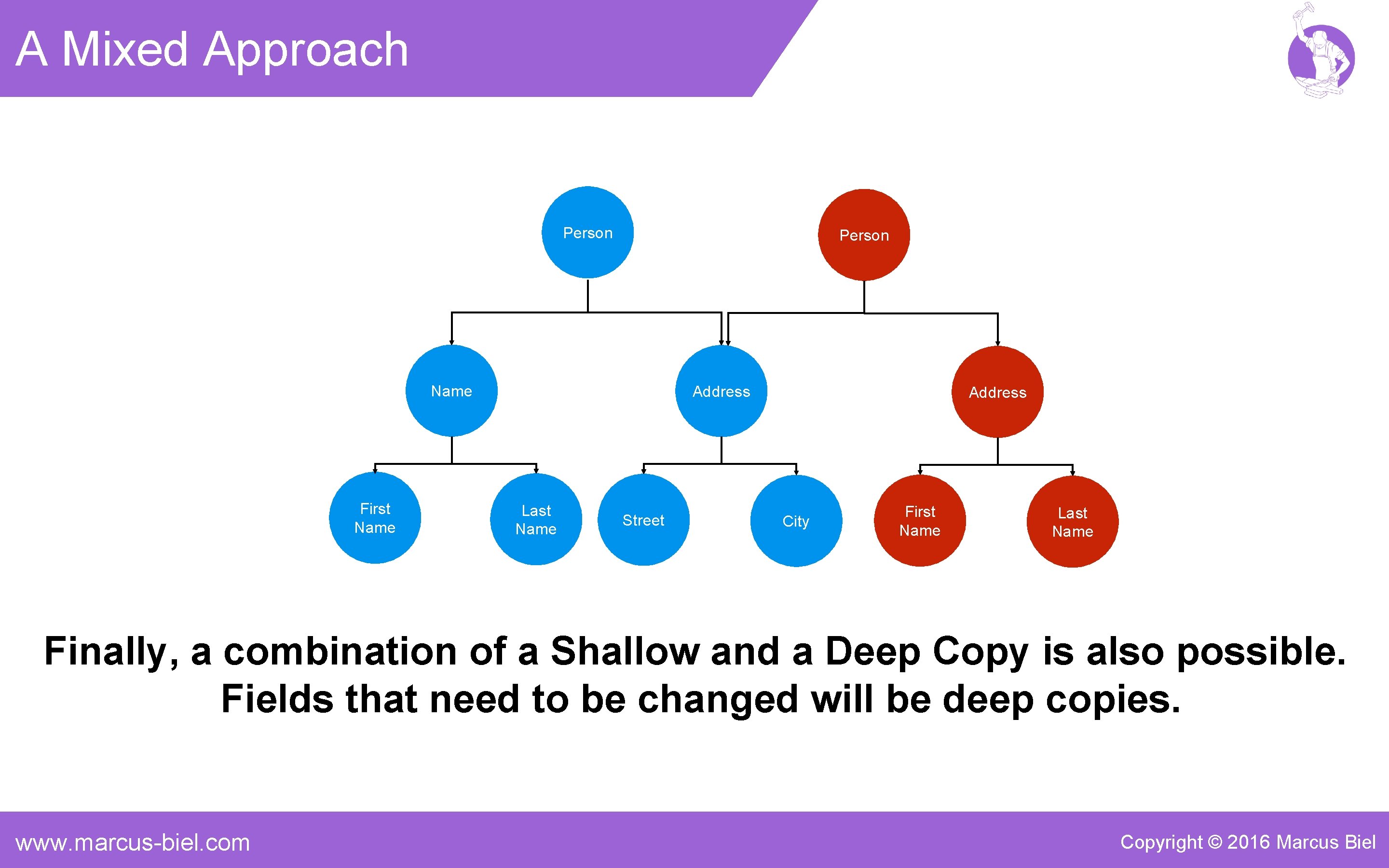
A Mixed Approach Person Name First Name Address Last Name Street Address City First Name Last Name Finally, a combination of a Shallow and a Deep Copy is also possible. Fields that need to be changed will be deep copies. www. marcus-biel. com Copyright © 2016 Marcus Biel
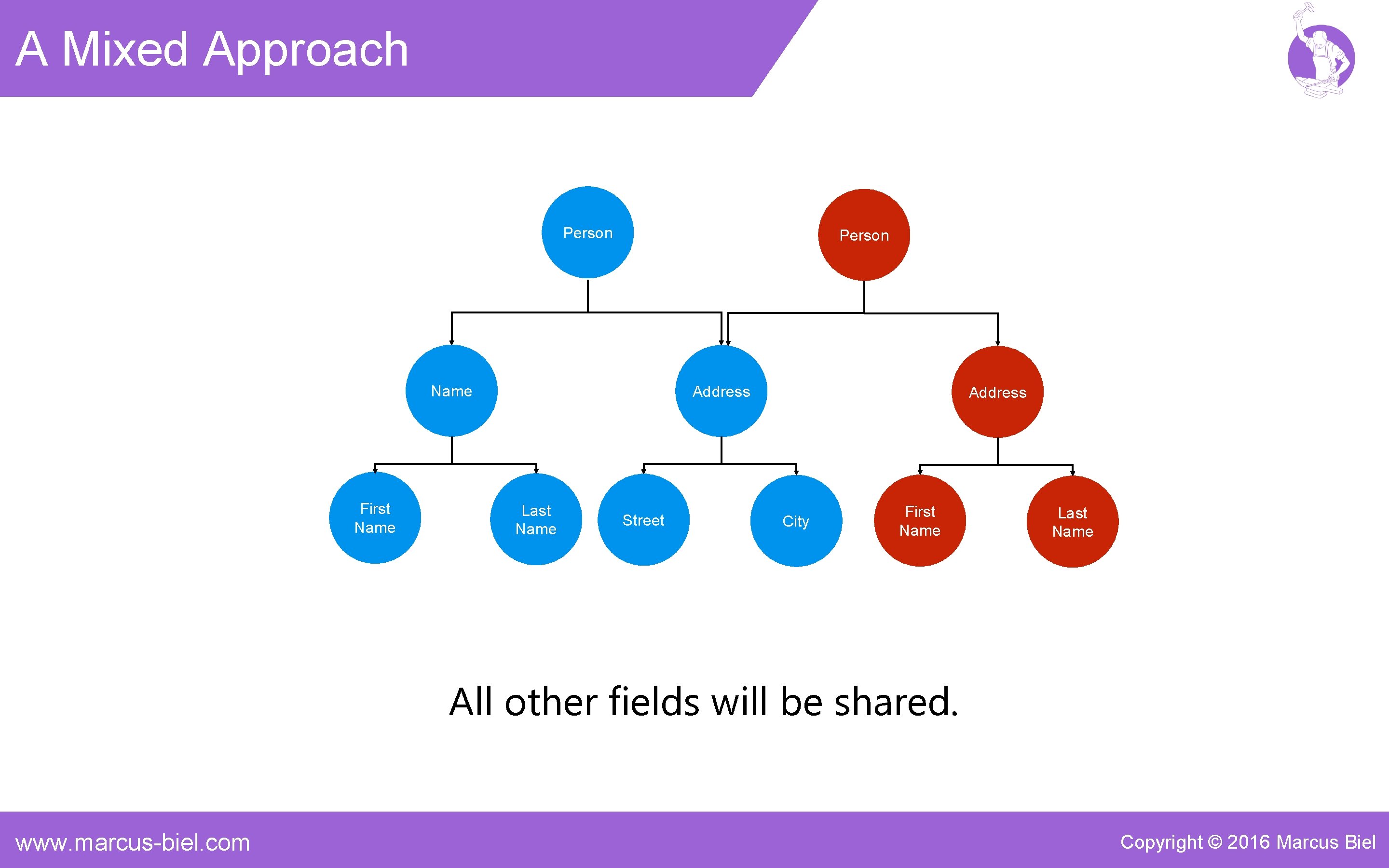
A Mixed Approach Person Name First Name Address Last Name Street Address City First Name Last Name All other fields will be shared. www. marcus-biel. com Copyright © 2016 Marcus Biel
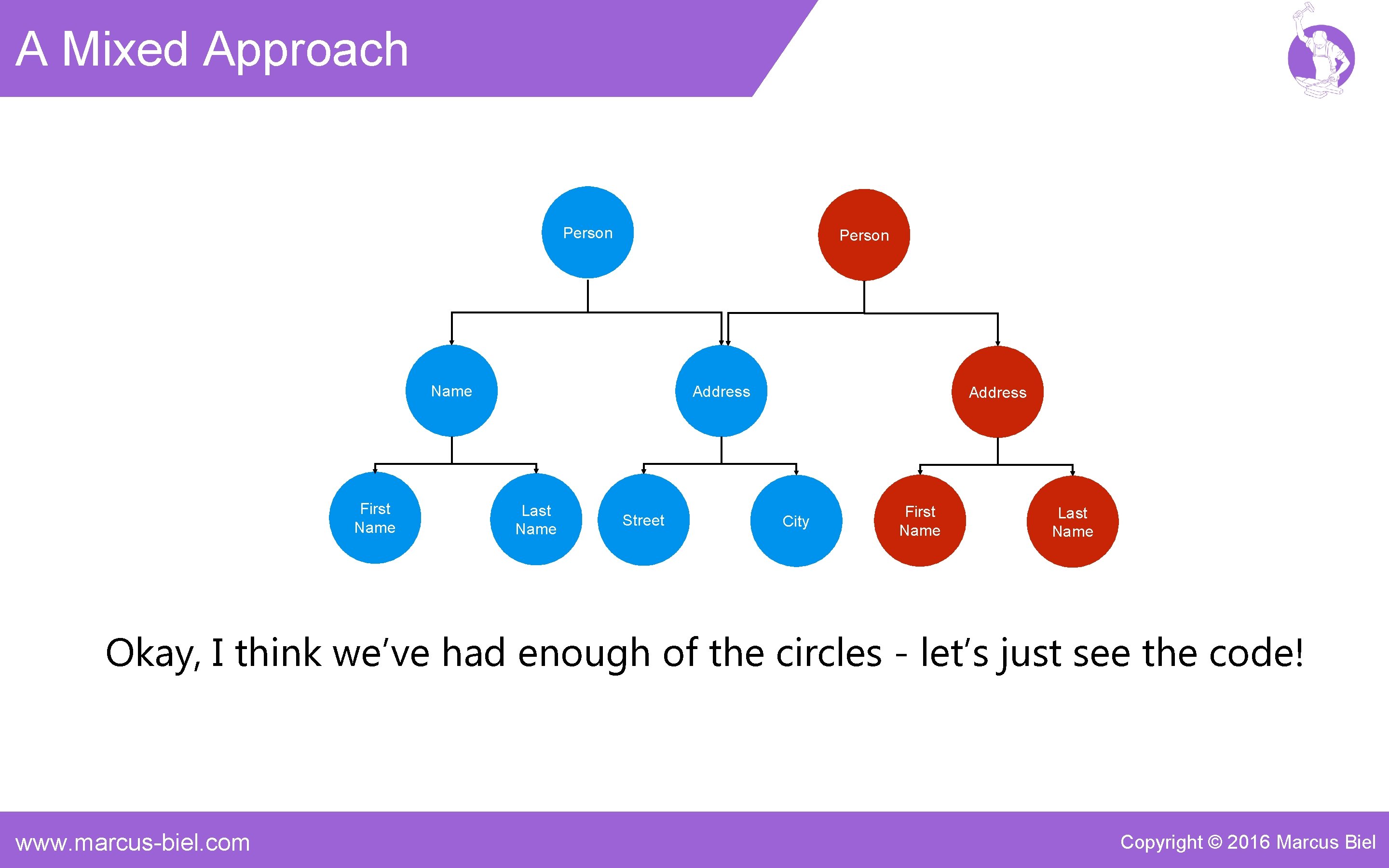
A Mixed Approach Person Name First Name Address Last Name Street Address City First Name Last Name Okay, I think we’ve had enough of the circles - let’s just see the code! www. marcus-biel. com Copyright © 2016 Marcus Biel

Shallow Copy Just like before, we’ll start with a Shallow Copy. www. marcus-biel. com Copyright © 2016 Marcus Biel
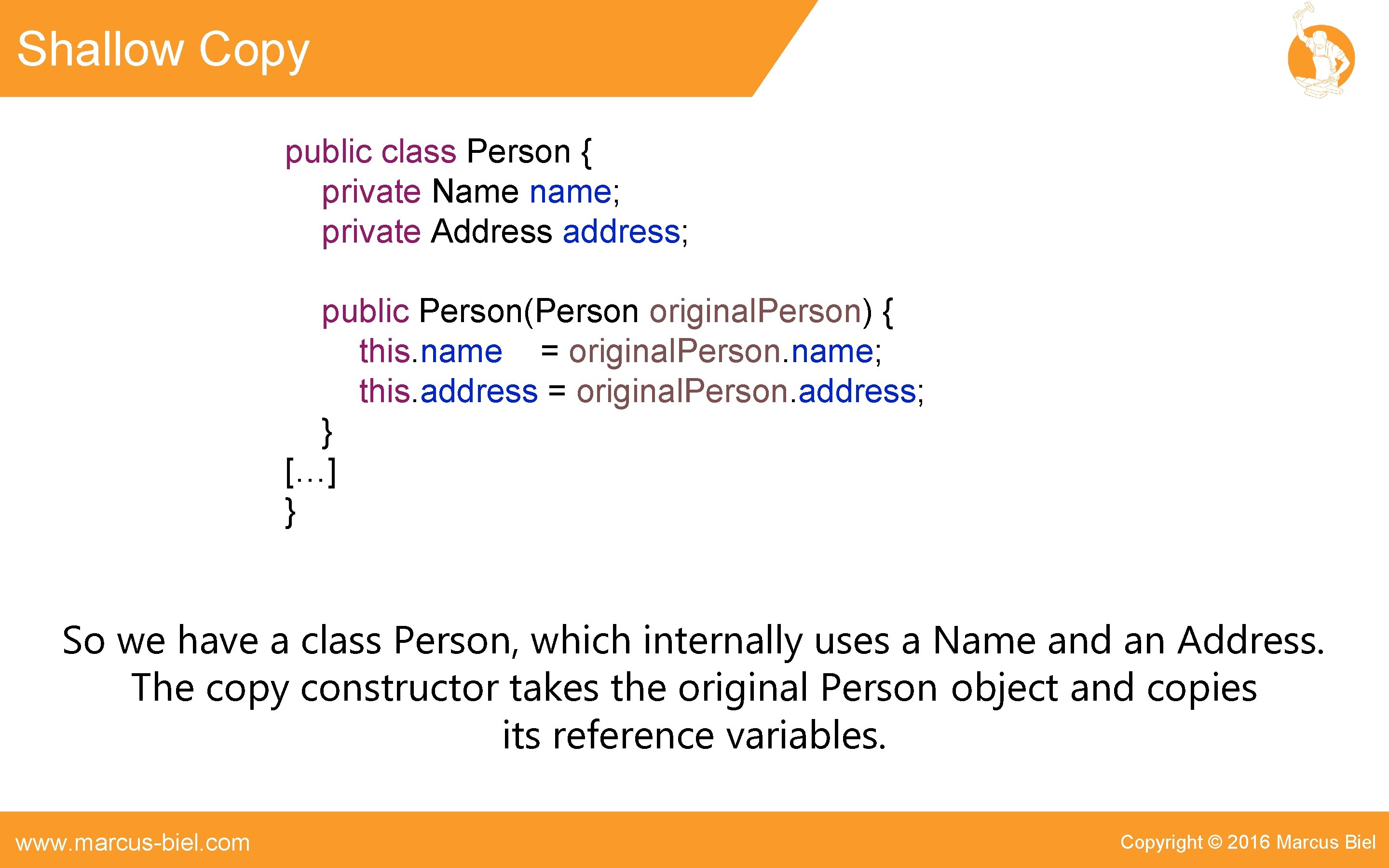
Shallow Copy public class Person { private Name name; private Address address; public Person(Person original. Person) { this. name = original. Person. name; this. address = original. Person. address; } […] } So we have a class Person, which internally uses a Name and an Address. The copy constructor takes the original Person object and copies its reference variables. www. marcus-biel. com Copyright © 2016 Marcus Biel
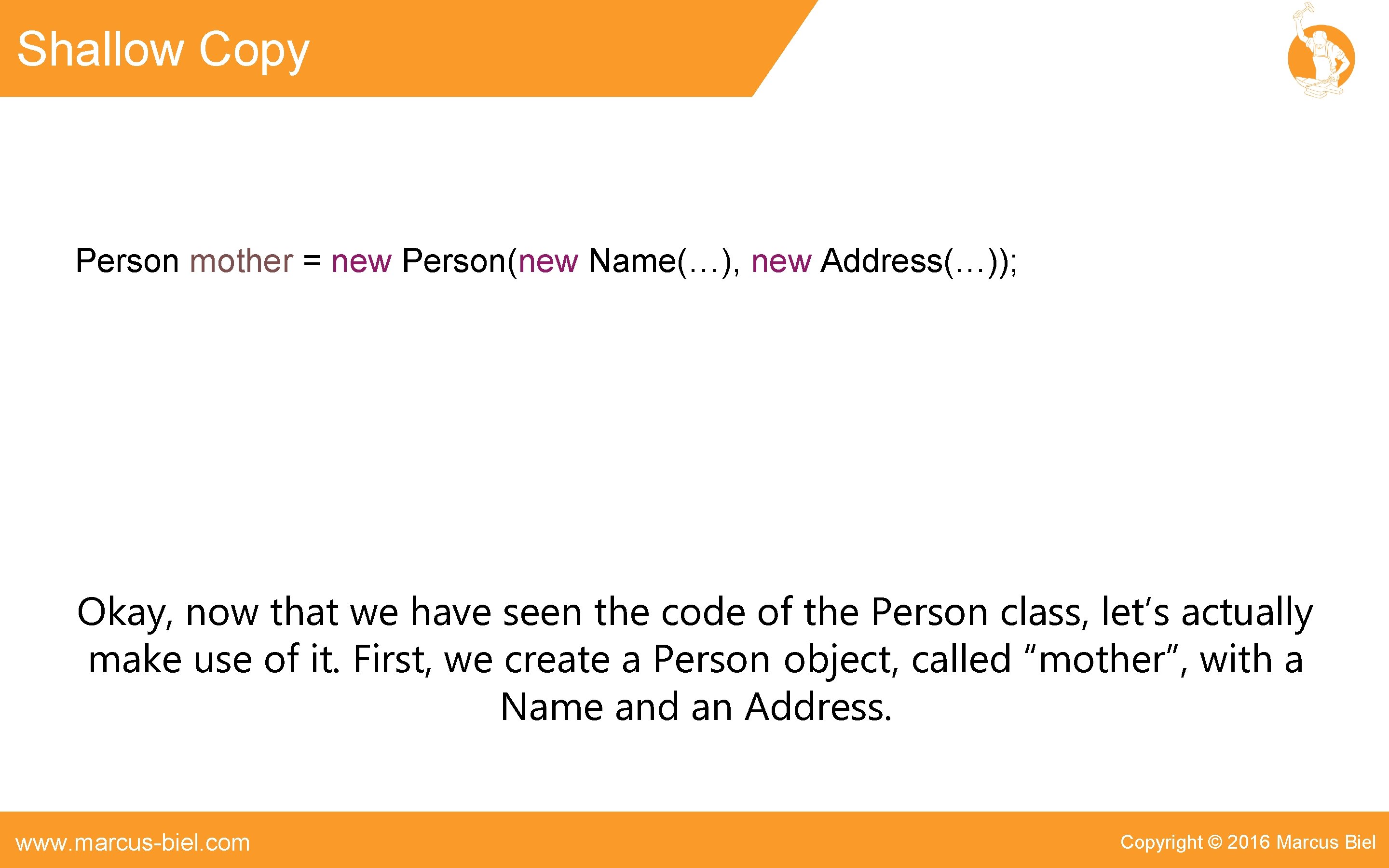
Shallow Copy Person mother = new Person(new Name(…), new Address(…)); Okay, now that we have seen the code of the Person class, let’s actually make use of it. First, we create a Person object, called “mother”, with a Name and an Address. www. marcus-biel. com Copyright © 2016 Marcus Biel
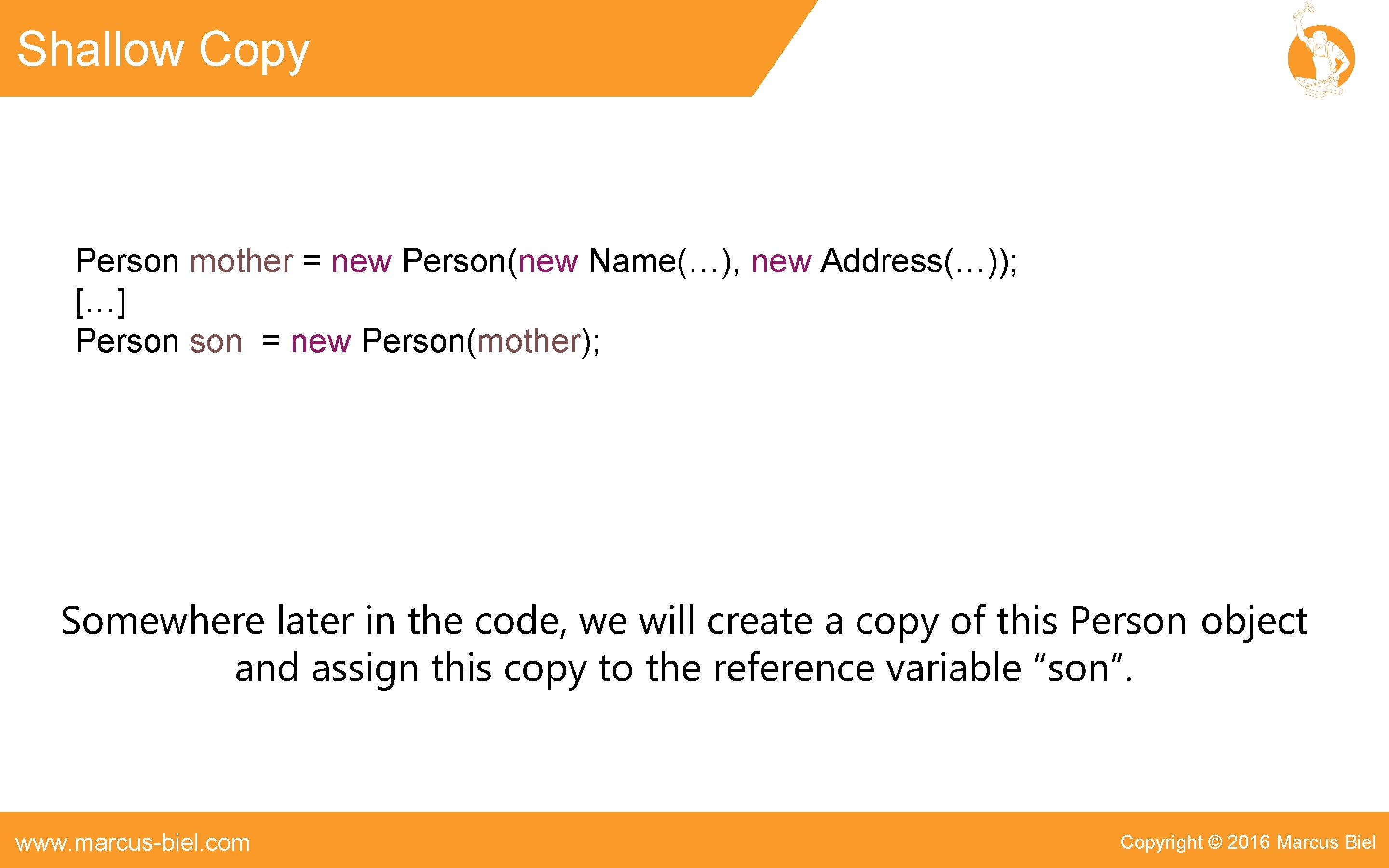
Shallow Copy Person mother = new Person(new Name(…), new Address(…)); […] Person = new Person(mother); Somewhere later in the code, we will create a copy of this Person object and assign this copy to the reference variable “son”. www. marcus-biel. com Copyright © 2016 Marcus Biel
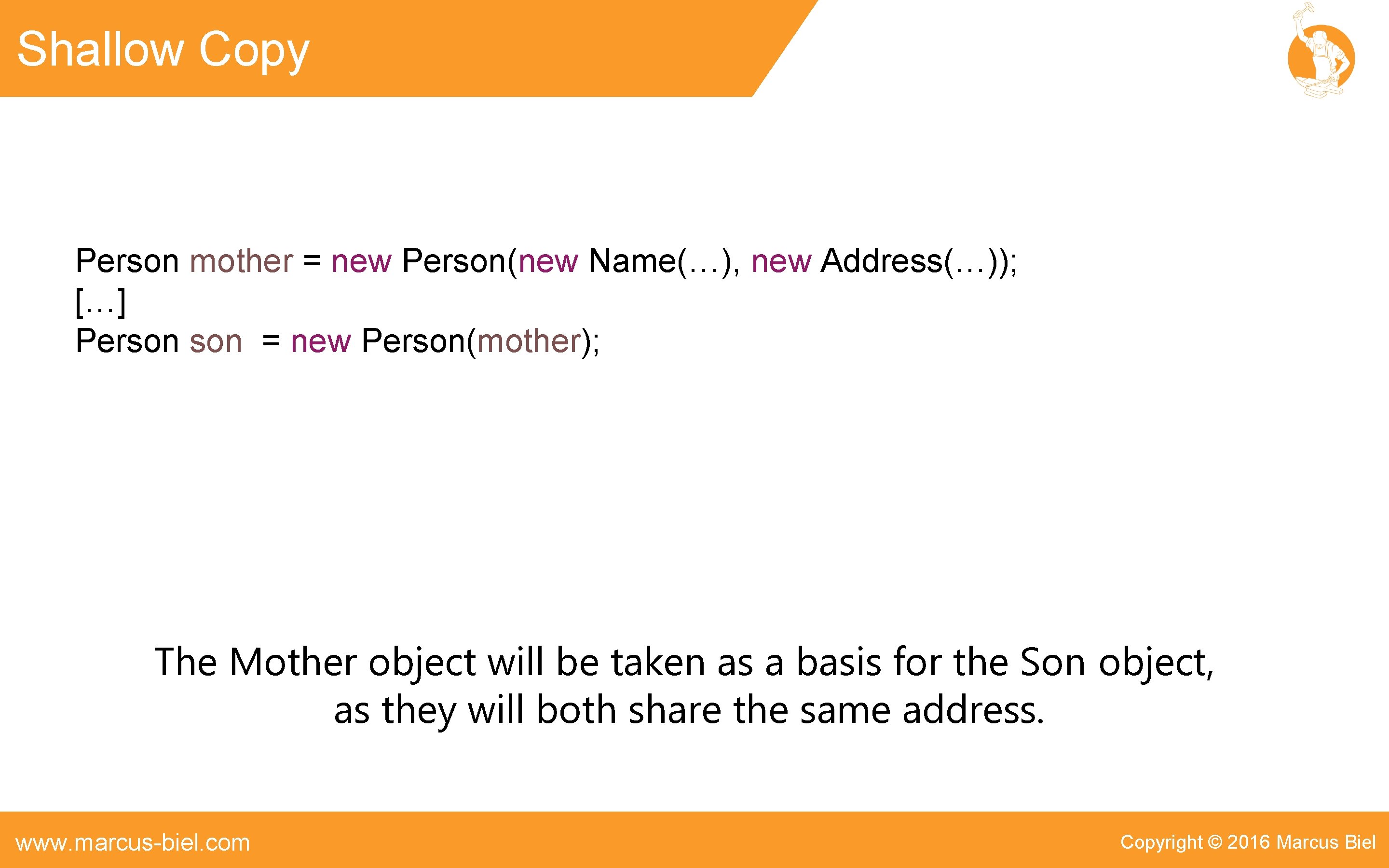
Shallow Copy Person mother = new Person(new Name(…), new Address(…)); […] Person = new Person(mother); The Mother object will be taken as a basis for the Son object, as they will both share the same address. www. marcus-biel. com Copyright © 2016 Marcus Biel
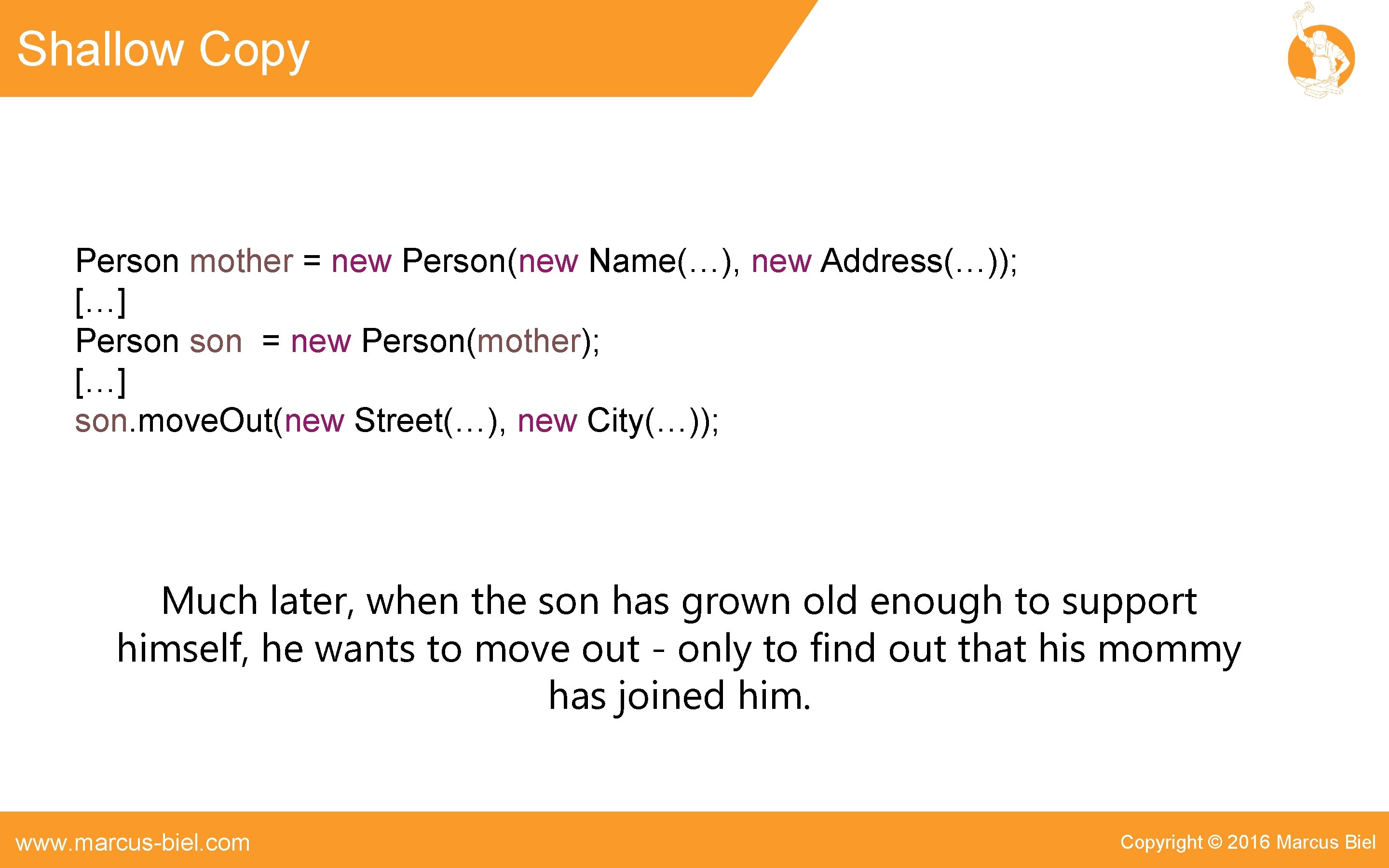
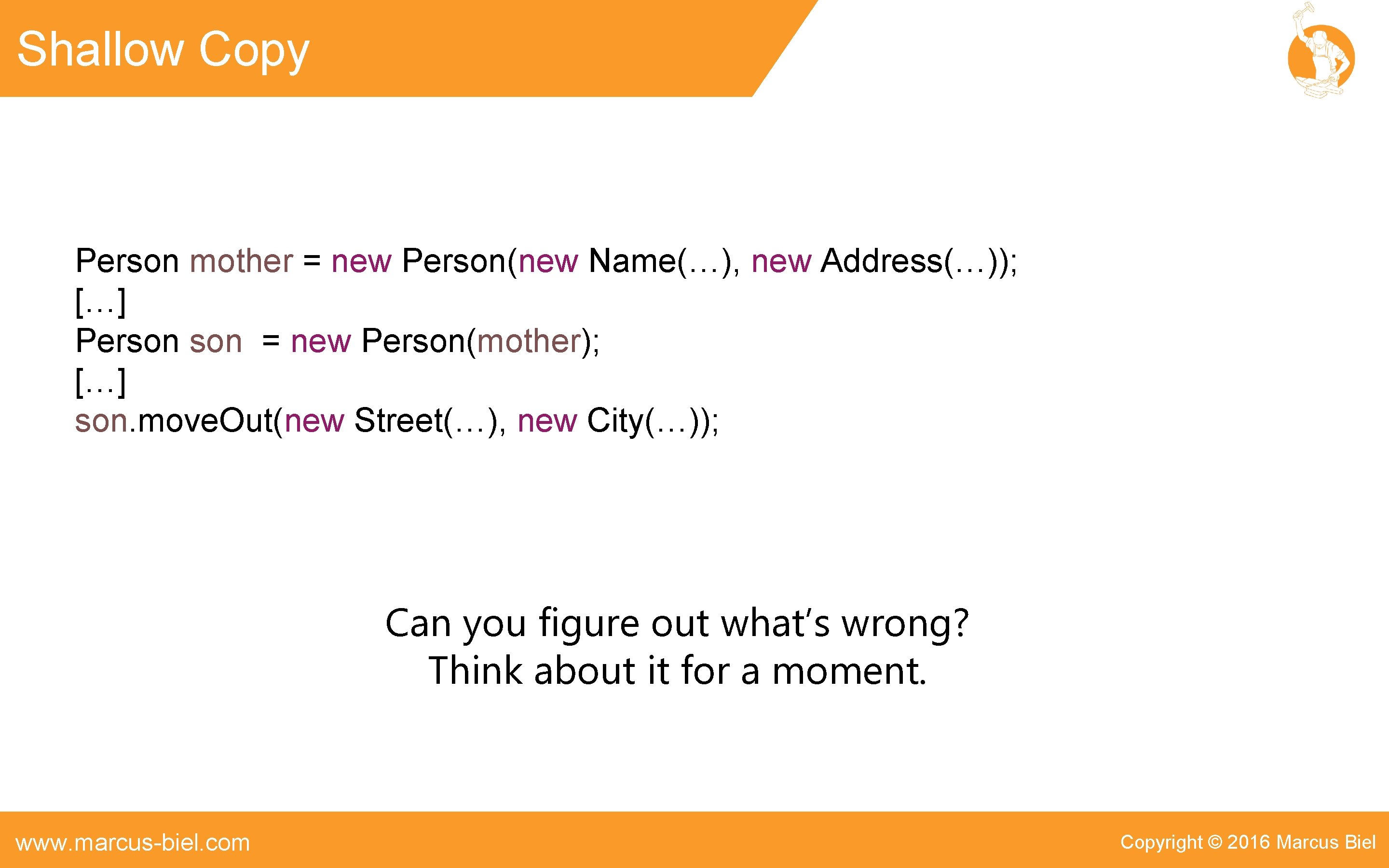
Shallow Copy Person mother = new Person(new Name(…), new Address(…)); […] Person = new Person(mother); […] son. move. Out(new Street(…), new City(…)); Much later, when the son has grown old enough to support himself, he wants to move out - only to find out that his mommy has joined him. www. marcus-biel. com Copyright © 2016 Marcus Biel
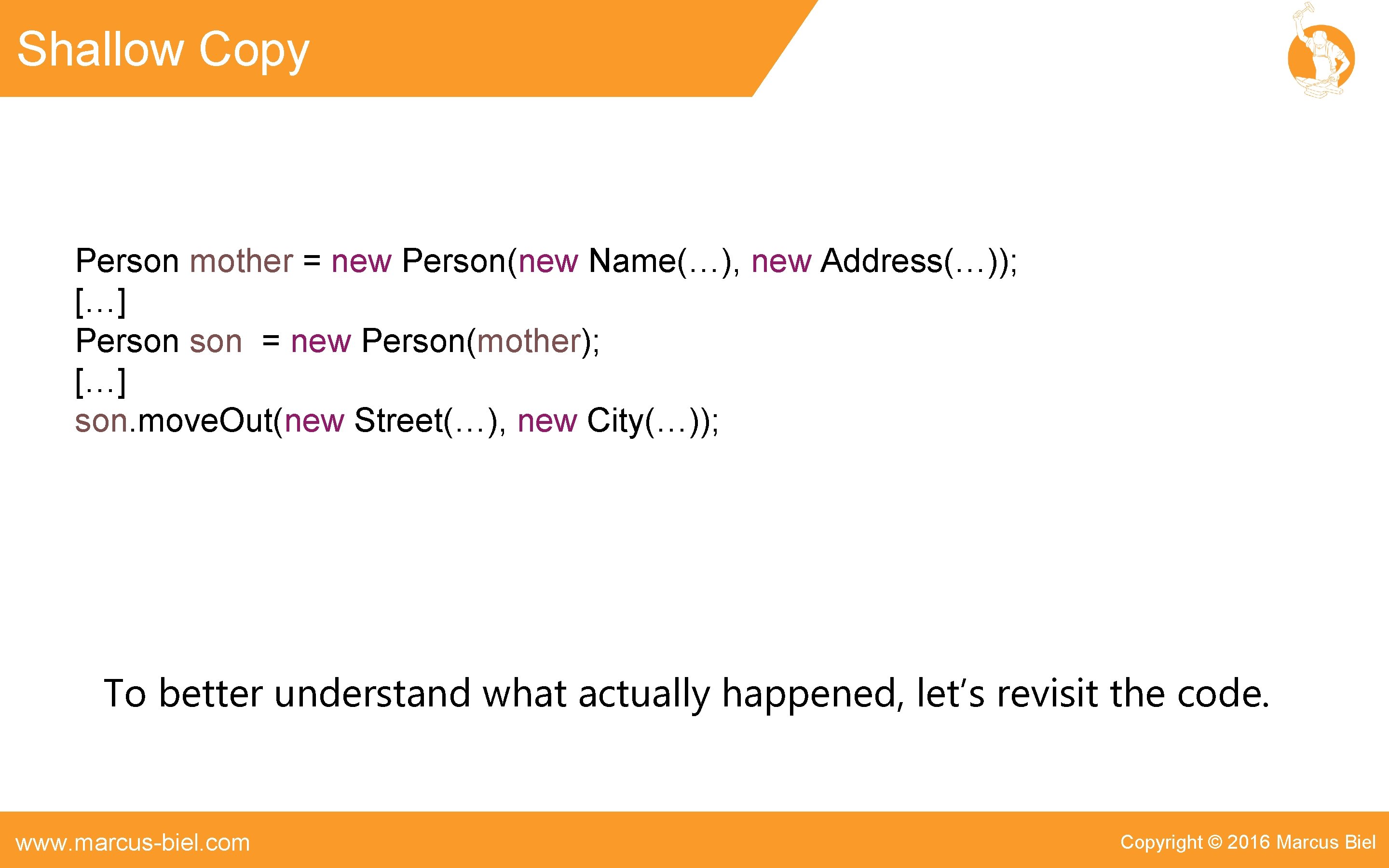
Shallow Copy Person mother = new Person(new Name(…), new Address(…)); […] Person = new Person(mother); […] son. move. Out(new Street(…), new City(…)); To better understand what actually happened, let’s revisit the code. www. marcus-biel. com Copyright © 2016 Marcus Biel
Shallow Copy Person mother = new Person(new Name(…), new Address(…)); […] Person = new Person(mother); […] son. move. Out(new Street(…), new City(…)); Can you figure out what’s wrong? Think about it for a moment. www. marcus-biel. com Copyright © 2016 Marcus Biel

Shallow Copy Person mother = new Person(new Name(…), new Address(…)); […] Person = new Person(mother); […] son. move. Out(new Street(…), new City(…)); Okay, so, the issue is that in the move. Out method, we directly changed our internal address object by replacing its Street and City objects. www. marcus-biel. com Copyright © 2016 Marcus Biel
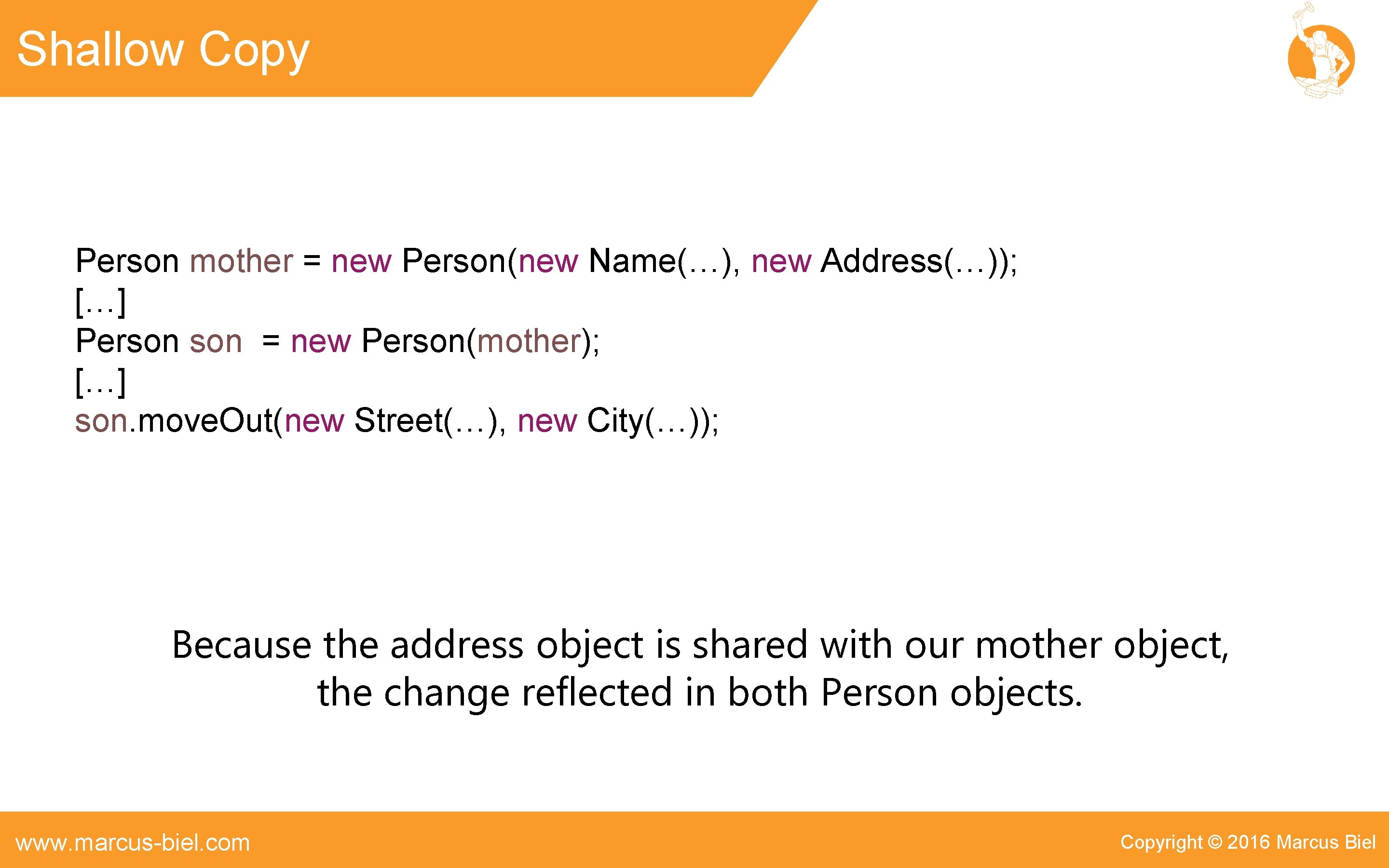
Shallow Copy Person mother = new Person(new Name(…), new Address(…)); […] Person = new Person(mother); […] son. move. Out(new Street(…), new City(…)); Because the address object is shared with our mother object, the change reflected in both Person objects. www. marcus-biel. com Copyright © 2016 Marcus Biel
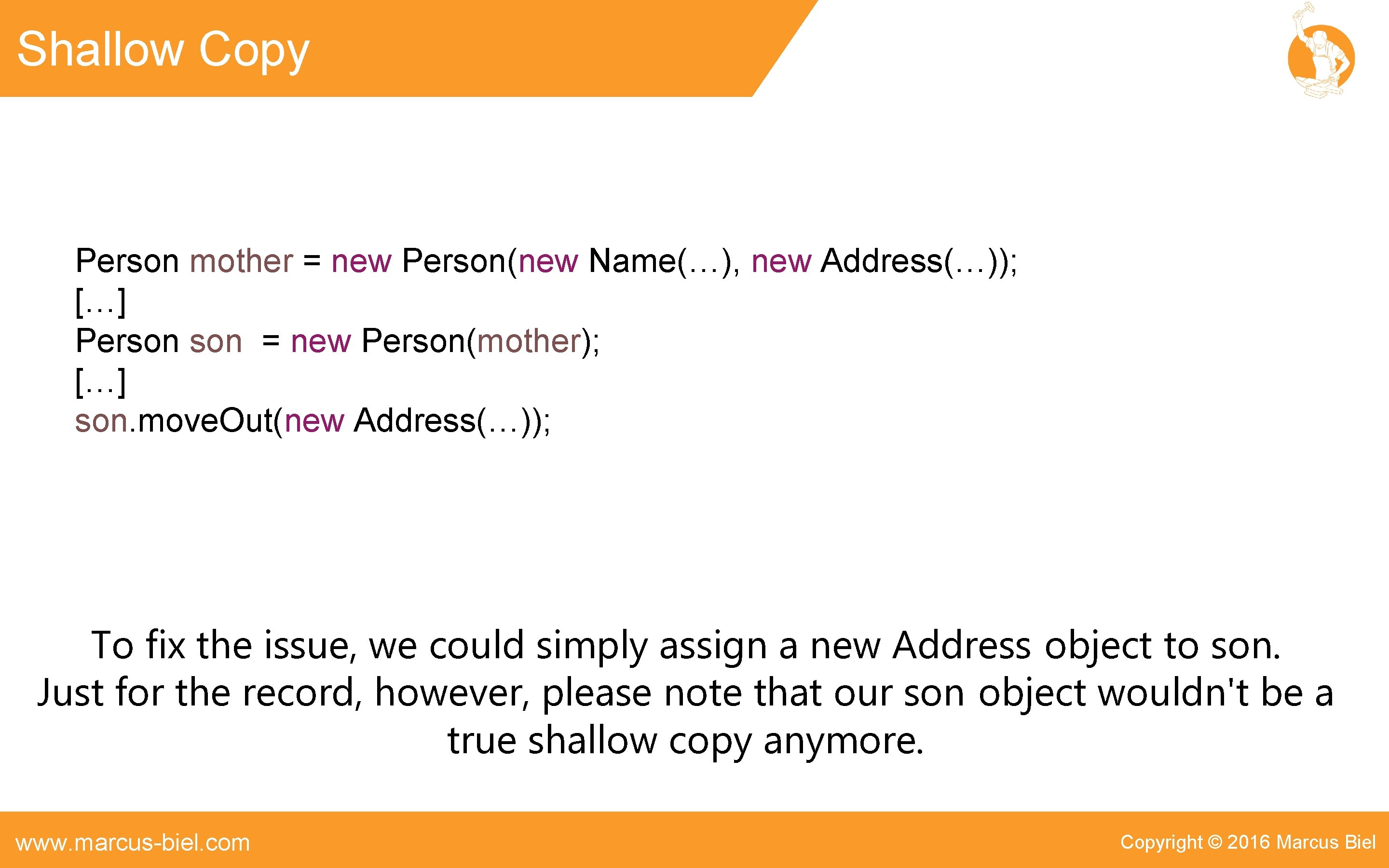
Shallow Copy Person mother = new Person(new Name(…), new Address(…)); […] Person = new Person(mother); […] son. move. Out(new Address(…)); To fix the issue, we could simply assign a new Address object to son. Just for the record, however, please note that our son object wouldn't be a true shallow copy anymore. www. marcus-biel. com Copyright © 2016 Marcus Biel
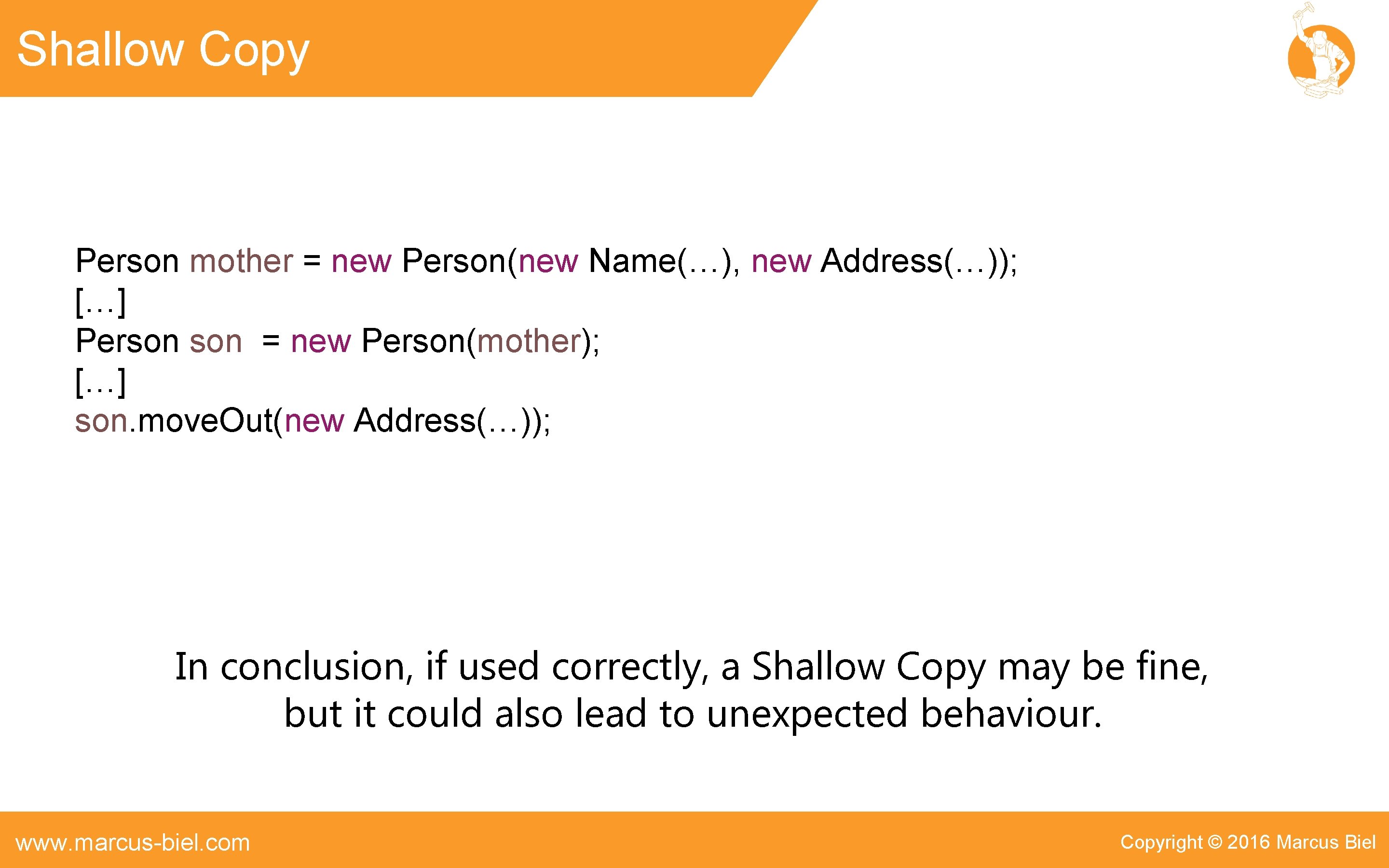
Shallow Copy Person mother = new Person(new Name(…), new Address(…)); […] Person = new Person(mother); […] son. move. Out(new Address(…)); In conclusion, if used correctly, a Shallow Copy may be fine, but it could also lead to unexpected behaviour. www. marcus-biel. com Copyright © 2016 Marcus Biel
Deep Copy Last but not least, let’s look at the code used to create a Deep Copy of the Person object. www. marcus-biel. com Copyright © 2016 Marcus Biel
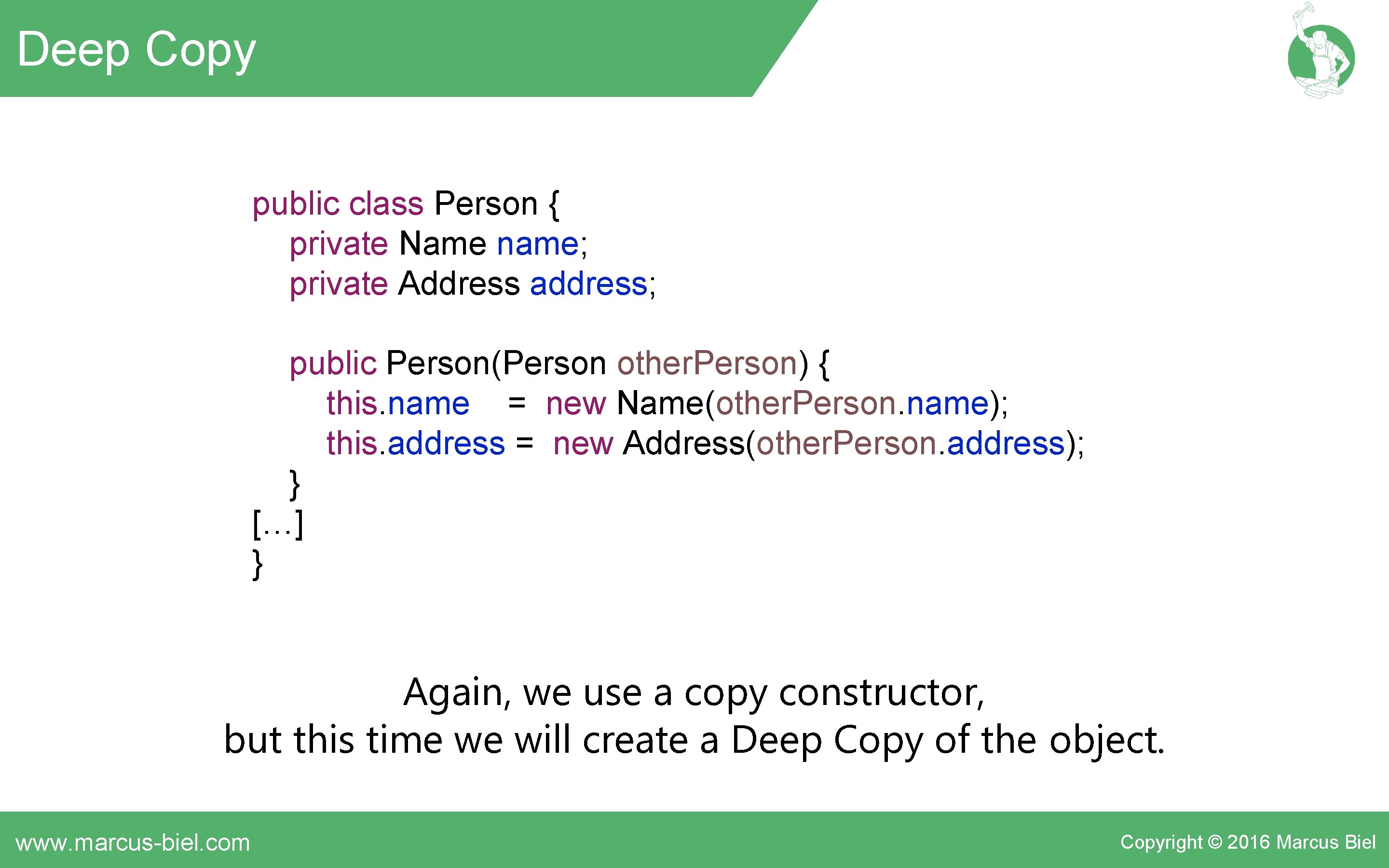
Deep Copy public class Person { private Name name; private Address address; public Person(Person other. Person) { this. name = new Name(other. Person. name); this. address = new Address(other. Person. address); } […] } Again, we use a copy constructor, but this time we will create a Deep Copy of the object. www. marcus-biel. com Copyright © 2016 Marcus Biel
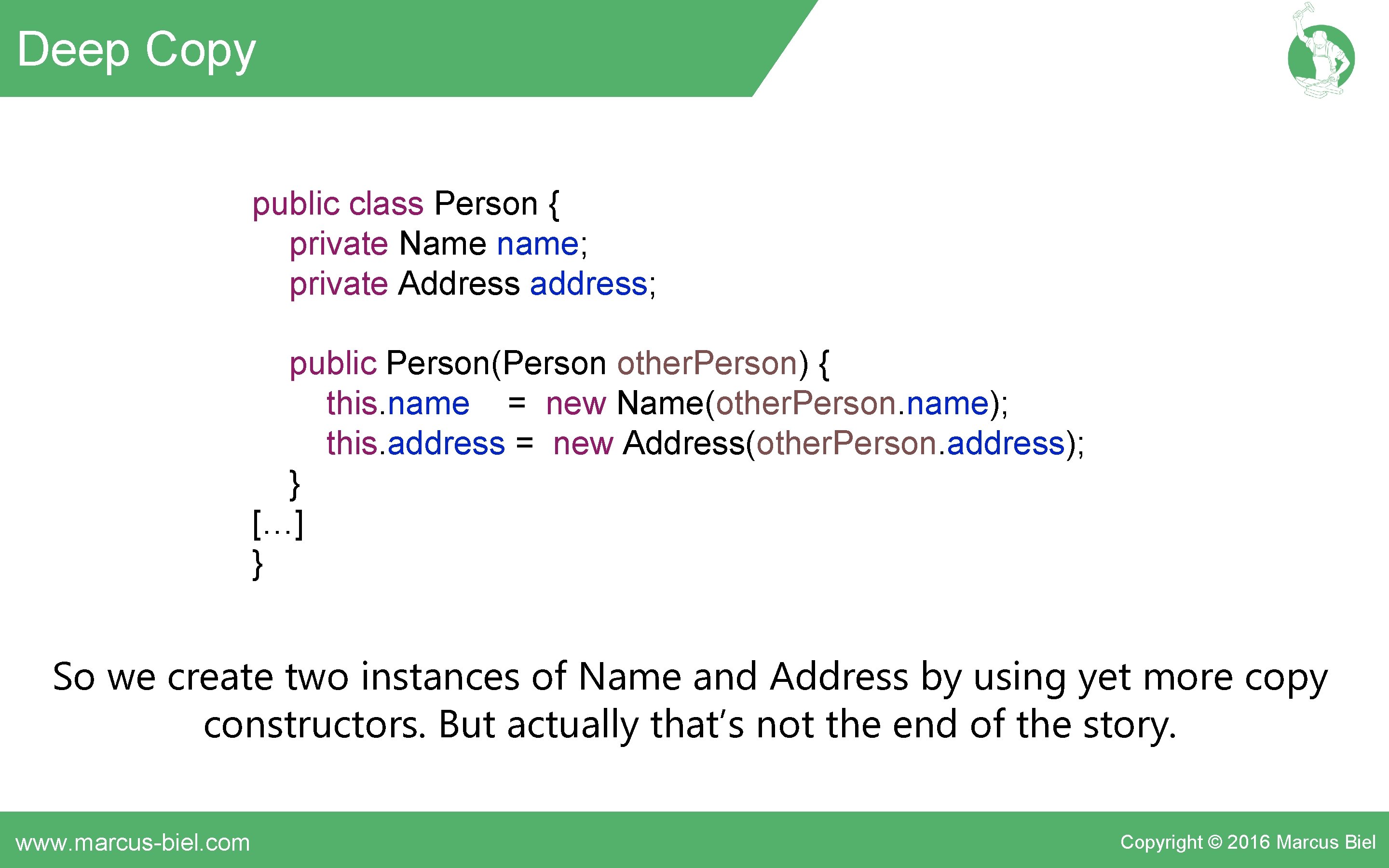
Deep Copy public class Person { private Name name; private Address address; public Person(Person other. Person) { this. name = new Name(other. Person. name); this. address = new Address(other. Person. address); } […] } So we create two instances of Name and Address by using yet more copy constructors. But actually that’s not the end of the story. www. marcus-biel. com Copyright © 2016 Marcus Biel
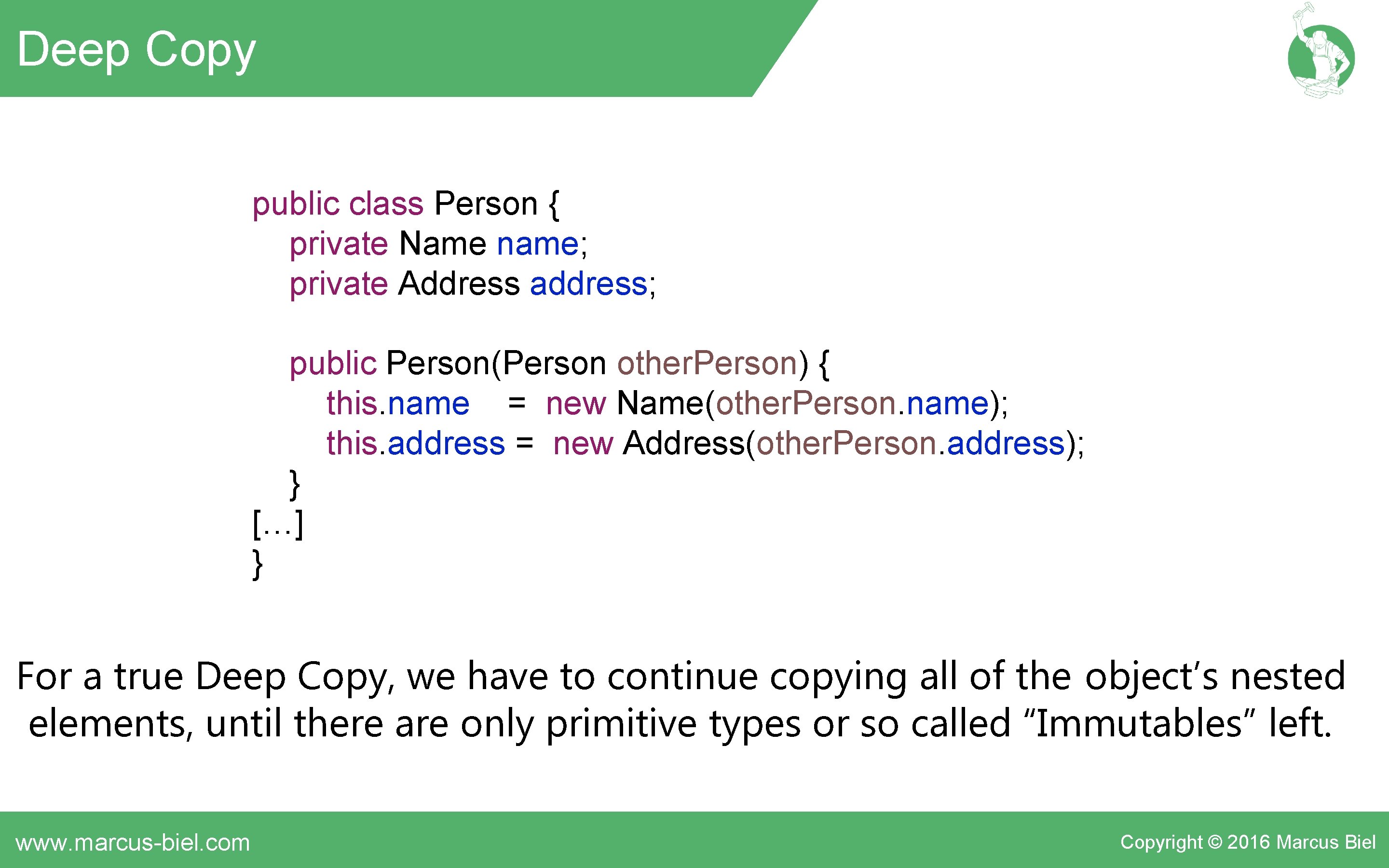
Deep Copy public class Person { private Name name; private Address address; public Person(Person other. Person) { this. name = new Name(other. Person. name); this. address = new Address(other. Person. address); } […] } For a true Deep Copy, we have to continue copying all of the object’s nested elements, until there are only primitive types or so called “Immutables” left. www. marcus-biel. com Copyright © 2016 Marcus Biel
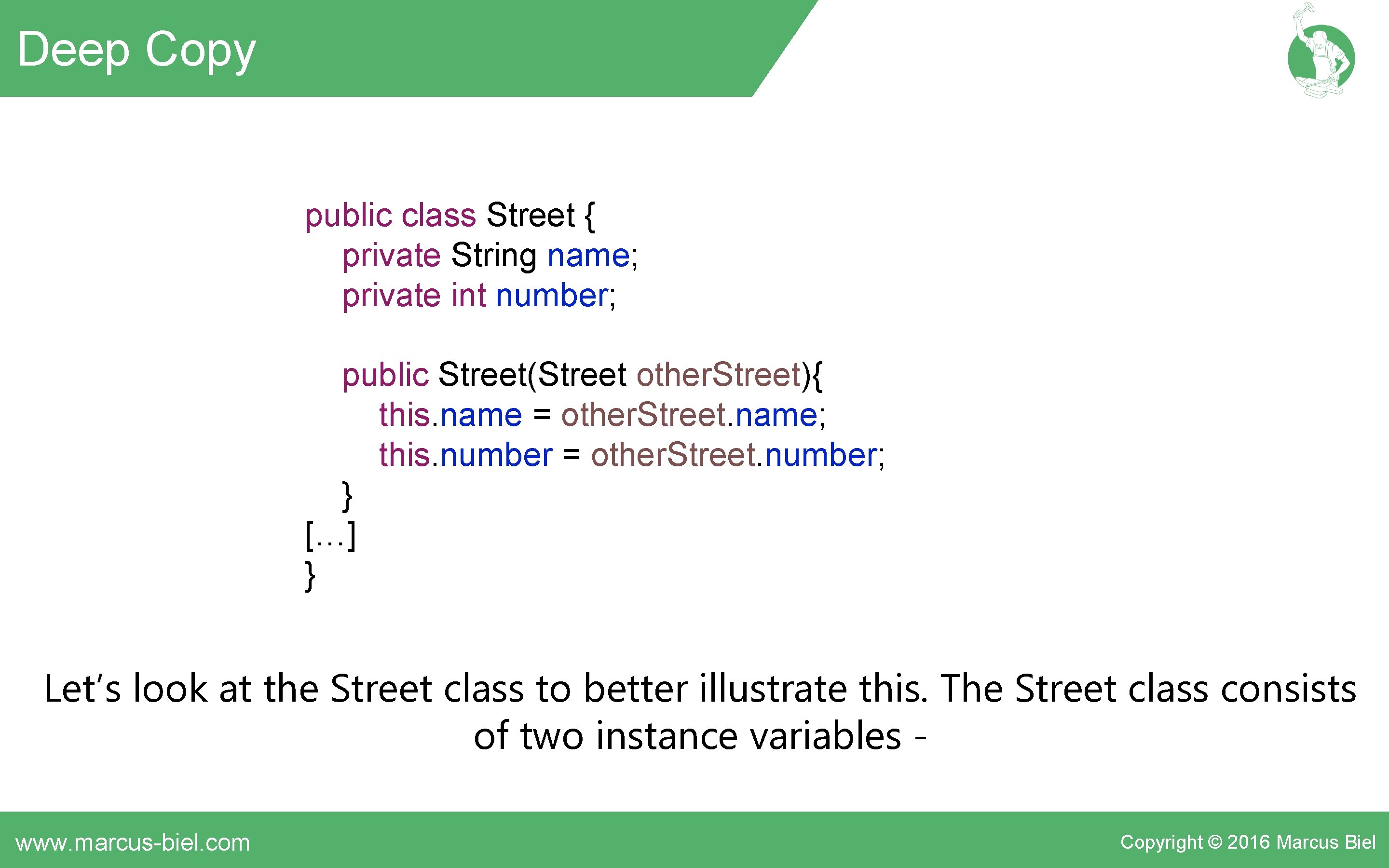
Deep Copy public class Street { private String name; private int number; public Street(Street other. Street){ this. name = other. Street. name; this. number = other. Street. number; } […] } Let’s look at the Street class to better illustrate this. The Street class consists of two instance variables www. marcus-biel. com Copyright © 2016 Marcus Biel
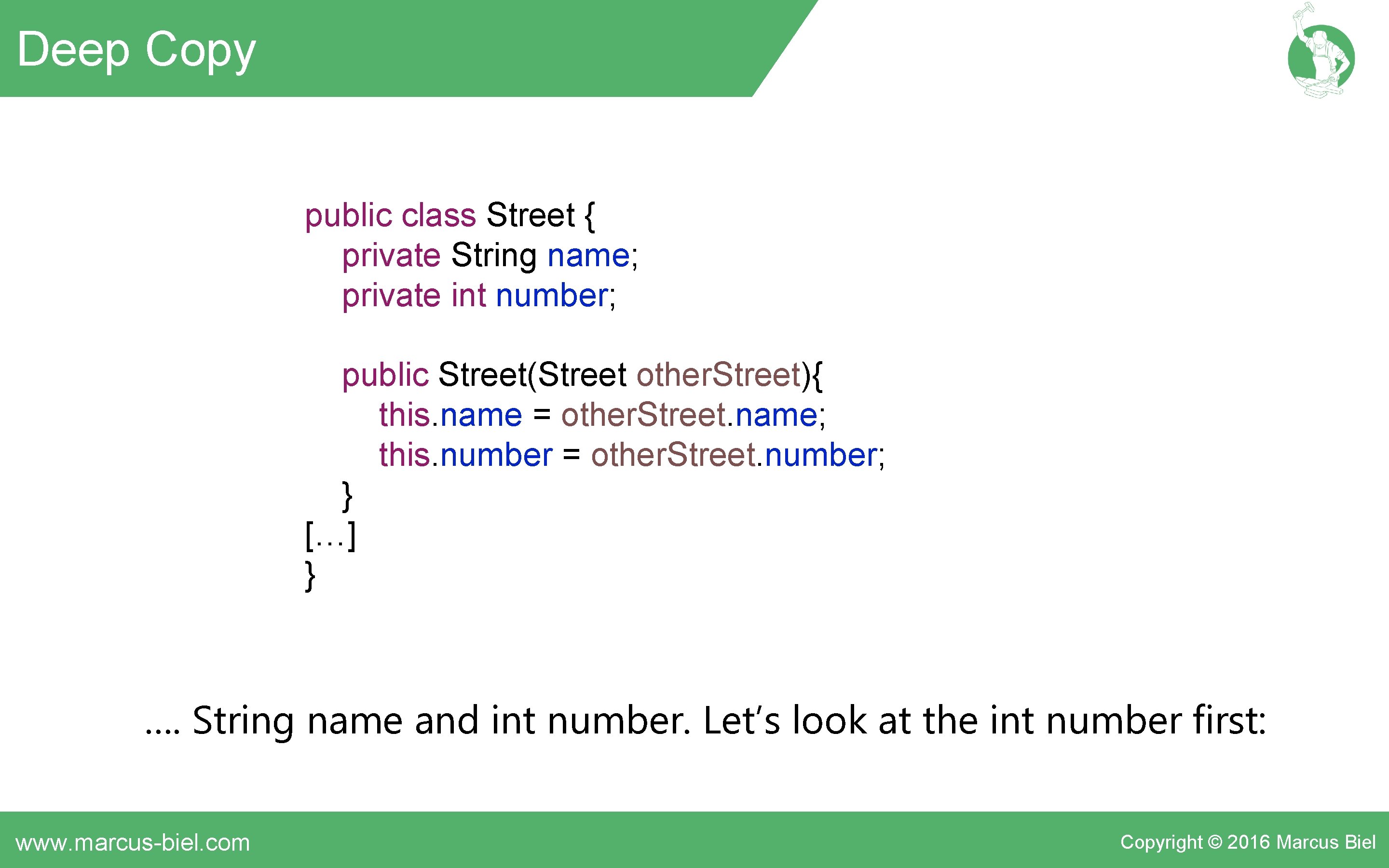
Deep Copy public class Street { private String name; private int number; public Street(Street other. Street){ this. name = other. Street. name; this. number = other. Street. number; } […] } …. String name and int number. Let’s look at the int number first: www. marcus-biel. com Copyright © 2016 Marcus Biel
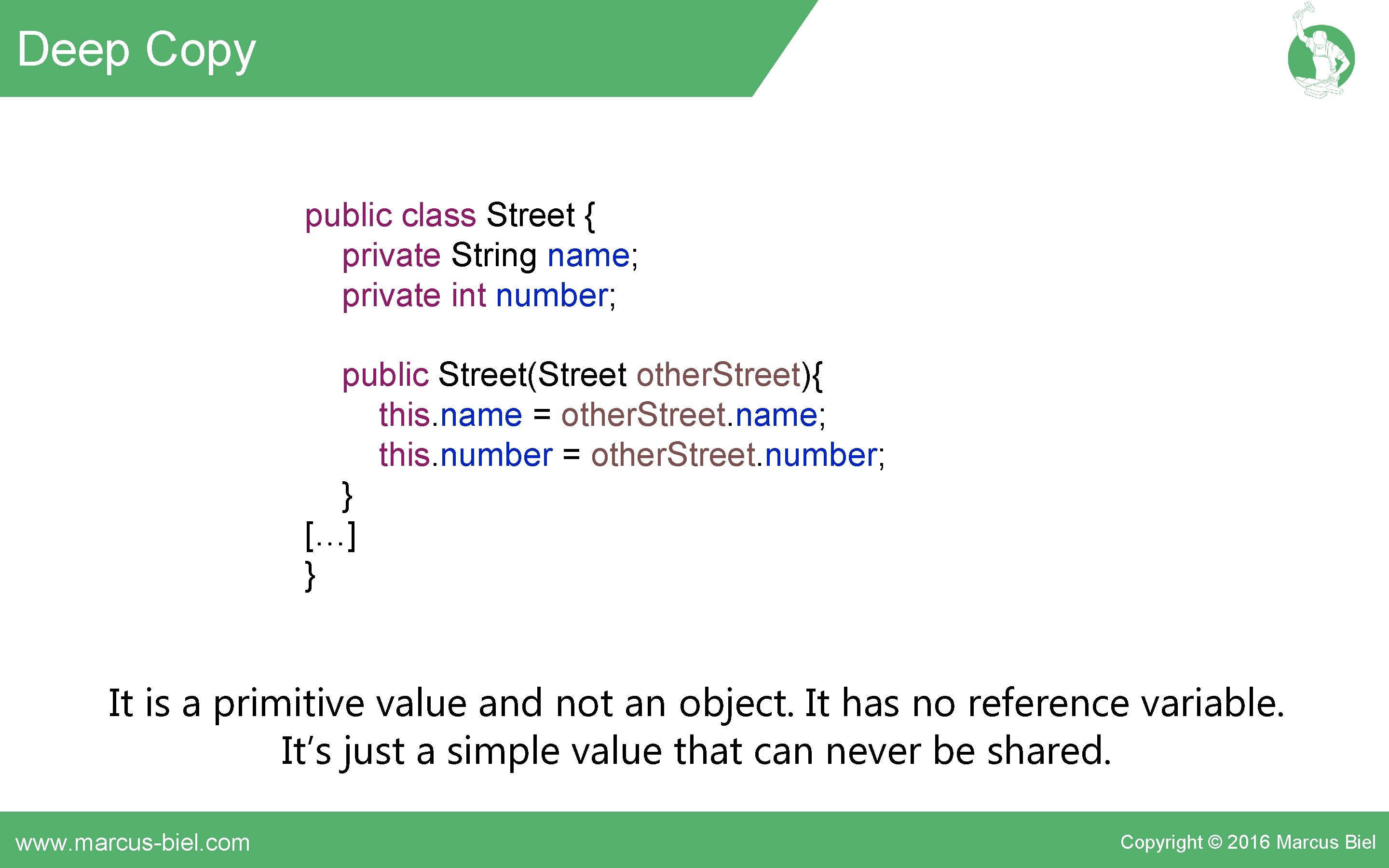
Deep Copy public class Street { private String name; private int number; public Street(Street other. Street){ this. name = other. Street. name; this. number = other. Street. number; } […] } It is a primitive value and not an object. It has no reference variable. It’s just a simple value that can never be shared. www. marcus-biel. com Copyright © 2016 Marcus Biel
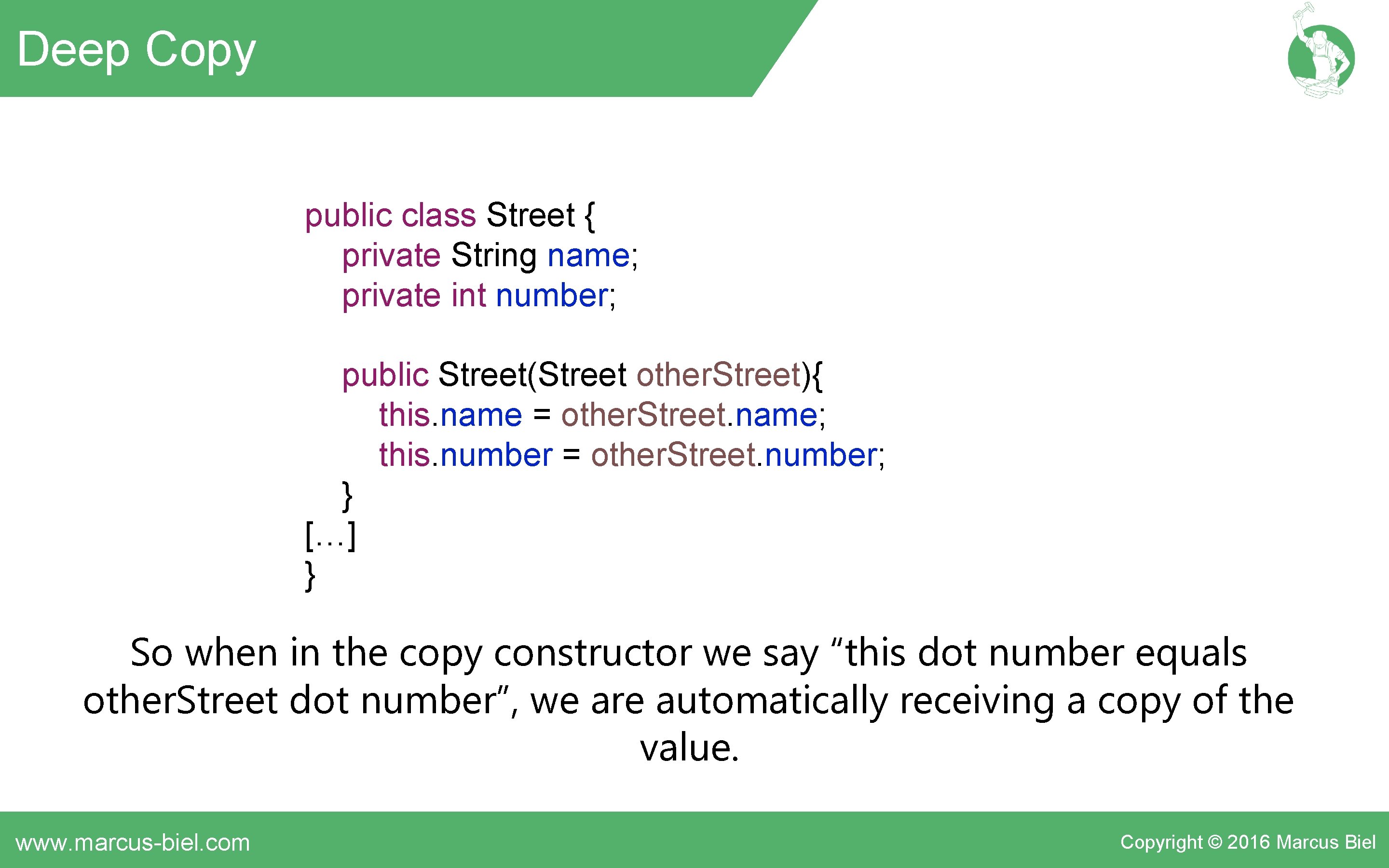
Deep Copy public class Street { private String name; private int number; public Street(Street other. Street){ this. name = other. Street. name; this. number = other. Street. number; } […] } So when in the copy constructor we say “this dot number equals other. Street dot number”, we are automatically receiving a copy of the value. www. marcus-biel. com Copyright © 2016 Marcus Biel
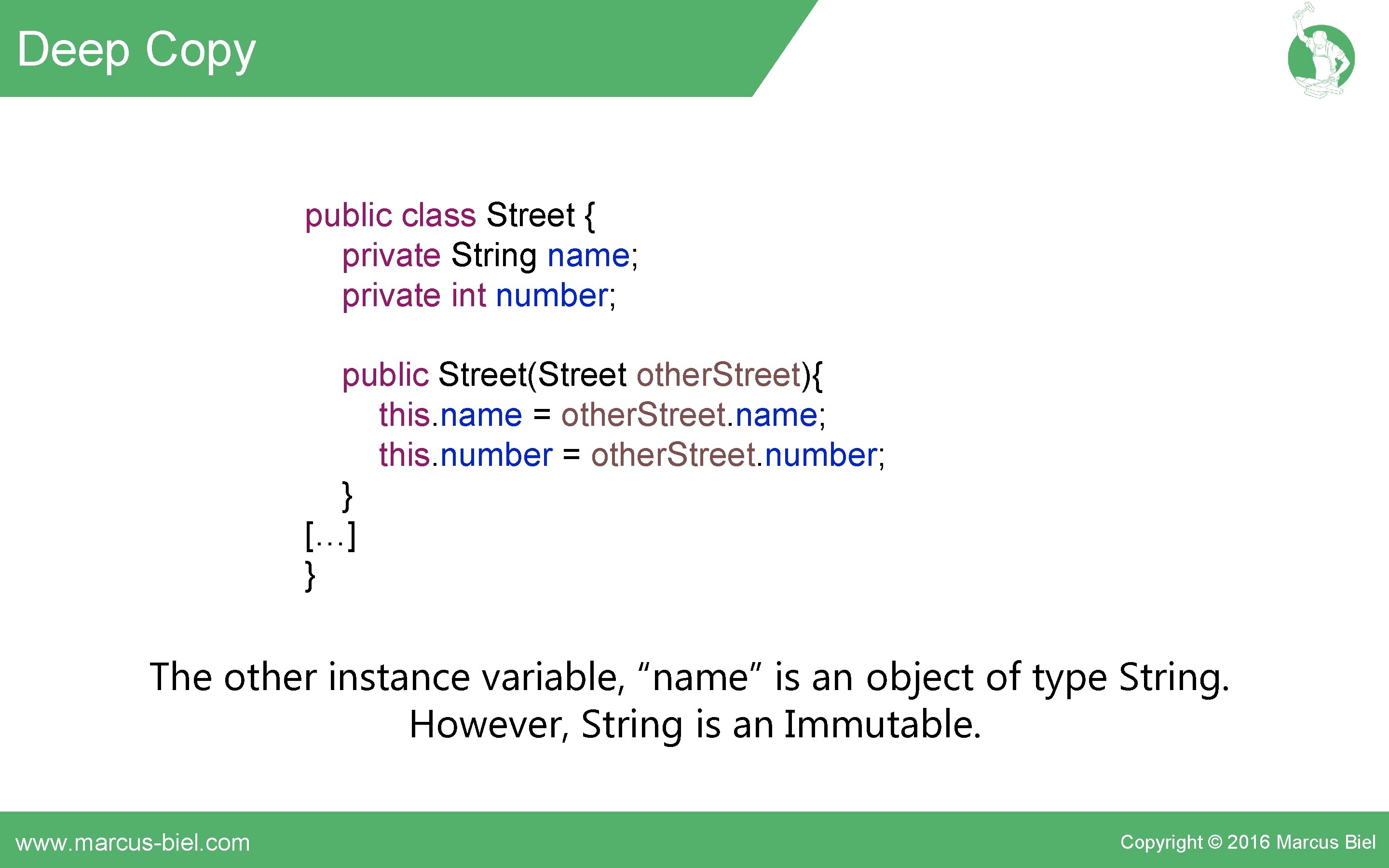
Deep Copy public class Street { private String name; private int number; public Street(Street other. Street){ this. name = other. Street. name; this. number = other. Street. number; } […] } The other instance variable, “name” is an object of type String. However, String is an Immutable. www. marcus-biel. com Copyright © 2016 Marcus Biel
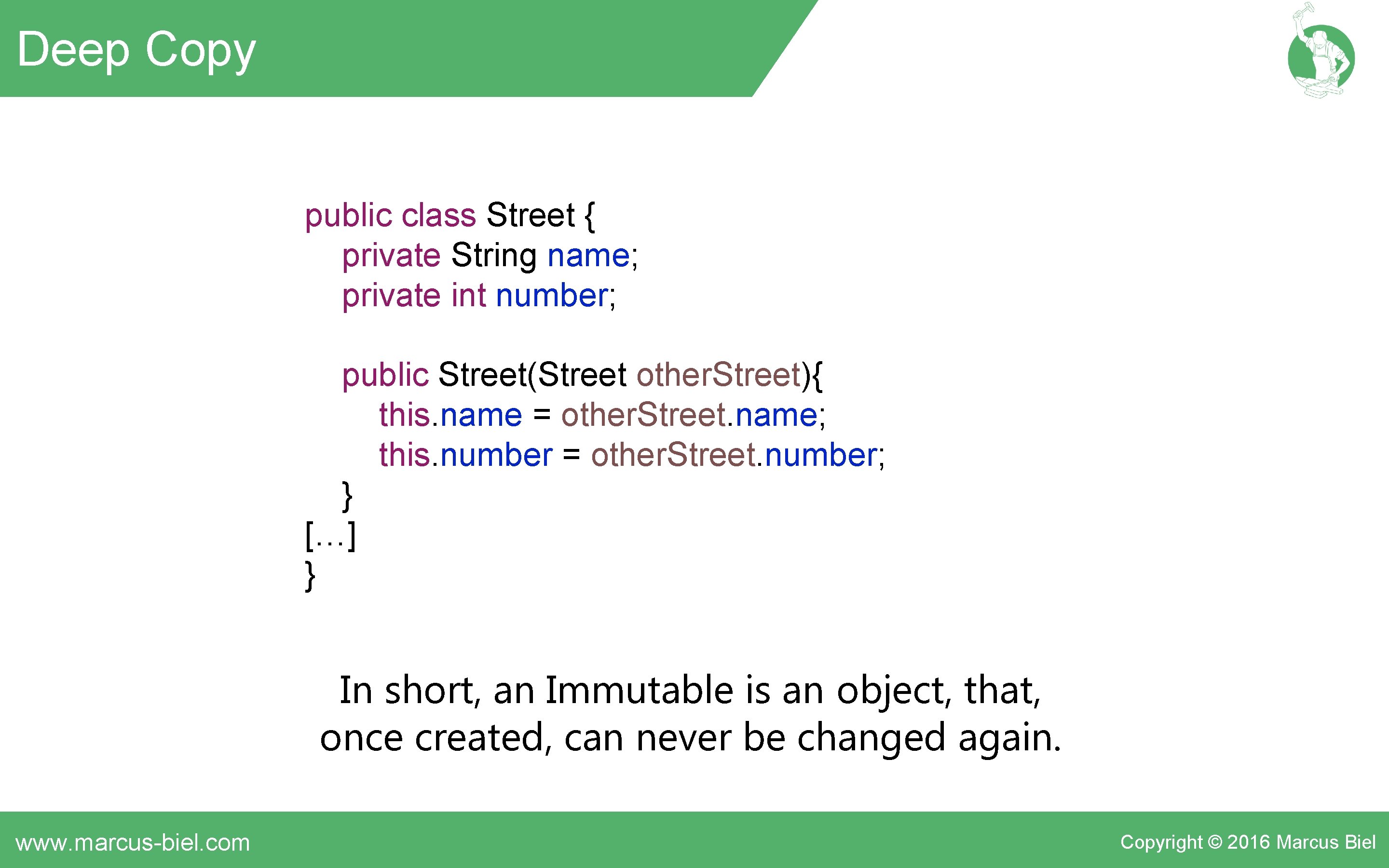
Deep Copy public class Street { private String name; private int number; public Street(Street other. Street){ this. name = other. Street. name; this. number = other. Street. number; } […] } In short, an Immutable is an object, that, once created, can never be changed again. www. marcus-biel. com Copyright © 2016 Marcus Biel
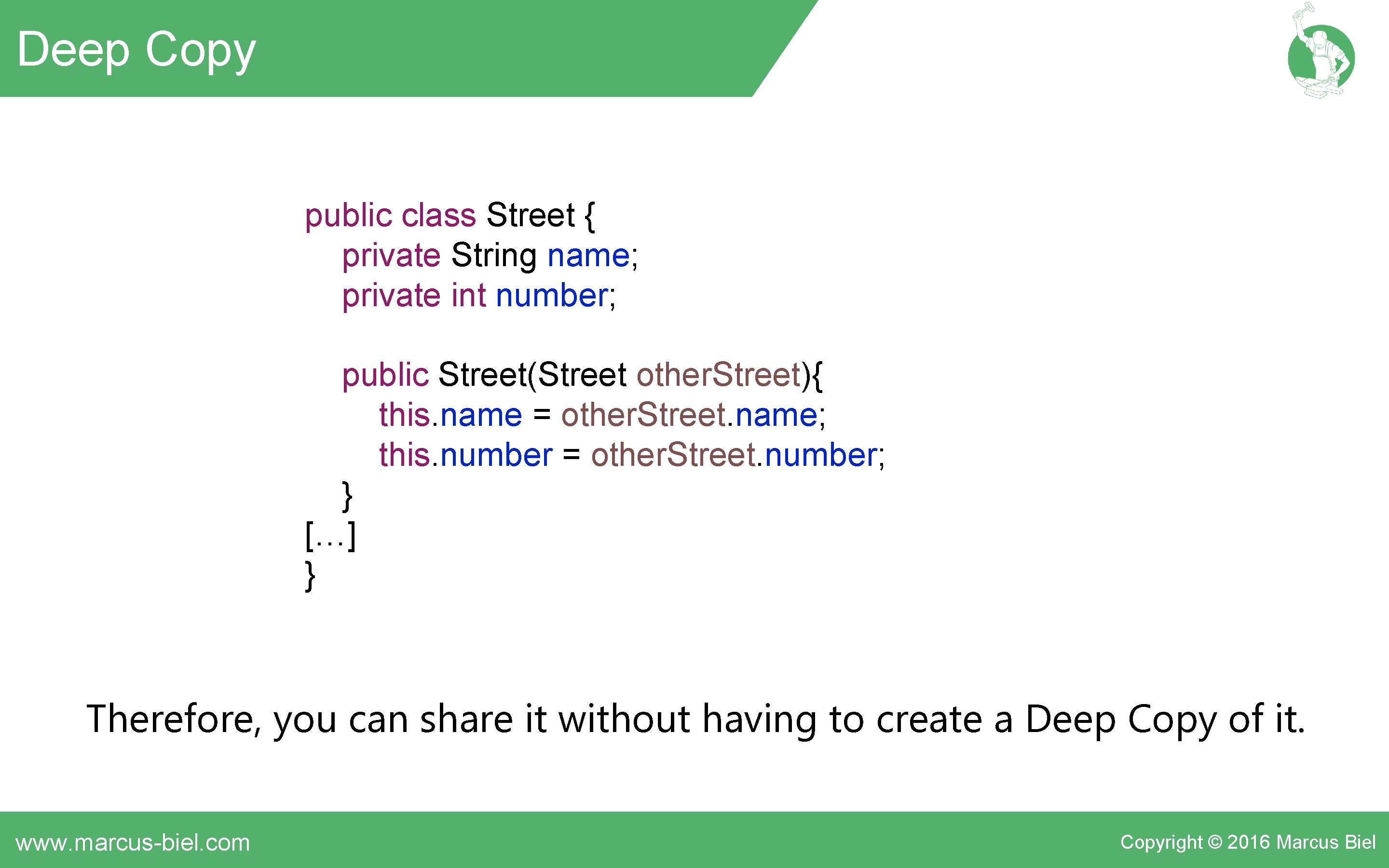
Deep Copy public class Street { private String name; private int number; public Street(Street other. Street){ this. name = other. Street. name; this. number = other. Street. number; } […] } Therefore, you can share it without having to create a Deep Copy of it. www. marcus-biel. com Copyright © 2016 Marcus Biel
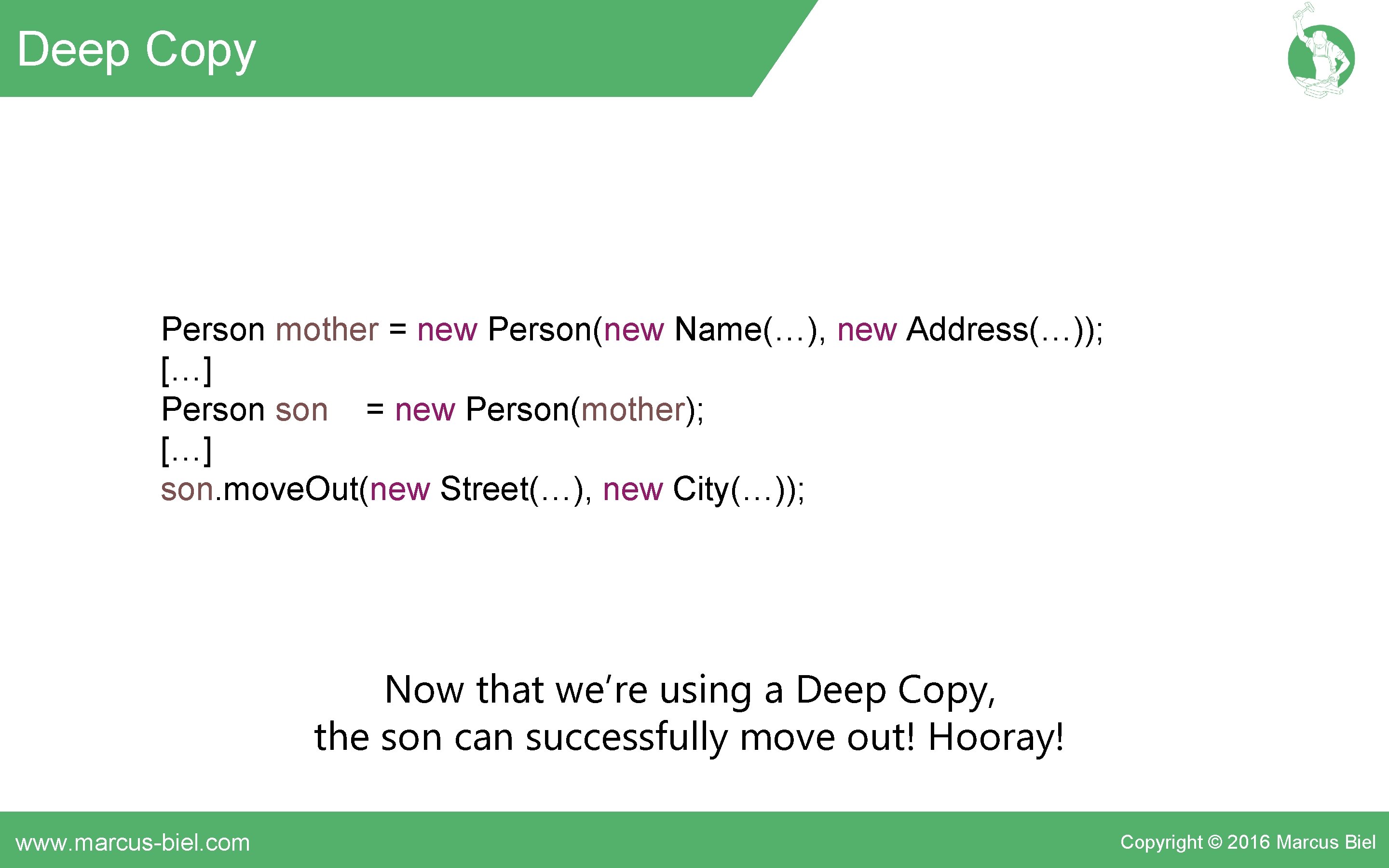
Deep Copy Person mother = new Person(new Name(…), new Address(…)); […] Person = new Person(mother); […] son. move. Out(new Street(…), new City(…)); Now that we’re using a Deep Copy, the son can successfully move out! Hooray! www. marcus-biel. com Copyright © 2016 Marcus Biel
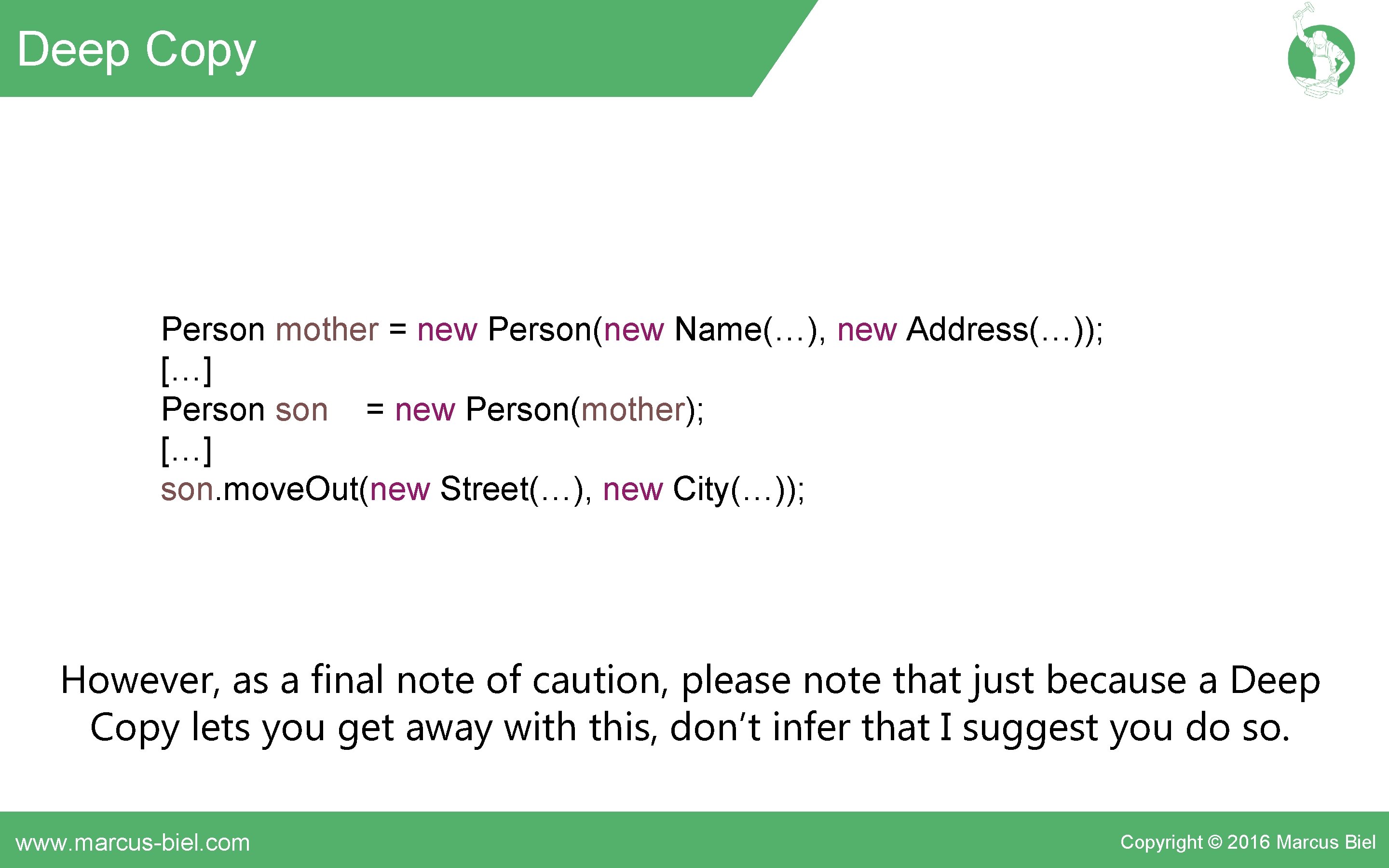
Deep Copy Person mother = new Person(new Name(…), new Address(…)); […] Person = new Person(mother); […] son. move. Out(new Street(…), new City(…)); However, as a final note of caution, please note that just because a Deep Copy lets you get away with this, don’t infer that I suggest you do so. www. marcus-biel. com Copyright © 2016 Marcus Biel
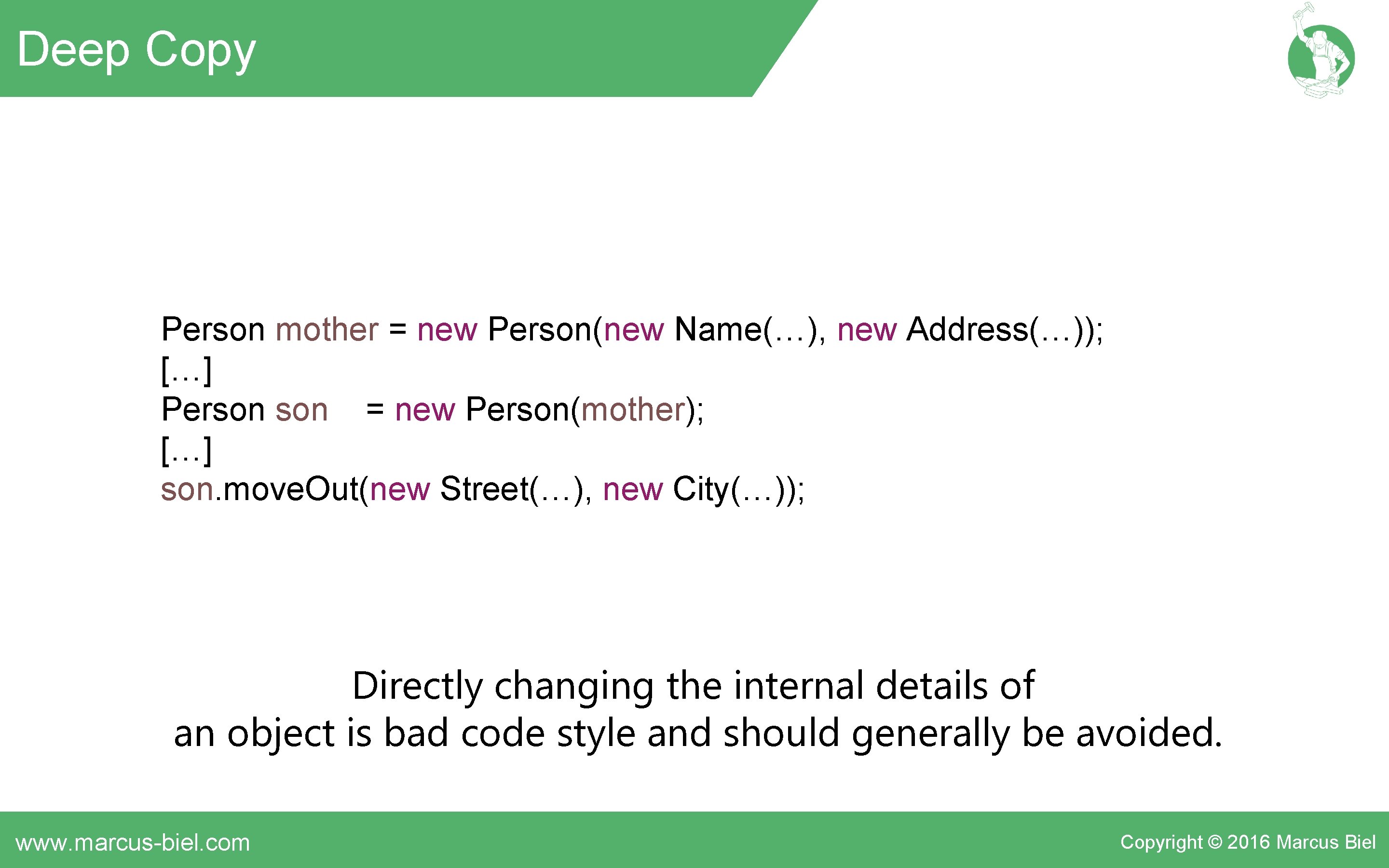
Deep Copy Person mother = new Person(new Name(…), new Address(…)); […] Person = new Person(mother); […] son. move. Out(new Street(…), new City(…)); Directly changing the internal details of an object is bad code style and should generally be avoided. www. marcus-biel. com Copyright © 2016 Marcus Biel
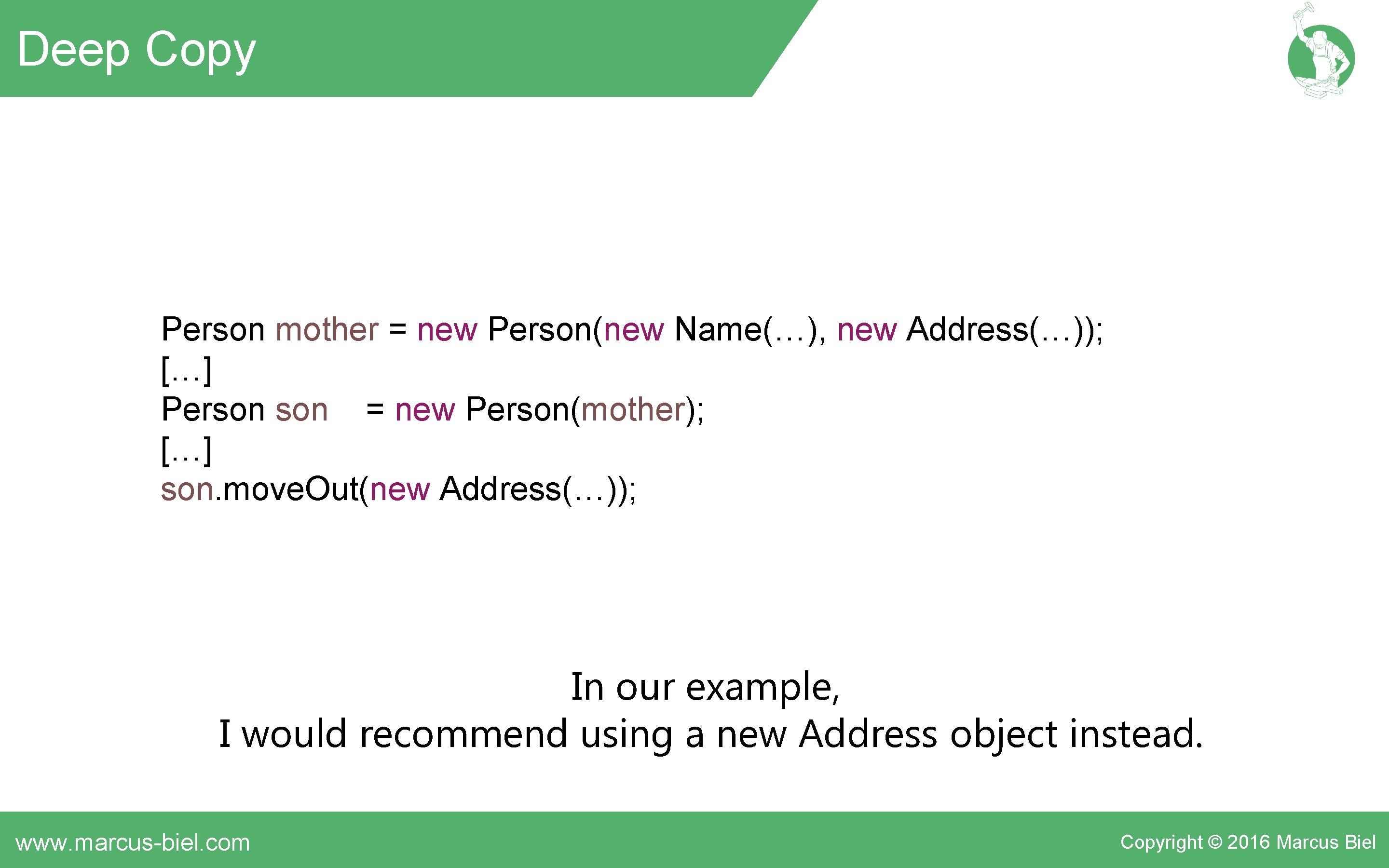
Deep Copy Person mother = new Person(new Name(…), new Address(…)); […] Person = new Person(mother); […] son. move. Out(new Address(…)); In our example, I would recommend using a new Address object instead. www. marcus-biel. com Copyright © 2016 Marcus Biel

Thank You Copyright © 2016 Marcus Biel All rights reserved www. marcus-biel. com Copyright © 2016 Marcus Biel
- Slides: 70