
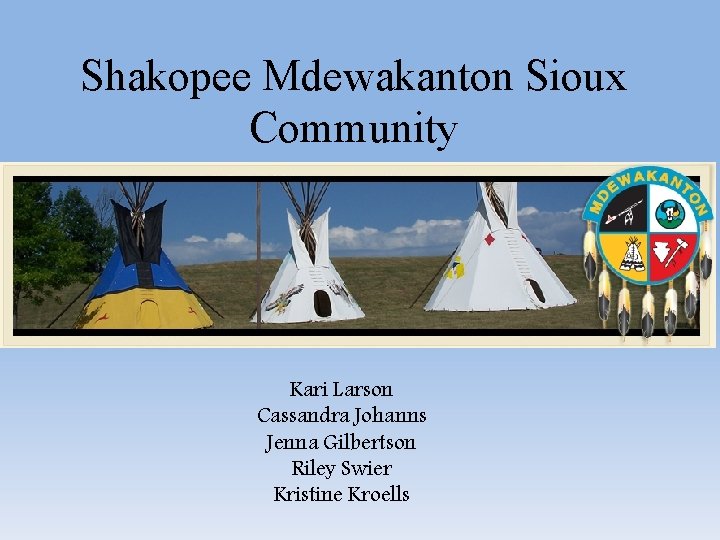
Shakopee Mdewakanton Sioux Community Kari Larson Cassandra Johanns
- Slides: 15
Shakopee Mdewakanton Sioux Community Kari Larson Cassandra Johanns Jenna Gilbertson Riley Swier Kristine Kroells
Overview • • • History Social Constructs Intersectionality & Levels of Discrimination Achievement Gaps Forms of Capital Culturally Relevant Teaching Techniques
History http: //www. shakopeedakota. org/video/history. html • Before European Contact – Minnesota River Valley • The Treaty and Reservation Era – – 1805 soldiers arrived Mass execution Indian boarding schools 1969 federal recognition • Prospects Begin to Improve – Little Six Bingo Palace – Mystic Lake Casino • Today
Forms of Capital (Economic, Social, Cultural, Human) v. Casinos Ø Mystic Lake Ø Little 6 Ø Mystic Lake Store at Mall of America v. The Meadows at Mystic Lake (golf course) v. Dakotah! Sport and Fitness v. Playworks
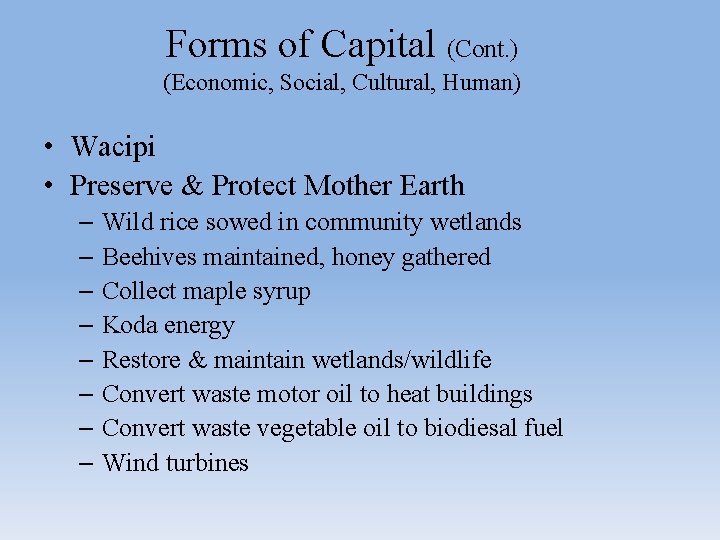
Forms of Capital (Cont. ) (Economic, Social, Cultural, Human) • Wacipi • Preserve & Protect Mother Earth – Wild rice sowed in community wetlands – Beehives maintained, honey gathered – Collect maple syrup – Koda energy – Restore & maintain wetlands/wildlife – Convert waste motor oil to heat buildings – Convert waste vegetable oil to biodiesal fuel – Wind turbines
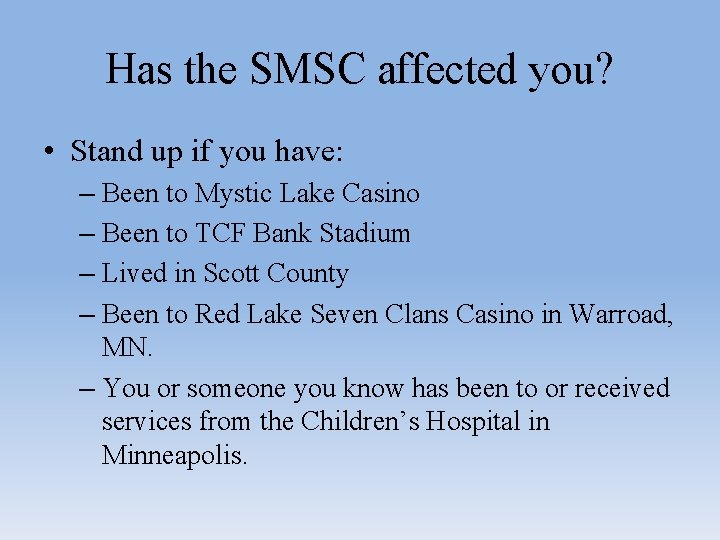
Has the SMSC affected you? • Stand up if you have: – Been to Mystic Lake Casino – Been to TCF Bank Stadium – Lived in Scott County – Been to Red Lake Seven Clans Casino in Warroad, MN. – You or someone you know has been to or received services from the Children’s Hospital in Minneapolis.
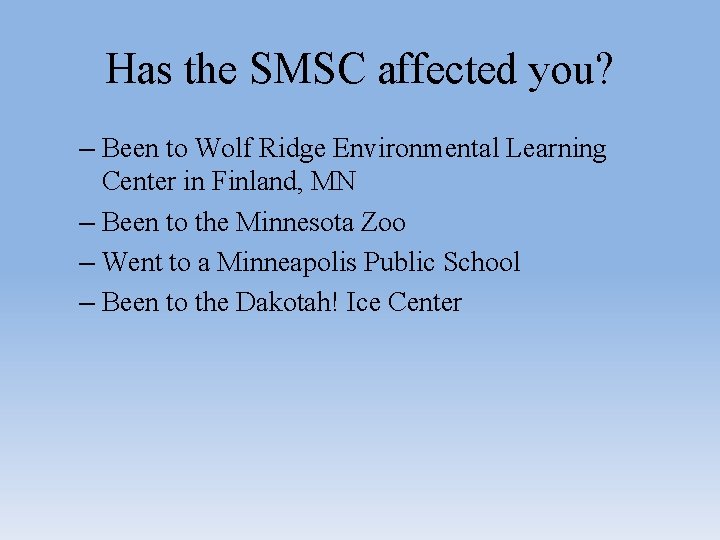
Has the SMSC affected you? – Been to Wolf Ridge Environmental Learning Center in Finland, MN – Been to the Minnesota Zoo – Went to a Minneapolis Public School – Been to the Dakotah! Ice Center
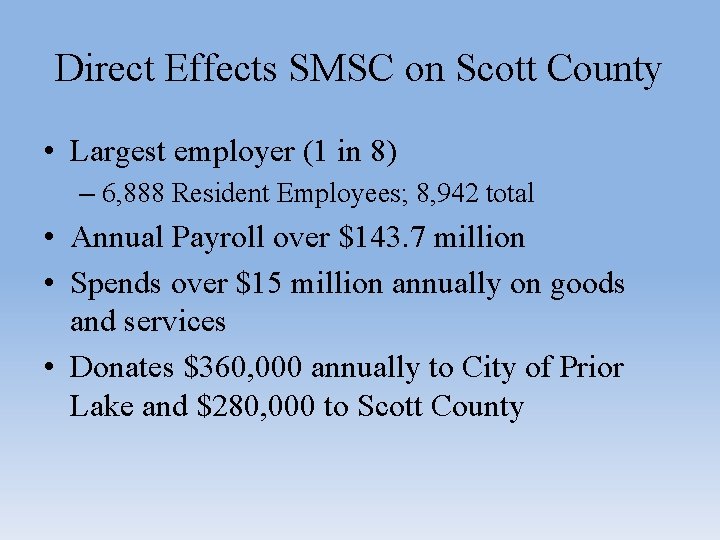
Direct Effects SMSC on Scott County • Largest employer (1 in 8) – 6, 888 Resident Employees; 8, 942 total • Annual Payroll over $143. 7 million • Spends over $15 million annually on goods and services • Donates $360, 000 annually to City of Prior Lake and $280, 000 to Scott County
Social Constructs • Gender Roles – Women playing an important role • Sexual Orientation – “Two Spirit” • Racism – Stereotypes in schools • http: //www. youtube. com/watch? v=Z_t. WEayq. HKk
Levels of Discrimination • Individual – Often viewed as uneducated and alcoholics. – History books fail to note the discrimination Native American’s faced and often portray events from the Western Centric point of view and perspective. – The use of Native American sports team mascots are insulting. There are multiple Native American groups within the U. S. , each with their own culture and language. This public mocking, disrespects the Native American fight to restore their cultures and religions (Examples: redskins, Indians, and savages). – Native Americans who have received money from their government, are sometimes labeled as lazy because they are given money from their government.
Levels of Discrimination (cont. ) • Organizational – Discrimination against Native Americans has gone down, but it is more subtle. There really hasn’t been any Native Americans that have been in a prominent political position or corporate position. – Discrimination against their culture • Declined a job because of taking peyote (a part of their religious practice). • Systematic – Many tribes are deprived from education that is available to most other American citizens. – Face discrimination in the workplace, earning lower wages or being unable to find jobs at all when they are forced to compete with white Americans, or even other minorities.
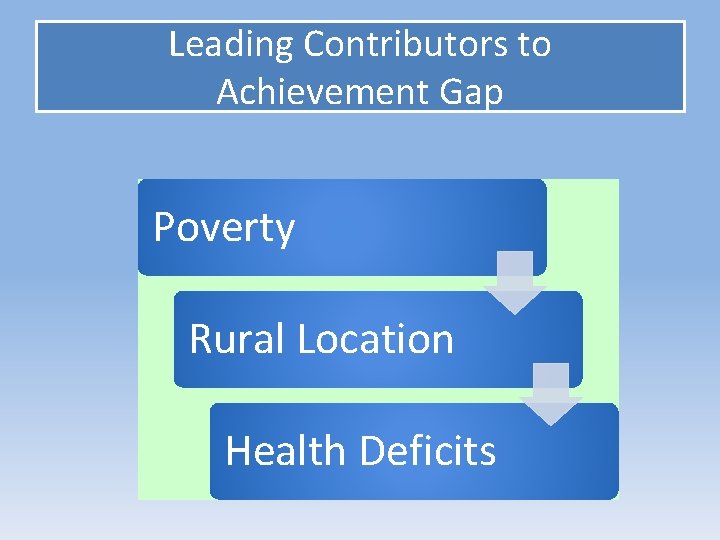
Leading Contributors to Achievement Gap Poverty Rural Location Health Deficits
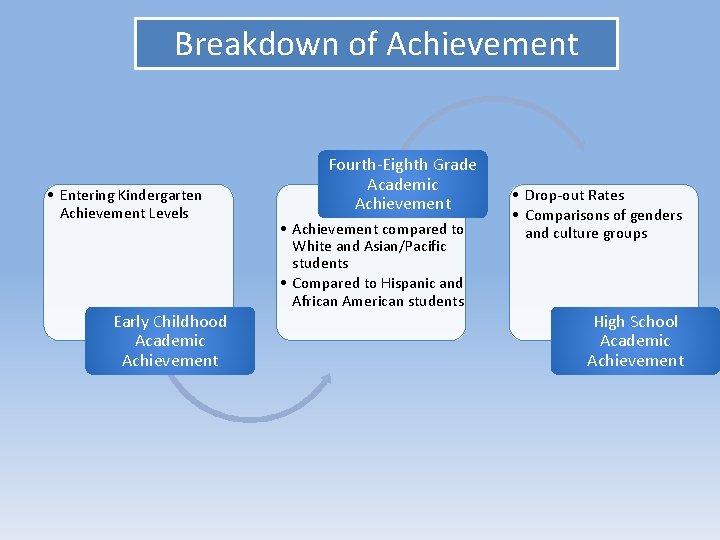
Breakdown of Achievement • Entering Kindergarten Achievement Levels Early Childhood Academic Achievement Fourth-Eighth Grade Academic Achievement • Achievement compared to White and Asian/Pacific students • Compared to Hispanic and African American students • Drop-out Rates • Comparisons of genders and culture groups High School Academic Achievement
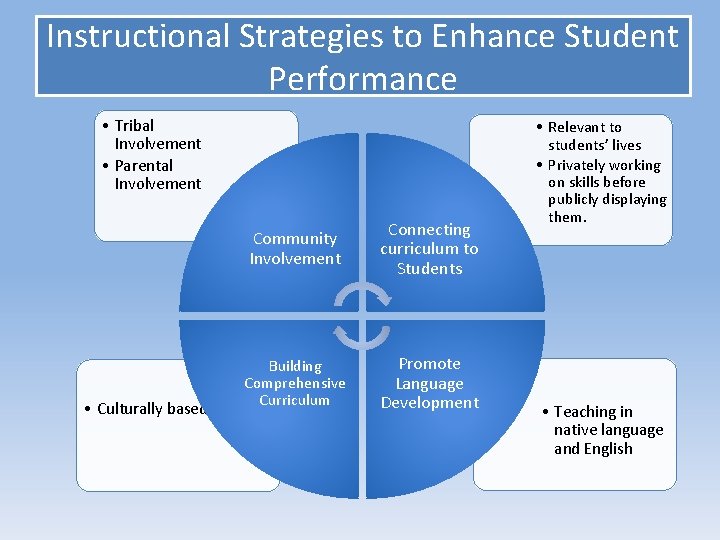
Instructional Strategies to Enhance Student Performance • Tribal Involvement • Parental Involvement • Culturally based Community Involvement Connecting curriculum to Students Building Comprehensive Curriculum Promote Language Development • Relevant to students’ lives • Privately working on skills before publicly displaying them. • Teaching in native language and English
Bibliography • • • American Indians: Concepts, Strategies, and Materials. The First Americans and African Americans, Part II. Retrieved on November 19 th, 2010 from Google Scholar database. Crystalinks, (2010). Native Americans. Retrieved from http: //www. crystalinks. com/nativeamericans. html Discrimination of Native American’s has been a serious problem since early American settlers arrived. (n. d. ). Retrieved from http: //truth-it. net/discrimination_of_native_americans. html Indians. org, (2010). Native American Women. Retrieved from http: //www. indians. org/articles/nativeamerican-women. html Kanatiyosh, (2010). RACISM & STEREOTYPING: The Affects On Our Children On Our Future. Retrieved from http: //www. tuscaroras. com/graydeer/pages/racism. htm National Education Association (NEA). (2004 -2005). American Indian/Alaskan Natives: Indian Student Achievement Today. Focus On Series, 2004. Retrieved November 18 th, 2010 from NEA Website. National Education Association (NEA). (2006). American Indian/Alaskan Natives: Endangered Indian Languages. Focus On Series, September 2006. Retrieved November 18 th, 2010 from NEA website. Native Americans and discrimination. (2009, June 10). Retrieved from http: //socyberty. com/ethnicity/native-americans-and-discrimination/ Shakopee Mdewakanton Sioux Community. [Web]. Retrieved from http: //www. shakopeedakota. org Shakopee Mdewakanton Sioux Community. Shakopee Mdewakantion Sioux Community 2009 donation report. (2010). [Web]. Retrieved from http: //www. shakopeedakota. org/flash/donationrpt 09/Booklet. pdf Whitebear, Dana. Personal Interview