
Shakespeares Theatre Elizabethan Drama Queen Elizabeth on the

Shakespeare’s Theatre

Elizabethan Drama ¬Queen Elizabeth on the throne from 15581603 ¬Shakespeare born 1564, lived to 1616, so he was primarily an Elizabethan ¬First theatres either Inn-Yards or Great Halls
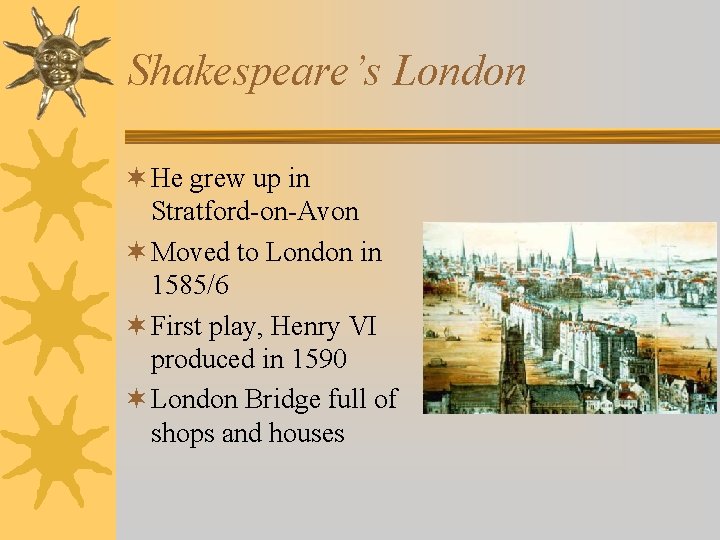
Shakespeare’s London ¬ He grew up in Stratford-on-Avon ¬ Moved to London in 1585/6 ¬ First play, Henry VI produced in 1590 ¬ London Bridge full of shops and houses
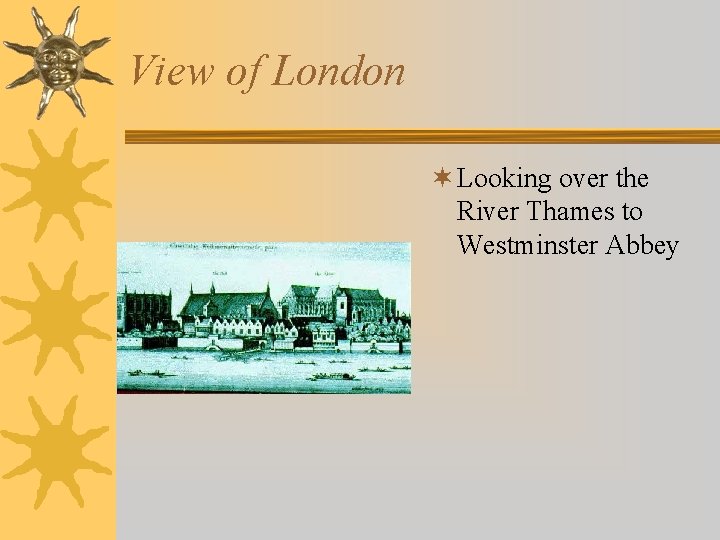
View of London ¬ Looking over the River Thames to Westminster Abbey
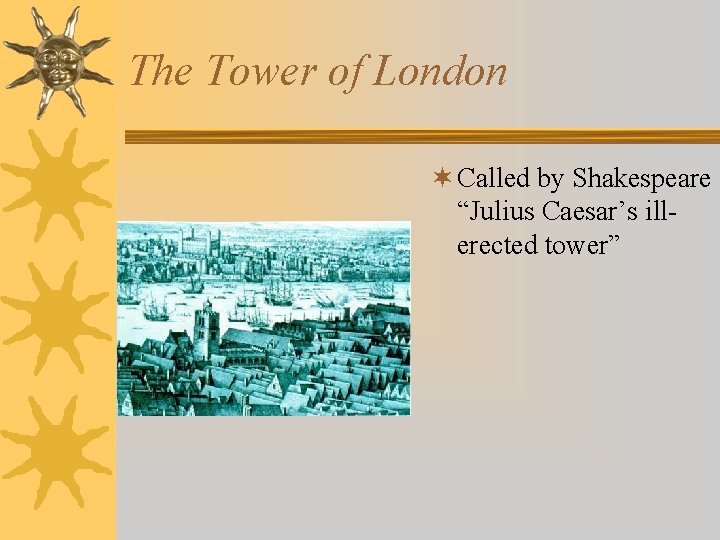
The Tower of London ¬ Called by Shakespeare “Julius Caesar’s illerected tower”
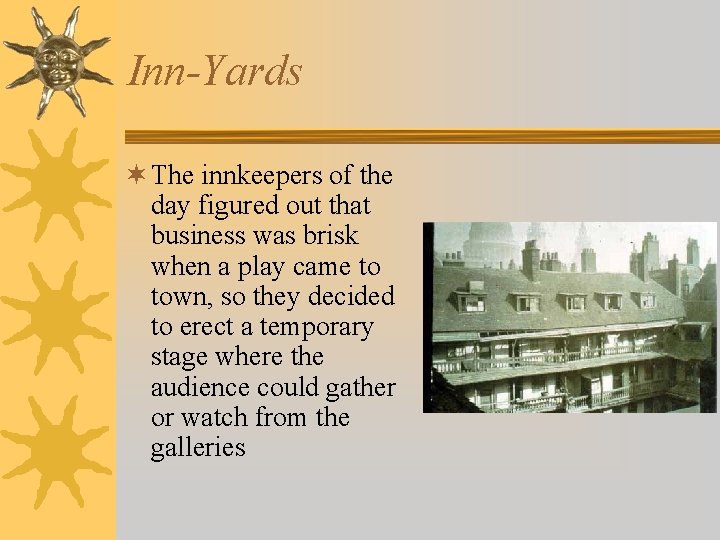
Inn-Yards ¬ The innkeepers of the day figured out that business was brisk when a play came to town, so they decided to erect a temporary stage where the audience could gather or watch from the galleries
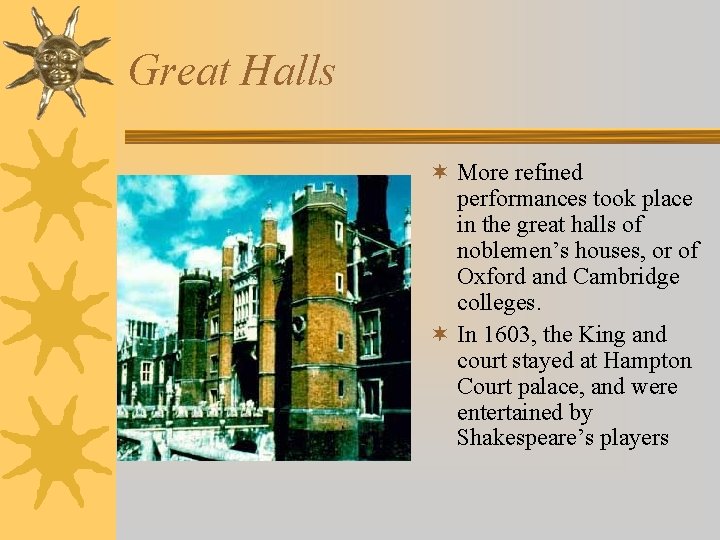
Great Halls ¬ More refined performances took place in the great halls of noblemen’s houses, or of Oxford and Cambridge colleges. ¬ In 1603, the King and court stayed at Hampton Court palace, and were entertained by Shakespeare’s players
Plays within plays ¬Many of Shakespeare’s plays included a play within a play – The Taming of the Shrew – Love’s Labours Lost – Midsummer Night’s Dream – Hamlet
Outdoor theatres ¬In 1575, when Shakespeare was only 11, the City authorities imposed a Code of Practice upon the Players which they despised ¬Moved their theatres outside of the city limits ¬In 1576, ‘The Theatre’ was built in Finsbury Fields, several others followed
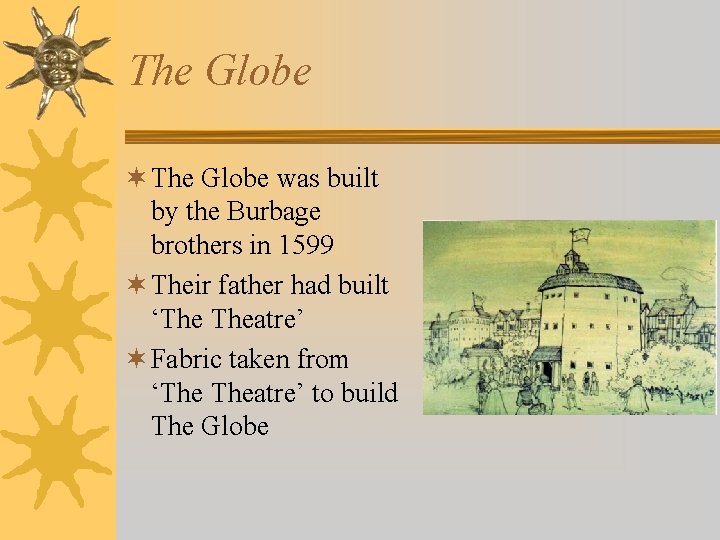
The Globe ¬ The Globe was built by the Burbage brothers in 1599 ¬ Their father had built ‘The Theatre’ ¬ Fabric taken from ‘The Theatre’ to build The Globe
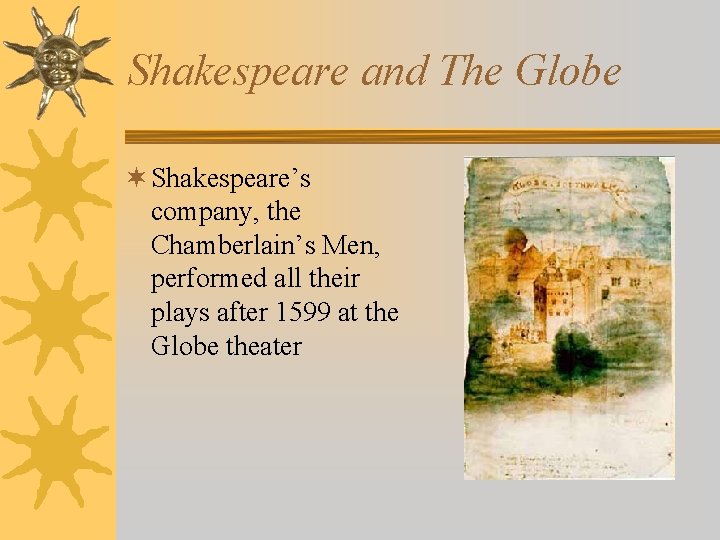
Shakespeare and The Globe ¬ Shakespeare’s company, the Chamberlain’s Men, performed all their plays after 1599 at the Globe theater
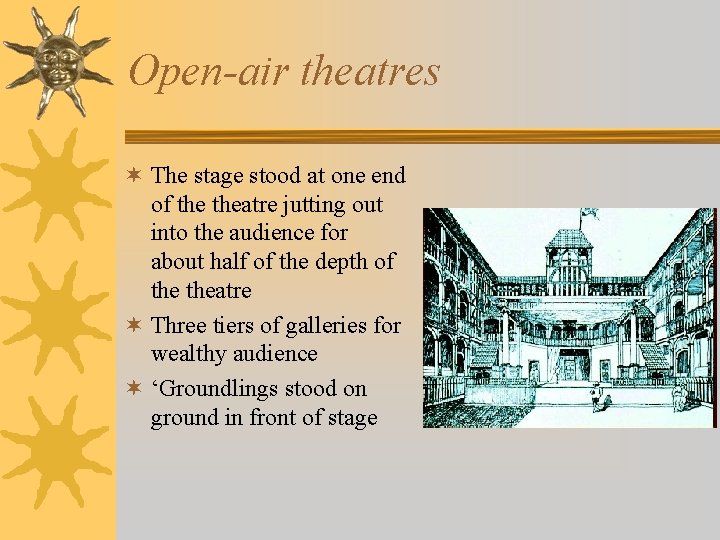
Open-air theatres ¬ The stage stood at one end of theatre jutting out into the audience for about half of the depth of theatre ¬ Three tiers of galleries for wealthy audience ¬ ‘Groundlings stood on ground in front of stage
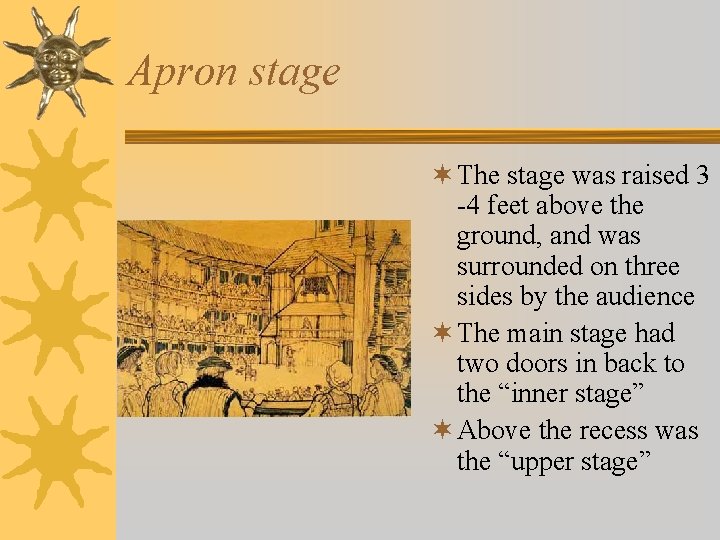
Apron stage ¬ The stage was raised 3 -4 feet above the ground, and was surrounded on three sides by the audience ¬ The main stage had two doors in back to the “inner stage” ¬ Above the recess was the “upper stage”
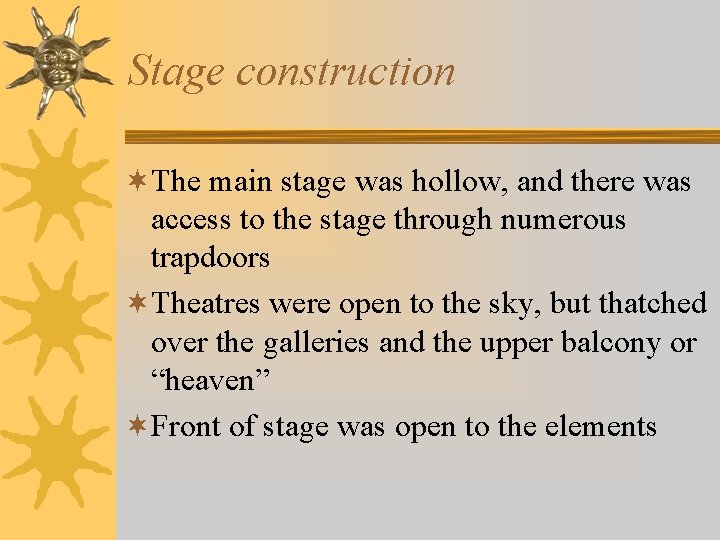
Stage construction ¬The main stage was hollow, and there was access to the stage through numerous trapdoors ¬Theatres were open to the sky, but thatched over the galleries and the upper balcony or “heaven” ¬Front of stage was open to the elements
Uses of the multiple stage ¬Main action took place on the main stage ¬Surrounded by audience, so that the “asides” were not so artificial as they seem today ¬Soliloquies could appear to be spoken confidentially to the audience ¬Trapdoor could serve as Ophelia’s grave
Indoor theatres ¬ While the outdoor theatres were being built, several indoor theatres were also constructed for companies of boy actors ¬ These were developed along the lines of the Great Halls ¬ They were smaller than outdoor theatres, rectangular, roofed, and lighted by candles ¬ Admission more expensive, only 700 or so people could fit into these theatres.
Settings ¬ No elaborate settings like plays of modern theatre ¬ Shakespeare had to create setting by the use of the words ¬ He had to establish time of day by stating the time, since many performances were outside ¬ No curtains to main stage, had to create change in scenes by the words and the actions of the players
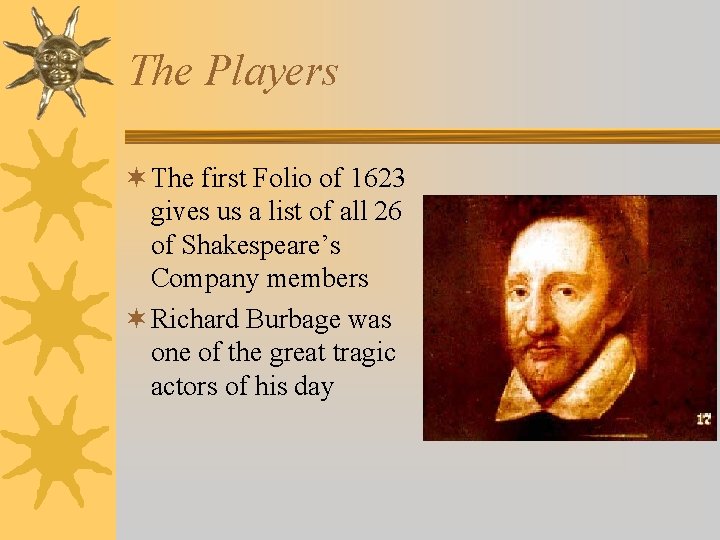
The Players ¬ The first Folio of 1623 gives us a list of all 26 of Shakespeare’s Company members ¬ Richard Burbage was one of the great tragic actors of his day
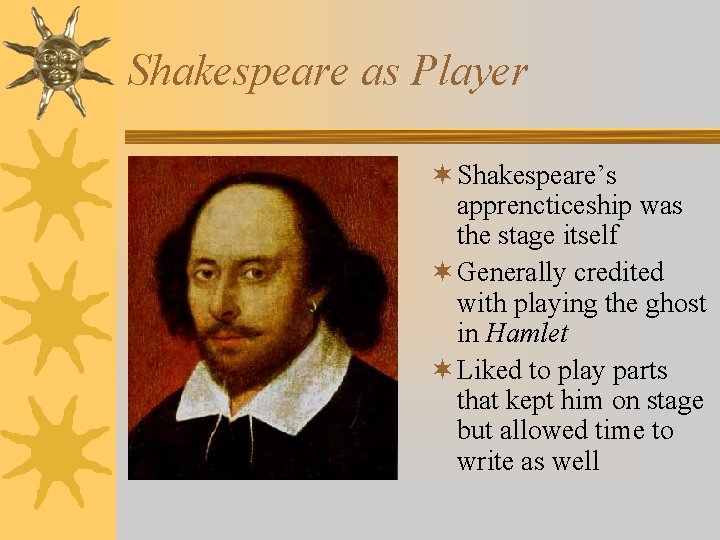
Shakespeare as Player ¬ Shakespeare’s apprencticeship was the stage itself ¬ Generally credited with playing the ghost in Hamlet ¬ Liked to play parts that kept him on stage but allowed time to write as well

Sources ¬Mowat, Barbara A. and Paul Werstine, eds. Hamlet by William Shakespeare, Folger Shakespeare Library. New York: Washington Square Press, 1992. ¬Lecture by Hilda D. Spear (University of Dundee) held at Cologne University on October of 1989
- Slides: 20