
Shakespeare Notes Part One Character Types in Shakespeares



- Slides: 25
Shakespeare Notes
Part One Character Types in Shakespeare’s Plays
Basic Character Definitions Dynamic Character: One who undergoes significant inner change or growth in personality and/or attitude during the course of a play; often referred to as a round or complex character. Static or stock character: One who does not undergo significant change or growth during the course of a play; often referred to as a flat, or twodimensional; stereotypical and often predictable; they usually do one of the following: - Provide comic relief - Deliver vital information or give assistance to other characters. - Serve as a menacing character that hinders or helps the hero to change in the course of a play.
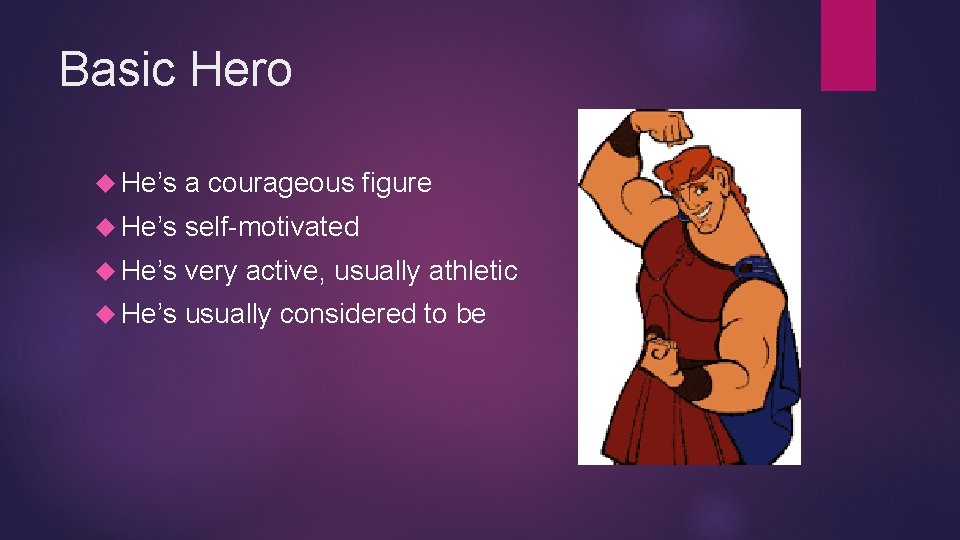
Basic Hero He’s a courageous figure He’s self-motivated He’s very active, usually athletic He’s usually considered to be handsome
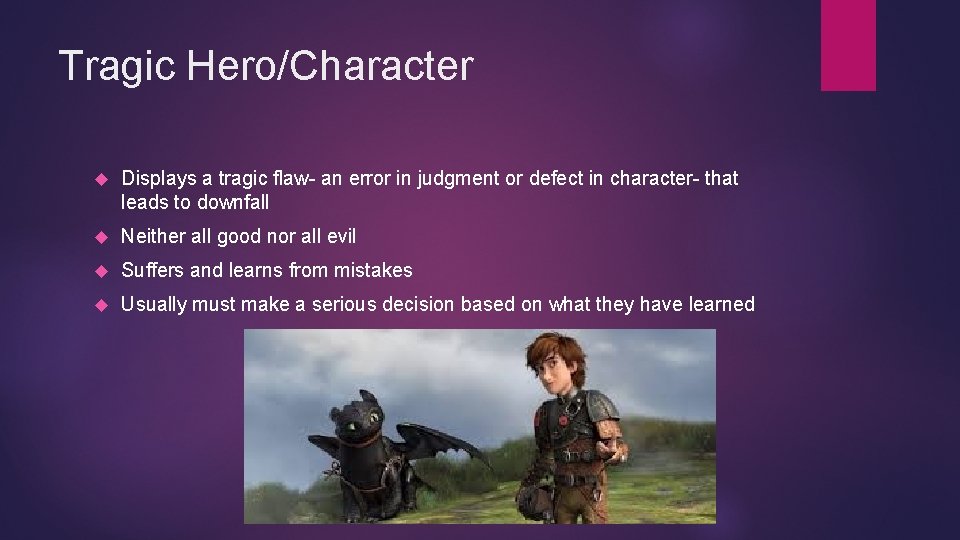
Tragic Hero/Character Displays a tragic flaw- an error in judgment or defect in character- that leads to downfall Neither all good nor all evil Suffers and learns from mistakes Usually must make a serious decision based on what they have learned
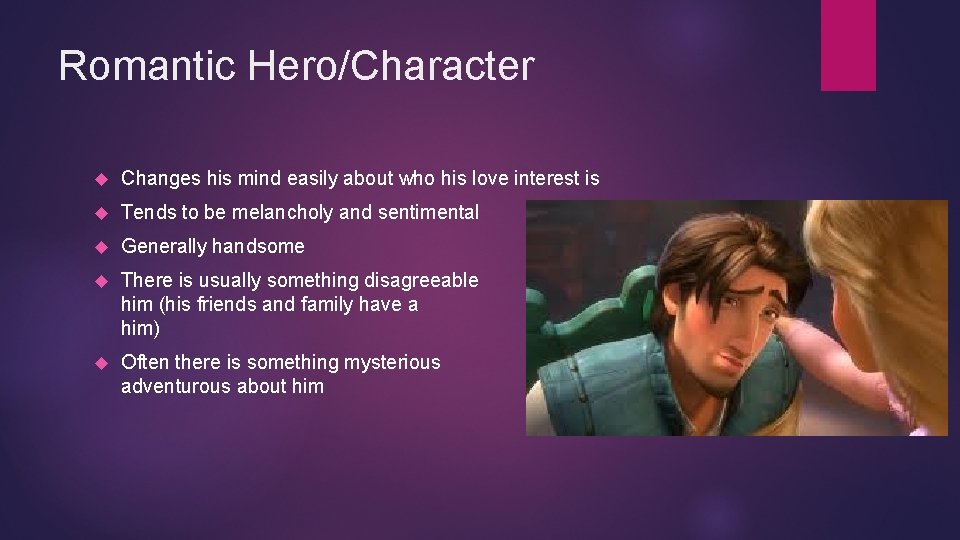
Romantic Hero/Character Changes his mind easily about who his love interest is Tends to be melancholy and sentimental Generally handsome There is usually something disagreeable him (his friends and family have a him) Often there is something mysterious adventurous about him about complaint about and/or
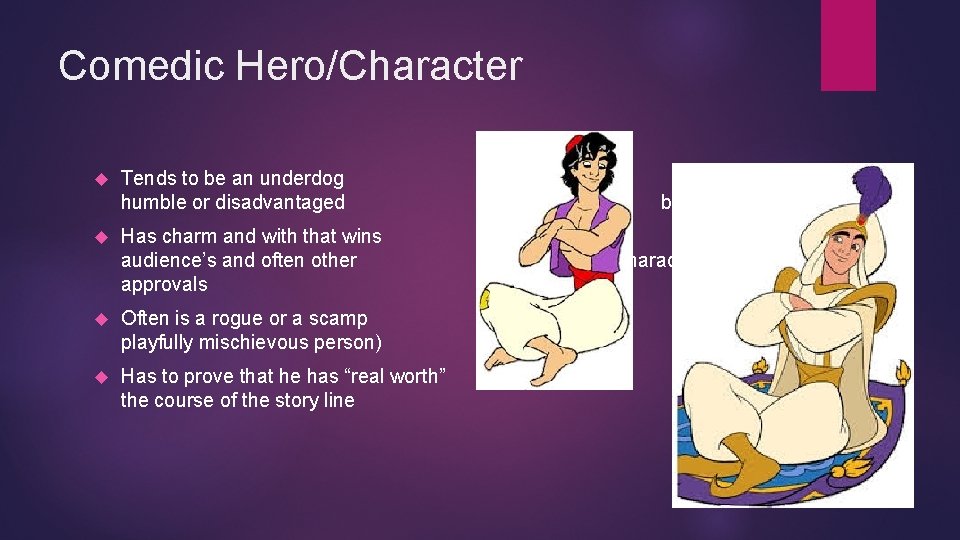
Comedic Hero/Character Tends to be an underdog humble or disadvantaged Has charm and with that wins audience’s and often other approvals Often is a rogue or a scamp playfully mischievous person) Has to prove that he has “real worth” the course of the story line (from backgrounds) the character’s (a through
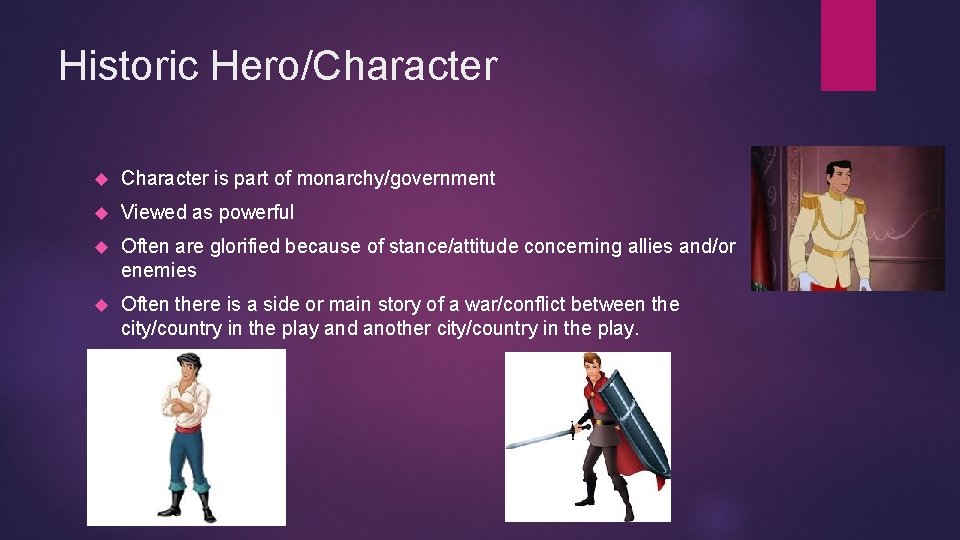
Historic Hero/Character is part of monarchy/government Viewed as powerful Often are glorified because of stance/attitude concerning allies and/or enemies Often there is a side or main story of a war/conflict between the city/country in the play and another city/country in the play.
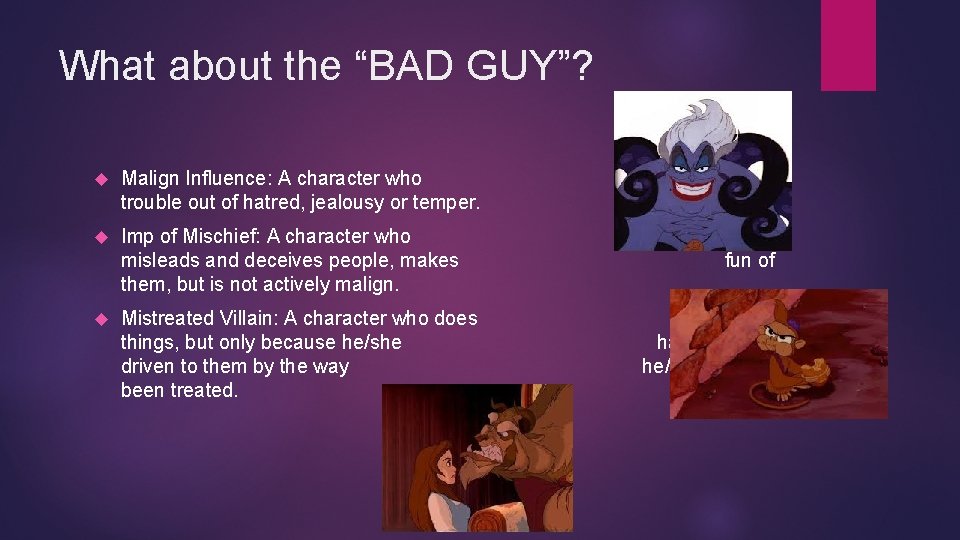
What about the “BAD GUY”? Malign Influence: A character who trouble out of hatred, jealousy or temper. Imp of Mischief: A character who misleads and deceives people, makes them, but is not actively malign. Mistreated Villain: A character who does things, but only because he/she driven to them by the way been treated. causes fun of wicked has ben he/she has
Supernatural Characters Witches: - make predictions for other characters - “trap” characters with magic and trickery Ghosts: - causes fear and apprehension in audience the actors’ situations in the play - give the audience a connection with the possible after life Fairies and Spirits: - add a feeling of chaos to the play - serve a childlike presence - are usually good, but can have a “devilish” side. for characters’
Characters in Story Lines Royalty: usually related by family or loyalty ties People of the court/community: minor characters that are a part of the royal community Love interest: the one the hero “lives” for Servants: those who are friends of the hero Commoners: non royal folks in the community Merchants, doctors, solicitors: people in the community who have professions that aid in the story line *these characters can be dynamic or static according to their rold and purpose in the story line.
Part Two TYPES OF SHAKESPEARE PLAYS
What did Shakespeare write? Comedies: “happy ending” Tragedies: end with death of main character(s) Histories: history focus on events in or similar to those in
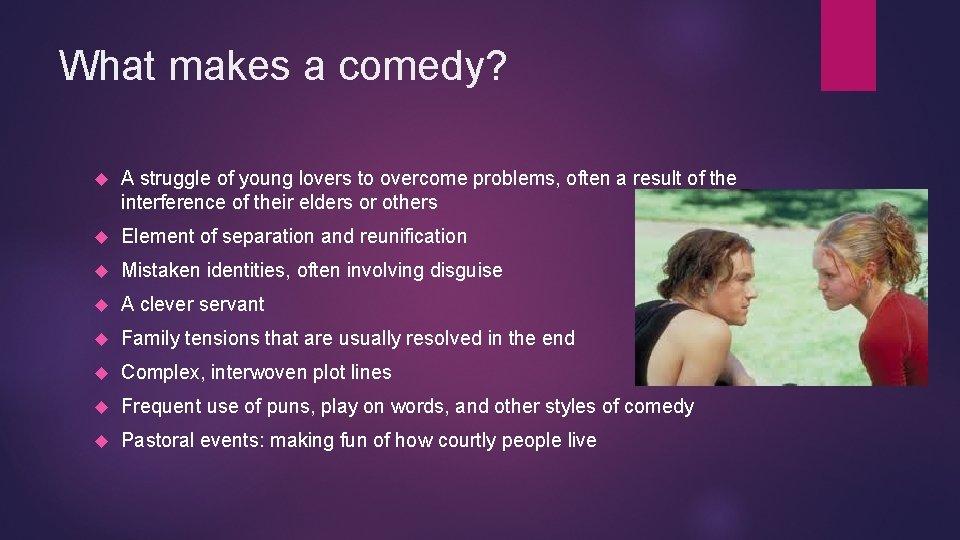
What makes a comedy? A struggle of young lovers to overcome problems, often a result of the interference of their elders or others Element of separation and reunification Mistaken identities, often involving disguise A clever servant Family tensions that are usually resolved in the end Complex, interwoven plot lines Frequent use of puns, play on words, and other styles of comedy Pastoral events: making fun of how courtly people live
Types of Comedies Farce: hilarious improbability; wild coincidences and complications; absurd characters; comic deceptions and disguises Romantic: sympathetic and well-matched lovers are united or reconciled; lovers are usually young; lovers often dept apart by complicating circumstances; fairy-tale ending Satirical: include con-artists, criminals, tricksters, hypocrites, gullible dupes, goofs; the central character is usually foolish, cynical or morally corrupt; often referred to a “black comedy” (we laugh at mortifying or grotesque events)
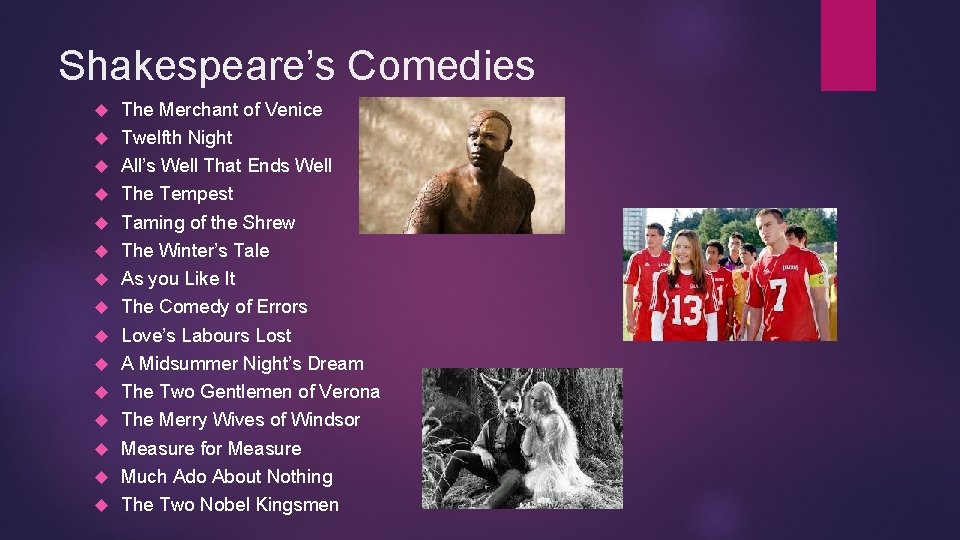
Shakespeare’s Comedies The Merchant of Venice Twelfth Night All’s Well That Ends Well The Tempest Taming of the Shrew The Winter’s Tale As you Like It The Comedy of Errors Love’s Labours Lost A Midsummer Night’s Dream The Two Gentlemen of Verona The Merry Wives of Windsor Measure for Measure Much Ado About Nothing The Two Nobel Kingsmen
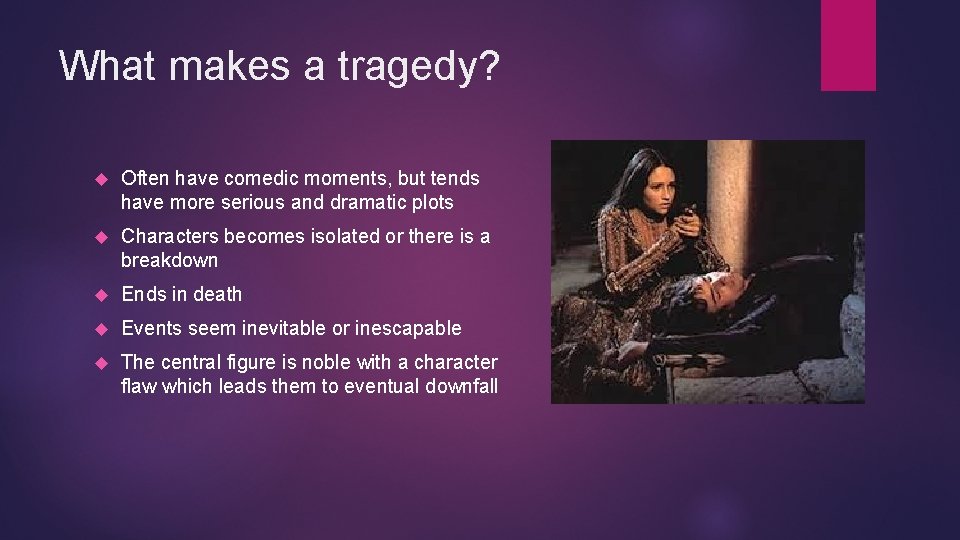
What makes a tragedy? Often have comedic moments, but tends have more serious and dramatic plots to Characters becomes isolated or there is a breakdown social Ends in death Events seem inevitable or inescapable The central figure is noble with a character flaw which leads them to eventual downfall
Shakespearean Tragedies Macbeth Hamlet Romeo and Juliet Titus Andronicus Julius Caesar (also a history) Troilus and Cressida Othello Coriolanus (also a history) King Lear Antony and Cleopatra (also a history) Cymbeline (this is debated as a comedy)
What makes a history play? Focus on England’s monarchs Play on Elizabethan propaganda showing dangers of civil war and glorifying the queen’s ancestors Royalty are depicted as powerful It is believed that the depiction of the royalty was inaccurate
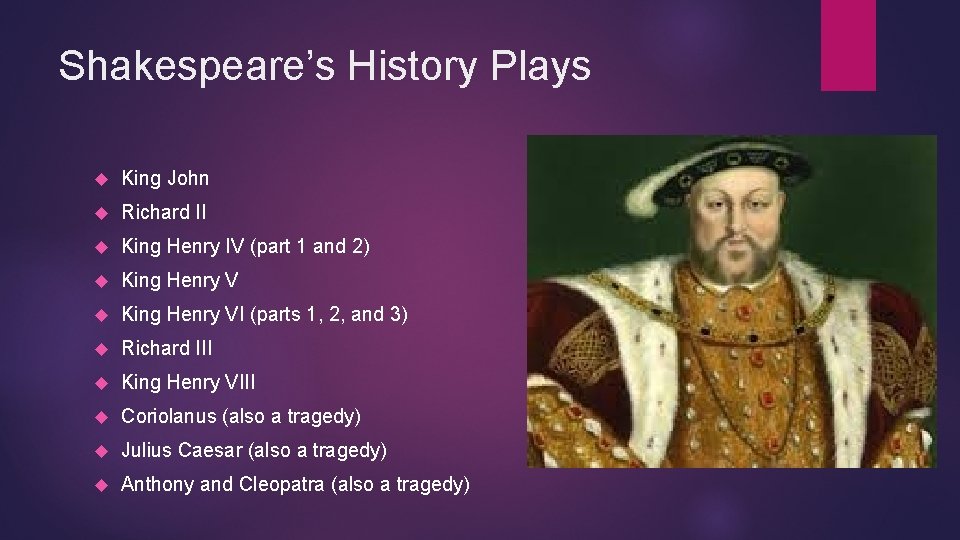
Shakespeare’s History Plays King John Richard II King Henry IV (part 1 and 2) King Henry VI (parts 1, 2, and 3) Richard III King Henry VIII Coriolanus (also a tragedy) Julius Caesar (also a tragedy) Anthony and Cleopatra (also a tragedy)
Part Three SITUATIONS, THEMES, AND CONTENT IN SHAKESPEARE’S PLAYS
Common situational archetypes in Shakespeare’s plays Star-crossed lovers Elite ceremonies and celebrations Hero’s fall from and/or rise to identify value, class, or title Division in classes causing conflict Mistaken identities that cause conflict/confusion Separation and reunification of families/characters Journey or quest to fulfill a destiny
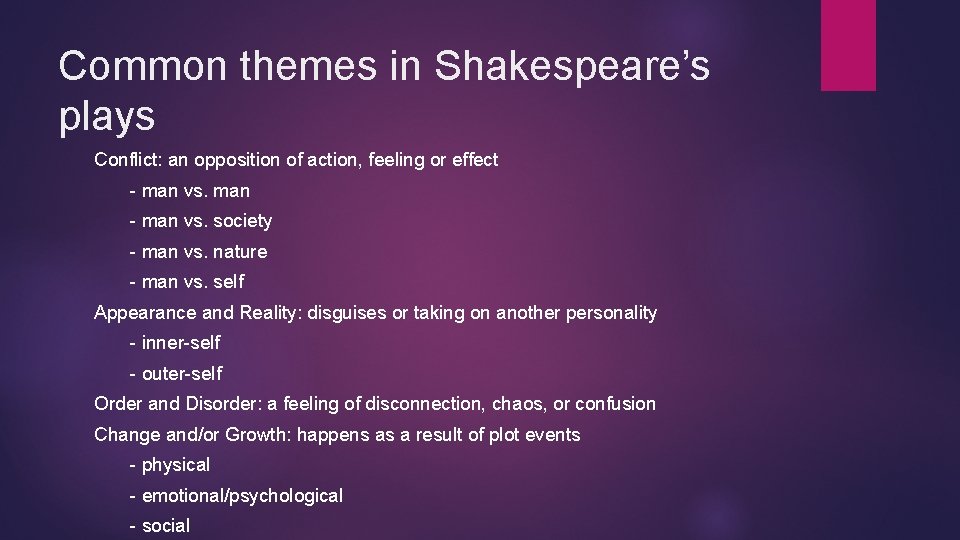
Common themes in Shakespeare’s plays Conflict: an opposition of action, feeling or effect - man vs. man - man vs. society - man vs. nature - man vs. self Appearance and Reality: disguises or taking on another personality - inner-self - outer-self Order and Disorder: a feeling of disconnection, chaos, or confusion Change and/or Growth: happens as a result of plot events - physical - emotional/psychological - social
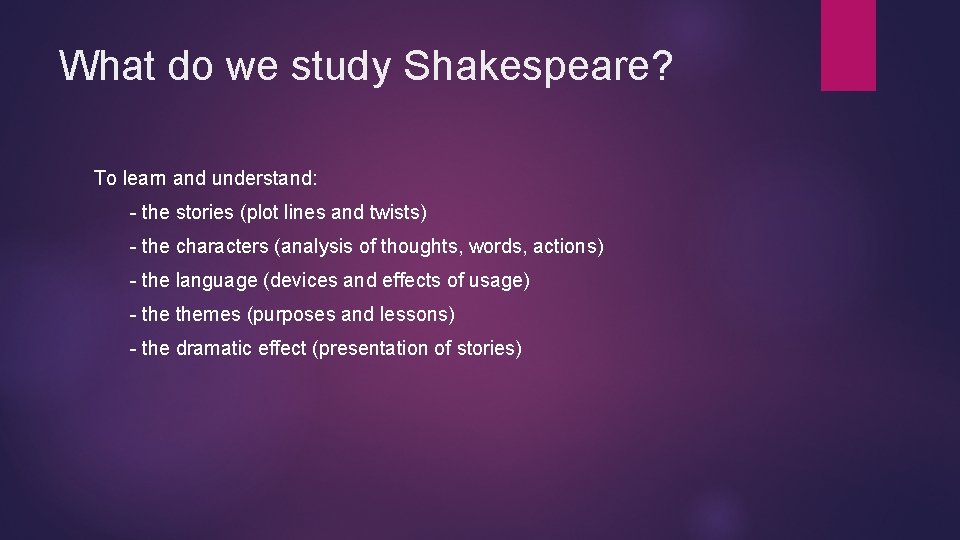
What do we study Shakespeare? To learn and understand: - the stories (plot lines and twists) - the characters (analysis of thoughts, words, actions) - the language (devices and effects of usage) - themes (purposes and lessons) - the dramatic effect (presentation of stories)
The End