
Shakespeare Life in Elizabethan Times Filling the time
Shakespeare
Life in Elizabethan Times
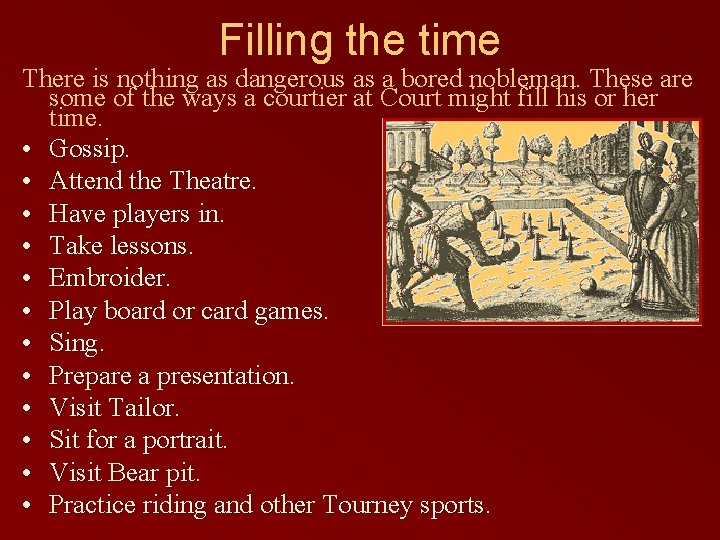
Filling the time There is nothing as dangerous as a bored nobleman. These are some of the ways a courtier at Court might fill his or her time. • Gossip. • Attend the Theatre. • Have players in. • Take lessons. • Embroider. • Play board or card games. • Sing. • Prepare a presentation. • Visit Tailor. • Sit for a portrait. • Visit Bear pit. • Practice riding and other Tourney sports.
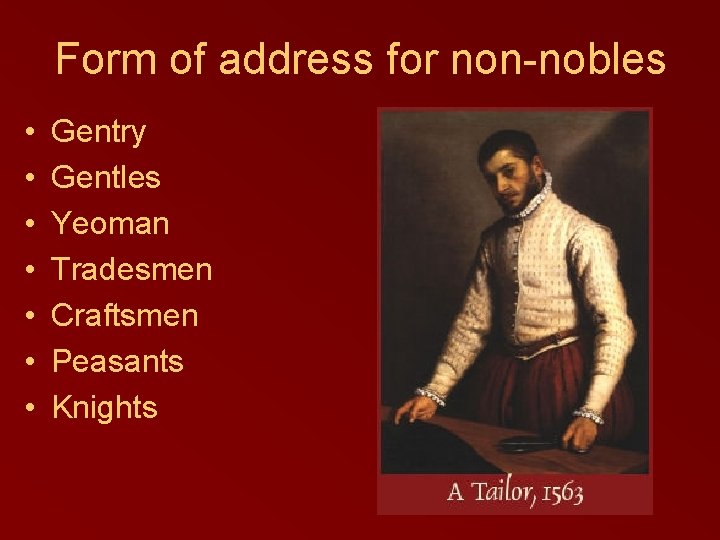
Form of address for non-nobles • • Gentry Gentles Yeoman Tradesmen Craftsmen Peasants Knights
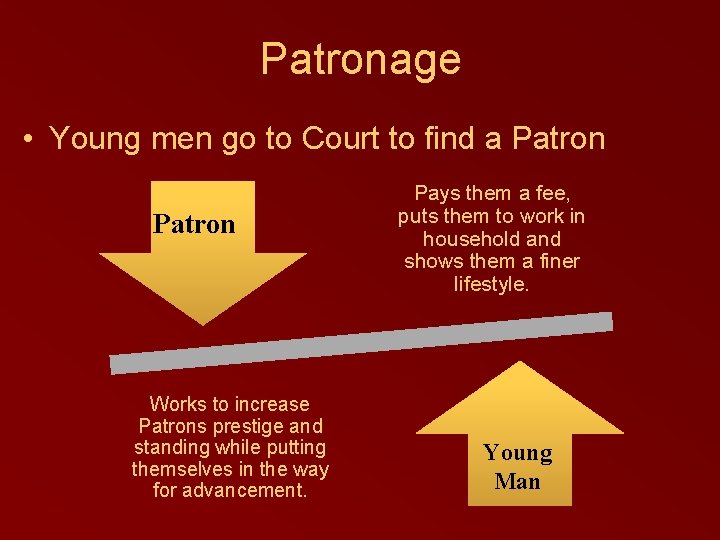
Patronage • Young men go to Court to find a Patron Works to increase Patrons prestige and standing while putting themselves in the way for advancement. Pays them a fee, puts them to work in household and shows them a finer lifestyle. Young Man
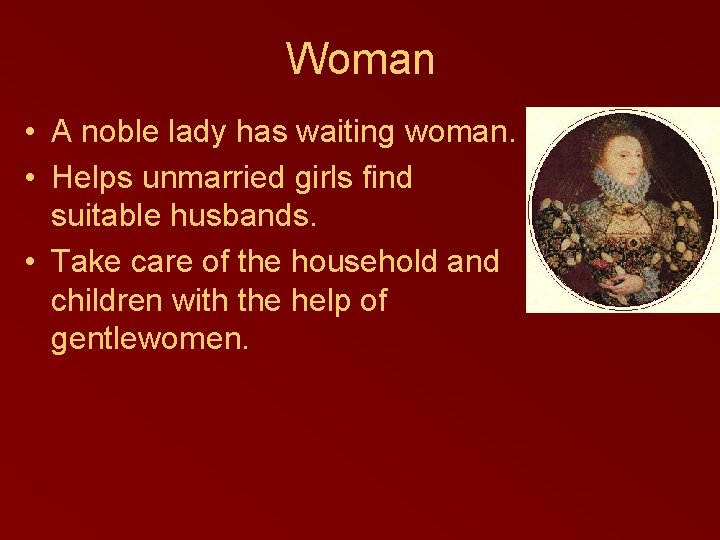
Woman • A noble lady has waiting woman. • Helps unmarried girls find suitable husbands. • Take care of the household and children with the help of gentlewomen.
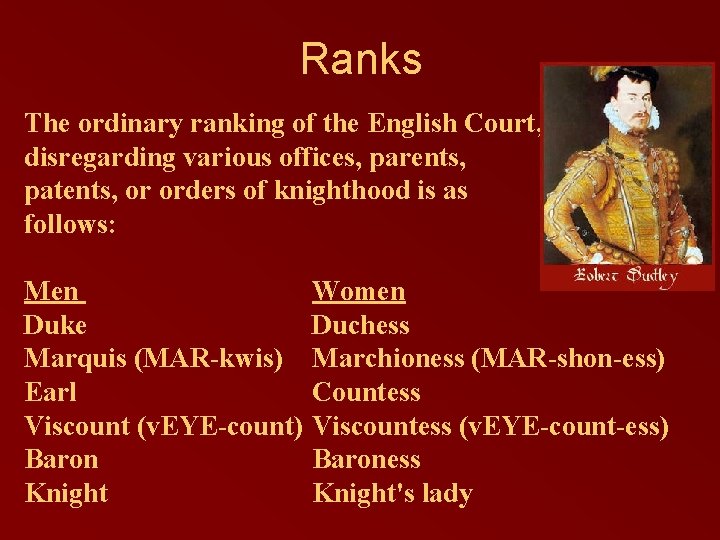
Ranks The ordinary ranking of the English Court, disregarding various offices, parents, patents, or orders of knighthood is as follows: Men Duke Marquis (MAR-kwis) Earl Viscount (v. EYE-count) Baron Knight Women Duchess Marchioness (MAR-shon-ess) Countess Viscountess (v. EYE-count-ess) Baroness Knight's lady
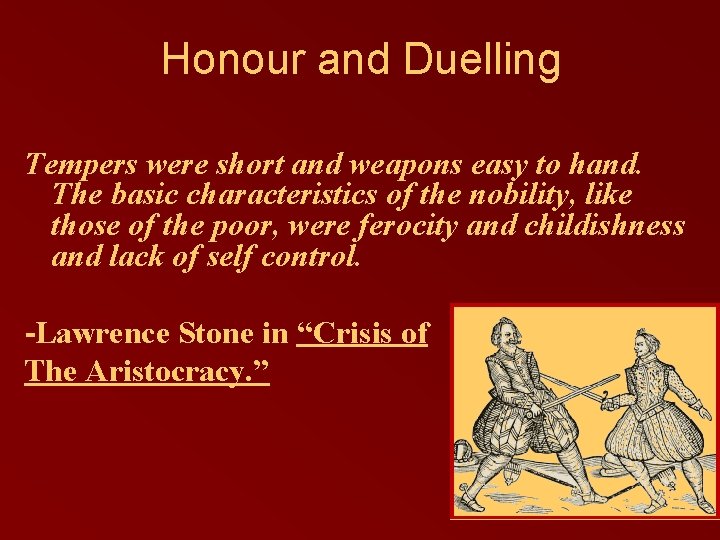
Honour and Duelling Tempers were short and weapons easy to hand. The basic characteristics of the nobility, like those of the poor, were ferocity and childishness and lack of self control. -Lawrence Stone in “Crisis of The Aristocracy. ”
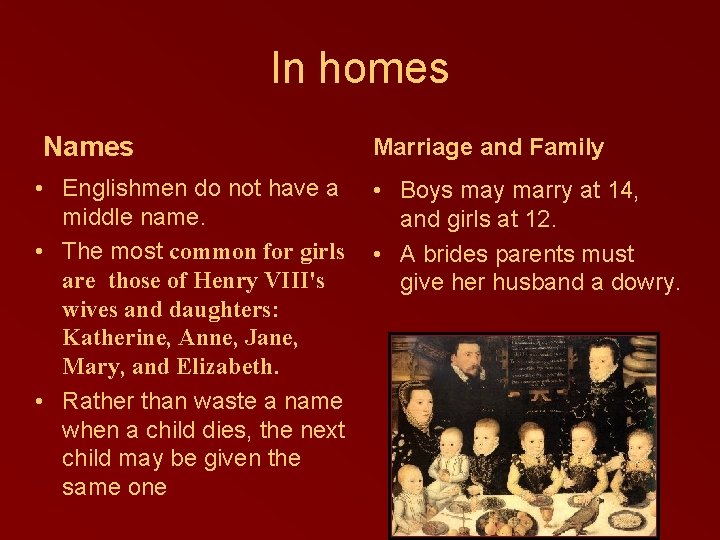
In homes Names Marriage and Family • Englishmen do not have a • Boys may marry at 14, middle name. and girls at 12. • The most common for girls • A brides parents must are those of Henry VIII's give her husband a dowry. wives and daughters: Katherine, Anne, Jane, Mary, and Elizabeth. • Rather than waste a name when a child dies, the next child may be given the same one
In general • Children are the property of their parents. • Wives are the property of their husbands. • Widows can own and run their own businesses. • Divorce is very difficult as a Protestant. • Male primogeniture is the rule. • A bastard is a child born out of wedlock and is deemed illegitimate.
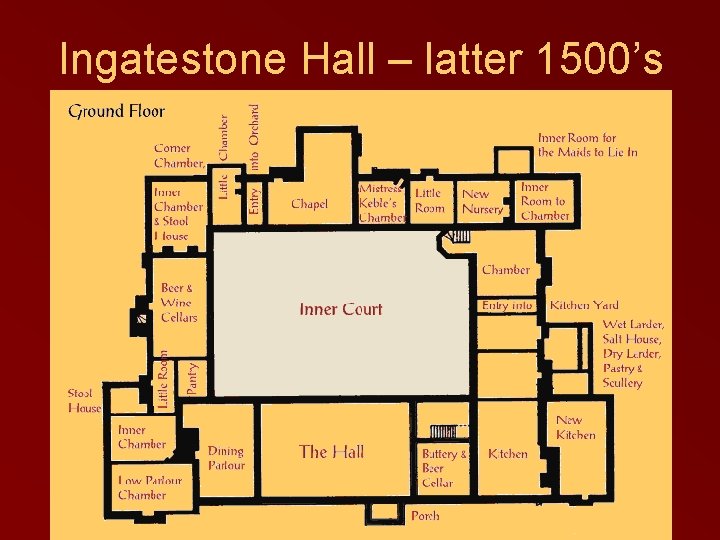
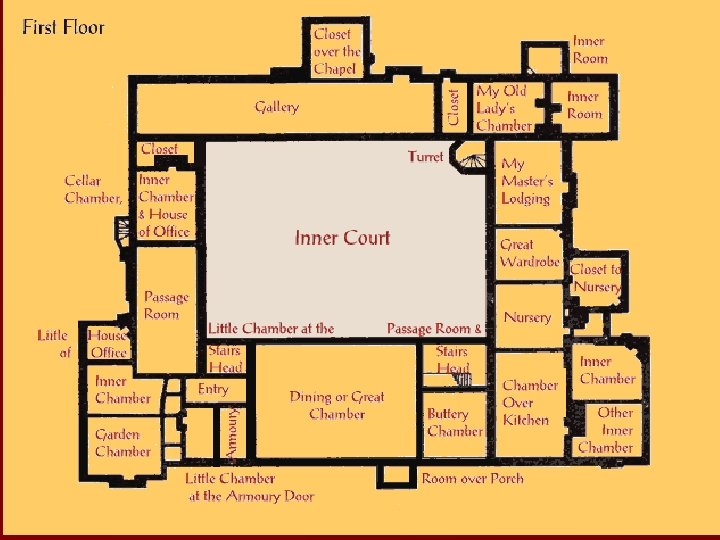
Ingatestone Hall – latter 1500’s
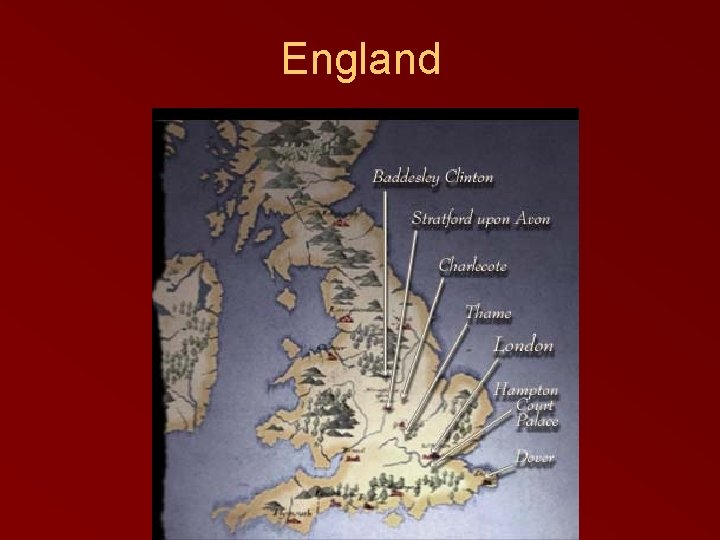
England
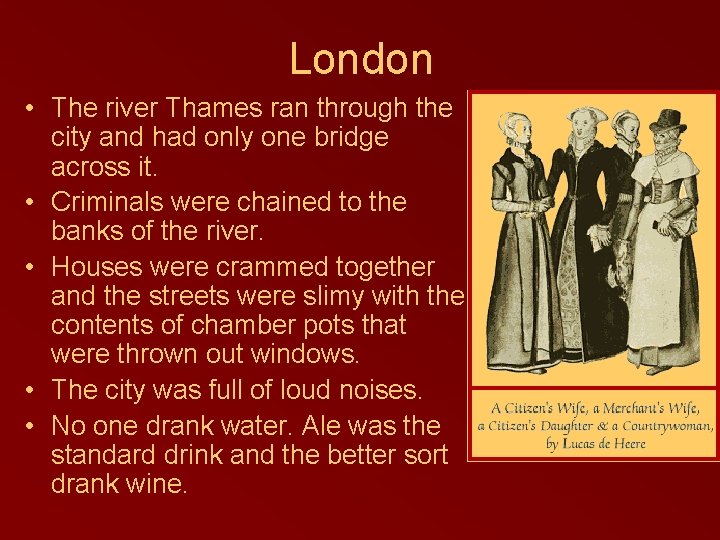
London • The river Thames ran through the city and had only one bridge across it. • Criminals were chained to the banks of the river. • Houses were crammed together and the streets were slimy with the contents of chamber pots that were thrown out windows. • The city was full of loud noises. • No one drank water. Ale was the standard drink and the better sort drank wine.
Food • In general people ate 2 meals a day; • Dinner around midday • Supper in the evening • Those who woke early would eat in the morning as well. • Wine was sweet and heavy and would have to be strained before being drunk. Beer was made without hops and was usually flat.
Religion • The official religion was the Church of England. • Being Roman Catholic was not a crime, but there was a fine for not attending Protestant services. • It was illegal to be a Catholic Priest in England.
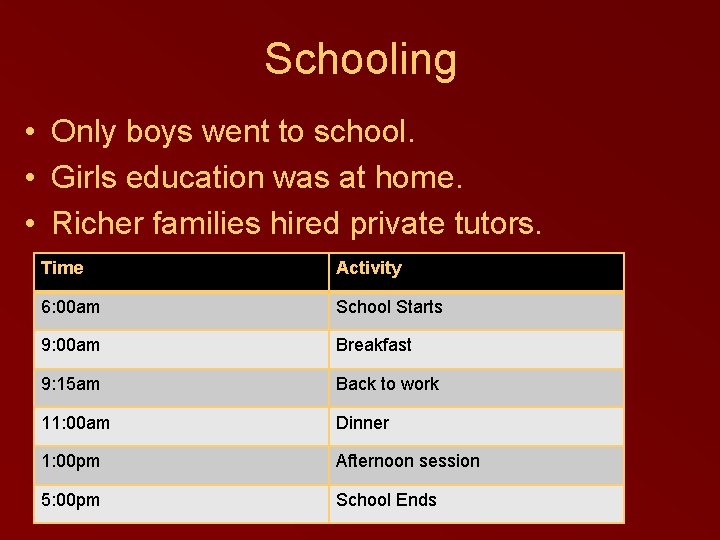
Schooling • Only boys went to school. • Girls education was at home. • Richer families hired private tutors. Time Activity 6: 00 am School Starts 9: 00 am Breakfast 9: 15 am Back to work 11: 00 am Dinner 1: 00 pm Afternoon session 5: 00 pm School Ends
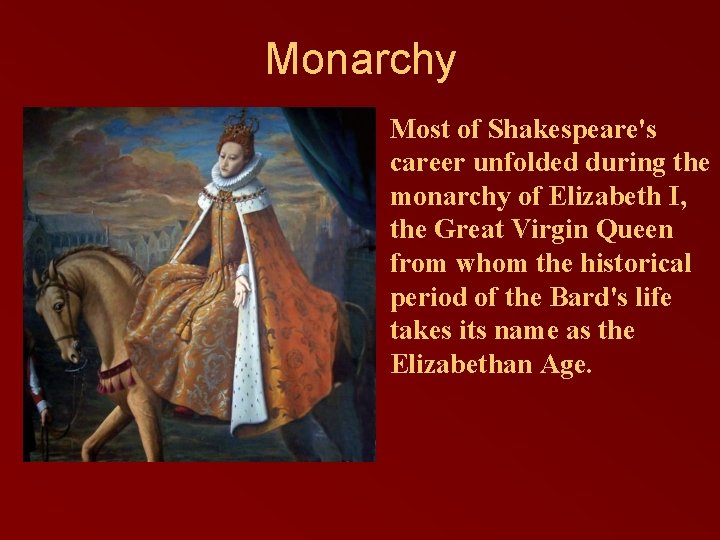
Monarchy Most of Shakespeare's career unfolded during the monarchy of Elizabeth I, the Great Virgin Queen from whom the historical period of the Bard's life takes its name as the Elizabethan Age.

William Shakespeare The man himself
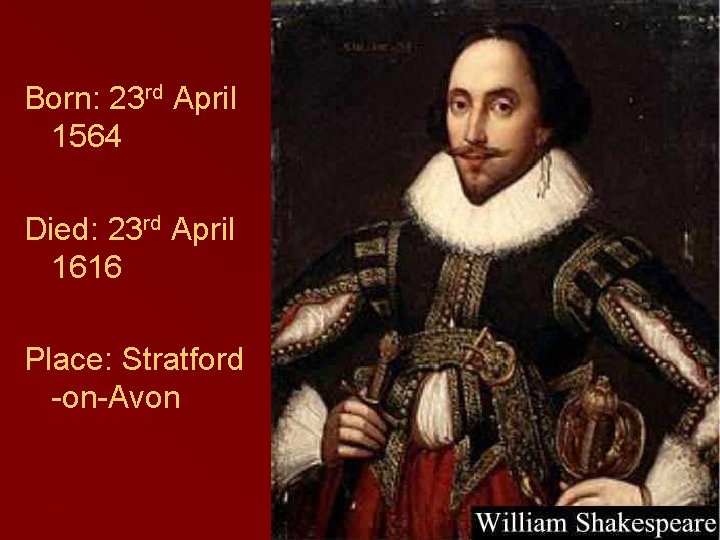
Born: 23 rd April 1564 Died: 23 rd April 1616 Place: Stratford -on-Avon
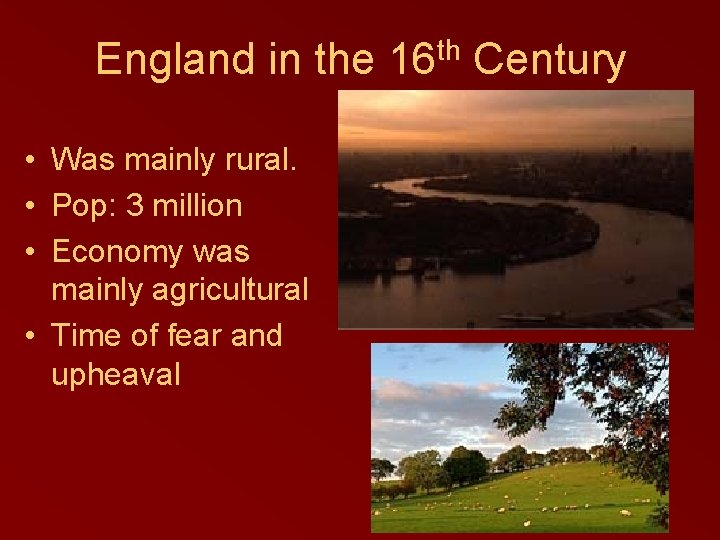
England in the 16 th Century • Was mainly rural. • Pop: 3 million • Economy was mainly agricultural • Time of fear and upheaval
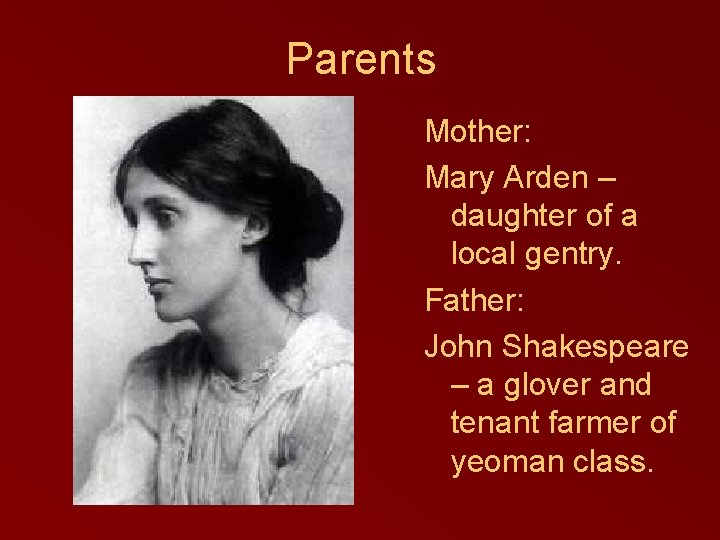
Parents Mother: Mary Arden – daughter of a local gentry. Father: John Shakespeare – a glover and tenant farmer of yeoman class.
Shakespeare's eventual fame and success spilled over to his parents in the form of both money and title. On the eve of John Shakespeare’s death in 1601, Queen Elizabeth granted the Bard's father a "gentleman's" family coat-of-arms.
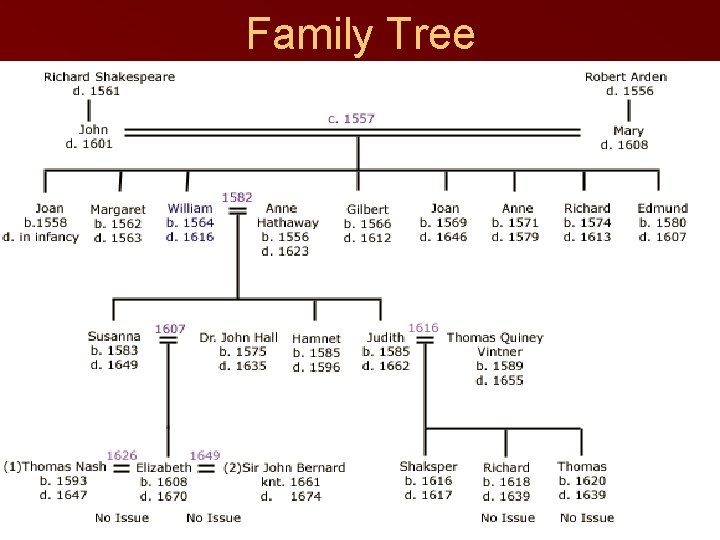
Family Tree
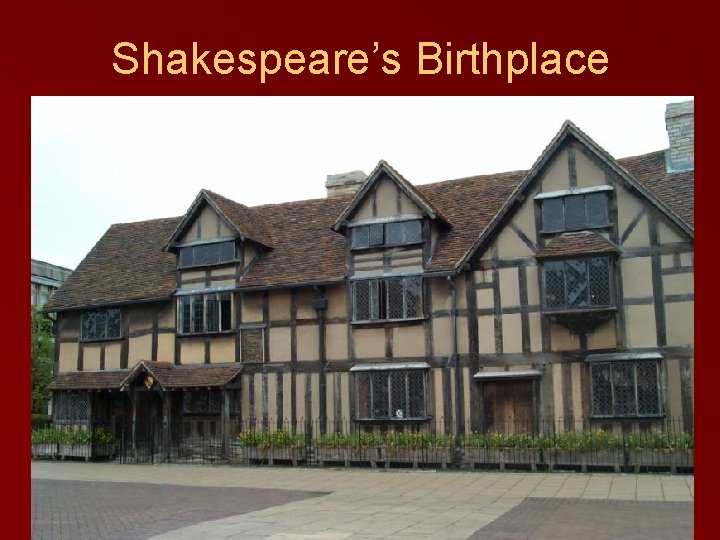
Shakespeare’s Birthplace
Education • Probably attended Stratford Grammar School where he would have learnt: • Greek and Latin Literature • Rhetoric • Christian ethics • Left school in 1579 at the age of 15. • Did not attend university and was not considered to be a truly learned man.
After school • In 1582 (18 yrs) he married Anne Hathaway who was 8 yrs his senior. • 6 months later their daughter Susanna was born. 2 yrs after that, twins Hamnet and Judith arrived. • Speculation has that Shakespeare was not happy in his marriage. • There is a period of 7 years (1585 - 1592) from which there is no primary source materials about Shakespeare. • During this time he travelled back and forth between London and Stratford, and by the time sources can be found again he was living almost full-time in London.
Life in London • Before he took up a career as a playwright Shakespeare had many and varied other jobs. • He most probably worked with his father in commercial trade, as a law clerk and served as a soldier or sailor as England was threatened by Spain.
His plays • Between the early 1590’s and 1620’s Shakespeare composed the most extraordinary body of works in the history of world drama. • He moved roughly from comedies to histories to tragedies. • His farewell to the stage was The Tempest.
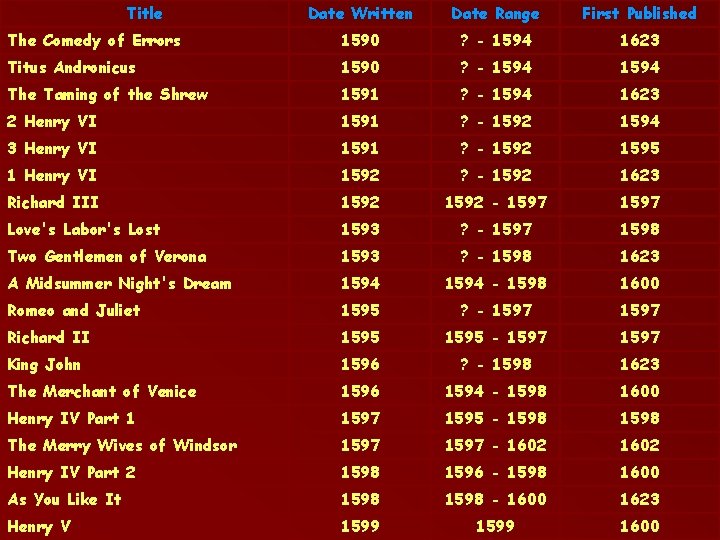
Title Date Written Date Range First Published The Comedy of Errors 1590 ? - 1594 1623 Titus Andronicus 1590 ? - 1594 The Taming of the Shrew 1591 ? - 1594 1623 2 Henry VI 1591 ? - 1592 1594 3 Henry VI 1591 ? - 1592 1595 1 Henry VI 1592 ? - 1592 1623 Richard III 1592 - 1597 Love's Labor's Lost 1593 ? - 1597 1598 Two Gentlemen of Verona 1593 ? - 1598 1623 A Midsummer Night's Dream 1594 - 1598 1600 Romeo and Juliet 1595 ? - 1597 Richard II 1595 - 1597 King John 1596 ? - 1598 1623 The Merchant of Venice 1596 1594 - 1598 1600 Henry IV Part 1 1597 1595 - 1598 The Merry Wives of Windsor 1597 - 1602 Henry IV Part 2 1598 1596 - 1598 1600 As You Like It 1598 - 1600 1623 Henry V 1599 1600
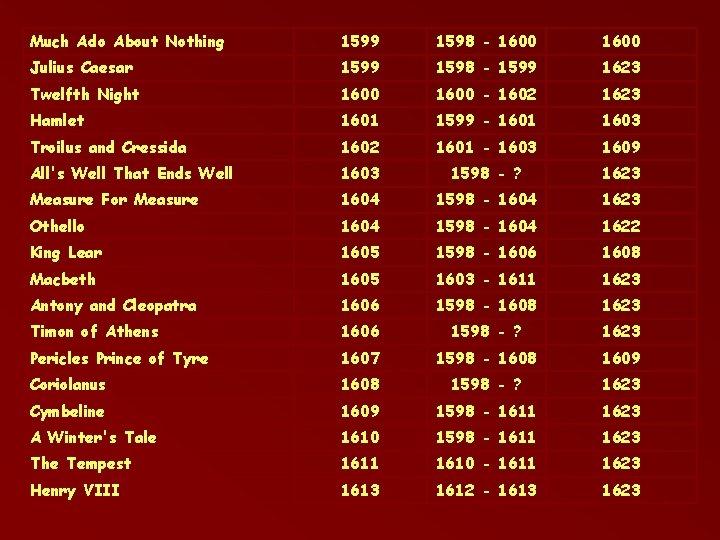
Much Ado About Nothing 1599 1598 - 1600 Julius Caesar 1599 1598 - 1599 1623 Twelfth Night 1600 - 1602 1623 Hamlet 1601 1599 - 1601 1603 Troilus and Cressida 1602 1601 - 1603 1609 All's Well That Ends Well 1603 1598 - ? 1623 Measure For Measure 1604 1598 - 1604 1623 Othello 1604 1598 - 1604 1622 King Lear 1605 1598 - 1606 1608 Macbeth 1605 1603 - 1611 1623 Antony and Cleopatra 1606 1598 - 1608 1623 Timon of Athens 1606 1598 - ? 1623 Pericles Prince of Tyre 1607 1598 - 1608 1609 Coriolanus 1608 1598 - ? 1623 Cymbeline 1609 1598 - 1611 1623 A Winter's Tale 1610 1598 - 1611 1623 The Tempest 1611 1610 - 1611 1623 Henry VIII 1613 1612 - 1613 1623
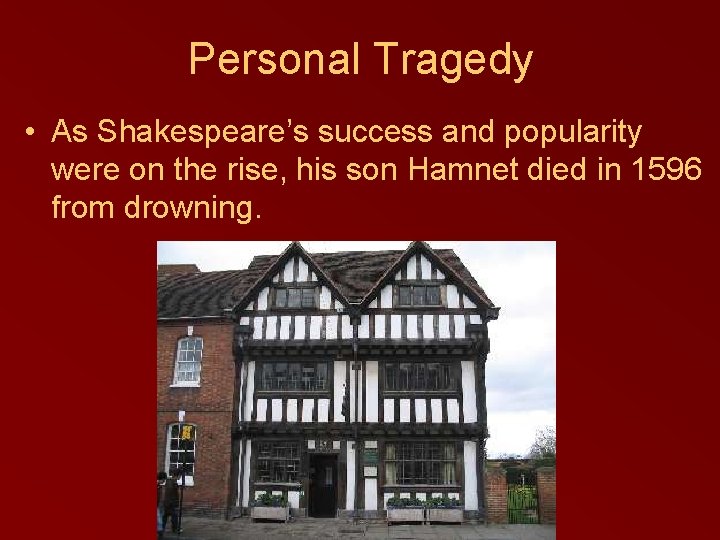
Personal Tragedy • As Shakespeare’s success and popularity were on the rise, his son Hamnet died in 1596 from drowning.
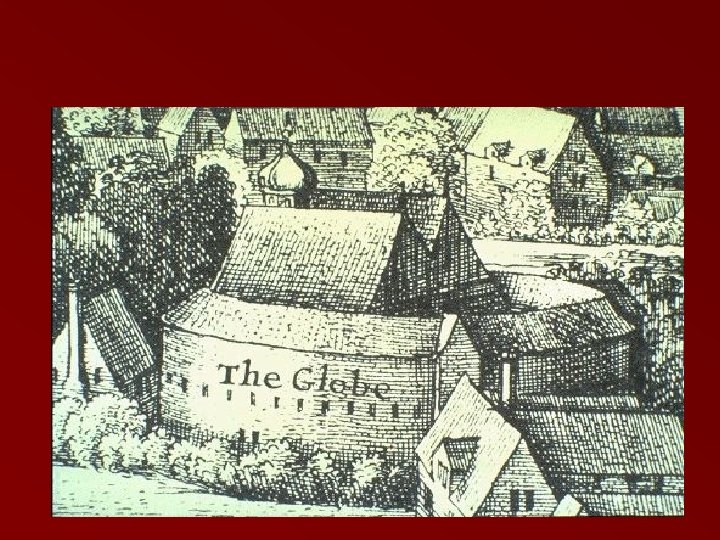
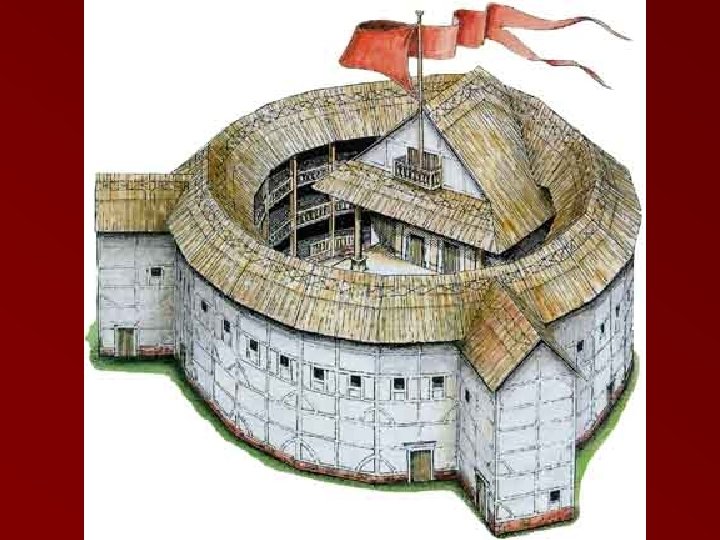
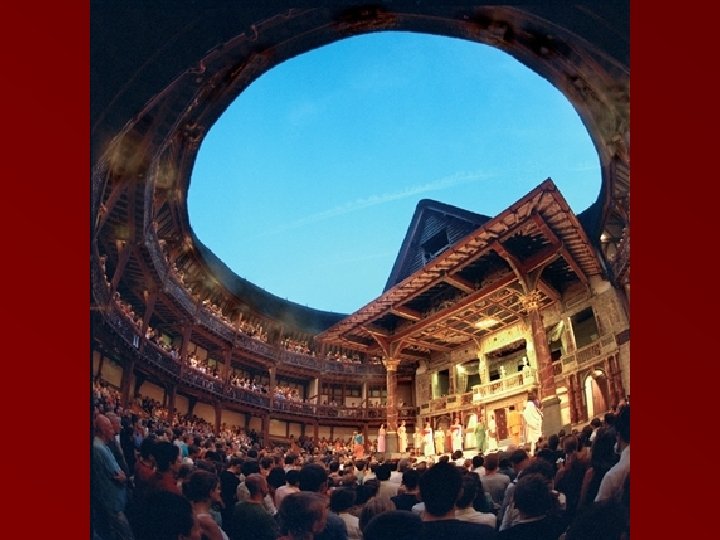
The Globe Theatre • The Globe Theatre was built in 1599 by Shakespeare's playing company, the Lord Chamberlain's Men, and was destroyed by fire on 29 June 1613. A second Globe Theatre was built on the same site by June 1614 and closed in 1642. • A modern reconstruction of the Globe, named "Shakespeare's Globe", opened in 1997 approximately 230 metres from the site of the original theatre.
- Slides: 37