
SGM EndofYear Conferences Gina Graham Professional Development Assistant

- Slides: 12
SGM End-of-Year Conferences Gina Graham Professional Development Assistant Director ggraha@neisd. net
Resources • Strive Student Growth Goal – Evidence • Student Learning Objective (SLO) Form • Student Growth Tracker • Student Work Samples – Actions • SLO Rating Rubric • EOY Reflection (optional)
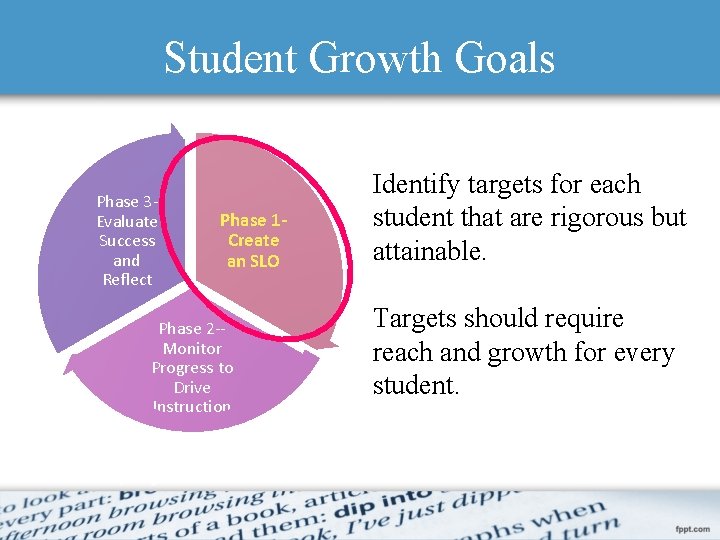
Student Growth Goals Phase 3 Evaluate Success and Reflect Phase 1 Create an SLO Phase 2 -Monitor Progress to Drive Instruction Identify targets for each student that are rigorous but attainable. Targets should require reach and growth for every student.
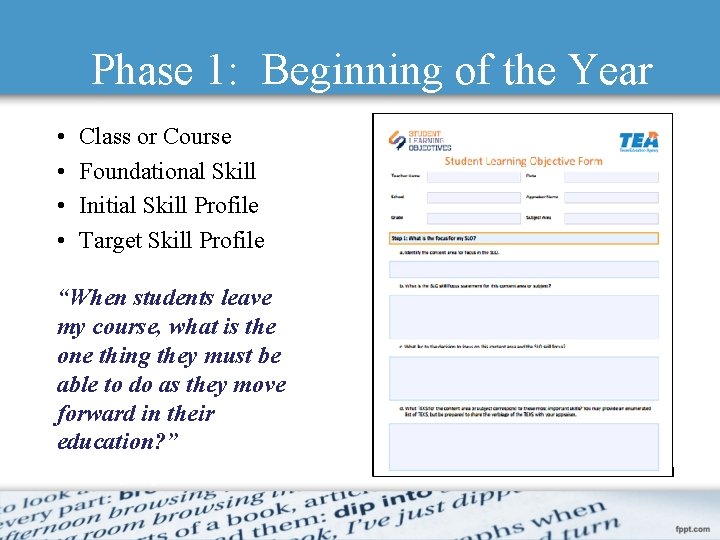
Phase 1: Beginning of the Year • • Class or Course Foundational Skill Initial Skill Profile Target Skill Profile “When students leave my course, what is the one thing they must be able to do as they move forward in their education? ”
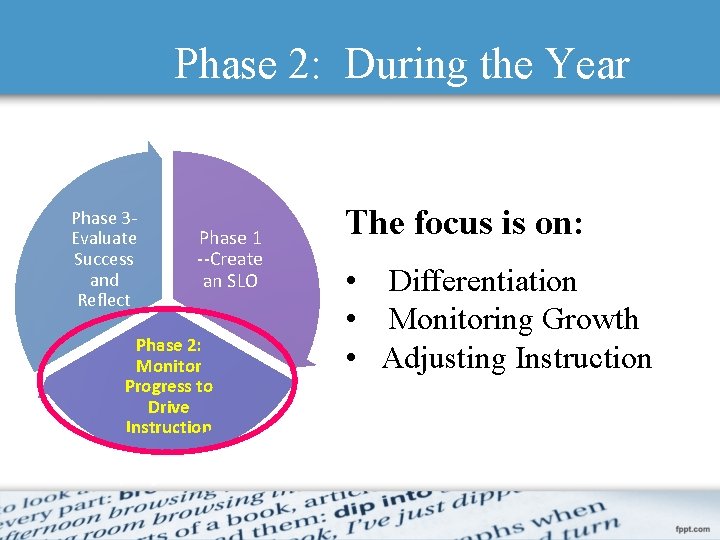
Phase 2: During the Year Phase 3 Evaluate Success and Reflect Phase 1 --Create an SLO Phase 2: Monitor Progress to Drive Instruction The focus is on: • Differentiation • Monitoring Growth • Adjusting Instruction
Student Growth Tracker
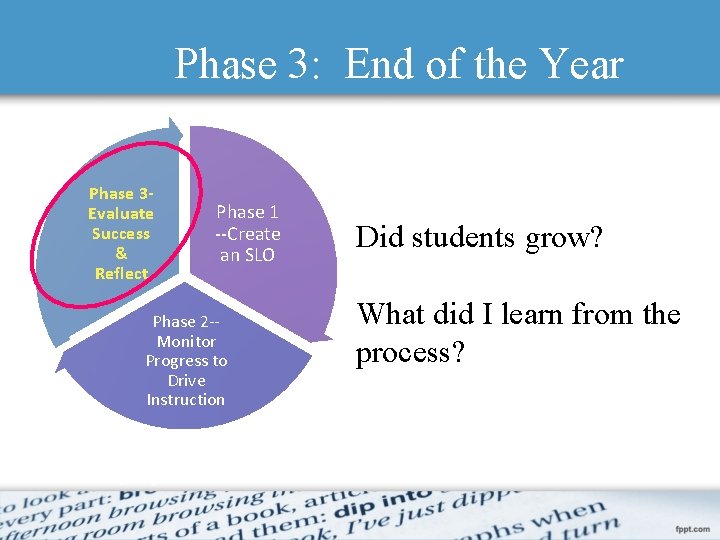
Phase 3: End of the Year Phase 3 Evaluate Success & Reflect Phase 1 --Create an SLO Phase 2 -Monitor Progress to Drive Instruction Did students grow? What did I learn from the process?
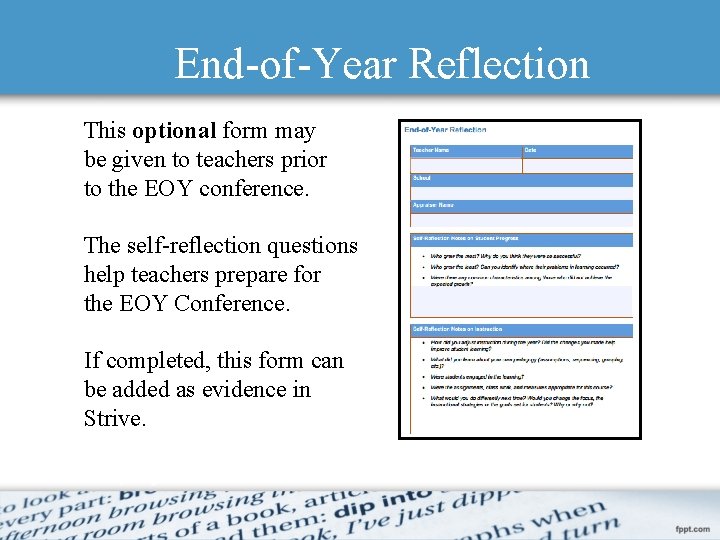
End-of-Year Reflection This optional form may be given to teachers prior to the EOY conference. The self-reflection questions help teachers prepare for the EOY Conference. If completed, this form can be added as evidence in Strive.
End of Year (EOY) Conference VIDEOS 117
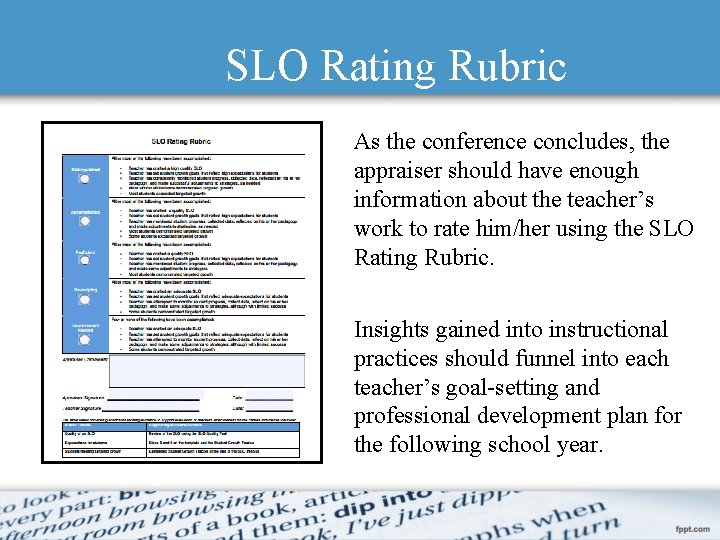
SLO Rating Rubric As the conference concludes, the appraiser should have enough information about the teacher’s work to rate him/her using the SLO Rating Rubric. Insights gained into instructional practices should funnel into each teacher’s goal-setting and professional development plan for the following school year.
More Information https: //Texas. SLO. org/
SGM This process provides teachers with a framework to: • set a vision of student success • plan for standards-aligned instruction • monitor progress using student work as evidence • adjust instruction accordingly to ensure that it facilitates student progress toward growth goals