
SFMTA Municipal Transportation Agency Image Market and Geary
- Slides: 13
SFMTA | Municipal Transportation Agency Image: Market and Geary Streets, circa 1920 s, Muni Centennial logo Political Support Needed to Improve Transportation 06 | 25 | 2013 SAN FRANCISCO, CALIFORNIA
Key Issues • SFMTA manages multiple services within a constrained Right of Way – Trade-offs among modes and objectives are required • SFMTA has Charter authority to make decisions but limited political ability to implement those decisions – Oftentimes, changes benefitting the collective good have impacts at the individual level – General conceptual support, but limited projectspecific support – Proposals are data-driven, but decision-making is often individually-based 2
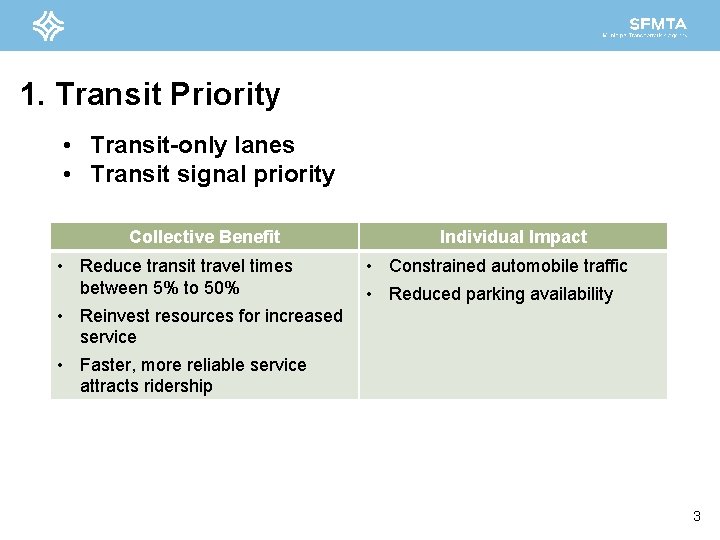
1. Transit Priority • Transit-only lanes • Transit signal priority Collective Benefit • Reduce transit travel times between 5% to 50% • Reinvest resources for increased service • Faster, more reliable service attracts ridership Individual Impact • Constrained automobile traffic • Reduced parking availability 3
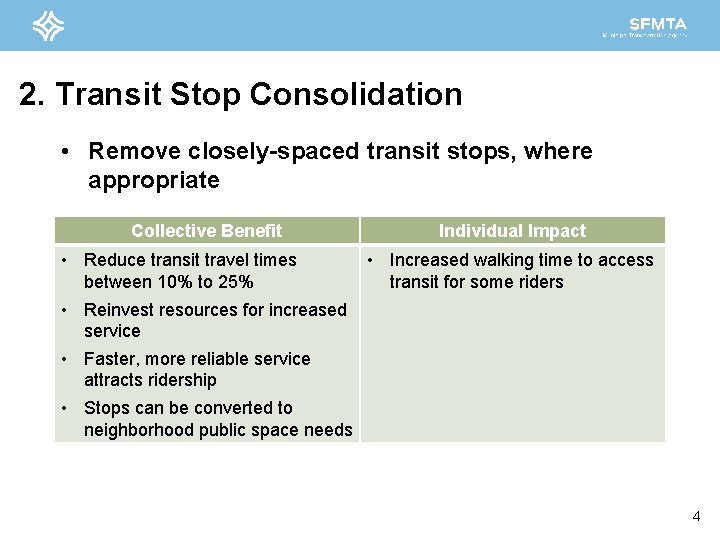
2. Transit Stop Consolidation • Remove closely-spaced transit stops, where appropriate Collective Benefit Individual Impact • Reduce transit travel times • Increased walking time to access between 10% to 25% transit for some riders • Reinvest resources for increased service • Faster, more reliable service attracts ridership • Stops can be converted to neighborhood public space needs 4
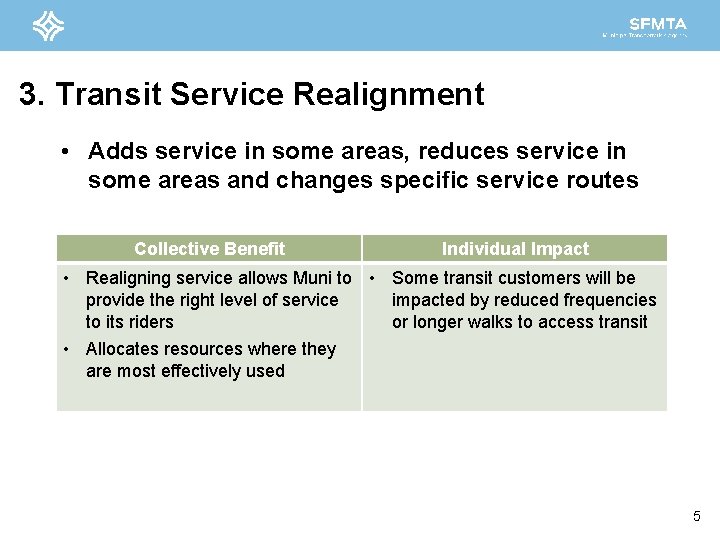
3. Transit Service Realignment • Adds service in some areas, reduces service in some areas and changes specific service routes Collective Benefit Individual Impact • Realigning service allows Muni to • Some transit customers will be provide the right level of service impacted by reduced frequencies to its riders or longer walks to access transit • Allocates resources where they are most effectively used 5
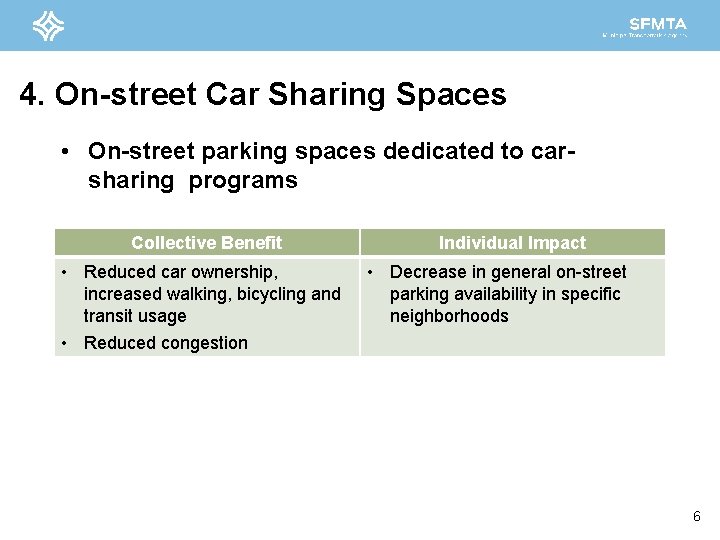
4. On-street Car Sharing Spaces • On-street parking spaces dedicated to carsharing programs Collective Benefit • Reduced car ownership, increased walking, bicycling and transit usage • Reduced congestion Individual Impact • Decrease in general on-street parking availability in specific neighborhoods 6
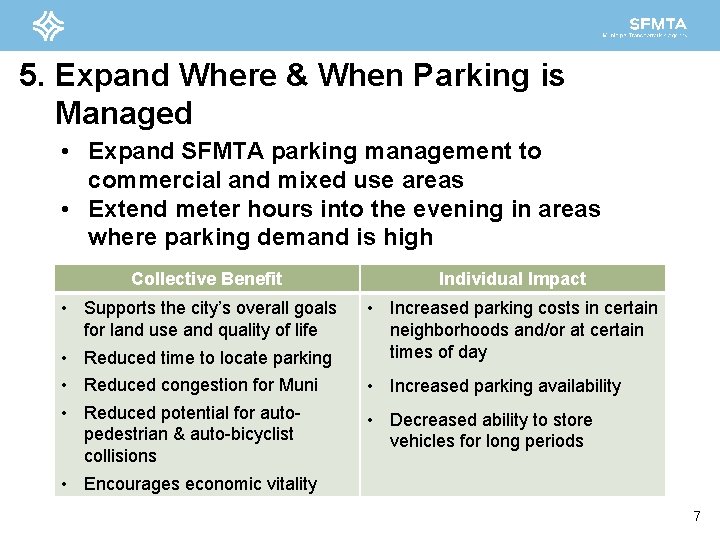
5. Expand Where & When Parking is Managed • Expand SFMTA parking management to commercial and mixed use areas • Extend meter hours into the evening in areas where parking demand is high Collective Benefit • Supports the city’s overall goals for land use and quality of life • Reduced time to locate parking • Reduced congestion for Muni • Reduced potential for autopedestrian & auto-bicyclist collisions • Encourages economic vitality Individual Impact • Increased parking costs in certain neighborhoods and/or at certain times of day • Increased parking availability • Decreased ability to store vehicles for long periods 7
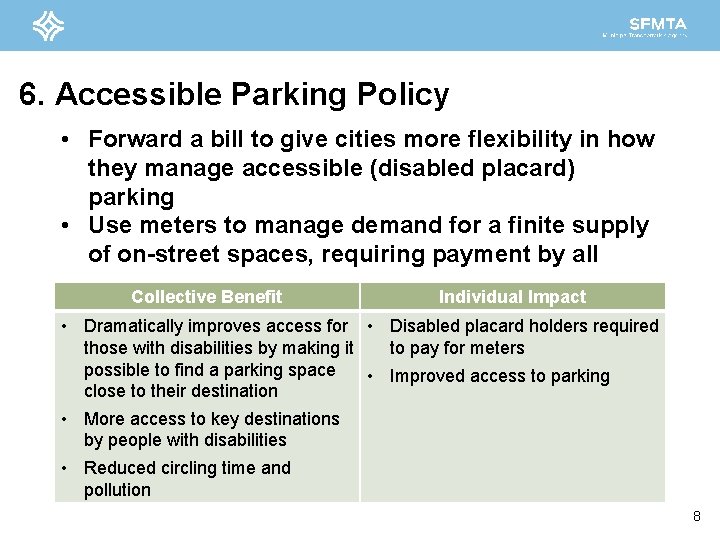
6. Accessible Parking Policy • Forward a bill to give cities more flexibility in how they manage accessible (disabled placard) parking • Use meters to manage demand for a finite supply of on-street spaces, requiring payment by all Collective Benefit Individual Impact • Dramatically improves access for • Disabled placard holders required those with disabilities by making it to pay for meters possible to find a parking space • Improved access to parking close to their destination • More access to key destinations by people with disabilities • Reduced circling time and pollution 8
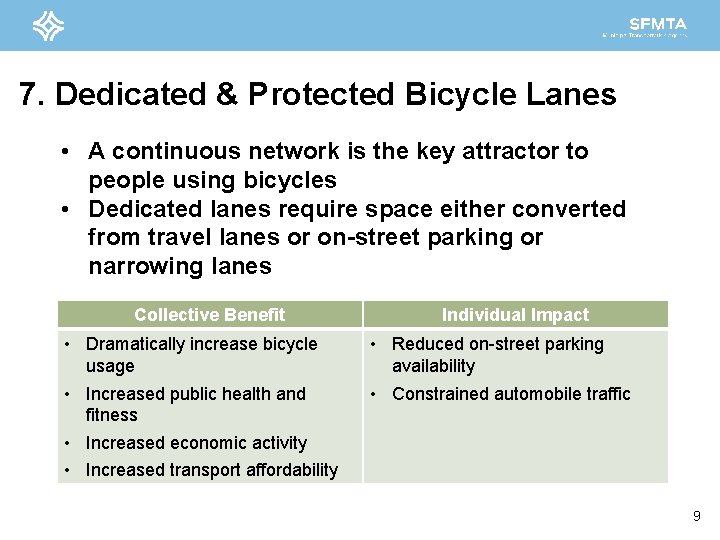
7. Dedicated & Protected Bicycle Lanes • A continuous network is the key attractor to people using bicycles • Dedicated lanes require space either converted from travel lanes or on-street parking or narrowing lanes Collective Benefit • Dramatically increase bicycle usage • Increased public health and fitness • Increased economic activity • Increased transport affordability Individual Impact • Reduced on-street parking availability • Constrained automobile traffic 9
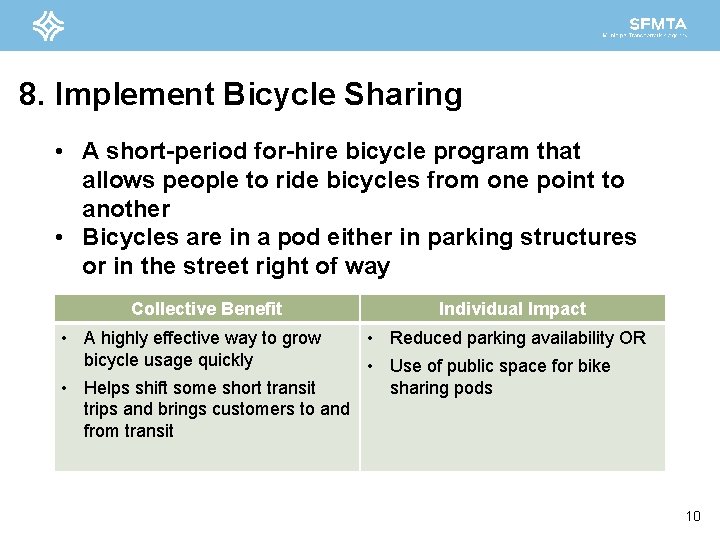
8. Implement Bicycle Sharing • A short-period for-hire bicycle program that allows people to ride bicycles from one point to another • Bicycles are in a pod either in parking structures or in the street right of way Collective Benefit Individual Impact • A highly effective way to grow • Reduced parking availability OR bicycle usage quickly • Use of public space for bike • Helps shift some short transit sharing pods trips and brings customers to and from transit 10
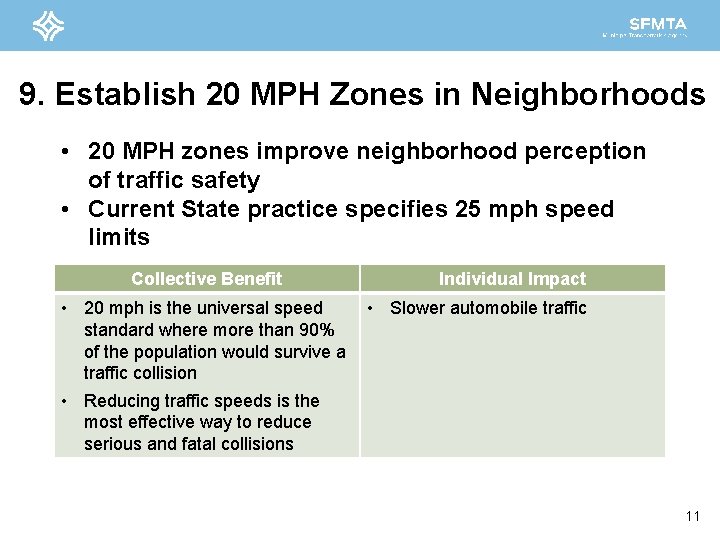
9. Establish 20 MPH Zones in Neighborhoods • 20 MPH zones improve neighborhood perception of traffic safety • Current State practice specifies 25 mph speed limits Collective Benefit • 20 mph is the universal speed standard where more than 90% of the population would survive a traffic collision • Reducing traffic speeds is the most effective way to reduce serious and fatal collisions Individual Impact • Slower automobile traffic 11
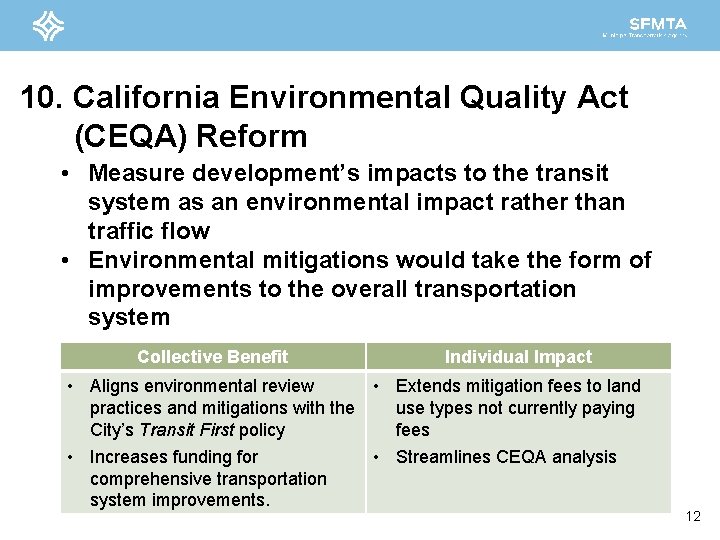
10. California Environmental Quality Act (CEQA) Reform • Measure development’s impacts to the transit system as an environmental impact rather than traffic flow • Environmental mitigations would take the form of improvements to the overall transportation system Collective Benefit • Aligns environmental review practices and mitigations with the City’s Transit First policy • Increases funding for comprehensive transportation system improvements. Individual Impact • Extends mitigation fees to land use types not currently paying fees • Streamlines CEQA analysis 12
Needed Support • Balance the collective benefit against the individual impact – Endorse key improvements outlined here – Speak in support at public hearings – Support SFMTA outreach with constituents and stakeholders • Communicate benefits, while acknowledging tradeoffs – Promote through traditional, social media and other networks – Advocate with elected officials 13 • Assume positive intent