
Sexually Transmitted Diseases Chlamydia Gonorrhoea Trichomoniasis Syphilis Done

- Slides: 19
Sexually Transmitted Diseases Chlamydia Gonorrhoea Trichomoniasis Syphilis Done By : Zaid Al-Ghnaneem
Chlamydia Infective organism : Chlamydia trachomatis is an obligate intracellular organism. Prevalence : Chlamydia is the commonest sexually transmitted organism in the UK and USA. Clinical features : Usually asymptomatic in pregnant woman. But it maybe associated with : 1 - Preterm rupture of membranes 2 - Preterm delivery 3 - low birthweight
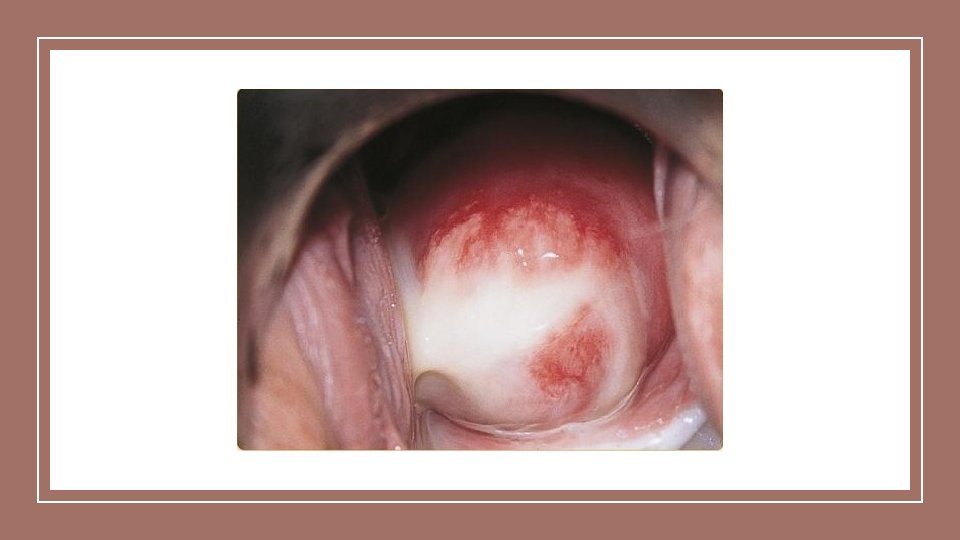
Transmission to the fetus occurs at the time of delivery and can cause conjunctivitis and pneumonia. Examination : • The classic cervical finding is mucopurulent cervical discharge. Urethral and cervical motion tenderness may or may not be noted. Management : Treatment with azithromycin or erythromycin is recommended. • Tetracyclines such as doxycycline should be avoided if possible during pregnancy.
Gonorrhoea Infective organism : Neisseria gonorrhoeae is a gram-negative diplococcus. Prevalence : In the UK it is the second most common bacterial sexually-transmitted disease. Clinical features : • Frequently asymptomatic, or women may present with a mucopurulent discharge or dysuria. • Rarely disseminated gonorrhoea may cause low-grade fever, a rash and polyarthritis. • There is an increased risk of coinfection with chlamydia and an increased risk of preterm rupture of membranes and preterm birth.
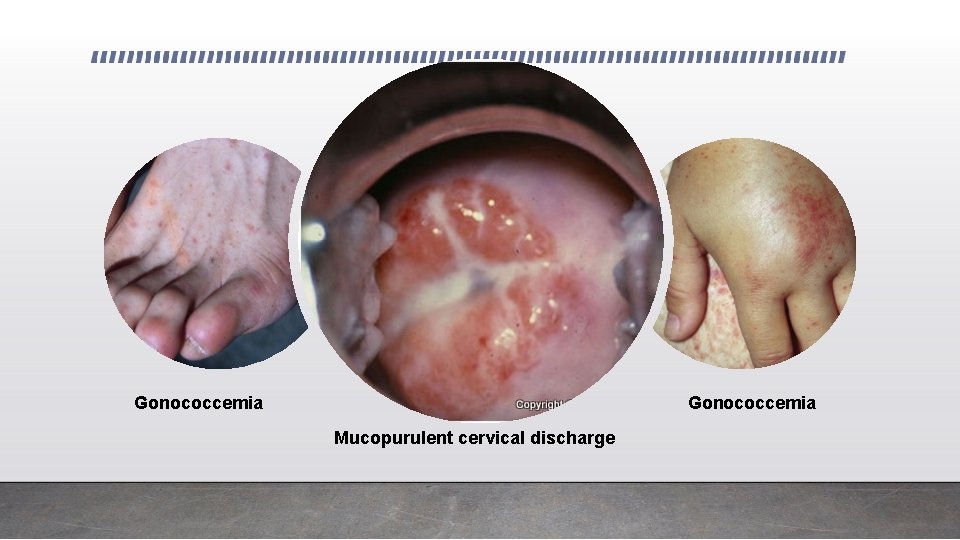
Transmission to the fetus occurs at the time of delivery and can cause ophthalmia neonatorum. Examination : • Mucopurulent cervical discharge is seen on speculum exam. • Cervical motion tenderness is common with bimanual pelvic exam. • Vulvovaginitis is seen on inspection. • Petechial skin lesions, septic arthritis, and rarely, endocarditis or meningitis, may demonstrate with disseminated gonorrhea. Management : • Bacteriological swabs should be taken and specific swabs/testing for concomitant infection with chlamydia should also be undertaken. • Cephalosporins are effective against gonococcus, but empirical treatment for chlamydia should also be considered.
Gonococcemia Mucopurulent cervical discharge
Trichomoniasis Infective organism : Trichomonas Vaginitis is an anaerobic, flagellated protozoan parasite and the causative agent of trichomoniasis. Clinical features : • The most common patient complaint is vaginal discharge associated with itching, burning, and pain with intercourse. • Asymptomatic infection is observed in up to 50% of women and most of their male sexual partners. • There is some evidence of an association with pregnancy outcome: preterm birth, low birthweight and maternal postpartum sepsis, although further research is required.
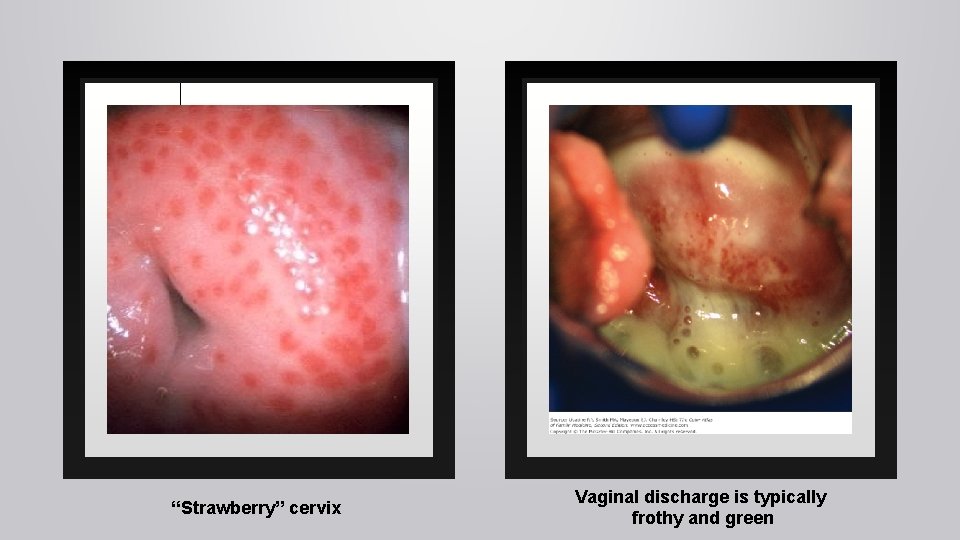
Speculum Examination : • The vaginal epithelium is frequently edematous and inflamed. • Vaginal discharge is typically frothy and green. • The erythematous cervix may demonstrate the characteristic “strawberry” appearance. • Vaginal p. H is elevated >4. 5 Testing : • Gold standard is a nucleic acid amplification test (NAAT) preferably on a vaginal or endocervical swab or on urine. • Testing is indicated in symptomatic women. • Some NAATs also detect Neisseria gonorrhoea and Chlamydia trachomatis on the sample; for these the optimal test is a vulvovaginal swab.
Wet Mount : • Microscopic examination reveals actively motile “trichomonads” on a saline preparation. WBCs are seen. Management : • The treatment of choice is oral metronidazole for both the patient and her sexual partner. Vaginal metronidazole gel has a 50% failure rate. Metronidazole is safe to use during pregnancy, including the first trimester.
“Strawberry” cervix Vaginal discharge is typically frothy and green
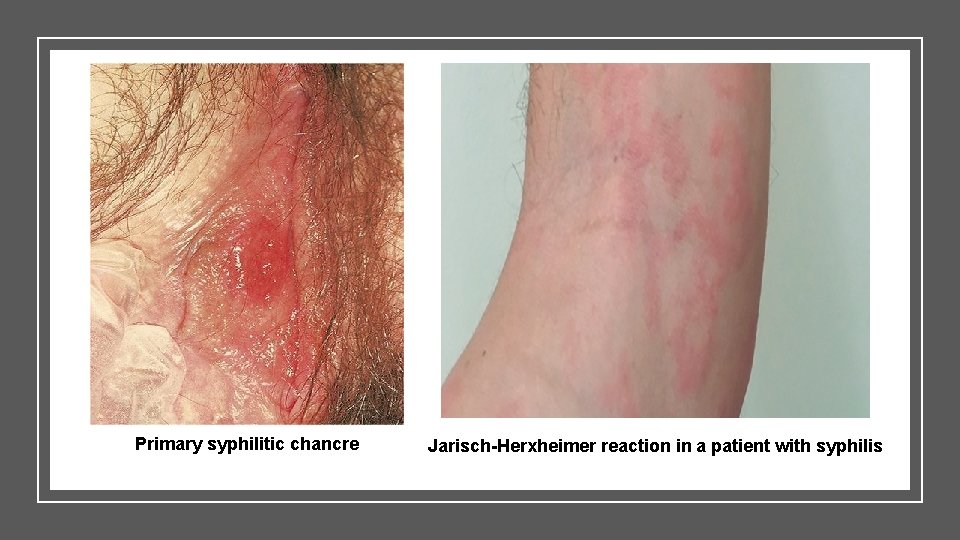
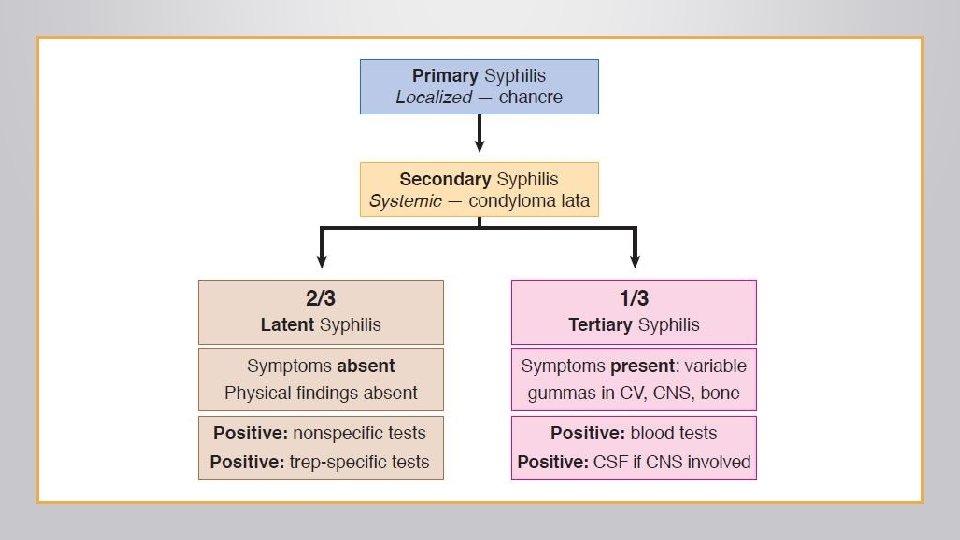
Syphilis Infective organism : • Syphilis is caused by Treponema pallidum, a motile anaerobic spirochete that cannot be cultured. Clinical features : • Primary syphilis may present as a painless genital ulcer 3– 6 weeks after the infection is acquired (condylomata lata). However, this may be on the cervix and go unnoticed. • Secondary manifestations occur 6 weeks to 6 months after infection and present as a maculopapular rash or lesions affecting the mucous membranes.
• Ultimately 20% of untreated patients will develop symptomatic cardiovascular tertiary syphilis and 5– 10% will develop symptomatic neurosyphilis. • In pregnant women with early, untreated (primary or secondary) syphilis, 70– 100% of infants will be infected and approximately 25% will be stillborn. • Mother-to-child transmission of syphilis in pregnancy is associated with fetal growth restriction (FGR), fetal hydrops, congenital syphilis (which may cause long -term disability), stillbirth, preterm birth and neonatal death. • The risk of congenital transmission declines with increasing duration of maternal syphilis prior to pregnancy. • Adequate treatment with benzathine penicillin markedly improves the outcome for the fetus.
Screening : • The body’s immune response to syphilis is the production nonspecific and specific treponemal antibodies. These can be detected by serological tests. • Non-treponemal tests detect non-specific treponemal antibodies and include : 1 - Venereal Diseases Research Laboratory (VDRL) 2 - Rapid plasma regain (RPR) • Treponemal tests detect specific treponemal antibodies and include enzyme immunoassays (EIAs), T. pallidum haemagglutination assay (TPHA) and the fluorescent treponemal antibody-absorbed test (FTA-abs) • Non-treponemal tests, on the other hand, may result in false negatives, particularly in very early or late syphilis, in patients with reinfection or those who are human immunodeficiency virus (HIV) positive. • None of these serological tests will detect syphilis in its incubation stage, which may last for an average of 25 days.
Prevention : • Vaginal delivery is appropriate with cesarean section only for obstetric indications. • Follow the principles of avoiding multiple sexual partners, and promote use of barrier contraceptives. Management : • Benzathine penicillin 2. 4 million units IM × 1 is given in pregnancy to ensure adequate antibiotic levels in the fetus. Other antibiotics do not cross the placenta well. Even if the gravida is penicillin-allergic, she should still be given a full penicillin dose using an oral desensitization regimen under controlled conditions.
• A Jarish–Herxheimer reaction may occur with treatment as a result of release of proinflammatory cytokines in response to dying organisms. This presents as a worsening of symptoms, and fever for 12– 24 hours after commencement of treatment. It may be associated with uterine contractions and fetal distress. Many clinicians therefore admit women at the time of commencement of treatment for monitoring. • If a woman is not treated during pregnancy her baby should be treated after delivery. An infected baby may be born without signs or symptoms of disease but if not treated immediately, may develop serious problems within a few weeks. • Untreated babies often developmental delay, have seizures or die.
Primary syphilitic chancre Jarisch-Herxheimer reaction in a patient with syphilis
Thank you