
Sexuality in People with Intellectual Disability Maria Quintero
Sexuality in People with Intellectual Disability Maria Quintero. Ph. D. , FAAIDD MHMRA of Harris County
心智障礙者的性愛 Maria Quintero. Ph. D. , FAAIDD MHMRA of Harris County
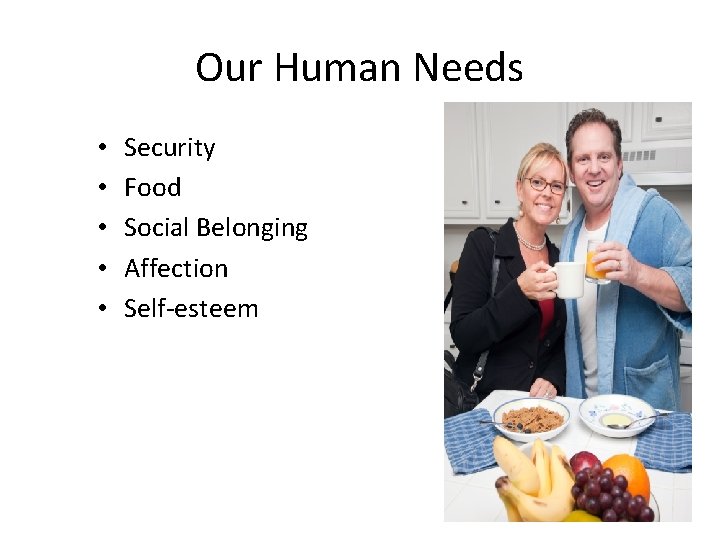
Our Human Needs • • • Security Food Social Belonging Affection Self-esteem
Basic Rights Right to own one’s body Right to privacy and intimacy Right to receive information and help in the area of sexuality Right to have relationships with others and manifest appropriate sexual behavior • Right to explore their bodies and discover possibilities for sexual pleasure. • •
Where do we start? • First, we need to evaluate our own attitudes about sexuality and specifically about sex between people with disabilities • We should… – Develop a positive attitude toward sexuality – Create an environment that invites questions and expression of needs – Communicate accurate information – Understand that education about sexuality does not cause a person to behave sexually. On the contrary, we increase the individual’s protection against vulnerability and victimization.
False Beliefs About Sexuality: • People with Intellectual Disability: – – – – Are asexual Are like children, even sexually Are not seen as sexually attractive by other people Are innocent, so we shouldn’t do anything to awaken their sexual needs Consider sexual intercourse as the most important sexual behavior Only have sexual relations so that they can have children Don’t have sexual interests All want the same thing sexually
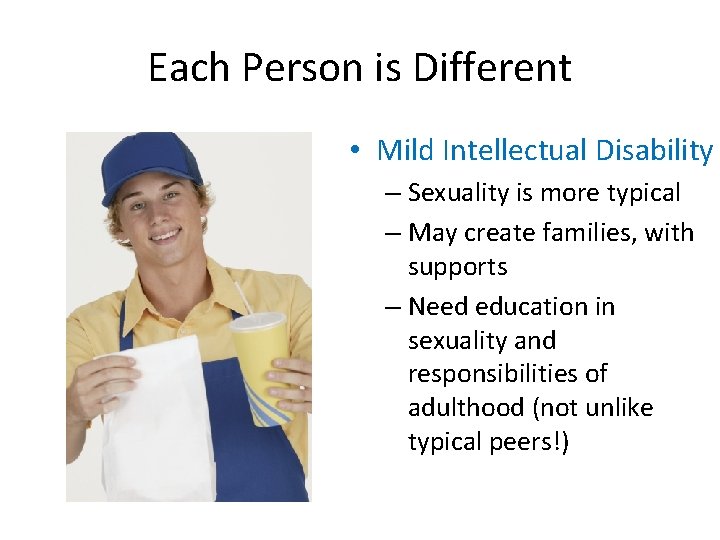
Each Person is Different • Mild Intellectual Disability – Sexuality is more typical – May create families, with supports – Need education in sexuality and responsibilities of adulthood (not unlike typical peers!)

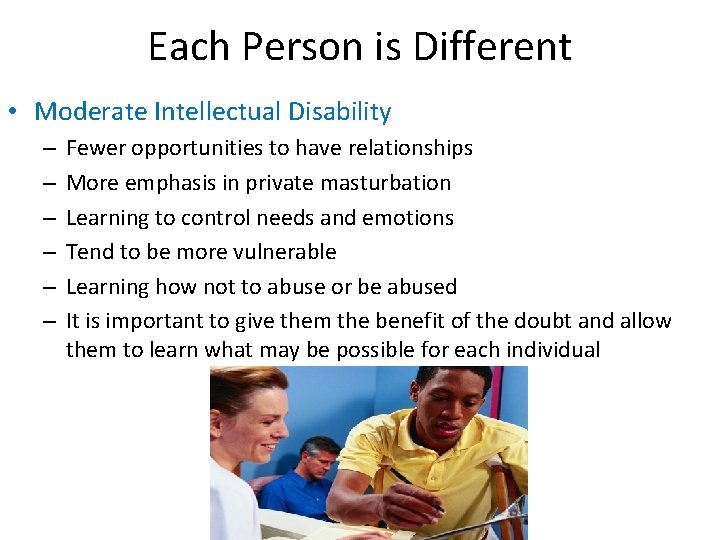
Each Person is Different • Moderate Intellectual Disability – – – Fewer opportunities to have relationships More emphasis in private masturbation Learning to control needs and emotions Tend to be more vulnerable Learning how not to abuse or be abused It is important to give them the benefit of the doubt and allow them to learn what may be possible for each individual
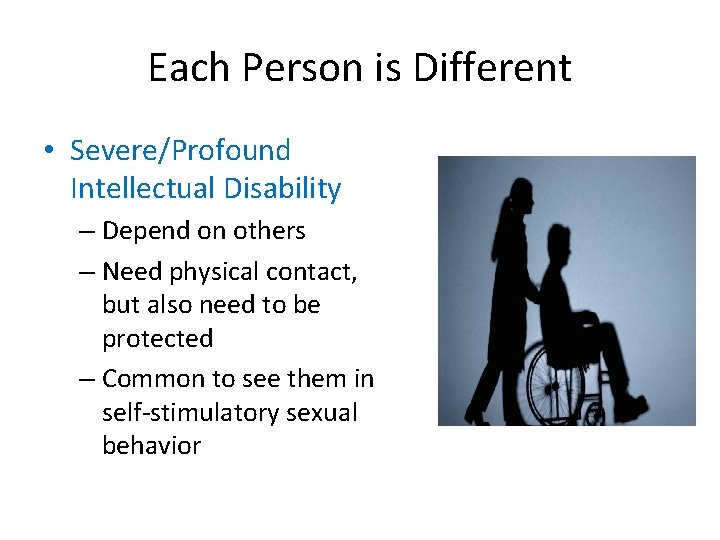
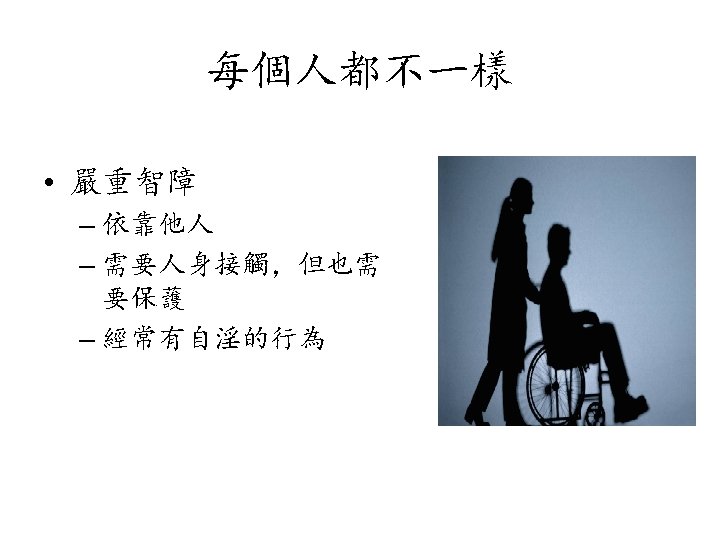
Each Person is Different • Severe/Profound Intellectual Disability – Depend on others – Need physical contact, but also need to be protected – Common to see them in self-stimulatory sexual behavior
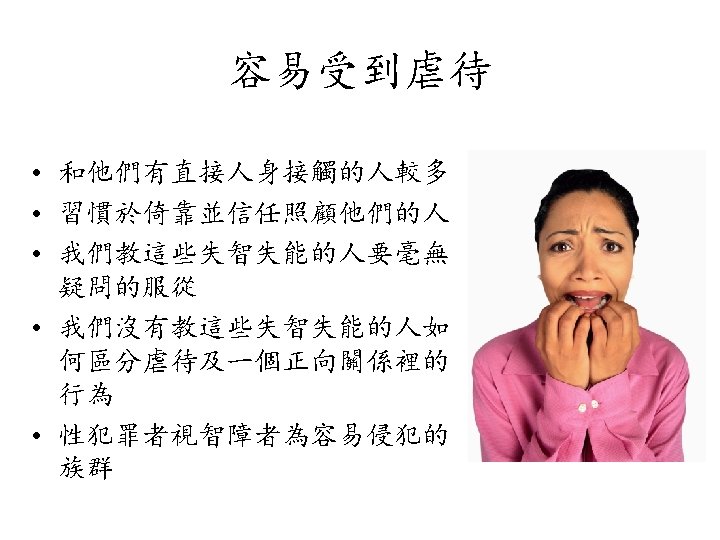
Increased Vulnerability for Mistreatment • Have more contact with people who have direct access to their bodies • Have learned to depend upon, and trust, a variety of caregivers. • We teach compliance and obedience without question • We do not teach to distinguish between abuse and behaviors within a positive relationship • Predators consider people with disabilities to be an easy group to abuse.
WHAT IS THE SOLUTION? EDUCATION!

Why educate? • They have the same needs • Despite society’s denial of their sexuality, they will find ways to meet their biological needs • Education is a preventative measure against abuse. • We can educate about more than just biological functions— we can teach about affection, friendship, non-sexual intimate relationships • We can include education about personal hygiene and safe sex
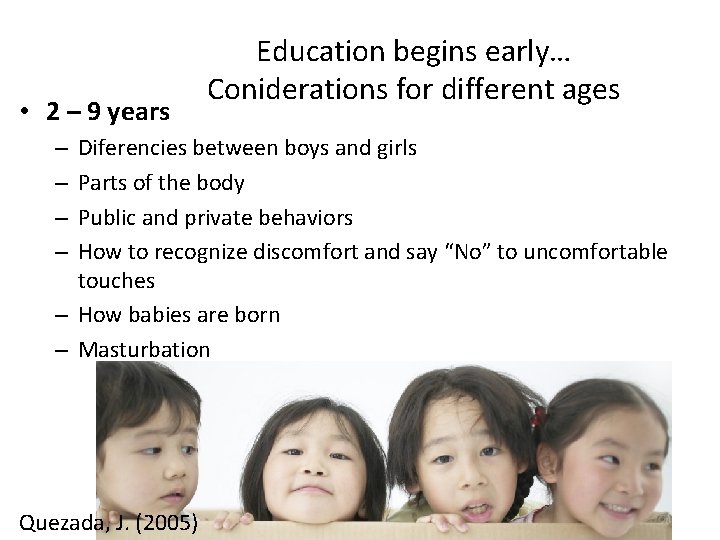
• 2 – 9 years Education begins early… Coniderations for different ages Diferencies between boys and girls Parts of the body Public and private behaviors How to recognize discomfort and say “No” to uncomfortable touches – How babies are born – Masturbation – – Quezada, J. (2005)
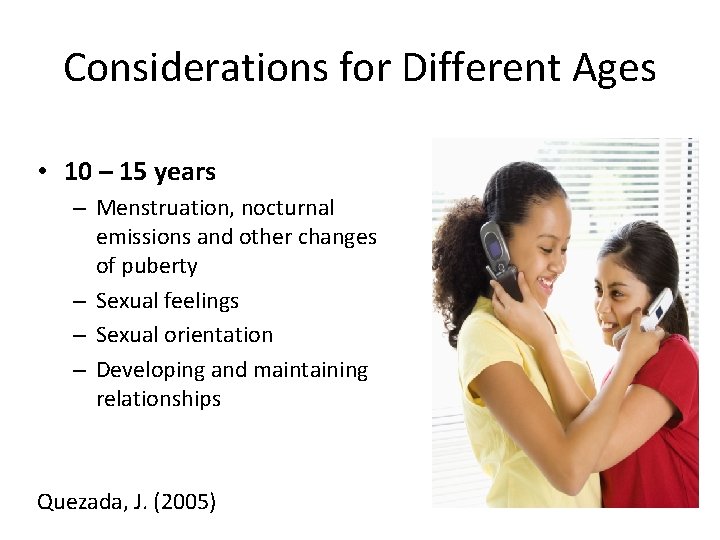
Considerations for Different Ages • 10 – 15 years – Menstruation, nocturnal emissions and other changes of puberty – Sexual feelings – Sexual orientation – Developing and maintaining relationships Quezada, J. (2005)
Considerations for Different Ages • 16 years + – – Differences between sex and love Responsibilities that accompany sexual relationships Responsibilities of parenthood Laws and consequences of inappropriate contact with others Quezada, J. (2005)
Goals to understand relationships • Who am I? – Development of self-esteem • Who is in my life? • What behavior is appropriate with these different persons?
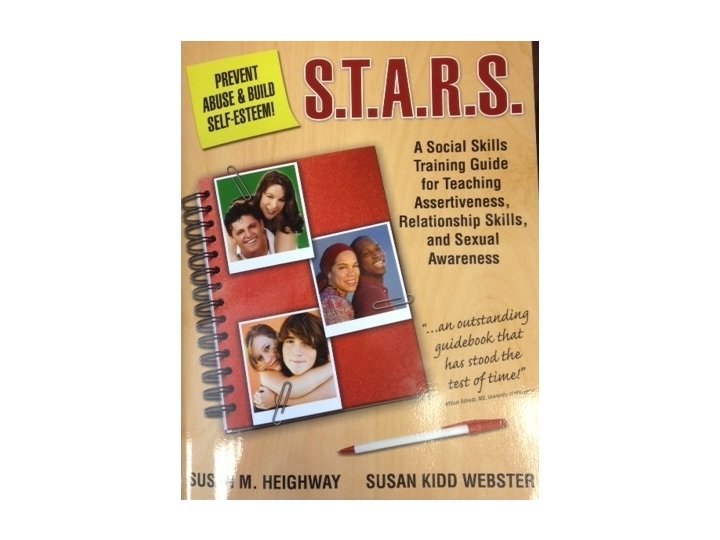
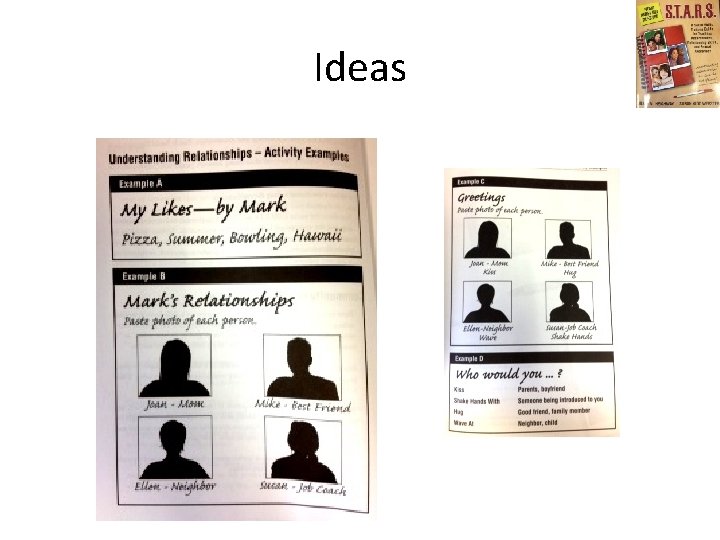
Ideas

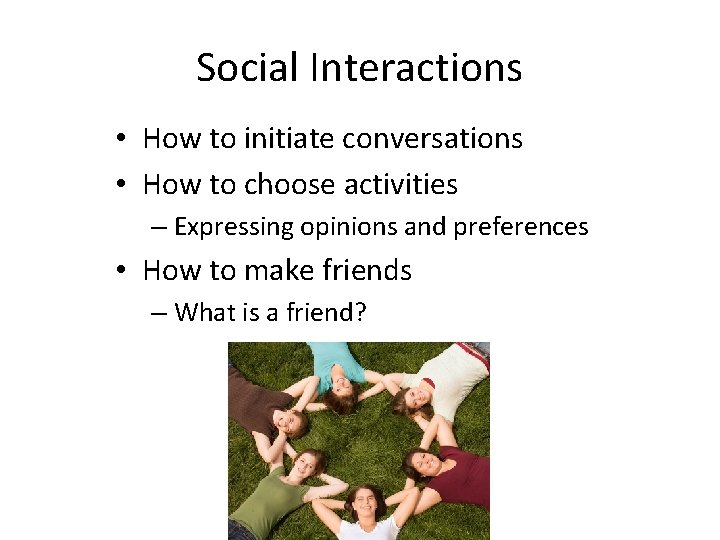
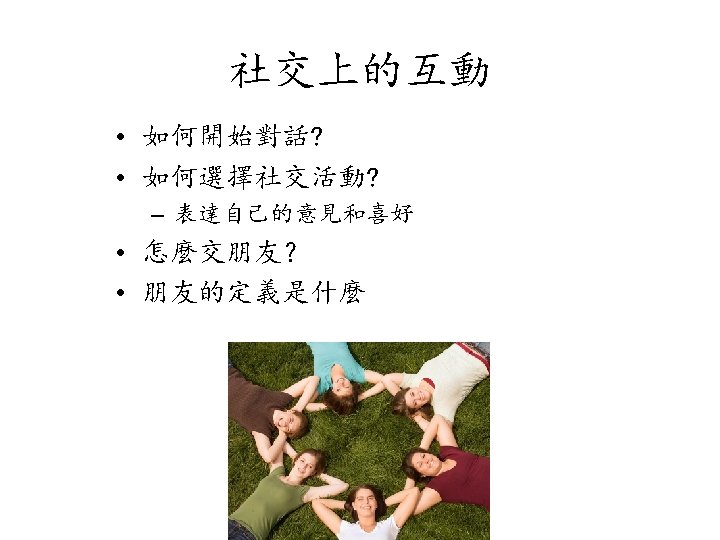
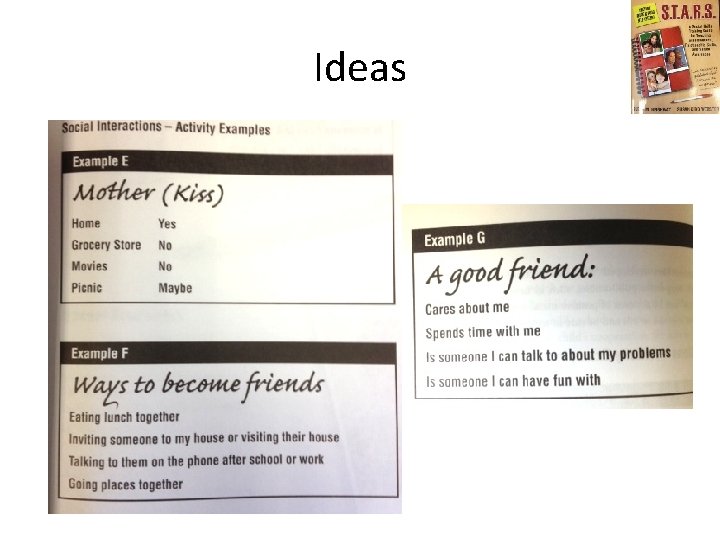
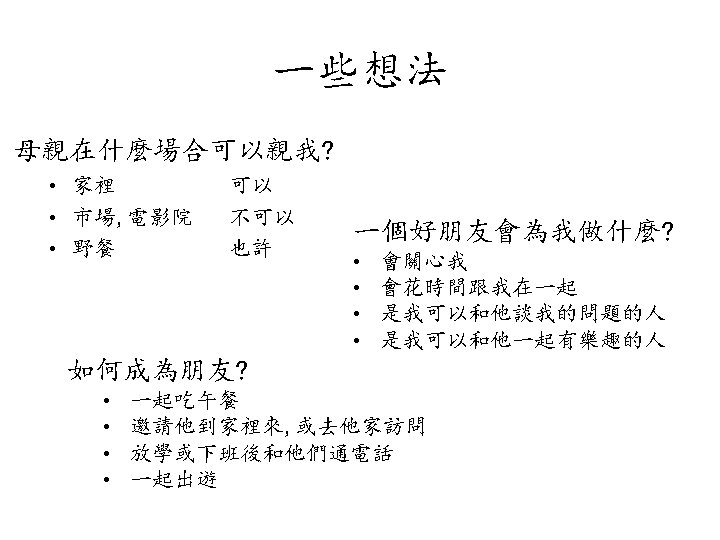
Social Interactions • How to initiate conversations • How to choose activities – Expressing opinions and preferences • How to make friends – What is a friend?
Ideas
Sexual Knowledge • • Identification of boy vs. girl Parts of the body and their uses Public and private behavior Appropriate and inappropriate touch The body and emotions Reproduction Family values Sexually transmitted diseases
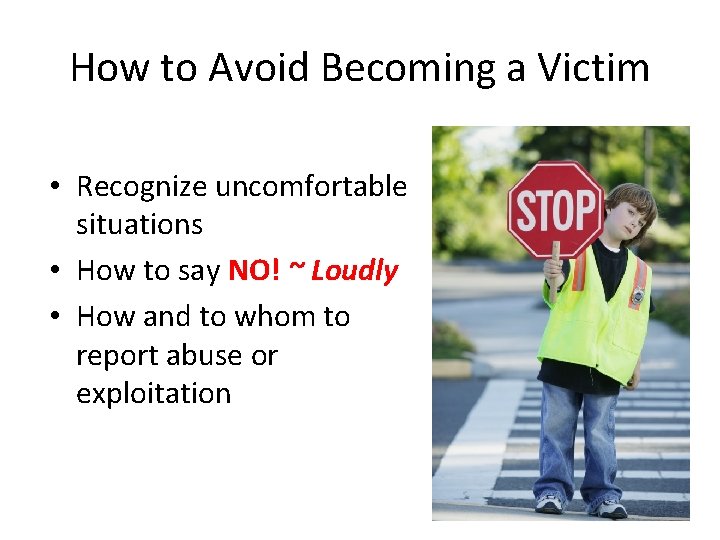
How to Avoid Becoming a Victim • Recognize uncomfortable situations • How to say NO! ~ Loudly • How and to whom to report abuse or exploitation
Factors that complicate the issue • • Few opportunities for typical social situations Overprotection/denial by family members and society Absence of privacy Refusal to provide sex education No examples in TV or real life Cognitive deficits Social and interpersonal deficits
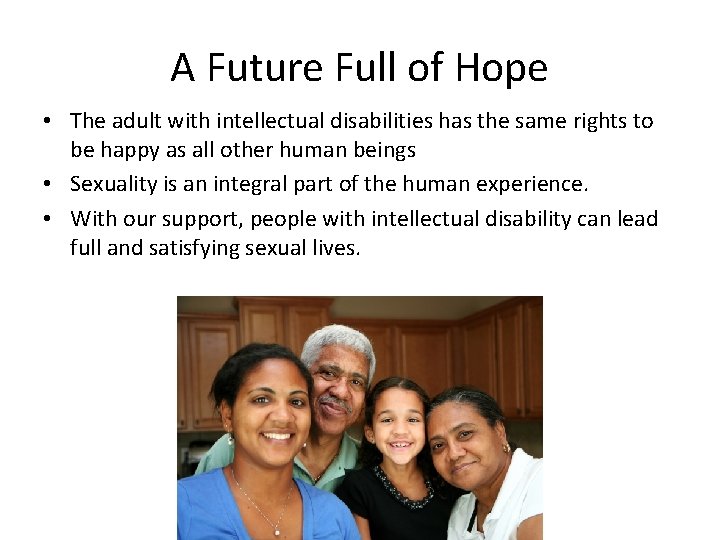
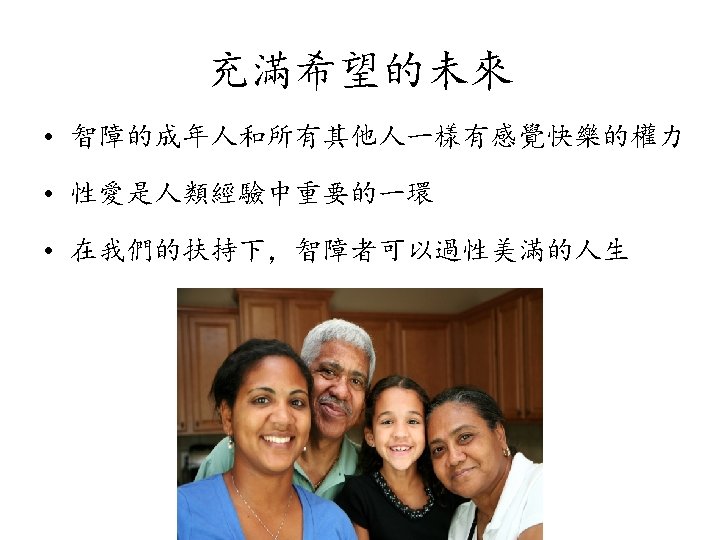
A Future Full of Hope • The adult with intellectual disabilities has the same rights to be happy as all other human beings • Sexuality is an integral part of the human experience. • With our support, people with intellectual disability can lead full and satisfying sexual lives.
- Slides: 46