
Sexual v Asexual Biology of Heredity overview Mitosis

Sexual v. Asexual • Biology of Heredity overview • Mitosis v. Mieosis Meiosis KM 1

Heredity • Heredity – way of transferring genetic information to offspring • Chromosome theory of heredity: chromosomes carry genes. • Gene – “unit of heredity”. Meiosis KM 2

Reproduction • Asexual – Many single-celled organisms reproduce by splitting & budding, – Some multicellular organisms can reproduce asexually, produce clones (offspring genetically identical to parent). Meiosis KM 3

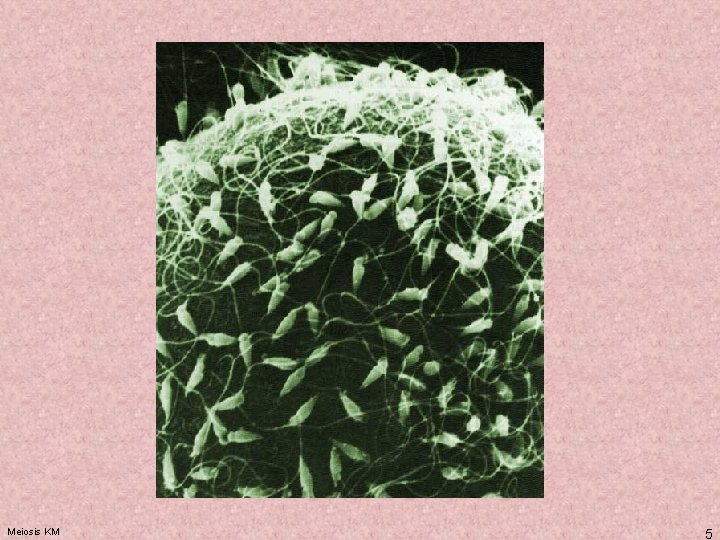
Sexual reproduction • Fusion of two gametes (i. e. sperm & egg, pollen & egg) to produce a single zygote. • Introduces greater genetic variation, drives adaptation! • With exception of self-fertilizing organisms (e. g. some plants), zygote has gametes from two different parents. Meiosis KM 4
Meiosis KM 5

In humans … • 23 chromosomes donated by each parent (total = 46 or 23 pairs). • Gametes (sperm/ova): – Contain 22 autosomes and 1 sex chromosome. – Are haploid (haploid number “n” = 23 in humans). • Fertilization/syngamy results in zygote with 2 haploid sets of chromosomes - now diploid. – Diploid cell; 2 n = 46. (n=23 in humans) • Most cells in the body produced by mitosis. • Only gametes (eggs & sperm or pollen)are produced by meiosis. Meiosis KM 6
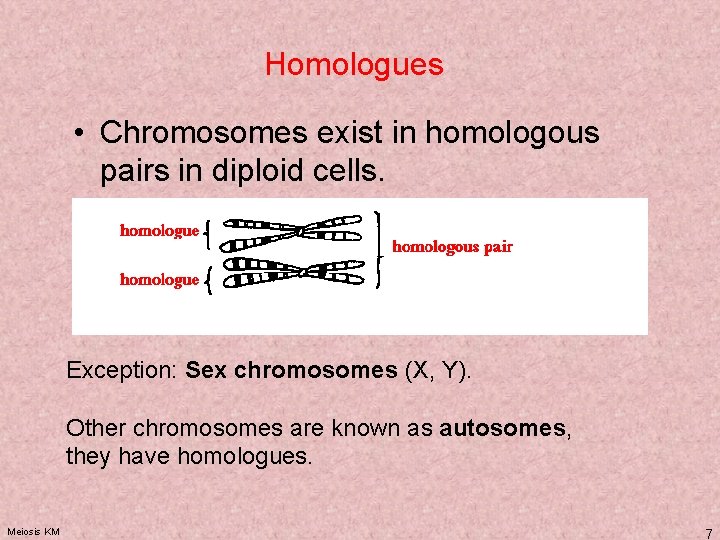
Homologues • Chromosomes exist in homologous pairs in diploid cells. Exception: Sex chromosomes (X, Y). Other chromosomes are known as autosomes, they have homologues. Meiosis KM 7

Meiosis KM 8

Chromosomes = DNA Meiosis KM 9

Meiosis KM 10
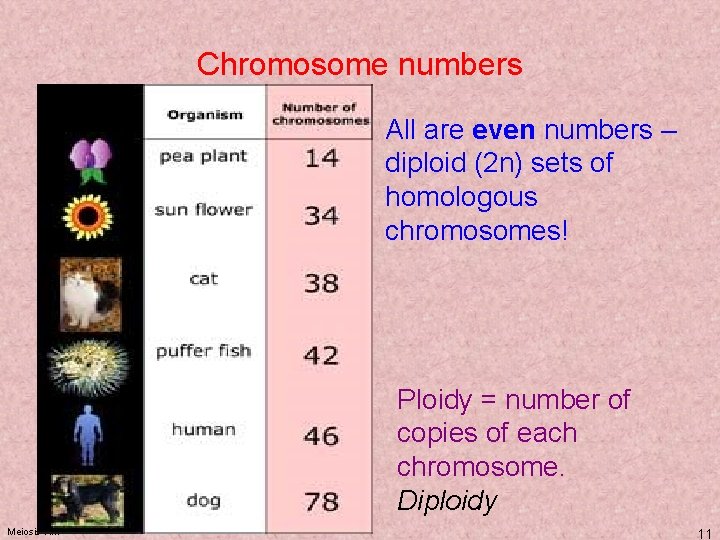
Chromosome numbers All are even numbers – diploid (2 n) sets of homologous chromosomes! Ploidy = number of copies of each chromosome. Diploidy Meiosis KM 11
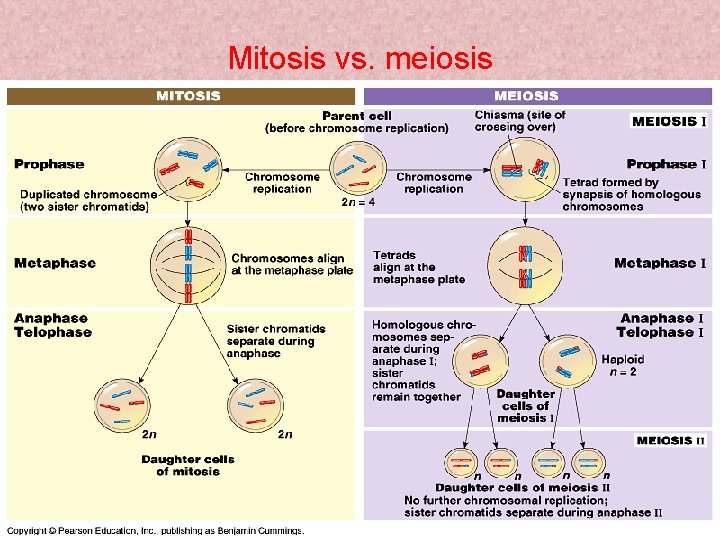
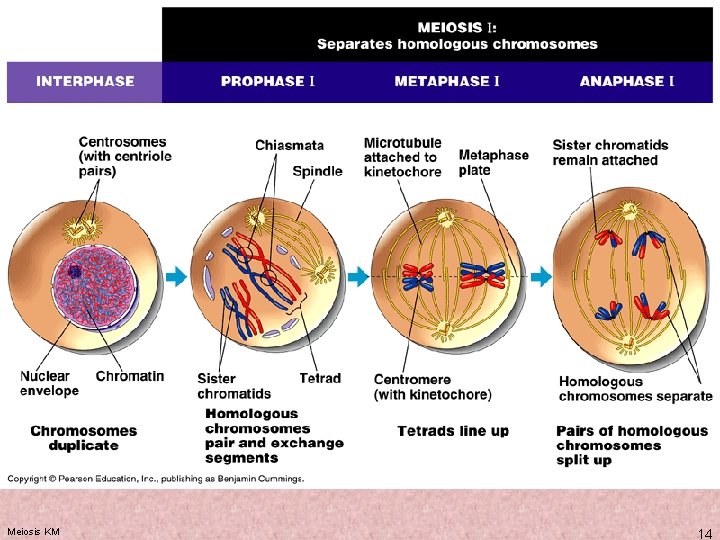
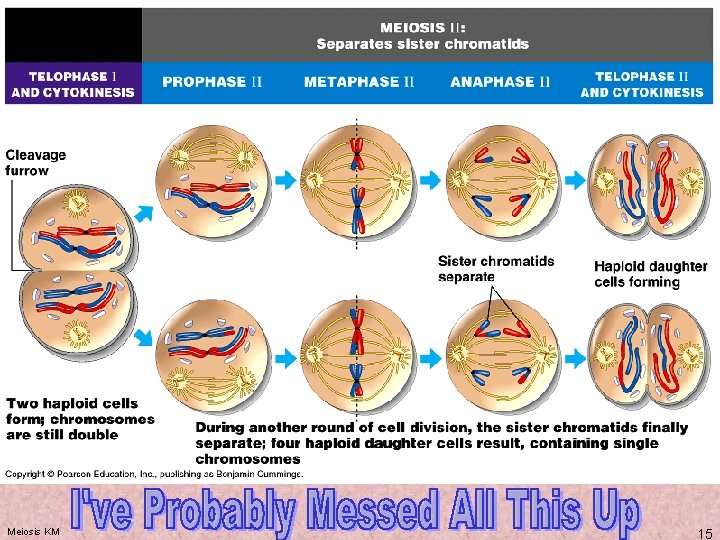
Mitosis vs. meiosis Meiosis KM 12

Meiosis KM 13
Meiosis KM 14
Meiosis KM 15

Animation Meiosis KM 16
Meiosis – key differences from mitosis • Meiosis reduces the number of chromosomes by half. • Daughter cells differ from parent, and each other. • Meiosis involves two divisions, Mitosis only one. Meiosis KM 17
- Slides: 17