
Sexual Selection 2 types of selection 1 Intrasexual
- Slides: 24
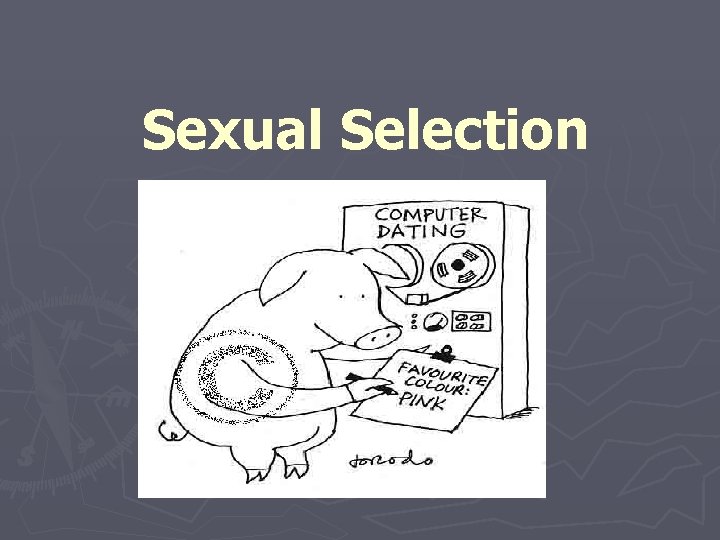
Sexual Selection
2 types of selection: 1. Intrasexual Selection: ► Members of 1 sex COMPETE with each other for ACCESS to the other SEX. 2. Intersexual Selection: ► Females and Males CHOOSE partners with the most ATTRACTIVE attributes.
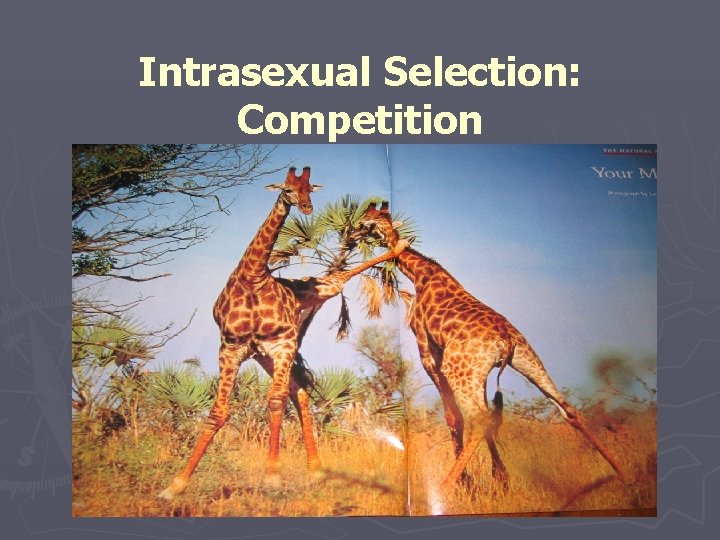
Intrasexual Selection: Competition
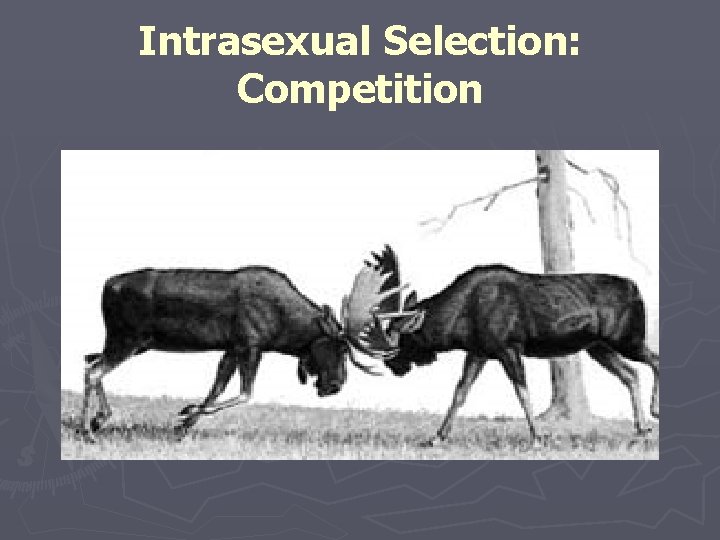
Intrasexual Selection: Competition
Intrasexual Selection 1. Competition: ► Leads to differences in reproductive SUCCESS. ► Charles DARWIN: Whoever SURVIVES will REPRODUCE. ► In most species, MALES compete for FEMALES
Intrasexual Selection 2. Why is there a difference between sexes? ► Different type and NUMBER of GAMETES (sperm/egg) produced by males and females
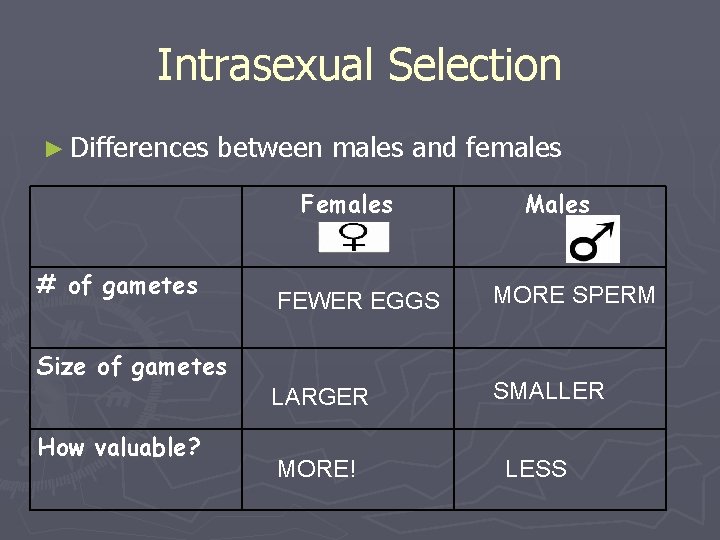
Intrasexual Selection ► Differences between males and females Females # of gametes FEWER EGGS MORE SPERM LARGER SMALLER Size of gametes How valuable? Males MORE! LESS
Intrasexual Selection 1. Females limit male reproductive success. Why? ► Females EGGS are often, but not always, FEWER and FAR between. 2. This leads to severe what? ► COMPETITION!!!!!
Intersexual Selection: Mate Choice
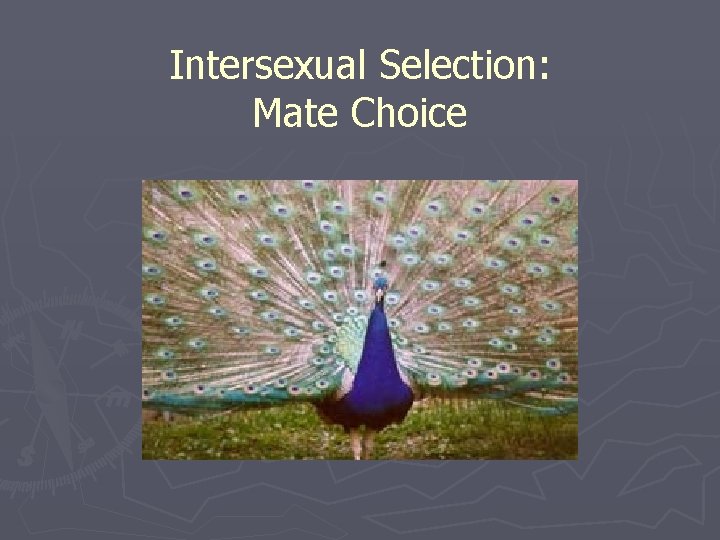
Intersexual Selection ► Seeking PARTNERS with the most ATTRACTIVE attributes ► Attractive attributes may be: 1. PHYSICAL ex. Peacocks tail 2. BEHAVIOURAL ex. Courtship dances
Sexual Behavior ► Includes ► Much COURTSHIP and the MATING act. of the behavior is VISUAL including posture, feather FLUFFING, tail carriage; some of it is AUDITORY, especially in cats, but CHEMICAL communication via PHEROMONES is the clincher.
Sexual Behavior I. Courtship: a. Purpose of courtship displays: ► System designed to trap ATTENTION of potential SEXUAL partner ► All ACTIONS have SPECIFIC meanings.
Sexual Behavior b. Why perform courtship rituals? 1. To find a potential MATE 2. IDENTIFY yourself as the correct SPECIES 3. ATTRACT your potential MATE to you – Close PROXIMITY for MATING 4. AROUSE potential MATES so that they’re physiologically ready. ex. egg in proper position
Sexual Behavior Female Mate Choice: More Prevalent! Why? ► Females stand to LOSE more than MALES by making BAD choices ► Females INVEST more ENERGY in each gamete. ► Females DEVOTE more TIME and ENERGY to their offspring.
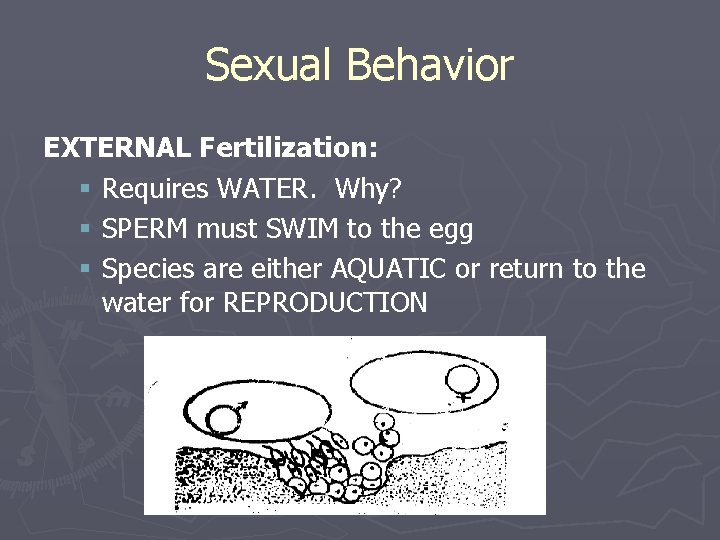
Sexual Behavior II. Copulation: ► Physical act of MATING 1. EXTERNAL Fertilization: § Egg and SPERM join OUTSIDE the FEMALE body. § Many GAMETES are released into the WATER at the same TIME and LOCATION.
Sexual Behavior EXTERNAL Fertilization: § Requires WATER. Why? § SPERM must SWIM to the egg § Species are either AQUATIC or return to the water for REPRODUCTION
Sexual Behavior 2. INTERNAL Fertilization: ► Egg and SPERM join inside the FEMALE body ► Practiced by species that LAY shelled eggs or have a period of internal EMBRYONIC development. ► Enables animals to reproduce in a TERRESTRIAL environment
Sexual Behavior Internal Fertilization: ► Males often have a COPULATORY organ to transfer sperm. ► Examples of Copulatory Organs: 1. Sharks, rays and skates have PELVIC FINS that transfer the sperm into the female. 2. Insects and Mammals have a PENIS 3. Some reptiles and birds have a PENIS 4. MOST reptiles and birds have a single OPENING for the REPRODUCTIVE, excretory and digestive systems called a CLOACA.
Care Giving Behavior III. Epimeletic: ► MATERNAL Behavior ► Demonstrated by a FEMALE caring for her YOUNG in the early stages. ► “SUCCORANT Behavior”: Giving of HELP to a DISTRESSED individual
Care Soliciting Behavior IV. Et-Epimeletic: ► CARE-seeking behavior ► Behavioral ACTIVITIES manifested to SOLICIT attention, CARE, or help from other individuals. ► young RESPONDING to the FEMALE’S care giving. ► In PUPPIES, this includes TAIL-wagging, LICKING the female's face, and following the female closely. ► ARISES in situations where an animal is INCAPABLE of adjusting or ADAPTING itself.
Patterns of Growth and Development 1. Altricial: ► meaning “REQUIRING nourishment“ ► Found in ORGANISMS which are INCAPABLE of moving around on their own soon after HATCHING or being born. ► Characteristics: a. IMMOBLE b. LACK HAIR OR DOWN c. CLOSED EYES
Patterns of Growth and Development ► Examples a. b. c. d. e. f. g. of ALTRICIAL species: HERONS Hawks WOODPECKERS Owls RODENTS MARSUPIALS Cats, Dogs and humans
Patterns of Growth and Development 2. Precocial ► Species in which the YOUNG are relatively MATURE and MOBILE from the moment of BIRTH or hatching. ► Chrarcteristics: a. LONGER gestation or incubation period than related altricial species b. SMALLER litters or clutches
Patterns of Growth and Development ► Examples of PRECOCIAL species: a. HARE b. Guinea Pigs c. SOME Birds