
SEXUAL REPRODUCTION Sex cells formed by meiosis Requires
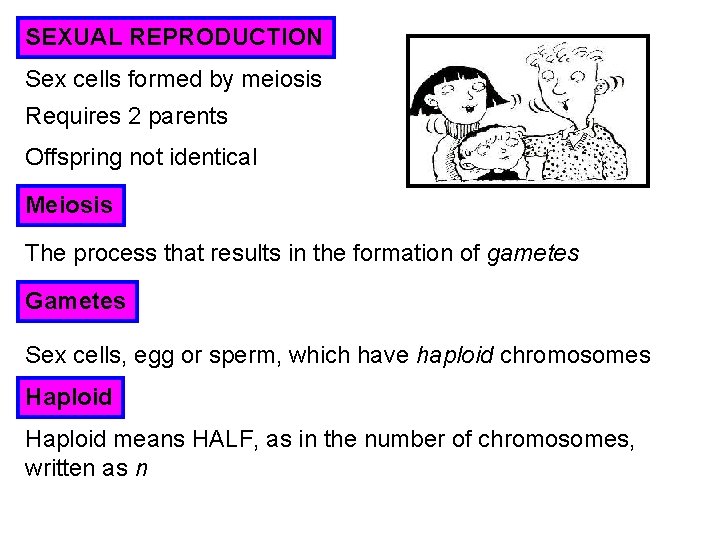
SEXUAL REPRODUCTION Sex cells formed by meiosis Requires 2 parents Offspring not identical Meiosis The process that results in the formation of gametes Gametes Sex cells, egg or sperm, which have haploid chromosomes Haploid means HALF, as in the number of chromosomes, written as n
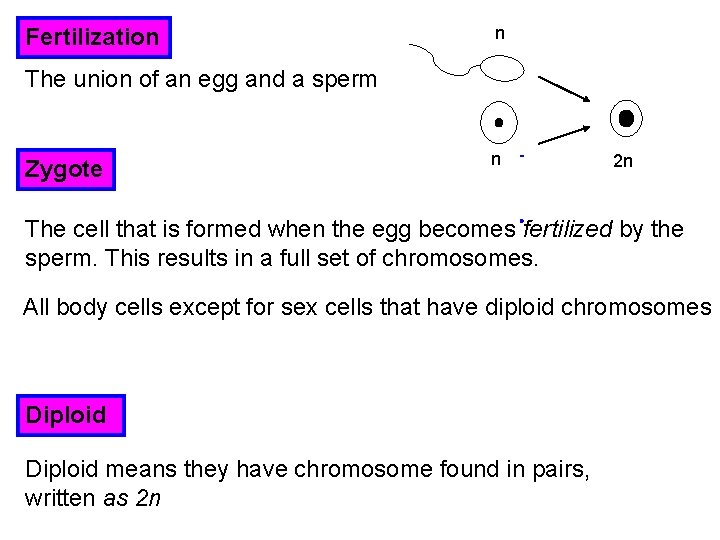
Fertilization n The union of an egg and a sperm Zygote n 2 n The cell that is formed when the egg becomes fertilized by the sperm. This results in a full set of chromosomes. All body cells except for sex cells that have diploid chromosomes Diploid means they have chromosome found in pairs, written as 2 n
Homologous Chromosomes Similar chromosomes that are found in pairs. The paired chromosomes come from the mother and father. * Human body cells have 46 chromosomes each * Human body cells have 23 homologous pairs Meiosis A kind of cell division that results in gametes (sex cells) with half the number of chromosomes.
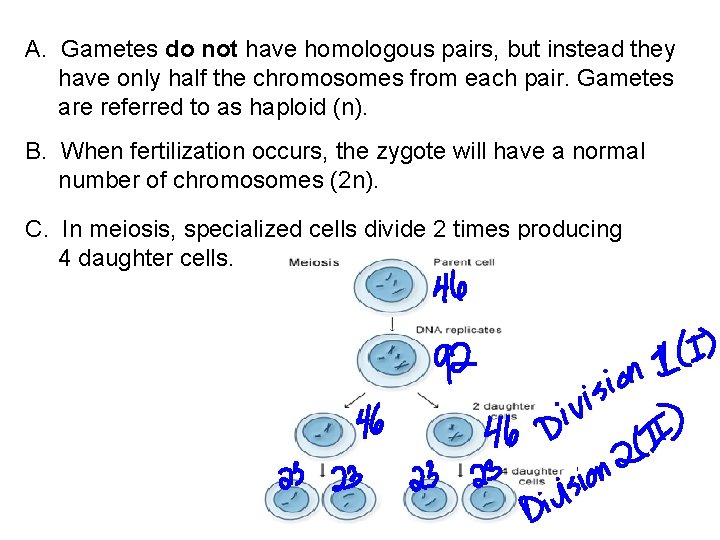
A. Gametes do not have homologous pairs, but instead they have only half the chromosomes from each pair. Gametes are referred to as haploid (n). B. When fertilization occurs, the zygote will have a normal number of chromosomes (2 n). C. In meiosis, specialized cells divide 2 times producing 4 daughter cells.
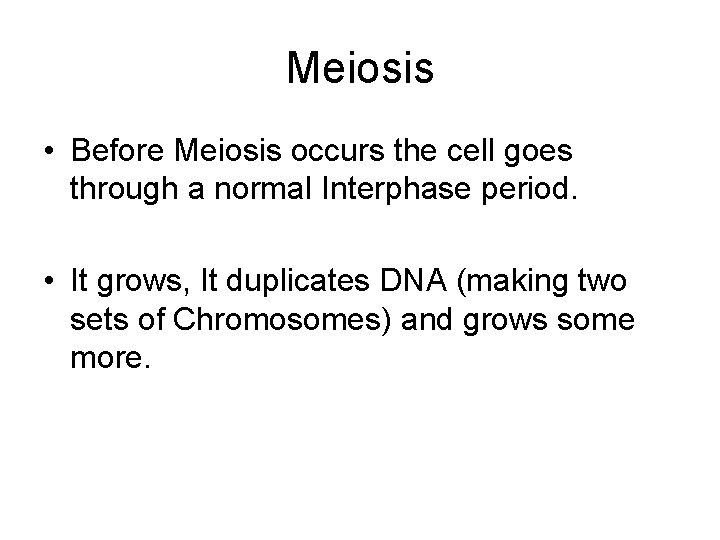
Meiosis • Before Meiosis occurs the cell goes through a normal Interphase period. • It grows, It duplicates DNA (making two sets of Chromosomes) and grows some more.
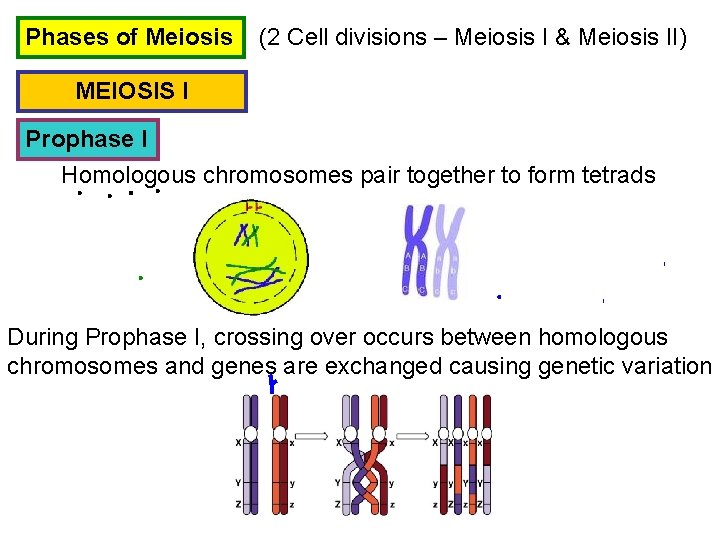
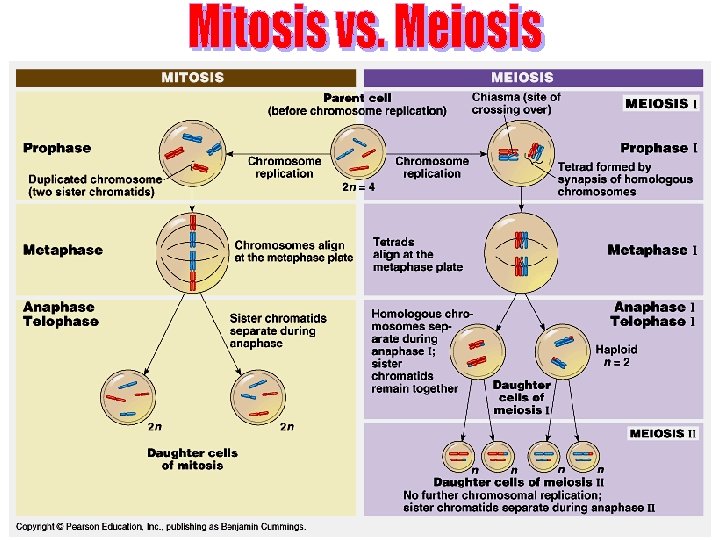
Phases of Meiosis (2 Cell divisions – Meiosis I & Meiosis II) MEIOSIS I Prophase I Homologous chromosomes pair together to form tetrads During Prophase I, crossing over occurs between homologous chromosomes and genes are exchanged causing genetic variation
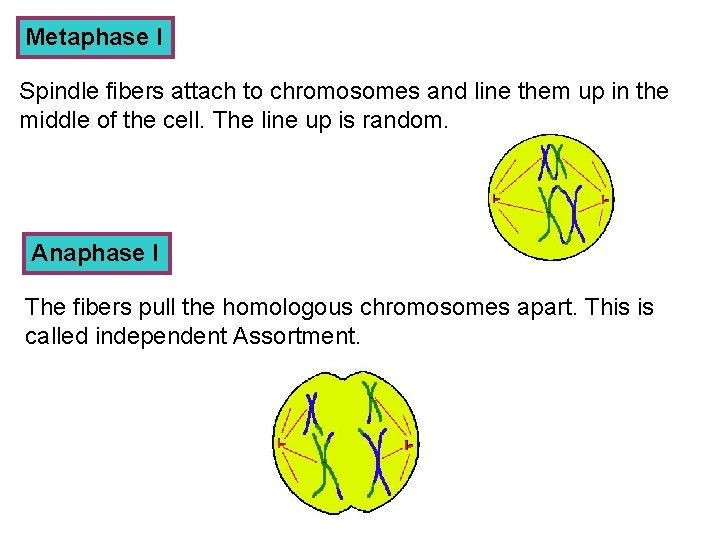
Metaphase I Spindle fibers attach to chromosomes and line them up in the middle of the cell. The line up is random. Anaphase I The fibers pull the homologous chromosomes apart. This is called independent Assortment.
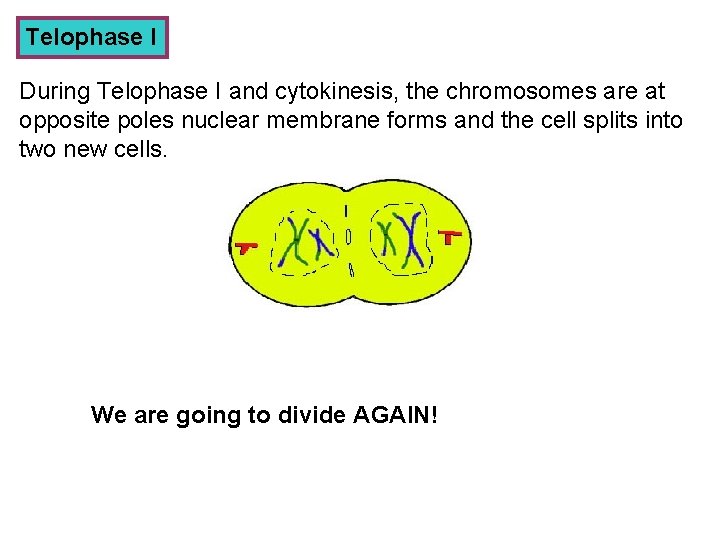
Telophase I During Telophase I and cytokinesis, the chromosomes are at opposite poles nuclear membrane forms and the cell splits into two new cells. We are going to divide AGAIN!
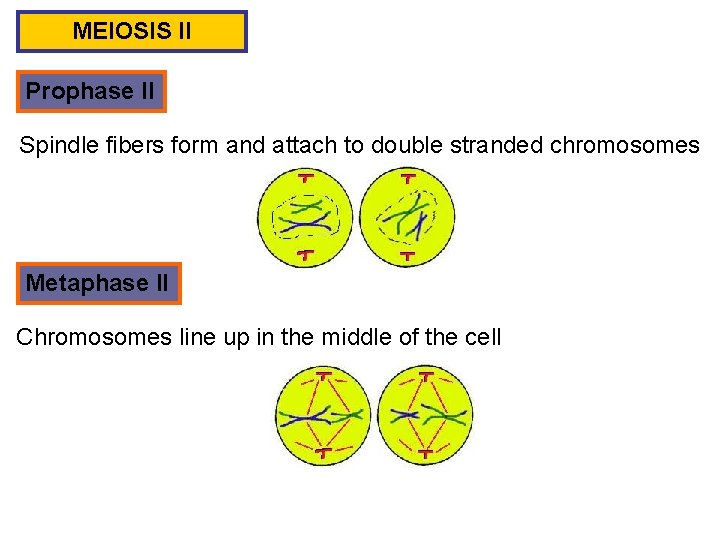
MEIOSIS II Prophase II Spindle fibers form and attach to double stranded chromosomes Metaphase II Chromosomes line up in the middle of the cell
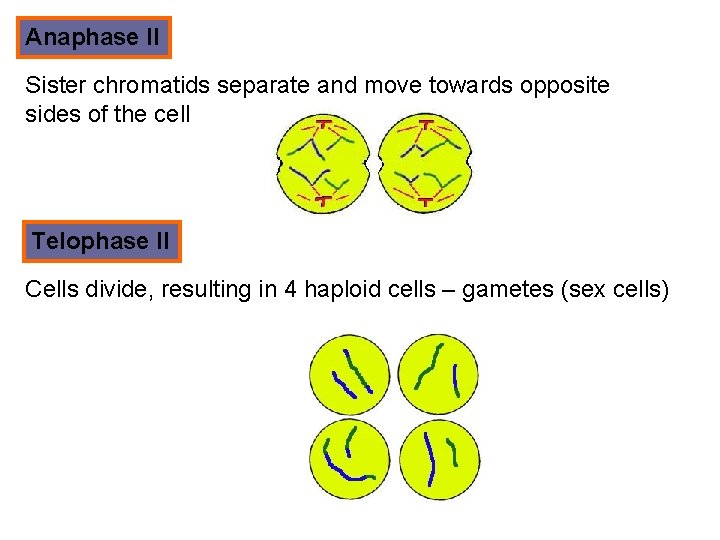
Anaphase II Sister chromatids separate and move towards opposite sides of the cell Telophase II Cells divide, resulting in 4 haploid cells – gametes (sex cells)
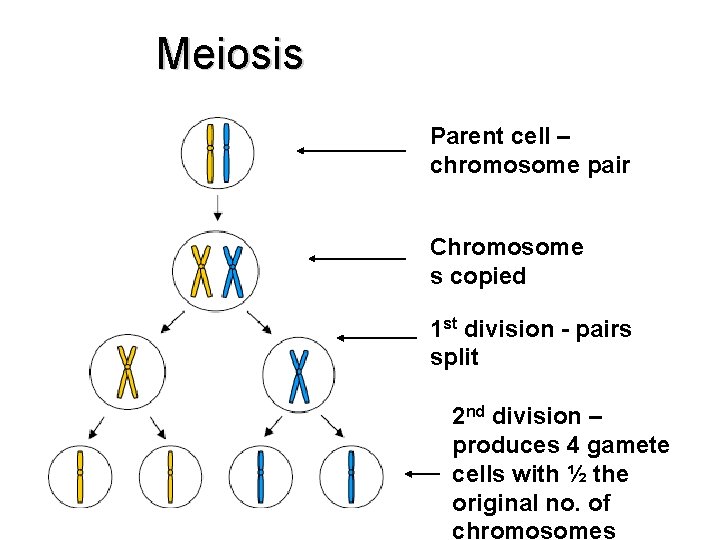
Meiosis Parent cell – chromosome pair Chromosome s copied 1 st division - pairs split 2 nd division – produces 4 gamete cells with ½ the original no. of chromosomes
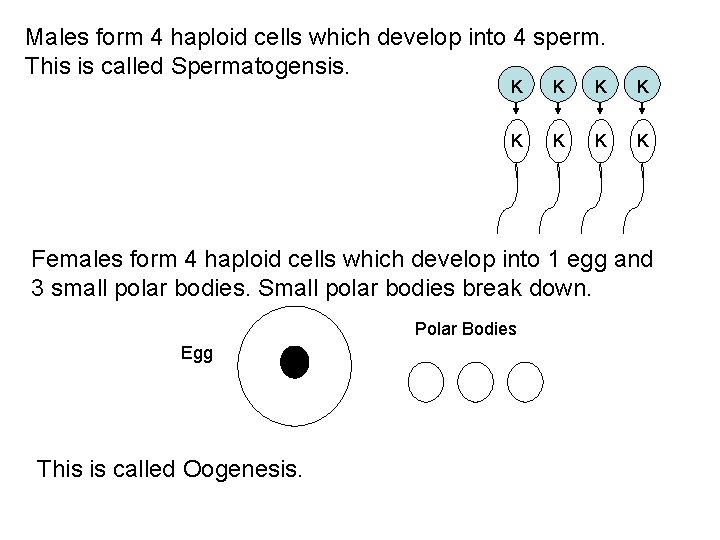
Males form 4 haploid cells which develop into 4 sperm. This is called Spermatogensis. K K K K Females form 4 haploid cells which develop into 1 egg and 3 small polar bodies. Small polar bodies break down. Polar Bodies Egg This is called Oogenesis.
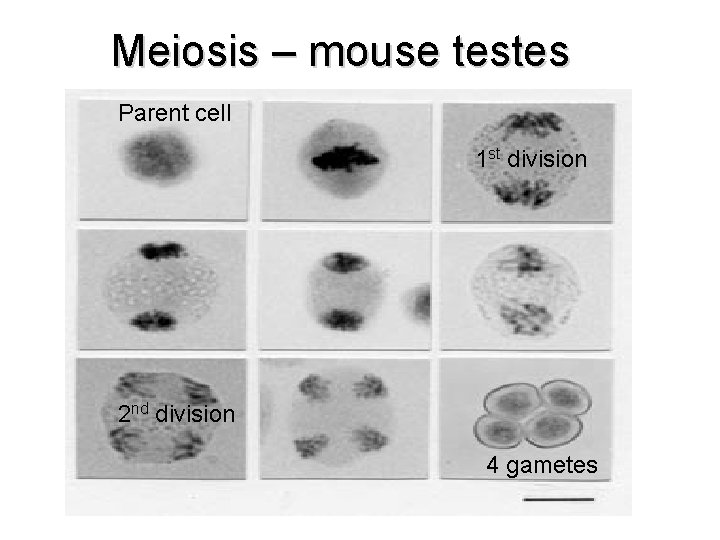
Meiosis – mouse testes Parent cell 1 st division 2 nd division 4 gametes
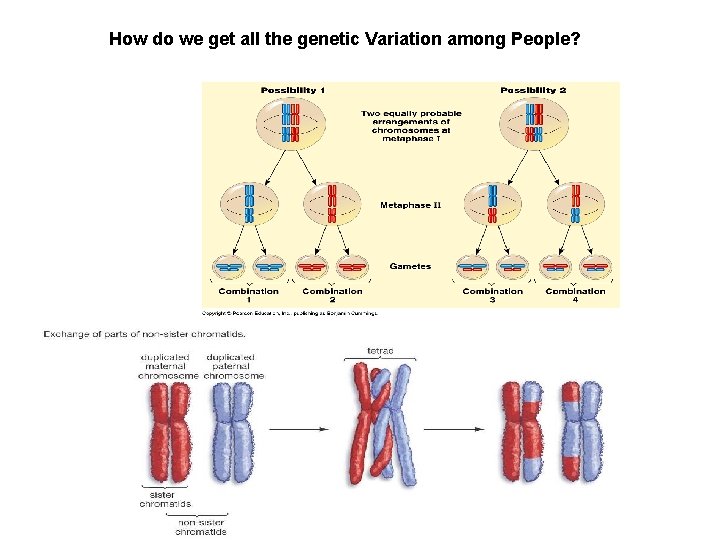
How do we get all the genetic Variation among People?
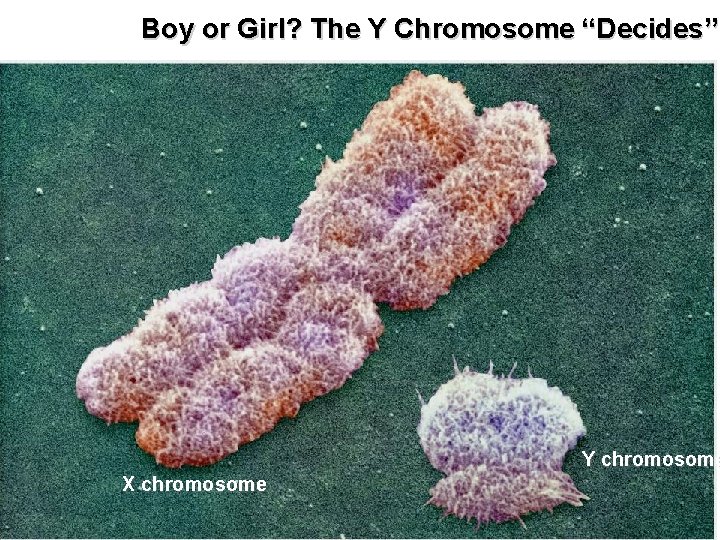
Boy or Girl? The Y Chromosome “Decides” Y chromosome X chromosome
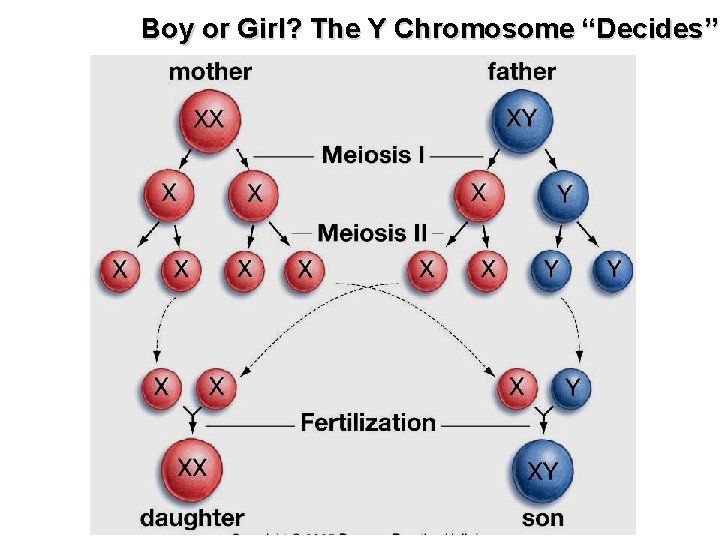
Boy or Girl? The Y Chromosome “Decides”
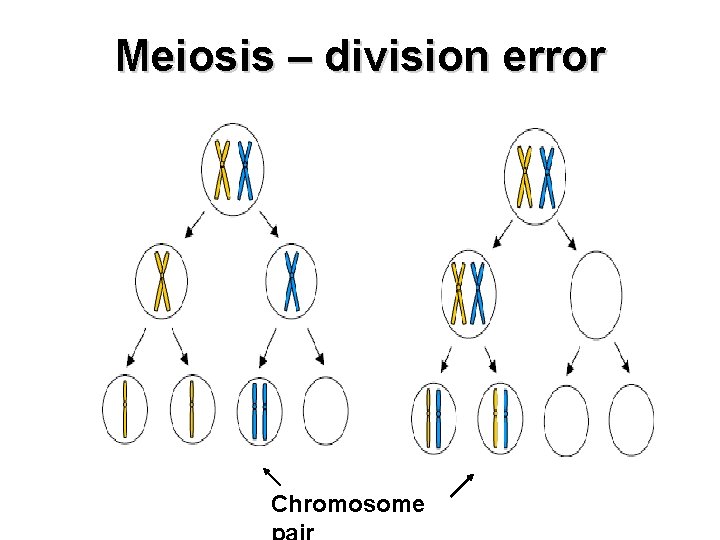
Meiosis – division error Chromosome
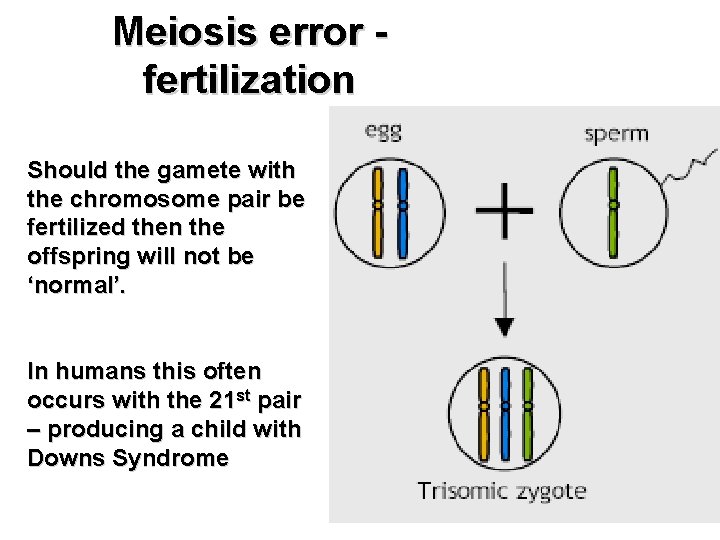
Meiosis error fertilization Should the gamete with the chromosome pair be fertilized then the offspring will not be ‘normal’. In humans this often occurs with the 21 st pair – producing a child with Downs Syndrome
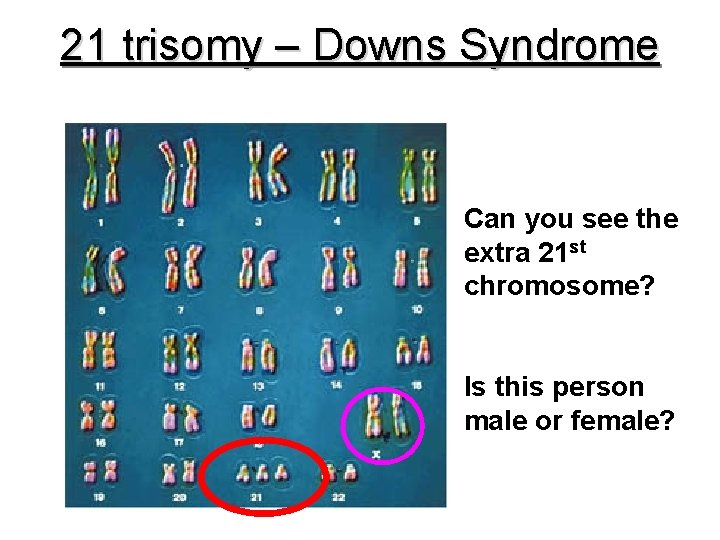
21 trisomy – Downs Syndrome Can you see the extra 21 st chromosome? Is this person male or female?
- Slides: 21