
Sexual Reproduction Part 1 Meiosis Science 9 Definitions
- Slides: 19
Sexual Reproduction Part 1: Meiosis Science 9
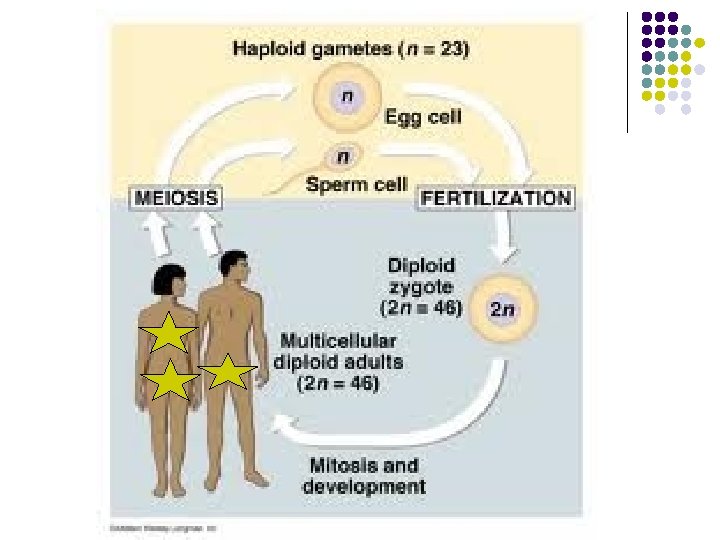
Definitions l l Diploid (2 N): cell has 2 sets of chromosomes, one set from each parent ie) human body cells have 2 x 23 = 46 chromosomes Haploid (N): cell only has 1 set of chromosomes ie) human sperm or egg cells have 23 chromosomes
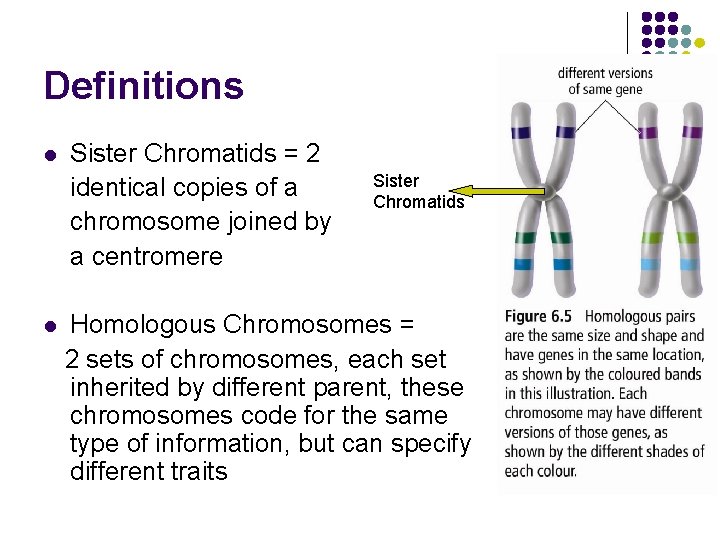
Definitions l l Sister Chromatids = 2 identical copies of a chromosome joined by a centromere Sister Chromatids Homologous Chromosomes = 2 sets of chromosomes, each set inherited by different parent, these chromosomes code for the same type of information, but can specify different traits
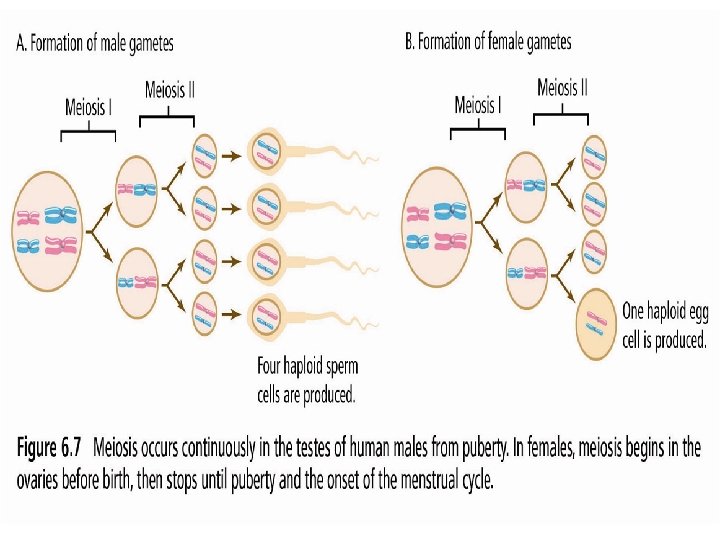
Meiosis l A process of 2 cell divisions that produces haploid cells called gametes: - sperm cells in males - egg cells in females
Meiosis I: -one diploid cell divides into 2 haploid cells Meiosis II: -each haploid cell then divides again to produce 4 gametes: ~Males: 4 sperm cells ~Females: 1 egg cell + 3 polar bodies
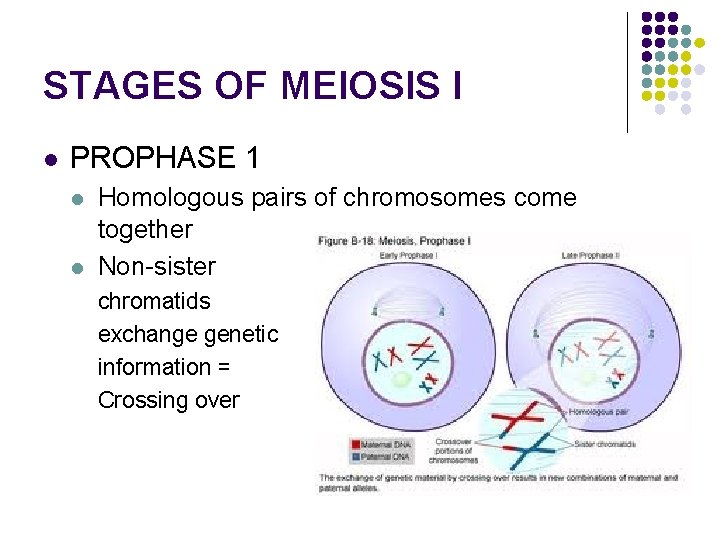
STAGES OF MEIOSIS I l PROPHASE 1 l l Homologous pairs of chromosomes come together Non-sister chromatids exchange genetic information = Crossing over
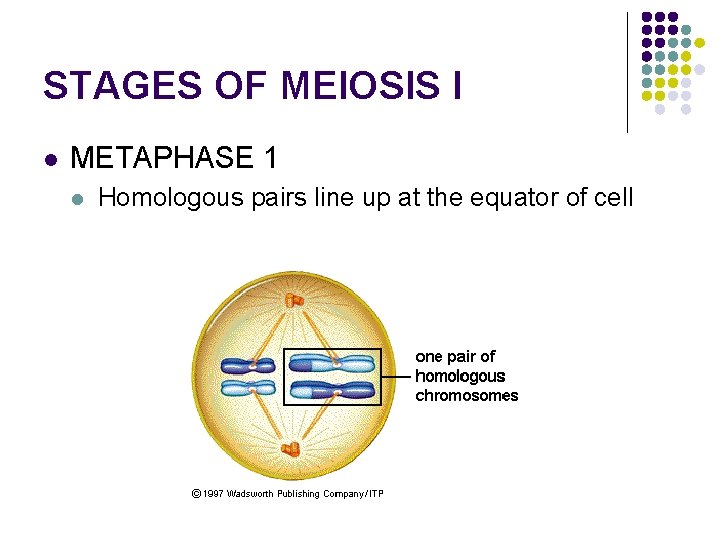
STAGES OF MEIOSIS I l METAPHASE 1 l Homologous pairs line up at the equator of cell
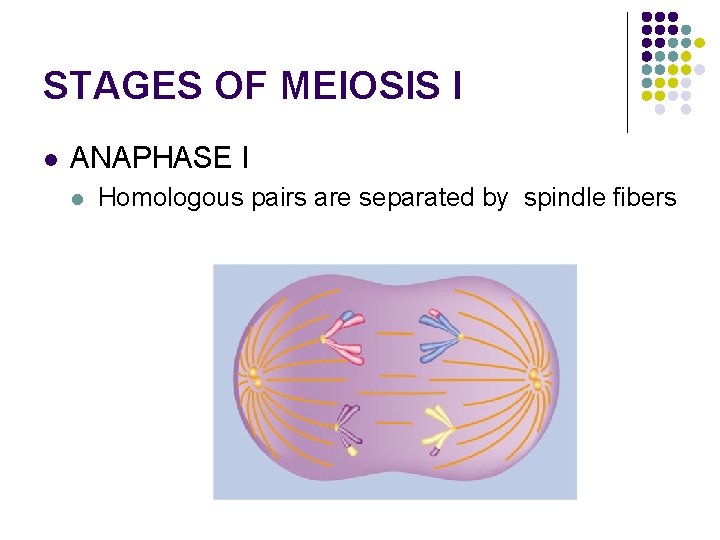
STAGES OF MEIOSIS I l ANAPHASE I l Homologous pairs are separated by spindle fibers
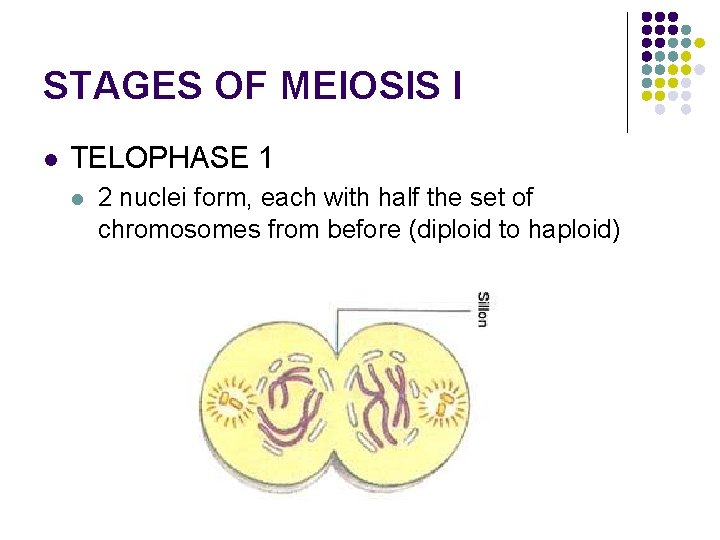
STAGES OF MEIOSIS I l TELOPHASE 1 l 2 nuclei form, each with half the set of chromosomes from before (diploid to haploid)
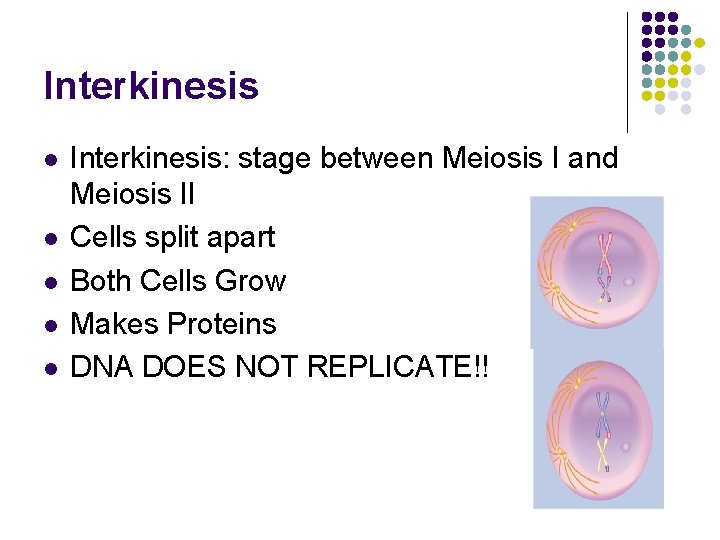
Interkinesis l l l Interkinesis: stage between Meiosis I and Meiosis II Cells split apart Both Cells Grow Makes Proteins DNA DOES NOT REPLICATE!!
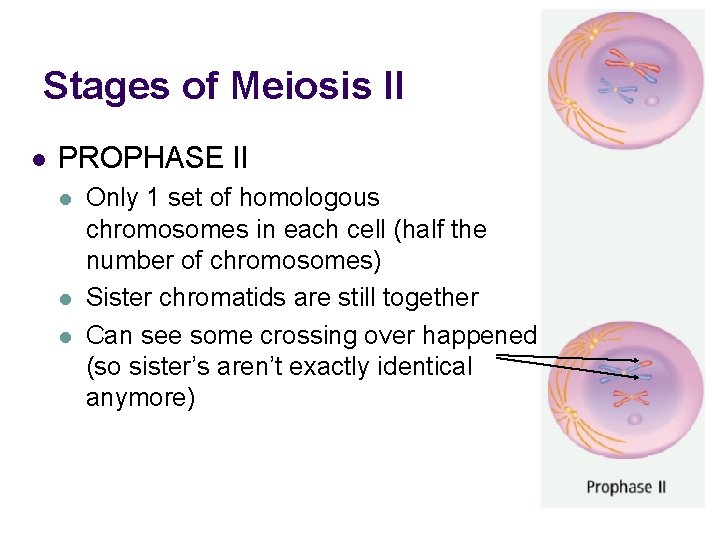
Stages of Meiosis II l PROPHASE II l l l Only 1 set of homologous chromosomes in each cell (half the number of chromosomes) Sister chromatids are still together Can see some crossing over happened (so sister’s aren’t exactly identical anymore)
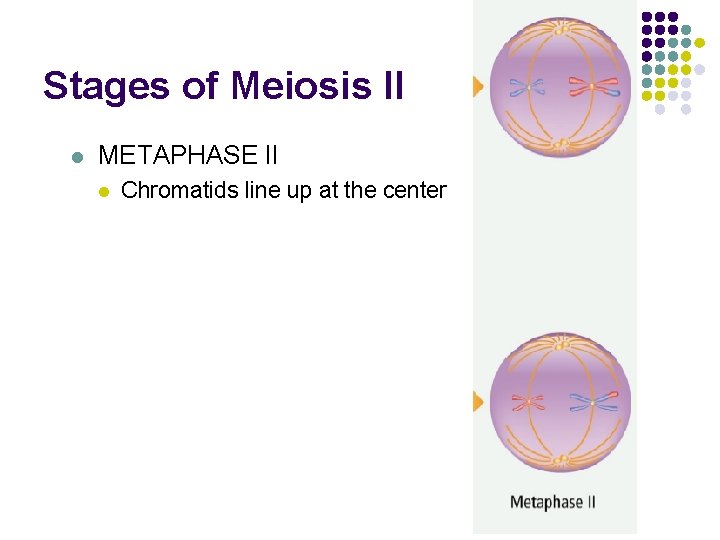
Stages of Meiosis II l METAPHASE II l Chromatids line up at the center
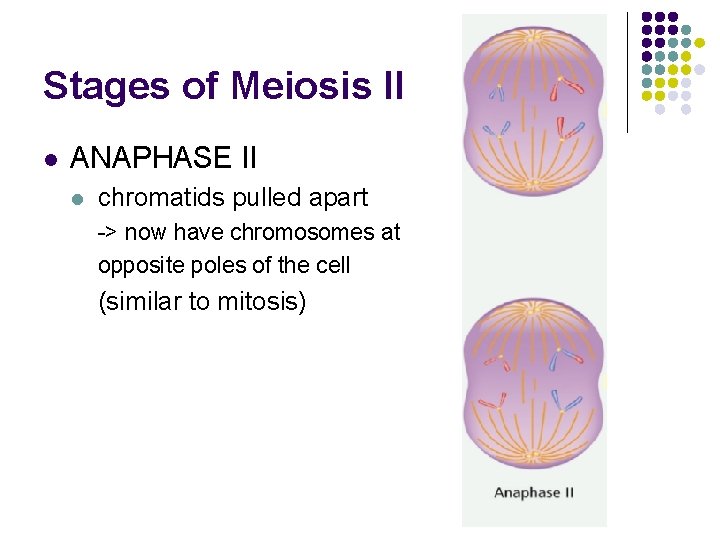
Stages of Meiosis II l ANAPHASE II l chromatids pulled apart -> now have chromosomes at opposite poles of the cell (similar to mitosis)
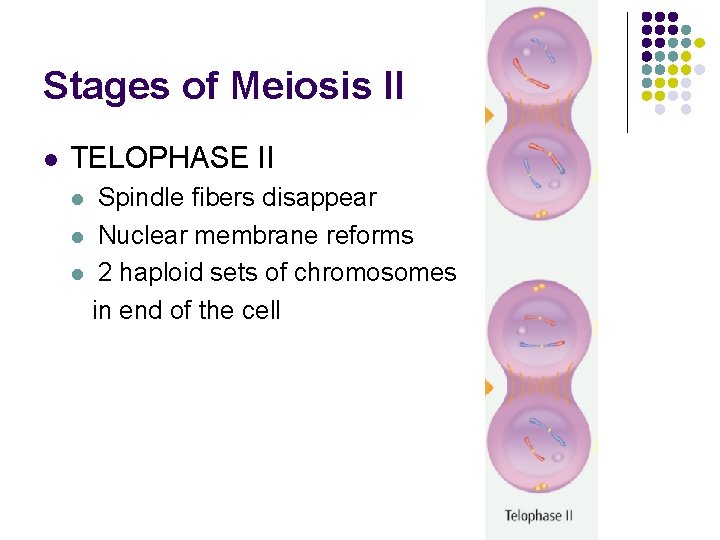
Stages of Meiosis II l TELOPHASE II Spindle fibers disappear l Nuclear membrane reforms l 2 haploid sets of chromosomes in end of the cell l
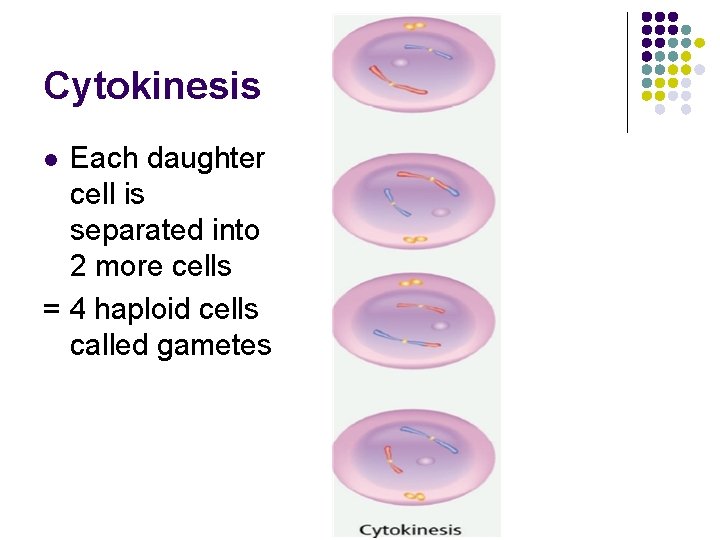
Cytokinesis Each daughter cell is separated into 2 more cells = 4 haploid cells called gametes l
What is Independent Assortment? (Page 192) l Describe or draw what it is? l In what stage of meiosis does this happen?
What is Crossing Over? (Page 192) l Describe or draw what it is? l In what stage of meiosis does this happen?