
Sexual Reproduction of the Flowering Plant Adapted from




- Slides: 64
Sexual Reproduction of the Flowering Plant Adapted from Biology Resource CD, 2009 Dept. of Education Orla Bergin
Structure of the flower
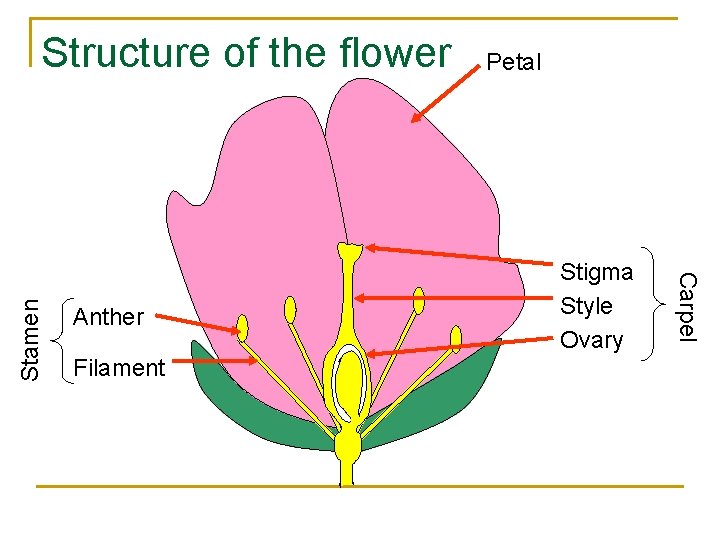
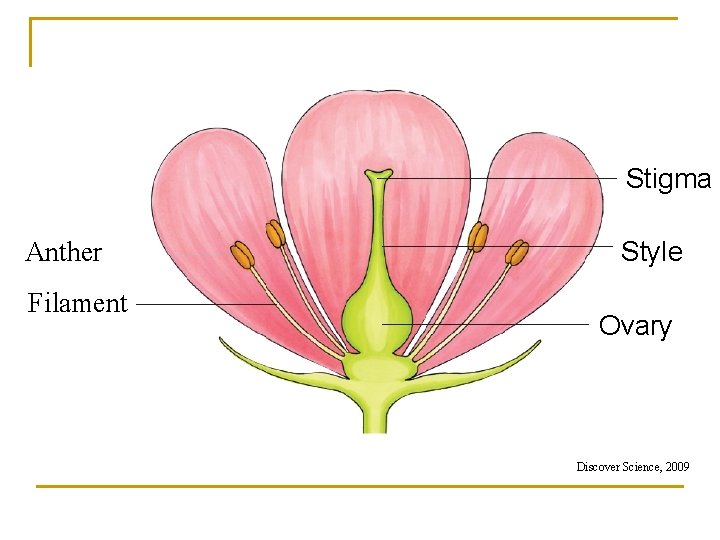
Anther Filament Petal Stigma Style Ovary Carpel Stamen Structure of the flower
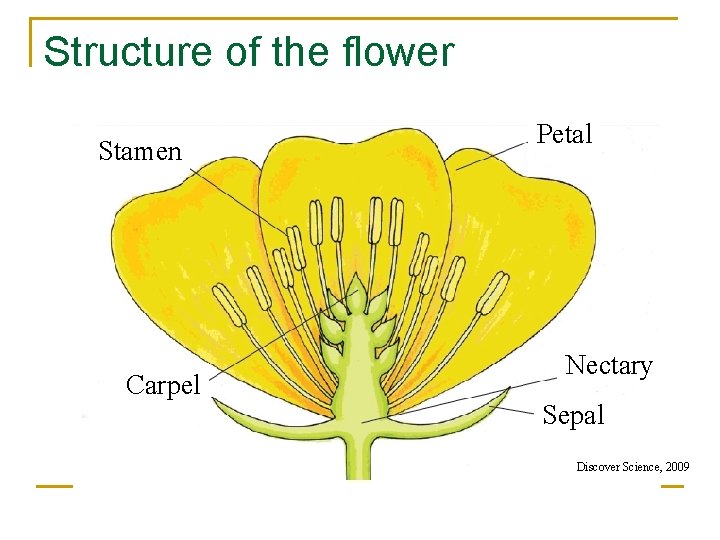
Structure of the flower Stamen Carpel Petal Nectary Sepal Discover Science, 2009
Stigma Anther Filament Style Ovary Discover Science, 2009
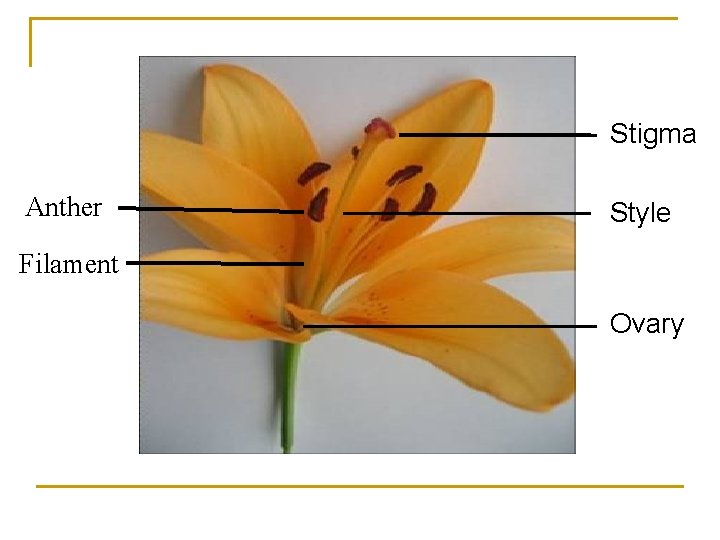
Stigma Anther Style Filament Ovary
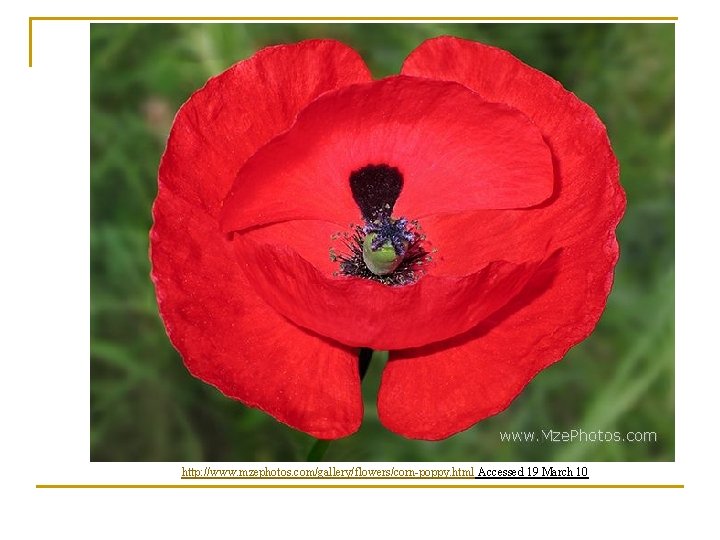
http: //www. mzephotos. com/gallery/flowers/corn-poppy. html Accessed 19 March 10
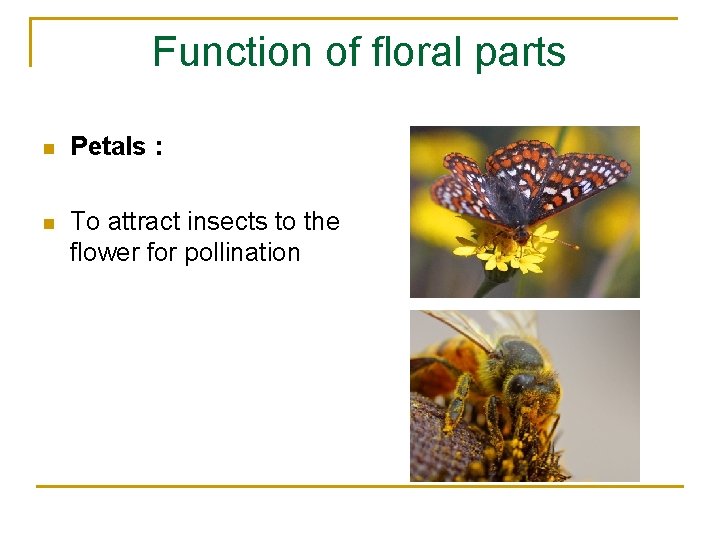
Function of floral parts n Petals : n To attract insects to the flower for pollination
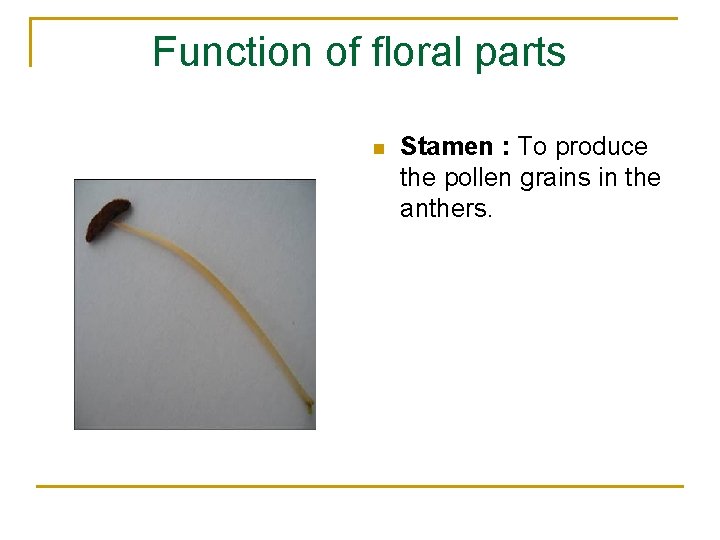
Function of floral parts n Stamen : To produce the pollen grains in the anthers.
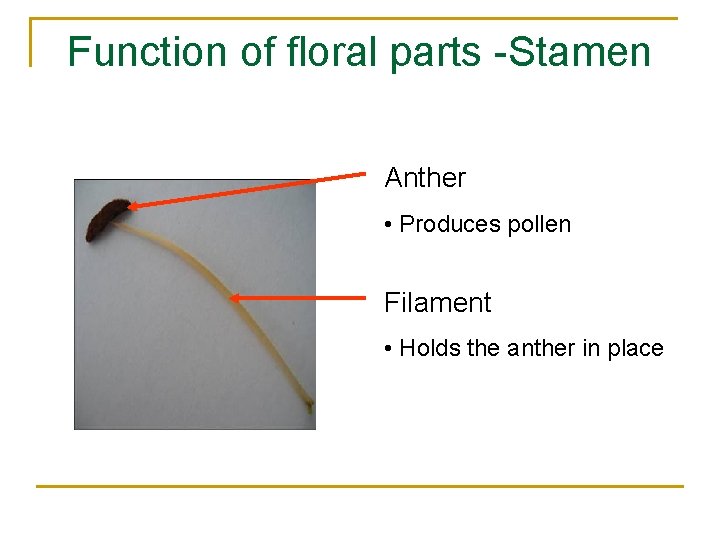
Function of floral parts -Stamen Anther • Produces pollen Filament • Holds the anther in place
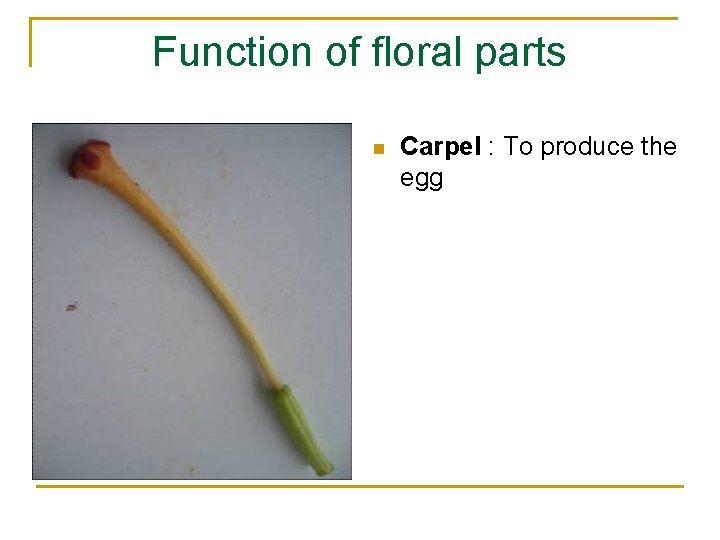
Function of floral parts n Carpel : To produce the egg
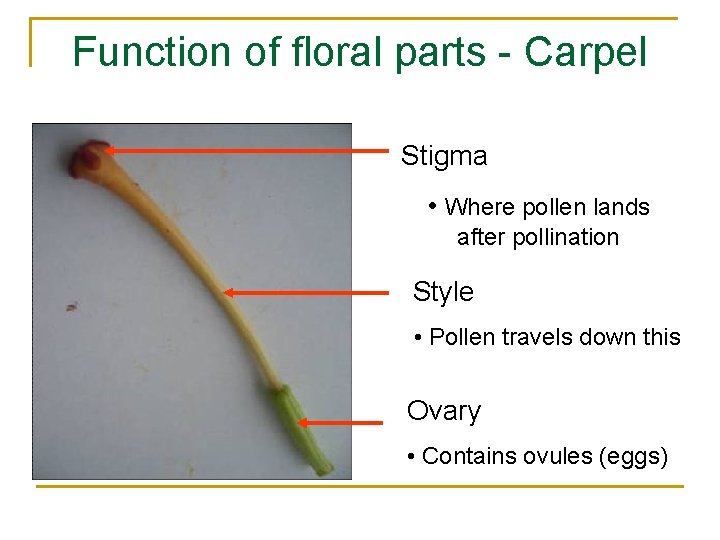
Function of floral parts - Carpel Stigma • Where pollen lands after pollination Style • Pollen travels down this Ovary • Contains ovules (eggs)
Pollination
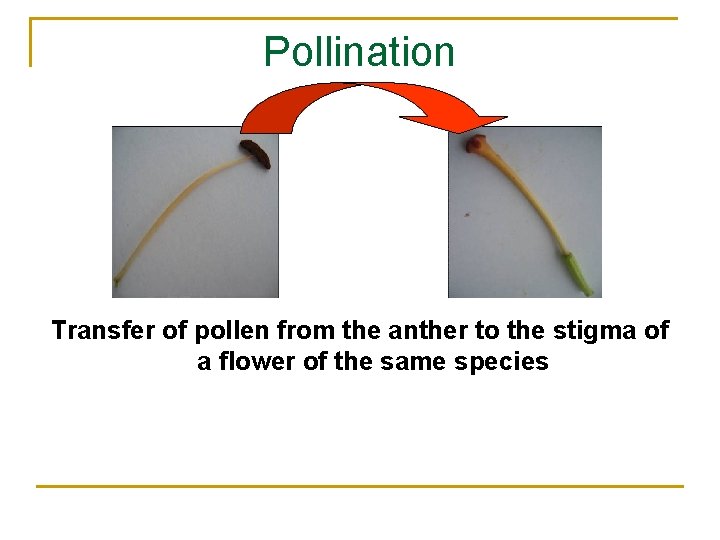
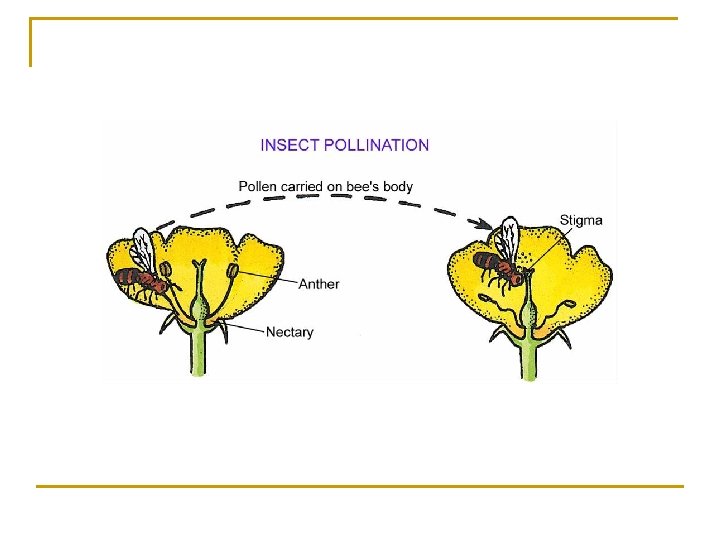
Pollination Transfer of pollen from the anther to the stigma of a flower of the same species
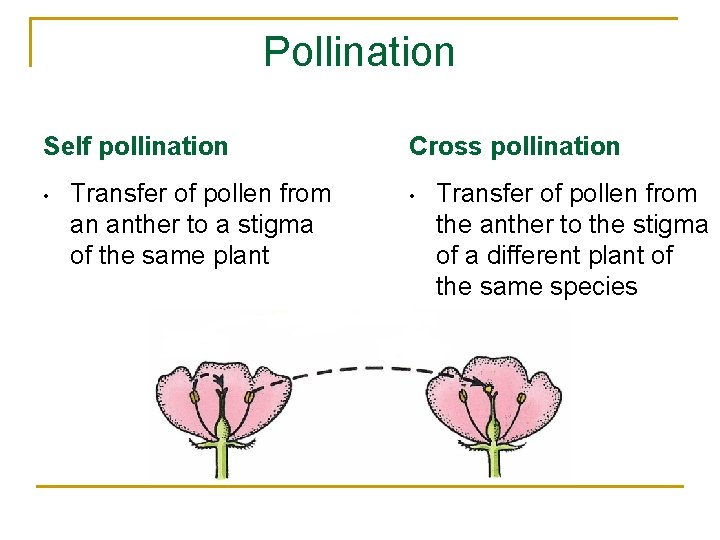
Pollination Self pollination • Transfer of pollen from an anther to a stigma of the same plant Cross pollination • Transfer of pollen from the anther to the stigma of a different plant of the same species
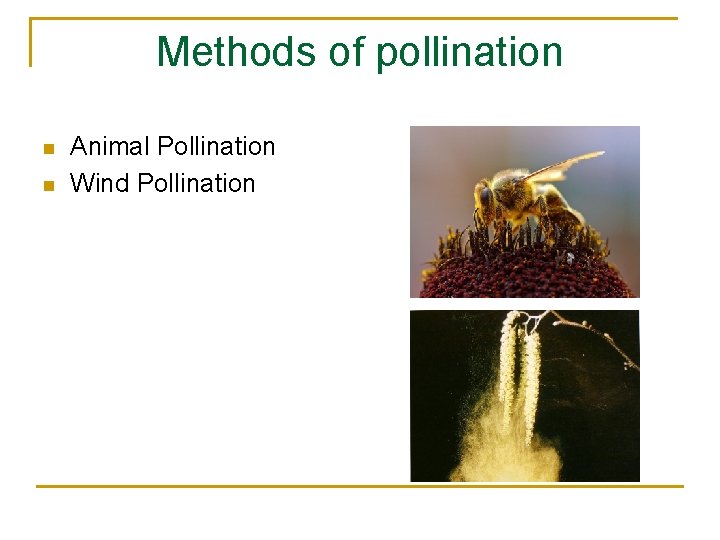
Methods of pollination n n Animal Pollination Wind Pollination
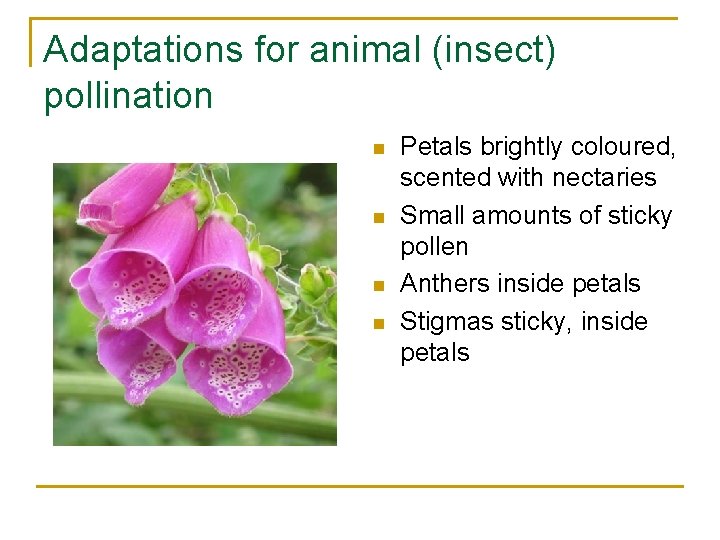
Adaptations for animal (insect) pollination n n Petals brightly coloured, scented with nectaries Small amounts of sticky pollen Anthers inside petals Stigmas sticky, inside petals
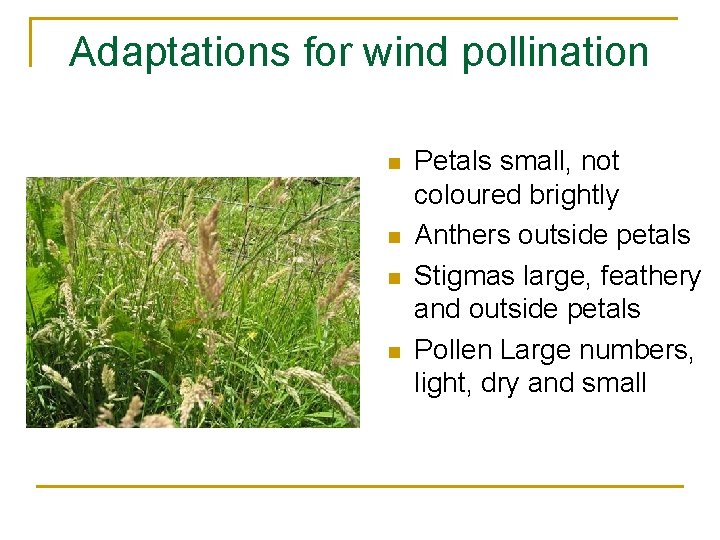
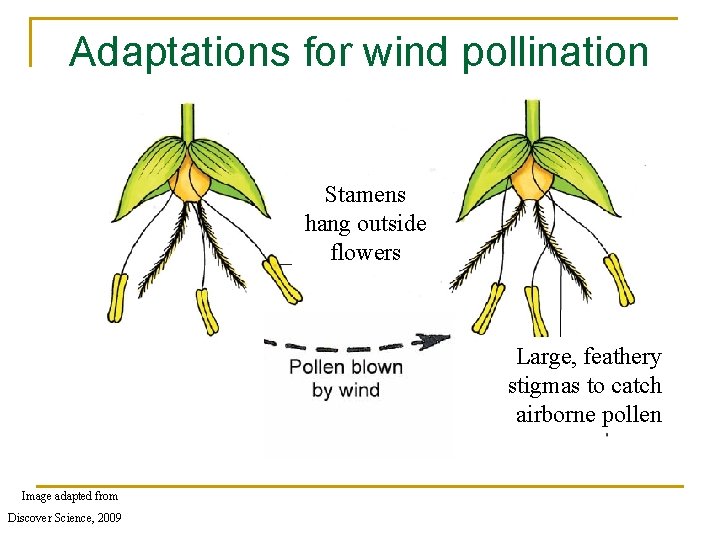
Adaptations for wind pollination n n Petals small, not coloured brightly Anthers outside petals Stigmas large, feathery and outside petals Pollen Large numbers, light, dry and small
Adaptations for wind pollination Stamens hang outside flowers Large, feathery stigmas to catch airborne pollen Image adapted from Discover Science, 2009
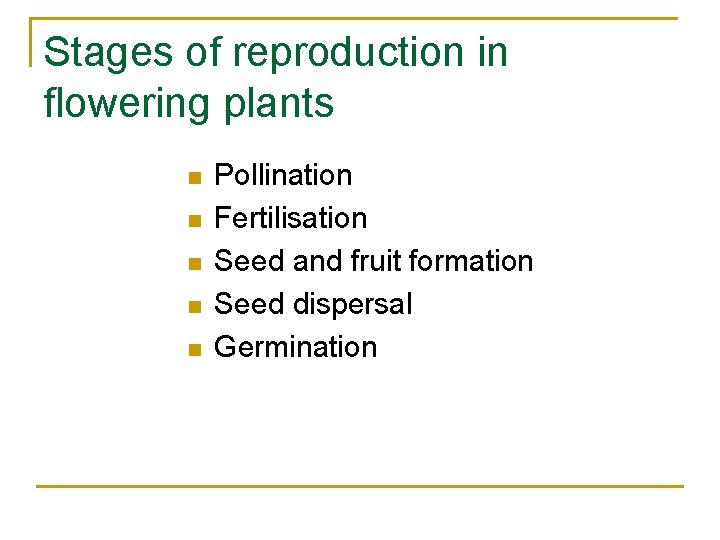
Stages of reproduction in flowering plants n n n Pollination Fertilisation Seed and fruit formation Seed dispersal Germination
Video : Pollination http: //www. youtube. com/watch? v=4 YQ 5 q 1 cj. EU 4 Accessed 20 March 2010
Fertilisation
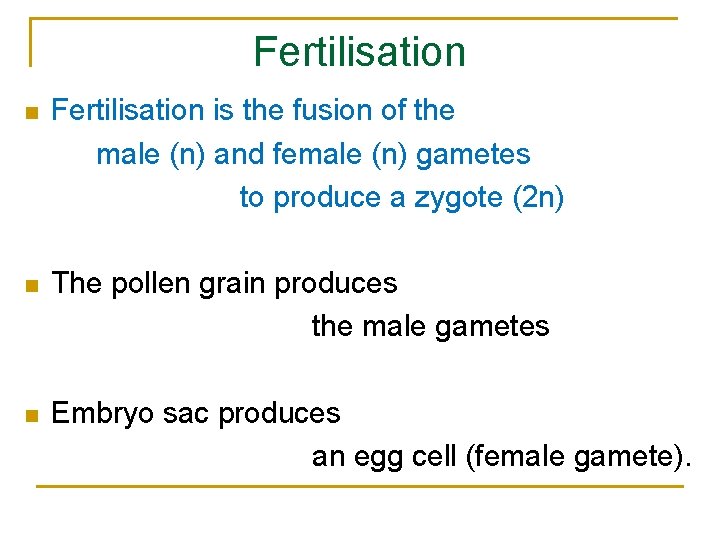
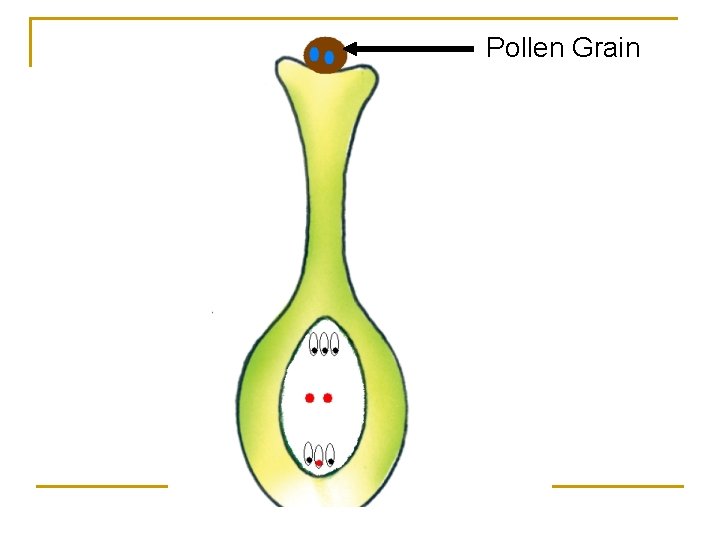
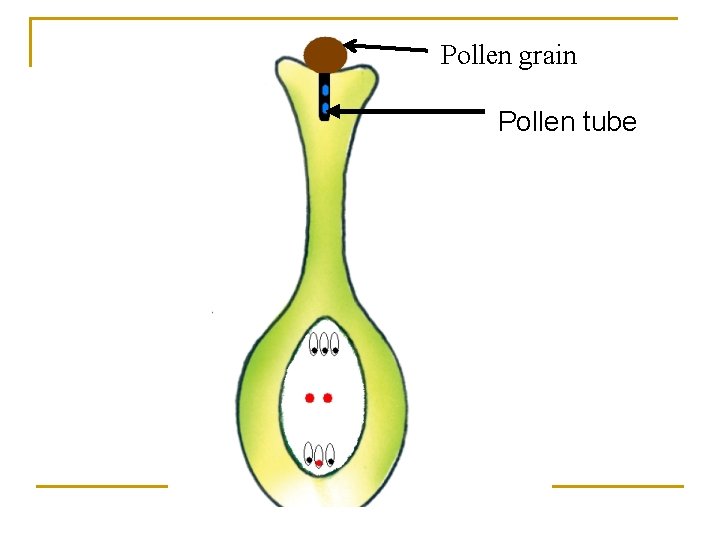
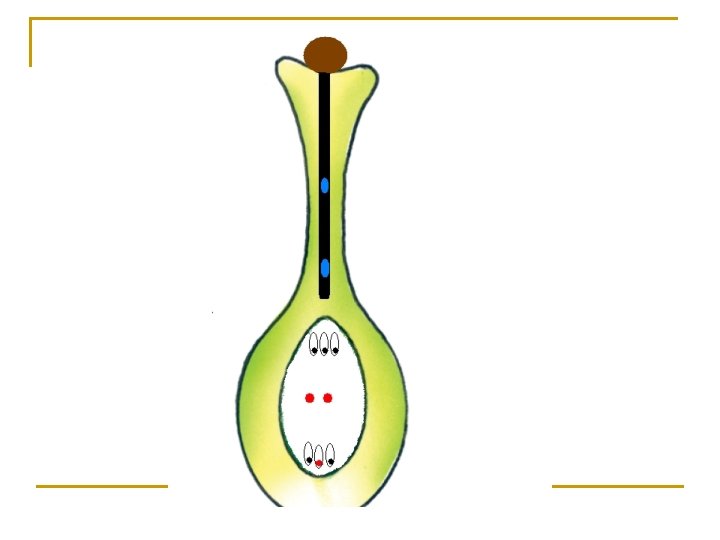
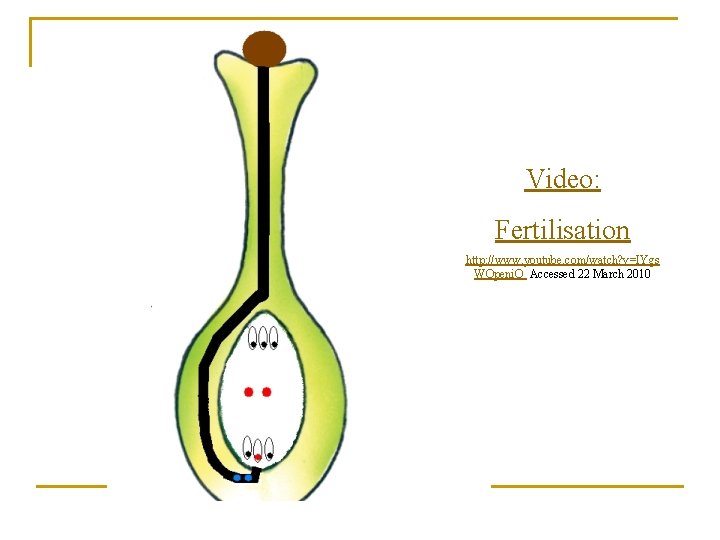
Fertilisation n Fertilisation is the fusion of the male (n) and female (n) gametes to produce a zygote (2 n) n The pollen grain produces the male gametes n Embryo sac produces an egg cell (female gamete).
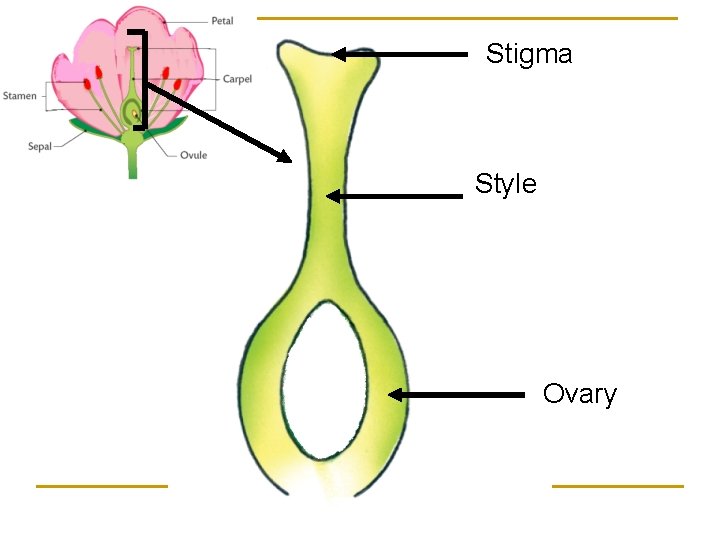
Stigma Style Ovary
Pollen Grain
Pollen grain Pollen tube
Video: Fertilisation http: //www. youtube. com/watch? v=IYgs WOpeni. Q Accessed 22 March 2010
Learning Check n Fertilisation is the fusion of the male (n) and female (n) gametes to produce a zygote (2 n) n The pollen grain produces the male gametes n Embryo sac produces an egg cell (female gamete).
Seed formation
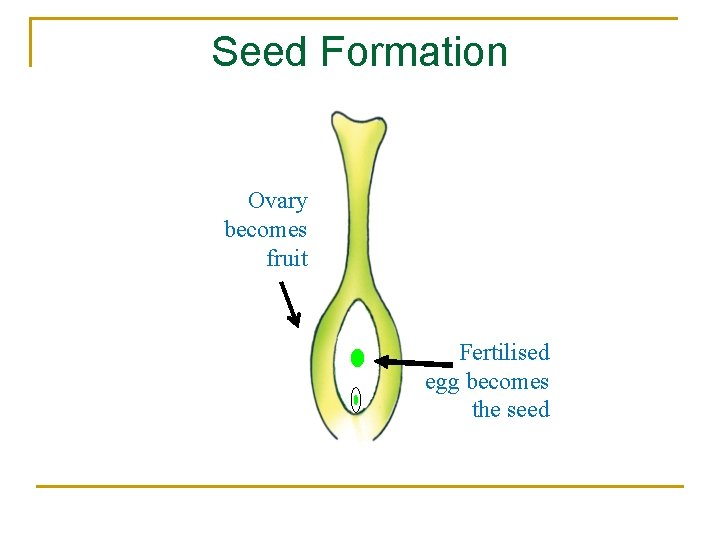
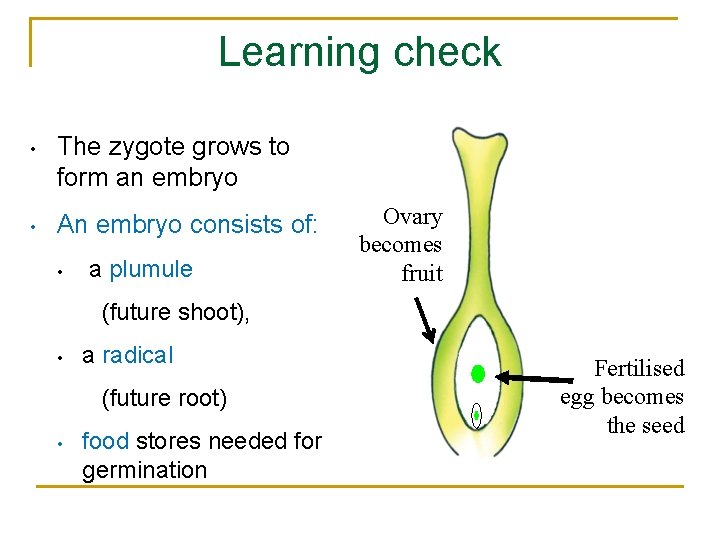
Seed Formation Ovary becomes fruit • 3 N endosperm nucleus Fertilised egg becomes the seed 2 N Zygote
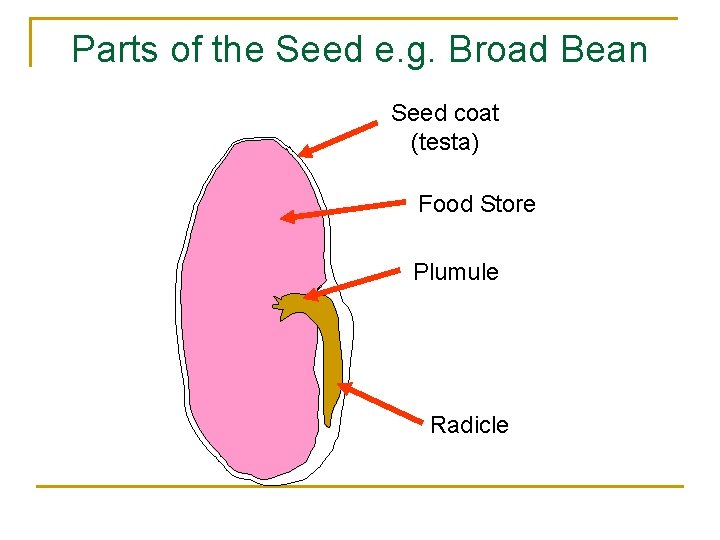
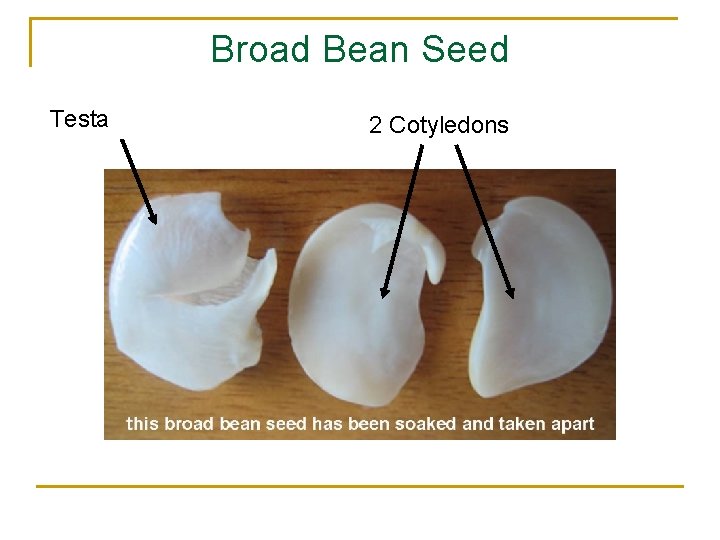
Parts of the Seed e. g. Broad Bean Seed coat (testa) Food Store Plumule Radicle
Broad Bean Seed Testa 2 Cotyledons
Learning check • The zygote grows to form an embryo • An embryo consists of: • a plumule (future shoot), • a radical (future root) • food stores needed for germination Ovary becomes fruit • 3 N endosperm nucleus Fertilised egg becomes the seed 2 N Zygote
Stages of reproduction in flowering plants n n n Pollination Fertilisation Seed and fruit formation Seed dispersal Germination
Fruit formation Seedless fruits Fruit and seed dispersal
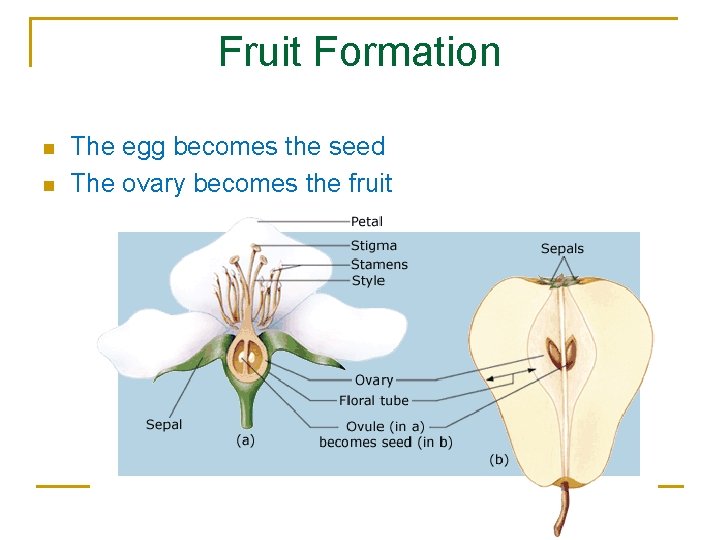
Fruit Formation n n The egg becomes the seed The ovary becomes the fruit
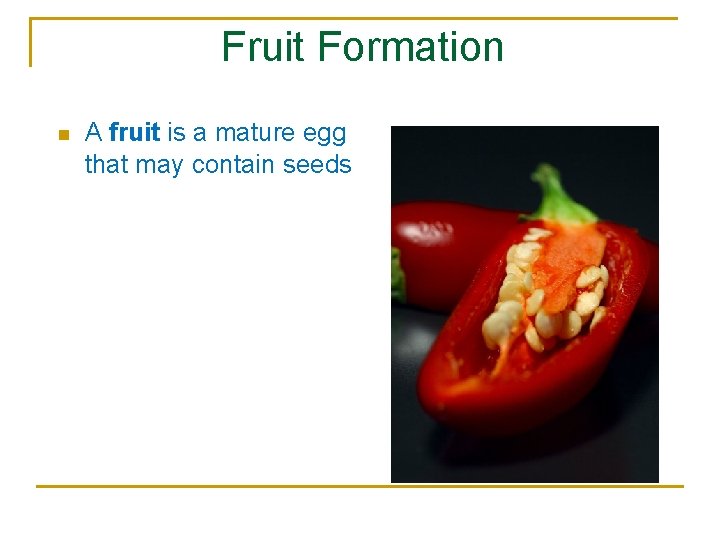
Fruit Formation n A fruit is a mature egg that may contain seeds
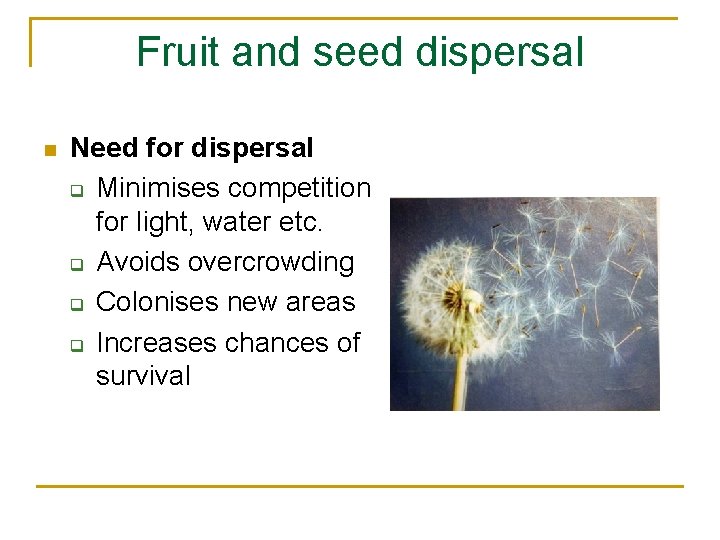
Fruit and seed dispersal n Need for dispersal q Minimises competition for light, water etc. q Avoids overcrowding q Colonises new areas q Increases chances of survival
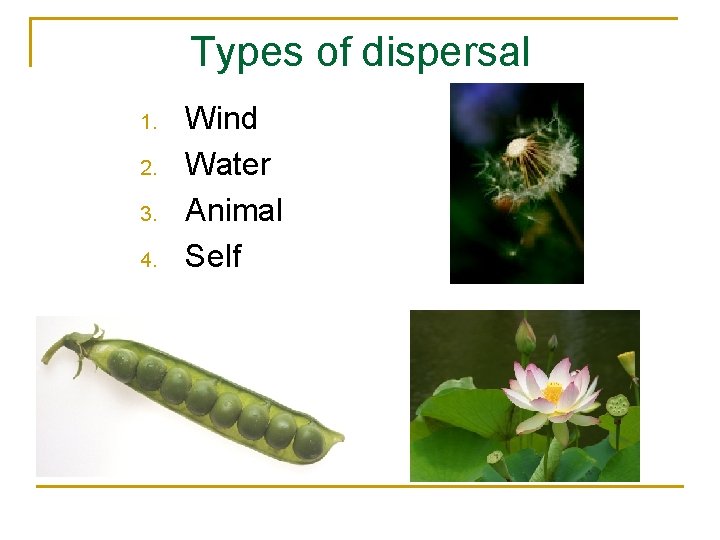
Types of dispersal 1. 2. 3. 4. Wind Water Animal Self
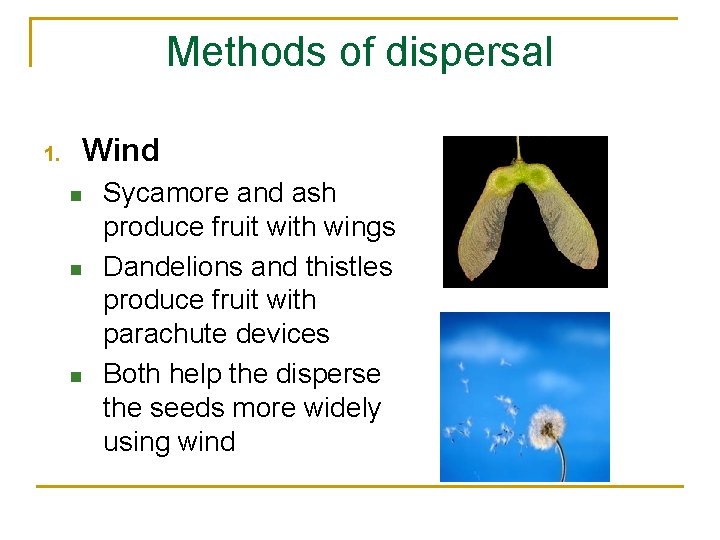
Methods of dispersal 1. Wind n n n Sycamore and ash produce fruit with wings Dandelions and thistles produce fruit with parachute devices Both help the disperse the seeds more widely using wind
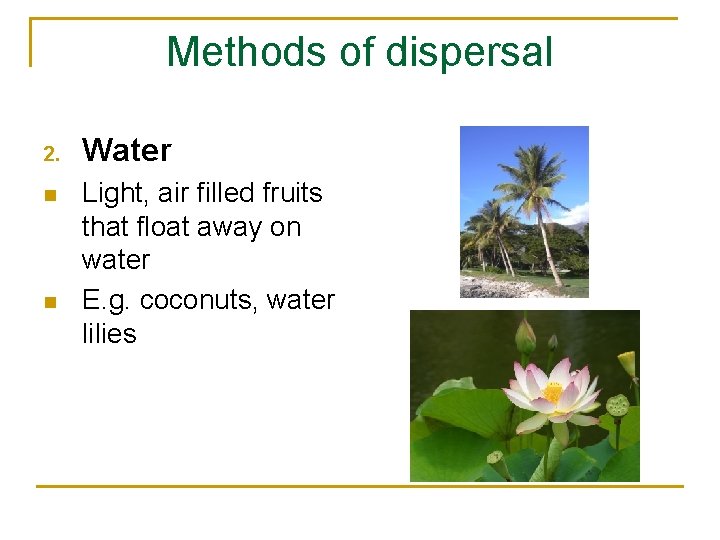
Methods of dispersal 2. n n Water Light, air filled fruits that float away on water E. g. coconuts, water lilies
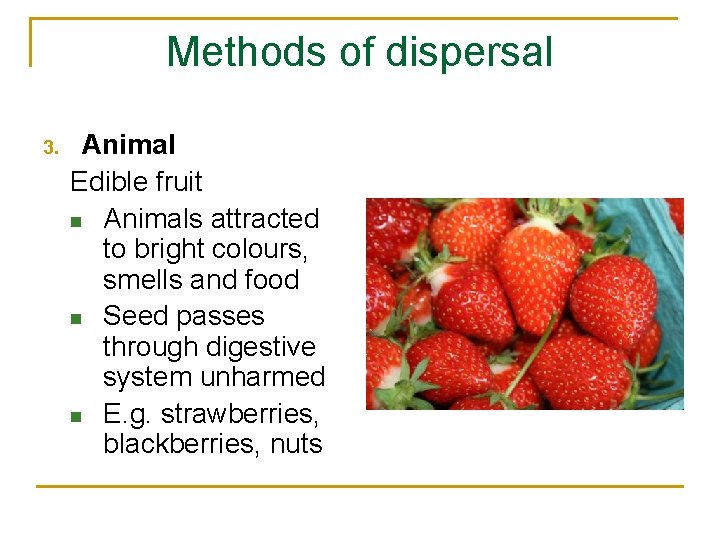
Methods of dispersal 3. Animal Edible fruit n Animals attracted to bright colours, smells and food n Seed passes through digestive system unharmed n E. g. strawberries, blackberries, nuts
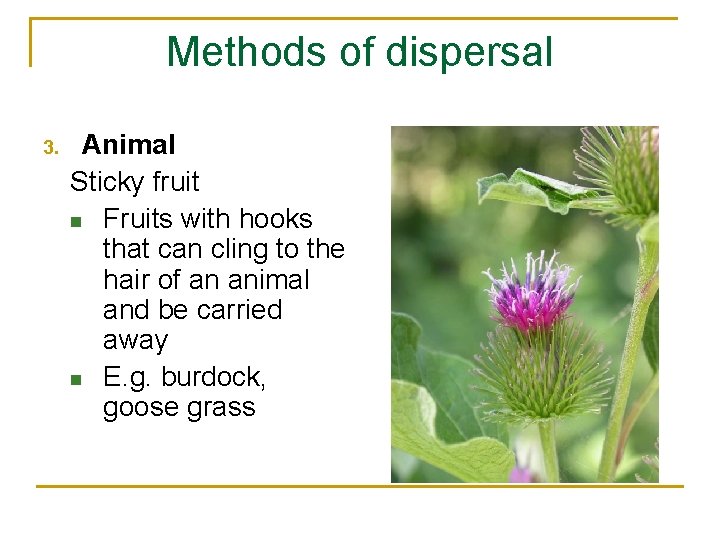
Methods of dispersal 3. Animal Sticky fruit n Fruits with hooks that can cling to the hair of an animal and be carried away n E. g. burdock, goose grass
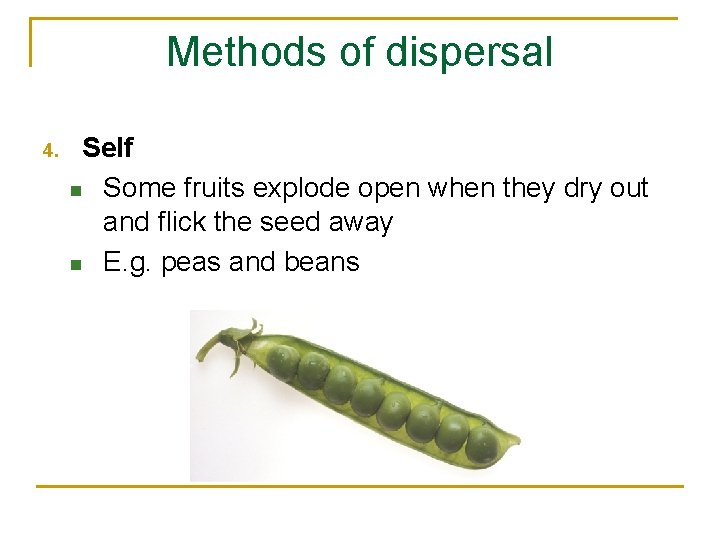
Methods of dispersal 4. Self n Some fruits explode open when they dry out and flick the seed away n E. g. peas and beans
Stages of reproduction in flowering plants n n n Pollination Fertilisation Seed and fruit formation Seed dispersal Germination
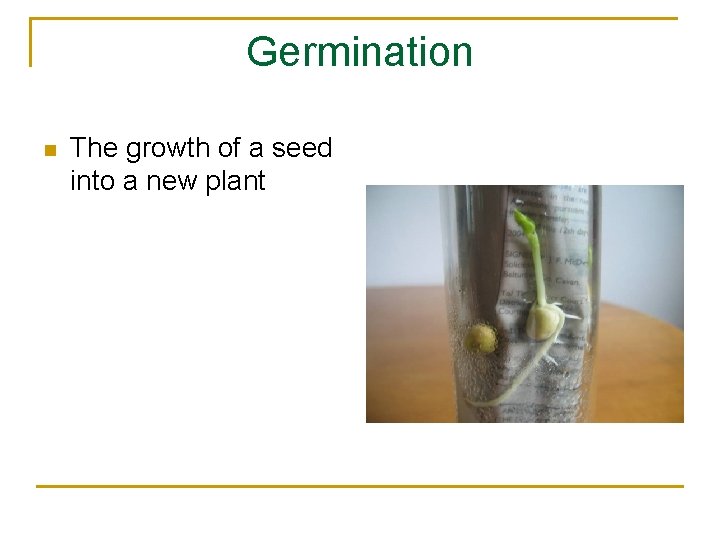
Germination n The growth of a seed into a new plant
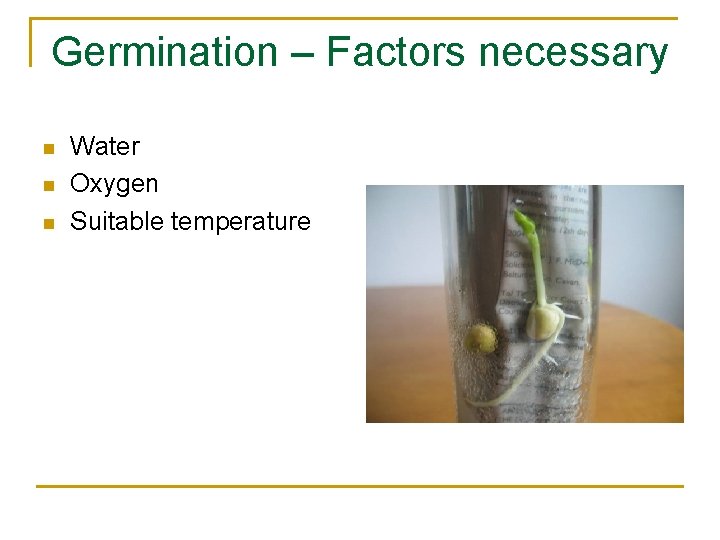
Germination – Factors necessary n n n Water Oxygen Suitable temperature
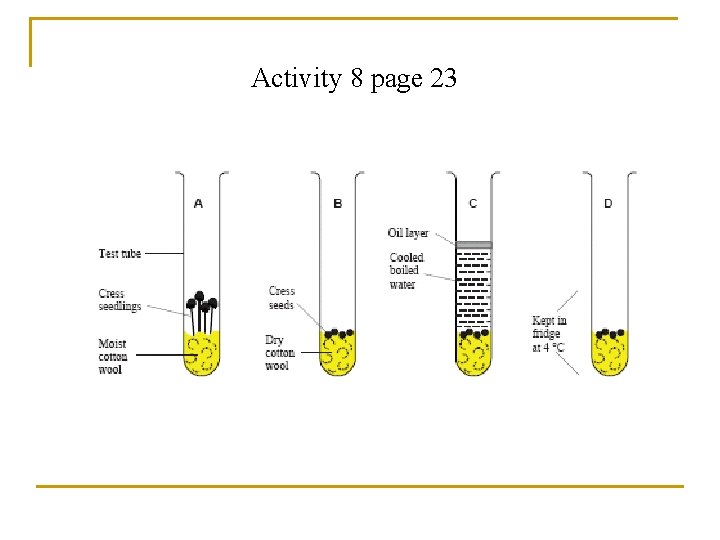
1. To. Investigatethe. Conditions. N eededfor. Germination(16. 1) Germination – Factors necessary? n n n Water Oxygen Suitable temperature
Materials and Apparatus Used: Four test tubes, cotton wool, oil, cress seeds How would you remove? n n n Water Oxygen Suitable temperature What other tube might you set up?
(a)Why are mustard seeds used for this experiment? (b)Why would you place several seeds in each test tube, and not just one? (c)Why is it necessary to include tube A, which has all the necessary conditions for germination - water, oxygen and heat? (d) Explain how oxygen is removed from the seeds in tube C? (e) Heat is removed from test tube D by placing it in a _______?
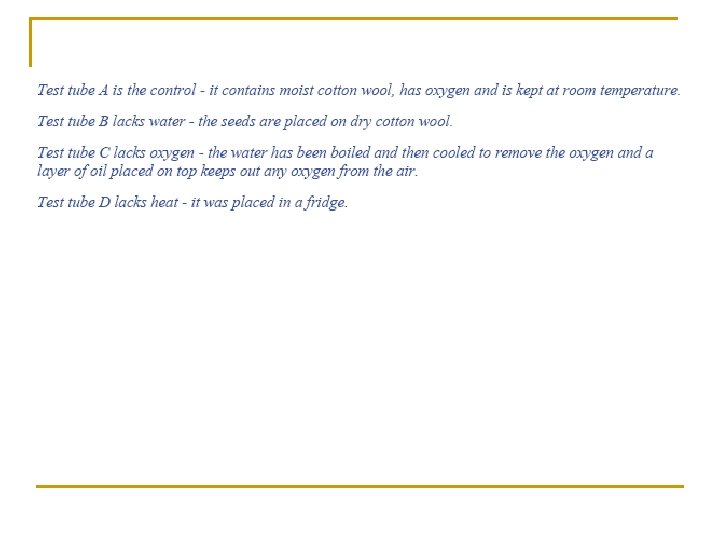
Activity 8 page 23
Activity 8 page 23
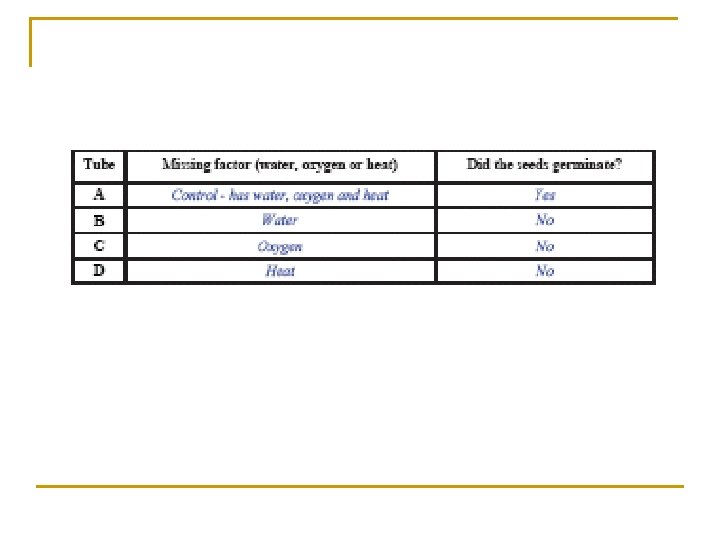
What do you expect to see?
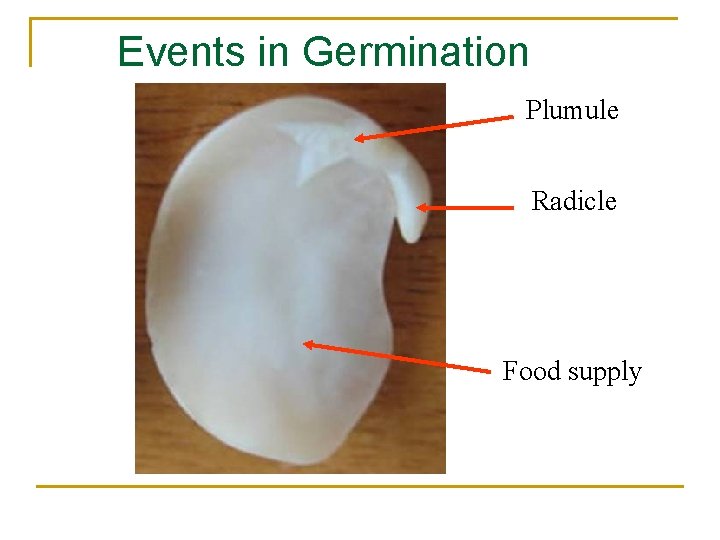
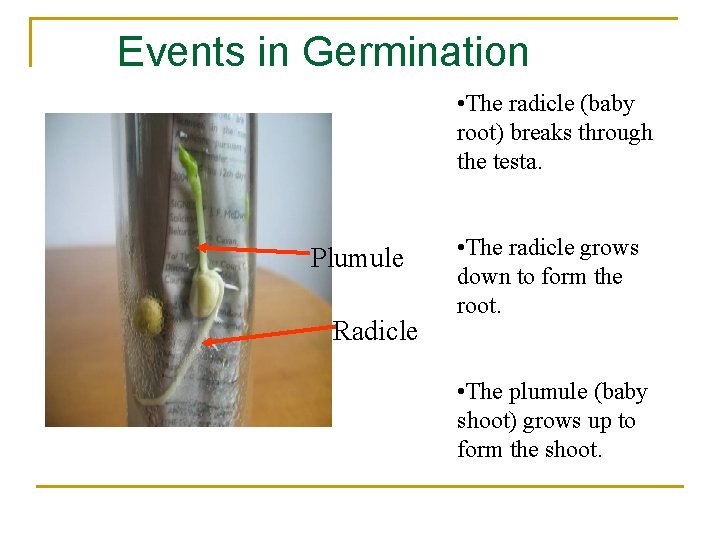
Events in Germination Plumule Radicle Food supply
Events in Germination • The radicle (baby root) breaks through the testa. Plumule Radicle • The radicle grows down to form the root. • The plumule (baby shoot) grows up to form the shoot.
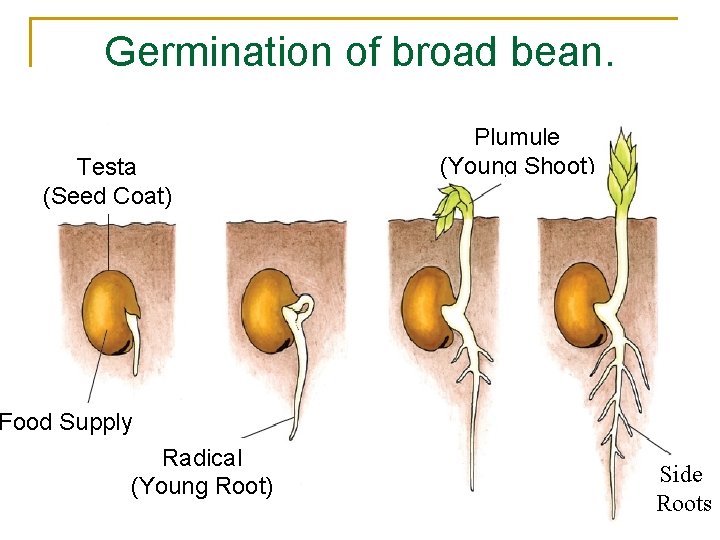
Germination of broad bean. Testa (Seed Coat) Plumule (Young Shoot) Food Supply Radical (Young Root) Side Roots
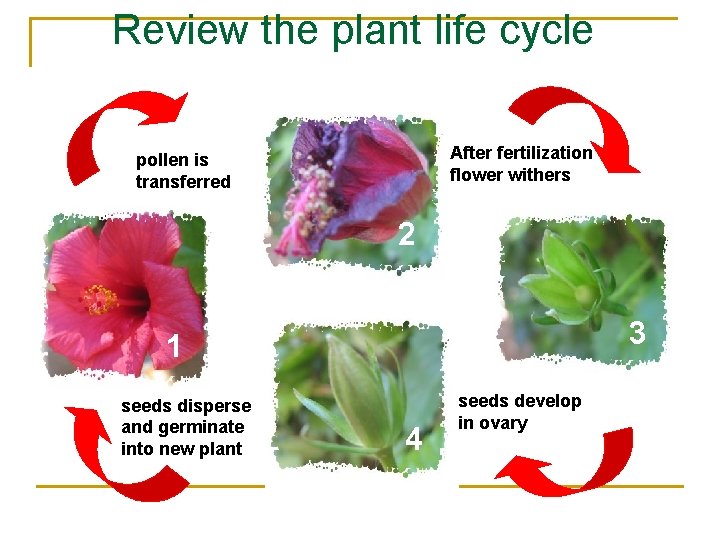
Review the plant life cycle After fertilization flower withers pollen is transferred 2 3 1 seeds disperse and germinate into new plant 4 seeds develop in ovary
Bibliography • Discover Science. John Cullen, 2 nd Edition. Mentor Book, 2009. • Leaving Certification Biology Resource CD • Corn Flower image: http: //www. mzephotos. com/gallery/flowers/corn-poppy. html • Accessed 19 March 10 • Pollination video: http: //www. youtube. com/watch? v=4 YQ 5 q 1 cj. EU 4 Accessed 20 March 2010 Fertilisation Video: http: //www. youtube. com/watch? v=IYgs. WOpeni. Q Accessed 22 March 2010
END