
Sexual reproduction in flowering plants Structure of flower
- Slides: 13
Sexual reproduction in flowering plants • Structure of flower • Pollination • Fertilization • Fruits and seeds
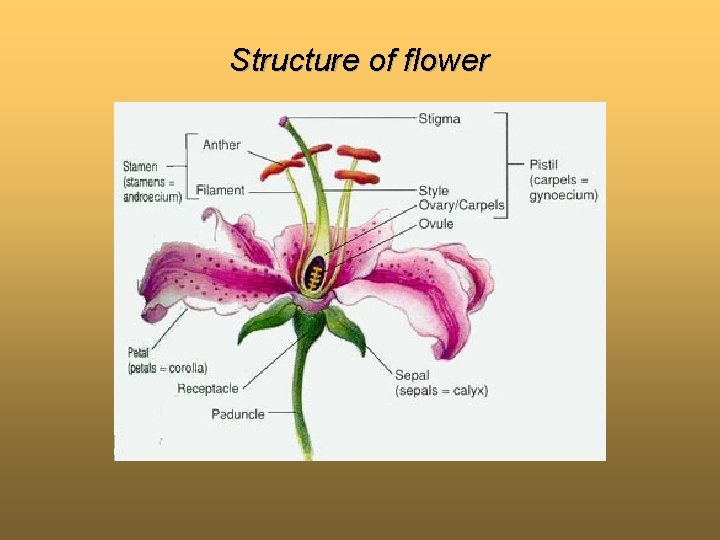
Structure of flower
Pollination is the transfer of pollen grains from anthers to stigmas of flowers. Self-pollination: pollen grains are transferred to the stigma of the same flower or to other flowers on the same plant. Cross-pollination: pollen grains are transferred to flowers on different plant of the same species
Wind-pollinated flowers (e. g. grass) • no scent • small petals with green or dully colour • no nectarines • anthers loosely attached to filament; hang out of flowers • large number of light, smooth and dry pollen grains • stigmas are large, feathery and project outside the flower
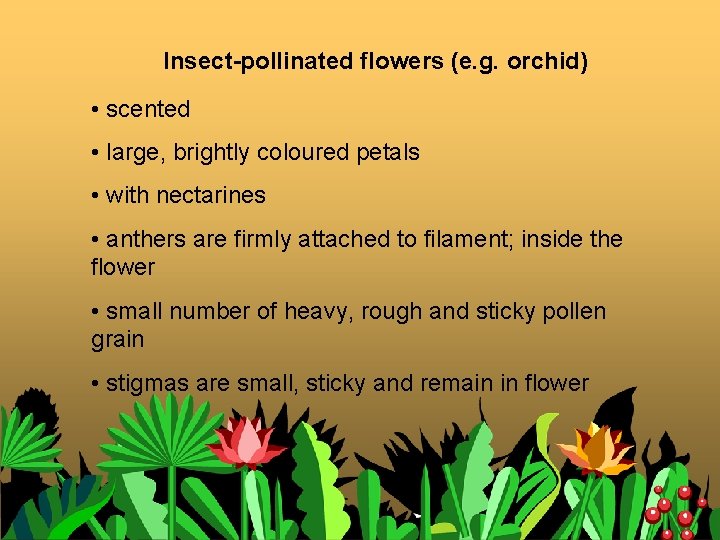
Insect-pollinated flowers (e. g. orchid) • scented • large, brightly coloured petals • with nectarines • anthers are firmly attached to filament; inside the flower • small number of heavy, rough and sticky pollen grain • stigmas are small, sticky and remain in flower
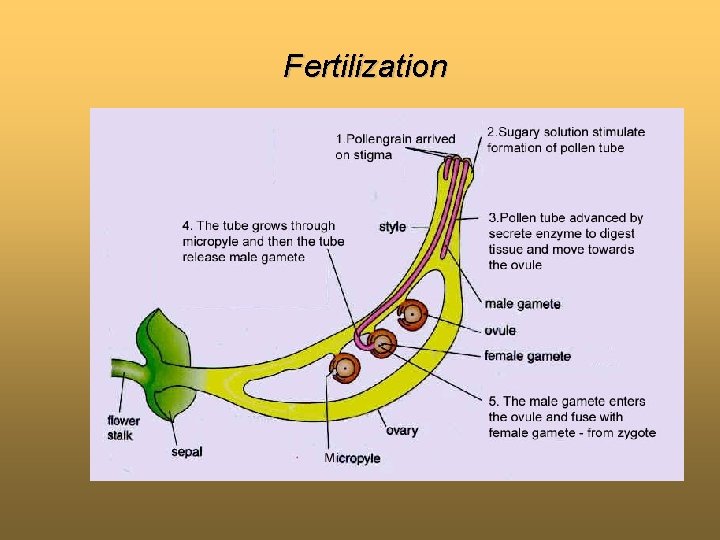
Fertilization
Fruits and seeds 1. Fate of floral part after fertilization
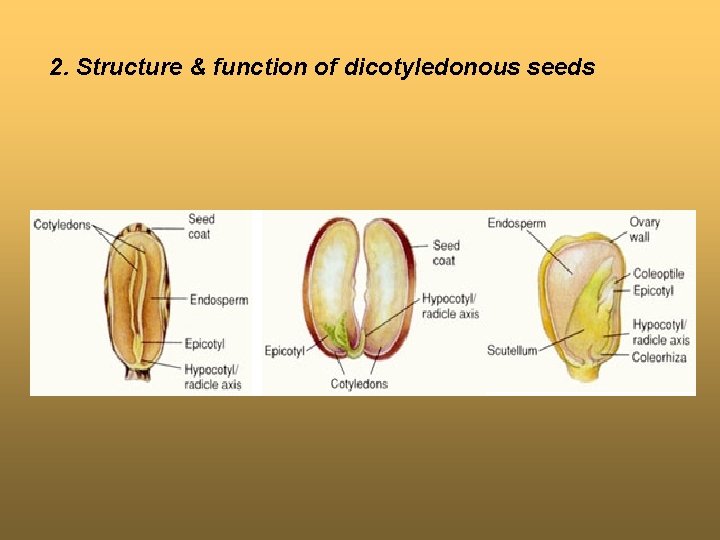
2. Structure & function of dicotyledonous seeds
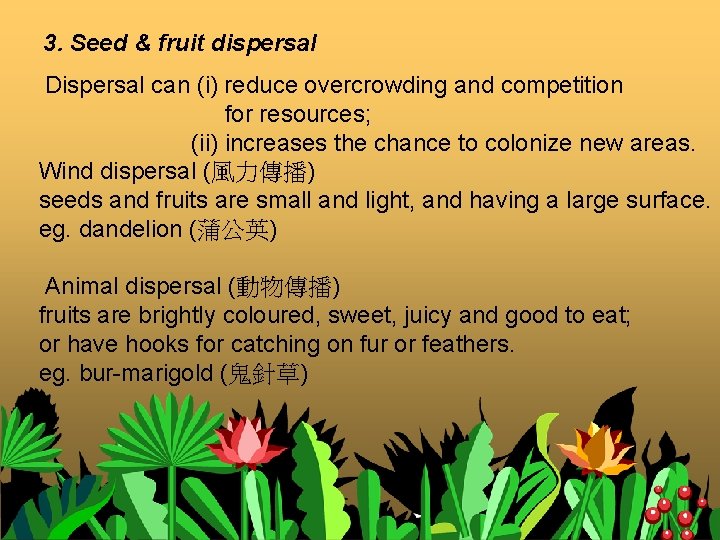
3. Seed & fruit dispersal Dispersal can (i) reduce overcrowding and competition for resources; (ii) increases the chance to colonize new areas. Wind dispersal (風力傳播) seeds and fruits are small and light, and having a large surface. eg. dandelion (蒲公英) Animal dispersal (動物傳播) fruits are brightly coloured, sweet, juicy and good to eat; or have hooks for catching on fur or feathers. eg. bur-marigold (鬼針草)
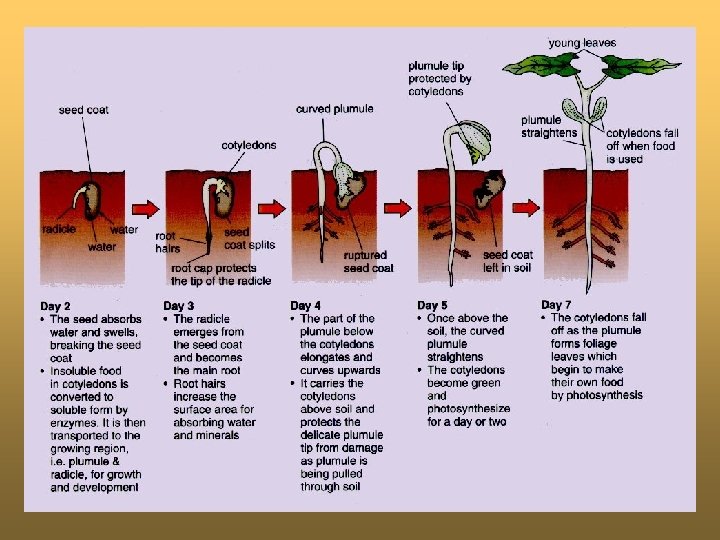
4. Germination of seed Germination (發芽) means the process of a seed develops into a new young plant.
5. Under what conditions can seeds germinate? i. water supply ii. warm temperature iii. oxygen supply
Physiology of seed germination Water - (i) softens the seed coat to allow the radical to emerge (ii) makes the seed swell to break the seed coat (iv) activates enzymes in the seed to digest nutrients stored in the cotyledons, (v) acts as a medium for transportation of soluble food. Temperature - ensures the effective functioning of enzymes. Oxygen - required for aerobic respiration to provide energy for growth.